

When life gets busy, sticking to your health goals can certainly become more challenging. Whether it’s a late night at the office or a packed after-school schedule, here are some simple tips on how to eat healthy on the go.

When it comes to healthy eating, there are numerous “rules” you can follow; however, generally speaking, the objectives are straightforward: eat a balanced diet composed primarily of whole foods.
According to the nutrition prioritization pyramid, a tool that highlights the most important aspects of nutrition, the priorities of a healthy diet are not in the tiny details of food groups, micronutrients, and nutrient timing, but rather in the foundational principles of overall lifestyle, consistency, food quality, and macronutrient intake.
Unfortunately, many people stress over the small details of their diet and aim for perfection, and often give up when they make a small “mistake”, when they should be focusing on building a foundation of healthy eating habits they can maintain for the long term.
Whether the goal is weight loss, weight gain, to maintain a healthy weight, or general health, it’s important to learn to eat healthy when life is slow AND when life gets busy.

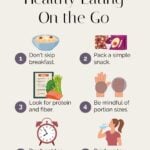
6 Tips for Eating Healthy on the Go
Here are some quick and easy tips for healthy eating on the go.
1. Don’t skip breakfast.
If you know you’ve got a busy day ahead, don’t skip breakfast. Eating breakfast, particularly a well-balanced one, can help to ensure you’re fueled for the day, balance your blood sugar, and mitigate sugar cravings and poor food choices later in the day.
Ensuring you eat breakfast is also particularly helpful when you’re on the go and don’t know when you’ll be able to eat a full meal again. By eating a well-balanced meal with protein, carbohydrates, fiber, and healthy fats, you can get your day started on the right foot. Examples of quick breakfasts you can meal prep the night before or in the morning include:
- Protein Overnight Oats
- Breakfast Egg Bake
- Spinach Feta Egg White Wrap
- Meal Prep Breakfast Sandwiches
- Protein Fruit Smoothie
2. Pack a snack.
Before you leave the house, put something in your bag. While meal prepping a bunch of meals before a busy week would be an ideal solution, packing something before you leave the house may simply be more realistic. If you’ve got time to pull together a quick no-cook meal, that’s great; otherwise, grabbing a healthy travel snack before you head out the door can help to keep you on track.
Do your best to reach for whole foods and, if possible, ones that are high in protein and fiber. Examples of grab-and-go nutritious snacks include:
- Cheese + Apple
- Hummus + Carrots
- Yogurt + Berries
- Peanut Butter + Crackers
- Protein Bars
3. Look for protein and fiber.
When you’re busy, you may find yourself buying meals or eating at restaurants more frequently than you’d like to; however, that doesn’t mean you need to forgo your health goals. When deciding what to eat, scan the menu for meal options with sources of protein and fiber. Not only does this help to ensure you’re eating a more balanced meal, but foods high in protein and fiber are some of the most filling foods and can help to increase satiety and, in turn, reduce overeating (1, 2).
In fact, whether you’re in a restaurant, gas station, or airport, healthy choices are far more prevalent than commonly believed. Most restaurants offer grilled or baked protein options with rice, baked potatoes, steamed veggies, or greens with salad dressing, while you can easily find fresh fruits, nuts, seeds, beef jerky, cheese sticks, and boiled eggs at most gas stations, train stations, and airports.
Examples of low-fat, protein-rich foods include:
- Lean beef
- Chicken
- Fish
- Shrimp
- Greek yogurt
- Cottage cheese
Examples of high-fiber foods include:
- Whole grains
- Brown rice
- Chickpeas
- Beans
- Lentils
- Fruits
- Vegetables
Moreover, looking for prepared foods with protein and fiber can help to limit added sugars in the diet, which are very common in packaged and processed foods, such as granola bars, fruit yogurts, and trail mixes.
4. Be mindful of portion sizes.
Whether you’re going through the drive-through or grabbing something to eat with your coffee, being mindful of the portion size you order is a great way to eat healthier on the go. Research has shown that restaurant portion sizes are often 2 to 4 times larger than home-cooked ones, and eating at fast food and full-service restaurants was associated with an increase in daily total energy intake of roughly 200 calories and a reduction in other nutrients (3).
So, instead of just ordering the combo meal or the large drink, take a moment to consider your hunger and fullness cues to practice portion control. For example, ordering the 6-inch sub instead of the 12-inch sub can cut calorie intake from 1,064 calories to 532 calories in a single meal, while ordering the small vanilla latte instead of the venti vanilla latte can decrease your sugar intake from 49 grams to 26 grams in a single snack (4, 5).
That said, if you are served a large portion at a restaurant, remember, you don’t need to finish it all. In fact, saving leftovers for the next meal or the next day is another great strategy for eating healthy on the go.
5. Don’t get too hungry.
When trying to eat healthy on the go, don’t let perfect be the enemy of good. If you’re hungry and you haven’t packed anything and truly can’t find any healthy options, just eat something.
Although some people are comfortable waiting or skipping meals, for others, this can be a recipe for disaster and lead to “hangry” mode and poor food choices later in the day. Instead of stressing over finding the healthiest option, just do your best with the available options and reprioritize whole foods, protein, and fiber the next time you eat.
6. Stay hydrated.
Staying hydrated is important every day of the week, but particularly important when you’re busy or outside of your regular day-to-day routine. Adequate hydration plays an important role in energy, mood, performance, and body composition, so ensuring you’re drinking water while you’re on the can help to mitigate its stressful side effects (6).
Exactly how much water you need will vary by individual based on several factors, including weight, activity level, climate, and diet; however, on average, it is suggested that the total water intake for men is 15.5 cups (3.7 liters) per day, and the total water intake for women is 11.5 cups (2.7 liters) per day (7, 8, 9).

The Bottom Line
While eating healthy on the go can be challenging, it’s possible with a few healthy eating strategies. By eating breakfast, packing snacks, prioritizing protein and fiber, being mindful of portion sizes at restaurants, and staying hydrated, you can help to support your dietary goals no matter how busy your schedule gets.


Leave a Review