

If you’re struggling to lose weight or can’t seem to keep weight off, despite careful food choices and hours of exercise, you may be experiencing a phenomenon known as metabolic adaptation. While this physiological mechanism can make it more difficult to meet your weight loss goals, it’s completely natural and can be fixed, avoided, or mitigated with the appropriate diet and lifestyle strategies.

Table of contents
If you’ve ever wondered if you can damage your metabolism from dieting, you’re not alone. The idea that you can “break” your metabolism is very common, however, it’s a bit misleading. While your metabolism plays a vital role in your overall health and weight management, it’s not an organ or body part and, therefore, it cannot break.
That said, years of yo-yo dieting and crash diets can influence our metabolism and lead to something known as metabolic adaptation, which can make weight loss and weight loss maintenance more difficult.
What is metabolic adaptation?
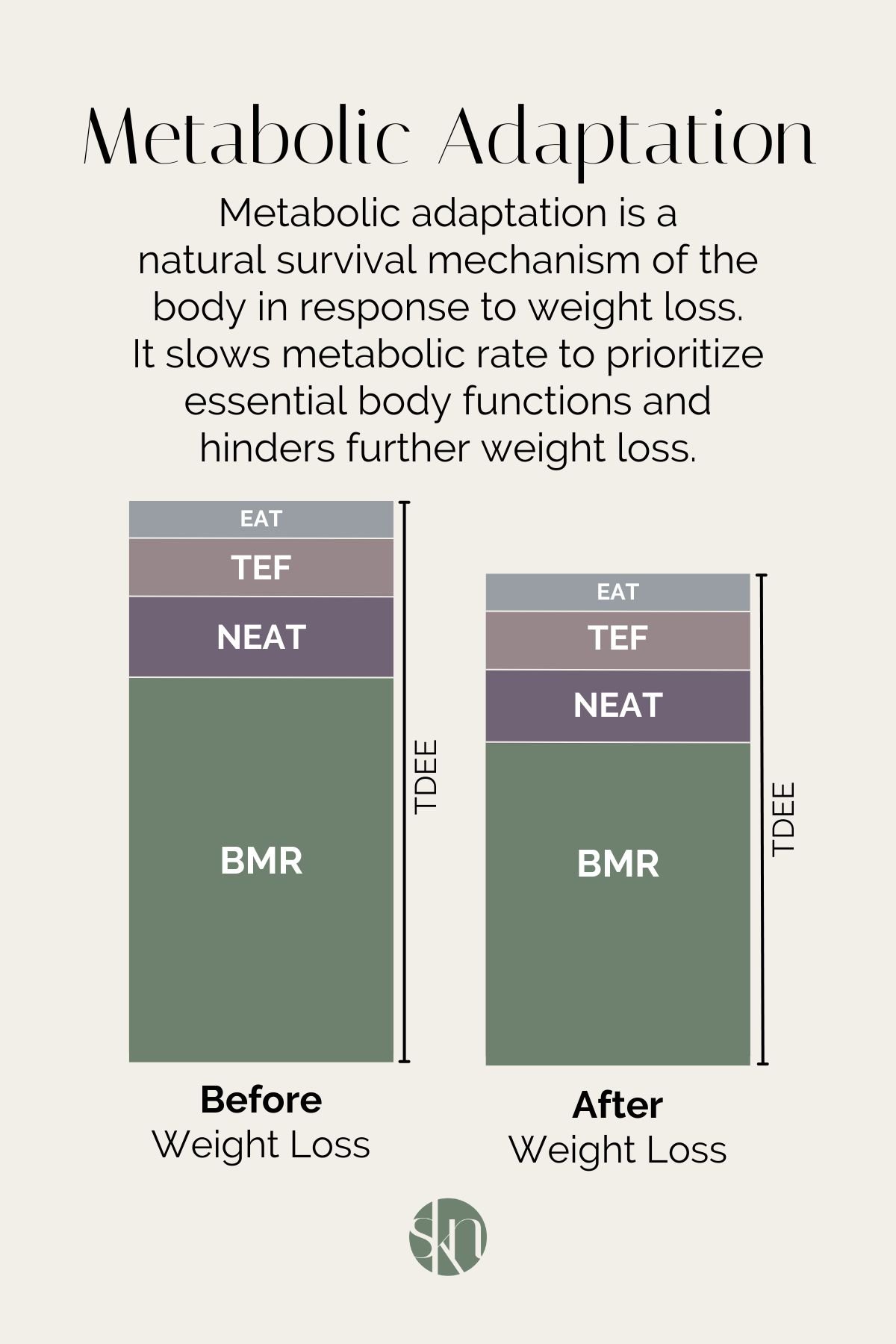
Metabolic adaptation (MA) refers to a cluster of adaptations to weight loss that hinder further weight loss and promote weight regain (1, 2). Also known as adaptive thermogenesis (AT), metabolic adaptation is a natural survival mechanism of the body that works to ensure it has enough energy to perform essential functions and help it survive in times of food scarcity or famine.
While famine is rare in modern times, the body cannot distinguish between times of true food scarcity and diet-induced calorie restriction and, therefore, responds the same way by slowing metabolism to prioritize essential body functions. Through metabolic adaptation, your body becomes more efficient at using energy and burns fewer calories in the process.
Metabolic Adaptation and Metabolism
The term metabolism refers to the sum of all reactions that occur within each cell that provide the body with energy. Metabolism is made up of 4 primary components (3, 4):
- Basal Metabolic Rate (BMR): The energy used by the body at rest or for your most basic life-sustaining functions, approximately 70% of total daily energy expenditure.
- Thermic Effect of Food (TEF): The energy expended to digest, metabolize, absorb, and store the food that you eat, approximately 10% of total daily energy expenditure.
- Exercise Activity Thermogenesis (EAT): The energy expended by the body for physical movement, approximately 5% to 30% of total daily energy expenditure.
- Non-Exercise Activity Thermogenesis (NEAT): The energy expended for everything we do that is not sleeping, eating, or sports-like exercise, approximately 15% of total daily energy expenditure.
Together, the energy our bodies burn through basal metabolic rate, thermic effect of food, exercise activity thermogenesis, and non-exercise activity thermogenesis, make up our total daily energy expenditure (TDEE), also known as our metabolism.
Metabolic adaptation generally occurs in response to weight loss and is a reduction in total energy expenditure below predicted levels, namely of BMR. While there are many reasons metabolic adaptation occurs, the primary reason it happens is our body’s biological drive to regain the body mass we lose to survive (5).
Why does metabolic adaptation happen?
While it’s important to understand that metabolic rate is dynamic in nature, research has shown that several factors can cause metabolic adaptation to occur.
1. Decreased Lean Mass
Muscle mass is a major contributor and determinant of basal metabolic rate (BMR). When you increase muscle mass, you increase metabolic rate, however, when you lose muscle mass, you decrease metabolic rate (6, 7, 8). As fat-free mass and muscle mass are often lost in weight loss, metabolic adaptation is commonly experienced due to this decrease in BMR. Furthermore, a reduced body weight or lower body mass index can inherently lower BMR as smaller bodies generally require less energy to function.
2. Decreased Food Intake
Roughly 10% of energy expenditure occurs through the digestion and absorption of food, also known as the thermic effect of food (TEF). When energy intake decreases for weight loss, TEF is reduced, and fewer calories are burned in the process (6).
3. Decreased NEAT
Physiological studies demonstrate that when an individual diets for weight loss, the underconsumption of calories can lead to a decrease in energy levels and, in turn, decrease overall subconscious movement throughout the day (9). This not only causes a decrease in non-exercise activity thermogenesis (NEAT), but a decrease in resting metabolic rate (RMR); the energy burned for low-effort daily activities on top of basic body functions.
4. Increased Mitochondrial Efficiency
Mitochondria are the organelle in our cells responsible for producing energy, in the form of adenosine triphosphate (ATP), for the body. In regular conditions, this process has inefficiencies, as energy is lost, and is a significant contributor to energy expenditure. However, during dieting, mitochondria become more efficient at creating energy, and less energy is lost in the process, reducing total energy expenditure (6).
5. Changes in Hormones
Several hormones play roles in the regulation of weight, body composition, and energy expenditure. For instance, the hormones of the thyroid gland play a direct role in direct role in regulating metabolic rate, while leptin controls satiety signals, and insulin plays a crucial role in inhibiting muscle protein breakdown (6, 10, 11, 12). Studies involving energy restriction report decreases in leptin, insulin, testosterone, and thyroid hormones, while subsequently reporting increases in ghrelin and cortisol, which can all influence metabolic adaptation.
6. Changes in Gut Microbiome
Research suggests that the gut microbiome plays in metabolic rate through the metabolism of nutrients, such as indigestible polysaccharides, lipids, vitamins, and amino acids. When undigested food matter passes into the large intestine, it is fermented by our gut bacteria for energy production (13). When dieting, the current evidence suggests that bacteria become more efficient at extracting nutrients from our food, which results in less energy loss (14).
Metabolic Adaptation to Weight Loss
While metabolic adaptation occurs for several reasons, it often occurs in response to weight loss, especially in situations of extreme calorie restriction and rapid weight loss.
For weight loss to occur, you must create a calorie deficit (calories out > calories in) to allow the body to use stored energy, also known as body fat, for fuel. While this negative energy balance is essential for weight loss, when implemented in extreme fashion or for extended periods, the body’s natural protection mechanism kicks in in response to this underfeeding by slowing both resting (REE) and non-resting energy expenditure (NREE).
While metabolic adaptation is largely observed in cases of unhealthy or extreme weight loss, it can also be seen in cases of healthy weight loss achieved through sustainable approaches of diet and exercise.
How to Avoid Metabolic Adaptation
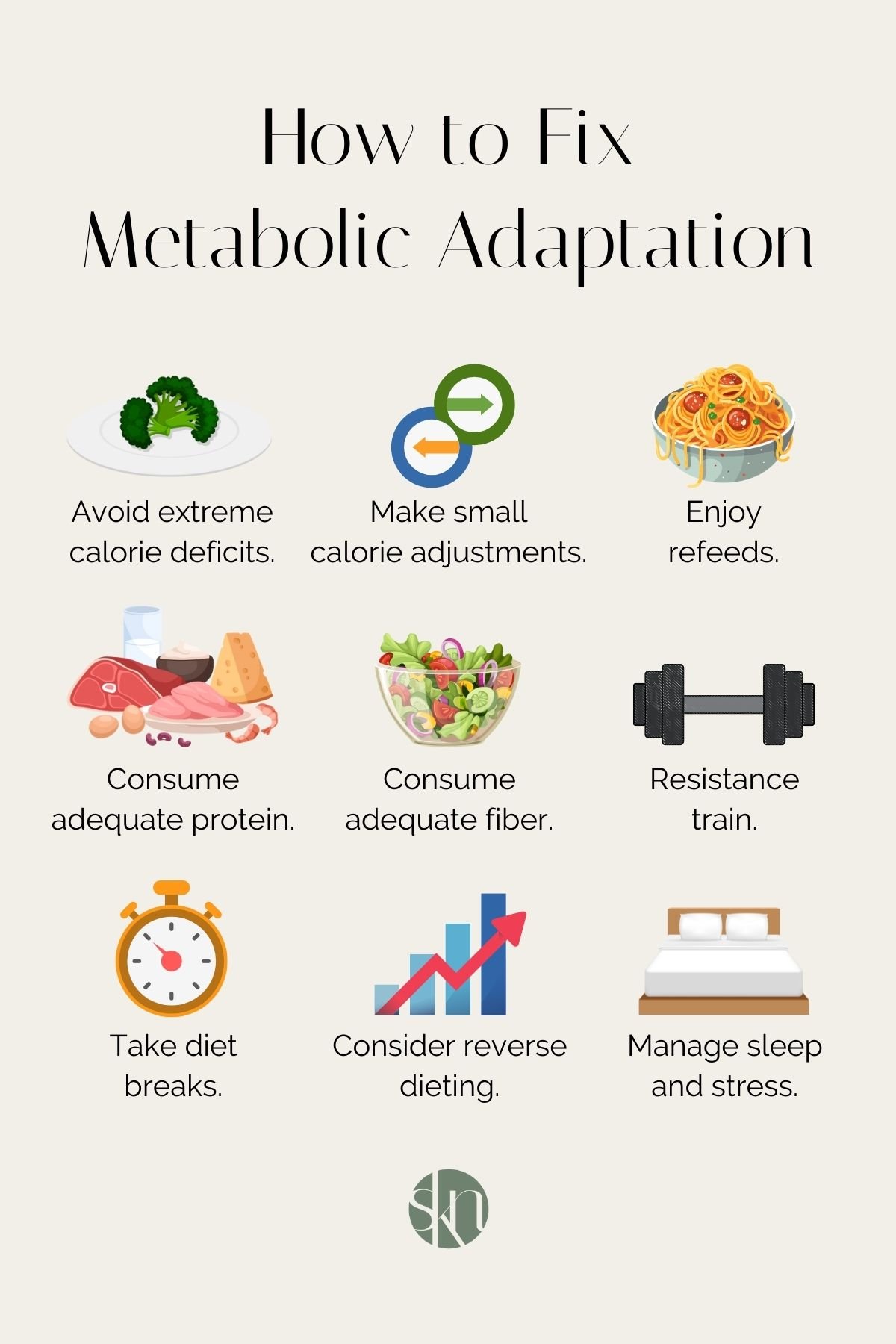
Here are the best diet and lifestyle tips to fix metabolic adaptation.
1. Avoid extreme calorie deficits.
While a calorie deficit is required for weight loss, its size can majorly impact metabolic adaptation. Although a larger calorie deficit can lead to faster weight loss, it is likely unsustainable in the long run and can cause metabolism to slow more quickly. When determining the level of calorie restriction for weight loss, it is best to start with the smallest calorie deficit possible, ideally 10-15% below maintenance calories, and only increase the deficit as needed based on results.
2. Make mall calorie adjustments.
Plateaus are a part of the weight loss process and it’s normal for weight to stall for a week or two during a weight-loss phase before trending down again. When weight loss plateaus occur, an adjustment in calorie intake, and/or calorie expenditure (i.e. exercise), is required to remain in a calorie deficit, however, these adjustments must remain small and are only used as needed. When adjusting calorie intake, it is best to opt for a decrease of no more than 5-10% of total calories at a time to avoid metabolic adaptation and leave more room for decreases when future plateaus occur.
3. Consume adequate protein.
Consuming adequate protein is vital to minimizing metabolic adaptation. Protein helps to maintain lean body mass, which includes the mass of bones, muscles, water, ligaments, tendons, and internal organs, and builds muscle mass which increases metabolic rate. Research suggests that an intake of at least 0.7 grams of protein per pound of body weight per day is deal for gaining muscle mass during weight loss. Moreover, protein has the highest thermic effect of food and is the most satiating macronutrient, which helps to maximize energy expenditure and feelings of fullness when in a calorie deficit.
4. Consume adequate fiber.
Eating a wide variety of whole foods is important to overall health and consuming adequate fiber aids digestion and gut health, which is a factor in metabolic adaptation. The current dietary guidelines recommend 14 grams of fiber per 1000 calories consumed, which works out to roughly 25 grams of fiber for an adult female and 38 grams of fiber for an adult male (15). Not only does consuming high-fiber foods contribute to a healthy gut microbiome, but it also helps to increase feelings of fullness during caloric restriction.
5. Enjoy refeeds.
Also known as “cheat days”, enjoying days with slightly higher calorie intake can help to temporarily increase metabolism and mitigate metabolic adaptation. Some studies have shown that periods of consuming more calories than normal, especially from carbohydrates, can increase TDEE by 7-8% (16, 17). While the effects on metabolism are minimal, cheat meals can also help to provide a mental break and increase adherence afterward.
6. Prioritize resistance training.
Resistance training helps to maintain muscle mass, which is vital for avoiding metabolic adaptation. Also known as strength training, helps to build muscle mass by challenging your muscles to work against a weight or force and, when paired with a high-protein intake, is the most effective way to build muscle.
7. Take diet breaks.
A “diet break” is a scheduled period during a weight loss phase where calorie intake is increased to a maintenance level. These breaks can help to mitigate metabolic adaptation by normalizing hormone levels and metabolic rate, which aid in the weight loss process long term. As a general rule, diet breaks should be taken for 1-2 weeks after 12 weeks of consistent dieting and can easily be worked into a flexible dieting approach for increased sustainability.
8. Manage stress and sleep.
Given stress can have a major impact on hormones, it has the potential to influence metabolism, namely basal metabolic rate, and, therefore, trigger metabolic adaption. While stress and sleep are often overlooked factors in weight management, research has clearly shown that stress increases cortisol levels and sleep deprivation can alter the glucose metabolism and hormones involved in regulating metabolism (18). Practicing stress management techniques and good sleep hygiene, by going to bed at the same time every night, sleeping in a dark and cool room, avoiding digital devices at least 1 hour before bed, and avoiding caffeine in the afternoon and evening, can help to fix metabolic adaptation.
9. Consider reverse dieting.
Reverse dieting is a strategic eating plan that slowly increases calorie intake from deficit to maintenance levels to increase BMR and prevent fat gain. After dieting, many people regain weight and body fat due, in part, to the metabolic adaptation that occurred during their weight loss phase. By slowly, strategically, and incrementally increasing calorie intake over a 1-2 month period to a level where you feel energized and are performing well while minimizing fat gain.

The Bottom Line
While you cannot break your metabolism, it is possible to decrease your metabolic rate through a natural survival mechanism known as metabolic adaptation. Metabolic adaptation can occur due to decreased lean body mass, decreased food intake, decreased non-activity exercise thermogenesis, increased mitochondrial efficiency, changes in hormones, and/or changes in the gut microbiome. Fortunately, metabolic adaptation can be mitigated by avoiding extreme calorie deficits, consuming adequate protein and fiber, prioritizing resistance training, and implementing refeeds, diet breaks, and reserve dieting as needed.




That was a great article. You made it easy to understand and doable. Thanks
I appreciate your kind words and I’m so happy you found it informative, Jillian! Lots more to come. 🙂
I will definitely share this information with friends.& refer back to myself.
I’m happy you found it helpful, Sherry. 🙂