

Although calories have a bad rep, they are essential to human health. Calories provide the body with the energy needed for basic functions and physical activity, as well as fuel growth and repair. Here is everything you need to know about calories so you can support your overall health and maintain a healthy weight.
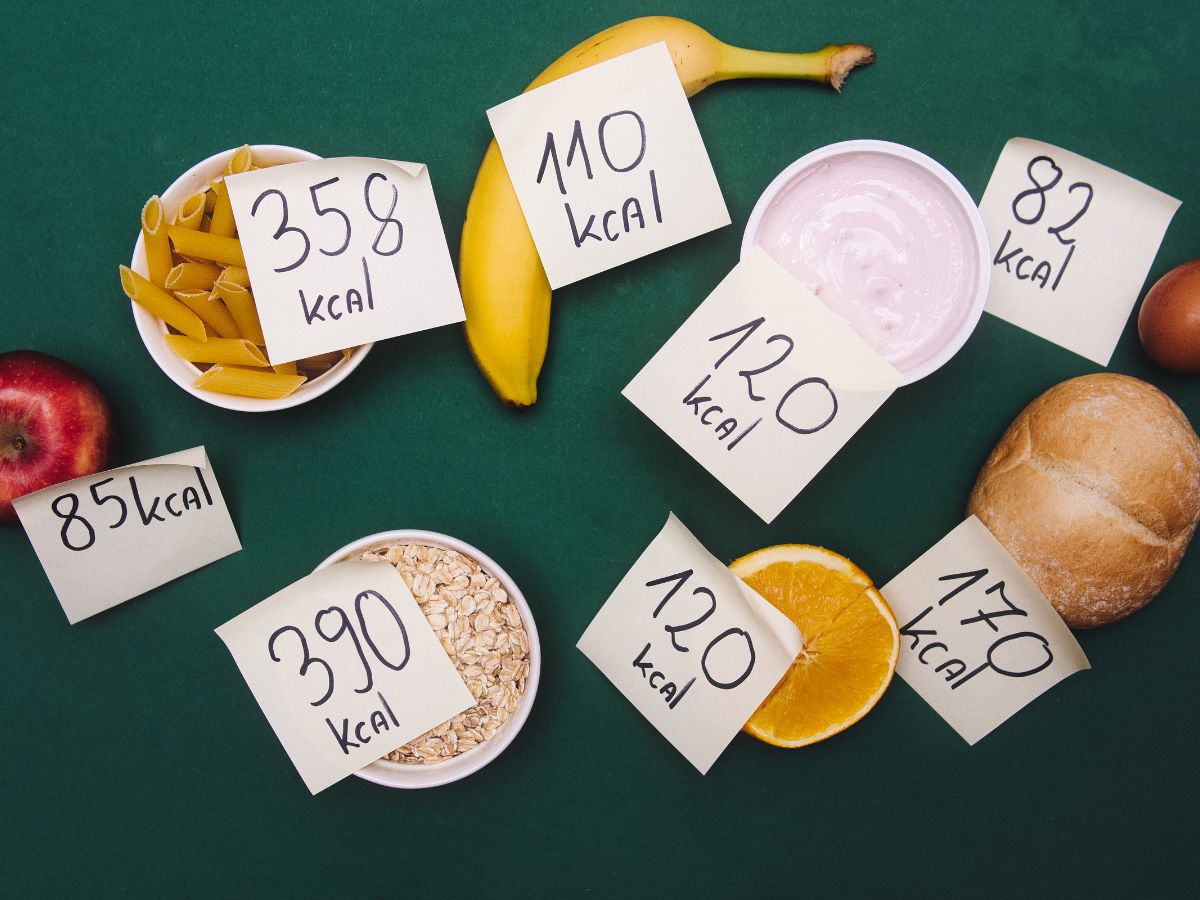
Table of contents
What are calories?
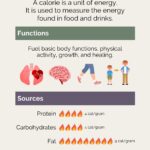
Calories are a measure of energy (1). The terms “calorie” and “energy” are often used interchangeably, but calories are a defined unit that measures the body’s use of energy (2). Specifically, a calorie is the measure of how much energy is needed to raise the temperature of 1 gram of water by 1 degree Celsius.
Calories are used to measure the amount of energy in food and drinks and are measured in kilocalories (kcal) or kilojoules (kJ), depending on the country’s measurement system. The number of calories a food or drink contains is noted on the nutrition label of food packaging and listed by serving size.
Where do calories come from?
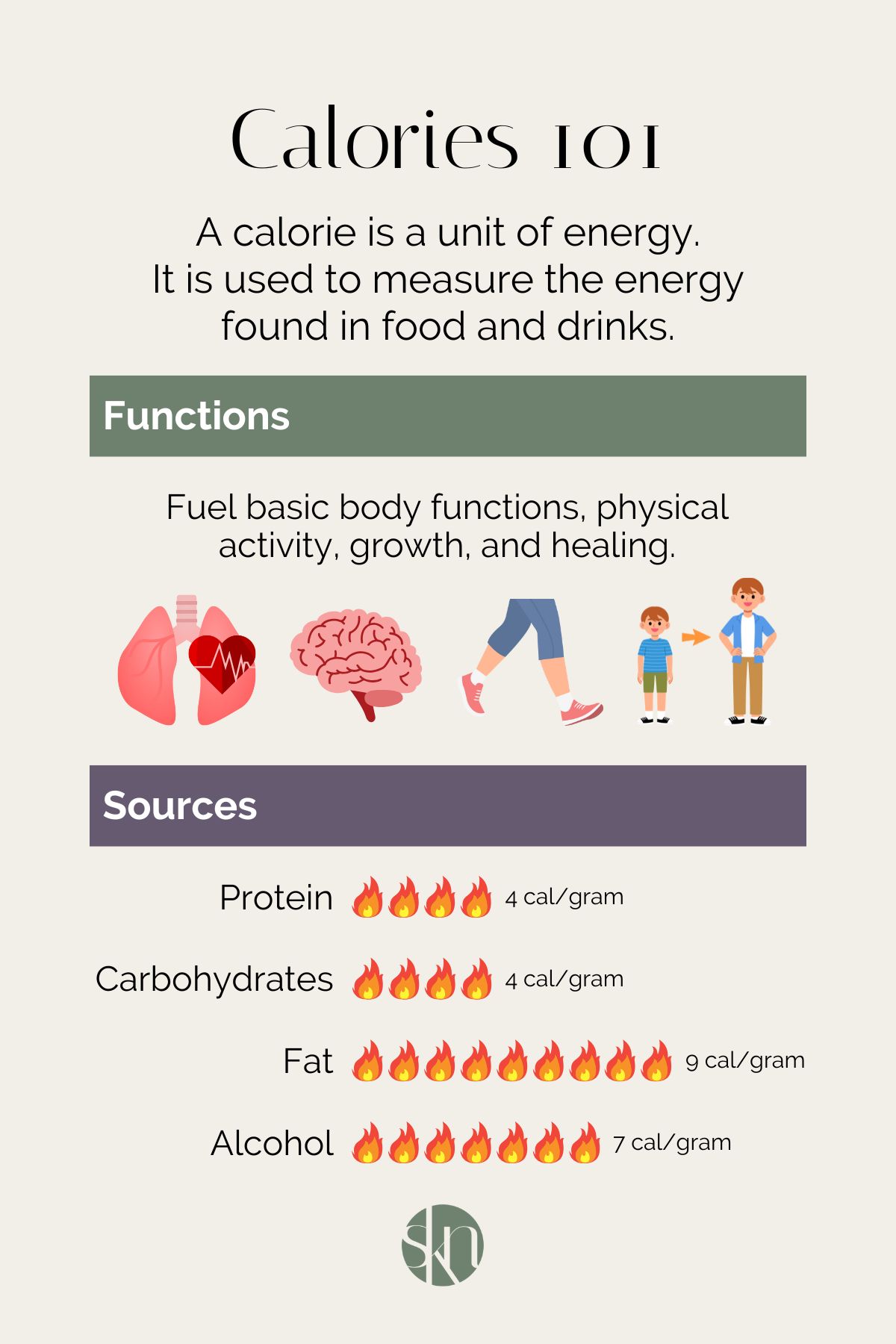
The calories (energy) in food and drinks come from macronutrients, each providing a different energy density:
- Protein provides 4 calories per gram,
- Carbohydrates provide 4 calories per gram,
- Fat provides 9 calories per gram.
Other dietary components of food and drinks, such as alcohol, which provides 7 calories per gram, nucleotides, organic acids, and sugar alcohols, also offer very small amounts of calories (2).
What do calories do?
Calories are essential to human life and health. The calories (energy) consumed from food and beverages allow the human body to perform basic functions like breathing and heart beating, and physical activities like walking, household chores, or exercise (1).
The calories your body uses during the day contribute to your metabolism: the sum of all reactions that occur throughout the body within each cell that provide the body with energy (3). Metabolism is measured in calories by TDEE (Total Daily Energy Expenditure). TDEE is the total number of calories your body burns in a day, including all activities from basic functions to intentional exercise, and is composed of (4, 5):
- Basal Metabolic Rate (BMR)
- Thermic Effect of Food (TEF)
- Exercise Activity Thermogenesis (EAT)
- Non-Exercise Activity Thermogenesis (NEAT)
How many calories do you need?
Exactly how many calories a person needs depends on a number of genetic and lifestyle factors. An individual’s optimal caloric intake is influenced by metabolism, which is influenced by age, sex, height, weight, lean body mass, and activity level, and health goals.
According to the US dietary guidelines, the average male adult requires 2,500 calories per day, while the average female adult requires 2,000 calories per day (6). Albeit these values can vary widely by individual.
To more accurately estimate ideal calorie intake, you can use an online calorie calculator to determine your daily needs and adjust based on your personal health goals. More specifically:
- Use a TDEE calculator to determine your estimated daily calorie needs.
- Adjust your daily calorie needs to support your personal health goals, for example:
- For general health, use your estimated daily calorie needs.
- For weight loss, you’ll need to eat fewer calories to create a calorie deficit.
- For weight gain, you’ll need to eat more calories to create a calorie surplus.
Are there “good” calories and “bad” calories?
While calories have no inherent moral value, some calories are more nutrient-dense than others. Calories from whole foods, such as fruits, vegetables, whole grains, legumes, nuts, seeds, eggs, dairy products, poultry, red meat, seafood, and shellfish, generally contain more micronutrients per gram than processed foods, particularly ultra-processed foods such as candy, sugar-sweetened beverages, and mass-produced packaged foods.
Whole foods are sometimes referred to as “good” calories, as these unprocessed or minimally processed foods tend to provide more nutritional benefit, given they have a high nutrient density and high nutritional value. They are sources of high-quality protein, carbohydrates, and fat, and are rich in fiber, vitamins, and minerals.
Ultra-processed foods are sometimes referred to as “bad” calories or “empty” calories, as they have a low nutrient density and little nutritional value. While these foods do provide calories from protein, carbohydrates, and fat, they often contain little to no fiber, vitamins, and minerals.
That said, “bad” calories can still be included in a healthy and balanced diet. These low-nutrient-density calories can be included in a healthy diet in moderate amounts after your daily needs for essential nutrients are met. The term “discretionary calories” represents the margin of calories remaining when recommended nutrient intakes are met through a predominance of nutrient-dense foods, or “good” calories, and should represent no more than 10-20% of calorie intake (7).
What foods have the fewest and most calories?
Interestingly, a food’s physical weight and calorie content are not directly correlated, as the calorie content of food is determined by its water content and macronutrient breakdown. Foods with the fewest calories tend to be high in water and/or fiber, while foods with the most calories tend to be high in fat.
Some of the least calorie-dense foods include lettuce, celery, cucumber, cauliflower, and bell peppers, and some of the most calorie-dense foods include oil, butter, nuts, seeds, and cheese.
Understanding calorie density is a helpful tool in weight management, as it can help to better understand portion size and volume eating to more effectively reach your health goals.
How do calories influence body weight?
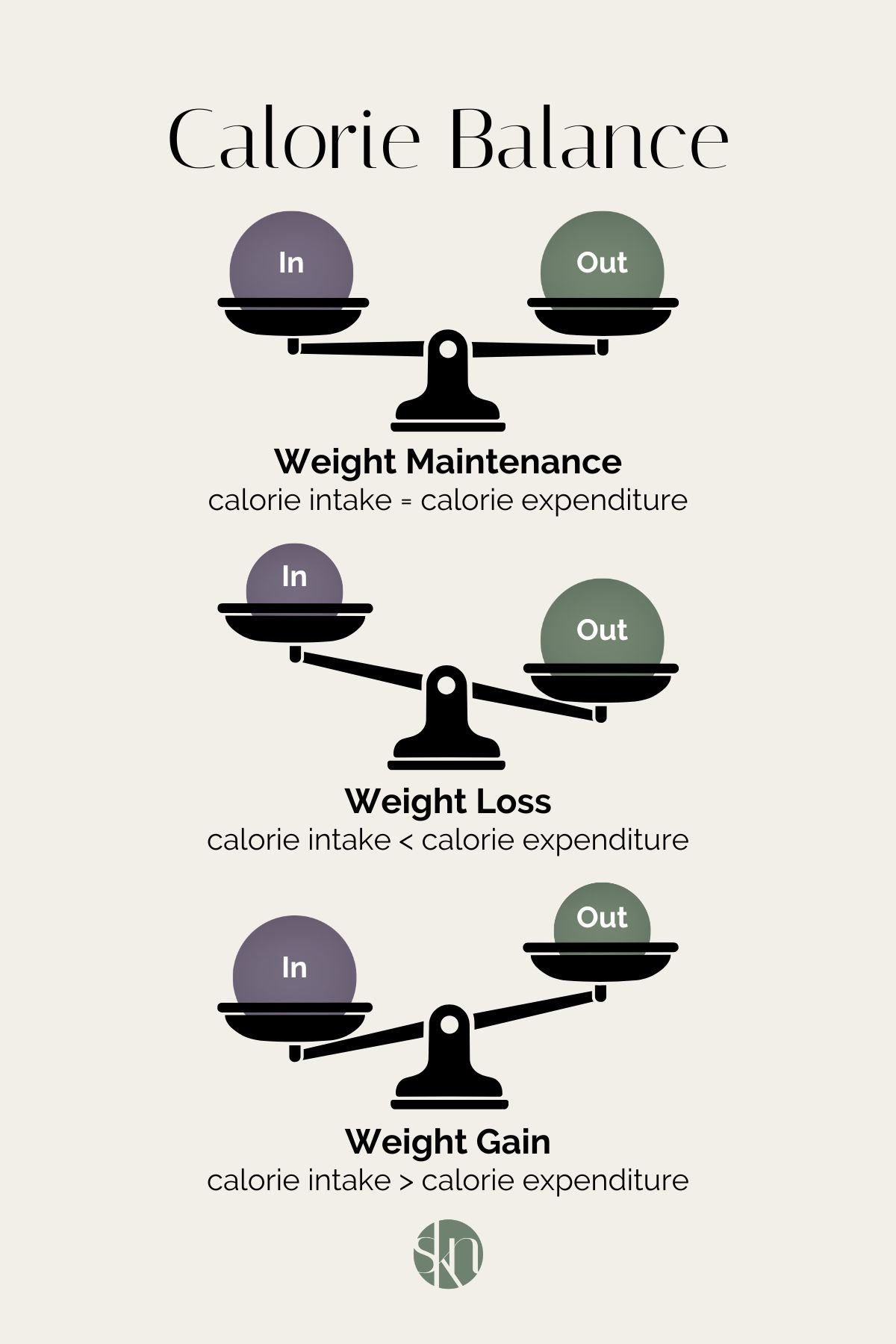
Calories influence body weight fundamentally through energy balance. Energy balance is the relationship between calories “in” via food and beverages and calories “out” via the body’s daily energy requirements.
The balance between calories in (energy intake) and calories out (energy expenditure) determines whether body weight is lost, gained, or remains the same (8). Generally speaking:
- An individual will maintain weight when energy intake = energy expenditure,
- An individual will lose weight when energy intake < energy expenditure,
- An individual will gain weight when energy intake > energy expenditure.
When more calories are consumed than required, excess energy is stored as glycogen in muscles/liver or as body fat. When fewer calories are consumed than required, stored body fat is burned as energy. Put simply, this constant balance of energy intake and energy expenditure determines body weight.
Do you need to count calories?
No, you don’t need to count calories to eat a healthy diet; however, it is an effective tool for reaching and maintaining a healthy body weight.
Counting calories can help to better understand energy intake and increase awareness and accountability around food choices, and is particularly helpful for weight loss goals. Research has repeatedly shown that any diet that restricts calories will support weight loss; however, it has also shown that people who follow diets with greater flexibility have greater long-term weight loss success (9, 10).
Macro counting is a more detailed approach to calorie counting, which tracks the total number of calories consumed per day by monitoring how many grams of each macronutrient (protein, carbohydrate, and fat) are consumed.
While both calorie and macro counting are effective weight management tools, tracking macros is more effective for body composition goals as it focuses on nutrient balance and protein intake required for muscle development (11, 12).
That being said, it’s important to note that calorie counting is not for everyone. While it can lead to healthier eating habits for some, for others, it can lead to disordered eating behaviors and/or extreme eating disorders. It is best to work with a registered dietitian to determine if calorie counting is ideal for you.

The Bottom Line
Calories are a unit used to measure energy. Calories are found in food and beverages and are largely provided by protein, carbohydrates, and fat. The average male adult requires 2,500 calories per day, while the average female adult requires 2,000 calories per day. Regardless of health goal, it is best to prioritize calories from whole, unprocessed foods and limit calories from processed foods.




Leave a Review