

Both muesli and granola are oat-based breakfast cereals, but which is the healthier choice? Here is a breakdown of the ingredients, preparation methods, and nutritional values of muesli vs. granola so you can make an informed choice.
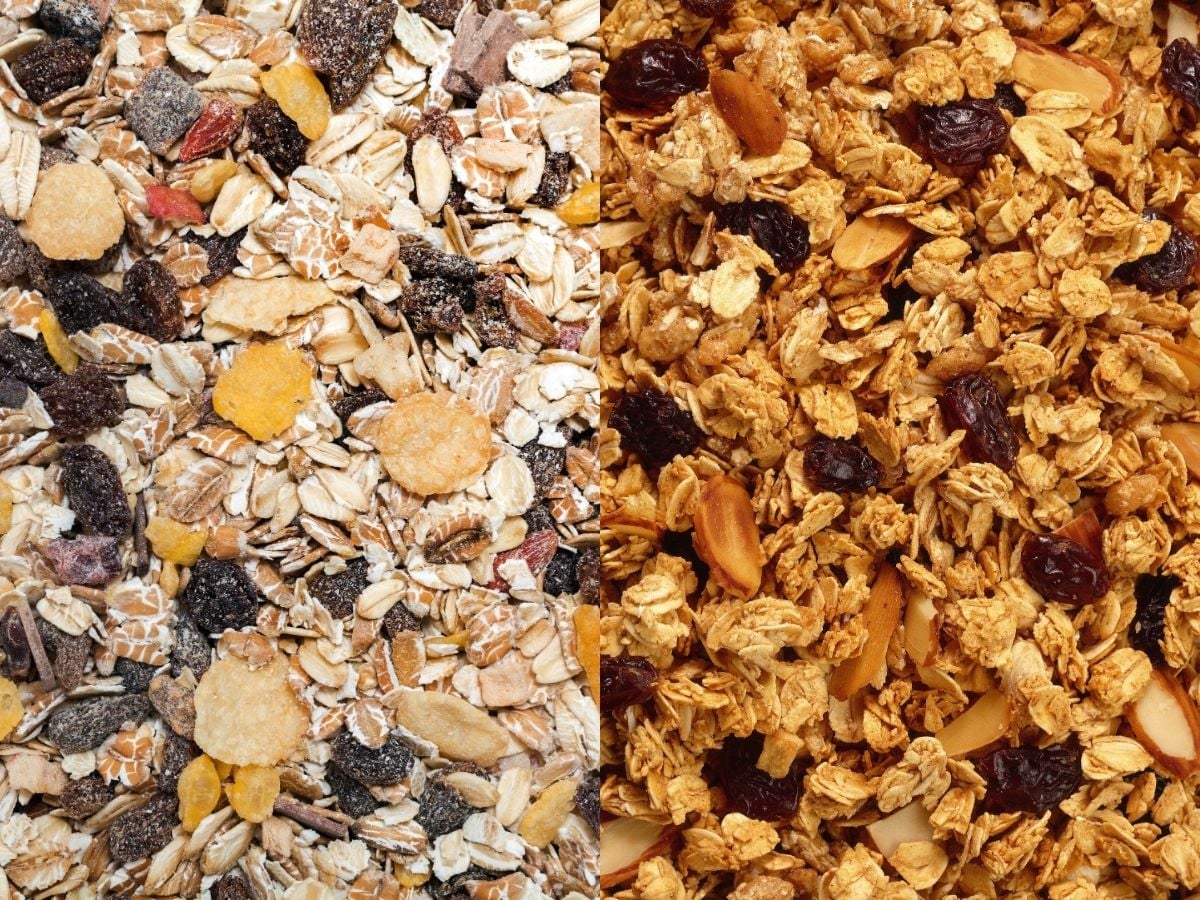
Table of contents
What’s the difference between muesli and granola?
Both muesli and granola are oat-based cereals; however, they differ in their ingredients, preparation method, and texture.
Muesli is a raw, uncooked breakfast cereal made from rolled oats, nuts, seeds, and dried fruits. It is a popular Swiss breakfast that is typically soaked in milk and/or yogurt and served cold.
There are many styles of muesli, including the popular Bircher muesli, which was invented around 1900 by Swiss doctor Maximilian Bircher-Benner (1). Bircher muesli is said to be the original overnight oats, and is made by soaking muesli with sweetened condensed milk, freshly grated apple, and lemon juice.
Granola is a toasted breakfast cereal made from rolled oats, nuts, seeds, dried fruits, sugar, and/or oil.
Granola is said to have been introduced in America in 1863 by Dr. James Caleb Jackson, with the original recipe consisting of baked graham flour (2). While the first version was not an immediate success, soon afterwards, Dr. John Harvey Kellogg made a mixture of wheat flour, oatmeal, and cornmeal. Abeit it wasn’t until the late 1960s that Layton Gentry created a modern version of granola and turned it into a mass-market item in the cereal aisle.
| Feature | Muesli | Granola |
| Ingredients | Rolled oats, nuts, seeds, and dried fruits | Rolled oats, nuts, seeds, dried fruits, sugar, and oil |
| Preparation | Raw, unbaked | Toasted, baked |
| Sweeteners | None, typically | Added sugar, honey, or maple syrup |
| Binding Agent | None | Oil, or butter |
| Texture | Crunchy, chewy, flaky | Crunchy with clusters |
Ingredients in Muesli vs. Granola
Given that both muesli and granola are recipes, their ingredients can vary widely from one version or brand to the next. While they generally contain rolled oats, nuts, seeds, and dried fruits, the exact types and additional ingredients differ, which influences their nutritional value.
For instance, some versions of muesli and granola contain high-protein nuts, such as almonds, while some contain higher-fat nuts, such as pecans. Other versions may contain high-protein seeds, such as pumpkin seeds, while some contain high-fat seeds, such as flax seeds and pumpkin seeds.
Additionally, some versions of granola are sweetened with white sugar, while others use natural sweeteners, such as honey or maple syrup. Moreover, both muesli and granola can include other grains (such as barley flakes, puffed rice, or quinoa), additional spices, dried fruits, such as raisins or dried cranberries, or even dark chocolate chips.
Here are the ingredients in the most popular muesli brands in the US (3, 4, 5):
- Bob’s Red Mill® Country Style Muesli: Whole Grain Wheat, Dates, Sunflower Seeds, Raisins (Raisins, Sunflower Oil), Whole Grain Rye, Barley, Whole Grain Oats, Whole Grain Triticale (Wheat), Almonds, Flaxseed, and Walnuts.
- Alpen® Original Muesli: Whole Grain Oats, Whole Grain Wheat, Raisins (Coated with Expeller Pressed Sunflower Oil), Brown Cane Sugar, Almonds, Hazelnuts.
- Familia® Swiss Muesli: Whole Grain Oat Flakes, Apple Flakes [Whole Grain Flour (Wheat, Rye, Barley), Sugar, Apples], Whole Grain Wheat Flakes, Raw Sugar, Raisins (Sunflower Oil), Gianduja (Sugar, Hazelnuts), Roasted Almonds.
Here are the ingredients in the most popular granola brands in the US (6, 7, 8):
- Nature Valley® Oats & Honey Crunchy Granola: Whole Grain Oats, Sugar, Canola and/or Sunflower Oil, Rice Flour, Honey, Brown Sugar Syrup, Salt, Baking Soda, Soy Lecithin, Natural Flavor.
- Nature’s Path® Dark Chocolate & Red Berries Granola: Whole Grain Rolled Oats, Cane Sugar, Sunflower and/or Soy Oil, Fair Trade Dark Chocolate Chunks (Cane Sugar, Unsweetened Chocolate, Cocoa Butter, Vanilla Extract), Dried Coconut, Fair Trade Cocoa Powder, Freeze-Dried Strawberries, Freeze-Dried Raspberries, Rice Starch, Sea Salt, Chocolate Flavor, Tocopherols.
- Purely Elizabeth® Ancient Grain Granola: Oats, Coconut Sugar, Coconut Oil, Sunflower Seeds, Puffed Amaranth, Quinoa Flakes, Chia Seeds, Cinnamon, Sea Salt.
Muesli vs. Granola: Nutrition Comparison
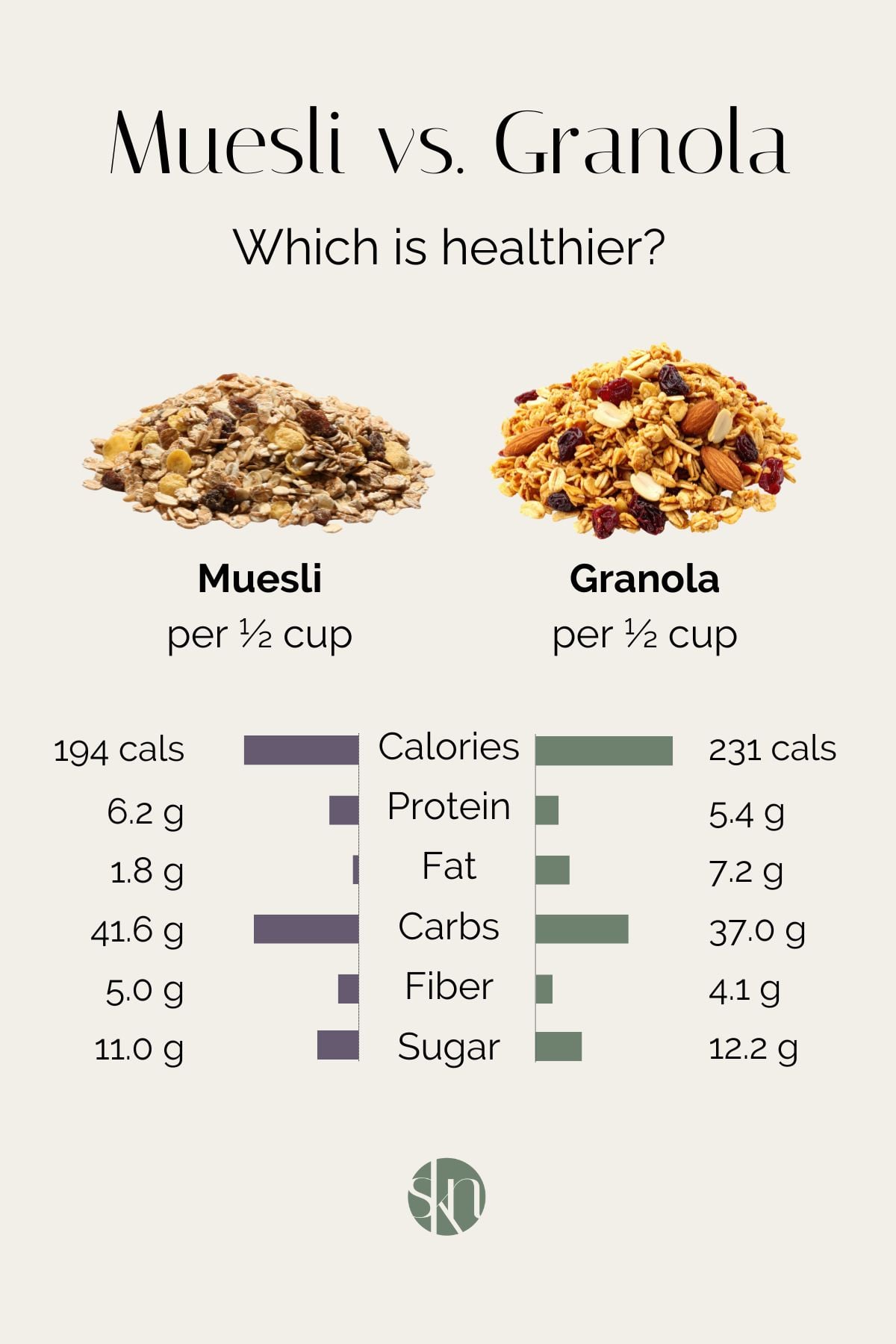
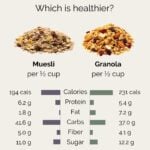
Here is a comparison of the nutritional value of a 1/2-cup (55-gram) serving of muesli and granola (9, 10).
| Nutrition per 1/2 cup | Muesli | Granola |
| Calories | 194 calories | 231 calories |
| Protein | 6.2 grams | 5.4 grams |
| Fat | 1.8 grams | 7.2 grams |
| Carbohydrates | 41.6 grams | 37.0 grams |
| Fiber | 5.0 grams | 4.1 grams |
| Sugar | 11.0 grams | 12.2 grams |
Calories
Granola typically contains more calories than muesli. A 1/2 cup serving of muesli contains 194 calories, while a 1/2 cup serving of granola contains 231 calories.
The higher calorie content of granola is due to the added sweeteners and oil required for binding and baking.
Protein
Muesli and granola contain similar amounts of protein. A 1/2 cup serving of muesli contains 6.2 grams of protein, while a 1/2 cup serving of granola contains 5.4 grams of protein.
The protein content of muesli and granola is provided by the nuts, seeds, and whole grains.
Fat
Granola typically contains more fat than muesli. A 1/2 cup serving of muesli contains 1.8 grams of fat, while a 1/2 cup serving of granola contains 7.2 grams of fat.
Both muesli and granola contain healthy fats from nuts and seeds; however, the higher fat content of granola is due to the added oil.
Carbohydrates
Muesli and granola contain similar amounts of carbohydrates. A 1/2 cup serving of muesli contains 41.6 grams of carbohydrates, while a 1/2 cup serving of granola contains 37.0 grams of carbohydrates.
The carbohydrates in muesli and granola are mostly from the whole grains and dried fruit, and added sweeteners in the case of granola.
Fiber
Muesli typically contains slightly more dietary fiber than granola. A 1/2 cup serving of muesli contains 5.0 grams of fiber, while a 1/2 cup serving of granola contains 4.1 grams of fiber.
The higher fiber content of muesli is generally due to the fact that it is a mixture of unprocessed whole ingredients.
Sugar
Granola typically contains more sugar than muesli. A 1/2 cup serving of muesli contains 11.0 grams of fat, while a 1/2 cup serving of granola contains 12.2 grams of fat.
While both granola and muesli typically contain dried fruits, which naturally contain sugar, the high sugar content of granola is largely due to the added sugar from sweeteners.
Other Factors to Consider
Here are some other factors to consider in the muesli vs. granola debate.
Allergies
Neither muesli nor granola is inherently gluten-free. While oats are a gluten-free grain, they are prone to cross-contamination during production, and some versions contain gluten-containing grains (11). For individuals with celiac disease or gluten intolerance, it is best to opt for certified gluten-free muesli and granola.
Digestion
Both granola and muesli are good sources of fiber, which supports digestive health; however, because muesli is uncooked, the raw oats, which contain antinutrients, can be difficult for some individuals to digest if unsoaked (12). Given that some forms of granola are more processed foods than others, the added sugars can make digestion uncomfortable for some individuals.
Serving
Unlike muesli, which is made of uncooked oats, granola is ready to eat and can easily be eaten on its own for breakfast or as a simple snack. On the contrary, muesli is rarely eaten raw; rather, it is typically soaked overnight and served cold.
So, which one is healthier?
While muesli is generally healthier than granola, as it’s typically minimally processed, lower in calories, lower in sugar, and higher in fiber, both are healthy choices and can be included in a healthy diet.
Both granola and muesli can be served with a source of protein, such as milk, yogurt, Greek yogurt, or skyr, and fresh fruits to create a balanced meal to start the day. And low sugar options of both are available if preferred, and are particularly helpful for individuals counting calories or macros for weight loss goals.
You can also make your own muesli, granola, or granola bars, with these quick, easy, and healthy recipes:

The Bottom Line
Muesli and granola are both oat-based cereals; however, muesli is generally a healthier choice given it’s lower in calories, lower in sugar, and higher and fiber. Nevertheless, both granola and muesli can included in a healthy and balanced diet regardless of health goals.

Thanks Stephanie for the great review. I eat granola regularly so I’ll check the ingredients again to make sure they are the best for what I can find. I like that the muesli is healthier but I don’t like the idea of soaking so I’ll continue on with my granola. What I will have to watch is quantity. I don’t measure 1/2 cup so I’ll start doing that. You are a wealth of information and I always check out your great recipes.
I’m happy you found the information insightful, Betty!