

Whether you’re trying to manage your blood sugar, lose weight, or simply eat a little healthier, added sugars can be a problem. Here is a list of foods with hidden sugar you can start looking out for today.
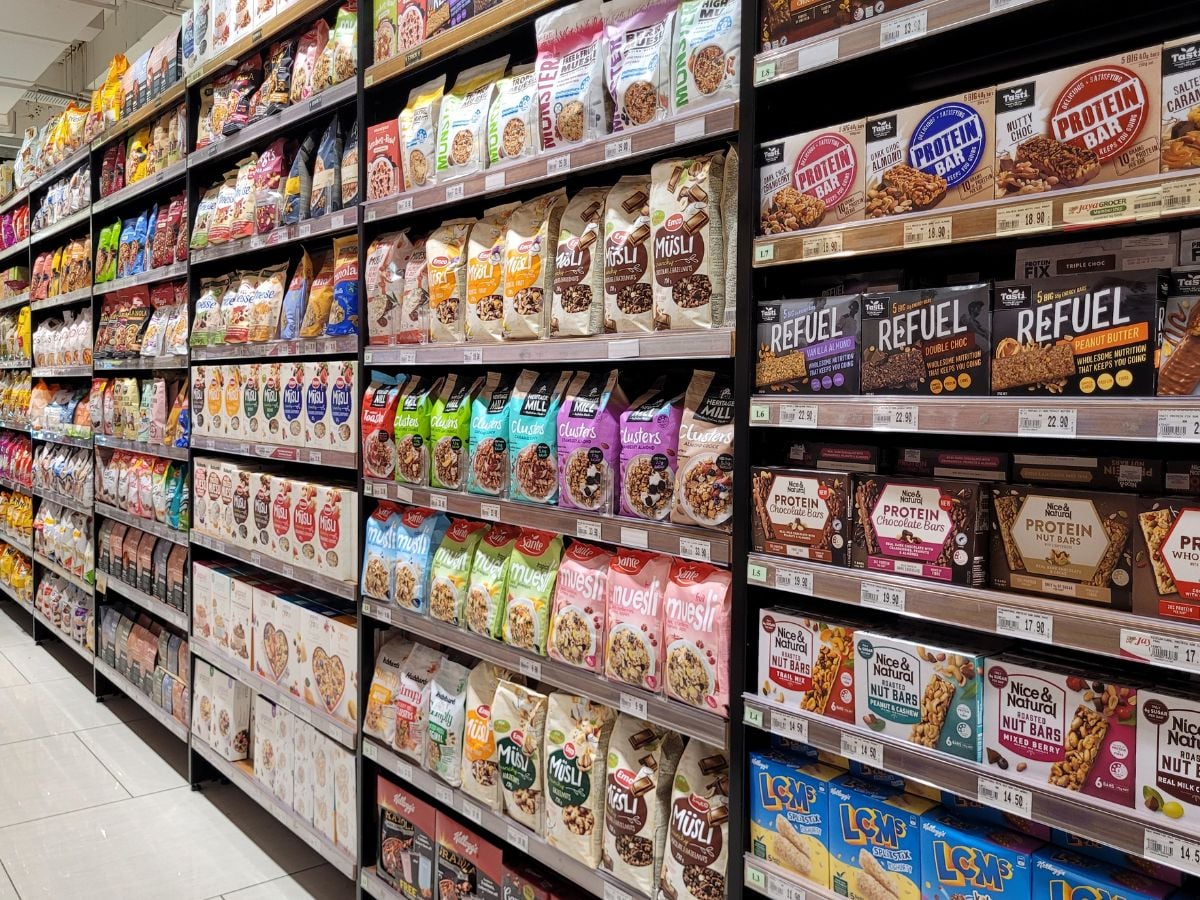
Table of contents
- What are hidden sugars?
- How do you identify hidden sugars?
- List of Foods with Hidden Sugar
- 1. Flavored Yogurt
- 2. Salad Dressing
- 3. Instant Oatmeal
- 4. Granola
- 5. Sauces
- 6. Protein Bars
- 7. Canned Fruit
- 8. Fruit Juice
- 9. Non-Dairy Milks
- 10. Nut Butters
- 11. Canned Soups
- 12. Bread
- 13. Sports Drinks
- 14. Coffee Creamers
- 15. Dried Fruits
- Tips for Reducing Hidden Sugar Intake
What are hidden sugars?
Let’s set the record straight: no sugars are truly hidden in foods. That said, the term “hidden sugar” is commonly used to refer to added sugars in processed foods that you may not expect to be present.
While it’s obvious sugar is used in cakes, cookies, baked goods, and sodas, food producers often add sugars to foods that are marketed as “healthy”, where you might least expect them.
How do you identify hidden sugars?
The best way to determine if a food product contains hidden sugar is to read the Nutrition Facts and Ingredients list on the label.
The Nutrition Facts label will tell you how much Total Sugar and Added Sugar the item contains. Total Sugars accounts for the natural sugars and added sugars, while Added Sugars accounts for the sugars added during processing (i.e., hidden sugars). For example, if a food contains 15 grams of Total Sugars and 10 grams of Added Sugars per serving, 5 grams of sugar are naturally occurring sugars.
The ingredient list includes the type(s) of sugar that have been added during processing. The ingredients on a nutrition label are listed in descending order by weight. If any form of sugar appears in the first three ingredients, the product is likely high in sugar.
Note, hidden sugars come under many names. While “sugar” is the most obvious name, there are many code words for sugar, including high-fructose corn syrup, rice syrup, table sugar, beet sugar, raw sugar, cane sugar, brown sugar, caramel, and words ending in -use (e.g., glucose, fructose, etc.).
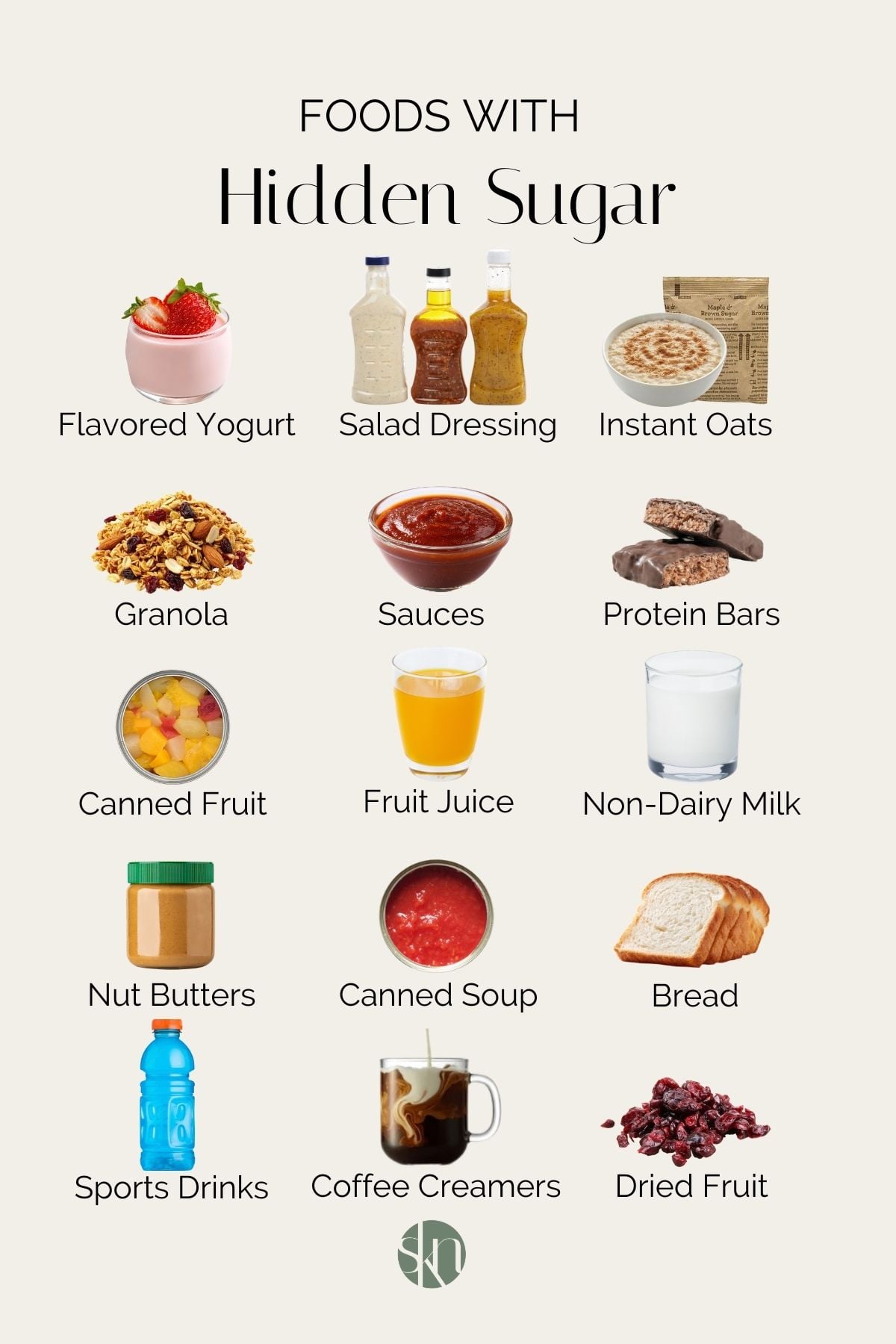
List of Foods with Hidden Sugar
Here is a list of popular healthy foods that contain unexpected hidden added sugars.
1. Flavored Yogurt
Flavored yogurt is one of the most common sources of hidden sugars. While yogurt is a healthy food, full of protein and probiotics, flavored versions often contain copious amounts of added sugars. Yogurt has a natural tart flavor, so food manufacturers often add sweeteners to make it more palatable. A 3/4-cup (150-gram) serving of Dannon® Strawberry Fruit on the Bottom Yogurt contains 12 grams of added sugars (1).
2. Salad Dressing
Salad dressings are another surprising source of added sugars. Food manufacturers often add sugar to “Light” and “Low-Fat” salad dressings in an effort to enhance flavor. Ranch, Catalina, Thousand Island, French, and Sweet Chili salad dressings are some of the worst offenders. A 2-tablespoon (33-gram) serving of Kraft® Catalina Dressing contains 8 grams of added sugars (2).
3. Instant Oatmeal
Oatmeal is a great way to start the day, but instant oatmeal, specifically flavored versions, is a source of hidden sugars. While plain varieties are a good source of complex carbohydrates and fiber, flavored versions can quickly increase your added sugar intake. A 1-container (75-gram) serving of Modern Oats® Goji Blueberry Premium Oatmeal contains 16 grams of added sugars (3).
4. Granola
While it may be obvious that chocolate chip-studded granola contains hidden sugars, even some of the versions marketed as healthier do. In fact, some muesli and granola brands, as well as granola bars, contain as much added sugar as traditional sugar-loaded breakfast cereals. A 1/2-cup (53-gram) serving of Honey Bunches of Oats® Honey Roasted Granola contains 12 grams of added sugars (4).
5. Sauces
Hidden sugars are also added to foods we don’t consider to be sweet, including pasta sauce. They are also added to sauces and condiments to add a hint of sweet flavor to counteract acidity, such as barbecue sauce, ketchup, hoisin sauce, and teriyaki sauce. A 1/2-cup (120mL) serving of Prego® Traditional Italian Sauce contains 4 grams of added sugars (5).
6. Protein Bars
Protein bars are another source of hidden sugars. Some of the most popular brands of protein bars contain as much sugar as a chocolate bar, with moderate amounts of protein. The best protein bars are made from quality ingredients, contain at least 10 grams of protein (although ideally closer to 20 grams), and have no more than 10 grams of sugar per bar. A 1-bar (100-gram) serving of Met-Rx® Big 100 Super Cookie Crunch protein bar contains 24 grams of added sugars (6).
7. Canned Fruit
While fresh fruits are a source of naturally occurring sugars, canned fruit is often packed in a sugar-loaded liquid, which not only adds sweetness but also helps maintain texture and color. The syrup used in fruit canning can vary from light (10-20% sugar) to heavy (40-50% sugar), depending on the type of fruit and brand (7). A 1/2-cup (128-gram) serving of Del Monte® Fruit Cocktail contains 14 grams of added sugars (8).
8. Fruit Juice
Pure fruit juices are a great way to hydrate and consume more micronutrients; however, some fruit juices contain as much added sugar as soft drinks. This is particularly an issue with fruit “drinks”, “cocktails”, and “nectars”, which, unlike 100% fruit juices, often contain sweeteners and additional ingredients. A 1-cup (240mL) serving of Welch’s® Orange Pineapple Apple juice contains 19 grams of added sugars (9).
9. Non-Dairy Milks
Although often thought of as health foods, non-dairy milk alternatives such as almond milk and oat milk contain a lot of hidden sugar. Even some “plain” and “original” varieties use sugar to make them more palatable, given that a combination of oats and water is not particularly tasty. A 1-cup (240mL) serving of Good & Gather® Original Oat Milk contains 12 grams of added sugars (10).
10. Nut Butters
Many commercial varieties of nut butter use added sugars to enhance the flavor and texture. Although natural nut butters are simply made of nuts, and sometimes salt, conventional peanut butter and almond butter spreads contain hidden sugars. A 2-tablespoon (34-gram) serving of Peter Pan® Creamy Honey Roast Peanut Spread contains 7 grams of added sugars (11).
11. Canned Soups
Shockingly, canned soups are a frequent source of hidden sugars. While homemade soup recipes rarely call for adding sugar, pre-made varieties sometimes use sugar to balance acidity and extend shelf life. High fructose corn syrup and glucose are the most commonly used hidden sugars in canned soups. A 1/2-cup (120mL) serving of Campbell’s® Condensed Tomato Soup contains 8 grams of added sugars (12).
12. Bread
While traditional bread only requires flour, water, salt, and yeast, many food manufacturers add sugar to commercial breads. Even whole-wheat, whole-grain, and multi-grain varieties marketed as “healthy” can contain hidden sugars. It’s for this reason that sourdough is considered the healthiest bread, as it’s only made with flour, water, and salt. A 2-slice (57-gram) serving of Wonder Bread® Classic White contains 5 grams of added sugar (13).
13. Sports Drinks
Sports drinks contain added sugar for a reason: to provide an easily digested and fast-acting fuel source to enhance athletic performance and recovery. However, if consumed outside of these situations, sports drinks and energy drinks contain an excessive amount of added sugar, particularly for sedentary individuals. A 1-bottle (597mL) serving of Gatorade® Lemon Lime Sports Drink contains 34 grams of added sugar (14).
14. Coffee Creamers
Coffee creamers are one of the most significant sources of hidden sugars. Often sweetened with corn syrup or dextrose, these cream-like liquids are packed full of sugar. Not to mention, their serving size is small, so they add up quickly, especially if you drink multiple coffees per day. A 1-tablespoon (15mL) serving of Coffee Mate® French Vanilla Liquid Creamer contains 5 grams of added sugar (15).
15. Dried Fruits
Although you would think dried fruit is just that – dried, fruit – some versions contain hidden added sugars. Some brands use syrups or fruit juice concentrate to enhance flavor and improve texture. That said, it’s easy to find 100% naturally dried fruit without added sugar at most major grocery stores. A 1/4-cup (40-gram) serving of Ocean Spray® Craisins Original Dried Cranberries contains 26 grams of added sugar (16).
Tips for Reducing Hidden Sugar Intake
To be clear, added sugars are safe to consume in a healthy diet and don’t need to be avoided altogether; however, excess sugar intake can pose a problem to overall health. Exactly how much added sugar a person should consume per day varies by person, as the Dietary Guidelines for Americans recommends that added sugars should make up no more than 10% of total calorie intake, and ideally no more than 5% (17).
While there are many ways to eat less sugar, some simple tips to help reduce your intake of hidden added sugars include:
- Check the Nutrition Facts label for “Added Sugars”.
- Read the Ingredients list for code words for sugar.
- Reach for “Low-Sugar” or “No Added Sugar” options.
- Limit processed foods and prioritize whole foods: fruits, vegetables, whole grains, legumes, nuts, seeds, eggs, dairy products, poultry, red meat, seafood, and shellfish.

The Bottom Line
The term “hidden sugar” is used to describe added sugar in processed foods that are often marketed as healthy. The most common foods with hidden sugars include flavored yogurt, salad dressing, instant oatmeal, granola, sauces, protein bars, canned fruit, fruit juice, non-dairy milks, nut butters, canned soups, bread, sports drinks, coffee creamers, and dried fruits. The best way to determine if a food contains added sugar is to read food labels, specifically the nutrition facts and ingredients.


Leave a Review