

If you’re confused as to whether fresh or frozen produce is healthier, you’re not alone. This is a popular debate in the health community; however, the nutritional differences are not as stark as you may think. Here is everything you need to know about fresh vs. frozen fruits and vegetables.
Table of contents
- What’s the difference between fresh and frozen fruits and vegetables?
- The Science of Freezing Foods
- Factors that Affect the Nutritional Value of Fruits and Vegetables
- Fresh vs. Frozen Blueberries
- Fresh vs. Frozen Broccoli
- Pros + Cons of Frozen Produce
- So, are fresh or frozen fruits and vegetables healthier?
What’s the difference between fresh and frozen fruits and vegetables?
Fresh fruits and vegetables have been picked or produced recently and have not been processed through freezing, canning, or preserving, nor have they spoiled in any way, while frozen fruits and vegetables have been processed by reducing their temperature to below freezing.
Fresh fruit and vegetables come to be “fresh” in two ways: vine-ripened or postharvest-ripened (1). While smaller farms may allow their produce to grow to peak ripeness (i.e. vine-ripened) to be sold at farm stands or farmers’ markets, larger farms may pick their produce before fully ripe and allow it to ripen fully during transport to grocery stores.
Frozen fruits and vegetables are considered forms of minimally processed food. While this is often considered a bad thing, the freezing process is simply a form of food preservation that helps to extend shelf life and, in many cases, preserve the nutritional value of the food.
In general, frozen fruits and vegetables are typically vine-ripened, picked at peak freshness, undergo minimal processing, and immediately frozen.
The Science of Freezing Foods
Freezing is a simple and low-cost method of preserving food. Like other methods of food preservation, such as drying, pickling, and fermenting, freezing food increases access to seasonal produce; however, unlike other methods, it can be done without the addition of sugar, salt, or bacteria.
Once harvested, fresh fruits and vegetables continue to undergo chemical changes that can cause spoilage and deterioration of the produce and its micronutrients. Fresh produce contains enzymes that cause color, flavor, and nutritional value to change over time, however, they can be inactivated through freezing and other processing to ensure they have a much longer shelf life.
For instance, blanching vegetables before freezing can help deactivate enzymes and destroy microorganisms on their surface, which can lead to spoilage and possible foodborne illness, while soaking fruit in diluted vinegar solutions or adding ascorbic acid (vitamin C) can prevent browning (2, 3). Moreover, keeping frozen fruits and vegetables in airtight containers can help to reduce air exposure and prevent them from developing rancid oxidative flavors and freezer burn.
Although blanching can leach out minerals and break down some vitamins, namely water-soluble vitamin C and B vitamins, studies have shown that postharvest-ripened produce and blanched frozen produce have a very similar nutrient value (4).
Factors that Affect the Nutritional Value of Fruits and Vegetables
The vitamin and mineral content of fruits and vegetables is not static. Rather, it depends on a multitude of factors, including:
- Genetic makeup of the crop species
- Climatic circumstances
- Soil quality and microbe diversity
- Ripeness of the plant at harvesting
- Level of processing and freezing method
- Cooking and preparation method
While preservation methods are a major concern of the nutritional value of fruits and vegetables, much of it depends on the soil quality in which they are grown. Soil micronutrients are important for plant growth, as plants require a proper balance of all the essential nutrients for normal growth and optimum yield (5, 6).
Therefore, not only can the nutrient value of fruits and vegetables vary between fresh and frozen versions, but it can vary significantly between fresh versions and frozen versions themselves. While you might expect vine-ripened produce to be more nutritious, and it often is, some plants can synthesize macronutrients and micronutrients during postharvest ripening (7). Several studies have shown that postharvest-ripened produce is nutritionally equivalent to vine-ripened produce in many cases (1).
In addition to fresh and frozen, canned fruits and vegetables are typically vine-ripened but undergo more processing than frozen produce. Not only is blanching common for canned vegetables, but canned fruits contain added sugar in the form of syrup, salt, and sometimes other additives.
Fresh vs. Frozen Blueberries
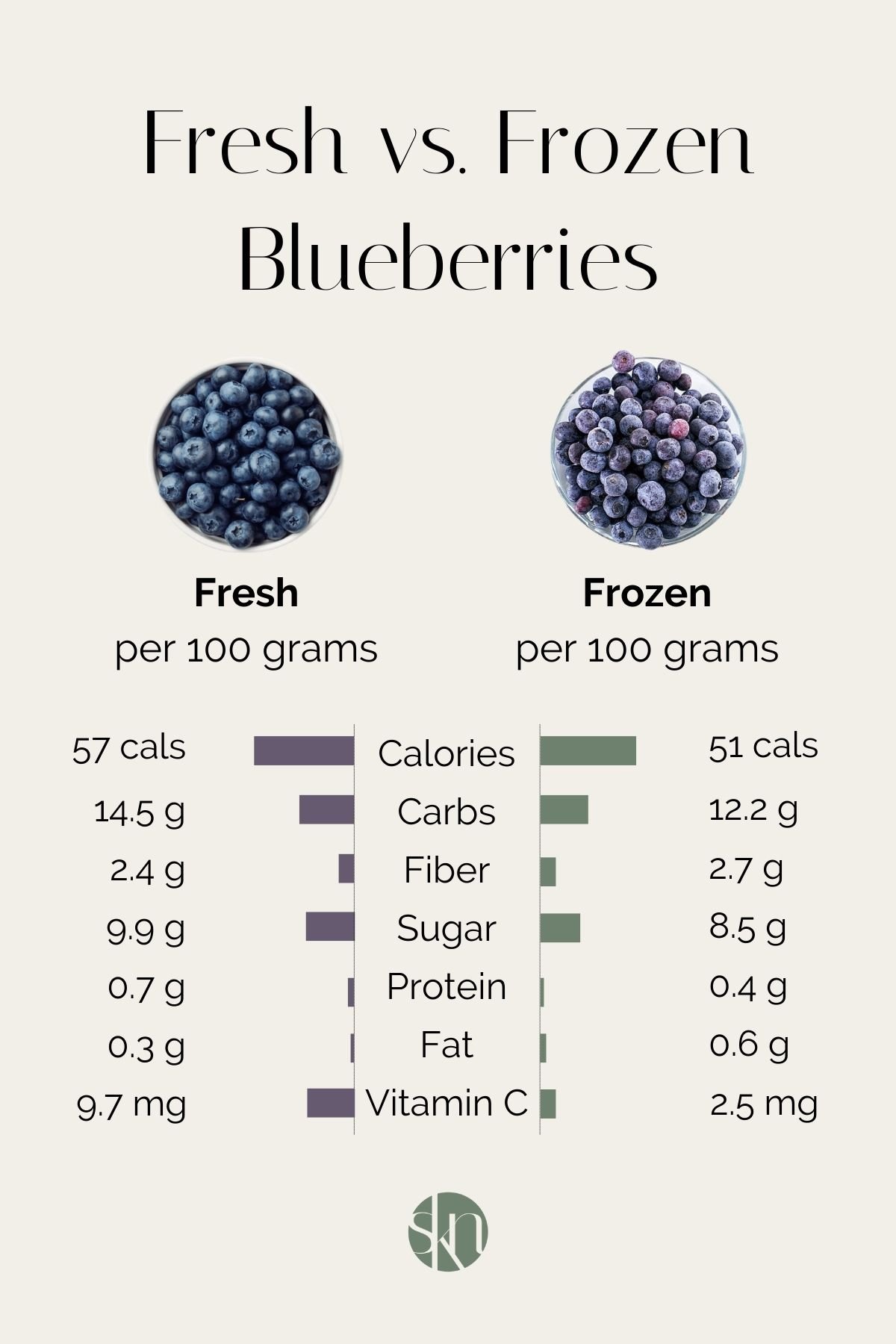
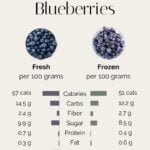
Here is a nutrition comparison of fresh vs. frozen blueberries (8, 9).
| Nutrition per 100 grams | Fresh Blueberries | Frozen Blueberries |
| Calories | 57 calories | 51 calories |
| Carbohydrates | 14.5 grams | 12.2 grams |
| Fiber | 2.4 grams | 2.7 grams |
| Sugar | 9.9 grams | 8.5 grams |
| Protein | 0.7 grams | 0.4 grams |
| Fat | 0.3 grams | 0.6 grams |
| Vitamin C | 9.7 mg | 2.5 mg |
Calories
Fresh blueberries contain slightly more calories than frozen blueberries; however, the difference is minimal. A 100-gram serving of fresh blueberries contains 57 calories, while a 100-gram serving of frozen blueberries contains 51 calories.
Carbohydrates
Fresh blueberries contain slightly more carbohydrates than frozen blueberries. A 100-gram serving of fresh blueberries contains 14.5 grams of carbohydrates, while a 100-gram serving of frozen blueberries contains 12.2 grams of carbohydrates.
Sugar
Fresh and frozen blueberries contain almost the same amount of sugar. A 100-gram serving of fresh blueberries contains 9.96 grams of sugar, while a 100-gram serving of frozen blueberries contains 8.45 grams of sugar.
Fiber
Fresh and frozen blueberries contain almost the same amount of fiber. A 100-gram serving of fresh blueberries contains 2.4 grams of fiber, while a 100-gram serving of frozen blueberries contains 2.7 grams of fiber.
Protein
Fresh blueberries contain slightly more protein than frozen blueberries, however, neither is a significant source of protein. A 100-gram serving of fresh blueberries contains 0.74 grams of protein, while a 100-gram serving of frozen blueberries contains 0.42 grams of protein.
Fat
Frozen blueberries contain slightly more fat than fresh blueberries, however, neither is a significant source of fat. A 100-gram serving of fresh blueberries contains 0.33 grams of fat, while a 100-gram serving of frozen blueberries contains 0.64 grams of fat.
Vitamins + Minerals
Fresh and frozen berries contain similar levels of vitamin A, vitamin E, manganese, copper, and folate; however, fresh berries contain more vitamin C than frozen berries. A 100-gram serving of fresh blueberries contains 9.7 mg of vitamin C, while a 100-gram serving of frozen blueberries contains 2.5 mg of vitamin C.
Fresh vs. Frozen Broccoli
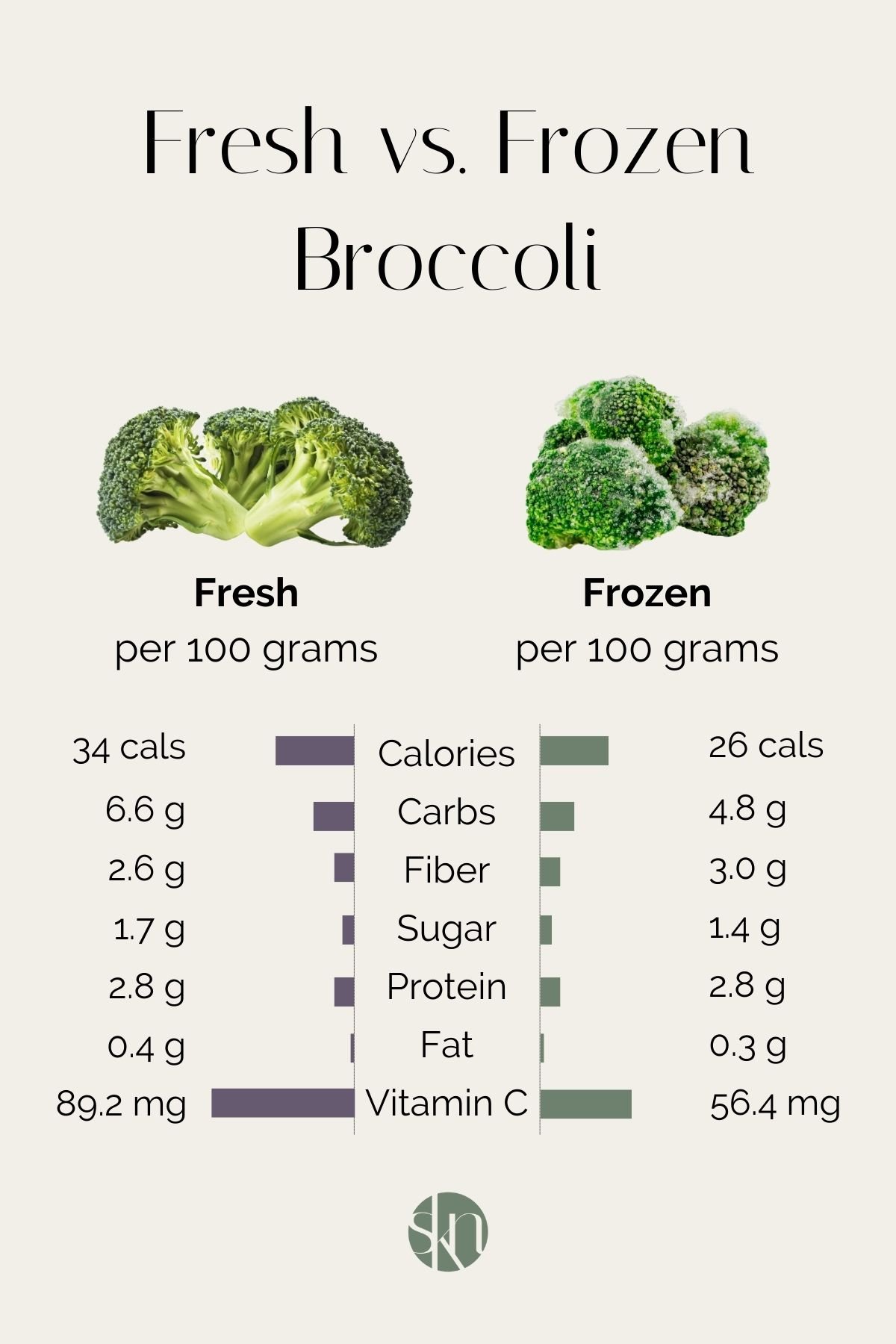
Here is a nutrition comparison of fresh vs. frozen broccoli (10, 11).
| Nutrition per 100 grams | Fresh Broccoli | Frozen Broccoli |
| Calories | 34 calories | 26 claories |
| Carbohydrates | 6.6 grams | 4.8 grams |
| Fiber | 2.6 grams | 3.0 grams |
| Sugar | 1.7 grams | 1.4 grams |
| Protein | 2.8 grams | 2.8 grams |
| Fat | 0.4 grams | 0.3 grams |
| Vitamin C | 89.2 mg | 56.4 mg |
Calories
Fresh broccoli contains slightly more calories than frozen broccoli, however, the difference is minimal. A 100-gram serving of fresh broccoli contains 34 calories, while a 100-gram serving of frozen broccoli contains 26 calories.
Carbohydrates
Fresh broccoli contains slightly more carbohydrates than frozen broccoli. A 100-gram serving of fresh broccoli contains 6.64 grams of carbohydrates, while a 100-gram serving of frozen broccoli contains 4.78 grams of carbohydrates
Sugar
Fresh and frozen broccoli contain almost the same amount of sugar. A 100-gram serving of fresh broccoli contains 1.7 grams of sugar, while a 100-gram serving of frozen broccoli contains 1.35 grams of sugar.
Fiber
Fresh and frozen broccoli contain almost the same amount of fiber. A 100-gram serving of fresh broccoli contains 2.6 grams of sugar, while a 100-gram serving of frozen broccoli contains 3.0 grams of sugar.
Protein
Fresh and frozen broccoli contain the same amount of protein; neither are a significant source of protein. A 100-gram serving of fresh broccoli contains 2.82 grams of protein, while a 100-gram serving of frozen broccoli contains 2.81 grams of protein.
Fat
Fresh broccoli contains slightly more fat than frozen broccoli; neither are a significant source of fat. A 100-gram serving of fresh broccoli contains 0.4 grams of fat, while a 100-gram serving of frozen broccoli contains 0.3 grams of fat.
Vitamins + Minerals
Fresh and frozen vegetables contain similar levels of vitamin A, vitamin E, manganese, copper, and folate; however, fresh veggies contain more vitamin C than frozen veggies. A 100-gram serving of fresh broccoli contains 89.2 mg of vitamin C, while a 100-gram serving of frozen broccoli contains 56.4 mg of vitamin C.
Pros + Cons of Frozen Produce
If you’re confused as to whether or not you should buy frozen produce, here is a list of the benefits and drawbacks of frozen fruits and vegetables versus fresh varieties:
Benefits of frozen fruits and vegetables:
- Longer shelf life
- Less food waste
- Less expensive
- Very convenient
- Reduced risk of food poisoning
- Good source of nutrients and fiber
Drawbacks of frozen fruits and vegetables:
- May contain less vitamin C
- May contain added salt or seasonings
- Reduced flavor
- Reduced texture
So, are fresh or frozen fruits and vegetables healthier?
Frozen fruits and vegetables are just as healthy as fresh and provide numerous health benefits. Freezing is merely a method of food preservation, and freezing fruits and vegetables helps to extend their shelf life and reduce food waste. While some vitamins and minerals may be reduced in the freezing process, namely vitamin C, fresh and frozen produce contain similar calories, carbohydrates, fiber, sugar, and micronutrients. Overall, the cooking method has a much greater effect on the nutritional content and bioavailability of fruits and vegetables (12).
When buying frozen fruits and vegetables, be sure to read the label and review the ingredients list to ensure you are choosing options without additives and preservatives.

The Bottom Line
The micronutrient content of fresh and frozen produce depends on the soil in which it was grown, the ripeness of the plant at harvesting, the level of processing, the freezing method, and the preparation method. The nutritional difference between fresh and frozen fruits is so minimal that they are unlikely to affect your health substantially. So, instead of stressing over whether fresh or frozen fruits and vegetables are better, simply focus on adding more to your diet.




Excellent review of fresh vs frozen. I agree 100%- just concentrate on eating fruits and vegetables, whichever way is easiest for you. Frozen with a tiny bit less is still 100% more than not eating vegetables at all!
Exactly! Thanks for sharing, Margo. 🙂