

Vitamin E is a powerful antioxidant that protects for cell damage and supports immune function. Here is a list of foods high in vitamin E you can add to your diet today.
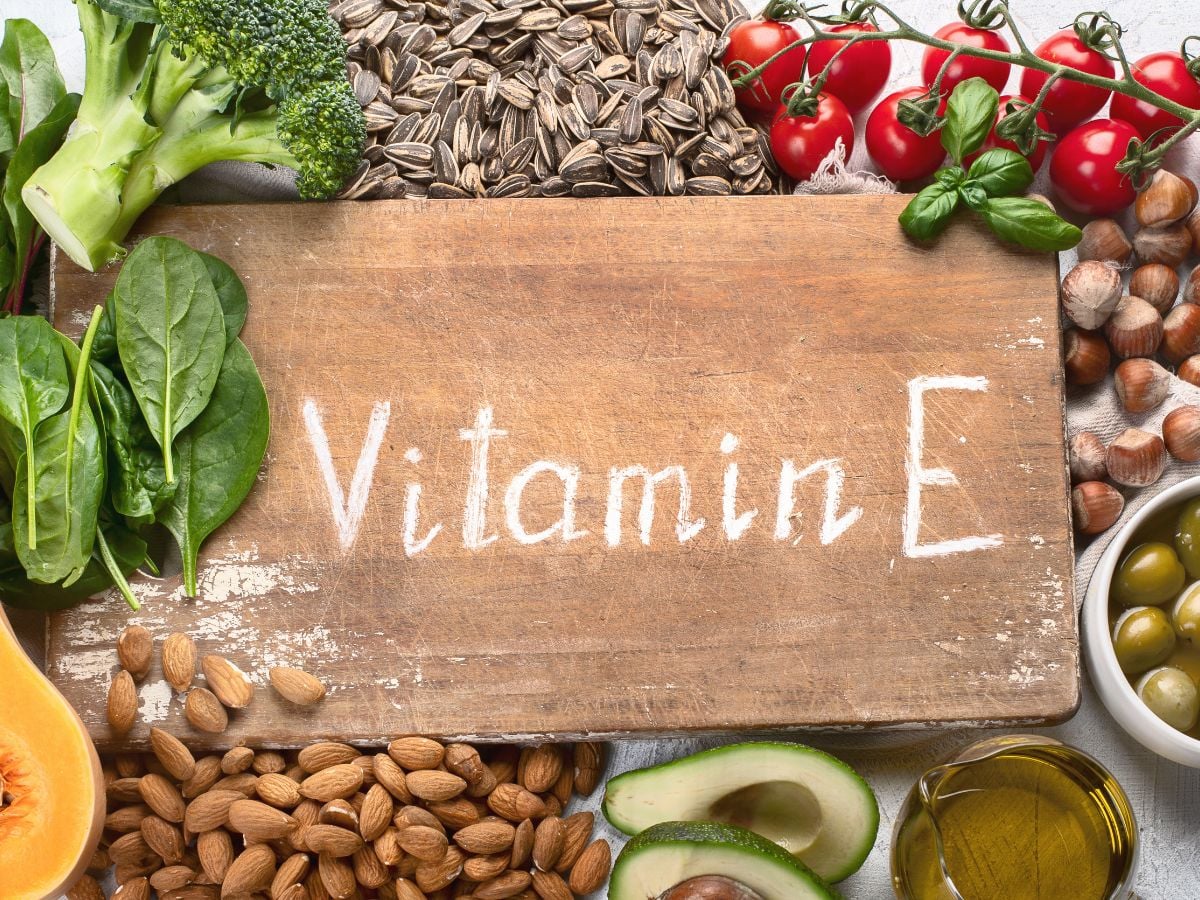
Table of contents
- What is Vitamin E?
- Health Benefits of Vitamin E
- How much vitamin E do you need?
- Can you take too much vitamin E?
- List of Foods Sources of Vitamin E
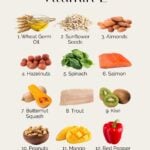
- 1. Wheat Germ Oil
- 2. Sunflower Seeds
- 3. Almonds
- 4. Hazelnuts
- 5. Spinach
- 6. Salmon
- 7. Butternut Squash
- 8. Trout
- 9. Kiwi
- 10. Peanuts
- 11. Mango
- 12. Red Bell Pepper
- Are foods fortified with vitamin E?
- Ranking of Vitamin E-Rich Foods per Serving Size
- Should you take vitamin E supplements?
- FAQs
- Recipes with Foods High in Vitamin E
What is Vitamin E?
Vitamin E is the collective name for a group of fat-soluble micronutrients that act as antioxidants in the body (1). It is found naturally in some foods, including oils, nuts, seeds, fish, and green leafy vegetables, and is also added to others and is available as a dietary supplement.
Naturally occurring vitamin E occurs in eight distinct chemical forms, which are classified into two main forms: tocopherols and tocotrienols (1). The different types of vitamin E offer varying biological benefits, although alpha-tocopherol is the only form that is recognized to meet human requirements (2).
Health Benefits of Vitamin E
Vitamin E acts as an antioxidant in the body, helping to protect cells from damage caused by free radicals. It is also involved in immune function, cell signaling, gene expression regulation, and other metabolic processes (3).
While there are many claims to the benefits of vitamin E for treating heart disease, eye disorders (age-related macular degeneration), cancer, and mental function, the current research provides little evidence that high-dose vitamin E supplementation is beneficial (4).
How much vitamin E do you need?
The current Recommended Dietary Allowance (RDA) for vitamin E varies by age and life stage (4):
- Birth to 6 months: 4 mg/day
- Infants 7-12 months: 5 mg/day
- Children 1-3 years: 6 mg/day
- Children 4-8 years: 7 mg/day
- Children 9–13 years: 11 mg/day
- Teens 14–18 years: 15 mg/day
- Adults 19+ years: 15 mg/day
- Pregnant Teens and Women: 15 mg/day
- Breastfeeding Teens and Women: 15 mg/day
Given that vitamin E is widely available in common foods, vitamin E deficiency is rare in healthy people. Nevertheless, understanding which foods are high in vitamin E can help provide more information to support overall health.
Can you take too much vitamin E?
The vitamin E present in whole foods is not harmful and does not need to be limited, as research has not shown any adverse effects. However, high doses of vitamin E supplements can be harmful and may increase the risk of blood clots and of serious bleeding in the brain. The Tolerable Upper Intake Level (UL) for vitamin E supplements is 1,000 mg/day (4).
List of Foods Sources of Vitamin E
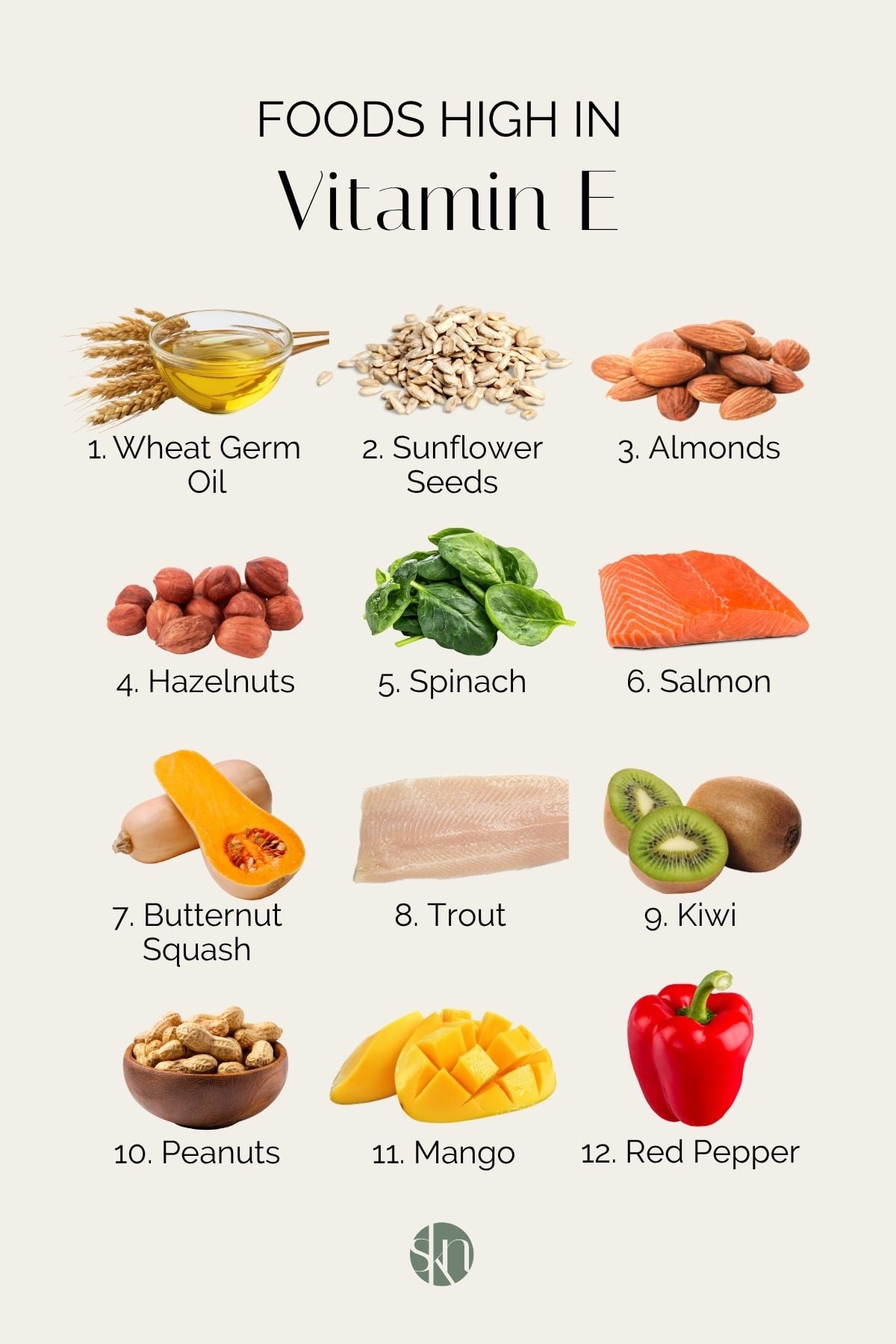
Here is a list of some of the most vitamin E-rich foods.
1. Wheat Germ Oil
Wheat germ oil is the richest source of vitamin E, providing roughly 135% of the Daily Value (DV) per serving. It is extracted from the wheat kernel’s embryo (germ) and, while not often used in cooking, is commonly consumed as a supplement. In general, vegetable oils are good sources of vitamin E, including sunflower oil, safflower oil, corn oil, and olive oil. A 1-tablespoon serving of wheat germ oil contains 20.30 mg of vitamin E (5).
2. Sunflower Seeds
Sunflower seeds are the best whole food source of vitamin E. They are also the highest protein seed and contain a good mix of soluble and insoluble fiber. They can be enjoyed raw or roasted, on their own, in salads, or on top of oatmeal. A 1-ounce serving of raw sunflower seeds contains 5.56 mg of vitamin E (6).
3. Almonds
Like seeds, nuts are a good source of vitamin E, and almonds contain the most. They are also a good source of magnesium, dietary fiber, and the highest protein nut. A handful of almonds as an afternoon snack can provide roughly 34% of the recommended daily intake. A 1-ounce serving of raw almonds contains 5.39 mg of vitamin E (7).
4. Hazelnuts
Along with almonds, hazelnuts are another vitamin E-rich nut. They are also a good source of healthy fats, namely monounsaturated fats, and dietary fiber. A 1-ounce serving of raw hazelnuts contains 4.25 mg of vitamin E (8).
5. Spinach
Most green leafy vegetables contain vitamin E; however, spinach is the best source. It is also a good source of vitamins A, C, and K, magnesium, and folate. Spinach can be eaten raw, boiled, sautéed, or cooked into pastas, sauces, and casseroles. A 1-cup serving of cooked spinach contains 3.74 mg of vitamin E (9).
6. Salmon
Salmon is another good source of vitamin E and a great source of omega-3 fatty acids. While many types of seafood contain vitamin E, fatty fish contain the most of this fat-soluble vitamin. A 3-ounce serving of raw, farmed, Atlantic salmon contains 3.02 mg of vitamin E (10).
7. Butternut Squash
Butternut squash is a nutrient-dense complex carbohydrate and a good source of vitamin E, beta carotene, and potassium. It can be enjoyed baked, roasted, steamed, sautéed, or blended into soups or sauces. A 1-cup serving of cubed, raw butternut squash contains 2.02 mg of vitamin E (11).
8. Trout
Much like salmon, trout is another good source of lean protein, healthy fats, and vitamin E. It’s also the best source of vitamin D and calcium when consumed with bones. A 3-ounce serving of raw, farmed, rainbow trout contains 1.99 mg of vitamin E (12).
9. Kiwi
Kiwi is the fruit with the most vitamin E. Although present throughout the fruit, its vitamin E is concentrated in the skin and flesh beneath it. Kiwis are low in calories, a good source of fiber, and also a good source of vitamin C, vitamin K, potassium, copper, and folate. A 2-fruit serving of kiwis contains 1.95 mg of vitamin E (13).
10. Peanuts
Peanuts are a good source of vitamin E, plant protein, fiber, and healthy monounsaturated and polyunsaturated fats. Peanut butter is also a good source of vitamin E, offering the same health benefits as nuts; however, it’s best to opt for versions made from peanuts and salt, without added sugar. A 1-ounce serving of raw peanuts contains 1.86 mg of vitamin E (14).
11. Mango
Mangos are full of immune-boosting nutrients, including vitamin E, vitamin C, and antioxidants. They are also a good source of polyphenols, a natural, antioxidant-rich compound that is found in the peel, pulp, and seed kernel (15). A 1-cup serving of mango pieces contains 1.48 mg of vitamin E (16).
12. Red Bell Pepper
Red bell peppers, or sweet peppers, are one of the best vegetable sources of vitamin E. They are also one of the best sources of vitamin C, providing roughly 159% of the Daily Value (DV) for women. A 1-cup serving of sliced red bell pepper contains 1.45 mg of vitamin E (17).
Are foods fortified with vitamin E?
While not required, some foods are voluntarily fortified with vitamin E, including breakfast cereals, fruit juices, margarines, spreads, and plant-based milk alternatives (18, 19).
Ranking of Vitamin E-Rich Foods per Serving Size
| Food | Serving Size | Vitamin C per Serving |
| Wheat Germ Oil | 1 tablespoon | 20.30 mg |
| Sunflower Oil | 1 tablespoon | 9.32 mg |
| Safflower Oil | 1 tablespoon | 6.26 mg |
| Sunflower Seeds | 1 ounce | 5.56 mg |
| Almonds | 1 ounce | 5.39 mg |
| Hazelnuts | 1 ounce | 4.25 mg |
| Spinach, cooked | 1 cup | 3.74 mg |
| Corn Oil | 1 tablespoon | 3.07 mg |
| Salmon | 3 ounces | 3.02 mg |
| Butternut Squash | 1 cup | 2.02 mg |
| Trout | 3 ounces | 1.99 mg |
| Olive Oil | 1 tablespoon | 1.96 mg |
| Kiwi | 2 fruits | 1.95 mg |
| Peanuts | 1 ounce | 1.86 mg |
| Peanut Butter | 2 tablespoons | 1.62 mg |
| Mango | 1 cup | 1.48 mg |
| Red Bell Pepper | 1 cup | 1.45 mg |
| Tomato | 1 fruit | 0.66 mg |
| Broccoli | 1 cup | 0.11 mg |
All nutrition data is based on FoodData Central.
Should you take vitamin E supplements?
Most healthy people do not need vitamin E supplements, as a balanced diet provides sufficient amounts, and deficiency is rare (4). While it is a powerful antioxidant vitamin supplement, high-dose vitamin E can cause serious health issues. Therefore, it is best to consult with a health professional or registered dietitian to determine if supplemental vitamin E intake is right for you.
FAQs
Wheat germ oil is the richest food source of vitamin E, containing roughly 135% of the adult daily value per 1-tablespoon serving.
Consuming foods high in vitamin E, such as vegetable oils, nuts, seeds, fish, and vegetables, is the easiest way to increase vitamin E.
Spinach, butternut squash, kiwis, mangos, and red bell peppers are the fruits and vegetables highest in vitamin E.
Recipes with Foods High in Vitamin E
- Broccoli and Chickpea Salad
- Spinach-Stuffed Pork Chops
- Honey Miso Salmon
- Butternut Squash and Spinach Lasagna
- Butternut Squash Casserole
- Peanut Tofu Noodles
- Couscous Kale Salad
- Coconut Crusted Fish Tacos

The Bottom Line
Vitamin E is a fat-soluble antioxidant found in many foods. The best sources of vitamin E include wheat germ oil, sunflower seeds, almonds, hazelnuts, spinach, salmon, butternut squash, trout, kiwi, peanuts, mango, and red bell pepper.

Çok faydalı bilgiler, paylaşım için sağolun. Özellikle detaylı yaklaşım hoşuma gitti.
My pleasure, I’m happy you found it informative!