

Omega-3s are essential fatty acids with many health benefits that must be obtained from the diet. Here is a list of the foods high in omega-3 that you can start eating today.
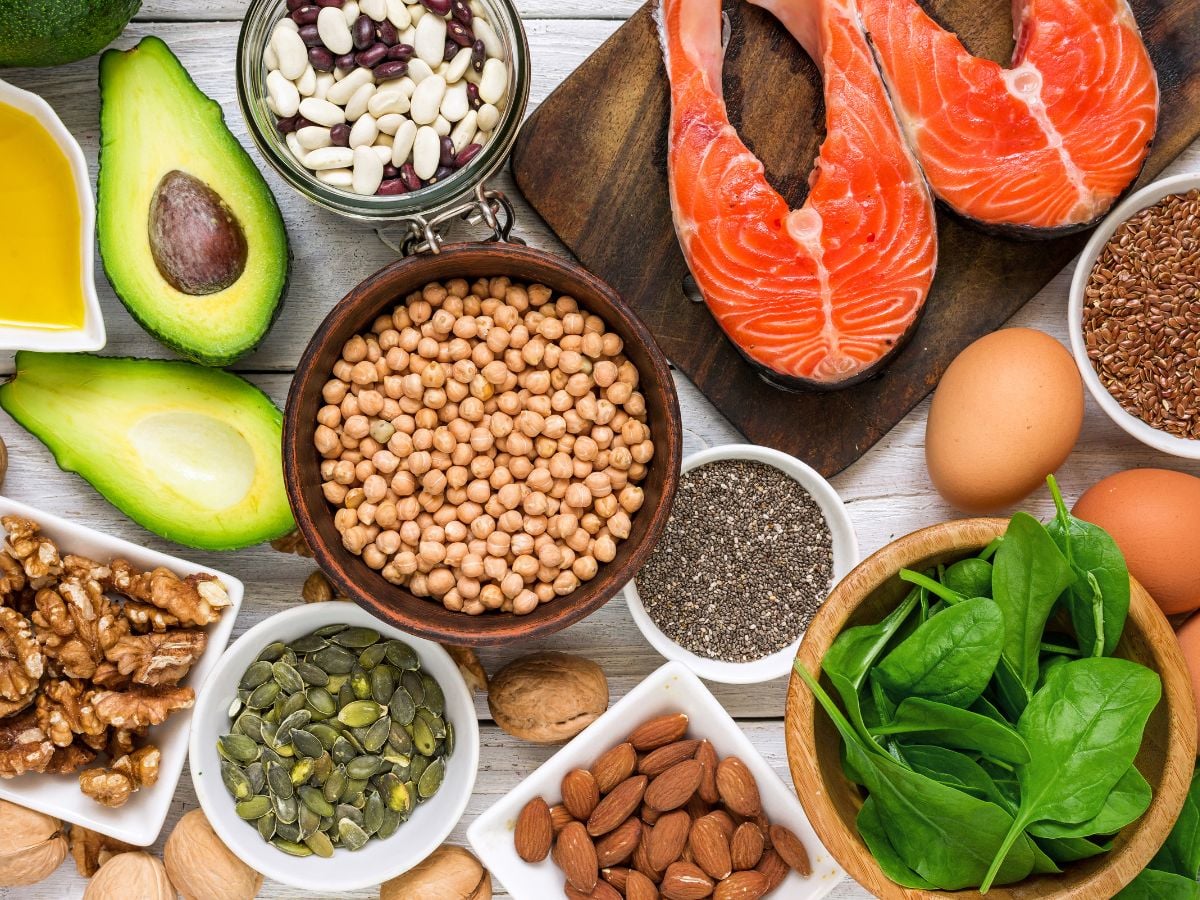
Table of contents
- What are omega-3 fatty acids?
- Health Benefits of Omega-3 Fats
- How much omega 3 do you need?
- Can you take too much omega 3?
- List of Foods High in Omega-3s
- 1. Mackerel
- 2. Salmon
- 3. Herring
- 4. Chia Seeds
- 5. Trout
- 6. Anchovies
- 7. Walnuts
- 8. Tuna
- 9. Sardines
- 10. Soybeans
- 11. Flax Seeds
- 12. Caviar
- Ranking of Omega-3 Foods per Serving
- How much fish should you eat?
- Should you take an omega-3 dietary supplement?
- FAQs
What are omega-3 fatty acids?
Omega-3 fatty acids are polyunsaturated fatty acids (PUFAs). Omega-3s, sometimes referred to as n-3s, play many vital roles in the human body and are considered essential nutrients because the body cannot produce them and, therefore, they must be obtained from food.
There are 3 main types of omega-3 fatty acids (1):
- Alpha-Linolenic Acid (ALA)
- Eicosapentaenoic Acid (EPA)
- Docosahexaenoic Acid (DHA)
Omega-3 fatty acids are found in the oil of plant and animal foods. ALA (alpha-linolenic acid)is found in plant foods such as chia seeds, flax seeds, and walnuts, while EPA (eicosapentaenoic acid) and DHA (docosahexaenoic acid) are found in animal foods, primarily in fatty, cold-water fish such as salmon, mackerel, sardines, and herring.
EPA and DHA are the most bioactive forms of the fatty acids and are directly used by the body. While the body can convert some ALA into EPA and DHA, the process is inefficient, and only very small amounts are converted, making EPA and DHA the most effective forms of omega-3s with more significant physiological and clinical benefits.
Health Benefits of Omega-3 Fats
Omega-3 fatty acids are the focus of a great deal of research and have been linked with many health benefits. Studies suggest that omega-3s can help to (2):
- Lower triglyceride levels
- Lower blood pressure
- Protect against cardiovascular disease and coronary heart disease
- Lower risk of developing Alzheimer’s disease, dementia, and other problems with cognitive function
- Lower risk of breast cancer and colorectal cancer
- Lower risk of developing age-related macular degeneration (AMD) and dry eye disease
- Support maternal health and fetal growth and development
To date, most health benefits have been associated with EPA and DHA from foods (e.g., fish) and/or dietary supplements (e.g., fish oil), as opposed to ALA. While ALA is a good source of healthy fats, the body’s ability to convert it into EPA and DHA is limited and estimated to occur at rates of <8% and <4%, respectively (3). Therefore, consuming EPA and DHA from food sources and/or supplements is recommended, particularly for vegetarians and vegans.
More studies are needed to understand how omega-3 fats might help rheumatoid arthritis, mental health conditions, or other diseases.
How much omega 3 do you need?
Only infants and children under the age of 1 have specific dietary guidelines for total omega-3 intake. For adults and children over 1 year of age, the Adequate Intakes (AIs) apply only to ALA because it is the only omega-3 that is essential (4).
- Birth to 12 months*: 0.5 g/day
- Children 1-3 years: 0.7 g/day
- Children 4-8 years: 0.9 g/day
- Boys 9-13 years: 1.2 g/day
- Girls 9-13 years: 1.0 g/day
- Teen boys 14-18 years: 1.6 g/day
- Teen girls 14-18 years: 1.1 g/day
- Men: 1.6 g/day
- Women: 1.1 g/day
- Pregnant teens and women: 1.4 g/day
- Breastfeeding teens and women 1.3 g/day
*As total omega-3s. All other values are for ALA alone.
Can you take too much omega 3?
Yes, you can take too much omega-3 from supplements; however, the side effects are typically mild and include an unpleasant taste in the mouth, bad breath, heartburn, nausea, stomach discomfort, diarrhea, headache, and smelly sweat (5, 6).
While there is no established Tolerable Upper Intake Level (UL), health authorities generally recommend consuming no more than 5 g/day of EPA and DHA combined from dietary supplements (2).
List of Foods High in Omega-3s
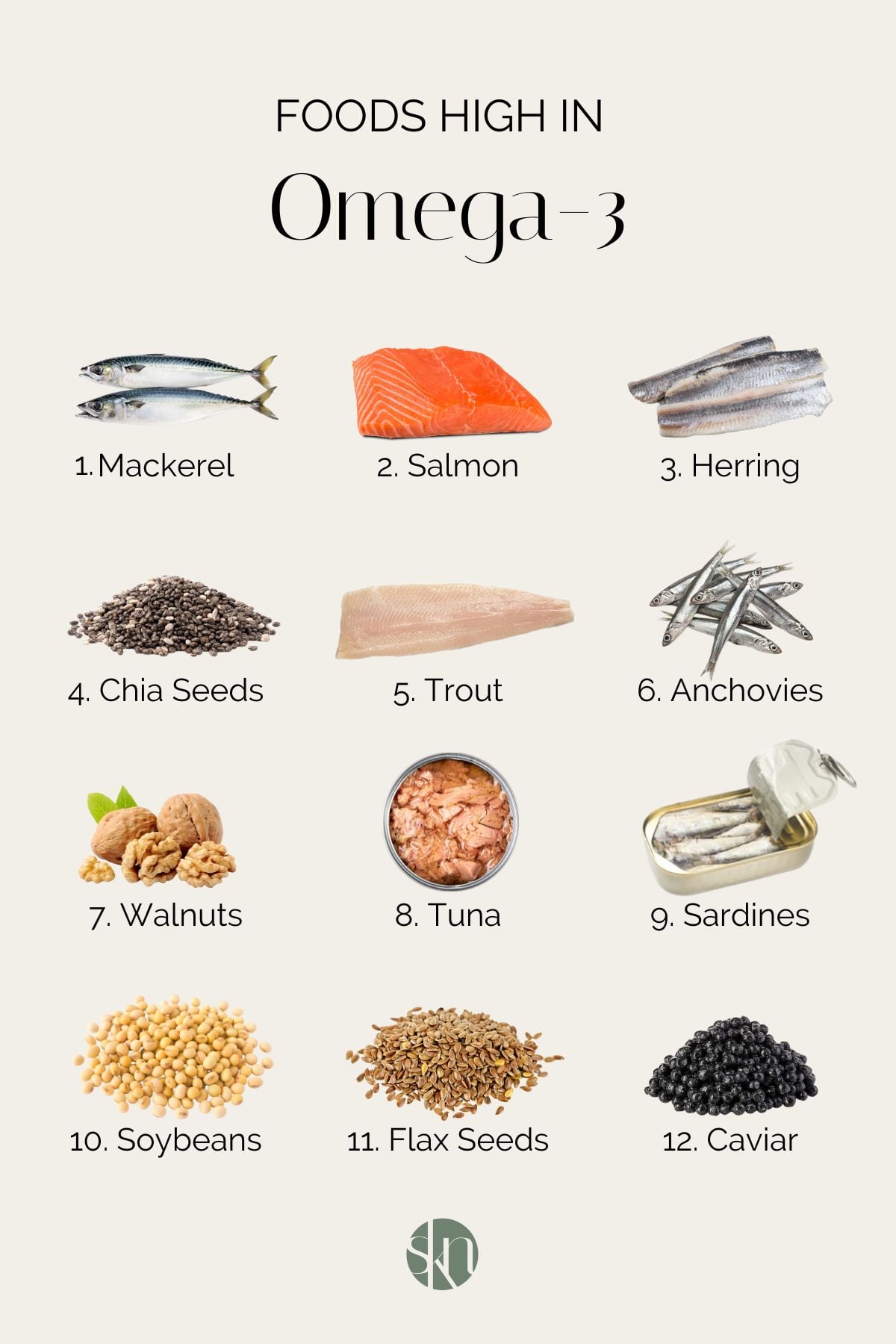
Here is a list of the foods highest in omega-3 fatty acids, in no particular order.
1. Mackerel
Mackerel is one of the best sources of omega-3 fatty acids. These small fish are also a great source of animal protein, vitamin D, vitamin B12, and selenium. Mackerel can be prepared in many ways, as fresh mackerel can be grilled, pan-fried, or smoked, while canned mackerel can be used in salads or spreads. A 3-ounce serving of mackerel contains 1.95 grams of combined EPA and DHA omega-3 fatty acids (7, 8).
2. Salmon
Salmon is a great source of omega-3s, specifically EPA and DHA. Along with other fatty fish, salmon is rich in healthy fats, protein, and many micronutrients. Both farmed and wild-caught salmon are healthy choices, and fresh, frozen, or tinned salmon are all good sources of omega-3 fatty acids. A 3-ounce serving of salmon contains 1.83 grams of combined EPA and DHA omega-3 fatty acids (9, 8).
3. Herring
Herring is another oily fish rich in omega-3 fats. It can be grilled, smoked, or pickled, and is commonly eaten with bread, crackers, or potatoes, with butter, onions, or pickles. A 3-ounce serving of herring contains 1.83 grams of combined EPA and DHA omega-3 fatty acids (10, 8).
4. Chia Seeds
Chia seeds are one of the best plant-based food sources of omega-3 fatty acids. They are also one of the best sources of fiber, magnesium, and are one of the highest protein seeds. Be they black or white, chia seeds can be added to overnight oats, blended into smoothies, sprinkled onto yogurt bowls, or made into chia seed pudding. A 1-tablespoon serving of chia seeds contains 2.42 grams of ALA omega-3 fatty acids (11).
5. Trout
Trout is another fish rich in omega-3 fatty acids, although levels vary by species and whether it is farmed or wild. Lake trout generally have the highest omega-3 content among trout species, particularly siscowet trout. Trout is also a good source of vitamin D, vitamin E, and lean protein. A 3-ounce serving of trout contains 1.34 grams of combined EPA and DHA omega-3 fatty acids (12, 8).
6. Anchovies
Anchovies are an abundant source of omega-3 fatty acids. While often high in sodium, these tiny fish are rich in selenium, and their strong taste makes them great for dissolving into dishes to add a deep, savory, umami flavor. Anchovies are a common ingredient in Caesar salad dressing, Worcestershire sauce, and spaghetti alla puttanesca. A 3-ounce serving of anchovies contains 1.23 grams of combined EPA and DHA omega-3 fatty acids (13, 8).
7. Walnuts
Walnuts are another plant source of omega-3 fatty acids, specifically ALA. They are also a good source of insoluble fiber and have been shown to have anti-inflammatory benefits thanks to their high antioxidant content. A 1-ounce serving of walnuts contains 2.57 grams of ALA omega-3 fatty acids (14).
8. Tuna
Be it skipjack, yellowfin, or albacore, tuna is a rich source of omega-3 fatty acids. Albacore (white) tuna generally contains more EPA and DHA than light tuna; however, all types of tuna are rich in healthy fats and great high-protein, low-calorie foods. A 3-ounce serving of tuna contains 1.11 grams of combined EPA and DHA omega-3 fatty acids (15, 8).
9. Sardines
Sardines are one of the most nutrient-dense foods and a great source of healthy fats. These small, oily fish have a soft texture and strong flavor, and can be cooked fresh or found canned. Sardines can be eaten directly from the tin on crackers or toast, or added to salad dressings and sauces for a depth of flavor. A 3-ounce serving of sardines contains 0.84 grams of combined EPA and DHA omega-3 fatty acids (16, 8).
10. Soybeans
Not only are soybeans one of the best sources of vegetarian protein, but they are also one of the best plant-based sources of the omega-3 fatty acid alpha-linolenic acid. While soybean oil is the richest in omega-3 fats, other soybean products, such as tofu, tempeh, and edamame, contain healthy fats. A 1-cup (93-gram) serving of soybeans contains 1.34 grams of ALA omega-3 fatty acids (17).
11. Flax Seeds
Flax seeds are another seed high in ALA omega-3 fatty acids. Whole flax seeds can be hard for the body to digest; therefore, ground flaxseed and flaxseed oil are better options to obtain maximum health benefits. Ground flaxseed can be sprinkled onto oatmeal, added to smoothies, or used to make flax eggs in baked goods. A 1-tablespoon serving of flax seeds contains 2.35 grams of ALA omega-3 fatty acids (18).
12. Caviar
Caviar is tiny, cured, unfertilized fish eggs and is rich in omega-3 fatty acids. It is considered a luxury food item and is commonly served as a garnish on crackers, toast, or blinis with crème fraîche, onions, and/or chives. A 1-ounce serving of caviar contains 0.89 grams of combined EPA and DHA omega-3 fatty acids (19, 8).
Ranking of Omega-3 Foods per Serving
| Food | Serving Size | Omega-3 per Serving | Type(s) of Omega-3 |
| Walnuts | 1 ounce | 2.57 grams | ALA |
| Cod Liver Oil | 1 tablespoon | 2.44 grams | EPA & DHA |
| Chia Seeds | 1 tablespoon | 2.42 grams | ALA |
| Flax Seeds | 1 tablespoon | 2.35 grams | ALA |
| Mackerel | 3 ounces | 1.95 grams | EPA & DHA |
| Salmon | 3 ounces | 1.83 grams | EPA & DHA |
| Herring | 3 ounces | 1.83 grams | EPA & DHA |
| Trout | 3 ounces | 1.34 grams | EPA & DHA |
| Soybeans | 1 cup | 1.34 grams | ALA |
| Anchovies | 3 ounces | 1.23 grams | EPA & DHA |
| Hemp Seeds | 1 tablespoon | 1.20 grams | ALA |
| Tuna | 3 ounces | 1.11 grams | EPA & DHA |
| Canola Oil | 1 tablespoon | 1.01 grams | ALA |
| Soybean Oil | 1 tabelspoon | 0.90 grams | ALA |
| Caviar | 1 tablespoon | 0.89 grams | EPA & DHA |
| Sardines | 3 ounces | 0.84 grams | EPA & DHA |
| Oysters | 3 ounces | 0.33 grams | EPA & DHA |
| Lamb (ground) | 3 ounces | 0.01 grams | EPA & DHA |
| Beef (steak) | 3 ounces | 0.01 grams | EPA & DHA |
All nutrition facts are provided by Food Data Central.
How much fish should you eat?
The American Heart Association recommends eating fish 2-3 times per week, including one serving of oily fish. If you’re concerned about consuming too much mercury, focus on low-mercury fish such as salmon, sardines, anchovies, trout, catfish, cod, shrimp, and scallops (20).
Should you take an omega-3 dietary supplement?
Omega-3 supplements, such as fish oil supplements, can be helpful, particularly if you are not getting adequate omega-3 fatty acids from your diet. Supplementation may be beneficial for individuals who do not eat fatty fish, are pregnant or breastfeeding, or for certain conditions; however, it is best to consult with your doctor or a registered dietitian before taking them.
FAQs
Fatty, oily fish such as mackerel, salmon, and herring have the highest omega-3 content.
Fruits are not particularly good sources of omega-3 fatty acids.
Some eggs are high in omega-3 fatty acids, specifically eggs from pasture-raised hens or ones that were fed a diet with feed enriched with omega-3 fats from flaxseed or algae (21).
An insufficient intake of omega-3-rich food, particularly low fish consumption, can hinder levels of omega-3 fatty acids. A deficiency of omega-3s can cause rough, scaly skin and a red, swollen, itchy rash (2).

The Bottom Line
Omega-3 fatty acids are heart-healthy fats that are essential for optimal health. The best sources of eicosapentaenoic acid (EPA) and docosahexaenoic acid (DHA) omega-3 fats are mackerel, salmon, and herring, while the best sources of Alpha-Linolenic Acid (ALA) omega-3 fats are chia seeds, walnuts, and flax seeds. Health authorities recommend eating at least two servings of fish per week to support adequate omega-3 intake.



Lovely article. Nice graphics!
Wondering if you happen to have done a Omega 6 to Omega 3 Ratio and what the best ratio is?
If not, might you consider?
Thanks!!
Thanks, Mincdy! I’m happy you found the information helpful.
I’ve covered the omega-3 to omega-6 ratio in several other articles on my website, including this one: https://kaynutrition.com/guide-to-healthy-fats/