

Magnesium is an important mineral for optimal health and plays a vital role in the body. Here is a list of foods high in magnesium to help increase your dietary magnesium intake.
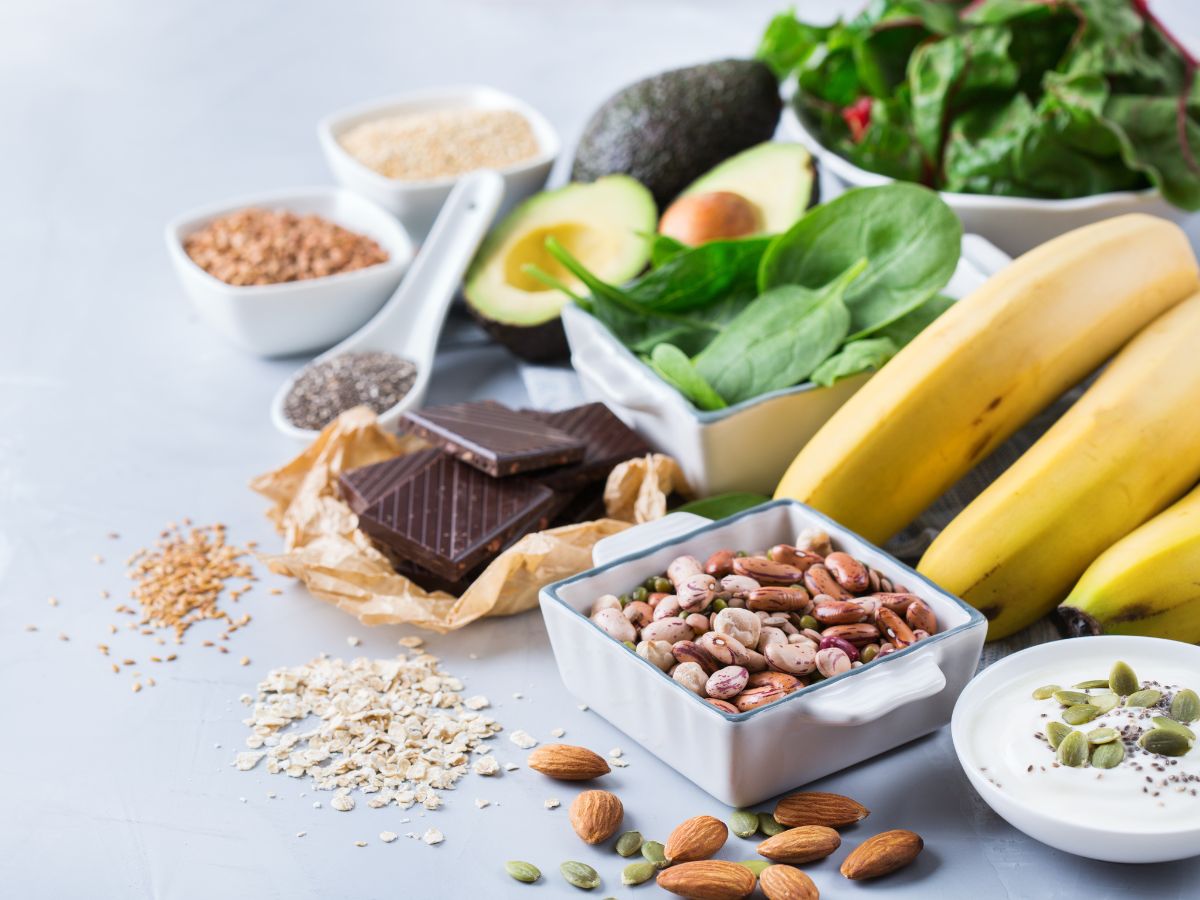
Table of contents
- What is magnesium?
- Benefits of Magnesium
- How much magnesium do you need?
- Can you take too much magnesium?
- List of Foods High in Magnesium
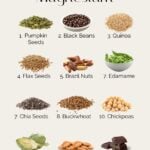
- 1. Pumpkin Seeds
- 2. Black Beans
- 3. Quinoa
- 4. Flax Seeds
- 5. Brazil Nuts
- 6. Edamame
- 7. Chia Seeds
- 8. Buckwheat
- 9. Chickpeas
- 10. Artichokes
- 11. Almonds
- 12. Dark Chocolate
- Ranking of Magnesium Foods per Serving
- Should you take magnesium supplements?
- FAQs
What is magnesium?
Magnesium is a mineral and an essential micronutrient required for overall health and well-being. It is abundant in the body, naturally present in many foods, added to others, and can also be found in supplement form.
Magnesium is primarily stored in bones, roughly 50% – 60%, while the remainder is found in soft tissues and muscles, with less than 1% found in blood serum, of which levels are kept under tight control (1). Magnesium plays a role in over than 300 enzyme systems that play a critical role in biochemical reactions in the body.
Benefits of Magnesium
Magnesium is required for numerous bodily functions, including muscle and nerve function, blood glucose control, blood pressure regulation, protein synthesis, and bone and DNA production (2). It also aids in energy production and plays an important role in the active transport of calcium and potassium ions across cell membranes, which is essential to nerve conduction and muscle contraction (3).
How much magnesium do you need?
The current Recommended Dietary Allowance (RDA) for vitamin D varies by age and sex (1):
- Birth to 6 months: 30 mg/day
- Infants 7-12 months: 75 mg/day
- Children 1-3 years: 80 mg/day
- Children 4-8 years: 130 mg/day
- Children 9-13 years: 240 mg/day
- Boys 14-18 years: 410 mg/day
- Girls 14-18 years: 360 mg/day
- Men 19-30 years: 400 mg/day
- Women 19-30 years: 310 mg/day
- Men 31-50 years: 420 mg/day
- Women 31-50 years: 320 mg/day
- Men >51 years: 420 mg/day
- Women >51 years: 320 mg/day
- Pregnant women: 360-400 mg/day
- Lactating women: 310-360 mg/day
The RDA reflects the average daily intake required to meet the nutrient requirements for healthy individuals and refers to the total intake from foods, beverages, and supplements. Unfortunately, dietary surveys in the United States consistently show that many people consume less than the RDA of magnesium, particularly teenage girls, teenage boys, and men over the age of 70 (4).
Can you take too much magnesium?
Magnesium from food is not harmful and does not need to be limited in healthy individuals, as the kidneys can get rid of any excess magnesium in the urine. However, high doses of magnesium from dietary supplements and medications can pose health risks and should, therefore, not be consumed above the upper limit.
The tolerable upper intake level (UL) for magnesium supplements is (4):
- Birth to 12 months: Not Established
- Children 1-3 years: 65 mg/day
- Children 4-8 years: 110 mg/day
- Children 9-18 years: 350 mg/day
- Adults >19 years: 350 mg/day
List of Foods High in Magnesium
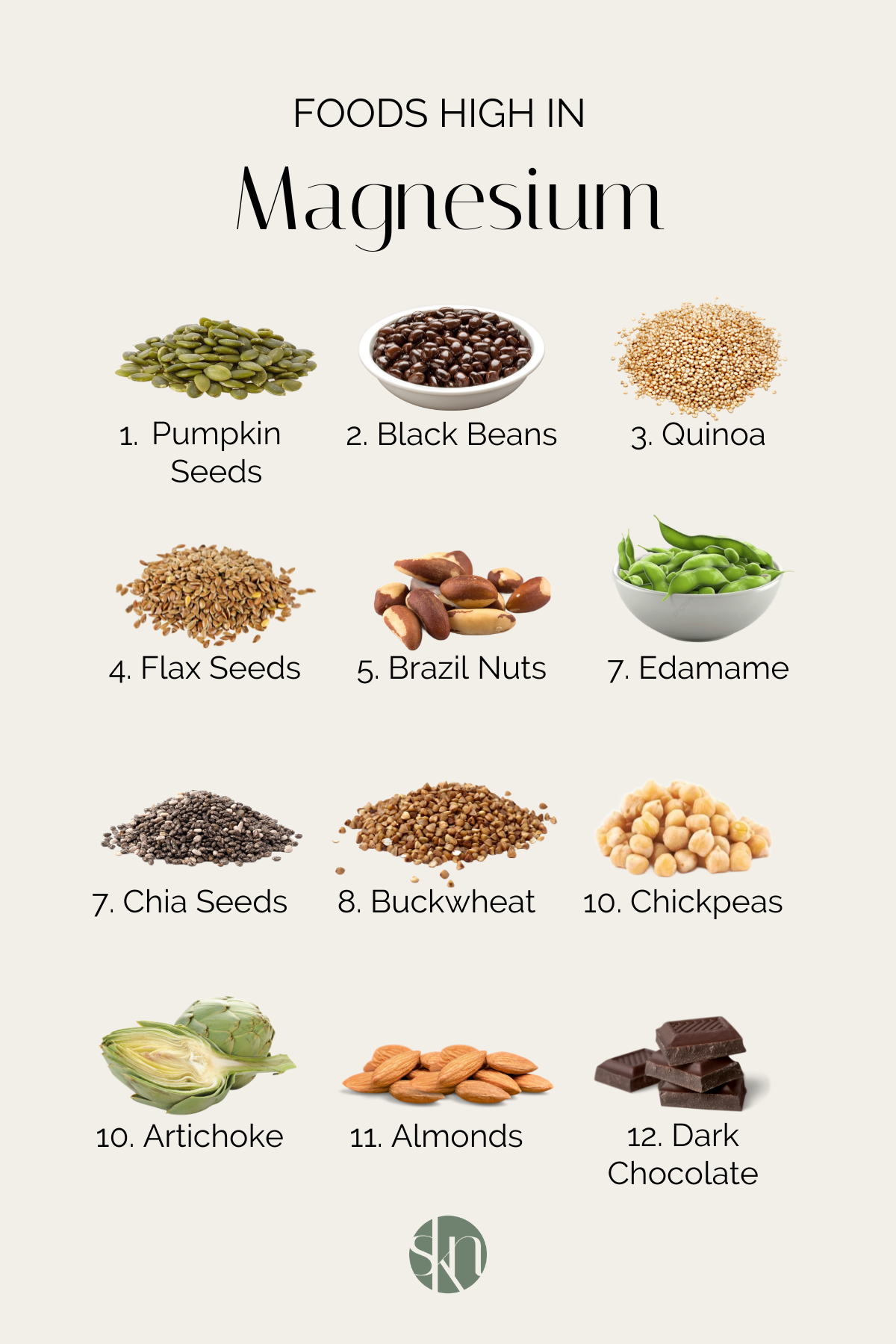
Magnesium is widely available in plant and animal foods. Here is a list of the most magnesium-rich foods.
1. Pumpkin Seeds
Pumpkin seeds are one of the best sources of magnesium. Compared gram for gram, pumpkin seeds contain more magnesium than any other plant or animal food. In addition to magnesium, pumpkin seeds are also a great source of zinc, iron, potassium, healthy fats, and are one of the highest-protein seeds. A 1-ounce serving of raw pumpkin seeds contains 142 mg of magnesium (5).
2. Black Beans
All beans are a good source of magnesium; however, black beans are particularly rich in magnesium. Black beans provide roughly 38% of the recommended daily intake for adult women and 29% for adult men per cup. Moreover, beans are a great source of plant-based protein and one of the best sources of dietary fiber. A 1-cup (172 grams) serving of cooked black beans contains 120 mg of magnesium (6).
3. Quinoa
Quinoa is rich in magnesium and contains more than all other whole grains. It’s also naturally gluten-free, high in fiber, and one of the highest protein grains. Although considered an ancient grain, quinoa is technically a seed and is classified as a pseudocereal. A 1-cup (185 grams) serving of cooked quinoa contains 118 mg of magnesium (7).
4. Flax Seeds
Along with pumpkin seeds, flax seeds are also a good source of magnesium. Be they brown, yellow, or golden, flax seeds are also a great source of healthy fats, particularly omega-3 fatty acids, and have been shown the improve digestion. A 1-ounce serving of raw flaxseed contains 111 mg of magnesium (8).
5. Brazil Nuts
Not only are Brazil nuts a great source of magnesium, but they are also one of the highest protein nuts and a significant source of selenium. Just one Brazil nut provides 175% of the recommended daily intake of selenium. A 1-ounce serving of raw, blanched Brazil nuts contains 107 mg of magnesium (9).
6. Edamame
Edamame, or young soybeans, is one of the best sources of magnesium. Soy is one of the few complete vegetarian protein sources to contain all essential amino acids, making it a great way to increase your protein intake, and a great source of calcium. A 1-cup (155 grams) serving of frozen, prepared edamame contains 99 mg of magnesium (10).
7. Chia Seeds
Be they black or white, these tiny seeds offer a range of health benefits due to their rich nutritional profile. Chia seeds are a good source of magnesium, manganese, phosphorus, copper, selenium, iron, calcium, omega-3 fatty acids, and one of the best sources of fiber. A 1-ounce serving of raw, dry chia seeds contains 92 mg of magnesium (11).
8. Buckwheat
Much like quinoa, buckwheat is a gluten-free pseudocereal that is rich in magnesium. These small, dark brown or black triangular seeds are also a good source of fiber, making them beneficial for blood sugar control and cardiovascular disease. Buckwheat can be cooked whole like rice or quinoa, added to soups and stews, or made into porridge. A 1-cup (168 grams) serving of cooked buckwheat groats contains 86 mg of magnesium (12).
9. Chickpeas
Chickpeas, also known as garbanzo beans, are a good source of magnesium, containing 27% of the recommended daily intake for adult women and 19% for adult men in one cup. Like other legumes, such as beans and lentils, chickpeas have a low glycemic index and are a great source of fiber and vegetarian protein. Their vast nutritional profile makes them helpful for balancing blood sugar and improving digestion. A 1-cup (164 grams) serving of cooked buckwheat groats contains 79 mg of magnesium (13).
10. Artichokes
While considered a vegetable, artichokes are an edible flower bud and a good source of magnesium. They are also low in calories, high in fiber, and a rich source of vitamins, minerals, and antioxidants. Research suggests they may help to lower cholesterol, improve heart health, and aid in digestion (14, 15). One medium artichoke (128 grams) contains 77 mg of magnesium (16).
11. Almonds
While many nuts contain magnesium, almonds are particularly rich in magnesium, along with Brazil nuts. They are also one of the highest protein nuts, after peanuts, and a good source of healthy fats, fiber, vitamin E, and other essential minerals. A 1-ounce serving of raw, whole almonds contains 73 mg of magnesium (19).
12. Dark Chocolate
Surprisingly, dark chocolate is a great source of magnesium, containing % of the recommended daily intake for adult women and % for adult men in one serving. Cacao and cocoa beans are a source of many essential minerals, including iron, potassium, calcium, zinc, copper, and manganese, and trace minerals, including selenium, manganese, and chromium. A 1-ounce serving of 70-85% dark chocolate contains 65 mg of magnesium (20).
Ranking of Magnesium Foods per Serving
| Food | Serving Size | Magnesium per Serving |
| Pumpkin Seeds | 1 ounce | 142 mg |
| Black Beans (cooked) | 1 cup | 120 mg |
| Quinoa (cooked) | 1 cup | 118 mg |
| Flax Seeds | 1 ounce | 111 mg |
| Brazil Nuts | 1 ounce | 107 mg |
| Edamame (prepared) | 1 cup | 99 mg |
| Chia Seeds | 1 ounce | 92 mg |
| Buckwheat (cooked) | 1 cup | 86 mg |
| Pinto Beans (cooked) | 1 cup | 86 mg |
| Lima Beans (cooked) | 1 cup | 81 mg |
| Kidney Beans (cooked) | 1 cup | 80 mg |
| Chickpeas (cooked) | 1 cup | 79 mg |
| Aritchoke | 1 medium | 77 mg |
| Almonds | 1 ounce | 73 mg |
| Cashews | 1 ounce | 71 mg |
| Dark Chocolate | 1 ounce | 65 mg |
| Mackerel | 3 ounces | 65 mg |
| Oats | 1/2 cup | 57 mg |
| Soy Milk | 1 cup | 54 mg |
| Peanuts | 1 ounce | 51 mg |
| Whole Wheat Bread | 2 slices | 49 mg |
| Potato | 1 medium | 49 mg |
| Tuna | 3 ounces | 43 mg |
| Banana | 1 medium | 32 mg |
| Spinach (raw) | 1 cup | 28 mg |
| Avocado | 1/2 fruit | 25 mg |
| Salmon | 3 ounces | 22 mg |
| Halibut | 3 ounces | 22 mg |
| Yogurt (Whole Milk) | 3/4 cup | 19 mg |
| Collards | 1 cup | 18 mg |
| Raisins | 1/4 cup | 11 mg |
| Kale | 1 cup | 7 mg |
All nutrition data is based on FoodData Central.
Should you take magnesium supplements?
Magnesium supplements are available in various formats, including magnesium oxide, magnesium citrate, and magnesium chloride. Magnesium is available in isolated mineral supplements or as part of a multivitamin.
Magnesium deficiency can occur; however, certain groups are at a greater risk than others. Individuals with gastrointestinal diseases, including Crohn’s disease and celiac disease, type 2 diabetes, and chronic alcoholism are more likely to experience magnesium depletion (3). Moreover, vitamin D deficiency can exacerbate magnesium deficiency, as vitamin D can’t be metabolized without sufficient magnesium levels (22).
As with all supplements, it is best to consult with a health professional or registered dietitian if you are considering magnesium supplementation to determine the type and amount that is best for you.
FAQs
Pumpkin seeds are the food with the most magnesium, containing 142 mg of magnesium per 1-ounce serving.
Signs of magnesium deficiency include loss of appetite, nausea, vomiting, fatigue, and weakness. Extreme magnesium deficiency may lead to numbness, tingling, muscle cramps, seizures, personality changes, low bone mineral density, and an abnormal heart rhythm (23).
You can quickly increase your magnesium level by consuming more magnesium-rich foods and/or by taking a magnesium supplement. However, it is best to consult with a health professional or registered dietitian to determine before taking a magnesium supplement.

The Bottom Line
Magnesium is an essential mineral and is found in many plant and animal foods. Seeds, nuts, beans, whole grains, dark chocolate, fatty fish, and leafy greens are some of the best sources of magnesium. Consuming magnesium-rich foods can help ensure you’re consuming adequate magnesium in your diet and supporting your overall health.


Leave a Review