

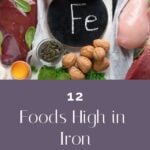
Iron is an essential mineral required for vital functions in the body. The human body is unable to synthesize iron and, therefore, it must be obtained from dietary sources. Here are 12 foods high in iron that you can start eating today to ensure you’re getting enough.
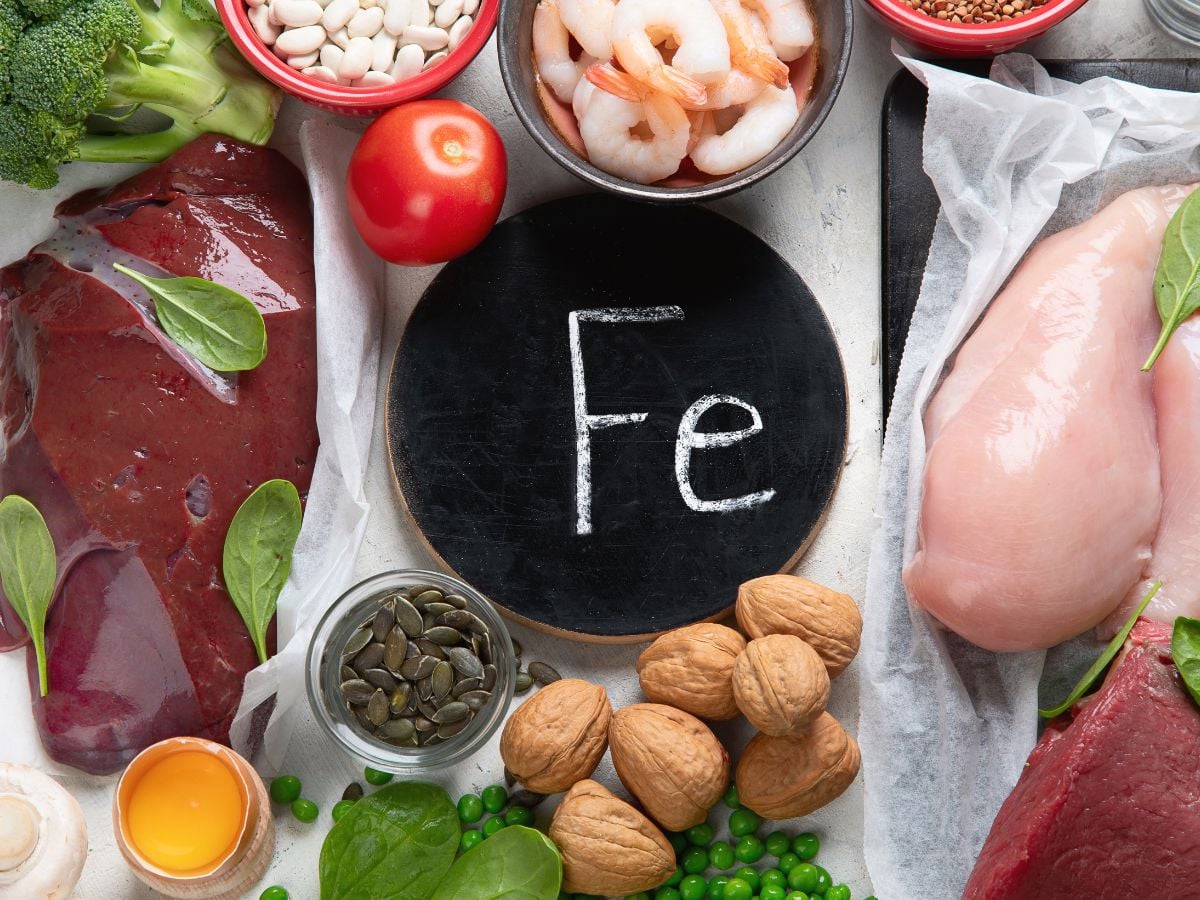
Table of contents
- What is iron?
- Health Benefits of Iron
- How much iron do you need?
- Can you take too much iron?
- List of Foods High in Iron
- 1. Liver
- 2. Oysters
- 3. Sardines
- 4. Beef
- 5. Clams
- 6. Lamb
- 7. White Beans
- 8. Lentils
- 9. Chickpeas
- 10. Quinoa
- 11. Pumpkin Seeds
- 12. Tofu
- Ranking of Iron-Rich Foods per Serving
- What foods are fortified with iron?
- Should you take iron supplements?
- FAQs
What is iron?
Iron is a trace mineral and essential micronutrient required for optimal physiological functioning and overall health. The body cannot synthesize iron and, therefore, it must be derived from dietary sources. Iron is naturally present in certain animal and plant foods, added to others, and also available as a dietary supplement.
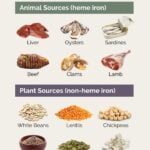
There are two forms of iron: heme and non-heme iron (1). Animal foods, such as lean red meat, lamb, pork, chicken, and fish, contain heme and non-heme iron, while plant foods, such as beans, lentils, nuts, and seeds, and foods fortified with iron, only contain non-heme iron.
Heme iron has better bioavailability and is more easily absorbed than non-heme iron. Depending on an individual’s iron stores, approximately 15% to 35% of heme iron is absorbed, while 2% to 20% or less of non-heme iron is absorbed (1, 2).
Health Benefits of Iron
Iron is an essential component of hemoglobin, the protein within erythrocytes (red blood cells) responsible for transferring oxygen from the lungs to tissues throughout the body, and myoglobin, the protein that ensures adequate oxygen supply for muscle function (1). It is also necessary for physical growth, neurological development, cellular functioning, energy metabolism, DNA and amino acid synthesis, immune function, and the synthesis of some hormones.
Most elemental iron in the body is found in hemoglobin, and the remaining is stored in the form of ferritin, or hemosiderin, in the liver, spleen, and bone marrow, or located in the myoglobin of muscle tissue (3, 4).
Humans typically lose small amounts of iron via urine, feces, sweat, and skin cells; however, menstruating women lose greater amounts due to blood loss during periods (5). Iron balance is primarily regulated by the amount of iron absorption rather than elimination.
When the body’s iron stores become too low, iron deficiency anemia develops (1, 6). Symptoms of iron deficiency anemia include gastrointestinal disturbances, weakness, fatigue, and difficulty concentrating, as well as impaired cognitive function, immune function, and body temperature regulation.
How much iron do you need?
The current Recommended Dietary Allowance (RDA) for iron varies by age and life stage (7):
- Birth to 6 months: 0.27 mg/day
- Infants 7-12 months: 11 mg/day
- Children 1-3 years: 7 mg/day
- Children 4-8 years: 10 mg/day
- Children 9-13 years: 8 mg/day
- Teen boys 14-18 years: 11 mg/day
- Teen girls 14-18 years: 15 mg/day
- Adult men 19-50 years: 8 mg/day
- Adult women 19-50 years: 18 mg/day
- Adults 51 years and older: 8 mg/day
- Pregnant teens: 27 mg
- Pregnant women: 27 mg
- Breastfeeding teens: 10 mg
- Breastfeeding women: 9 mg
Vegetarians, vegans, or individuals who do not eat meat need almost twice as much iron as the RDA, since the absorption rate of non-heme iron from plant foods is much lower (5).
Moreover, the body absorbs non-heme iron more effectively when consumed with foods that contain heme iron, and foods high in vitamin C, such as bell peppers, broccoli, oranges, tomatoes, and strawberries (8, 9). Vitamin C also counteracts iron absorption inhibitors (antinutrients) such as phytates in grains and legumes, oxalates in spinach, polyphenols in tea, coffee, and red wine, and calcium in milk and dairy products (10). Calcium can reduce the bioavailability of both non-heme and heme iron.
Can you take too much iron?
The tolerable upper intake level (UL) of iron is 45 mg for adults and ranges from 40 mg to 45 mg for infants, children, and adolescents (5).
The risk of overconsuming iron-rich foods is unlikely among adults with normal intestinal function; however, high doses of supplemental iron can be harmful. High doses of iron supplements can cause an upset stomach, constipation, nausea, abdominal pain, vomiting, and diarrhea, especially in an upset stomach. Extremely high doses can have very dangerous and serious side effects, including corrosive necrosis of the intestine, organ failure, and death.
List of Foods High in Iron
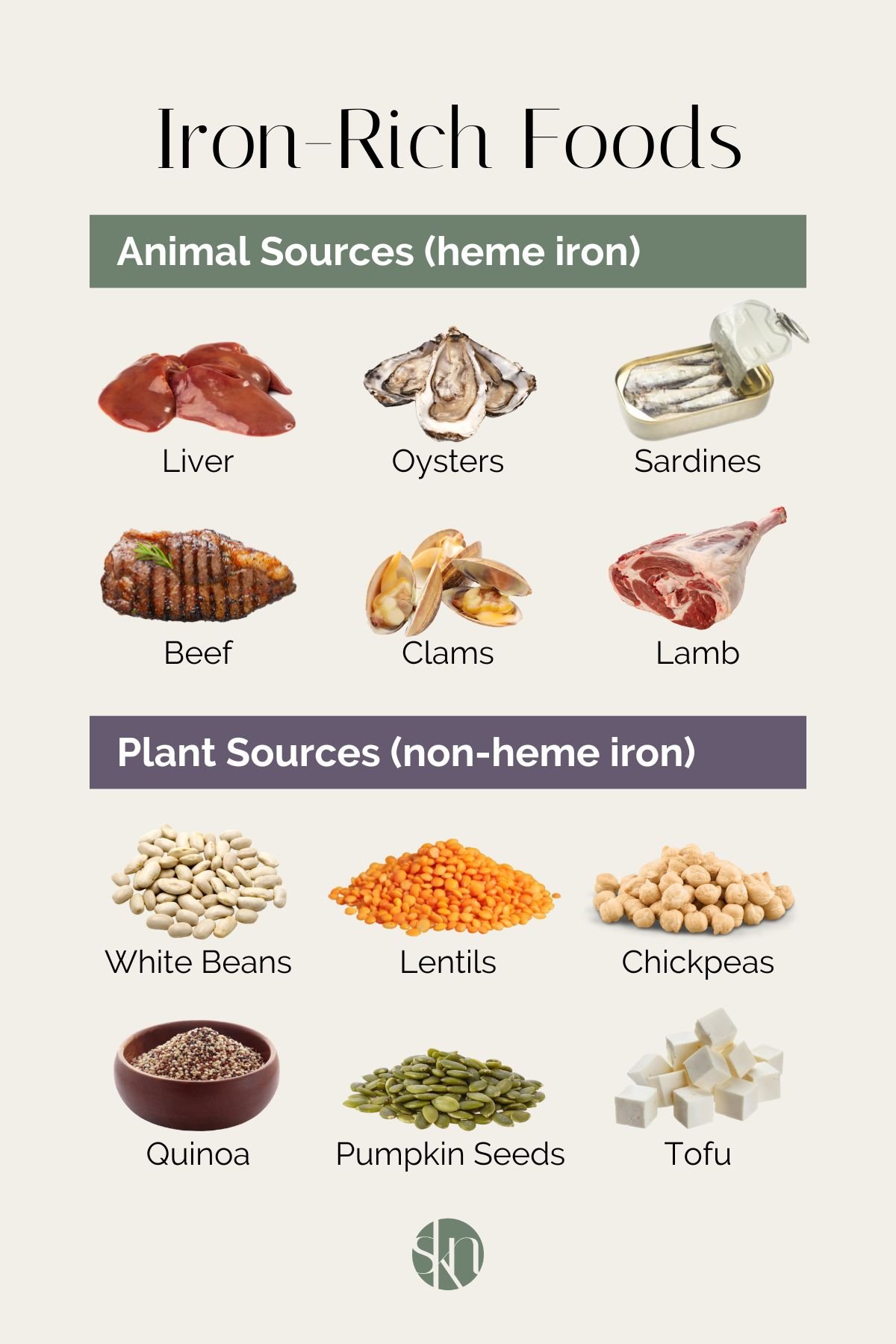
Here is a list of some of the top food sources of iron.
1. Liver
Liver is one of the best food sources of iron. It’s a remarkably nutrient-dense food as it’s rich in micronutrients, including vitamin A, vitamin B12, copper, zinc, and selenium. All forms of liver, be it chicken, beef, or lamb, are rich in heme iron. Like other organ meats, liver is safe to eat, but should be consumed in moderation, as consuming too much or consuming it too frequently can pose health problems. A 3-ounce serving of raw chicken liver contains 7.65 mg of iron (11).
2. Oysters
Oysters are one of the most iron-rich foods. Small but mighty, these shellfish are a nutritional powerhouse, providing a good source of protein and healthy fats, and offering a wide array of essential vitamins and minerals with minimal calories. A 3-ounce serving of raw oysters contains 4.34 mg of iron (12).
3. Sardines
Sardines are a small fish with big health benefits. They are an exceptional source of iron, one of the few natural sources of vitamin D, and one of the best food sources of calcium. A 3-ounce serving of canned, drained sardines with bones contains 2.48 mg of iron (13).
4. Beef
All red meat is a good source of highly bioavailable heme iron, but beef is a particularly good source. Beef contains a higher concentration of iron compared to other sources of red meat, such as pork and lamb, offering twice as much iron per serving. Lean cuts of beef are also great high-protein, low-calorie foods that can help increase protein intake. A 3-ounce serving of raw, beef top sirloin steak contains 1.89 mg of iron (14).
5. Clams
Whether you’re eating them baked, steamed, fried, or in chowder, clams are a low-fat seafood and a good source of iron. They’re also a great source of healthy fats, specifically heart-healthy omega-3 fatty acids. The iron content of clams can vary widely, so it’s best to read the nutrition label to ensure you’re choosing an iron-rich version. A 3-ounce serving of raw clams contains 1.38 mg of iron (15).
6. Lamb
Lamb is another form of red meat and a highly nutrient-dense food that is high in iron. Like other meats, it’s a source of both heme and non-heme iron, but contains more than most forms of poultry and seafood. Lamb is also a good source of protein, healthy fats, vitamin B12, zinc, and selenium. A 3-ounce serving of ground lamb contains 1.32 mg of iron (16).
7. White Beans
White beans are the best plant food source of iron, specifically non-heme iron. They are also a great source of plant-based protein, high in fiber, relatively inexpensive, and very versatile. Beans work well in soups, stews, chilis, casseroles, dips, and salads. A 1-cup serving of cooked white beans contains 6.62 mg of iron (17).
8. Lentils
Be they red, brown, or green, lentils are a good source of non-heme iron, plant-based protein, and one of the highest fiber foods. Their high protein and fiber content make them great for weight management, increasing feelings of satiety, and make them one of the most filling foods. They are a good alternative to beans, as they are quicker to cook, and also work well in soups, stews, chilis, casseroles, dips, and salads. A 1-cup serving of cooked lentils contains 6.59 mg of iron (18).
9. Chickpeas
Along with beans and lentils, chickpeas are another legume that is high in non-heme iron. Chickpeas, also known as garbanzo beans, are a good source of vegetarian protein and fiber, specifically heart-healthy soluble fiber, which helps regulate blood sugar and cholesterol, and supports a healthy gut microbiome. A 1-cup serving of cooked chickpeas contains 4.74 mg of iron (19).
10. Quinoa
Although technically a seed, quinoa is often referred to as a whole grain and is one of the highest protein grains, as well as a good source of iron. Quinoa is also a good source of other trace minerals, particularly copper, zinc, and manganese. A 1-cup serving of cooked quinoa contains 2.76 mg of iron (20).
11. Pumpkin Seeds
Pumpkin seeds are a high-protein seed with numerous health benefits. They are a good source of healthy fats, fiber, antioxidants, and minerals, including iron, magnesium, zinc, and manganese. A 1-ounce serving of raw pumpkin seeds contains 2.51 mg of iron (21).
12. Tofu
Tofu is an excellent source of iron for individuals who follow a vegetarian, vegan, or plant-based diet. Soybeans, the primary ingredient in tofu, are rich in non-heme iron and are a complete protein, providing all nine essential amino acids. Along with tofu, tempeh, a similar product made from fermented soybeans, is also an iron-rich food. A 3-ounce serving of firm tofu contains 2.34 mg of iron (22).
Ranking of Iron-Rich Foods per Serving
Here is a ranking of other foods that are some of the best sources of heme iron, non-heme iron, and fortified iron.
| Source | Serving Size | Iron per Serving |
| Foods High in Heme Iron | ||
| Liver, chicken | 3 ounces | 7.65 mg |
| Oysters | 3 ounces | 4.34 mg |
| Sardines | 3 ounces | 2.48 mg |
| Beef, sirloin | 3 ounces | 1.89 mg |
| Clams | 3 ounces | 1.38 mg |
| Lamb, ground | 3 ounces | 1.32 mg |
| Tuna, skipjack | 3 ounces | 1.06 mg |
| Pork, shoulder | 3 ounces | 1.04 mg |
| Herring | 3 ounces | 0.94 mg |
| Turkey, ground | 3 ounces | 0.93 mg |
| Trout, rainbow | 3 ounces | 0.60 mg |
| Chicken, thigh | 3 ounces | 0.51 mg |
| Foods High in Non-Heme Iron | ||
| Beans, white | 1 cup | 6.62 mg |
| Lentils, red | 1 cup | 6.59 mg |
| Chickpeas | 1 cup | 4.74 mg |
| Spinach, cooked | 1/2 cup | 3.22 mg |
| Quinoa | 1 cup | 2.76 mg |
| Pumpkin seeds | 1 ounce | 2.51 mg |
| Tofu, hard | 3 ounces | 2.34 mg |
| Potato, white | 1 medium | 1.72 mg |
| Eggs | 2 eggs | 1.68 mg |
| Molasses | 1 tablespoon | 0.94 mg |
| Tahini | 2 tablespoons | 0.75 mg |
| Apricots, dried | 1 ounce | 0.75 mg |
| Foods High in Fortified Iron | ||
| Infant formula, fortified | 1 scoop | 9.30 mg |
| Hot cereal, fortified | 3 tablespoons | 9.87 mg |
| Cold cereal, fortified | 1 cup | 8.09 mg |
| Egg noodles, fortified | 3 ounces | 3.44 mg |
| Whole wheat bread, fortified | 2 slices | 1.64 mg |
All nutrition data is based on FoodData Central.
What foods are fortified with iron?
Wheat and other grain products are often fortified with iron in the US and Canada (23). Breakfast cereals, bread, pasta, and flours, as well as infant formulas, are fortified with iron. The iron added to these foods is a form of non-heme iron, which is naturally found in plant-based foods.
Should you take iron supplements?
It is best to work with a healthcare provider or registered dietitian to determine if an iron supplement is best for you.
FAQs
Liver is generally considered the best food source of iron. Albeit it depends on the type, as certain oysters contain more iron than certain types of liver.
Consuming iron-rich foods such as liver is the best way to raise iron levels quickly. Eating a combination of heme iron, from red meat, poultry, and fish, and non-heme iron, from beans and lentils, can easily help to amplify iron consumption.
Prune juice is the drink highest in iron; a 1-cup serving of prune juice contains 2.93 mg of iron (24). Beet juice and smoothies made with spinach are also good sources of iron.

The Bottom Line
Iron is an essential mineral required for optimal health. Iron exists in as highly absorbable heme iron in animal foods like liver and oysters, and less absorbable non-heme iron in plant foods such as white beans and lentils. The daily recommended intake (RDA) of iron varies based on age, gender, and life stage, with women and vegetarians typically needing higher amounts.

Leave a Review