

Potassium is a vital mineral and electrolyte that plays a fundamental role in nearly every bodily function. Here is a list of foods high in potassium that you can add to your diet today.
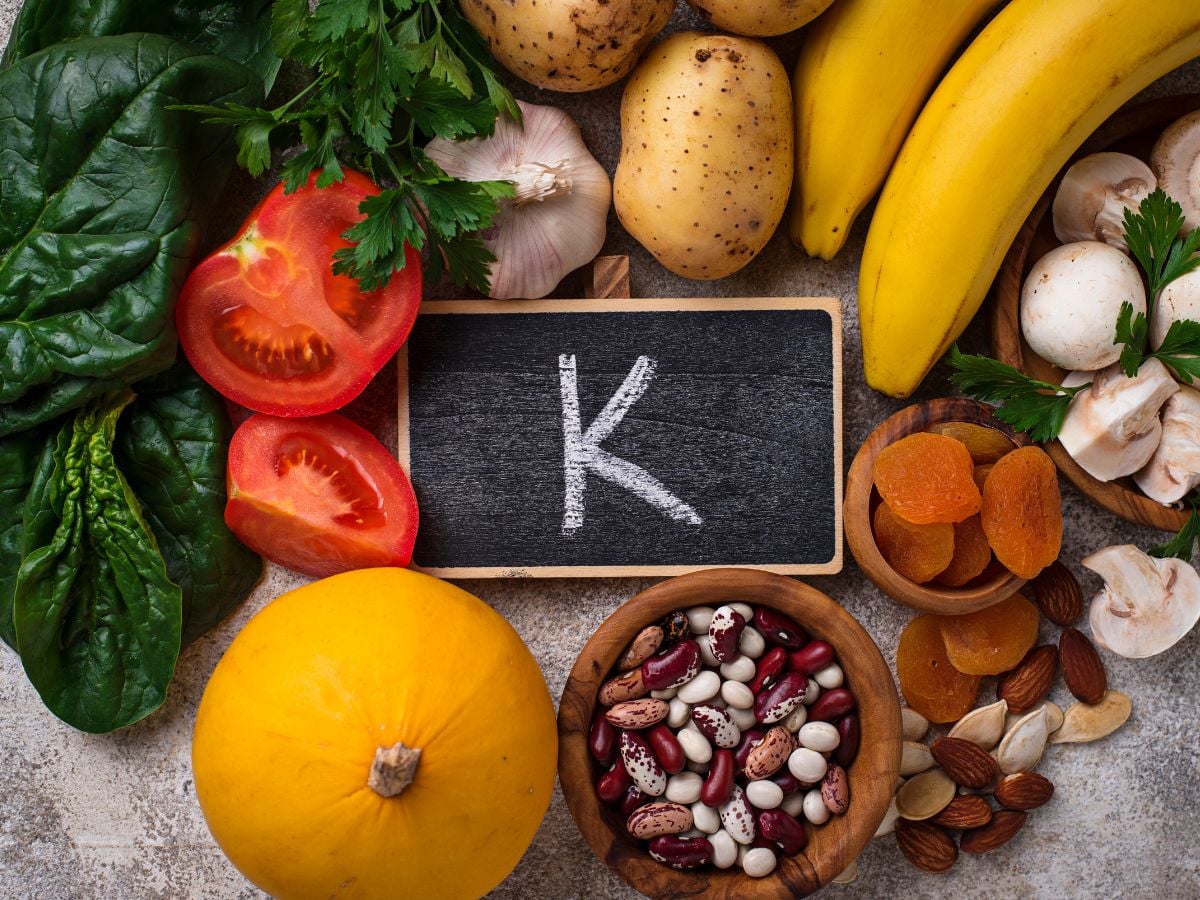
Table of contents
- What is potassium?
- Health Benefits of Potassium
- How much potassium do you need?
- Can you take too much potassium?
- List of Foods High in Potassium
- 1. Swiss Chard
- 2. Potatoes
- 3. Squash
- 4. Apricots
- 5. Beans
- 6. Parsnips
- 7. Clams
- 8. Beets
- 9. Avocado
- 10. Banana
- 11. Asparagus
- 12. Lentils
- Ranking of Potassium-Rich Foods and Beverages per Serving Size
- How do you know how much potassium a food contains?
- Should you take potassium supplements?
- FAQs
- Recipes with High Potassium Foods:
What is potassium?
Potassium is an essential mineral and micronutrient required in all tissues of the body. It is naturally present in many foods, including fruits, vegetables, grains, meat, and dairy products, and can be found in supplement form (1).
Potassium comes in many forms. The forms of potassium in whole foods include potassium phosphate, sulfate, citrate, and others (1). Potassium chloride is the form used in salt substitutes and some dietary supplements.
Health Benefits of Potassium
Potassium plays many crucial roles in the body, including proper kidney function, heart function, blood pressure, muscle contraction, and nerve signals (2, 3). Working alongside its counterpart sodium, potassium acts as an electrolyte whose electrical charge is essential for regulating intracellular fluid balance.
While readily available in many plant and animal foods, most Americans do not get enough potassium. Dietary surveys have shown that an estimated 98% of American adults do not meet their daily recommended potassium intake (4).
How much potassium do you need?
The current Recommended Dietary Allowance (RDA) for potassium varies by age and life stage (4):
- Birth to 6 months: 400 mg/day
- Infants 7-12 months: 860 mg/day
- Children 1-3 years: 2,000 mg/day
- Children 4-8 years: 2,300 mg/day
- Children 9–13 years (boys): 2,500 mg/day
- Children 9–13 years (girls): 2,300 mg/day
- Teens 14–18 years (boys): 3,000 mg
- Teens 14–18 years (girls): 2,300 mg
- Adults 19+ years (men): 3,400 mg
- Adults 19+ years (women): 2,600 mg
- Pregnant teens: 2,600 mg
- Pregnant women: 2,900 mg
- Breastfeeding teens: 2,500 mg
- Breastfeeding women: 2,800 mg
Insufficient potassium intake can increase blood pressure, deplete calcium in bones, and increase the risk of high blood pressure, heart disease, and kidney stones (4). Severe potassium deficiency, medically known as hypokalemia, can be life-threatening, but it is rare among healthy people with normal kidney function.
Can you take too much potassium?
In healthy individuals with normal kidney function, a high potassium intake from food and beverages is not of concern because the kidneys eliminate excess amounts in the urine (4).
However, for individuals with chronic kidney disease and some specific medical conditions, high potassium levels can be very dangerous and potentially fatal. High potassium levels in their blood can lead to a condition called hyperkalemia, which can cause muscle weakness, paralysis, heart palpitations, paresthesia, and cardiac arrhythmias (5, 6).
While an upper limit (UL) has not been established for healthy individuals, those with kidney disease, type 1 diabetes, congestive heart failure, adrenal insufficiency, or liver disease should work with a registered dietitian or healthcare provider before taking potassium supplements (5).
List of Foods High in Potassium
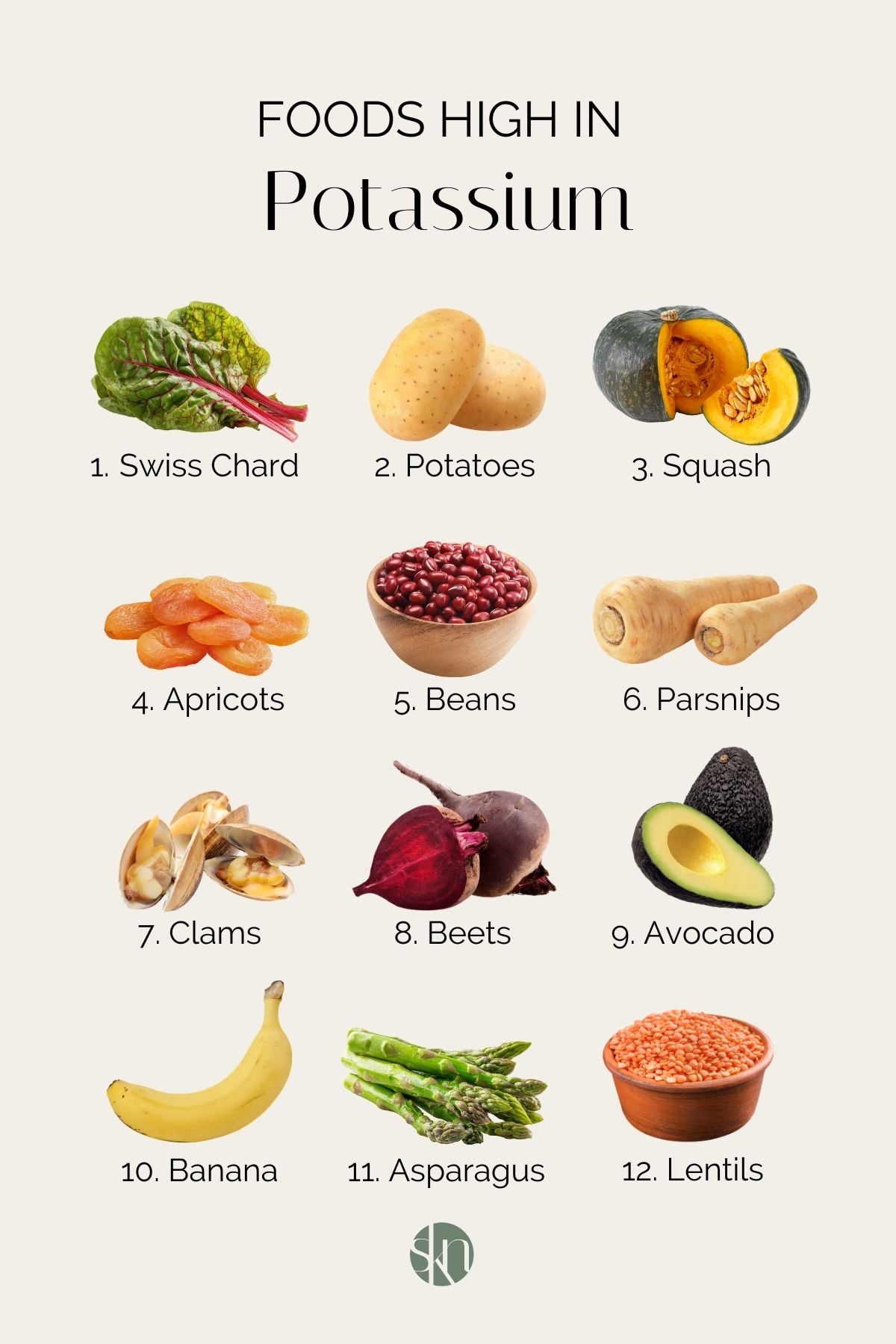
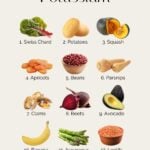
Here is a list of the most potassium-rich foods.
1. Swiss Chard
All leafy greens are rich in micronutrients, but Swiss chard, beet greens, and spinach are particularly rich in potassium. They are also one of the most nutrient-dense high-volume foods, making them great additions to meals for individuals looking to create a calorie deficit for weight loss. A 1-cup serving of cooked Swiss chard contains 961 mg of potassium (7).
2. Potatoes
Potatoes are another great source of potassium. Both white potatoes and sweet potatoes contain potassium in the skin and flesh; however, most is found in the skin. Potatoes are also a good source of complex carbohydrates, particularly soluble and insoluble fiber, and can be eaten baked, boiled, or roasted. A 1-medium (173-gram) cooked Russet potato contains 952 mg of potassium (8).
3. Squash
Winter squash is another good source of potassium, although the concentration varies by variety. Acorn squash contains the most potassium among them, followed by butternut squash and pumpkin. Squash is also a great source of dietary fiber, vitamin A, and vitamin C. A 1-cup serving of cooked acorn squash contains 896 mg of potassium (9).
4. Apricots
Apricots, specifically dried apricots, are another potassium-rich food. In fact, compared gram per gram, dried apricots contain 3 times more potassium than bananas. Along with other dried fruits, including prunes and raisins, apricots are also a good source of fiber, energy, and natural sugars. A 1/2 cup serving of dried apricots contains 755 mg of potassium (10).
5. Beans
Beans are one of the best sources of potassium. While adzuki beans contain the most potassium, lima beans, white beans, kidney beans, navy beans, and Great Northern beans are all good sources of potassium. They are also a good source of vegetarian protien, fiber, iron, magnesium, and zinc. A 1/2-cup serving of cooked adzuki beans contains 610 mg of potassium (11).
6. Parsnips
Along with potatoes, parsnips are the most potassium-rich root vegetables. This pale, cream-colored, carrot-like vegetable is also a good source of vitamin C. They have a sweet, earthy, and slightly nutty flavor and are good roasted, steamed, or in soups. A 1-cup serving of cooked parsnips contains 572 mg of potassium (12).
7. Clams
Clams contain more potassium than any other form of seafood or animal protein. They are also a good source of lean protein and healthy fats, particularly omega-3 fatty acids. The exact amount of potassium clams contain varies by species and preparation. A 3-ounce serving of canned clams contains 534 mg of potassium (13).
8. Beets
Beets are another good source of potassium. Be they red, golden, or striped, these colorful roots are full of potassium, folate, and antioxidants. They are also high in natural nitrate content, which has been shown to have anti-inflammatory properties and improve athletic performance. A 1-cup serving of cooked beets contains 518 mg of potassium (14).
Along with the root, beet greens – the green, edible leaves- are also rich in potassium, providing 50% of the DV for potassium, based on a 2,000-calorie-a-day diet. A 1-cup serving of cooked beet greens contains 1,310 mg of potassium (15).
9. Avocado
While often thought of as a vegetable, avocados are a fruit and one of the best sources of potassium. They are also a great source of fiber, healthy fats, and vitamins K, E, C, and B. The exact amount of potassium an avocado contains will vary by size, variety, and preparation. A 1/2-fruit serving of raw avocado contains 403 mg of potassium (16).
10. Banana
Bananas are the most well-known potassium-rich food, although they are not the most concentrated source. They are outranked by leafy greens, potatoes, squash, apricots, beans, parsnips, beets, clams, and avocado. A 1 medium-sized fruit serving of banana contains 375 mg of potassium (17).
11. Asparagus
Asparagus is one of the most potassium-rich vegetables. It’s also a nutrient-dense, low-calorie spring vegetable packed with fiber, folate, and vitamins A, C, E, and K, and is rich in antioxidants. It can be eaten raw, but is best steamed, roasted, grilled, or sauteed. A 1-cup serving of raw asparagus contains 375 mg of potassium (18).
12. Lentils
Much like beans, lentils are a good source of potassium. Be they red, green, or brown, they are a good source of plant-based protein, fiber, vitamins, and minerals. A 1/2-cup serving of cooked lentils contains 731 mg of potassium (19).
Ranking of Potassium-Rich Foods and Beverages per Serving Size
Here is a ranking of other high-potassium foods ranked by recommended serving size.
| Food or Beverage | Serving Size | Potassium per Serving |
| Swiss chard, cooked | 1 cup | 961 mg |
| Potato, baked | 1 medium | 952 mg |
| Acorn squash, cooked | 1 cup | 896 mg |
| Spinach, cooked | 1 cup | 839 mg |
| Apricots, dried | 1/2 cup | 755 mg |
| Prunes | 1/2 cup | 635 mg |
| Adzuki beans, cooked | 1/2 cup | 610 mg |
| Coconut water | 1 cup | 600 mg |
| Butternut squash, cooked | 1 cup | 582 mg |
| Parsnips, cooked | 1 cup | 572 mg |
| Pumpkin, cooked | 1 cup | 564 mg |
| Sweet potato, cooked | 1 medium | 542 mg |
| Clams, canned | 3 ounces | 534 mg |
| Pomegranate juice | 1 cup | 533 mg |
| Tomato juice | 1 cup | 527 mg |
| Beets, cooked | 1 cup | 518 mg |
| Prune juice | 1 cup | 518 mg |
| Lima beans, cooked | 1/2 cup | 485 mg |
| Orange juice | 1 cup | 434 mg |
| White beans, cooked | 1/2 cup | 415 mg |
| Avocado | 1/2 medium | 403 mg |
| Soy milk | 1 cup | 379 mg |
| Banana | 1 medium | 375 mg |
| Asparagus | 1 cup | 375 mg |
| Milk, 3.25% | 1 cup | 374 mg |
| Lentils, cooked | 1/2 cup | 366 mg |
| Kidney beans, cooked | 1/2 cup | 357 mg |
| Navy beans, cooked | 1/2 cup | 354 mg |
| Northern beans, cooked | 1/2 cup | 346 mg |
| Artichoke | 1 medium | 343 mg |
| Mackerel, cooked | 3 ounces | 341 mg |
| Edamame | 1/2 cup | 338 mg |
| Pomegranate | 1 medium | 333 mg |
| Salmon, cooked | 3 ounces | 326 mg |
| Portabello mushrooms | 1 cup | 313 mg |
| Beef, cooked | 3 ounces | 302 mg |
| Pork, cooked | 3 ounces | 297 mg |
| Chicken, cooked | 3 ounces | 292 mg |
| Molasses | 1 tablespoon | 292 mg |
| Halibut, cooked | 3 ounces | 292 mg |
| Yogurt, 3.25% | 3/4 cup | 287 mg |
| Tomato | 1 medium | 274 mg |
| Raisins | 1/4 cup | 270 mg |
| Mung beans, cooked | 1/2 cup | 269 mg |
| Zucchini | 1 cup | 269 mg |
| Cantaloupe | 1 cup | 251 mg |
| Watermelon | 1 cup | 178 mg |
All nutrition data is based on FoodData Central.
Potassium is also commonly used in table salt substitutes, specifically in the form of potassium chloride (KCl).
How do you know how much potassium a food contains?
The best way to determine the potassium content of a food, particularly processed foods, is to read food labels. The potassium content of a food is listed in the Nutrition Facts Label of food packaging and listed by total milligrams (mg) or the % Daily Value (%DV) per serving.
Should you take potassium supplements?
Potassium supplements come in many different forms, with potassium chloride being the most popular. As with all dietary supplements, it is best to consult with a registered dietician or health professional to determine if potassium supplements are right for you.
FAQs
Beets, beans, and potatoes are the top 3 foods highest in potassium.
Coconut water, pomegranate juice, and tomato juice are the drinks highest in calcium. Prune juice, orange juice, soy milk, and cow’s milk are also good sources of potassium.
Consuming foods and beverages high in potassium is the best way to increase intake. Potassium supplements can also help; however, it is best to work with a registered dietitian or health professional before using them.
Recipes with High Potassium Foods:
- Vegetarian Stuffed Potatoes
- Apricot Pistachio Oatmeal Cookies
- Carrot and Parsnip Soup
- French Lentil and Beet Salad
- Roasted Beet Pasta
- Avocado Egg Salad
- Banana Oatmeal Pancakes
- Asparagus Pasta Salad
- Lentil Chili

The Bottom Line
Potassium is a mineral and electrolyte that is essential for health and life. The most potassium-rich foods include leafy greens, potatoes, squash, apricots, and beans; however, it is available in a wide variety of other foods, including fruits, vegetables, grains, meat, and dairy products.

Leave a Review