

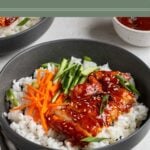
Layered with rice, tender chicken, veggies, and covered in a sweet and spicy gochujang sauce, these gochujang chicken bowls are a delicious and nutritious meal. They’re also ready in 30 minutes, perfect for a high-protein weeknight dinner.
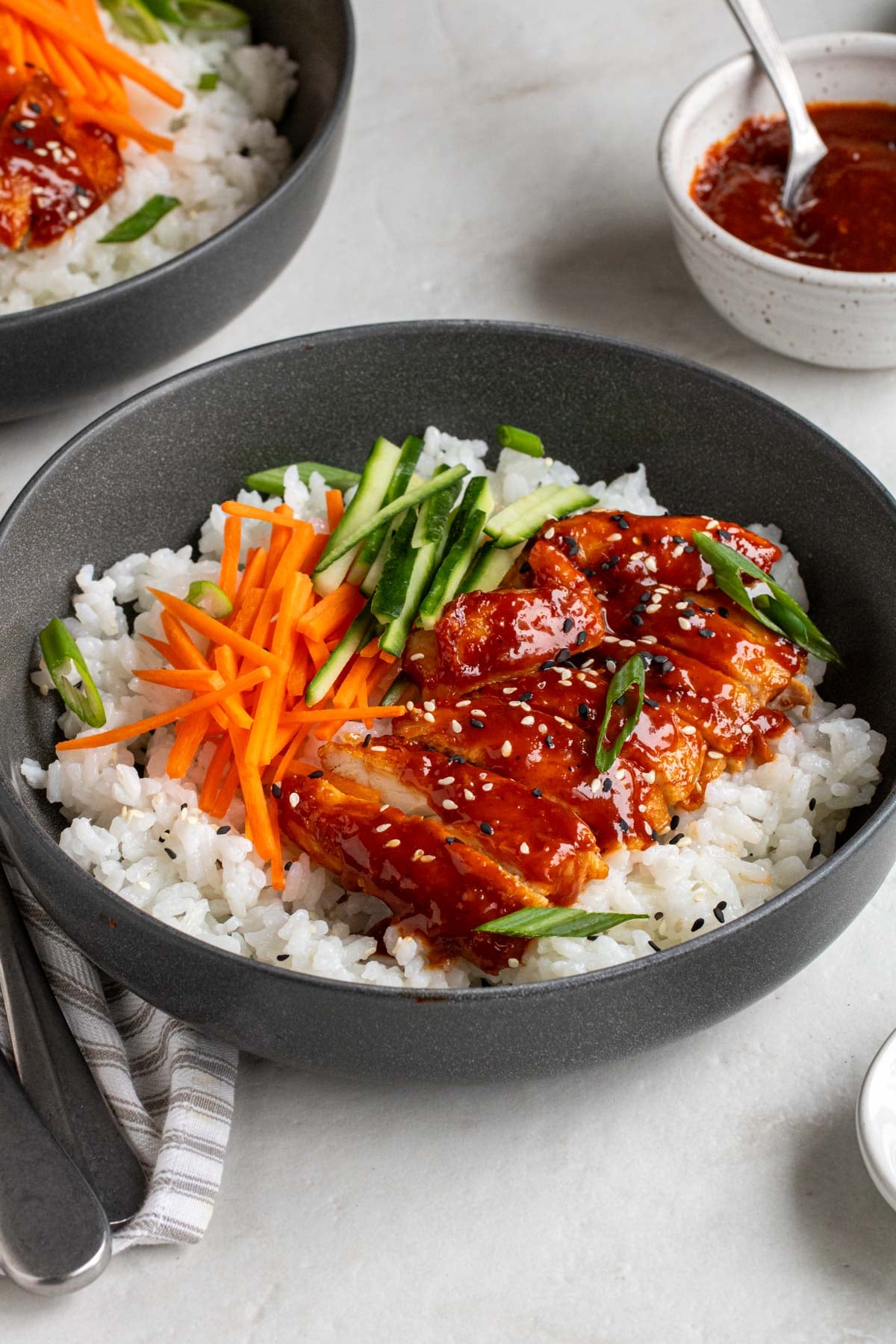
If you’re looking for a dinner that beats boring weeknight meals, this gochujang chicken recipe is for you! It’s full of flavor, colors, and texture while using pantry ingredients to keep prep and cleanup to a minimum. This recipe is perfect for a quick and easy dinner or a simple meal prep idea that is high in protein, full of healthy fats, and lots of veggies.
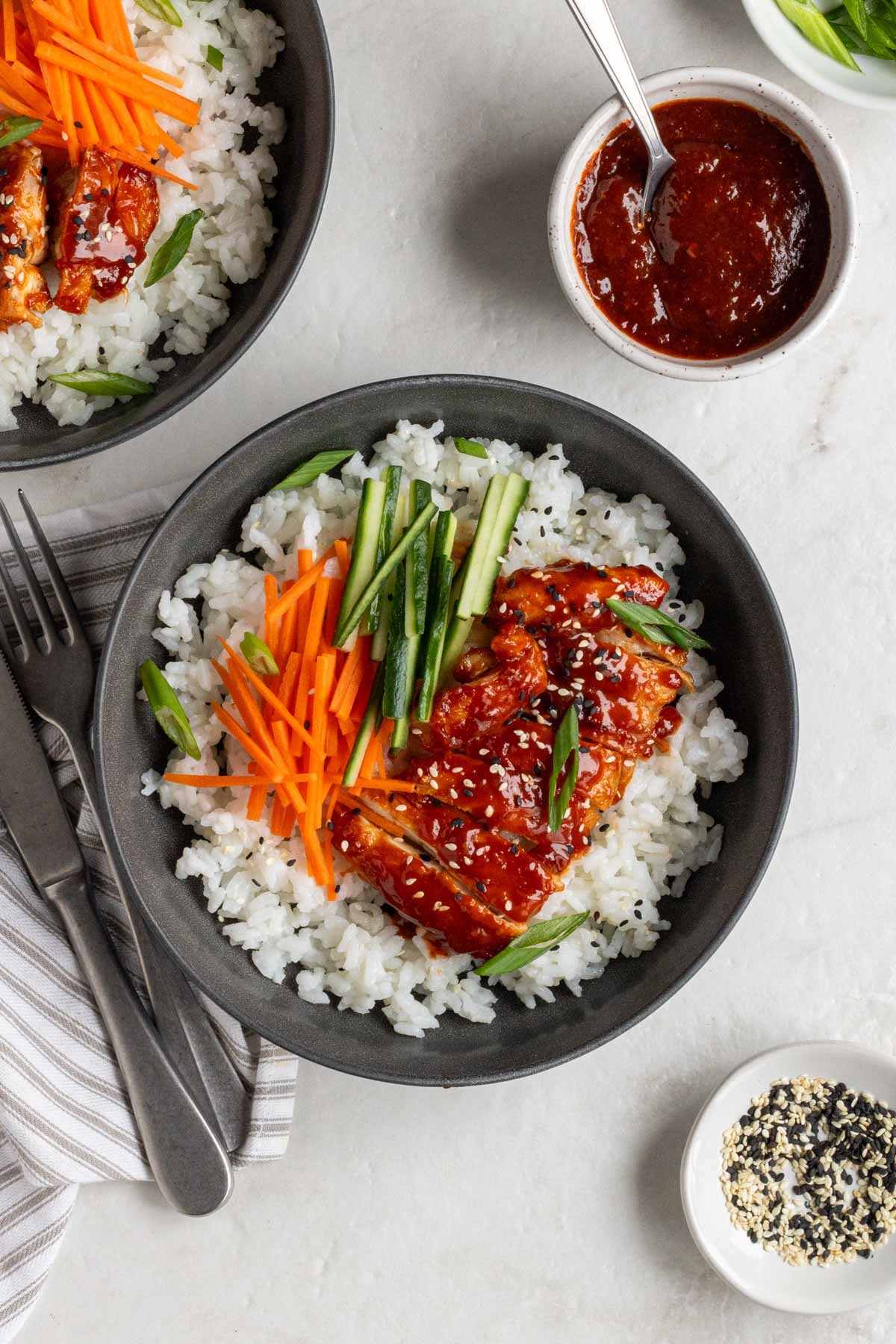
Why You’ll Love Them
- Ready in 30 Minutes – These gochujang chicken bowls are perfect for a quick weeknight dinner or an easy meal prep idea.
- High in Protein – These bowls are loaded with 30 grams of protein per serving.
- Full of Flavor – The mixture of soy sauce, honey, and gochujang paste ensures every bite is absolutely delicious.
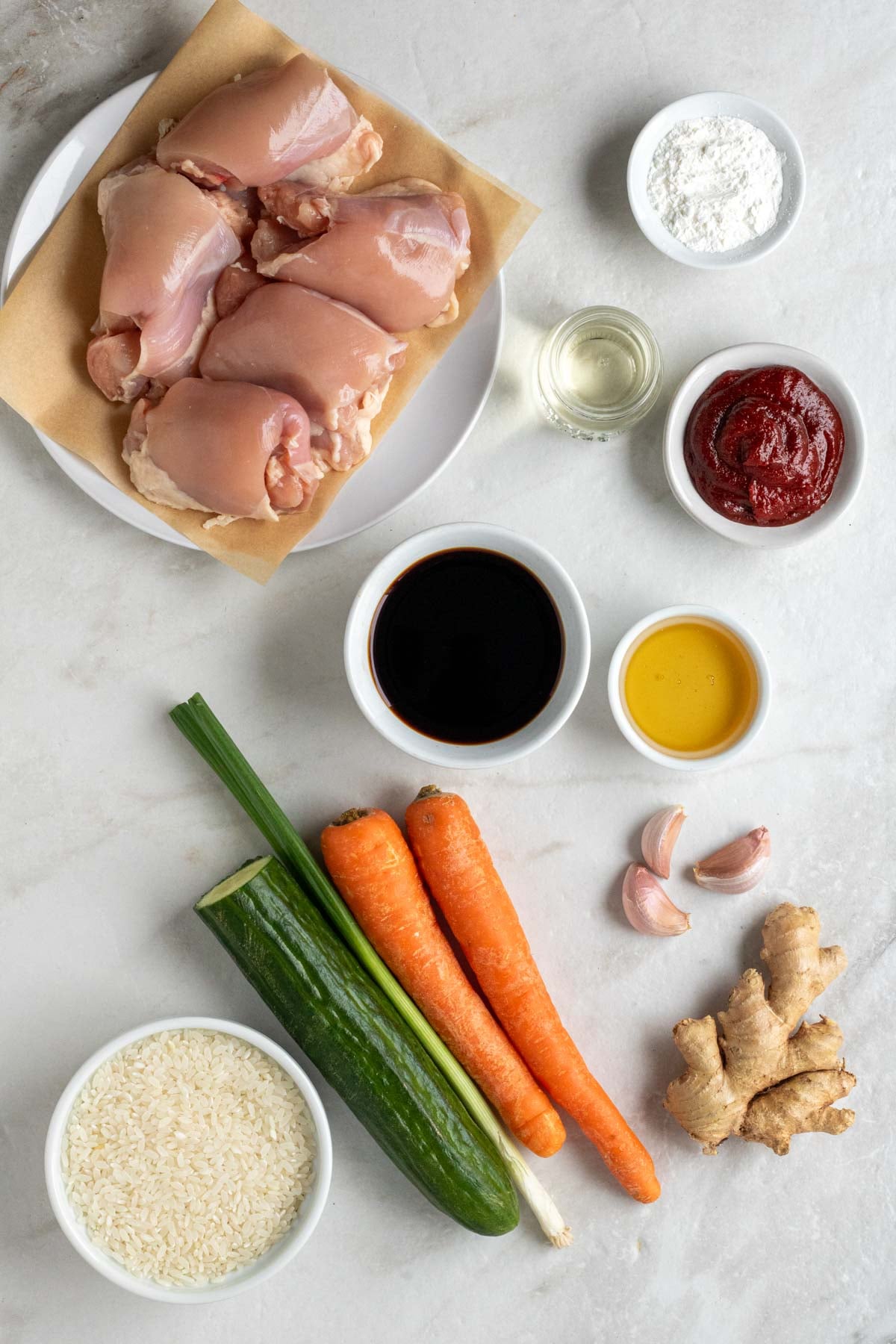
Ingredients + Substitutions
- Chicken Thighs – To add some protein. The recipe calls for boneless, skinless chicken thighs, but you can use boneless, skinless chicken breasts if preferred. See the notes section of the recipe card for details.
- Gochujang Paste – To flavor the chicken and add some heat. Gochujang is a Korean chili paste and works best in this recipe; however, you can use an alternative chili sauce, such as garlic chili paste, sambal, or sriracha if needed.
- Soy Sauce – To add some saltiness to the sauce. You can use regular or low-sodium soy sauce, or swap it for tamari or coconut aminos if needed.
- Honey – To add a hint of sweetness to the sauce. The recipe calls for honey, but brown sugar will also work.
- Sesame Oil – To cook the chicken and add some healthy fats. The recipe calls for regular or toasted sesame oil, but olive oil or avocado oil will also work.
- Corn Starch – To thicken the gochujang sauce.
- Ginger – To flavor the sauce. The recipe calls for fresh ginger, but you can use ground ginger if preferred. See the notes section of the recipe card for details.
- Garlic – To flavor the sauce. The recipe calls for garlic cloves, but you can use garlic powder if preferred. See the notes section of the recipe card for details.
- Rice – To add some complex carbohydrates. While any white rice will work, a medium-grain glutinous rice, such as sushi rice, works best.
- Vegetables – To add some fiber and color. The recipe calls for cucumber and carrots, but green cabbage, bok choy, and bean sprouts would also work well.
- Green onions – To add some crunch and color, although optional.
- Sesame Seeds – Some toasted sesame seeds to serve, although optional.
Dietary Adaptions
To Make it Gluten-Free: Swap the soy sauce for gluten-free soy sauce, tamari, or coconut aminos.
To Make it Dairy-Free: No adaptations are needed; this recipe is dairy-free.
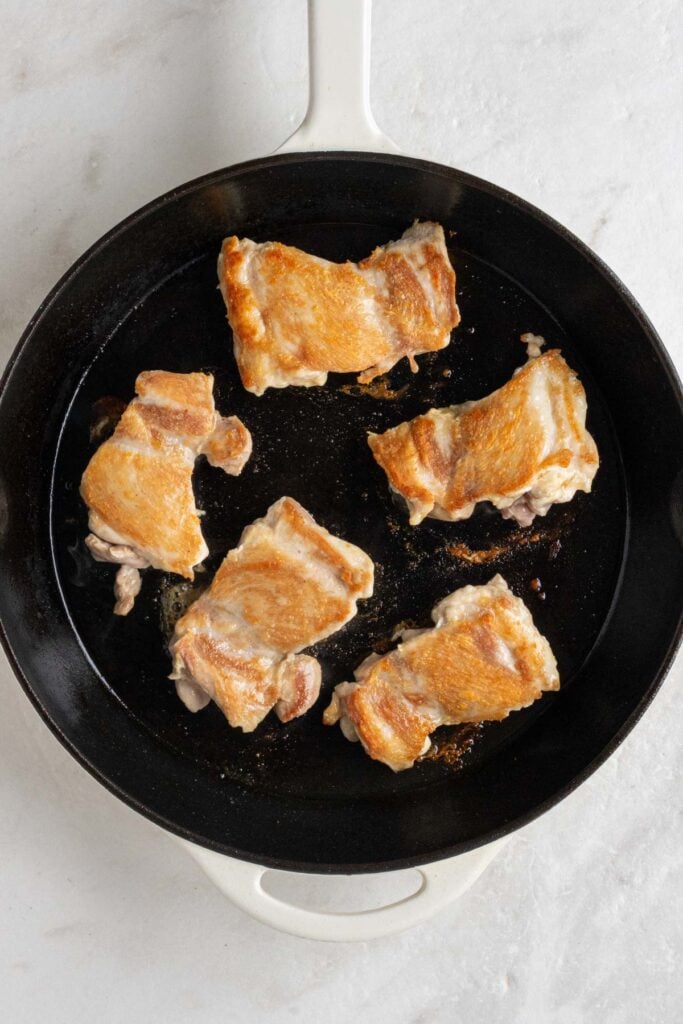
Red’s Nutrition Tip
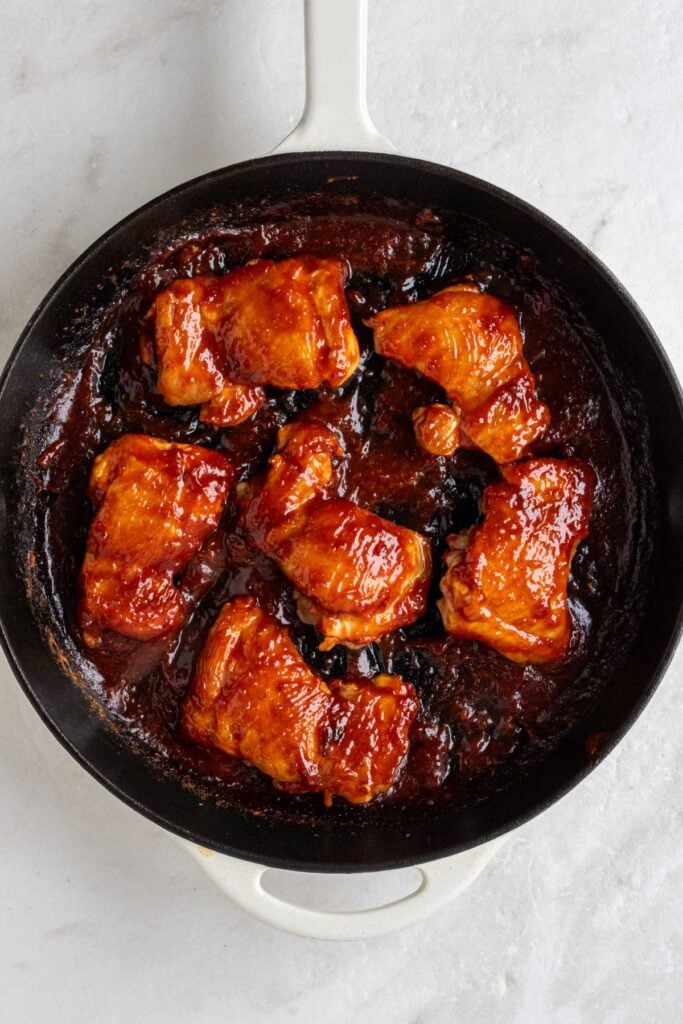
I opted to use chicken thighs for this gochujang chicken, as I think they provide better flavor. That said, you can certainly use chicken breasts if preferred. In fact, the nutritional differences between chicken breasts and chicken thighs are much fewer than most people think.
Serving Suggestions
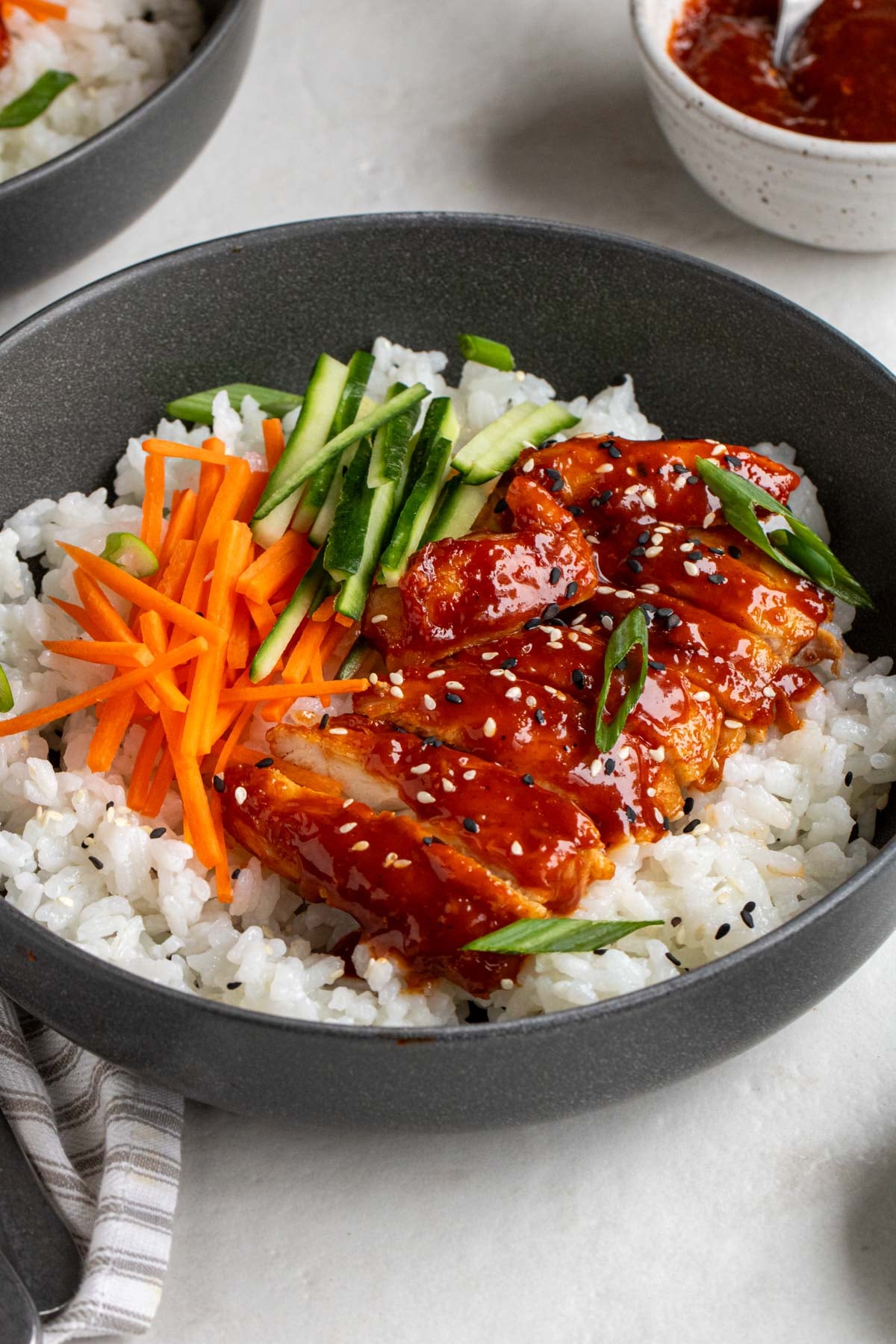
These gochujang chicken bowls are a balanced meal with protein, carbohydrates, fiber, and fat. It can be enjoyed on its own or adapted to suit your personal calorie or macro needs. For example:
- To make it higher in protein, add an additional 1/2 pound of chicken thighs to the recipe.
- To make it lower in fat, swap the chicken thighs for chicken breast or lean ground chicken.
- To make it lower in carbs, swap the white rice for cauliflower rice.
- To make it higher in fiber, swap the white rice for brown rice, and add some more high-fiber vegetables such as broccoli and cabbage.
Storage + Reheating
To Refrigerate: Once cooled, the chicken, rice, and extra sauce can be stored together in an airtight container in the fridge for up to 4 days. The veggies can be stored in a separate airtight container for up to 5 days.
To Freeze: Once cooled, the chicken, rice, and extra sauce can be stored together in an airtight container in the freezer for up to 3 months. The veggies cannot be frozen.
To Reheat: Once thawed, the rice and chicken can be reheated in the microwave for 2-3 minutes or until warm. The veggies can be added to the bowls once reheated.
More Chicken Bowls:
- Peanut Chicken Bowls
- Hot Honey Chicken Bowls
- Sticky Chicken Meal Prep Bowls
- Honey Cashew Chicken Bowls
- Teriyaki Chicken and Rice Bowls
Spicy Gochujang Chicken Bowls
The sweet and spicy gochujang chicken bowls are easy to make, full of flavor, and high in protein. They are perfect for a quick weeknight meal, and leftovers keep well for healthy lunches.
-
 Prep Time: 15 minutes
 -
Cook Time: 15 minutes
-
Total Time: 30 minutes
-
Yield: 4 bowls 1x
-
Category: Dinner
-
Method: Stovetop
 Prep Time:
 Yield:
 Category:
 Method:
Ingredients
Gochujang Sauce:
- 3 tablespoons gochujang
- 6 tablespoons soy sauce
- 2 tablespoons honey
- 2 tablespoons rice vinegar
- 1 tablespoon corn starch
- 2 inches fresh ginger root, minced or grated
- 3 cloves garlic, minced or grated
- 2 tablespoons water
Chicken:
- 1 tablespoon sesame oil
- 1 pound chicken thighs, boneless and skinless
Bowls:
- 1 1/2 cups white rice, uncooked
- 1/2 cucumber, julienned
- 1 carrot, peeled and julienned
- 1 green onion, thinly sliced
- Sesame seeds, to serve
Instructions
- In a pot, combine the rice with 3 cups of water and a pinch of salt. Bring to a boil, then reduce to a simmer, and allow to cook covered for 15 minutes, or as per package directions, until it can be fluffed with a fork.
- In a small bowl, add the gochujang, soy sauce, honey, rice vinegar, corn starch, minced garlic, minced ginger, and water, and whisk until well combined. Set aside.
- In a large pan or cast-iron skillet on medium-high heat, warm the sesame oil, then add the chicken thighs and cook for 4-5 minutes or until golden brown, then flip and continue cooking for an additional 3-4 minutes, until mostly cooked through.
- When the chicken thighs are almost done cooking, pour the gochujang sauce into the pan, covering the chicken thighs, and continue cooking for 1-2 minutes until the chicken is cooked through to an internal temperature of 165°F.
- Once cooked, flip the chicken in the sauce to coat it on all sides, then remove the chicken from the pan and place it on a cutting board to rest.
- With the remaining sauce in the pan, continue to cook it for an additional minute, whisking frequently, until slightly thickened, then transfer it to a small bowl. (If the sauce is too thick, you can add 1-2 tablespoons of water to thin it to your liking.)
- Once the chicken has rested, cut the thighs into 1/2 strips.
- Once everything is ready, assemble the bowls with a layer of rice, then top with strips of chicken, cucumber, carrots, and green onion, and finish with a sprinkle of sesame seeds and/or additional gochujang sauce if desired.
- Any leftover rice, chicken, and sauce can be cooled and stored in an airtight container in the fridge for up to 4 days or in the freezer for up to 3 months. The vegetables can be stored in the fridge for up 5 days, but cannot be frozen.

Notes
To Use Chicken Breasts: Swap the chicken breasts for 1 pound of chicken thighs in step #3 and increase the cooking time by 1-2 minutes per side.
To Use Brown Sugar: Swap the honey for 2 tablespoons of brown sugar in step #2.
To Use Ground Ginger: Swap the fresh ginger for 2 teaspoons of ground ginger in step #2.
To Use Garlic Powder: Swap the garlic cloves for 3/4 teaspoon of garlic powder in step #2.
Nutrition
- Serving Size: 1 bowl
- Calories: 506 calories
- Sugar: 13 grams
- Fat: 9 grams
- Carbohydrates: 75 grams
- Fiber: 2 grams
- Protein: 30 grams

Delicious! Would definitely make again! Thank you!
Thank you so much for sharing, Jennifer! I’m happy you liked it. 🙂
This has become a go to for our family- the right amount of spicy, salty and sweet keeps us wanting more!
Love that! Thanks for sharing, Suzanne.
Delicious and easy
Really good