

Whether you’re managing a medical diagnosis or exploring a lifestyle change, the idea of going all-in on a gluten-free diet can be overwhelming, especially if you’re not sure if it’s right for you. This beginner’s guide to gluten-free explores everything you need to know about gluten: what it is, who needs to avoid it, the best foods to eat, and some simple tips to get started.
Table of contents
What is gluten?
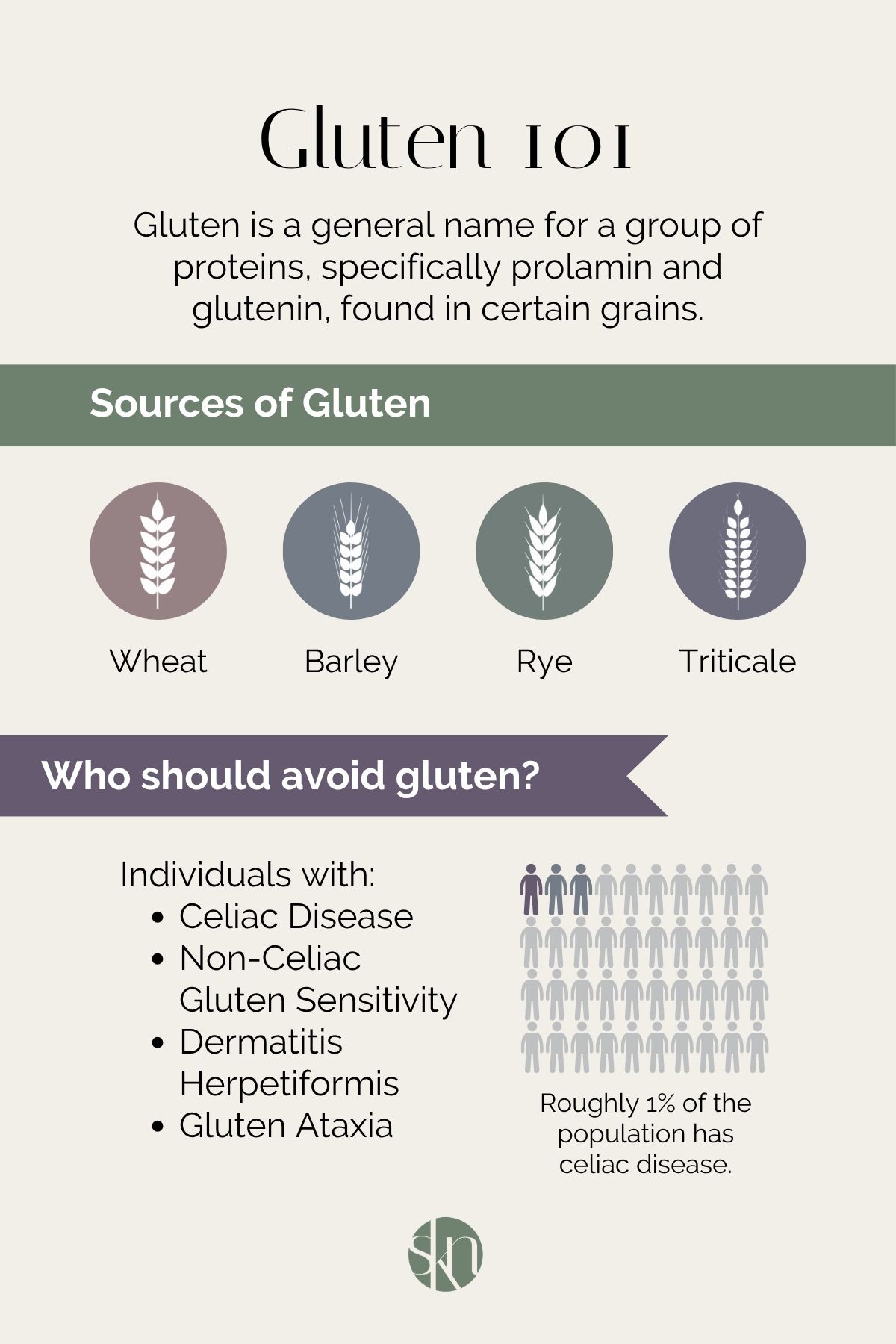
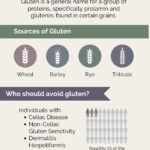
Gluten is a general name for a group of proteins, specifically prolamin and glutenin, found in certain grains (1). These proteins act as a “glue” when mixed with water and provide strength, structure, and elasticity in foods. For example, gluten gives elasticity to dough, allowing bread to rise, and structure to baked goods, to hold them together.
What foods contain gluten?
Gluten proteins are naturally found in wheat, barley, rye, and triticale, and all of the homemade and processed foods, beverages, and products made from them. Common gluten-containing foods include:
- Breads: Sandwich loaf, bagels, baguettes, tortillas, etc.
- Pasta: Spaghetti, penne, macaroni, etc.
- Baked Goods: Muffins, cookies, cakes, etc.
- Cereals: Wheaties, Special K, Corn Flakes, etc.
- Snacks: Crackers, granola bars, pretzels, etc.
- Sauces: Soy sauce, Teriyaki sauce, BBQ sauce, gravy, etc.
- Soups: Noodle soups, cream-based soups, or any soup that uses wheat flour as a thickener
- Processed Meats: Sausages, hot dogs, imitation crab, etc.
Moreover, naturally gluten-free foods can become cross-contaminated with gluten during farming, processing, or cooking (e.g., cutting board, toaster, etc.). Items can also become contaminated during consumption when utensils used on gluten-containing food are double-dipped (e.g., butter, jam, peanut butter, etc.).
Who should eat a gluten-free diet?
While gluten is completely safe to consume for the majority of the population, certain individuals must avoid it completely and follow a gluten-free diet for health problems and/or medical conditions. These include (2):
- Celiac Disease: A chronic immune-mediated intestinal disease in genetically predisposed individuals that is induced by exposure to dietary gluten proteins.
- Wheat Allergy: An IgE-mediated immune response that occurs within minutes to hours of wheat gluten ingestion.
- Non-Celiac Gluten Sensitivity: A spectrum of symptoms in which ingestion of gluten proteins produces intestinal and other symptoms similar to those seen in celiac disease. Also known as gluten intolerance.
- Dermatitis Herpetiformis: Celiac disease of the skin.
- Gluten Ataxia: An autoimmune disorder that causes unsteadiness or uncoordination with or without small intestinal inflammation.
List of Gluten-Free Grains
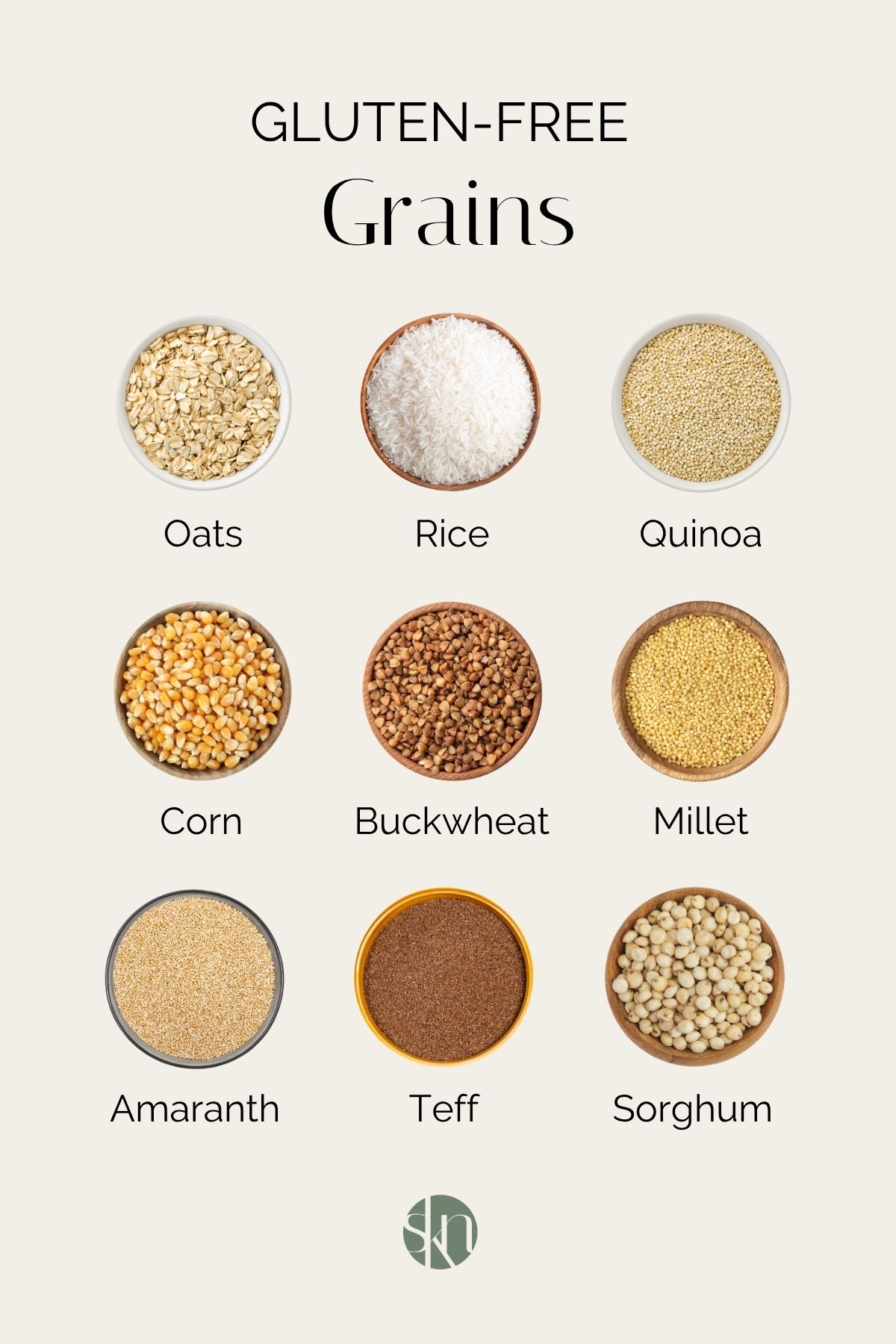
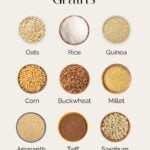
Here is a list of naturally gluten-free grains you can safely include in a gluten-free diet.
Oats
While oats are inherently gluten-free, they often become contaminated during processing, as they are often harvested and processed in factories that process other grains. For this reason, when purchasing oats, be sure to opt for certified gluten-free oats.
Rice
All varieties of rice, including white, brown, jasmine, basmati, sushi, and wild, are gluten-free. While all plain, raw rice is safe to use and cook with, some prepared, flavored, or boxed rice and rice pilaf contain gluten.
Quinoa
While technically a seed, quinoa is often considered a gluten-free grain. It’s also a good source of vegetarian protein, and cooked quinoa works well as a substitute for couscous or breadcrumbs in meatballs.
Corn
Like oats, corn is inherently gluten-free; however, corn products can become contaminated during harvesting and processing. While corn on the cob and frozen corn is generally safe, opt for certified gluten-free options when purchasing items such as tortillas, meals, crackers, and chips.
Buckwheat
Despite its name, buckwheat is not a form of wheat; rather, it’s an ancient grain and pseudocereal similar to quinoa. It’s a good source of fiber, and buckwheat groats are a good alternative to oats in porridge, and soba noodles, traditional Japanese noodles made from buckwheat, are a good substitute for wheat-based noodles and pasta.
Millet
Millet is a small gluten-free grain with a nutty flavor and fluffy and/or creamy texture when cooked. It works well as a substitute for couscous or cooked into a porridge; it’s also commonly used in gluten-free granola.
Amaranth
Amaranth is another ancient gluten-free grain, commonly used to make hot cereal and polenta. The kernels can also be popped like popcorn for a savory snack.
Teff
In addition to being gluten-free, teff is one of the highest protein grains, making it a great source of plant-based protein. It can be cooked whole like rice or ground into flour for baking.
Sorghum
Sorghum, also known as milo, is a gluten-free grain with a hearty and chewy texture similar to wheat berries. Sorghum can be popped like popcorn, cooked into porridge, or ground into flour for baked foods.
FAQs
While you can lose weight by going gluten-free, a gluten-free diet does not inherently cause weight loss. Rather, weight loss is caused by creating a sustained calorie deficit.
For individuals with celiac disease, gluten intolerance, or a wheat allergy, a gluten-free diet is life-changing. However, it offers no proven health benefits to the rest of the population.
No, there are no dietary supplements that neutralize gluten for individuals with celiac disease, gluten intolerance, or a wheat allergy.
Traditional beers (ales, lagers, stouts, and porters) contain gluten, as do malt beverages.
Tips for Following a Gluten-Free Diet:
New to a gluten-free diet? Here are 5 simple tips to help get you started.
- Focus on Whole Foods: With the exception of wheat, barley, rye, and triticale, most whole foods are naturally gluten-free. Prioritizing fruits, vegetables, nuts, seeds, beans, lentils, milk, poultry, seafood, and meat can help make eating gluten-free much easier.
- Read Labels: Food manufacturers must list major food allergens, including gluten, on food labels. When buying prepared foods, refer to the label and ingredients list to determine if the item contains gluten.
- Cook Your Meals: Preparing your meals at home allows for more control so you can ensure what you’re eating is free of gluten. Cooking gluten-free recipes is one of the best ways to eat a gluten-free diet.
- Prevent Cross-Contamination: Thoroughly clean all kitchen utensils and cooking surfaces and use dedicated, separate kitchen items that cannot be cleaned (i.e., cutting board, toaster, etc.) for gluten-free foods. Avoid “double dipping” with shared foods (i.e., butter, peanut butter, jam, etc.) or use dedicated gluten-free ones.
- Work with a Registered dietitian: It is best to work with a registered dietitian who specializes in gluten-free diets to ensure you are set up for success.
Examples of Gluten-Free Swaps
In addition to the tips above, here are some simple swaps you can use to replace wheat-based foods with delicious and safe gluten-free alternatives.
- Swap regular pasta for chickpea pasta or rice noodles.
- Swap wheat flour for cornstarch to thicken sauces and soups.
- Swap flour tortillas for corn tortillas.
- Swap couscous for quinoa or millet.
- Swap soy sauce for gluten-free soy sauce, tamari, or coconut aminos.
- Swap breadcrumbs for almond meal.
- Swap croutons for nuts.
- Swap crackers for rice cakes.

The Bottom Line
Gluten is the name given to specific proteins in certain grains, namely wheat, barley, and rye. While it is safe to consume for most, for people with celiac disease or other medical conditions, it causes a host of health issues and must be completely avoided. To successfully follow a gluten-free diet, it is best to focus on whole foods (fruits, vegetables, nuts, seeds, beans, lentils, milk, poultry, seafood) and reach for food products labeled gluten-free.


Leave a Review