

When it comes to weight loss, the efficacy of low-carb and low-fat diets is often debated. Some swear that skipping bread is the solution, while others suggest lean meats and whole grains are the best approach. But is one truly better than the other? Here is a breakdown and some answers to the low-carb vs. low-fat debate.
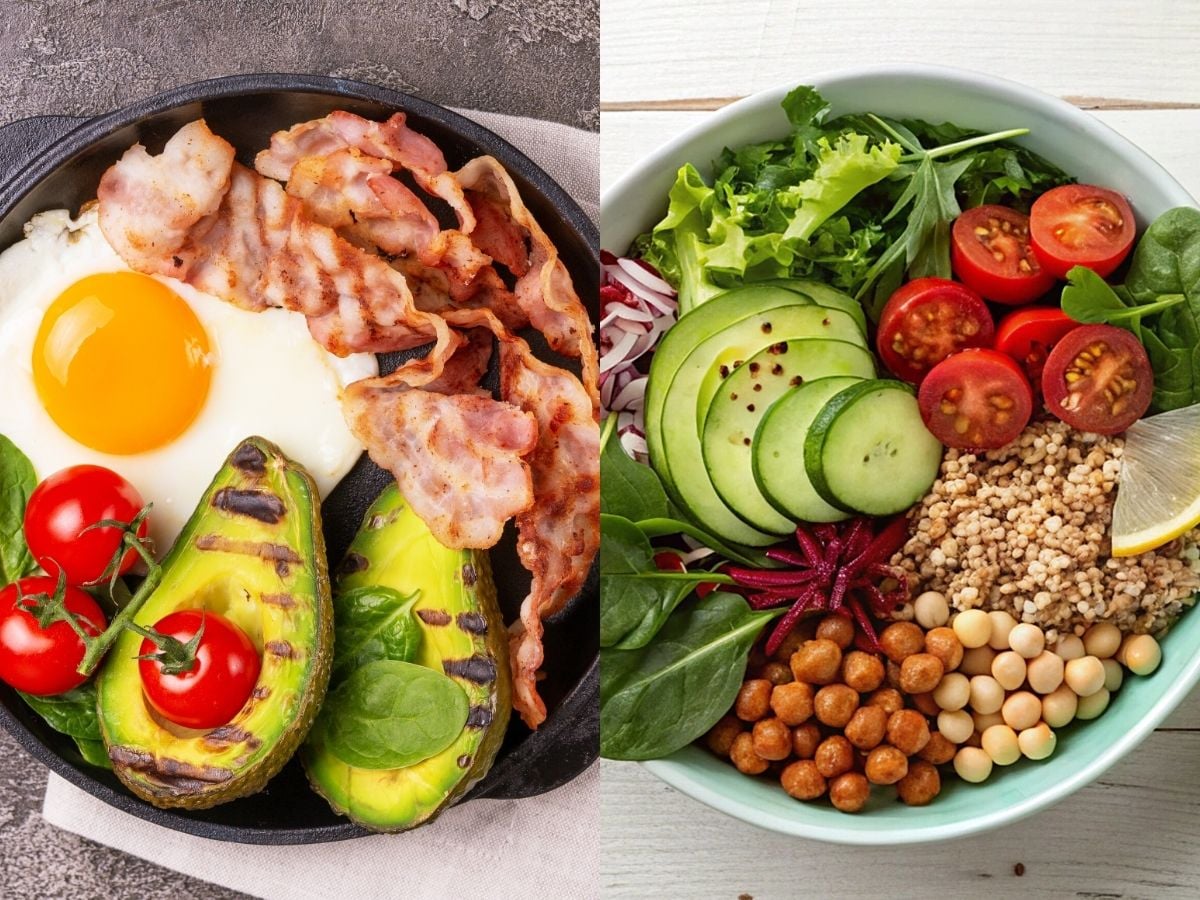
Table of contents
- What’s a low-carb diet?
- What’s a low-fat diet?
- Benefits of a Low-Carb Diet
- Drawbacks of a Low-Carb Diet
- Benefits of a Low-Fat Diet
- Drawbacks of a Low-Fat Diet
- Is a low-carb or low-fat diet better for health?
- Is a low-carb or low-fat diet better for weight loss?
- How do I determine if a low-carb or low-fat diet is better for me?
Carbohydrates and fat are macronutrients, along with protein, that make up our total calorie intake. Carbohydrates and protein provide 4 calories per gram, while fat provides 9 calories per gram.
Given that weight loss is about calorie balance, people often look to reduce calories by limiting or eliminating a single macronutrient. So, let’s discuss the basics of low-carb and low-fat diets, their pros and cons, and whether one is truly more effective for weight loss or not.
What’s a low-carb diet?
A low-carb diet is generally defined as an eating pattern that provides fewer carbohydrates than recommended by the dietary guidelines. While there is no clear consensus on what exactly defines a low-carb diet, it is generally described as a diet that provides less than 130 grams of carbs each day. Within scientific literature, carbohydrate intake in a diet is often categorized as follows (1):
- Very Low Carb Diet: <10% of total daily calories from carbohydrates
- Low Carb Diet: 10%-26% of total daily calories from carbohydrates
- Moderate Carb Diet: 26%-44% of total daily calories from carbohydrates
- High Carb Diet: >45% of total daily calories from carbohydrates
Most governing health bodies, including the Dietary Guidelines for Americans, Health Canada, and the NHS, recommend that 45–65% of total caloric intake come from carbohydrates (2, 3).
Popular low-carb diets include the ketogenic diet (keto diet), carnivore diet, paleo diet, Mediterranean diet, and the Atkins diet. These diets typically encourage meat, fish, eggs, and non-starchy vegetables, and restrict or exclude grains (whole and refined grains), legumes, dairy, and sugar.
What’s a low-fat diet?
A low-fat diet is defined as one where 30% or less of total calories come from fat. In scientific literature, fat intake in a diet is often categorized as follows (4):
- Low-Fat Diet: 20%-30% of total daily calories from fat
- Very Low-Fat Diet: <10%-15% of total daily calories from fat
While most low-fat diets prioritize a reduction in saturated fat, they also account for a reduction in total fat intake, which includes saturated and unsaturated fat, including monounsaturated fats and polyunsaturated fats.
Most governing health bodies, including the Dietary Guidelines for Americans, Health Canada, and the NHS, recommend that 20–35% of total caloric intake come from fat (2, 3).
Popular low-fat diets include the Ornish diet and DASH diet (Dietary Approaches to Stop Hypertension). These diets typically encourage lean meats, whole grains, legumes, fruits, vegetables, and low-fat dairy products, and restrict or exclude fatty cuts of meat, full-fat dairy products, certain condiments and sauces, and fried foods. Low-fat diets also encourage cooking methods that limit added fats and cooking oils, such as steaming, boiling, or grilling.
Benefits of a Low-Carb Diet
A low-card diet may:
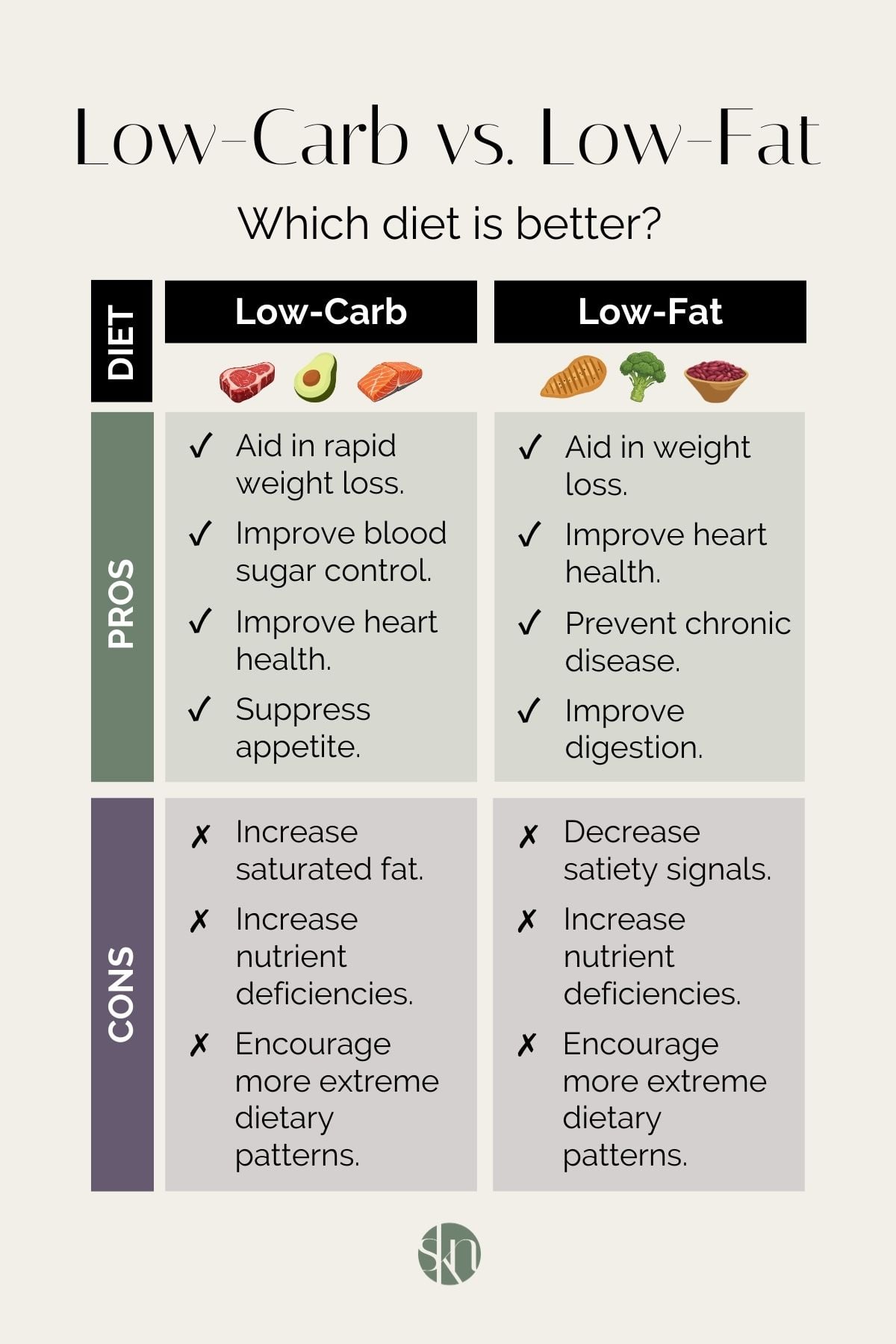
Aid in rapid weight loss.
A low-carb diet may lead to rapid weight loss, compared to low-fat diets (5). A reduction in carbohydrate intake may reduce total caloric intake, resulting in a calorie deficit and weight loss. Dieters may experience a large initial drop in weight due to a decrease in water weight, as glycogen stores are depleted and the water associated with them (6).
Improve blood sugar control.
Restricting carbohydrate intake can help to stabilize blood glucose levels and lower A1C levels (7). Individuals with diabetes use low-carb diets to help manage their blood sugar levels and lower the need for medication in Type 2 diabetics (8).
Improve heart health markers.
Studies and meta-analyses of randomized controlled trials have shown that a low-carbohydrate diet decreases triglycerides and raises HDL (“good”) cholesterol (9, 10).
Suppress appetite.
Low-carb diets have been shown to increase satiety and reduce hunger, as they may better preserve levels of PYY – a hormone that signals fullness (11). This may also be due to the natural increase in dietary protein and fat, which have been shown to slow digestion and increase feelings of fullness, further aiding in reducing calories and supporting weight loss.
Drawbacks of a Low-Carb Diet
A low-card diet may:
Increase saturated fat intake.
A low-carb diet may increase intake of saturated fat. As carbohydrates are restricted, the increased intake of animal proteins and fats can lead to an overall increase in saturated fat. While this may increase calorie intake, as high-fat foods are the most calorie-dense foods, some studies have shown that high percentages of saturated fat in low-carb diets may not harm cholesterol levels (12).
Increase nutrient deficiencies.
Eliminating food groups, including whole grains, legumes, and fruits, may lead to an inadequate intake of fiber and certain micronutrients, including B vitamins, vitamin C, potassium, and magnesium.
Encourage more extreme dietary patterns.
Low-carb diets often lack sustainability and can encourage more extreme dietary patterns. While low-carb diets are highly effective for weight loss in the short term, typically 3–6 months, studies have shown that weight loss and adherence plateaus after 12–18 months (5).
Benefits of a Low-Fat Diet
A low-fat diet may:
Aid in weight loss.
A low-fat diet is effective for weight loss, with studies showing similar results to low-carb diets regarding fat loss and BMI reduction (5). The total reduction in fat intake can help to decrease calorie intake, as fat is the most calorie-dense macronutrient, aiding in creating a calorie deficit.
Improve cardiovascular health.
Low-fat diets can cause a decrease in saturated fat intake, which has been shown to lower LDL (“bad”) cholesterol, a major contributor to heart disease (13).
Prevent from chronic disease.
A low-fat diet, particularly one that is plant-forward and high in fiber, has been linked to improved lipid profiles, improved blood sugar control, and a reduced risk for heart disease, obesity, and type 2 diabetes (14).
Improve digestion.
Eating a low-fat, high-carbohydrate diet, particularly focused on whole foods, may promote a healthier gut microbiota (15). The focus on high-fiber foods in a low-fat diet, namely, whole grains, beans, lentils, fruits, and vegetables, can help to improve digestion and overall health.
Drawbacks of a Low-Fat Diet
A low-fat diet may:
Decrease satiety.
Low-fat diets generally have a weaker effect on satiety, compared to low-carb diets, particularly if they are not high in protien (16). A reduction in these satiety signals could potentially lead to increased appetite; however, this can be mitigated by focusing on high-fiber, high-volume foods, which promote fullness through stomach distension.
Increase nutrient deficiencies.
Eliminating fat-rich foods may lead to an inadequate intake of omega-3 fatty acids and fat-soluble vitamin D, A, E, and K.
Encourage more extreme dietary patterns.
Similar to low-carb diets, low-fat diets often lack sustainability and can encourage more extreme dietary patterns. While effective for short-term calorie reduction, long-term weight loss success depends more on adherence than on fat intake alone.
Is a low-carb or low-fat diet better for health?
Current research shows that neither a low-carb nor a low-fat diet is “better” for overall health (17). Rather, it is the quality of the food consumed within the diet (i.e., whole foods vs. processed foods) that is the most critical factor.
For long-term health, it is best to focus on the overall quality of the carbohydrates (i.e., increasing whole grains, legumes, vegetables, and fruits, and limiting refined grains and added sugars) and fats consumed (i.e., increasing healthy fats and reducing saturated and trans fats), rather than simply considering the total amount of carbohydrate and fat consumed.
As indicated in the nutrition prioritization pyramid, although all aspects of nutrition are important, they are not equally important. Consistency, lifestyle factors, food quality, and calorie intake are more impactful on overall health than macronutrient and micronutrient breakdown.
Is a low-carb or low-fat diet better for weight loss?
Neither a low-carbohydrate nor a low-fat diet is superior for weight loss (5). A year-long randomized clinical trial, named the Diet Intervention Examining The Factors Interacting with Treatment Success (DIETFITS), of 609 participants found that neither low-fat nor low-carb is superior for weight loss. Over 12 months, both groups saw similar results in weight reduction and metabolic health markers, suggesting that neither approach is inherently superior.
Research has consistently shown that any dietary strategy that restricts calories is effective for weight loss when adhered to (18). Rather, the largest predictors of weight loss success are personal preferences, adherence, and calorie intake.
When it comes to weight loss and fat loss, calories are king. Effective fat loss requires the consistent creation of a calorie deficit: a state where the energy (calories) you consume from food and beverages is less than the total energy (calories) your body expends through metabolic functions and physical activity.
If you’re focusing your efforts on weight loss but are not losing weight or have reached a weight loss plateau, it’s best to review your calorie intake and exercise program before tinkering with your macros (protein, carbohydrates, and fats) alone.
How do I determine if a low-carb or low-fat diet is better for me?
It is best to speak with a doctor or registered dietitian before trying any diet. This is particularly important if you have health problems such as diabetes, heart disease, or kidney disease, or are at risk for them. Health professionals can help you create an eating plan that supports your health and goals.

The Bottom Line
A low-carb diet is one where 26% or less of total calories come from carbohydrates, while a low-fat diet is one where 30% or less of total calories come from fat. Low-carb diets are linked with improved blood sugar management, heart health markers, and suppressed appetite, and low-fat diets are linked with improved cardiovascular health, improved digestion, and chronic disease prevention. Low-carb and low-fat diets are equally effective for weight loss, provided the diets are adhered to and total calories are equated.



I need help in learning how to build a make better choices. I am prediebtic an need some help but I also use a meal supplement for breakfast, lunch plus a snack in between so does tha count for the macro/micron
Thanks for your comment! While I have some general information on how to create balanced meals and snacks on my website, such as this article (https://kaynutrition.com/how-to-create-a-balanced-meal/), I’d recommend working with a Registered Dietician to determine what’s best for you. 🙂
Best analysis of the different diet approaches I have read. Thank you. I have always cooked from scratch but fought my body and it’s love to store the calories for another day! Your information explained why my vitamin D is often borderline and my B 12 is supplemented with injections.
Thanks, Karen, I’m so happy you found it informative!