

Not all carbohydrates affect your body in the same way. Some are nutrient-dense and provide long-lasting energy, while others lack nutrients and can spike your blood sugar. Here is everything you need to know about refined carbs and how they impact your daily health.

Table of contents
What are refined carbs?
Refined carbs are carbohydrates that have been heavily processed and stripped of much of their nutritional value.
Carbohydrates are one of three essential macronutrients, along with protein and fat, found in food and drinks. They function as the body’s main fuel, providing the energy for the brain, muscles, and organs, and play key roles in glucose and insulin action, as well as cholesterol and triglyceride metabolism and fermentation (1).
Carbohydrates, or “carbs”, are made up of starches, sugars, and fibers, and are broadly classified into simple and complex carbohydrates based on their structure.
- Simple carbohydrates consist of 1 or 2 sugar molecules linked together, typically of natural or added sugar with no starch or fiber.
- Complex carbohydrates consist of 3 or more sugar molecules linked together, typically in chains of simple carbohydrates and/or fiber.
Refined carbohydrates are generally forms of simple carbs and include heavily processed grains, starches, and sugars, and share several characteristics:
- Highly Processed: Refined carbs have typically undergone heavy processing and are considered ultra-processed foods.
- Low Nutrient Density: Refined carbs are often low in micronutrients (vitamins and minerals) and are therefore considered forms of “empty calories”.
- Low in Fiber: Refined carbs are often very low in dietary fiber, as much has been stripped away during processing.
- Calorie-Dense: Refined carbs are often high in sugar and/or fat, making them some of the most calorie-dense foods.
- High Glycemic Index: Refined carbs typically have a high glycemic index (GI) ranking, as their refined sugars are easily and rapidly digested, causing a quick spike in blood sugar and insulin.
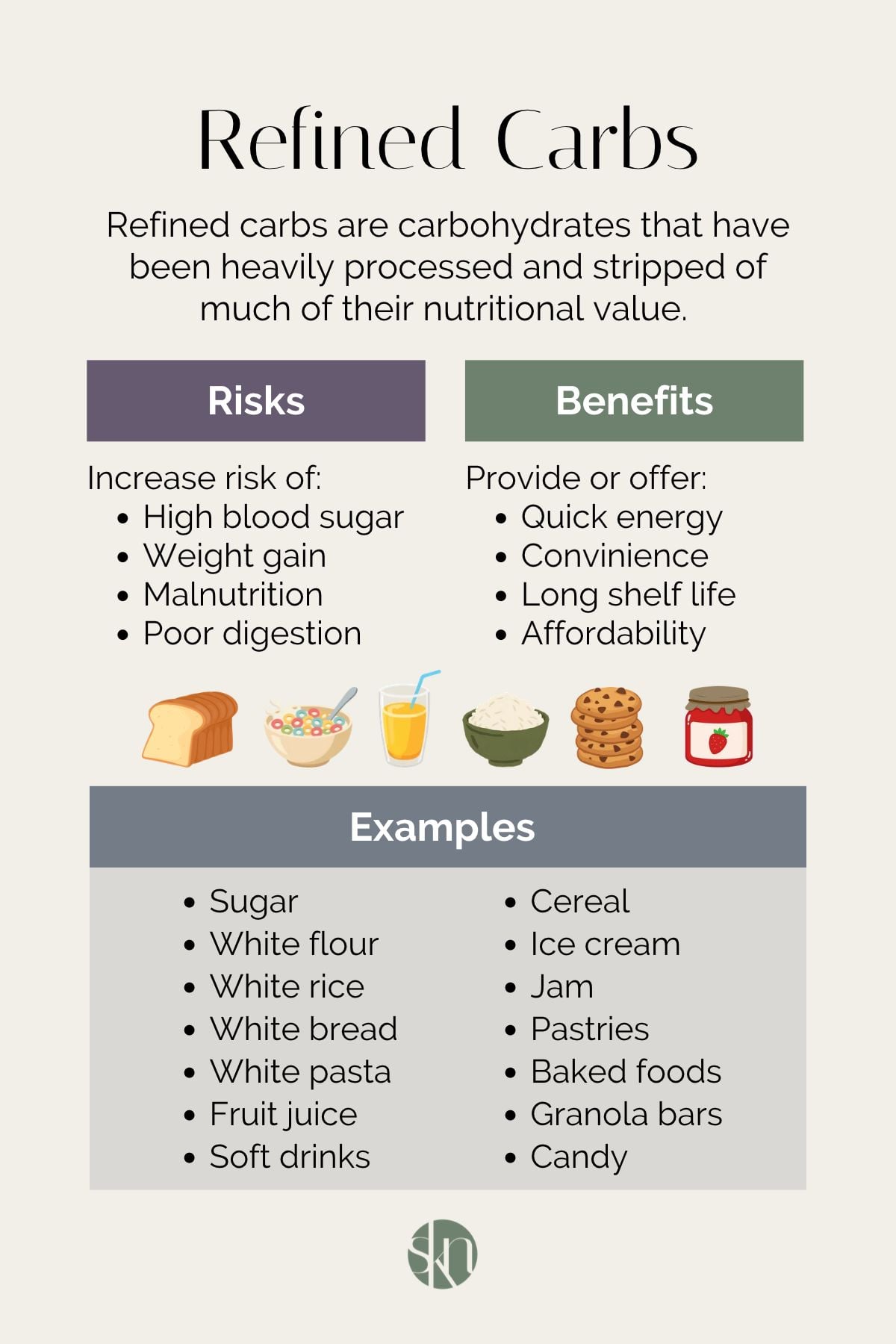
Examples of Refined Carbs
Here is a list of foods high in refined carbs:
- White Sugar (and other forms of sugar)
- White Flour (and products made from it)
- White Rice
- White Bread
- White Pasta
- Fruit Juice
- Soft Drinks
- Breakfast Cereals
- Ice Cream
- Jam
- Pastries
- Baked Goods
- Granola Bars
- Candy
It’s also important to note that not all refined carbs are processed to the same extent or lack the same level of nutritional value. For instance, while white rice and white bread are refined grains, and therefore refined carbs, they offer far more nutritional value than sugary foods, such as candy or soda.
Health Risks of Refined Carbs
While refined carbs are not inherently harmful, excessive consumption can pose several long-term health risks, including (2, 3, 4, 5, 6):
- Increased risk of high blood sugar and type 2 diabetes.
- Increased risk of weight gain and obesity.
- Increased risk of cardiovascular disease and high triglycerides.
- Increased risk of malnutrition.
- Increased risk of poor digestion.
Benefits of Refined Carbs
Although the over-consumption of refined carbs can pose some health risks, they do offer some benefits, including:
- Good source of fast-acting energy, particularly as pre-workout snacks.
- Convenient for quick meals or on-the-go snacks.
- Offer a longer shelf life than many unrefined carbs.
- Often more affordable than unrefined carbs.
Can refined carbs be included in a healthy diet?
Contrary to popular belief, refined carbs can be included in a healthy and balanced diet. Although they should not make up the bulk of carbohydrate intake in the diet, they can be included in moderate amounts.
No single food or macronutrient can make or break your health; rather, it is the overall composition of the diet, calorie intake, and food quality that determines overall health. While nutrient-rich whole foods should make up most of a healthy diet, refined carbs can be included as part of “discretionary calories” after your daily needs for essential nutrients are met.
That said, discretionary calories should represent no more than 10-20% of calorie intake, while the other 80-90% of calorie intake should come from unprocessed and minimally processed whole foods (7).
Can you eat refined carbs and still lose weight?
Yes, you can consume refined carbohydrates and still lose weight. Weight loss is determined by calorie intake, and provided a calorie deficit is maintained, an individual can consume refined carbs and support a weight loss goal.
Tips for Reducing Refined Carbs Intake
Here are some simple swaps to help you reduce your consumption of refined carbohydrates.
- Swap sugary drinks for water, sparkling water, or flavored seltzer.
- Swap sweetened coffee drinks for black coffee.
- Swap fruit juice for whole fruit.
- Swap sugary cereals for oatmeal or homemade granola.
- Swap white bread for whole-grain bread.
- Swap white rice for brown rice.
- Swap white pasta for whole-wheat pasta.
- Swap white flour for whole-wheat flour.
- Swap granola bars for nuts, seeds, or trail mix.
In addition to these swaps, pairing refined carbohydrates with a source of protein, complex carbohydrates, and/or fiber at meals can help to create a more balanced meal or snack, increase the overall nutritional value of the meal, and keep blood sugar stable. For example:
- Pair white pasta with high-fiber vegetables such as broccoli, carrots, or green peas.
- Pair white rice with sweet potatoes, beans, or lentils.
- Pair white bread with cheese, eggs, or avocado.
- Pair cereal with whole milk and fresh berries.

The Bottom Line
Refined carbs are carbohydrates that have been heavily processed and stripped of much of their nutritional value. Examples of refined carbohydrates include sugar, white flour, white bread, baked goods, and many other processed and packaged foods. While consumption of refined carbs can contribute to blood sugar spikes and other health issues, they can be included in a healthy diet in moderate amounts.




Leave a Review