

Whether you’re on a low-carb diet, working to balance your blood sugar, or simply trying to reduce your carbohydrate intake, here are some simple low-carb food swaps you can make today.
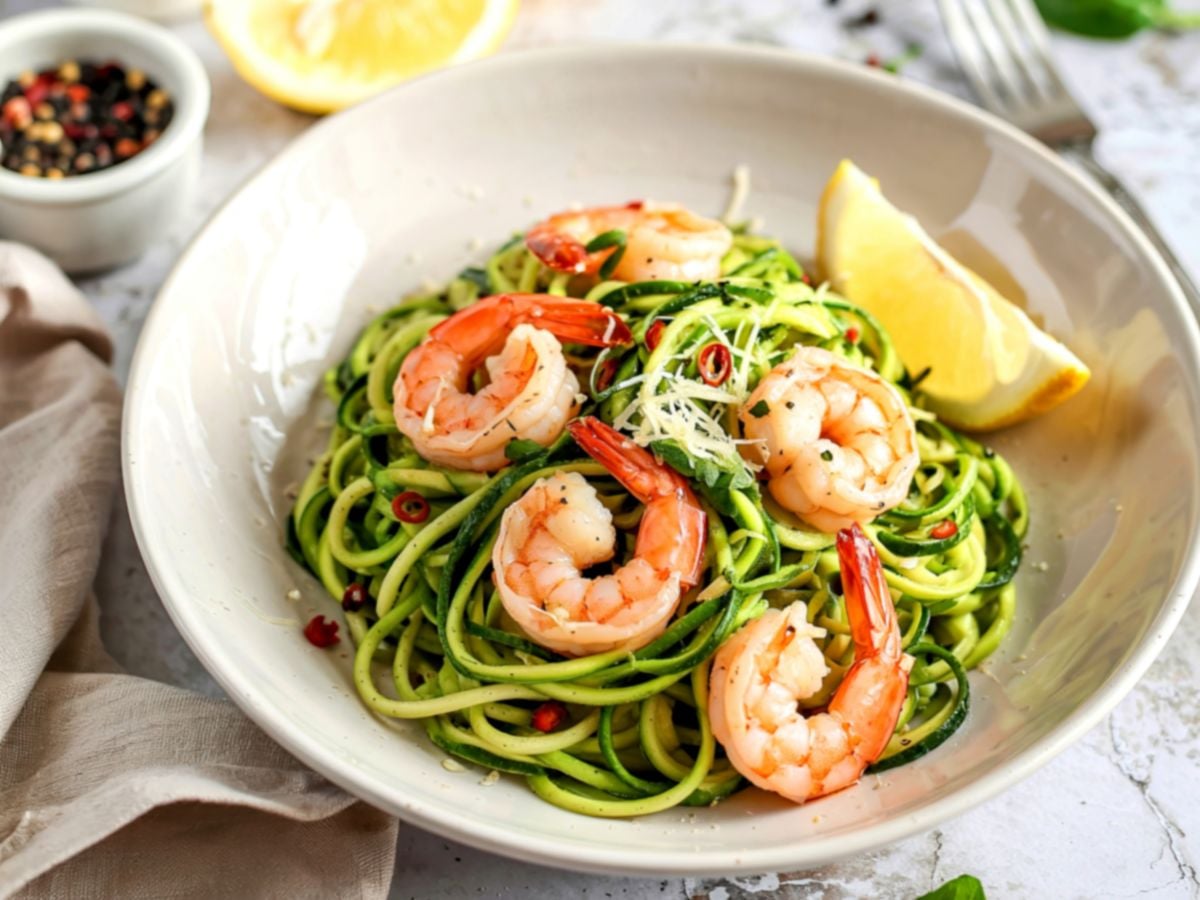
Table of contents
- List of Low-Carb Swaps
- 1. Swap rice for cauliflower rice.
- 2. Swap spaghetti for spaghetti squash.
- 3. Swap mashed potatoes for celeriac mash.
- 4. Swap crackers for cucumber slices.
- 5. Swap tortillas for lettuce wraps.
- 6. Swap croutons for nuts.
- 7. Swap breadcrumbs for shredded coconut.
- 8. Swap burger buns for mushroom caps.
- 9. Swap lasagna noodles for zucchini slices.
- 10. Swap all-purpose flour for almond flour.
- 11. Swap flavored yogurt for plain yogurt.
- 12. Swap soda for seltzer.
- Comparison of High and Low-Carb Food Swaps
- Low-Carb Recipes:
To clarify, carbohydrates are healthy and can be included in a balanced and healthy diet, particularly those from whole foods. Carbohydrates are the body’s primary source of energy and play key roles in glucose and insulin action, as well as cholesterol and triglyceride metabolism and fermentation (1).
There are 3 main types of carbohydrates: starches, sugars, and fibers, and they are naturally present in whole grains, beans, lentils, fruits, vegetables, nuts, seeds, and dairy products.
On a nutrition label, “Total Carbohydrate” refers to the sum of starch, sugar, and fiber content. While “Dietary Fiber” refers to the carbs from fiber, “Total Sugars” refers to the carbs from natural and added sugar, and “Added Sugars” only refers to sugars added during food processing.
While a low-carb diet is often used by individuals looking to lose weight, it does not inherently lead to sustained weight loss. Low-carb doesn’t always equate to fewer calories, as some low-carb foods are higher in fat and, in turn, higher in calories than their higher-carb counterparts.
Albeit, following a low-carbohydrate diet or eating fewer carbs, especially refined carbs, can help to improve blood sugar control and improve heart health markers (2, 3, 4). Plus, there are many therapeutic uses of a low-carb diet or ketogenic diet, AKA the keto diet; however, it’s best to work with a doctor or registered dietician to determine if it’s right for you (5).
All of that said, if you’re trying to reduce your intake of carbohydrates for specific health benefits or to support your weight loss goals, there are many food swaps you can make at home to create healthy eating habits.

List of Low-Carb Swaps
Here are 12 low-carb food swaps you can try today.
1. Swap rice for cauliflower rice.
Rice is a popular side dish served with everything from meat to beans to vegetables. Be it brown or white, rice is easy to prepare, versatile, and filling, though it’s a rich source of complex carbohydrates. Fortunately, it can easily be swapped for cauliflower rice – cauliflower that’s been grated or pulsed in a food processor to create small rice-like grains – for fewer calories and a lower carbohydrate content.
A 1-cup serving of white rice has 53.2 grams of carbohydrate, while a 1-cup serving of cauliflower rice has 5.3 grams of carbohydrate (6, 7). By swapping white rice for cauliflower rice, you can reduce carbohydrate intake by 47.9 grams.
2. Swap spaghetti for spaghetti squash.
As the name suggests, spaghetti squash is a great low-carb swap for spaghetti or other pasta shapes. Once cooked, spaghetti squash can easily be pulled into noodle-like strands that can be topped with bolognese, pesto, or Alfredo sauce, or used in pasta bakes or casseroles. Not to mention, spaghetti squash is naturally gluten-free, making it something everyone can enjoy.
A 1-cup serving of cooked spaghetti has 37.9 grams of carbohydrate, while a 1-cup serving of cooked spaghetti squash has 10.0 grams of carbohydrate (8, 9). By swapping spaghetti for spaghetti squash, you can reduce carbohydrate intake by 27.9 grams.
3. Swap mashed potatoes for celeriac mash.
Celeriac, also known as celery root, is the large root bulb of the celery plant, and it works incredibly well as a low-carb alternative to sweet or white potatoes. It can be roasted, boiled, steamed, or mashed into a creamy alternative to mashed potatoes, much like cauliflower mash.
A 1-cup serving of cooked potato has 26.4 grams of carbohydrate, while a 1-cup serving of cooked celeriac has 9.1 grams of carbohydrate (10, 11). By swapping potatoes for celeriac, you can reduce carbohydrate intake by 17.3 grams.
4. Swap crackers for cucumber slices.
Swapping crackers for cucumber slices, or radish slices, at snack time is another simple low-carb food swap. Whether you’re eating them with cream cheese, hummus, or on their own, sliced cucumbers are a crunchy and refreshing alternative.
A 16-cracker serving of wheat crackers has 25.0 grams of carbohydrate, while a 16-slice serving of cucumber has 2.5 grams of carbohydrate (12, 13). By swapping crackers for cucumber slices, you can reduce carbohydrate intake by 22.5 grams.
5. Swap tortillas for lettuce wraps.
Lettuce wraps are a simple low-carb swap for tortillas on taco night. Whether you’re using bib lettuce, romaine lettuce, iceberg lettuce, or collard greens, large green leafy vegetables provide great structure for layering your favorite taco fillings and toppings.
An 8-inch serving of a flour tortilla has 25.3 grams of carbohydrate, while a 1-leaf serving of romaine lettuce has 1.4 grams of carbohydrate (14, 15). By swapping tortillas for lettuce wraps, you can reduce carbohydrate intake by 23.9 grams.
6. Swap croutons for nuts.
Croutons are a delicious and crunchy topping for salads that are high-carb; however, they can easily be swapped for raw or roasted nuts or seeds as a low-carb alternative. Plus, they are great sources of healthy fats, and opting for high-protein nuts or high-protein seeds can help to boost the protein content of the meal at the same time.
A 1-ounce serving of croutons has 20.8 grams of carbohydrate, while a 1-ounce serving of pecans has 3.6 grams of carbohydrate (16, 17). By swapping croutons for pecans, you can reduce carbohydrate intake by 17.2 grams.
7. Swap breadcrumbs for shredded coconut.
Whether you’re adding them to meatballs or creating a crispy crust on chicken, fish, or tofu, unsweetened shredded coconut is a great low-carb alternative to breadcrumbs. It provides the necessary texture and crunch, while adding a slightly nutty flavor.
A 1/2-cup serving of breadcrumbs has 38.9 grams of carbohydrate, while a 1/2-cup serving of unsweetened, shredded coconut has 12.0 grams of carbohydrate (18, 19). By swapping breadcrumbs for shredded coconut, you can reduce carbohydrate intake by 26.9 grams.
8. Swap burger buns for mushroom caps.
There’s no need to skip burger night if you’re trying to reduce your carb intake, as you can easily swap the bun for mushroom caps. The caps of the portobello mushrooms have a similar width and thickness to hamburger buns and have a consistency sturdy enough to hold a burger together without falling apart.
A 1-bun serving of a plain hamburger roll has 22.0 grams of carbohydrate, while a 2-cap serving of portobello mushroom has 6.5 grams of carbohydrate (20, 21). By swapping a hamburger bun for mushroom caps, you can reduce carbohydrate intake by 15.5 grams.
9. Swap lasagna noodles for zucchini slices.
Believe it or not, sliced zucchini noodles are a great alternative to lasagna sheets. By slicing zucchinis lengthwise into 1/4- to 1/2-inch-thick slices, you can create a healthy, low-carb lasagna that tastes almost as good as the real thing. Zucchini is also great for volume eating, given it has a high-water content and low net carb content (Total Carbs – Fiber – Sugar Alcohols). Sliced eggplant also works well, and you can also spiralize zucchini to make zucchini noodles as a low-carb swap for other pasta dishes.
A 1-cup serving of lasagna noodles has 35.5 grams of carbohydrate, while a 1-cup serving of zucchini has 3.3 grams of carbohydrate (22, 23). By swapping lasagna noodles for zucchini slices, you can reduce carbohydrate intake by 32.2 grams.
10. Swap all-purpose flour for almond flour.
Whether you’re making muffins, pancakes, or cookies, almond flour can be used as a low-carb swap for all-purpose flour in many baked goods. Although it doesn’t work perfectly with a 1-to-1 ratio in every recipe, it can often be used with a few adjustments and offer more protein, fiber, and healthy fats. That said, almond flour contains more calories than regular flour, which is important to consider if you are looking to create a calorie deficit for weight loss.
A 1/4-cup serving of all-purpose flour has 22.0 grams of carbohydrate, while a 1/4-cup serving of almond flour has 9.8 grams of carbohydrate (24, 25). By swapping all-purpose flour for almond flour, you can reduce carbohydrate intake by 12.2 grams.
11. Swap flavored yogurt for plain yogurt.
Yogurt is a nutritious food full of protein, healthy fats, and probiotic bacteria; however, flavored yogurt contains far more carbohydrates than plain yogurt, specifically from added sugars. By swapping plain yogurt for flavored yogurt, you can cut carbs and reduce your sugar intake at the same time.
A 3/4-cup serving of vanilla yogurt has 28.9 grams of carbohydrate, while a 3/4-cup serving of plain yogurt has 9.8 grams of carbohydrate (26, 27). By swapping vanilla yogurt for plain yogurt, you can reduce carbohydrate intake by 19.1 grams.
12. Swap soda for seltzer.
Swapping soda for seltzer is an easy way to cut carbs and added sugar. If plain water isn’t your thing, there are plenty of tasty zero-calorie sodas and flavored sparkling waters that still give you that carbonated fix and great flavor, without refined sugar, corn syrup, or other code words for sugar. It’s also one of the best swaps for cutting calories.
A 1-can (12-ounce) serving of soda has 38.5 grams of carbohydrate, while a 1-can (12-ounce) serving of club soda has 0 grams of carbohydrate (28, 29). By swapping soda for club soda, you can reduce carbohydrate intake by 38.5 grams.
Comparison of High and Low-Carb Food Swaps
Here is a comparison of high and low-carb food swaps listed by average serving size.
| Serving Size | Original | Carb Content | Swap | Carb Content |
| 1 cup | White Rice | 53.2 grams | Cauliflower Rice | 5.3 grams |
| 1 cup | Spaghetti | 37.9 grams | Spaghetti Squash | 10.0 grams |
| 1 cup | White Potato | 26.4 grams | Celeriac | 9.1 grams |
| 16 crackesr | Wheat Crackers | 25.0 grams | Cucumber | 2.5 grams |
| 1 wrap | Tortilla | 25.3 grams | Lettuce | 1.4 grams |
| 1 ounce | Croutons | 20.8 grams | Pecans | 3.6 grams |
| 1/2 cup | Breadcrumbs | 38.9 grams | Shredded Coconut | 12.0 grams |
| 1 bun | Hamburger Bun | 22.0 grams | Portobello Mushrooms | 6.5 grams |
| 1 cup | Lasagna Noodles | 35.5 grams | Zucchini Slices | 3.3 grams |
| 1/4 cup | All-Purpose Flour | 22.0 grams | Almond Flour | 9.8 grams |
| 3/4 cup | Vanilla Yogurt | 28.9 grams | Plain Yogurt | 9.8 grams |
| 1 can | Soda | 36.8 grams | Club Soda | 0.0 grams |
All nutrition data is based on FoodData Central.
Low-Carb Recipes:
- Zucchini Lasagna
- Spaghetti Squash Casserole
- Creamy Roasted Cauliflower Soup
- Coconut Crusted Fish Tacos
- Turkey Lettuce Wraps
- Almond Banana Pancakes
- Berry Baked Yogurt

The Bottom Line
Making low-carb food swaps can help to reduce intake of total carbohydrates, refined carbohydrates, calories, and, potentially, support overall health. Cauliflower, spaghetti squash, celeriac, cucumber, lettuce, nuts, shredded coconut, mushrooms, zucchini, almond flour, and plain yogurt are healthy whole foods that can help to limit carb intake.




Hi Stephanie! I absolutely love everything you send me. It has been very helpful in making healthier choices.
I have question regarding fruit. Is it true that you must eat your fruit 2 hours after other foods? I was told that the fruit sits in your stomach and ferments leading to weight gain. What are your thoughts in this?
Alice
Great question Alice! Generally speaking, I would say it’s not something to worry about, and that it is rather insignificant in the conversation of weight loss. However, I do think it’s a great question and a great topic for a blog post about food combining so thank you for asking!
Is cauliflower pizza crust a good substitute for regular crust? I thought maybe you had an article comparing the nutrition but I don’t see that. I’m just wondering if it is overall truly a healthier option. You nutrition articles are very helpful. TIA!
Whether it’s a “good substitute” depends largely on your objectives and health goals. A cauliflower pizza crust is often lower in carbohydrates, however may contain a similar amount of calories and often contains more fat. That said, since all pizza crusts are recipes, the exact nutrition facts will vary by type/brand.