

Carbohydrates are macronutrients found in foods and drinks and are the body’s main source of energy, yet not all carbs act the same way. Here is a comparison of simple vs. complex carbohydrates, including the types, nutritional values, and health benefits.
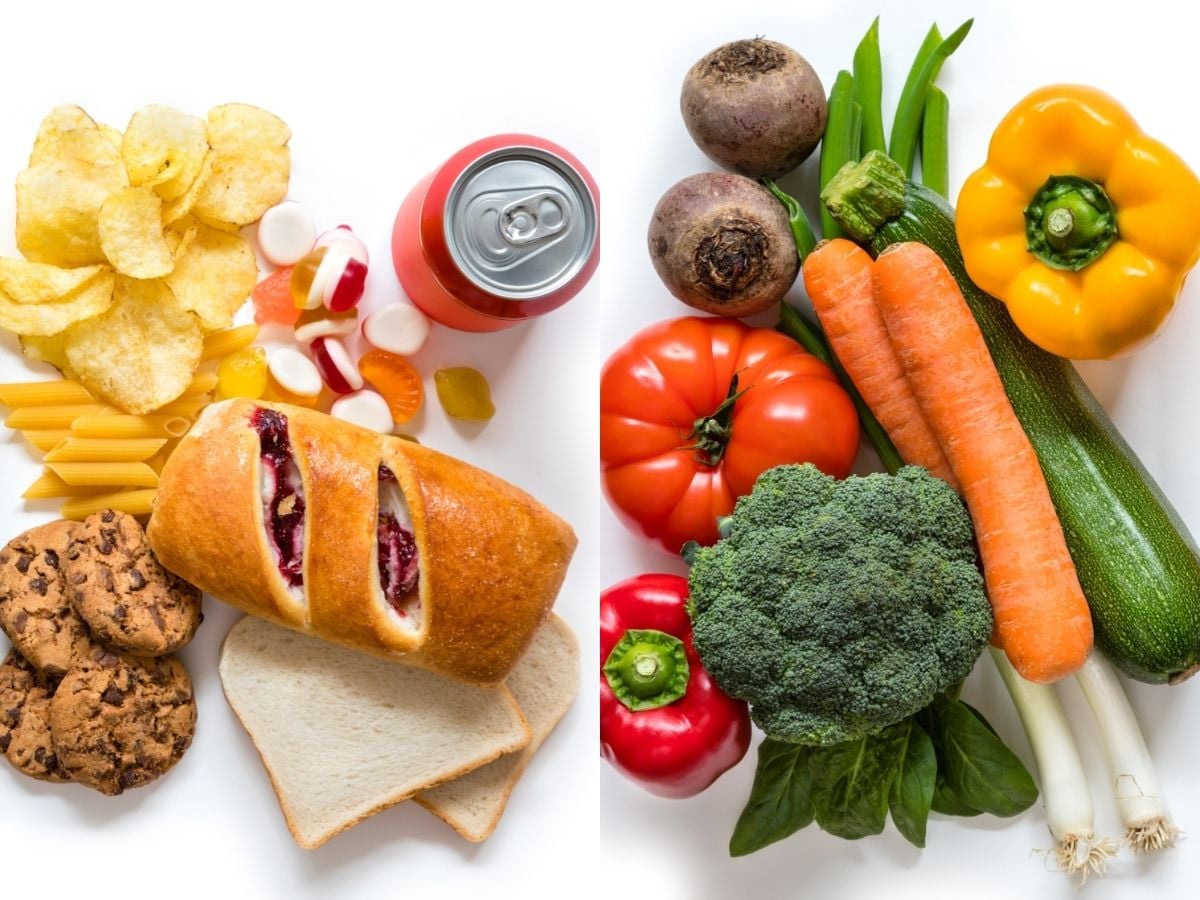
Table of contents
Understanding Carbohydrates
Carbohydrates are one of the 3 macronutrients in the human diet, along with protein and fat, and are found in food and drinks. They function as the body’s primary source of energy and play key roles in glucose and insulin action, as well as cholesterol and triglyceride metabolism, and fermentation (1).
Carbohydrate is an umbrella term that encompasses foods that contain sugars, starches, and fibers, including whole grains, beans, lentils, dairy products, fruits, and vegetables. These foods are broadly classified into simple and complex carbohydrates based on their structure.
What’s the difference between simple and complex carbs?
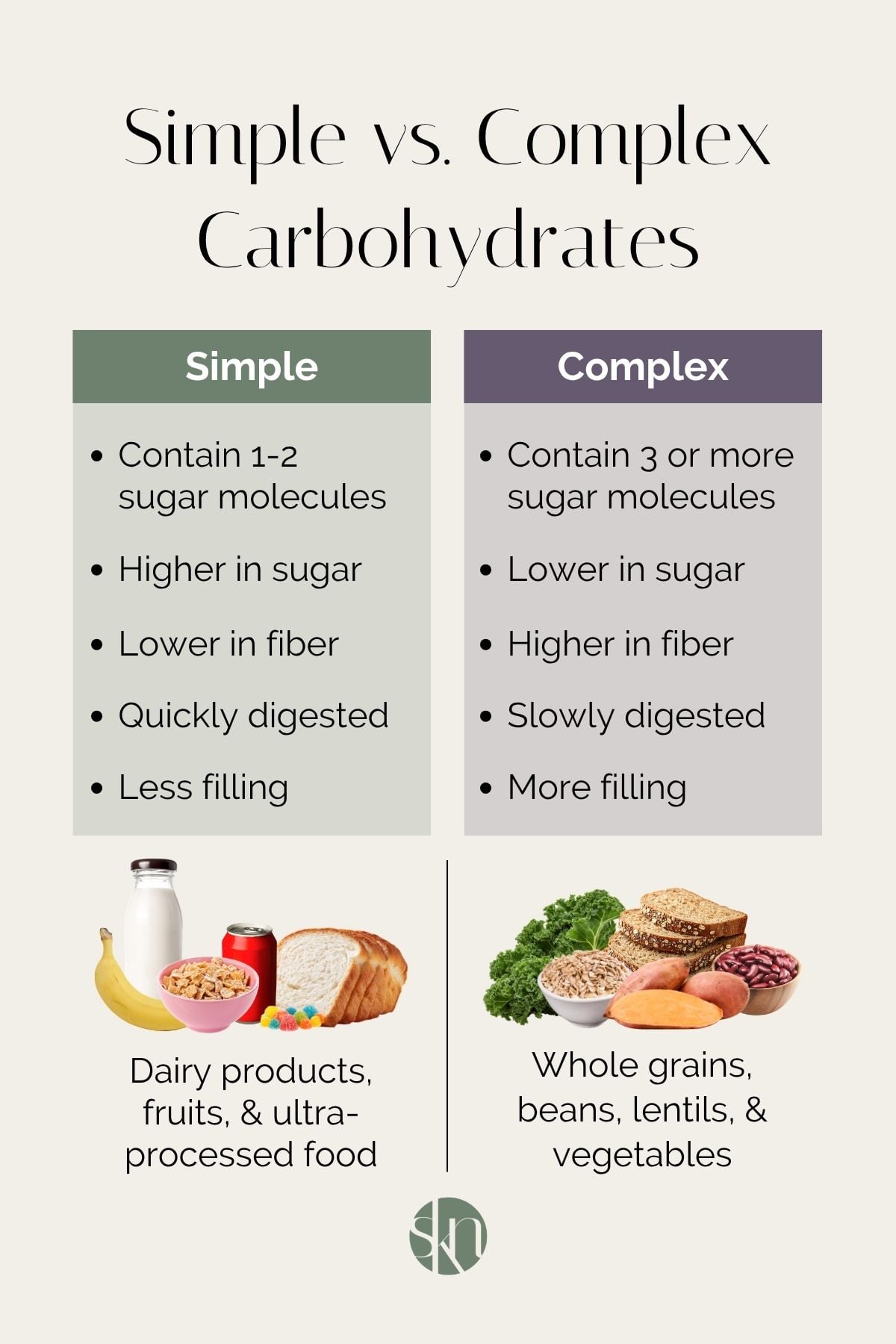
The primary difference between simple and complex carbohydrates is their chemical structure; simple carbohydrates consist of 1 or 2 sugar molecules linked together (monosaccharides and disaccharides), while complex carbohydrates consist of 3 or more sugar molecules linked together (oligosaccharides and polysaccharides) (1).
Simple carbohydrates are the most basic form of carbohydrate and consist of natural or added sugar with no starch or fiber. For this reason, simple carbs are quickly and easily digested and, when consumed on their own, cause rapid blood sugar spikes, which can increase the risk of diabetes. Simple carbs are naturally found in whole foods, in the form of natural sugar, but are also present in many processed foods in the form of added sugar.
Complex carbohydrates are made of chains of simple carbohydrates strung together and/or fiber. For this reason, complex carbs take longer for the body to break down and digest, which leads to a more sustained release of energy and better blood sugar regulation, making them more filling foods. Complex carbohydrates are primarily found in whole foods, but are also present in some processed foods.
Examples of simple carbohydrates:
- Whole Foods: Fruits, milk, yogurt, honey, maple syrup, etc.
- Processed Foods: Table sugar, candy, cookies, soda, breakfast cereals, baked goods, etc.
Examples of complex carbohydrates:
- Whole Foods: Brown rice, oats, sweet potatoes, beans, lentils, starchy vegetables, leafy green vegetables, etc.
- Processed Foods: Pasta, bread, baked beans, etc.
While carbohydrate-based foods are classified as simple or complex, it’s important to note that many foods contain both and are classified by what they contain most of.
| Feature | Simple Carbohydrates | Complex Carbohydrates |
| Structure | 1 or 2 sugar molecules (monosaccharides and disaccharides) | 3 or more sugar molecules (oligosaccharides and polysaccharides) |
| Nutrients | Little or no vitamins, minerals, and fiber | More vitamins, minerals, and fiber |
| Digestion Rate | Digested quickly | Digested slowly |
| Blood Glucose Impact | Quick blood sugar spikes | Stable, gradual blood sugar rise |
| Satiety Level | Less filling | More filling |
| Examples | Added sugar, candy, fruit juice, refined grains | Whole grains, sweet potatoes, legumes, vegetables |
Simple vs. Complex Carbohydrates: Nutrition
Here is a nutrition comparison of the calorie and macronutrient content of 100 grams of simple and complex carbohydrates in the form of rolled oats, raw broccoli, ripe banana, and white sugar (2, 3, 4, 5).
| Nutrition per 100 grams | Rolled Oats | Broccoli | Banana | White Sugar |
| Calories | 382 calories | 39 calories | 98 calories | 401 calories |
| Protein | 13.5 grams | 2.6 grams | 0.7 grams | 0.0 grams |
| Fat | 5.9 grams | 0.3 grams | 0.3 grams | 0.3 grams |
| Carbohydrates | 68.7 grams | 6.3 grams | 23.0 grams | 99.6 grams |
| Fiber | 10.4 grams | 2.4 gram | 1.7 grams | 0.0 grams |
| Sugar | 1.0 grams | 1.4 grams | 15.8 grams | 99.6 grams |
Calories
Neither simple nor complex carbohydrates are inherently higher in calories. All carbohydrates have the same calorie density, at 4 calories per gram. Rather, their calorie content varies by their macronutrient breakdown and the specific type and ratio of carbohydrates they contain (i.e., sugars, starches, and fibers).
Protein
Complex carbohydrates are generally higher in protein because foods such as whole grains, beans, and lentils naturally contain moderate amounts of vegetarian protein, while simple carbohydrates do not contain any. For example, a 1/2-cup serving of oats contains 5.4 grams of protein, while a 1-teaspoon serving of white sugar contains 0 grams of protein.
Fat
Complex carbohydrates are generally higher in fat because foods such as whole grains, beans, and lentils naturally contain healthy fats. For example, a 1/2-cup serving of oats contains 2.4 grams of fat, while 1-medium banana contains 0.33 grams of fat.
Carbohydrates
Neither simple nor complex carbohydrates are inherently higher in carbohydrates. The carbohydrate content of simple and complex carbs is based on the sum of all forms of carbohydrate (starches + sugars + dietary fiber) they contain.
Fiber
Complex carbohydrates are higher in fiber than simple carbohydrates. Dietary fiber is classified as a form of complex carbohydrate; therefore, all high-fiber foods are complex carbs. While some foods high in simple carbohydrates contain fiber, such as berries, apples, pears, and bananas, overall, they contain less fiber than foods high in complex carbohydrates, such as oats, beans, whole wheat pasta, and lentils.
Sugar
Simple carbohydrates are higher in sugar than complex carbohydrates. While both forms are composed of sugar molecules, simple carbs have a shorter chemical structure and are solely made of sugar, while complex carbs also contain starches and fibers. For example, a 1/2 cup serving of rolled oats and a 1-cup serving of broccoli contain 1.0 and 1.1 grams of naturally occurring sugar, respectively, while a 1-medium banana serving and a 1-teaspoon serving of white sugar contain 18.2 and 4.0 grams of sugar, respectively.
Vitamins and Minerals
Complex carbohydrates tend to contain more micronutrients than simple carbohydrates. While all unprocessed, whole food carbohydrates contain vitamins and minerals, in general, complex carbs tend to deliver more nutritional value than simple carbs, particularly in the case of processed foods, which are often viewed as “empty” calories.
So, are simple or complex carbohydrates better?
While the simple vs complex carbohydrate debate is often boiled down to simple carbs “bad” and complex carbs “good”, it’s a little more complicated than that. The nutritional values and health benefits of simple and complex carbohydrates depend on their form, level of processing, rate of consumption, and overall quality of the diet.
Whole-food complex carbohydrates (i.e, whole grains, beans, lentils, and vegetables) are generally the most nutrient-dense, followed by minimally processed complex carbohydrates (i.e., whole-grain bread and whole wheat pasta) and whole-food simple carbohydrates (i.e, milk, yogurt, and fresh fruit). Ultra-processed simple and complex carbohydrates (i.e., table sugar, baked goods, and breakfast cereals) are the least nutrient-dense.
Here are some general guidelines for opting for healthy carbohydrates:
- Grains – Opt for whole grains over refined grains.
- Dairy – Opt for unsweetened dairy products over sweetened dairy products.
- Legumes – Opts for dry or canned beans over baked beans.
- Vegetables – Opt for fresh or frozen vegetables over deep-fried versions.
- Fruits – Opt for fresh or frozen fruit over canned fruit and dried fruit, particularly sweetened versions.
In addition to opting for complex carbohydrate foods over simple carbohydrate foods, such as reaching for whole grain bread over white bread, whole wheat pasta over regular pasta, and brown rice over white rice, making low-carb food swaps can further aid in balancing blood sugar and creating a calorie deficit for weight loss.
While complex carbs should be prioritized over simple carbs, particularly processed ones, both forms can be included in a healthy eating plan, whether your goal is weight loss, weight gain, weight maintenance, or overall general health.
That said, consumption of simple sugars should be monitored and moderated, as consuming excessive amounts of simple carbohydrates may increase the risk of type 2 diabetes and weight gain (6). The Dietary Guidelines for Americans recommends that added sugars (simple carbs) should make up no more than 10% of total calorie intake, and ideally no more than 5% (7). For an average 2,000-calorie-a-day diet, that is roughly 200 calories, 12 teaspoons, or 48 grams of added sugars from both food and beverages.
FAQs
Be they simple or complex, whole-food carbohydrates are the healthiest form of carbohydrates. This includes whole grains, beans, lentils, dairy products (milk and yogurt), fruits, and vegetables.
Sugar-sweetened beverages, such as sodas and fruit juices, and carbohydrates from ultra-processed foods, such as baked goods, contain the most refined carbs and sugar per serving. While fat storage is largely driven by energy balance and not individual foods, these carbs have been identified as the leading contributors to the obesity epidemic in the USA (8).
Simple carbs in the form of added and refined sugars in ultra-processed foods are the least nutritious carbohydrates. These foods are generally stripped of their natural fiber, void of micronutrients, and can cause rapid blood sugar spikes, energy crashes, and increased cravings.

The Bottom Line
The primary difference between simple and complex carbohydrates is their chemical structure; simple carbs consist of 1 or 2 sugar molecules, and complex carbs consist of 3 or more sugar molecules. Complex carbohydrates are often considered healthier, as they generally contain less sugar and more fiber, vitamins, and minerals. Although simple carbohydrates, particularly those from whole foods such as fruit, can be included in a healthy diet.




Leave a Review