

It’s no secret that excess sugar is less than ideal for our health; however, many people still struggle to limit their intake. It’s sweet and tasty, and the thought of cutting it out cold turkey can feel completely overwhelming. So, here are some simple sugar-free swaps you can make today to reduce your consumption of added sugars while still satisfying your sweet tooth.
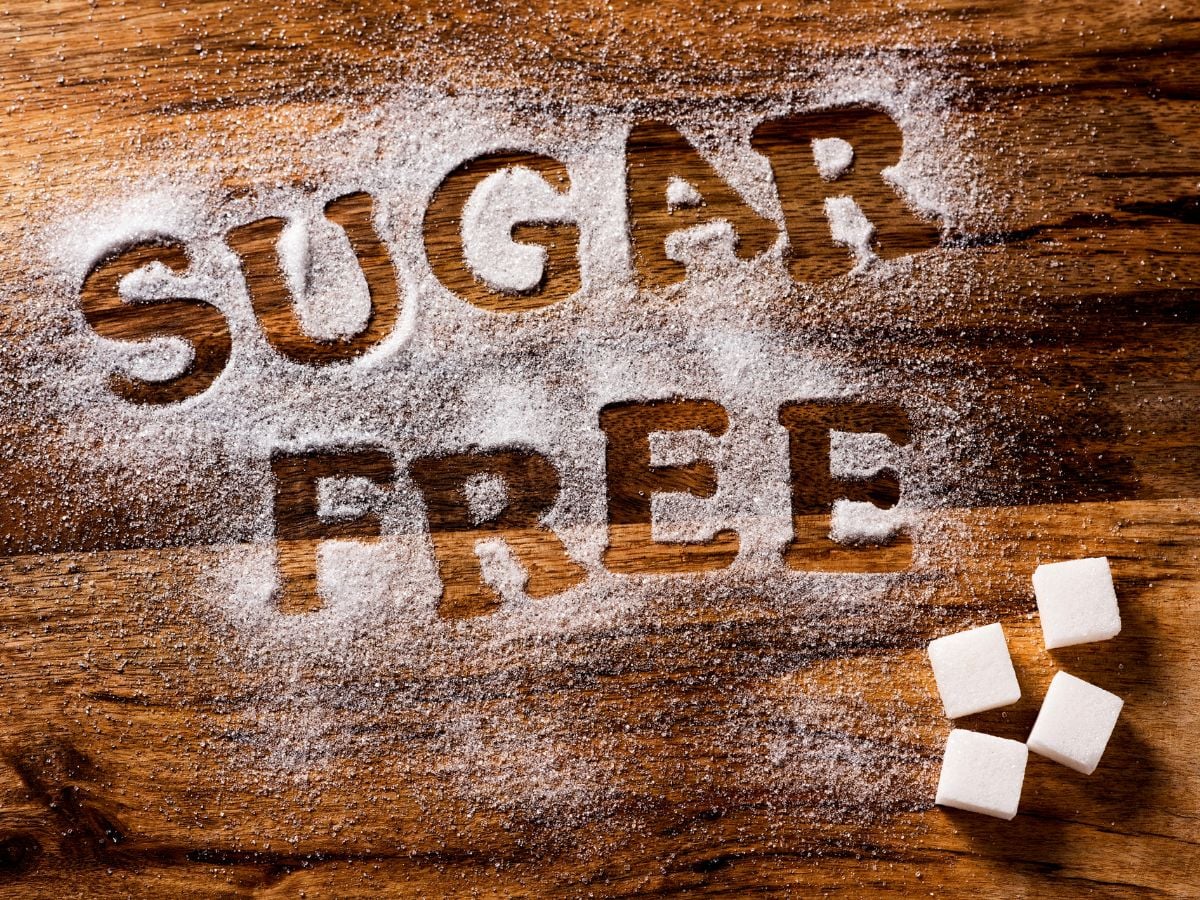
Table of contents
- “No Added Sugar” vs. “Sugar-Free”
- Types of Sugar-Free Sweeteners in Food
- Easy No Added Sugar Swaps
- 1. Swap cereal for oatmeal.
- 2. Swap soda for sparkling water.
- 3. Swap flavored milk for plain milk.
- 4. Swap granola bars for trail mix.
- 5. Swap canned fruit for fresh fruit.
- 6. Swap flavored yogurt for plain yogurt.
- 7. Swap peanut butter for natural peanut butter.
- 8. Swap salad dressing for homemade dressing.
- 9. Swap flavored coffee for plain coffee.
- 10. Swap jam for fruit spread.
To be clear, sugar can be included in a healthy diet. Not only is sugar naturally occurring in many nutritious whole foods, but even added sugars can be incorporated into a balanced diet in moderate amounts.
The Dietary Guidelines for Americans recommend that added sugars make up no more than 10% of total calorie intake, and ideally no more than 5% (1). On average, this equates to no more than 25 grams of added sugar per day for adult females and 36 grams of added sugar per day for adult males.
Unfortunately, many processed foods contain added sugar, and even versions marketed as “healthy” contain hidden sugars that can add up over time. Fortunately, reducing your sugar intake can be made easy if you know what to look for, and it offers many health benefits. Limiting excess sugar in the diet can help maintain stable blood sugar levels, support energy, and manage weight (2, 3).
“No Added Sugar” vs. “Sugar-Free”
Reading food labels is the best way to determine if a product contains sugars. The Nutrition Facts label will tell you how much Total Sugar and Added Sugar the item contains. Total Sugars accounts for the natural sugars and added sugars, while Added Sugars accounts for the sugars added during processing.
In addition to the Nutrition Facts label, food manufacturers may add nutrient content claims to the front-of-package label to make their products appear more appealing to boost sales. Fortunately, these claims must adhere to strict regulatory criteria to ensure accuracy. Common claims for sugar include (4, 5):
- No Added Sugar: No sugar or ingredient containing sugar was added during processing or packaging, but the product may still contain natural sugars.
- Sugar Free: Contains less than 0.5 grams of sugar, both natural and added, per serving.
- Reduced/Less Sugar: Contains at least 25% less sugar than the regular version of the product.
Types of Sugar-Free Sweeteners in Food
To support sugar-free label claims and still make foods taste sweet without white sugar or table sugar, manufacturers often use sugar-free sweeteners in processed foods. These code words for sugar include artificial sweeteners, sugar substitutes, and non-nutritive sweeteners, which offer a sweet taste without sugar and zero or very low calories. Examples of sugar-free sweeteners include:
- Sugar Alcohols: Erythritol, Lactitol, Maltitol, Mannitol, Sorbitol, Xylitol, etc.
- Non-Nutritive Sweeteners: Acesulfame Potassium (Ace-K), Monk Fruit Extract, Saccharin, Stevia, Sucralose, etc.
The FDA and Health Canada have approved these sweeteners for use in food and drinks, and they are considered safe for the general public, including individuals with diabetes. You can determine if a product contains a sugar-free sweetener by reading the ingredients label.
Easy No Added Sugar Swaps
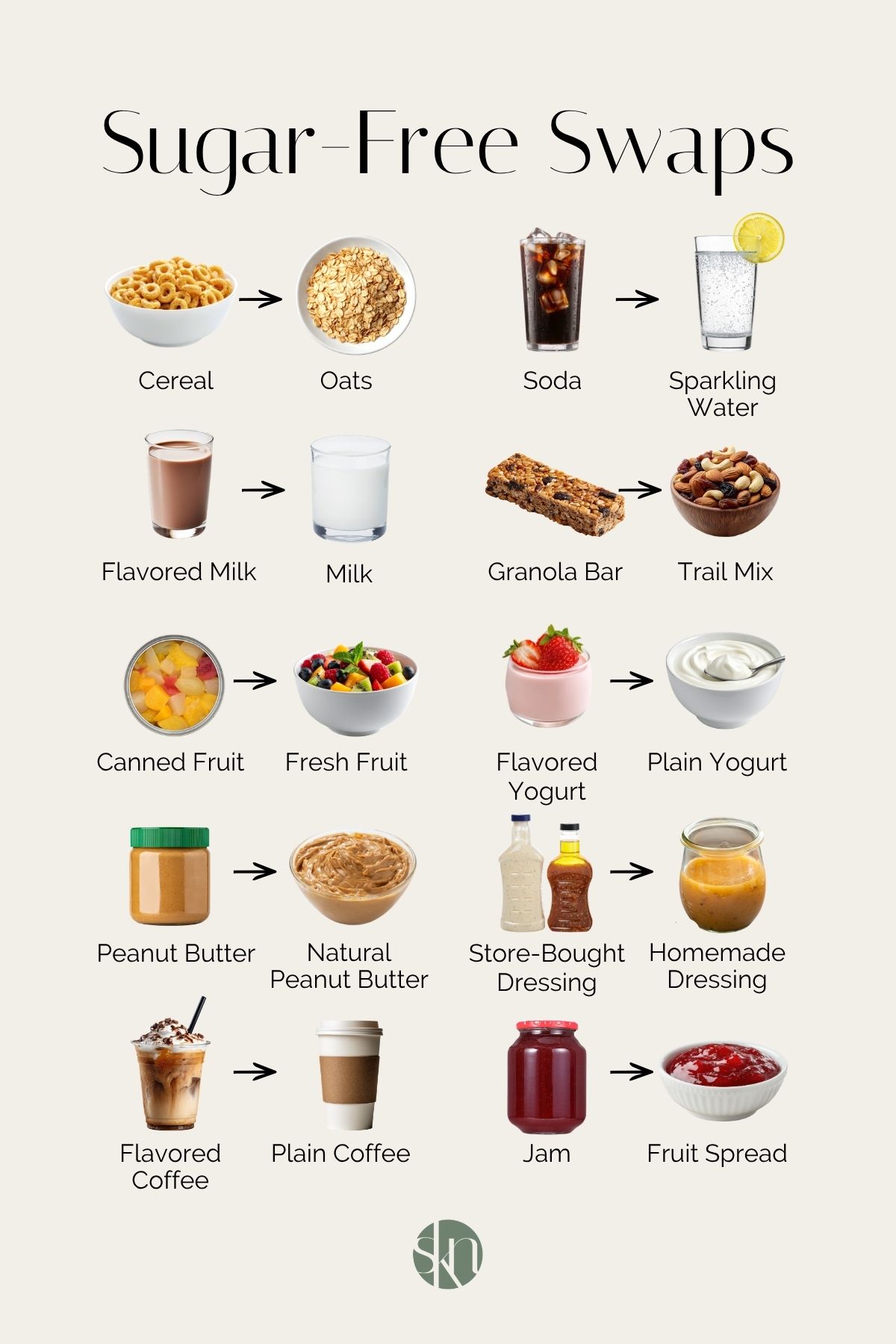
Here is a list of simple swaps you can make today to reduce your added sugar intake.
1. Swap cereal for oatmeal.
Cereal is a convenient grab-and-go breakfast, but it’s also one of the biggest sources of added sugars. While it may be obvious that Fruit Loops and Lucky Charms are high in sugar, many cereals marketed as “healthier” choices contain just as much sugar as the brightly colored versions. Fortunately, swapping breakfast cereal for oatmeal is relatively easy, and you can flavor it with toppings of your choice, such as cinnamon and fresh berries.
A 1-cup serving of Honey Nut Cheerios® has 12 grams of added sugar, while a 1/2-cup serving of rolled oats has 0 grams of added sugar (6, 7). By swapping cereal for oatmeal, you can reduce added sugar intake by 12 grams.
2. Swap soda for sparkling water.
Sodas and other sugar-sweetened beverages are the biggest contributors of added sugar in the standard American diet and weight gain (8). Regular soda is typically sweetened with high-fructose corn syrup, offering a large number of calories and little nutritional benefits. In addition to diet soda, which is sweetened with non-nutritive sweeteners such as aspartame, acesulfame potassium (Ace-K), and sucralose (Splenda), sparkling water is a refreshing beverage that provides the same satisfying “fizz” that soda drinkers enjoy.
A 12-ounce serving of Coca-Cola® has 39 grams of added sugar, while a 12-ounce serving of sparkling water has 0 grams of added sugar (9, 10). By swapping soda for sparkling water, you can reduce added sugar intake by 39 grams.
3. Swap flavored milk for plain milk.
Be it regular milk, oat milk, or almond milk, sweetened milks contain a lot of added sugar. While cow’s milk contains naturally occurring sugar in the form of lactose, chocolate milk, strawberry milk, and many non-dairy milks contain added sugar. In fact, most plain oat milk contains added sugar, oils, salt, gums, and flavor to improve the texture and flavor.
A 1-cup serving of 2% chocolate milk has 11 grams of added sugar, while a 1-cup serving of 2% milk has 0 grams of added sugar (11, 12). By swapping chocolate milk for plain milk, you can reduce added sugar intake by 11 grams.
4. Swap granola bars for trail mix.
Granola bars come in various types and forms, from chewy and crunchy to fruit-filled and nut-based, most of which contain added sugars. Given that granola bars are often made of nuts, seeds, and dried fruit, swapping them for trail mix is a simple way to get the same energy, fiber, and healthy fats without the refined sugars. Not to mention, it’s a good low-carb swap for individuals reducing carbohydrate intake or managing diabetes.
A 1-bar serving of Nature Valley® Trail Mix Bar has 5 grams of added sugar, while a 1/4-cup serving of trail mix has 0 grams of added sugar (13, 14). By swapping granola bars for trail mix, you can reduce added sugar intake by 5 grams.
5. Swap canned fruit for fresh fruit.
Fruit is a source of natural sugar, fiber, and micronutrients; however, canned fruit often contains added sugars in the form of syrup to add sweetness and maintain texture and color. By choosing fresh fruit over canned, you can reduce your sugar intake and increase your vitamin C intake at the same time.
A 1/2-cup serving of Del Monte® Fruit Salad has 14 grams of added sugar, while a 1/2-cup serving of fresh fruit salad has 0 grams of added sugar (15, 16). By swapping canned fruit for fresh fruit, you can reduce added sugar intake by 14 grams.
6. Swap flavored yogurt for plain yogurt.
All forms of yogurt are good sources of protein and probiotics, but some sweetened yogurts can carry as much sugar as chocolate bars or baked goods. Opting for regular yogurt or plain Greek yogurt is a lower-sugar and higher-protein option, and you can add extra flavor with honey or maple syrup, while controlling the level of sweetness.
A 3/4-cup serving of Dannon® Strawberry Fruit on the Bottom Yogurt has 12 grams of added sugar, while a 3/4-cup serving of plain, whole milk yogurt has 0 grams of added sugar (17, 18). By swapping flavored yogurt for plain yogurt, you can reduce added sugar intake by 12 grams.
7. Swap peanut butter for natural peanut butter.
Be it peanut butter or almond butter, many conventional nut butters contain added sugar in the form of cane sugar or corn syrup to enhance flavor and texture. Not to mention, flavored spreads such as Nutella® contain even more. Fortunately, it’s easy to find natural nut butters made solely of nuts and salt.
A 2-tablespoon serving of Jif® Peanut Butter has 2 grams of added sugar, while a 2-tablespoon serving of natural peanut butter has 0 grams of added sugar (19, 20). By swapping conventional peanut butter for natural peanut butter, you can reduce added sugar intake by 2 grams.
8. Swap salad dressing for homemade dressing.
Surprisingly, store-bought salad dressings commonly contain added sugars to enhance flavor, particularly in “light” and “low-fat” versions. While making homemade salad dressings takes a little extra time, it’s very easy to do and keeps well in the fridge for weeks.
A 2-tablespoon serving of Kraft® Catalina Dressing has 8 grams of added sugar, while a 2-tablespoon serving of homemade salad dressing can contain 0 grams of added sugar (21). By swapping store-bought salad dressing for homemade salad dressing, you can reduce added sugar intake by 8 grams.
9. Swap flavored coffee for plain coffee.
From lattes to iced coffee, there are so many styles and flavors to choose from. Although there is no harm in adding milk to coffee or lattes – it’s actually a great source of protein and micronutrients – flavored coffees like vanilla lattes and iced mochas often contain liquid syrups and whipped cream. Much like coffee, warm and iced tea can also be a source of added sugar, so it’s best to opt for unsweetened tea whenever possible.
A 12-ounce serving of a Starbucks® Vanilla Café Latte has 15 grams of added sugar, while a 12-ounce serving of a Starbucks® Café Latte has 0 grams of added sugar(22). By swapping flavored coffee for regular coffee, you can reduce added sugar intake by 15 grams.
10. Swap jam for fruit spread.
Be it store-bought or homemade, jams and jellies contain added sugars. Fortunately, they can easily be swapped for fruit spreads or chia seed jams that are free of added sugar and contain more fiber. Alternatively, many brands offer jams free of added sugar, often sweetened with Splenda®, stevia, or fruit juice.
A 1-tablespoon serving of Smucker’s® Strawberry Jam has 9 grams of added sugar, while a 2-tablespoon serving of GoodGood® Strawberry Spread has 0 grams of added sugar (23, 24). By swapping jam for fruit spread, you can reduce added sugar intake by 9 grams.

The Bottom Line
Opting for foods with “no added sugar” ensures that sugar was not added during processing or packaging and can help to limit overall intake of added sugars. Limiting sugar intake can help to manage diabetes, support weight loss, and improve overall health.




Leave a Review