

Vitamin A is an essential micronutrient that plays many vital roles in the human body. It is naturally present in animal products, plant foods, and certain supplements. Here is a list of foods high in vitamin A that you can add to your diet today.
Table of contents
- What is vitamin A?
- Health Benefits of Vitamin A
- How much vitamin A do you need?
- Can you take too much vitamin A?
- Are any foods fortified with vitamin A?
- List of Foods High in Vitamin A
- 1. Liver
- 2. Tuna
- 3. Mackerel
- 4. Eggs
- 5. Butter
- 6. Cheese
- 7. Carrots
- 8. Sweet Potato
- 9. Butternut Squash
- 10. Pumpkin
- 11. Cantaloupe
- 12. Red Peppers
- Ranking of Foods High in Vitamin A
- Do you need a vitamin A supplement?
- FAQs
What is vitamin A?
Vitamin A is a fat-soluble vitamin and an essential micronutrient. The human body cannot produce vitamin A and, therefore, it must be obtained through food. Vitamin A is naturally present in certain animal and plant foods, added to others, and also available as a dietary supplement.
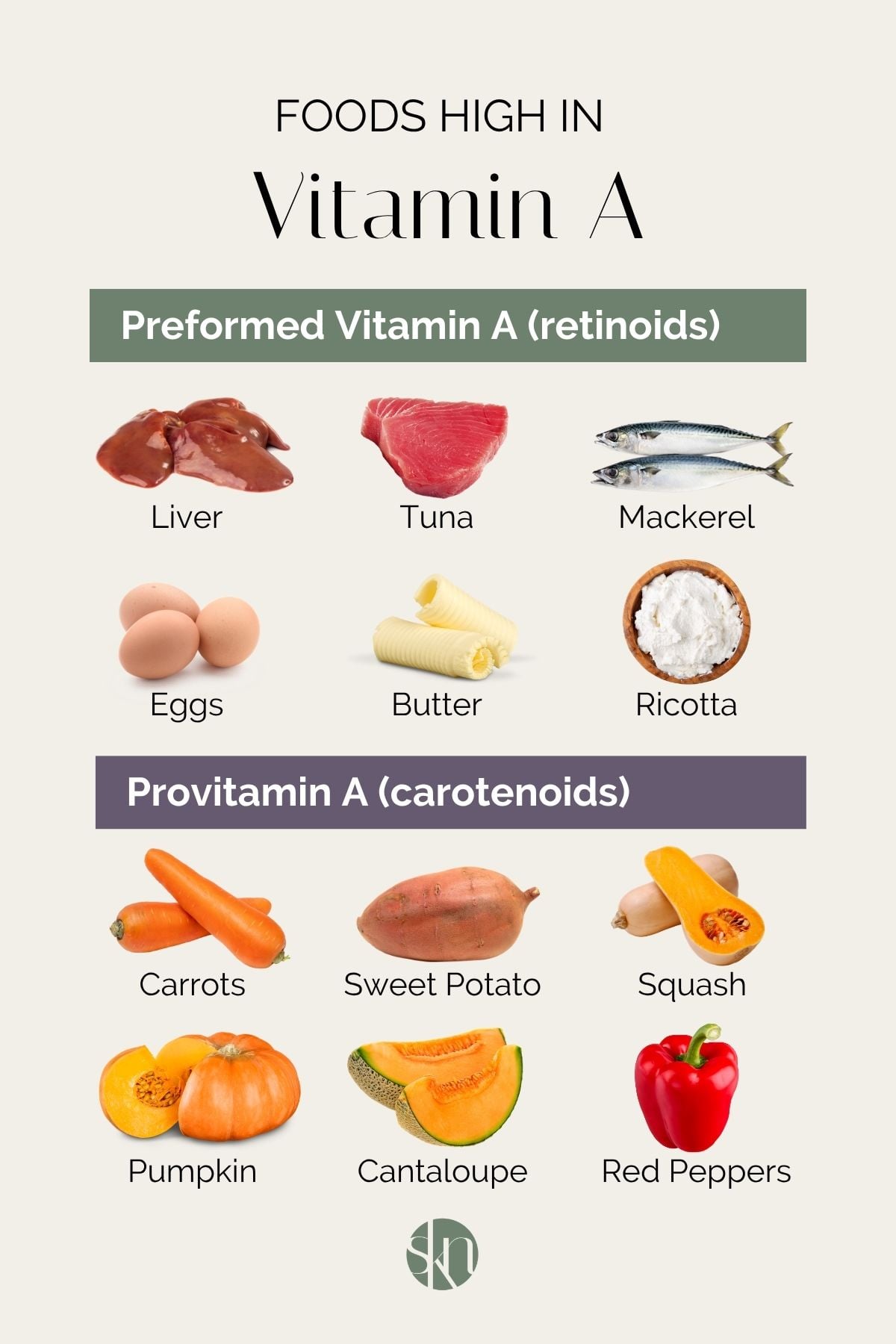
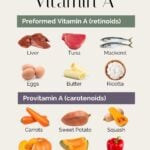
There are two forms of vitamin A: preformed vitamin A, also known as retinoids, and provitamin A, also known as carotenoids (1).
- Preformed vitamin A (retinoids) is the active form of vitamin A and the form that the body can use immediately. It is readily absorbed and is found in animal foods, such as oily fish, organ meats, dairy products, and eggs.
- Provitamin A (carotenoids) is the precursor form of vitamin A. The body must convert it into active retinol before it can be utilized, and some forms act as antioxidants, namely beta-carotene. It is found in plant foods, such as orange and yellow vegetables, green leafy vegetables, and in dietary supplements as retinyl acetate or retinyl palmitate (preformed vitamin A), beta-carotene (provitamin A), or a combination of preformed and provitamin A.
Health Benefits of Vitamin A
Vitamin A plays a vital role in immune system function, growth and development, and reproduction (2, 3, 4). It is also critical for maintaining healthy vision and for the formation and maintenance of the heart, lungs, and other organs.
While vitamin A deficiency is rare in the US and Canada, it is common in many developing countries, particularly in young children. Symptoms of vitamin A deficiency include night vision problems, dry skin, hair loss, anemia, and an increased risk of respiratory diseases and infections (2).
How much vitamin A do you need?
The current Recommended Dietary Allowance (RDA) for vitamin A varies by age and life stage (5):
- Birth to 6 months: 400 mcg RAE/day
- Infants 7-12 months: 500 mcg RAE/day
- Children 1-3 years: 300 mcg RAE/day
- Children 4-8 years: 400 mcg RAE/day
- Children 9–13 years: 600 mcg RAE/day
- Boys 14-18 years: 900 mcg RAE/day
- Girls 14-18 years: 700 mcg RAE/day
- Men 19+ years: 900 mcg RAE/day
- Women 19+ years: 700 mcg RAE/day
- Pregnant Teens: 750 mcg RAE/day
- Pregnant Women: 770 mcg RAE/day
- Breastfeeding Teens: 1,200 mcg RAE/day
- Breastfeeding Women: 1,300 mcg RAE/day
Can you take too much vitamin A?
Yes, high intakes of some forms of vitamin A can be harmful. The tolerable upper intake level (UL) of vitamin A is 3,000 mcg for adults, 2,800 mcg for teens, and ranges from 600-900 mcg for infants and children (5).
While the risk of consuming too much vitamin A from food is unlikely, it is possible to get too much preformed vitamin A from supplements or medications. Excessive vitamin A intake can cause headache, blurred vision, nausea, dizziness, muscle aches, and problems with coordination.
Are any foods fortified with vitamin A?
Yes, some processed foods are fortified with vitamin A. In the US and Canada, many breakfast cereals, juices, low-fat dairy products, and dairy alternatives, such as soy milk, are fortified with retinol (preformed vitamin A).
List of Foods High in Vitamin A
Here is a list of foods rich in vitamin A.
1. Liver
Liver is one of the best sources of vitamin A, specifically preformed vitamin A. It contains well over your daily requirement in a single serving, and is also a good source of iron, vitamin B12, copper, zinc, and selenium. While all forms of liver contain vitamin A, beef liver is the most concentrated source, and pâté, the spreadable paste made of ground liver, is also a good source. A 3-ounce serving of beef liver contains 4,227 mcg of vitamin A (6).
2. Tuna
Tuna is another animal food rich in preformed vitamin A; however, the exact amount varies by tuna type. Fresh fillets of bluefin tuna have a very high concentration, yielding over 80% of the daily value, while canned tuna, such as Yellowfin, Skipjack, and Albacore, yields about 1% to 10% of the daily value (7). Tuna is also a very lean source of protein, making it one of the best high-protein, low-calorie foods. A 3-ounce serving of bluefin tuna contains 557 mcg of vitamin A (8).
3. Mackerel
Mackerel is one of the most nutrient-rich foods, as it’s a great source of protein, vitamin D, vitamin B12, magnesium, selenium, and omega-3 fatty acids. These small but mighty fish can be prepared in many ways, as fresh mackerel can be grilled, pan-fried, or smoked, while canned mackerel can be used in salads or spreads. A 3-ounce serving of mackerel contains 281 mcg of vitamin A (9).
4. Eggs
Eggs are another food rich in vitamin A. Like other animal products, eggs contain preformed vitamin A, which is found strictly in the yolk. Egg whites contain virtually no vitamin A. A serving of 2 large eggs contains 181 mcg of vitamin A (10).
5. Butter
Butter is a good natural source of vitamin A. Because vitamin A requires fat to be absorbed, the natural milk fats in butter make it an ideal delivery system for the body. While often demonized, the saturated nature of butter also makes it one of the best cooking fats and a good source of other fat-soluble vitamins D, E, and K2. A 1-tablespoon serving of butter contains 97 mcg of vitamin A (11).
6. Cheese
Full-fat and hard cheeses retain a significant amount of the milk’s original fat, making them excellent sources of vitamin A. Although the concentration of vitamin A content varies by cheese type and serving size, ricotta cheese, cheddar cheese, and Roquefort cheese (blue cheese) contain 10%-30% of the daily value. A 1/4-cup serving of ricotta cheese contains 82 mcg of vitamin A (12).
7. Carrots
Carrots are the best source of provitamin A, primarily in the form of beta-carotene. It’s best to consume carrots with a source of healthy fat, such as olive oil, butter, or ghee, to increase absorption. Carrots can be consumed raw, steamed, boiled, roasted, or juiced for maximum concentration. A 1-cup serving of carrots contains 1,069 mcg of vitamin A (13).
8. Sweet Potato
Sweet potatoes are another root vegetable rich in vitamin A. Unlike white potatoes, sweet potatoes have a bright orange pigment, which comes from beta-carotene and acts as an antioxidant. A 1-cup serving of sweet potato contains 943 mcg of vitamin A (14).
9. Butternut Squash
The vibrant orange flesh of butternut squash makes it a good source of beta-carotene and provitamin A. While most orange winter squash are rich in vitamin A, including varieties such as hubbard, kabocha, and acorn, summer squash with pale-fleshed varieties, like zucchini and yellow crookneck, are far less concentrated. Squash is also an excellent source of dietary fiber and potassium. A 1-cup serving of butternut squash contains 745 mcg of vitamin A (15).
10. Pumpkin
As a form of squash, pumpkin is also a good source of vitamin A. It’s also a great source of complex carbohydrates, fiber, magnesium, and potassium. Edible pumpkin can be roasted, steamed, or boiled and enjoyed as a side dish, added to casseroles, or blended into soup. If opting for canned versions, be sure to read the label carefully to ensure you’re choosing pumpkin puree and not pumpkin pie filling, which has added sugar and spices. A 1-cup serving of pumpkin contains 494 mcg of vitamin A (16).
11. Cantaloupe
Cantaloupe is the fruit highest in vitamin A, as its yellow-orange flesh makes it a good source of beta carotene. It’s also one of the most hydrating foods, with a water content of approximately 90%. A 1-cup serving of cantaloupe contains 371 mcg of vitamin A (17).
12. Red Peppers
Red bell peppers are the peppers highest in vitamin A. They also happen to be the best source of vitamin C and a good source of vitamin E. They can be eaten as a snack with hummus, in a salad with dressing, or in a stir fry with some oil to add fat and make their vitamin A more absorbable. A 1-medium serving of sweet red pepper contains 187 mcg of vitamin A (18).
Ranking of Foods High in Vitamin A
Here is a ranking of the best sources of vitamin A per recommended serving size.
| Source | Serving Size | Vitamin A per Serving |
| Foods High in Preformed Vitamin A | ||
| Liver, beef | 3 ounces | 4,227 mcg |
| Tuna, steak | 3 ounces | 557 mcg |
| Pâté, chicken liver | 1 ounce | 281 mcg |
| Mackerel, king | 3 ounces | 185 mcg |
| Eggs | 2 eggs | 181 mcg |
| Butter | 1 tablespoon | 97 mcg |
| Cheese, ricotta | 1/4 cup | 82 mcg |
| Cheese, goat, soft | 1 ounce | 82 mcg |
| Yogurt, whole milk | 3/4 cup | 82 mcg |
| Milk, whole | 1 cup | 80 mcg |
| Clams | 3 ounces | 77 mcg |
| Trout | 3 ounces | 71 mcg |
| Oysters | 3 ounces | 69 mcg |
| Cheese, parmesan | 1 ounce | 59 mcg |
| Salmon | 3 ounces | 37 mcg |
| Herring | 3 ounces | 26 mcg |
| Foods High in Provitamin A | ||
| Carrots | 1 cup | 1,068 mcg |
| Sweet potatoes | 1 cup | 943 mcg |
| Butternut squash | 1 cup | 745 mcg |
| Pumpkin | 1 cup | 494 mcg |
| Cantaloupe | 1 cup | 371 mcg |
| Red peppers, sweet | 1 medium | 187 mcg |
| Apricots | 1 cup | 149 mcg |
| Grapefruit | 1 cup | 134 mcg |
| Swiss chard | 1 cup | 110 mcg |
| Spinach | 1 cup | 85 mcg |
| Mango | 1 cup | 76 mcg |
| Kale | 1 cup | 43 mcg |
| Pistachio | 1 ounce | 7 mcg |
| Broccoli | 1 cup | 6 mcg |
All nutrition data is based on FoodData Central.
Do you need a vitamin A supplement?
Vitamin A is available in stand-alone supplements and most multivitamins, and can be beneficial for certain individuals to ensure they are getting enough vitamin A. It is best to work with a healthcare provider or registered dietitian to determine if a vitamin A supplement is best for you.
FAQs
Liver is the food with the most vitamin A.
Consuming a diet with foods rich in vitamin A is the best way to increase your intake.
Carrots, sweet potatoes, cantaloupe, and apricots are the fruits and vegetables with the most vitamin A.

The Bottom Line
Vitamin A is a fat-soluble vitamin and an essential micronutrient. Preformed vitamin A is the most absorbable form and exists in animal foods, particularly liver and fatty fish, while provitamin A is the precursor form and exists in plant foods, particularly fruits and vegetables with orange pigment.

Leave a Review