

We all know we need to eat vegetables, but choking down steamed Brussels sprouts or snacking on raw broccoli can feel more like a chore than a dietary highlight. Fortunately, you don’t have to sacrifice flavor or spend hours in the kitchen to boost your nutrient intake. By shifting your approach from restriction to addition, you can use a few simple strategies to upgrade the meals you already love and easily master how to eat more vegetables.
Table of contents
- Benefits of Eating More Vegetables
- How many vegetables should you eat a day?
- Ways to Eat More Vegetables
- 1. Add them to meals you already make.
- 2. Use frozen vegetables.
- 3. Buy pre-cut vegetables.
- 4. Add them to smoothies.
- 5. Eat salads as a side dish.
- 6. Turn them into pasta sauce.
- 7. Add them to your eggs.
- 8. Use them as wraps, noodles, and rice.
- 9. Snack on them with dip.
- Sample Meals with Extra Vegetables:
Benefits of Eating More Vegetables
Consuming vegetables regularly is a healthy eating habit that has numerous health benefits, including:
- Contributes to a balanced diet. Consuming vegetables helps ensure you’re creating a balanced meal with a source of complex carbohydrates and fiber.
- Increases intake of vitamins, minerals, and antioxidants. Fresh and frozen vegetables are rich sources of micronutrients and antioxidants; therefore, eating them more regularly can help to ensure you’re consuming more nutrients in your daily meals.
- Supports hydration. Fruits and vegetables are the most hydrating foods, with many containing over 80% water, which can help to increase your water intake.
- Supports healthy digestion. Consuming high-fiber foods, such as vegetables, can improve digestion by adding bulk to stool and feeding probiotics found in the gut.
- Helps with weight management. Vegetables have a high-fiber content and low-calorie content, which helps to increase satiety and maintain a calorie deficit to support weight loss (1, 2).
- Helps to lower blood pressure, cholesterol, and chronic inflammation. The fiber and electrolytes found in vegetables have been shown to help protect your heart and blood vessels (3).
- Reduces the risk of heart disease, stroke, diabetes, and some cancers. A high vegetable intake has been shown to help prevent disease and chronic illness (4, 5).
How many vegetables should you eat a day?
The recommended intake of vegetables varies slightly by country and governing health body. The Dietary Guidelines for Americans and Canada Food Guide recommend making vegetables and fruits half of your plate at every meal, while others recommend adult females eat 2 to 2.5 cups per day and adult males eat 2.5 to 3 cups per day (6, 7).
A standard serving size for vegetables is equal to one fist-sized portion. For most raw veggies or chopped produce, this equals about 1 cup, while high-volume foods, like leafy greens or spinach, equate to about 2 cups.
Ways to Eat More Vegetables
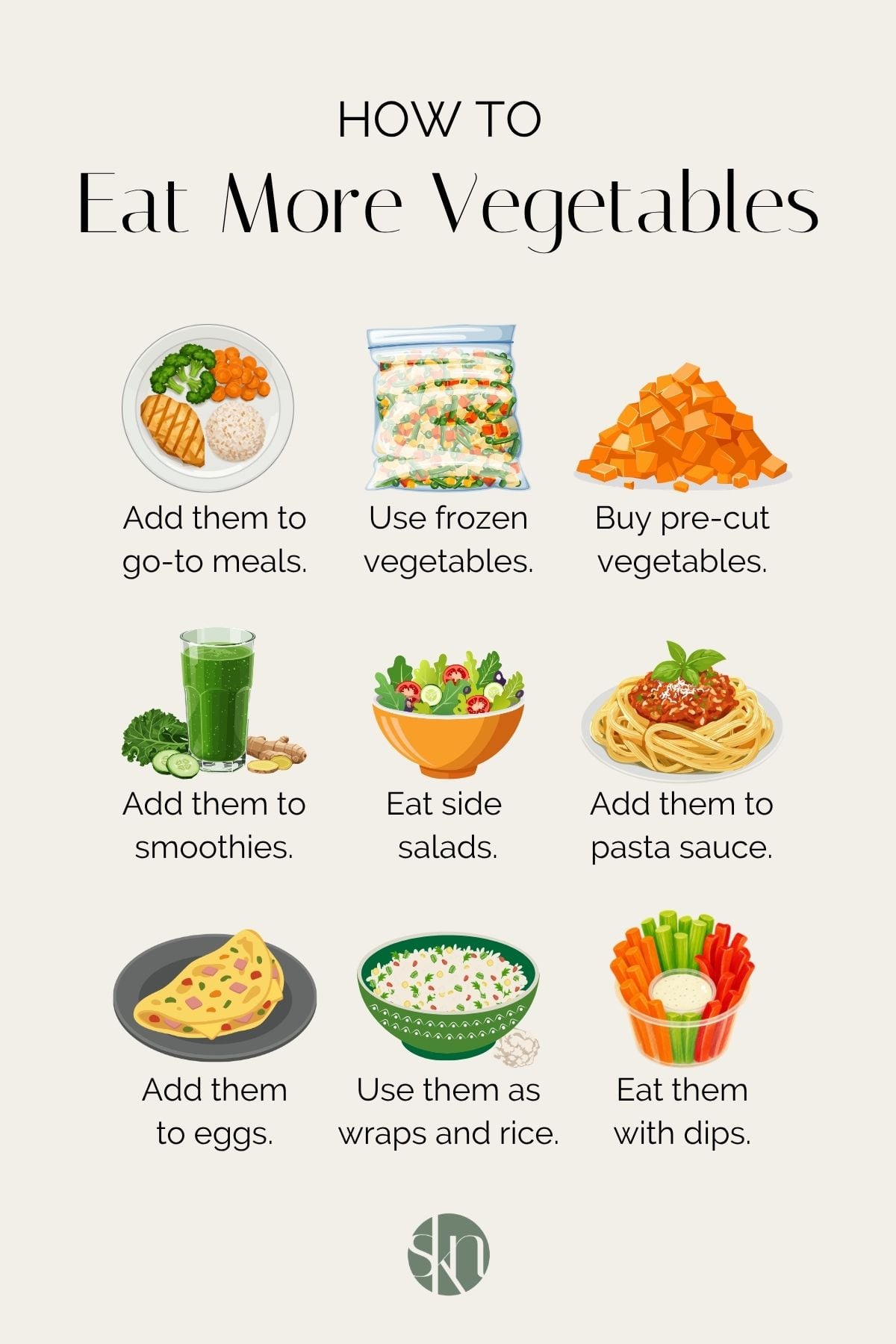
Here are 9 easy ways to add more veggies to your diet.
1. Add them to meals you already make.
Incorporating vegetables into meals you already love is one of the easiest ways to eat more vegetables without changing your routine. Whether it’s adding a bit of zucchini to pasta, a handful of spinach to soup, or broccoli to your eggs, simply adding extra vegetables can help you build a new habit onto an old one. This strategy lets you enjoy your favorite meals while seamlessly adding more fiber and micronutrients to your diet.
2. Use frozen vegetables.
One of the biggest barriers in eating more vegetables is the prep time required to wash, peel, and chop them. Using frozen vegetables that are pre-chopped and ready to use allows you to add veggies to any dish without extra effort. Be it frozen peas, green beans, or stir-fry blends, you can quickly add them to a pot or pan and have them cooked in minutes. Plus, frozen vegetables are flash-frozen at peak ripeness, helping to lock in essential nutrients and making them just as healthy as fresh veggies.
3. Buy pre-cut vegetables.
Much like frozen vegetables, buying raw pre-cut vegetables is a good way to make vegetables more accessible. Packages of chopped carrots, celery, and broccoli are readily available at most grocery stores, and having them visible in the fridge helps encourage healthy snacking.
4. Add them to smoothies.
While smoothies are often thought of as a vehicle for frozen fruit, they are also a great place to incorporate veggies. Blending leafy greens, such as spinach and kale, into fruit smoothies can help mask the taste of the vegetables and increase intake. Moreover, vegetables with a high-water content, such as cucumber and celery, also blend well into smoothies, while puréed sweet potato and pumpkin blend well into smoothies and are great alternatives to bananas.
5. Eat salads as a side dish.
Another great way to eat more vegetables is to enjoy a salad with your meals. Instead of overhauling your entire menu, you can add a small bowl of leafy greens, veggies, olive oil, and lemon juice alongside the dishes you already enjoy. In fact, starting a meal with a salad can increase vegetable intake while improving satiety at the same time.
6. Turn them into pasta sauce.
Blending or finely chopping a variety of vegetables directly into your pasta sauce is an effective strategy to boost your daily vegetable intake. In addition to adding veggies to ground meat in a classic tomato sauce, you can also blend cooked vegetables into creamy and colorful pasta sauces. For instance, you can blend leafy greens, cooked zucchini, pumpkin purée, or roasted beets with ricotta or cottage cheese to create a rich and creamy pasta sauce with minimal effort.
7. Add them to your eggs.
While most people target lunch and dinner to boost their vegetable intake, breakfast is an excellent opportunity to sneak in extra veggies – especially through savory dishes like eggs. Vegetables such as spinach, tomatoes, bell peppers, and mushrooms can easily be cooked into scrambled eggs, omelets, and egg bakes. Not only does this strategy help you get a jump start on your vegetable intake, but it helps you hit your daily fiber goals early, keeps your blood sugar steady, and provides lasting energy.
8. Use them as wraps, noodles, and rice.
Swapping grains for vegetable-based alternatives like lettuce wraps, spiralized veggie noodles, and cauliflower rice is another great way to maximize your daily vegetable intake. This can also help to reduce your intake of processed foods while increasing your intake of essential vitamins and dietary fiber. Using lettuce wraps instead of bread for sandwiches, cauliflower rice instead of white or brown rice, and zucchini noodles for traditional noodles are also low-carb swaps that can help to support weight management.
9. Snack on them with dip.
While eating raw vegetables is a good way to eat more veggies, pairing them with a delicious dip makes it much tastier. Crisp options like baby carrots, cucumber slices, and bell pepper strips become much more enticing when matched with flavorful additions like hummus, guacamole, or Greek yogurt ranch dip. These healthy dips also offer their own nutritional benefits, as many of them contain fiber and healthy fats, which improve your body’s absorption of essential fat-soluble vitamins.
Sample Meals with Extra Vegetables:
- Chicken Burrito Casserole
- Green Goddess Pasta
- Asian Chicken Lettuce Wraps
- Spinacy Pork Noodles
- Vegetable and Quinoa Soup
- Creamy Zucchini Pasta
- Chicken Spring Roll Bowls
- Roasted Beet Pasta
- Thai Chicken Noodle Soup
- Pumpkin Ricotta Pasta
- Vegetable Lasagna
- Spinach Baked Eggs

The Bottom Line
Eating more vegetables offers many health benefits, including improving heart health, supporting digestion, and helping to manage body weight. By adding vegetables to meals you enjoy, using frozen vegetables, buying pre-chopped vegetables, eating them at breakfast, adding them to pasta sauce, and using them as wraps and noodles, you can increase your intake of dietary fiber, vitamins, and minerals.




Leave a Review