

If you’re new to your meal prep journey, the task can feel overwhelming. Fortunately, meal prep doesn’t need to be complicated or time-consuming; in fact, with the right strategies, it can be easy and fun. Here is a complete guide on how to meal prep for the week.
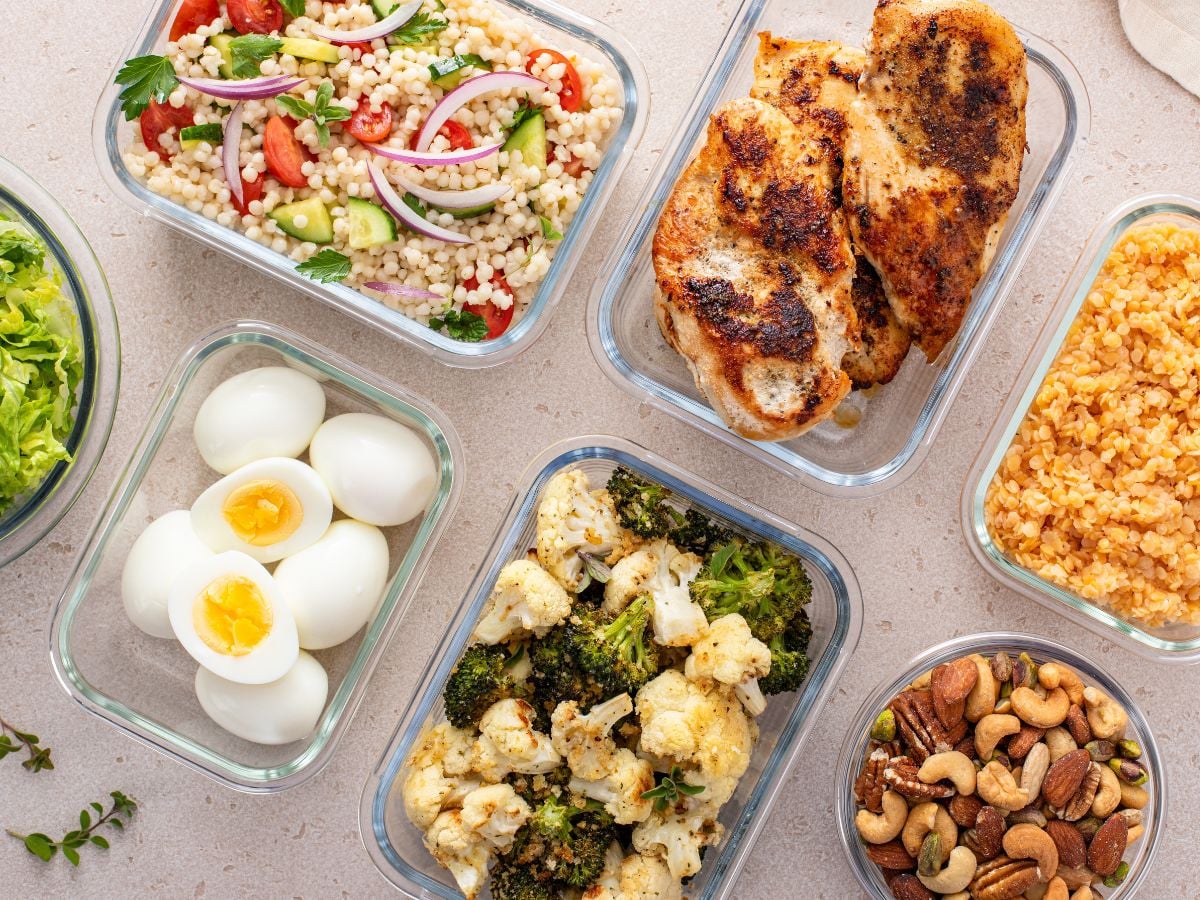
Table of contents
Meal Prep Basics
Meal prep is short for meal preparation and is the act of preparing all or some of your meals ahead of time. Although popularized by the fitness community, it has gained traction among professionals, parents, and students looking to save time and money and prioritize their health goals.
While many imagine meal prep as a fridge full of identical, pre-portioned containers for breakfast, lunch, and dinner, the practice is actually highly customizable to fit different lifestyles. Whether your goal is to create a calorie deficit to lose weight, gain healthy weight, or simply focus on healthy eating, the ideal meal prep strategy is best tailored to your schedule, dietary preferences, and goals.
Meal Prep Approaches
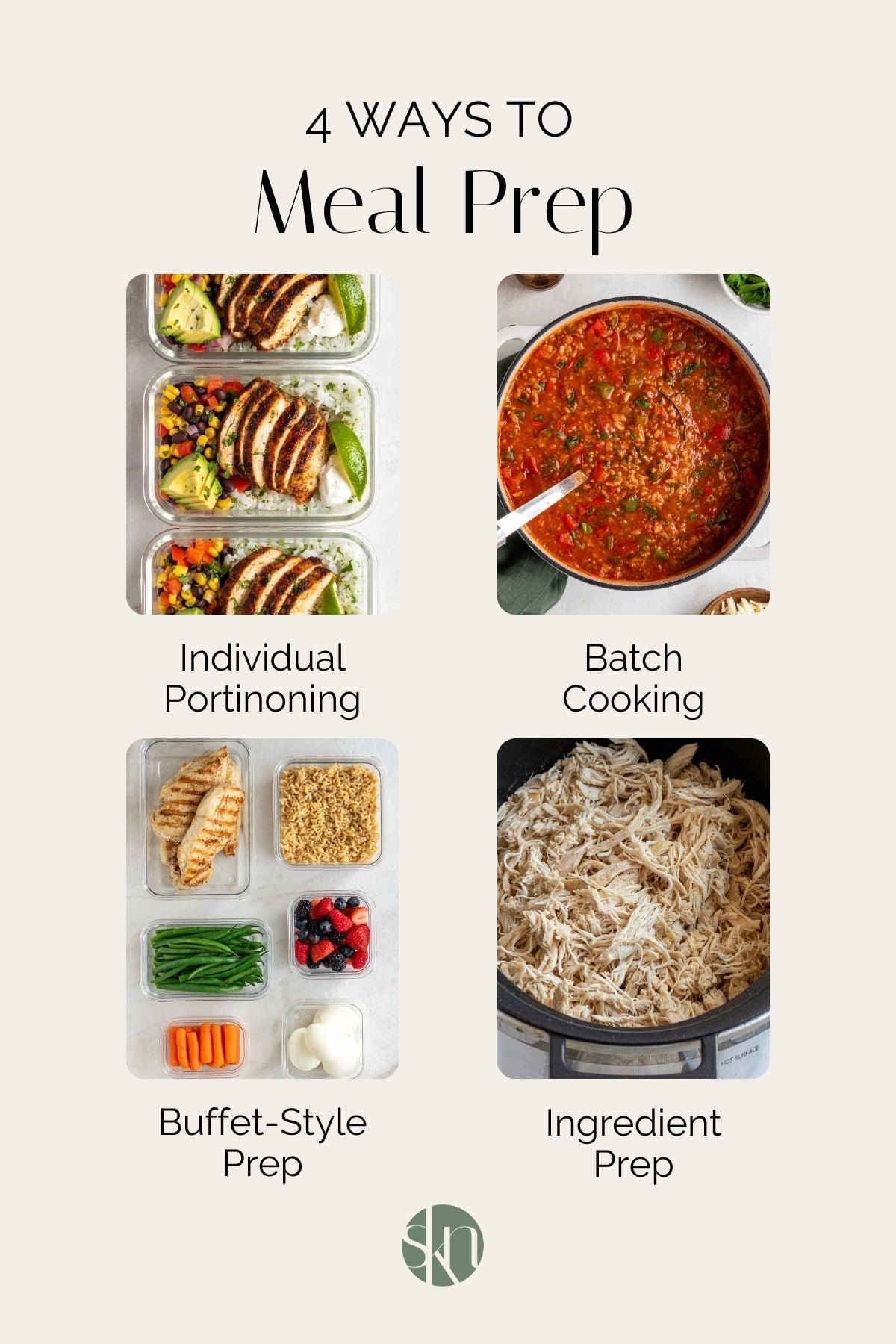
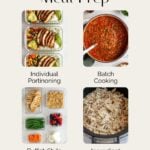
The most common meal prep approaches include:
Individual portioning.
Individual portioning involves making entire pre-portioned meals. This style of meal prep features individual serving containers filled with a source of protein, carbohydrate, fiber, and fat (e.g., chicken, rice, broccoli, and olive oil) that are refrigerated until ready to eat. While often more labor-intensive and time-consuming to prepare, this method is the most practical and convenient at mealtime.
Batch cooking.
Batch cooking involves making a large batch of a specific recipe that can be divided into individual portions and refrigerated or frozen for upcoming weeks or months. For most recipes, such as soup or chili, it doesn’t take much longer to make a double or triple batch as you cook, so you can easily make extra portions without much additional effort.
Buffet-style prep.
Buffet prep, also known as component prep, focuses on preparing bulk ingredients that can be quickly assembled into various meals throughout the week. For example, storing separate containers of grilled chicken, hard-boiled eggs, cooked rice, baked sweet potatoes, roasted veggies, and homemade salad dressing in the fridge creates a buffet of ingredients for you to choose from depending on your mood.
Ingredient prep.
Ingredient prep is a more basic form of buffet meal prep, as it involves preparing a single ingredient to help make a specific mealtime more convenient. For instance, preparing a batch of cooked meat or chopping a large batch of vegetables to make dinners easier, or preparing a large bowl of fresh fruit or a container of fresh veggies for snack time are examples of ingredient prep.
How to Meal Prep for a Week
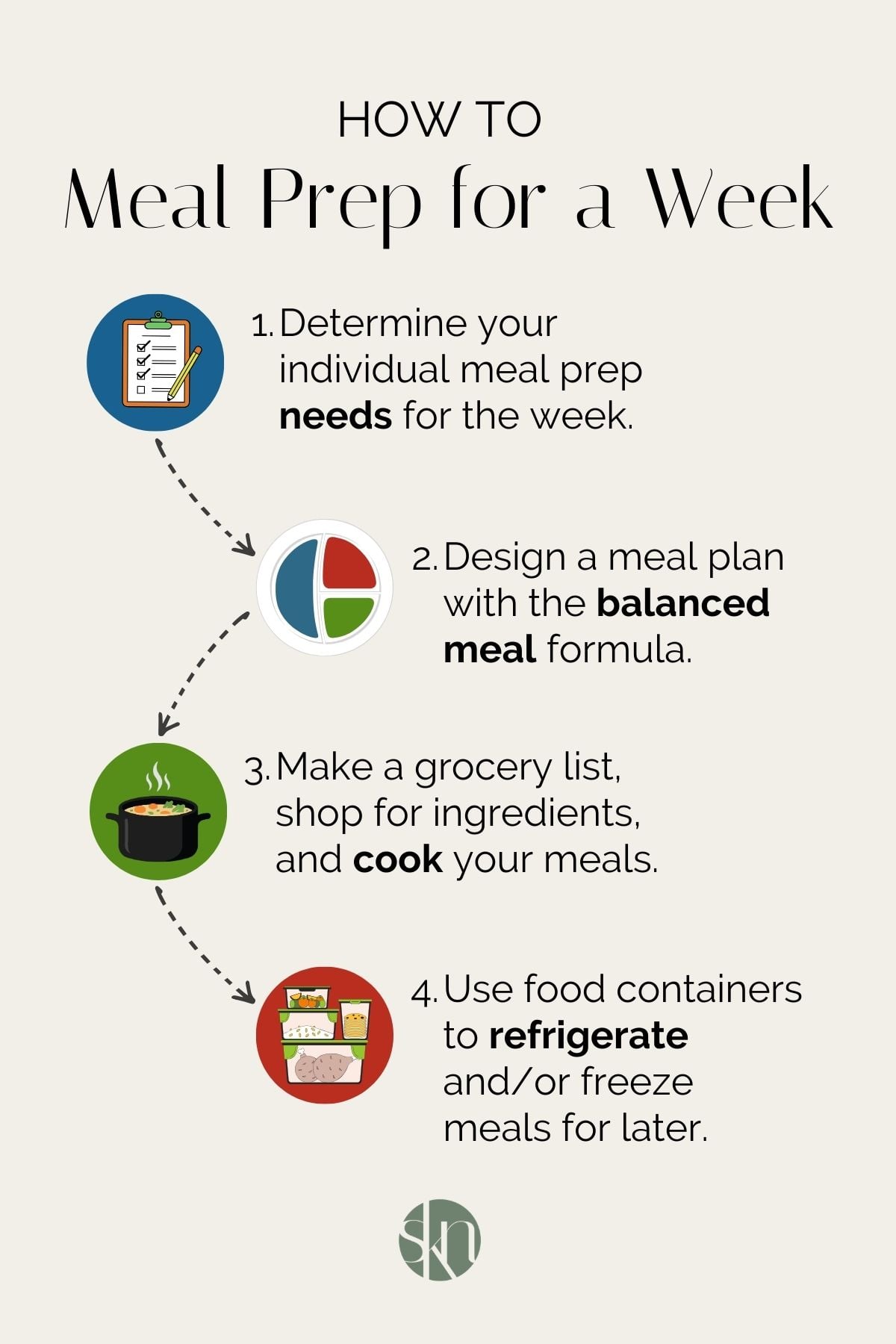
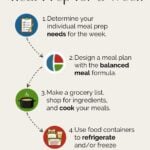
Here is an easy 4-step meal prep plan to help you prepare meals for a full week.
1. Determine your meal prep needs.
Look at your calendar and determine how much meal prep you need for the week and which approach you want to take. If you have a particularly busy week or are working on a weight-loss goal, perhaps individually portioned meals are a more practical approach. If you’re looking to make family dinner time quicker and easier, perhaps some batch cooking or ingredient prep is the best approach.
2. Use the balanced meal formula to design your meals.
To ensure you’re prepping well-balanced meals, use the balanced meal formula to include a source of protein, carbohydrates, fiber, and fat in your meal prep. Regardless of your goals, eating balanced meals will ensure you’re consuming all macronutrients, which can help to stabilize blood sugar and energy, increase feelings of fullness, and optimize micronutrient intake.
3. Cook your meals and/or ingredients.
Set aside some time in your weekly schedule to shop for ingredients and cook your meals. Depending on which meal prep approach you choose, this may take as little as 30 minutes or as much as several hours. While it is often more practical to set aside time on the weekend to meal prep full meals (e.g., cook shredded chicken, boil rice, and roast veggies), you can also use a weeknight to make a double batch of dinner and store the leftovers as meal prep.
4. Refrigerate and/or freeze the meals for later.
One of the most important, yet overlooked, aspects of meal prep is how you store your meals. Choosing ingredients that refrigerate and/or freeze well together, and using good meal prep containers, makes a huge difference in the quality of your meals. It’s important to use food containers that reheat well in the microwave, such as glass, and build meals with ingredients that reheat in a similar manner.
Sample Weekly Meal Prep Plan
Here is an example of a quick and easy meal prep plan for a week’s worth of meals.
- Breakfast – Meal prep jars of protein overnight oats for weekday breakfasts.
- Lunch – Batch cook a pot of vegetable quinoa soup for work lunches.
- Dinner – Make some slow-cooker shredded chicken to use in dinners throughout the week.
- Snack – Peel and chop fresh veggies and store them in a container for snacks.
For more weekly meal prep ideas, download a copy of my free 7-day meal plan.
Tips for a Weekly Meal Prep Routine
Here is a list of meal prep tips for beginners that you can use along with my general meal prep tips and meal prep hacks.
Use ingredients that refrigerate and reheat well.
For an optimal prep meal, it’s important to prep meals with ingredients that keep well and reheat easily. When prepping individually portioned meals, it’s best to avoid recipes with hot and cold components in the same container, as they will be more difficult to reheat properly. For example, salad should not be added to containers with foods that need to be reheated in the microwave. Furthermore, certain ingredients, such as sliced avocado, banana, and salad dressing, should only be added to a meal when you are ready to eat, as they don’t store well in the fridge or freezer.
Use prepared ingredients.
Using healthy, prepared store-bought ingredients is a great way to save time when meal prepping. Pre-cooked proteins (rotisserie chicken, canned tuna, smoked tofu), cooked carbohydrates (minute rice, cooked quinoa), prepared vegetables (salad kits, frozen veggies), pre-made sauces (pasta sauce, pesto, marinade, salad dressing), and pantry staples (canned beans) can help to dramatically reduce cooking time without compromising flavor or nutrition.
It’s important to note that, while these ingredients are considered processed foods, they are typically minimally processed, and you can ensure you are choosing high-quality options by reading food labels.
Make one-pot meals.
One-pot meals are a great way to minimize prep and cleanup time. They work equally well for individual portioned meal prep or batch cooking, and, generally speaking, most one-pot meals (e.g., soups, stews, chilis) keep very well in the fridge and freezer. Sheet pan meals are also great, as you can easily add a protein, carb, and vegetable to a pan and cook them together to create a balanced meal.
Make no-cook recipes.
No-cook recipes are also great meal prep ideas as they save a lot of prep and cooking time. No-cook meals with no-cook protein sources, such as overnight oats, yogurt parfaits, bean salads, and charcuterie boxes, assemble raw ingredients with minimal effort, without compromising nutrition or flavor.
Use the slow cooker.
Using a slow cooker for meal prep is incredibly convenient and is great when you are short on time. The set-it-and-forget-it nature of slow cooker recipes not only reduces prep time but can turn humble ingredients into delicious meals with little effort. The slow cooker is great for making a large batch of food on the weekend that you portion into individual containers for weekday lunches, or ingredient prep a source of protein you can use in dinners throughout the week.
Learn to multitask.
Utilizing multiple cooking appliances during meal prep can help to maximize your time and effort. For instance, by using the oven, stovetop, toaster oven, and slow cooker simultaneously, you can prepare multiple ingredients and recipes while reducing overall prep time and making the process less daunting.
Label containers.
Labelling food containers can help to easily identify their contents and reduce food waste, particularly for frozen meals. By labelling meal prep containers with a piece of masking tape and a marker, you can ensure you know exactly what’s in them and when to use them.
How long does meal prep last?
Generally speaking, most meal prep keeps well in the fridge for up to 4 days and in the freezer for up to 3 months; however, it’s best to refer to specific food storage guidelines for best practices.
Best Meal Prep Containers
The best meal prep containers are airtight, leak-proof, microwave-safe, dishwasher-safe, and made of durable materials. High-quality containers are made from materials that can withstand heat and repeated use, which typically include glass, BPA-free plastic, and stainless steel.
Here are some of my favorite meal prep containers:
- Best Glass Meal Prep Containers: William Sonoma Hold Everything Glass Food Storage Containers
- Best Plastic Meal Prep Containers: Rubbermaid Brilliance Food Storage Containers
- Best Stainless Steel Meal Prep Containers: Dalcini Stainless Lunch Containers
Additionally, food containers come in a variety of sizes, so the best size will depend on how you intend to use them (i.e., individually portioned meals vs. buffet-style meal prep).
Healthy Meal Prep Ideas
Here are some of my most popular healthy meal prep recipes.
Breakfast Meal Prep Recipes:
- Breakfast Egg Bake
- Berry Baked Oatmeal
- Meal Prep Breakfast Sandwiches
- Slow-Cooker Apple Cinnamon Oatmeal
Lunch Meal Prep Recipes:
- Teriyaki Ground Turkey Meal Prep Bowls
- High-Protein Lunch Box
- Firecracker Beef Meal Prep Bowls
- Sticky Chicken Meal Prep Bowls
Dinner Meal Prep Recipes:
- Chicken Fajita Meal Prep Bowls
- Golden Chicken Lentil Soup
- Slow-Cooker Vegetarian Chili
- Slow-Cooker Mexican Shredded Beef Tacos

The Bottom Line
There are many different approaches to meal prepping for a week, and the best approach depends on your schedule, dietary preferences, and health goals. Regardless, determining your individual meal prep needs, designing a well-balanced meal plan, setting aside time to cook your meals, and using high-quality storage containers can help to ensure that you’re putting your best foot forward on your meal prep journey.

Leave a Review