Stephanie Kay Nutrition

Stephanie Kay Nutrition

Real Food for Real Life

  • recipes
    • all recipes
    • Breakfast
    • Lunch
    • Dinner
    • Soups & Stews
    • Salads
    • Sides
    • Snacks
  • nutrition
    • All Articles
    • Tips
    • FAQs
    • This vs. That
    • How To/Guides
    • Weight Loss
  • resources
    • 10 Days of Nutrition
    • 7-Day Meal Plan
    • Balanced Meal Guide
    • 5-Ingredient Cookbook
    • Lunch Box Cookbook
  • About
    • About Steph
    • Contact
  • recipes
    • all recipes
    • Breakfast
    • Lunch
    • Dinner
    • Soups & Stews
    • Salads
    • Sides
    • Snacks
  • nutrition
    • All Articles
    • Tips
    • FAQs
    • This vs. That
    • How To/Guides
    • Weight Loss
  • resources
    • 10 Days of Nutrition
    • 7-Day Meal Plan
    • Balanced Meal Guide
    • 5-Ingredient Cookbook
    • Lunch Box Cookbook
  • About
    • About Steph
    • Contact
  • Dinner
  • Breakfast
  • Meal Prep
  • Nutrition Tips
  • facebook
  • instagram
  • pinterest
  • youtube

10 Non-Scale Health Goals

Published on January 21, 2025 by Stephanie Kay

While the scale is one way to measure health and progress, it’s not the only way to measure health and progress. In fact, your body weight is only one of many health metrics, so here is a list of non-scale health goals you can start working on today.

Woman's feet in running shoes on a gym floor.

Health is multifaceted, as it encompasses not only physical health but also emotional, mental, and social health. Unfortunately, for many, being “healthy” has become synonymous with weight loss. While weight does play a role in our health, becoming too focused on the scale can cause individuals to overlook other aspects of their health.

Working towards non-scale victories shifts your perspective on health and can help you focus on metrics that are just as, if not more, important than weight loss. For instance, daily exercise can help improve mood and cognition, and improving sleep quality can help reduce stress. Packing your lunch can help improve your health and save money, and lifting weights can help make your clothes fit differently or more comfortably.

Whether you’ve hit a weight loss plateau, are struggling to lose weight, or want to completely change your mindset, adding non-scale goals to your plan is a great way to create long-lasting lifestyle changes.

Infographic of non-scale health goals.

Non-Scale Health Goals

Here is a list of non-scale health goals you start working on today to help you focus on more non-scale victories.

1. Cook more often.

One of the simplest ways to improve your health is to eat more whole foods and cooking more often is a simple way to do so. Whole foods, such as fruits, vegetables, whole grains, legumes, nuts, seeds, eggs, dairy products, poultry, red meat, seafood, and shellfish, are the most nutrient-dense foods on the planet, by cooking from scratch, you are naturally forced to rely on minimally processed foods and less on ultra-processed foods.

Unfortunately, most prepared meals and packaged foods contain unnecessary additives and ingredients with excessive amounts of sugar, fat, and sodium. Not only does cooking your meals reduce the consumption of these unnecessary ingredients, but it also increases the nutritional value of your meals and will naturally impact how much you eat, as whole foods are the most filling foods. The higher vitamin, mineral, fiber, and water content of whole foods makes them more satiating and less palatable than processed foods, which means you’ll likely consume fewer calories (1, 2).

Plus, the more frequently you cook from scratch, the easier it becomes, and the more tools you add to your healthy eating habits toolkit for the future. You don’t need to know how to make a ton of different homemade meals to get started; you only need a few recipes you can rotate through.

2. Read the ingredients on everything you buy.

While whole foods are the healthiest foods, you don’t need to cook everything from scratch to eat healthy. There are many healthy packaged foods found in grocery stores that are healthy choices made solely of whole foods and can save you time and money in the healthy eating process.

How do you know if an option is healthy? Read the ingredients. The ingredient list is the most valuable part of any food label as it tells you exactly what the food product contains and in what ratio. Ingredients are listed in descending order by weight, including added water: the first ingredient listed is present in the largest amount by weight, and the last ingredient listed is present in the smallest amount by weight.

Not only does reading the ingredients only take a few seconds, but by reading the ingredients on everything you shop for you can pick the best brands in every product category (i.e. the ones made with whole foods) and help you better identify factual and misleading health food claims found on many food labels.

3. Eat more fiber.

While most people know fiber is healthy, it remains one of the most under-consumed nutrients as it is estimated that only 5% of Americans meet their recommended daily fiber needs (3). Dietary fiber has been shown to have many health benefits including supporting gut health, cardiovascular health, and digestion, and decreasing the risk of certain diseases such as type 2 diabetes and colorectal cancer (4, 5, 6, 7, 8, 9). The current dietary guidelines recommend 14 grams of fiber per 1000 calories consumed, which works out to roughly 25 grams of fiber for an adult female and 38 grams of fiber for an adult male.

Fiber is found in plant foods including fruits, vegetables, whole grains, beans, lentils, nuts, and seeds, and some of the best high-fiber foods are chia seeds, flax seeds, oats, almonds, and beans. A simple way to increase your fiber intake is to eat, at least one, fiber-containing food at every meal.

4. Eat a source of protein at every meal.

Focusing on your protein intake is an excellent way to ensure you are creating more balanced meals while supporting your overall health at the same time. Protein is an essential macronutrient because the body cannot biosynthesize enough of it to maintain health and survival, and consuming adequate protein can help to improve satiety, balance blood sugar, increase metabolic rate, aid muscle development, and aid in weight loss and weight management (10, 11, 12 ,13, 14).

By consuming a palm-sized portion of protein at every meal you can help to ensure you are meeting your recommended daily protein intake. While exactly how much protein you need will vary by individual and goal, individuals looking to optimize health should aim for 0.54 – 0.7 grams of protein per pound of body weight per day, and individuals looking to build muscle or lose weight should aim for at least 0.7 grams of protein per pound of body weight per day (15, 16).

Both plant and animal protein contribute to daily protein intake, so whether you choose to include animal protein sources such as eggs, chicken, beef, fish, Greek yogurt, cottage cheese, and/or plant-protein sources such as tofu, tempeh, black beans, or lentils, do your best to include a source of protein at every meal.

5. Pack your lunch for work.

Taking the time to prep and pack your lunch is a small but impactful action in helping to make your health a priority. Not only does buying your lunch every day get expensive, as just $10 a day adds up to $200 per month, but you are in far less control of what you are eating, including the ingredients, total calories, and macronutrient balance.

Whether you choose to throw something in a slower cooker, make meal prep boxes, or pull together some ingredients for a no-cook lunch idea, you can ensure you eating a balanced meal that can help to increase energy and productivity levels throughout the workday.

6. Eat at the dinner table, without digital devices.

Where and how you eat are overlooked aspects of healthy eating. While what and how much you eat are incredibly important, how you consume your food can impact your health.

Not only does sitting down to eat allow you to fully enjoy and properly digest your food, but studies have shown that not paying attention to a meal can prompt you to eat more than intended at that meal and eat more throughout the day (17). So, while you may need to eat in the car in or front of the computer from time to time, aim to sit down at a table and enjoy “electronic-free” meals as much as possible.

7. Spend more time outdoors.

Spending time outdoors is one of the most underrated healthy daily habits. Research has shown that spending time outdoors can boost physical and mental health in several ways including improved sleep, boosted immune function, reduced depression symptoms, reduced anxiety, and improved stress management (18).

Research also suggests that individuals who exercise outside tend to experience increased mood and better mental health (19). Outdoor exercise has been shown to reduce seasonal affective disorder (SAD) because sunshine naturally increases serotonin, a hormone that affects your mood (20). Whether you choose to bike, hike, walk, garden, ski, or snowshoe, look for more ways to spend more time outside to reduce stress levels and improve overall mental well-being.

8. Sign up for a fitness event.

If you’re looking for some extra motivation to exercise, signing up for a fitness event is a great way to do it. Registering for a charity run, a fundraising bike ride, or a fitness competition can be a powerful tool to hold yourself accountable to your physical activity goals and give you something fun to work towards.

That said, it’s important to be realistic with your fitness goals. While you want something challenging to work towards, you don’t want to pick something completely unrealistic that will leave you discouraged in the process. For example, if you are currently not exercising at all, don’t sign up for a marathon, rather, consider registering for a local 5km walk/run, working towards doing 5 full push-ups, or holding a 1-minute plank position.

9. Wake up earlier.

If you’re a night owl who loves to hit the snooze button and sleep in until the last minute, waking up earlier is a great non-scale health goal to consider.

The circadian rhythm-regulating effects of waking up early provide more benefits than just giving you more time in the morning, it can also help regulate your mood and improve mental health. Research has shown that people who tend to sleep and wake later are more likely to experience anxiety, depression, and many other health issues than those who sleep and wake earlier (21, 22).

To wake up earlier, you must improve your sleep quality by practicing better sleep hygiene by going to bed at the same time every night, sleeping in a dark and cool room, avoiding digital devices at least 1 hour before bed, and avoiding caffeine in the afternoon and evening.

10. Aim for consistency, not perfection.

Regardless of what your other non-scale health goals are, arguably, the most important goal is to aim for consistency, not perfection. Why? Because there is no such thing as perfection when it comes to diet and exercise – there will be celebrations, there will be vacations, there will be holidays, there will be schedule conflicts, and there will be days when you just don’t feel like it.

To create healthy lifestyle habits you can maintain and feel good about, you must remember that it’s a practice, you’re learning, and you need to give yourself a little grace and a lot of love in the process. You don’t need to exercise and diet “perfectly” 100% of the time. Rather, consistency is created by adhering to the priorities of the nutrition pyramid most of the time, not all of the time.

The Bottom Line

Non-scale health goals are diet, exercise, and lifestyle goals that focus on health benefits beyond the scale. While the list of potential goals is endless, some of the best non-scale health goals include cooking more homemade meals, reading ingredient labels, eating more fiber, eating protein at every meal, packing lunch for work, eating without digital devices, spending more time outdoors, signing up for a fitness event, and waking up earlier.

Roasted Red Pepper and Lentil Soup

Published on January 19, 2025 by Stephanie Kay

Packed full of fiber and vegetarian protein, this roasted red pepper and lentil soup is a hearty meal perfect for a cold day. Serve it with fresh crusty bread or your favorite sandwich for a delicious and nutritious lunch.

Bowl of roasted red pepper and lentil soup topped with a drizzle of cream and fresh basil and a side fresh crusty bread.

Lentil soup is one of my favorite cold-weather lunches. Not only is it incredibly easy to – just sauté, boil, and blend – but it’s hearty and filling. Lentils are one of the best sources plant protein and are packed full of fiber, while being incredibly inexpensive.

For this recipe, I opted to pair the lentils with roasted red peppers to balance the earthy flavor of the lentils with a bit of smokiness and sweetness. Once blended, it creates a rich and creamy texture in this red pepper and lentil soup that works perfectly with grilled cheese or fresh bread for a simple yet delicious meal.

Pot with roasted red pepper lentil soup with cream and fresh basil on top.

Why You’ll Love It

  • Easy – Made with minimal ingredients, this recipe soup is incredibly simple to prepare.
  • Full of Fiber – With over 9 grams of fiber per serving, this roasted red pepper and lentil soup is packed hearty and filling.
  • Vegetarian – Made with vegetarian protein, this is a dish that everyone can enjoy.
  • Great for Meal Prep – This soup keeps well in the fridge and freezer making it a great make-ahead meal idea.
Ingredients for roasted red pepper lentil soup: red bell peppers, red lentils, onion, garlic, smoked paprika, tomato paste, broth, lemon juice, olive oil, salt, and black pepper.

Ingredients + Substitutions

  • Red Bell Peppers – To add some veggies and sweetness. The recipe calls for you to roast peppers, but you can use jarred roasted red pepper if preferred, see the notes section of the recipe for details.
  • Red Lentils – To add some plant-based protein and fiber. Be sure to use dried red lentils, other lentil colors are not recommended.
  • Onion and Garlic – To add flavor and fragrance. You can use garlic powder if needed, see the notes section of the recipe card for details.
  • Tomato Paste – To thicken the soup. Tomato purée will also work, see the notes section of the recipe card for details.
  • Broth – I used vegetable broth, however; chicken broth will work just as well, or you can swap it for water if needed.
  • Smoked Paprika – To add a smokey flavor and bright red color. If you don’t have paprika, chili powder will also work.
  • Lemon Juice – To balance the flavors with a bit of acidity.
  • Olive Oil – To add some healthy fats.
Baking with with sliced red bell peppers.
Baking sheet with roasted bell peppers.

Dietary Adaptions

To Make it Gluten-Free: Use certified gluten-free broth.

To Make it Dairy-Free: No adaptations are needed, this recipe is dairy-free.

Pot with sautéed onions, garlic, paprika, salt, tomato paste, and red lentils.
Pot with veggies, red lentils, and broth.

Red’s Nutrition Tip

Not only are lentils of the best sources of plant-based protein, they are also one of the highest fiber foods. A mere 1 cup of cooked lentils contains 18 grams of fiber, which equates to roughly 70% of the recommended daily fiber for an adult female and 50% grams for an adult male.

Blender with cooked lentils, veggies, broth, and roasted peppers.
Blended with puréed roasted red pepper lentil soup.

Serving Suggestions

This lentil soup is a good source of plant-based protein, fiber, and complex carbohydrates, and can be enjoyed as a balanced meal on its own, or paired with sides to suit your personal dietary needs. For instance:

  • To increase the protein content, add some cooked shredded chicken or baked tofu to the soup.
  • To increase the fiber content, serve it with a side of green salad.
  • To add more healthy fats, add a drizzle of heavy cream or coconut milk to the soup.
Pot with cooked pepper and lentil soup with a serving spoon a a side of fresh basil, lemon, and crusty bread.

Storage + Reheating

To Refrigerate: Allow the soup to lentil cool completely, transfer it to an airtight container, and store it in the refrigerator for 5 days.

To Freeze: Once cooled, leftover soup can be stored in an airtight container in the freezer for up to 3 months.

To Reheat: Reheat the lentil soup in a pot on the stovetop on medium heat for 5 minutes or until warm, or in the microwave for 1-2 minutes. If using frozen leftovers, allow the stew to thaw completely before reheating.

Two bowls with roasted red pepper lentil soup with olive oil and fresh lemon juice on top with a side of fresh bread and basil.

More Roasted Red Pepper and Lentil Soup Recipes:

  • Roasted Red Pepper and Tomato Soup
  • Slow Cooker Lentil Soup
  • Golden Chicken Lentil Soup
  • Roasted Vegetable and Lentil Soup

Tofu Noodle Stir Fry

Published on January 16, 2025 by Stephanie Kay

Ready in 30 minutes, this tofu noodle stir fry is a quick, easy, and healthy vegetarian recipe that is perfect for a weeknight meal. It’s packed full of plant-based protein, veggies, and flavor.

Pan with tofu noodle stir fry with sesame seeds on top with a side of soy sauce and green onions.

If you’re looking tasty yet simple dinner idea, this tofu noodle stir fry is for you! It’s filled with crispy tofu, and crunchy veggies, and covered in a flavorful homemade stir-fry sauce, and the best part is, it’s super versatile. You can mix and match different noodles and veggies to use whatever you’ve got on hand without any fuss.

Plus, these tofu stir fry noodles keep well in the fridge and freezer making them a great meal prep idea for healthy lunches and dinners when things get busy.

Two bowls of tofu noodle stir fry on a green tea towel with chop sticks and a side of soy sauce and sliced green onions.

Why You’ll Love It

  • Quick and Easy – This tofu noodle stir fry is ready in less than 30 minutes making it a great healthy weeknight dinner idea.
  • Vegetarian – The use of tofu ensures that this recipe can be enjoyed by everyone including vegetarians and vegans.
  • High in Fiber – This veggie-loaded stir fry contains over 5 grams of fiber per serving.
Ingredients for tofu noodle stir fry: block of extra-firm tofu, ginger, garlic, soy sauce, chili paste, corn starch, brown sugar, rice vinegar, sesame oil, green onion, carrot, bell pepper, broccoli florets, and snow peas.

Ingredients + Substitutions

  • Tofu – To add some plant-based protein. Be sure to use firm or extra-firm tofu for the best results.
  • Noodles – To add some complex carbohydrates. The recipe calls for rice noodles, however, brown rice noodles, soba noodles, udon noodles, or any other stir-fry noodles also work well.
  • Veggies – To add some fiber and micronutrients. I used a mixture of carrots, bell peppers, snap peas, and broccoli, however, you can use any fresh veggies you like, baby corn, water chestnuts, and bok choy would also work well. While the recipe calls for fresh veggies you can use frozen vegetables if preferred, see the notes section of the recipe card for details.
  • Green Onion – To flavor the stir fry and finish it as a topping.
  • Garlic and Ginger – To add flavor. The recipe calls for fresh ginger and garlic, however, you can use garlic powder and ground ginger if preferred, see the notes section of the recipe card for details.
  • Soy Sauce – To make the stir-fry sauce. You can use regular soy sauce or low-sodium soy sauce, tamari, or coconut aminos.
  • Chili Paste – To spice things up, chili garlic sauce, gochujang, sambal, and sriracha all work well.
  • Sesame Oil – To flavor the sauce. You can use regular or toasted sesame oil, or swap it for olive oil if needed.
  • Rice Vinegar – To balance the sauce.
  • Brown Sugar – To add a hint of sweetness to the stir-fry sauce, maple syrup will also work well.
  • Corn Starch – Although optional, it helps to make the crispy tofu. Potato flour, tapioca flour, and arrowroot powder will also work.
  • Sesame Seeds – To finish the stir fry, although optional. You can use regular or toasted sesame seeds.
Bowl of cubed tofu covered in corn starch.

Dietary Adaptions

To Make it Gluten-Free: Swap the soy sauce for gluten-free soy sauce, tamari, or coconut aminos.

To Make it Dairy-Free: No adaptations are needed, this recipe is dairy-free.

Cubed tofu cooking in a frying pan.
Frying pan with stir-fried bell pepper, carrots, snow peas, broccoli, and green onion.

Red’s Nutrition Tip

I opted to use regular tofu in this recipe, however, you can use smoked tofu to add more flavor. You could also swap the tofu for tempeh to increase the protein content, as tempeh contains significantly more protein than tofu per serving.

Serving Suggestions

These tofu stir fry noodles are a balanced meal complete with protein, complex carbohydrates, fiber, and healthy fats, however, the recipe can be easily adapted to suit your personal dietary needs. For example:

  • To add more protein, swap the tofu for tempeh, add a 1/2 block of tofu, or add some ground turkey or ground chicken, if you eat animal protein.
  • To make it low-carb, swap the rice noodles for low-carb noodles, such as konjac noodles or zucchini noodles.
  • To add more fiber, swap the rice noodles for brown rice noodles or soba noodles and/or add more veggies.
Pan with tofu stir fry noodles with toasted sesame seeds on top with a serving spoon and a tea towel, chop sticks, soy sauce, and green onions on the side.

Storage + Reheating

To Refrigerate: Allow the cooked stir-fry noodles to cool completely, then transfer them to an airtight container and store them in the fridge for up to 5 days.

To Freeze: Place the cooled tofu noodle stir fry in an airtight container and store them in the freezer for up to 3 months.

To Reheat: To reheat on the stovetop, tofu noodles to a pan with two tablespoons of water (this helps to rehydrate the noodles) and cook on medium heat, tossing the noodles frequently and gently, until warmed through. To reheat the noodles in the microwave, place the noodles in a microwave-safe container with 2 tablespoons of water and heat for 1-minute increments, tossing the noodles in between, for a total of 2-3 minutes. If frozen, allow to thaw completely before reheating.

Two bowls of tofu noodle stir fry with chop sticks on a green tea towel with sesame seeds.

More Tofu Recipes:

  • Spicy Peanut Tofu Meal Prep Bowls
  • Tofu and Broccoli Bowls
  • Sesame Tofu Bowls
  • Peanut Tofu Noodles

Healthy Eating vs. Dieting: What’s the Difference?

Published on January 14, 2025 by Stephanie Kay

While often used interchangeably, eating healthy and dieting are not the same thing and should be used for different goals. Here is a breakdown of healthy eating vs. dieting and the pros and cons of both.

Glass meal prep container with mini pancakes, blueberries, and apple slices with a jar of yogurt, bottle of water, fork, and knife on the side.

Table of contents

  • What’s healthy eating?
  • What’s dieting?
  • So, is dieting the same as healthy eating?
  • Can you lose weight by eating healthy?
  • What’s the difference between diet food and healthy food?

What’s healthy eating?

Healthy eating is the way of eating that promotes adequate nutrition to support physical and mental health. The practice of healthy eating encourages the consumption of healthy foods; whole foods in their natural state such as fruits, vegetables, nuts, seeds, beans, lentils, whole grains, dairy, poultry, seafood, and meat, and balanced meals with ample macronutrients (protein, carbohydrates, and healthy fats) and micronutrients (vitamins and minerals).

While healthy eating focuses on consuming whole foods and reducing processed foods, it has an “all foods fit” approach to nutrition, as it encourages indulgence based on the body’s natural hunger and fullness cues.

What’s dieting?

Dieting is the practice of eating in a restrictive, regulated, or supervised manner (1). While the term “dieting” is most commonly used to reference short-term attempts to lose weight, alter body composition, or increase muscle mass, it also applies to medically prescribed diets used to treat diseases such as celiac, arthritis, diabetes, or heart disease.

The practice of dieting may involve eating in limited quantities, consuming fewer calories, restricting specific foods or food groups, limiting certain macronutrients, restricting eating hours, lists of “good” and “bad” foods, and/or external rules.

Infographic of comparing healthy eating vs. dieting.

So, is dieting the same as healthy eating?

Dieting and healthy eating are not the same thing. Dieting is a planned manner of eating that involves restrictive dietary patterns used to alter body weight, improve body composition, or treat disease, while healthy eating is a way of eating that encourages the consumption of healthy foods to support overall health.

Healthy eating can be used in conjunction with dieting, but the act of dieting does not ensure healthy eating unless prioritized.

Can you lose weight by eating healthy?

While you can lose weight by eating healthy, it’s not guaranteed. Put simply, if you are eating a healthy diet, but you are not eating in a calorie deficit, weight loss will not occur.

Weight loss requires the body to be in a sustained calorie deficit; when the body utilizes more calories than are consumed, however, healthy eating does not guarantee the creation of a calorie deficit.

Given healthy eating promotes the consumption of whole foods, and they tend to be lower in calories than ultra-processed foods, it is possible to lose weight by only eating healthy, however, it does not ensure weight loss. For fat loss, it is best to eat healthily AND focus on diet and exercise strategies that ensure you are burning more calories than you are confusing.

Fortunately, you don’t need to count calories or macros to support a weight loss goal. There are many ways to lose weight without counting calories and plenty of portion control strategies you can implement to support a weight loss goal without weighing or measuring your food.

Moreover, by focusing on creating healthy eating habits, such as reading food labels, cooking your meals, creating balanced meals, and practicing mindful eating and intuitive eating, you can create healthy habits that will help you avoid weight loss plateaus and maintain fat loss for the long term.

What’s the difference between diet food and healthy food?

Contrary to popular belief, there is no such thing as “diet food”. While all whole foods are considered healthy foods, as they are nutrient-dense and support overall health, there are no specific foods that ensure weight loss, weight gain, or changes in body composition.

While many foods are marketed as magical “diet foods” that will guarantee specific health outcomes, most of these claims are not factual or evidence-based, and consuming these foods does not ensure your diet will be effective. These foods often contain health claims such as “low-calorie”, “low in saturated fat”, “high in fiber”, “fat-free”, or “sugar-free”.

Weight loss and weight gain are dependent upon total calorie intake, which is based on diet, exercise, and overall lifestyle. Weight loss is only achieved by maintaining a sustained calorie deficit, and healthy weight gain is only achieved by maintaining a sustained calorie surplus with adequate protein intake.

The Bottom Line

Healthy eating focuses on consuming a balanced diet of healthy foods to support an adequate intake of essential nutrients without restriction to maintain optimal health, while dieting is a practice of eating food in a restrictive way to support weight maintenance, loss, or gain, treat illness, or prevent disease.

Do Certain Foods Cause Inflammation?

Published on January 12, 2025 by Stephanie Kay

The terms “anti-inflammatory diet” and “anti-inflammatory food” are commonly used by health influencers and fitness enthusiasts, but do foods truly cause inflammation? Here are the facts you need to know.

White bread, pretzels, cake, candy, bacon, pancakes, milk, soda, milk, and raisins on a wood cutting board on a white background.

Table of contents

  • What is inflammation?
  • Acute vs. Chronic Inflammation
  • Do Foods Cause Inflammation?
  • Weight Gain vs. Inflammation
  • Gut Health vs. Inflammation
  • Ways to Reduce Chronic Inflammation
    • 1. Maintain a Healthy Body Weight
    • 2. Eat a Balanced Diet of Whole Foods
    • 3. Minimize Ultra-Processed Foods
    • 4. Limit or Avoid Alcohol
    • 5. Stay Hydrated
    • 6. Avoid Smoking
    • 7. Exercise Regularly
    • 8. Get Enough Sleep
    • 9. Reduce Stress
  • List of Anti-Inflammatory Foods

What is inflammation?

Inflammation is the body’s natural response to protect itself against injury, infection, or foreign bodies such as bacteria and viruses (1). It is the process by which the immune system recognizes and removes harmful stimuli and begins the healing process. Inflammation can be either acute or chronic.

Infographic on the what is inflammation and the types of inflammation: acute inflammation and chronic inflammation.

Acute vs. Chronic Inflammation

There are two main types of inflammation: acute and chronic (1).

Acute inflammation is sudden and temporary. It occurs in response to an illness or injury, such as a broken bone, cut finger, viral infection like the flu, or bacterial infection like strep throat. Symptoms of acute inflammation include pain, redness, swelling, heat, and loss of function (2).

Chronic inflammation is a form of low-grade inflammation that persists long after the trigger to the initial inflammatory response is gone. While not as intense as acute inflammation, chronic inflammation does not tend to resolve itself and is a contributing independent risk factor to many chronic diseases including rheumatoid arthritis, diabetes, cardiovascular disease, heart disease, high blood pressure, and certain cancers (1). The symptoms of chronic inflammation vary widely and can be difficult to detect, however, may include joint pain, extreme fatigue, skin issues, mood disorders, and digestive issues.

Acute inflammation, also known as localized inflammation, typically lasts a few hours or days, while chronic inflammation, also known as systemic inflammation, can last for months or years if not treated.

Do Foods Cause Inflammation?

While food choices can contribute to chronic inflammation, individual foods do not cause a direct or immediate inflammatory response in the body, except for food allergies.

While many foods have been shown to aid in reducing inflammation, there is no evidence to suggest that consuming a single food will cause an inflammatory response, unless consumed in excess or a calorie surplus (3, 4, 5). Although diets rich in processed foods, such as refined carbohydrates, red and processed meats, and fried foods, are correlated with chronic inflammation, the consumption of these individual foods in minimal to moderate doses has not been shown to cause direct or immediate inflammation in the body.

Rather, it is suggested that chronic inflammation is influenced by components of the overall diet, including total calorie, macronutrient, micronutrient, and phytonutrient intake, as well as exercise and lifestyle choices.

Weight Gain vs. Inflammation

Body weight, which is heavily influenced by food choices, is an often overlooked component of inflammation. The current research demonstrates that when an individual loses, weight inflammation markers go down, and when they gain weight, inflammatory markers go up.

The link between weight gain and inflammation is in part due to the increase in body fat, also known as adipose tissue. Adipose tissue is inflammatory because it produces adipokines which themselves are inflammatory, as they increase inflammatory signaling, immune responses, and oxidative stress (6, 7).

Between diets (i.e. Mediterranean, paleo, keto, vegan, etc), there is little to no difference in changes in inflammatory markers when weight loss and calories are equated. For instance, inflammation does not differ between plant vs. animal proteins when macronutrients are equated, and inflammation does not differ between healthy diets that vary in macronutrients (8, 4).

The current data suggests controlling fat mass is more important than the means of control for inflammation. Meaning, that whether you choose to create a calorie deficit by counting calories or macros, eat animal or plant protein, practice mindful eating, or follow the principles of intuitive eating, maintaining a healthy body weight is integral to reducing inflammation.

Gut Health vs. Inflammation

There is still much to discover about the gut microbiome, but current research suggests that the presence of certain bacteria is associated with inflammatory molecules that may bring about inflammation in various body tissues, and changes in the gut microbial composition can result in chronic inflammation and metabolic dysfunction (9, 10).

While many uncontrollable factors can influence gut health, including genetics, the mode of delivery at birth, the method of infant feeding, and the use of antibiotics, food choices are a controllable factor that can support a healthy gut (11).

Gut bacteria are heavily influenced by what you eat and it is important to make healthy food choices to create a balanced gut microbiome. Consuming a healthy diet with high-fiber foods, fermented foods, prebiotic-rich foods, and probiotic-rich foods while minimizing ultra-processed foods is the best way to support gut health.

Infographic on ways to reduce inflammation.

Ways to Reduce Chronic Inflammation

Here are some diet and lifestyle tips to reduce chronic inflammation:

1. Maintain a Healthy Body Weight

Body fat, also known as adipose tissue, stimulates the release of inflammatory mediators predisposing the body to inflammation and oxidative stress (6, 7). Maintaining a healthy body weight, or healthy BMI, regardless of dietary approach, is integral to reducing chronic inflammation.

2. Eat a Balanced Diet of Whole Foods

The overall context of the diet is more impactful on inflammation than individual foods. Consuming a diet rich in healthy whole foods, including fruits, vegetables, whole grains, beans, lentils, nuts, seeds, milk, eggs, poultry, meat, seafood, and shellfish, is the simplest way to mitigate and reduce chronic inflammation. Not only are these foods unprocessed but they are rich in vitamins, minerals, essential fatty acids, and natural antioxidants which are anti-inflammatory.

By eating balanced meals with protein, complex carbohydrates, fiber, and healthy fats you can help to ensure you are eating adequate amounts of macronutrients and micronutrients.

3. Minimize Ultra-Processed Foods

While there is room for everything in a healthy diet, it is important to limit the total consumption of ultra-processed foods. Often referred to as “unhealthy foods”, ultra-processed foods are defined as formulations of ingredients that are typically created by a series of industrial techniques and processes, and make up approximately 60% of the standard American diet (12).

Not only are ultra-processed foods filled with refined sugar, refined carbohydrates, sodium, partially hydrogenated oils, trans fats, and saturated fats, but their unique combination of ingredients makes them hyper-palatable. Hyper-palatable foods are incredibly tasty, but they contain very little nutrition and are very easy to overconsume and, therefore, a major contributor to weight gain, another contributing factor to inflammation.

For this reason, it is best to practice moderation with ultra-processed packaged foods, such as soft drinks, candy, cakes, sweetened breakfast cereals, fried foods, and hot dogs, and focus on building meals with unprocessed or minimally processed foods, such as fruits, vegetables, whole grains, beans, lentils, nuts, seeds, milk, eggs, poultry, meat, seafood, and shellfish.

4. Limit or Avoid Alcohol

Excess consumption of alcohol can cause cell damage and disrupt the body’s immune system, which can trigger systemic chronic inflammation (13).

The Dietary Guidelines for Americans recommends that adults of legal drinking age should not drink alcohol or drink in moderation if they choose to drink alcohol. Moderate drinking reduces the risk of chronic disease and is defined as two drinks or less per day for men, and one drink or less per day for women (14).

5. Stay Hydrated

Maintaining optimal hydration levels can help fight inflammation by flushing out toxins. Moreover, drinking enough water can help to reduce joint pain from inflammation due to its lubricating effect, as an estimated 70% of your joint cartilage consists of water (15).

While hydration needs depend on a host of factors, including weight, age, gender, geography, and exercise type, it is generally recommended to drink 1/2 ounce to 1 ounce of water per pound of (target) body weight per day.

6. Avoid Smoking

Smoking is associated with a broad range of alterations in systemic immune and inflammation markers, especially in long-term smokers (16). Cigarette smoking is a risk factor for several chronic health conditions, including coronary heart disease, stroke, emphysema, and cancer, while tobacco use is also a leading risk factor for premature death and all-cause mortality (17).

7. Exercise Regularly

Regular exercise can help to maintain a healthy weight, reduce stress, and improve overall health, which can all help to reduce systemic inflammation. Physical inactivity leads to the accumulation of visceral fat and consequently the activation of a network of inflammatory pathways, which is linked to several chronic diseases (18).

Observational studies have consistently shown a link between self-reported levels of physical activity and inflammatory biomarkers (19). The anti-inflammatory effect of exercise may be due to a reduction in visceral fat, with a subsequent decrease of adipokines, and/or by the induction of an anti-inflammatory environment with each bout of exercise.

It is recommended that adults do, at least, 150 minutes of moderate-intensity physical activity a week, or 30 minutes a day 5 days a week, as well as 2 days of muscle-strengthening activity (20). Long-term progressive resistance training is associated with reduced chronic inflammatory markers, and diet and exercise are the best interventions for weight loss.

8. Get Enough Sleep

Poor sleep can negatively affect immune cells and is associated with higher levels of inflammatory biomarkers, which can contribute to many chronic diseases (21, 22). While it’s only natural to have a bad night’s rest from time to time, chronic insufficient sleep can have serious help implications and should be addressed.

The daily recommended hours of sleep vary by age, however, it is recommended that adults aim for 7 or more hours of sleep per night (23). To practice good sleep hygiene, try to go to bed at the same time every night, sleep in a dark and cool room, avoid digital devices at least 1 hour before bed, and avoid caffeine in the afternoon and evening.

9. Reduce Stress

Research shows that stress can cause inflammation in the body. Intense stress over-activates the immune system, which induces inflammation peripherally and centrally, and this imbalance leads to diversified stress-related diseases (24, 25).

Work to manage stress daily by making time to unwind, taking breaks from news and social media, journalling, meditating, connecting time with loved ones, and spending time in nature.

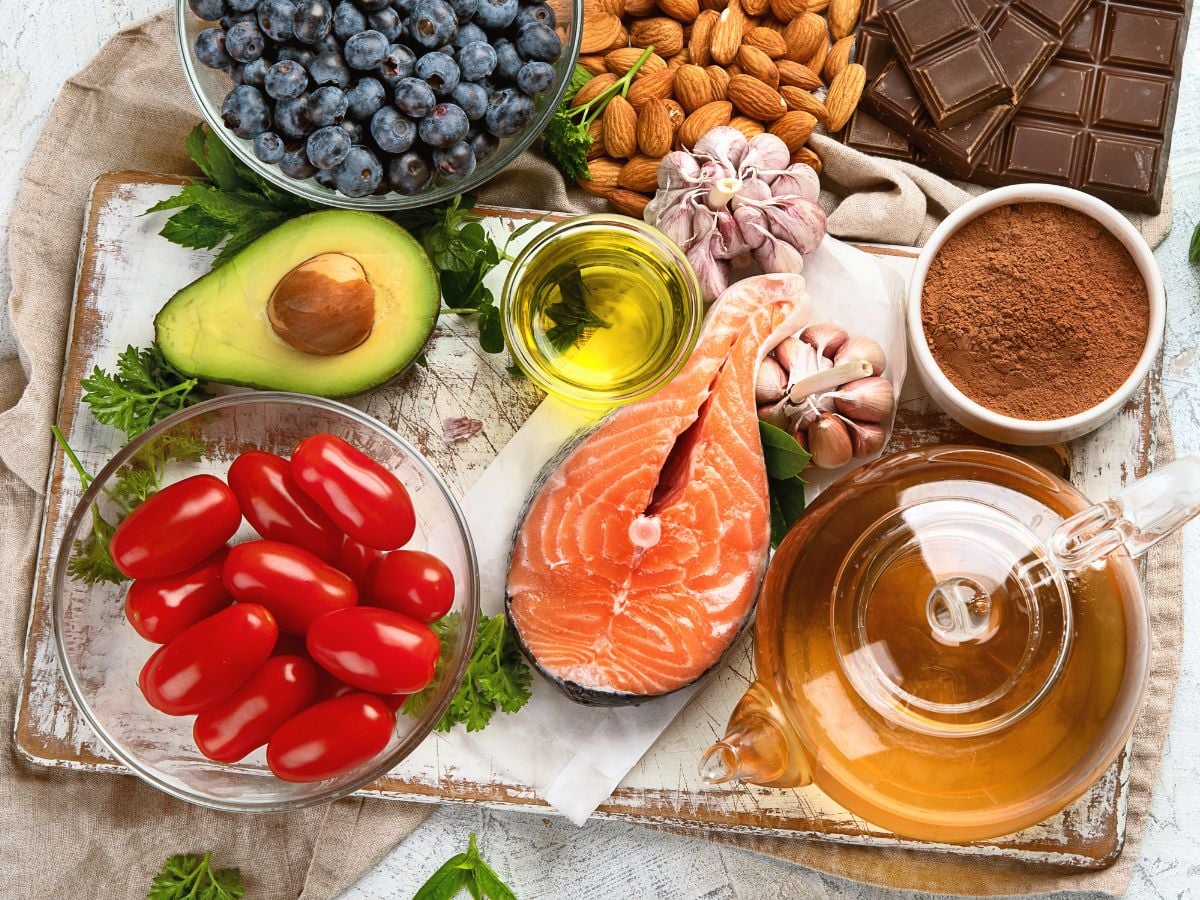
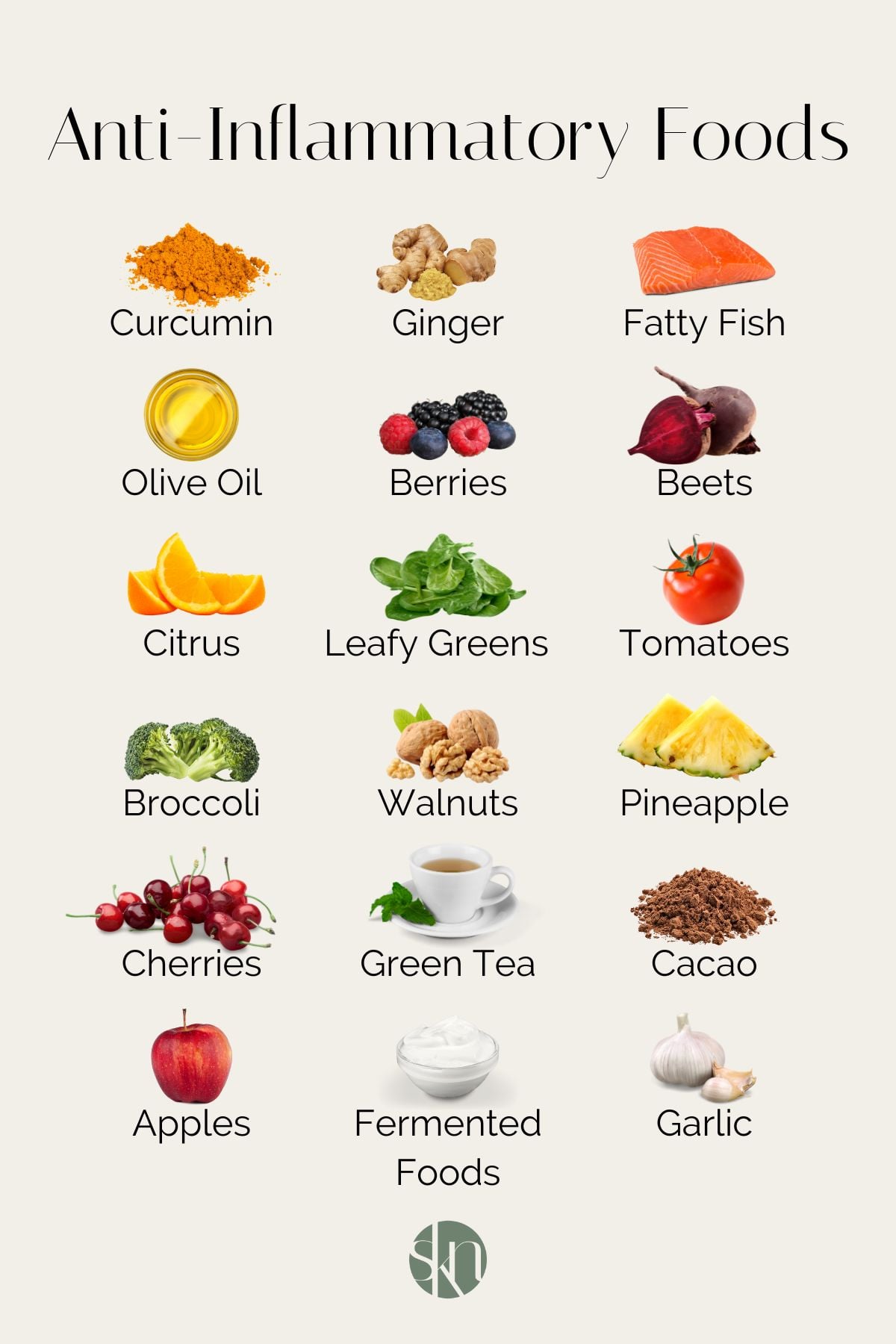
Infographic on list of anti-inflammatory foods.

List of Anti-Inflammatory Foods

Here is a list of the top anti-inflammatory foods that have been clinically shown to help fight inflammation:

  • Fruits, such as berries, cherries, and avocados
  • Green vegetables, such as kale, spinach, and broccoli
  • Fatty fish, such as salmon and mackerel
  • Nuts and seeds, such as walnuts, flax seeds, and chia seeds
  • Whole grains, such as oats, quinoa, and brown rice
  • Fats, such as olive oil and full-fat dairy products
  • Fermented foods, such as yogurt, kefir, sauerkraut, and kimchi
  • Herbs and herbal teas, such as green tea
  • Spices, such as turmeric, cinnamon, and ginger

The Bottom Line

Inflammation is the body’s defense mechanism to harmful and foreign stimuli and can be acute or chronic. Chronic inflammation is a form of slow, low-grade inflammation that has been linked to many chronic diseases. While certain foods have been shown to reduce inflammation, there are no foods that inherently cause inflammation in the body. To avoid or reduce chronic inflammation, one should maintain a healthy body weight, prioritize whole foods, reduce ultra-processed foods, limit or avoid alcohol, avoid smoking, stay hydrated, exercise regularly, get enough sleep, and reduce stress.

Spinach Feta Egg White Wrap

Published on January 9, 2025 by Stephanie Kay

This copycat Starbucks spinach feta egg white wrap recipe is quick and easy to make and just as tasty as the original version. With 27 grams of protein per wrap, it’s a great breakfast to start the day.

Plate with a spinach feta egg white wrap cut in half on a plate with parchment paper with a side of crumbled feta cheese, sun-dried tomatoes, spinach, and a cup of coffee.

Starbucks breakfast wraps are an incredibly popular breakfast option but, at over $6 per wrap, they can get pricey quickly. Fortunately, they are very easy to make at home for a fraction of the cost, and they can be prepared ahead of time for simple grab-and-go breakfasts.

Not to mention, the original Starbucks version of spinach feta egg white wrap contains over 40 ingredients, so this 8-ingredient version is a much healthier option filled with whole foods without skipping flavor.

Close up of a copycat Starbucks spinach feta wrap recipe on a plate.

Why You’ll Love Them

  • High in Protein – The combination of egg whites, cheese, and whole grains in this recipe ensures it has 27 grams of protein per wrap.
  • Low in Calories – This copy Starbucks spinach feta wrap recipe is great for people with a weight loss goal who need an on-the-go breakfast that is low in calories.
  • Versatile – You can mix and match the vegetables, cheese, eggs, and wrap to make it suit your personal calorie or macro intake needs.
Ingredients for copycat Starbucks spinach feta egg white wrap: liquid egg whites, spinach, sun-dried-tomatoes, feta cheese, cream cheese, olive oil, salt, and pepper.

Ingredients + Substitutions

  • Wrap – To add some complex carbohydrates. I used a whole grain tortilla, as it’s higher in protein and fiber, but you can use regular flour tortillas or any wrap you like.
  • Egg Whites – To add some lean protein. The recipe calls for egg whites to match the original Starbucks recipe, however, you can certainly use whole eggs if you like. See the notes section of the recipe card for details.
  • Spinach – Too add some leafy greens and fiber.
  • Sun-Dried Tomatoes – To add some color and a salty bite.
  • Cheese – A combination of feta and cream cheese to boost the protein content. Alternatively, you could use a combination of cheddar cheese, goat cheese, or another high-protein cheese.
  • Olive Oil – Too add some healthy fats and cook the egg whites.
  • Salt and Pepper – To season.
Frying pan with chopped sun-dried tomatoes and fresh spinach.
Frying pan with sautéed spinach and sun-dried tomatoes.

Dietary Adaptions

To Make it Gluten-Free: Use a certified gluten-free wrap.

To Make it Dairy-Free: Omit the feta cheese and cream cheese or use a non-dairy cheese instead.

Small bowl with cream cheese, sun-dried tomatoes, sautéed spinach, and crumbled feta cheese.
Bowl with sun-dried tomato cream cheese spread.

Red’s Nutrition Tip

Egg whites are one of the best low-calorie, high-protein foods, however, you can certainly use whole eggs if preferred, they will add more micronutrients too.

Frying pan with liquid egg whites.
Frying pan with cooked egg white omelet.

Serving Suggestions

These wraps are a balanced meal filled with protein, complex carbohydrates, fiber, and healthy fats. That said, you can adapt the recipe to suit your personal calorie or macro needs, for example:

  • To make it low-carb, use a low-carb wrap.
  • To make it lower in fat, use light cream cheese and low-fat feta cheese.
  • To make it higher in protein, increase the amount of liquid egg white.
  • To make it higher in fiber, add more spinach or serve the wrap with a side of fresh fruit.
Wrap covered with spinach sun-dried tomato cream cheese spread.
Wrap with spinach, sun-dried tomato cream cheese spread, and egg white omelet.

Storage + Reheating

To Refrigerate: Once cooked, allow the wraps to cool completely, then cover each wrap tightly in aluminum foil, transfer them to a plastic bag or airtight container, and store them in the fridge for up to 4 days.

To Freeze: Wrap each cooled spinach feta egg white wrap tightly in aluminum foil, place them in a freezer-safe bag or airtight container, and store them in the freezer for up to 3 months.

To Reheat: Transfer the aluminum foil-covered wraps to the refrigerator the day before to thaw. Once thawed, remove the aluminum foil, transfer it to the microwave on high for 1-2 minutes, or reheat it in a pan over medium-low, about 5 minutes on each side. To reheat from frozen, remove the aluminum foil, transfer it to the microwave on defrost for 5 minutes, then on high for 1-2 minutes until warmed through.

Cutting board with toasted spinach and feta egg white wrap with a knife and a side of feta, chopped sundried tomatoes, fresh spinach, and salt.

More Egg White Recipes:

  • Copycat Starbucks Egg White Bites
  • Egg White Oatmeal
  • Meal Prep Breakfast Sandwiches

How to Estimate Portion Sizes with Your Hand

Published on January 7, 2025 by Stephanie Kay

When it comes to determining how much to eat, size does matter. Whether you’re trying to lose weight, build muscle, or support your health, you can easily estimate your food portions using your hand to support your goals.

White plate with baked chicken breast, wild rice, steamed broccoli, and butter.

Table of contents

  • The Hand Portion Size Guide
  • Visual Examples of Hand Portion Sizes
    • Meat, Fish, & Alternatives
    • Whole Grains, Beans, Lentils, & Potatoes
    • Fruits & Vegetables
    • Milk & Yogurt
    • Nuts & Seeds
    • Cheese
    • Oil & Butter
  • How to Build a Balanced Meal with Hand Portion Sizes

If you’re confused about how much to eat, you are certainly not alone. Whether your goal is to create a calorie deficit for weight loss, to eat enough protein for weight gain, or just to eat a little healthier, figuring out how much you need to eat and how much of what you need to eat can be incredibly confusing.

Fortunately, the hand portion size method is just one of many portion control tips you use to measure your food intake without using measuring cups or a kitchen scale.

While certain individuals, such as athletes and individuals working on body composition goals, may require more advanced food tracking techniques, like tracking calories or macros, the hand portion size method is a great strategy for individuals looking to improve their overall health and well-being.

Infographic of the hand portion size guide.

The Hand Portion Size Guide

The hand method for portion sizes is a simple way to estimate portions without weighing or measuring food. By using your hand as a guide, you can quickly estimate the appropriate portion size of various foods, as follows:

  • 1 portion of protein = 1 palm
  • 1 portion of carbohydrates = 1 fist
  • 1 portion of vegetables = 1 fist
  • 1 portion of fruit = 1 fist
  • 1 portion of fat = 1 thumb

The hand portion size method is simple yet effective as hand size is relative to the individual; bigger people tend to have bigger hands and tend to need more food, while smaller people tend to have smaller hands and tend to need less food. Hands are also portable and never change in size, which helps with consistency.

While many factors influence our exact calorie needs, and individual needs will vary, the hand portion size method is a great starting point that can be used to make outcome-based decisions and adjustments to support your personal health goals.

It’s important to note that portion sizes are not the same as serving sizes. A serving size is a standard measure of food that is used to quantify nutrition data for comparative purposes on food labels, while a portion size is how much food you choose to eat at a given time, based on your hunger cues and health goals, which may be more or less than a serving size.

Visual Examples of Hand Portion Sizes

Here are some visual examples of portion sizes using your hand for various food groups of minimally processed foods.

Visual example of the hand portion size for meat, fish, poultry, and plant-based proteins.

Meat, Fish, & Alternatives

Protein is an essential macronutrient for overall health and is particularly helpful for goals of weight loss, weight gain, and muscle building. Although exact protein needs vary by individual and their health goals, research shows that individuals looking to optimize their health should aim for 0.54 to 0.7 grams of protein per pound body weight per day. Fortunately, if you don’t want to weigh or measure your food, you can achieve this goal by consuming, at least, a palm-sized hand portion of plant or animal protein at every meal, such as chicken, beef, pork, salmon, eggs, tofu, and tempeh.

Visual example of the hand portion size for whole grains, beans, lentils, potatoes, pasta, and bread.

Whole Grains, Beans, Lentils, & Potatoes

Complex carbohydrates are an important part of a balanced meal, as they are sources of energy, fiber, and micronutrients. Opting for minimally processed versions of complex carbohydrates, such as rolled oats, rice, chickpeas, black beans, lentils, potatoes, and whole-grain pasta, can help to balance blood sugar and create more filling meals. Complex starchy carbohydrate portion size can be estimated by a fist-sized hand portion.

Visual example of the hand portion size for fruits and vegetables.

Fruits & Vegetables

Fruits and vegetables, be they fresh or frozen, are good sources of fiber and micronutrients. Due to their high fiber and water content, fruits and veggies are considered high-volume foods, as you can consume a large portion for a few calories. The current dietary guidelines recommend 14 grams of fiber per 1,00 calories, which works out to roughly 25 grams of fiber for an adult female and 38 grams of fiber for an adult male (1). The portion size of fruits and veggies can be estimated by a fist-sized hand portion, however, certain high-volume vegetables, such as leafy greens or zucchini, can be double or triple this size.

Visual example of the hand portion size for milk and yogurt.

Milk & Yogurt

Dairy products such as milk, yogurt, Greek yogurt, skyr, and kefir naturally contain protein, carbohydrates, and healthy fats. For this reason, it can be difficult to determine how to use the hand portion size method to determine how to eat. While some of these products, such as Greek yogurt and skyr, are primarily protein sources, they also contain water, making them slightly higher-volume foods. Therefore, the portion size of milk and yogurt products can be estimated by a palm-sized hand portion.

Visual example of the hand portion size for nuts, seeds, and nut butters.

Nuts & Seeds

While nuts and seeds contain protein, they are primarily sources of dietary fat and, therefore, portion size is measured as such. The portion size for nuts and seeds can be estimated by a thumb-sized hand portion, this also applies to nut and seed butters such as peanut butter, almond butter, and tahini.

Visual example of the hand portion size for cheese.

Cheese

While cheese is a dairy product that contains protein, it’s primarily a source of dietary fat and is therefore portioned as such. Even the highest protein cheeses, like parmesan, Romano, and Gruyere, are considered moderate-volume foods due to their high fat content. The portion size of cheese can be estimated by a thumb-sized hand portion.

Visual example of the hand portion size for oil and butter.

Oil & Butter

Fat is the most calorie-dense macronutrient, containing 9 calories per gram, compared to 4 calories per gram for protein and carbohydrates. Dietary fats such as olive oil and butter are considered low-volume foods as they contain little to no water or fiber and, therefore, have the smallest recommended portion size. The portion size of oil and butter can be estimated by a thumb-sized hand portion.

How to Build a Balanced Meal with Hand Portion Sizes

Using the hand portion size method as a guide, you can easily learn how to build a balanced meal by incorporating a portion of protein, carbohydrate, fiber, and fat into every meal. Whether you are eating breakfast, lunch, or dinner, add a portion of each component to your plate, bowl, or cup to ensure you are creating a well-balanced meal.

Visual example of a balanced meal with a palm-sized portion of protein, fist-sized portion of complex carbohydrates, fist-sized portion of fiber, and thumb-sized portion of fat.

For example, a balanced meal might include a 1 palm-sized portion of chicken, a fist-sized portion of rice, a fist-sized portion of broccoli, and a thumb-sized portion of butter.

The Bottom Line

The hand portion size method is a great way to estimate portion sizes without measuring cups or food scales. Your hand is an effective tool to measure portion sizes as it is relative to you, doesn’t change in size, and is always with you. A portion of protein is the size of your palm, a portion of carbohydrate is the size of your fist, a portion of fruit and vegetables is the size of your fist, and a portion of fat is the size of your thumb.

Blackened Chicken and Sweet Potato Meal Prep Bowls

Published on January 2, 2025 by Stephanie Kay

Turn basic chicken and sweet potatoes into a flavorful meal with these blackened chicken and sweet potato meal prep bowls with hot honey dressing. They’re easy to make and work well for a healthy dinner or lunch.

Blackened chicken and sweet potato meal prep bowls with a side of hot honey dressing, fresh cilantro, a tea towel, and fork.

These chicken and sweet potato bowls are inspired by the Sweetgreen hot honey chicken bowls. While I opted to personalize them a little to make them a more well-balanced meal, the combination of spiced chicken, roasted sweet potatoes, fluffy grains, veggies, and hot honey dressing is a delicious combination of flavors that works perfectly for meal prep.

Not only can you make them ahead of time and store them for days in the fridge, but the ingredients freeze well, so you can make a double or triple batch and enjoy them for lunch or dinner for weeks and months to come.

Four blackended chicken and rosted sweet potato meal prep bowls in glass containers.

Why You’ll Love Them

  • High in Protein – With 34 grams of protein per bowl, they are a healthy and filling meal prep idea.
  • High in Fiber – The combination of sweet potatoes, wild rice, and vegetables ensures these bowls contain over 6 grams of fiber per serving.
  • Full of Flavor – The blackening seasoning blend and hot honey dressing give each bite a ton of flavor.
Ingredients for chicken and sweet potato meal prep bowls; chicken breasts, sweet potatoes, wild rice, kale, cabbage, blackening seasoning blend, and hot honey dressing.

Ingredients + Substitutions

  • Chicken Breasts – To add some protein. The recipe calls for chicken breasts, but boneless chicken thighs will work just as well. You can also use leftover chicken if desired.
  • Sweet Potatoes – To add some complex carbohydrates and fiber. You can use regular potatoes or butternut squash if preferred.
  • Spices – A mixture of smoked paprika, onion powder, garlic powder, dried oregano, cayenne pepper, and salt to make the blackening seasoning blend. While I made my own, you can certainly use a store-bought mixture to cut down on prep time, taco seasoning will also work well.
  • Wild Rice Blend – To add some more complex carbohydrates and fiber. I think a wild rice blend works best, but brown rice or white rice will also work well, or you can use another high-protein grain such as quinoa.
  • Chicken Broth – To flavor the wild rice, however, you can use vegetable broth, mushroom broth, or water if needed.
  • Veggies – A bit of kale and cabbage to add some color, fiber, and micronutrients, and some fresh cilantro to finish the bowls.
  • Olive Oil – To add some healthy fats and make the hot honey dressing.
  • Apple Cider Vinegar – To balance the dressing with some acid, lemon juice or lime juice will also work.
  • Honey – To add a hint of sweetness to the dressing.
  • Hot Sauce – To add a bit of heat to the dressing, crushed red pepper flakes will also work well.
Sheet pan of cubed sweet potatoes with olive oil and salt.
Sheet pan of roasted sweet potatoes.

Dietary Adaptions

To Make them Gluten-Free: Use certified gluten-free broth or water instead.

To Make them Dairy-Free: No adaptations are needed, this recipe is dairy-free.

Chicken breasts in a bowls marinated in blackened spice blend.
Blackened chicken breasts cooked in a cast iron skillet.

Red’s Nutrition Tip

While these chicken and sweet potato bowls contain 10 grams of sugar per serving, it’s important to understand that these are natural sugars primarily from honey and sweet potatoes. Natural sugars from whole foods are found with micronutrients and fiber, which help to mitigate the harmful effects of refined sugar and are, therefore, nothing to worry about.

Serving Suggestions

These bowls are a balanced meal complete with protein, carbohydrates, fiber, and healthy fats, however, they can be adapted to suit your personal calorie or macro needs. For example:

  • To make them higher in protein, add 1/2 pound of chicken breasts to the recipe.
  • To make them higher in fiber, double the amount of kale and cabbage.
  • To add more healthy fats, top each bowl with some sliced avocado, chopped almonds, or a sprinkle of shredded cheese.
Blackened sweet potato meal prep bowl covered in hot honey dressing.

Storage + Reheating

To Refrigerate: Once assembled, allow the chicken and sweet potato meal prep bowls to cool completely, then cover them with a lid and store them in the fridge for up to 4 days. The dressing can be stored in a separate airtight container in the fridge for up to 2 weeks.

To Freeze: Once the bowls have cooled completely, cover them with a lid and store them in the freezer for up to 3 months. The dressing cannot be frozen.

To Reheat: Allow the bowls to thaw completely, then reheat them in the microwave for 2-3 minutes or until warm.

More Chicken Meal Prep Recipes:

  • Buffalo Chicken Meal Prep Bowls
  • Chicken Pasta Meal Prep Bowls
  • Chicken Salad Meal Prep Bowls
  • Sticky Chicken Meal Prep Bowls
  • Chicken Fajita Meal Prep Bowls
  • Southwest Chicken Meal Prep Bowls

Ground Turkey Pasta Bake

Published on December 29, 2024 by Stephanie Kay

Ready in 30 minutes and made with minimal ingredients, this ground turkey pasta bake is perfect for a quick and easy meal that is packed full of protein. Serve it with a salad and crusty bread for a healthy family dinner.

Ground turkey pasta bake in a cast-iron skillet with fresh basil on top, a serving spoon, and a side of crushed red pepper flakes.

If you’re looking to add more lean protein to your diet, but still want a tasty dish, this ground turkey casserole is a great option. The use of ground turkey in this recipe ensures it’s high in protein and low in calories, while the pasta, herbs, and cheese tomato sauce ensure it’s satisfying and full of flavor.

Plus, it’s kid-friendly and it freezes well. So, not only can you serve up a crowd-pleasing dinner, but you can make it ahead of time, freeze it, and warm it up on busy nights when you just don’t have time to cook.

Close up of a serving ground turkey pasta bake casserole with parmesan and a spoon and basil in the background.

Why You’ll Love It

  • Ready in 30 Minutes – This quick and easy recipe is perfect for a weeknight meal.
  • High in Protein – The combination of ground turkey, pasta, and cheese, ensures that this recipe contains over 33 grams of protein per serving.
  • Family Friendly – This creamy ground turkey pasta is a delicious meal the whole family can enjoy.
Ingredients for ground turkey baked pasta: ground turkey, shell pasta, tomato sauce, onion, garlic, red bell pepper, Italian seasoning, mozzarella cheese, salt, and pepper.

Ingredients + Substitutions

  • Ground Turkey – To add some protein. I used lean ground turkey but extra lean ground turkey, ground turkey breast, ground chicken, lean ground beef, or ground sausage would also work well.
  • Pasta – To add some complex carbohydrates. I opted for small shell pasta, but macaroni, fusilli, or penne pasta would all work well, and you can use regular or whole-wheat pasta if preferred.
  • Onion and Garlic – To add flavor and fragrance. You can use onion powder and garlic powder if desired, see the notes section of the recipe card for details.
  • Bell Pepper – To add some veggies. I used a red bell pepper but any color will work, or you can omit it if desired.
  • Tomato Sauce – To make the pasta sauce. I used a can of crushed tomatoes, but diced tomatoes, passata, marinara sauce, or any tomato sauce will work.
  • Italian Seasoning – To season the tomato sauce. If you don’t have Italian seasoning, a combination of dried oregano, basil, and thyme will also work, and you can add a pinch of red pepper flakes for spice if desired.
  • Mozzarella Cheese – To add some healthy fats and top the pasta bake. If you don’t have mozzarella, cheddar cheese will also work well.
  • Parmesan Cheese – While optional, you can finish the dish with freshly grated parmesan cheese.
  • Fresh Herbs – While optional, I like to top the baked pasta with a bit of fresh parsley or fresh basil.
  • Salt and Pepper – To season the ground turkey pasta.
Cast iron skillet with cooked ground turkey with tomato sauce.
Cast iron skillet with cooked ground turkey, sautéed veggies, tomato sauce, and cooked pasta on top.

Dietary Adaptions

To Make it Gluten-Free: Use certified gluten-free pasta.

To Make it Dairy-Free: Omit the mozzarella cheese or use dairy-free cheese instead.

Cast iron skillet with cooked ground turkey tomato sauce with cooked pasta shells.
Cast iron skillet with cooked ground turkey tomato pasta with shredded mozzarella cheese on top.

Red’s Nutrition Tip

Whether you choose to use white pasta or whole wheat pasta, this turkey pasta bake is still an incredibly healthy meal. While whole wheat pasta contains slightly more fiber, regular pasta and whole wheat pasta have a similar calorie, protein, and carbohydrate content and can both be included in a healthy diet, regardless of your health goals.

Serving Suggestion

This ground turkey pasta dish is a great source of protein, carbohydrates, and healthy fats. It can be enjoyed on its own as a balanced meal or served with a side of vegetables to add some fiber and micronutrients, such as:

  • Steamed broccoli
  • Steamed asparagus
  • Garden Salad

You could also cook some additional vegetables into the pasta sauce, such as:

  • Fresh or frozen spinach
  • Diced zucchini
  • Diced carrots
  • Cherry tomatoes

If you want to make the dish a little heartier and more filling, I’d recommend serving it with a side of crusty bread.

Cast iron skillet with cooked creamy ground turkey pasta bake with fresh basil and grated parmesan cheese on top.

Storage + Reheating

To Refrigerate: Allow any leftover turkey pasta to cool completely and then transfer it to an airtight container and store it in the fridge for up to 5 days.

To Freeze: Once cooled completely, leftover ground turkey pasta bake can be stored in an airtight container in the freezer for up to 3 months.

To Reheat: Allow leftovers to thaw, then reheat them in the oven at 350°F for 10-20 minutes or in the microwave for 2-3 minutes.

Serving of ground turkey pasta bake on a plate with a side of bread and parmesan cheese on top.

More Ground Turkey Recipes:

  • Greek Turkey Meatballs
  • Ground Turkey Meal Prep Bowls
  • Butternut Squash Turkey Chili
  • Turkey Taco Skillet
  • Korean Ground Turkey Rice Bowls
  • Turkey Pumpkin Chili

Carrot and Parsnip Soup

Published on December 19, 2024 by Stephanie Kay

This rich and creamy carrot and parsnip soup is loaded with vegetables and incredibly easy to make. It’s a perfect dish for a cold weather day and pairs well with crusty bread or a sandwich.

Bowl of creamy carrot and parsnip soup with a drizzle of cream and parsley on a white plate and a side of crusty bread.

Nothing says winter like root vegetables. Whether you’re roasting them, steaming them, or cooking them into your favorite soup or stew, these fiber-loaded veggies are a nutritious and delicious addition to any meal.

Not to mention, they are super economical and last for weeks in the ridge. So, if you’re looking at those straggler carrots in the back of the fridge and you’re not sure what to do with them, this easy carrot parsnip soup recipe is for you.

Two bowls of carrot parsnip soup with crusty bread on a white plate with a spoon and tea towel with a drizzle of cream, parsley, and fresh black pepper on top.

Why You’ll Love It

  • Quick and Easy – This creamy soup is fast and simple to prepare.
  • Inexpensive – Made with root vegetables, this recipe is very cheap to make.
  • Rich and Creamy – The combination of carrots, parsnips, and heavy cream ensures this soup is velvety smooth.
  • Great for Meal Prep – This soup keeps well in the fridge and freezes making it a great make-ahead meal.
Ingredients for carrot and parsnip soup; carrots, parsnips, onions, garlic, broth, cream, salt, and pepper.

Ingredients + Substitutions

  • Carrots and Parsnips – A combination of root vegetables to ensure this soup is rich in fiber and micronutrients. The recipe calls for fresh carrots but you can use frozen carrots and parsnips if desired.
  • Onion and Garlic – To ensure the soup has a deep flavor. The recipe calls for garlic cloves, but you can use garlic powder if preferred, see the notes section of the recipe card for details.
  • Broth – To build more flavor. The recipe calls for vegetable broth, but chicken broth, chicken stock, and water will also work.
  • Cream – Although optional, a flash of heavy cream ensures the soup has a rich taste and texture. If preferred, half-and-half, whole milk, and coconut milk will also work.
  • Salt and Pepper – To season.
  • Parsley – A bit of freshly chopped parsley to serve. Other fresh herbs, such as fresh chives, would also work well.

While I opted to keep the recipe simple to highlight the seasonal flavors of carrots and parsnips, you can take the flavor up a notch by adding some dried herbs and/or spices such as dried thyme, curry powder, smoked paprika, or cayenne pepper if you want to make it spicy.

Dutch oven with sautéed onion, chopped carrots, chopped parsnips, and garlic.
Dutch oven with onions, carrots, parsnips, garlic, broth, salt, and pepper.

Dietary Adaptions

To Make it Dairy-Free: Swap the cream for canned coconut milk or omit it completely.

To Make it Gluten-Free: Use certified gluten-free broth or water instead.

Blender with cooked carrots and parsnips in broth.
Blender with puréed carrot parsnip soup.

Red’s Nutrition Tip

If you’re concerned about the sugar content in this soup, there is no need. Although this soup contains 10 grams of sugar per serving, it comes from the natural sugar present in the carrots, parsnips, and onions, which are healthy whole foods and great sources of micronutrients. Moreover, it is balanced with the fiber content of the vegetables, 7 grams per serving, which helps to mitigate potential spikes in blood sugar.

Can you make it in an Instant Pot?

Yes! Simply turn the Instant Pot to sauté mode, warm the olive oil, add the onions, and sauté for 5-6 minutes or until tender. Then add the chopped carrots, parsnips, and garlic and cook for an additional minute. Cover with broth and water, add salt and pepper, and stir to combine. Cook at high pressure for 6 minutes, then natural pressure release for 5-10 minutes, and then quick release. Use a blender to puree the soup, add the cream, stir to combine, and adjust the seasoning with salt and pepper as needed.

Dutch oven with creamy carrot and parsnip soup.

Serving Suggestions

This carrot parsnip soup is a great source of vegetables, fiber, and healthy fats. To ensure it’s a more balanced meal, I would suggest serving it with a source of protein and some additional complex carbohydrates, such as:

  • Grilled Cheese
  • Turkey Sandwich
  • Boiled Eggs and Crusty Bread
  • Hummus and Pita
  • Cheese and Crackers
  • Spinach and Mushroom Quiche
White bowl with carrot parsnip soup with chopped parsley on top and a spoon with a side of crusty bread.

Storage + Reheating

To Refrigerate: Allow the carrot parsnip soup to cool completely, then transfer to airtight containers and store in the refrigerator for up to 5 days.

To Freeze: Transfer the cooled soup to airtight containers and store it in the freezer for up to 3 months.

To Reheat: The soup can be reheated in a pot on the stovetop on medium heat for 5 minutes or until warm, or in the microwave for 1-2 minutes. If using frozen leftovers, allow the soup to thaw completely before reheating.

More Carrot Soup Recipes:

  • Roasted Apple and Carrot Soup
  • Moroccan Carrot Soup
  • Carrot Ginger Coconut Soup

18 Healthy Travel Snacks

Published on December 17, 2024 by Stephanie Kay

Whether you’re traveling by plane, train, or automobile, having snacks on hand is essential to a good trip. So here is a list of healthy travel snacks you can find at convenience stores, gas stations, and coffee shops that will easily fit into your carry-on luggage or bag.

Array of healthy road trip snacks including protein bars, trail mix, hummus, crackers, baby carrots and celery, hard-boiled eggs, beef jerky, dried apple chips, popcorn, peanut butter, cheese, yogurt, apple, and banana.

Table of contents

  • Components of a Healthy Travel Snack
  • List of Healthy Snacks for Travelling
  • 1. Fresh Fruit
  • 2. Dried Fruit
  • 3. Hard-Boiled Eggs
  • 4. Jerky
  • 5. Nuts and Seeds
  • 6. Nut Butters
  • 7. Veggies
  • 8. Hummus
  • 9. Protein Bars
  • 10. Trail Mix
  • 11. Cheese
  • 12. Yogurt
  • 13. Popcorn
  • 14. Dark Chocolate
  • 15. Baked Chips
  • 16. Deli Meat
  • 17. Energy Balls
  • 18. Protein Powder
  • Examples of Healthy Travel Snack Combos

Components of a Healthy Travel Snack

The components of a healthy road trip snack are the same as those of any healthy snack, with the caveat that they must be easy to transport. A healthy travel snack:

  1. Contains protein. Given protein is the most satiating macronutrient, incorporating a source of plant or animal protein into your snack can help to keep you full for extended periods without a meal, which is common during travel.
  2. Contains fiber. A high fiber intake has been associated with increased feelings of fullness and high-fiber foods are some of the most filling foods. Moreover, fiber can help to support gut health and regular bowel movements, as constipation and digestive upset are common during travel.
  3. Contains fat. Although not as essential in travel snacks as protein and fiber, including a source of healthy fat can help to increase feelings of fullness and balance blood sugar, as fat is the most slowly digested macronutrient, which can help to provide sustained energy.
  4. Transports easily. A good travel snack should be easy to pack and not spoil easily. It’s best to opt for well-packaged foods or non-perishable foods that you can easily throw into your bag.
Infographic of examples of the best healthy travel snacks.

List of Healthy Snacks for Travelling

Here is a list of healthy road trip snacks that are easy to find and pack whether you are flying, driving, or taking the train.

1. Fresh Fruit

Fresh fruits are one of the simplest grab-and-go healthy travel snacks. Not only are they packed full of fiber, but they are hydrating and full of micronutrients. When picking fruit, opt for a handheld version that is not easily crushed in your carry-on, apples, bananas, pears, and oranges are some of the best choices. You can grab these from home before you leave the house, or they can easily be found at the checkout of most airport kiosks, gas stations, and coffee shops.

2. Dried Fruit

If you can’t find fresh fruit, dried fruit works just as well; it has all of the fiber and most of the nutrients, without the water, making it a great easy-to-pack travel snack. Often referred to as “nature’s candy”, dried fruits like raisins and cranberries are great mixed into trail mix, while dried apples and dried mango work well as kid-friendly sweet treats. When buying dried fruits, read the ingredient label and opt for brands without added sugar or oil whenever possible.

3. Hard-Boiled Eggs

Hard-boiled eggs are a great high-protein travel snack full of healthy fats, vitamins, and minerals. Not only are they inexpensive and easy to make at home, but you can easily find pre-made, packaged hard-boiled eggs at certain coffee shop chains, convenience stores, and major gas stations. If you are concerned about smelling up the plane, just learn how to boil perfect eggs so you don’t overcook them.

4. Jerky

Be it beef, turkey, bison, or fish, jerky is a great high-protein, low-calorie food that is great for travel. Beef sticks and jerky can easily be found at just about any grocery store, convenience store, gas station, or airport. To ensure you are choosing the best option, read the ingredients and look for brands that are made with grass-fed beef, if possible, and have little to no added sugars or additives, such as Chomps, Country Archer, or Epic.

5. Nuts and Seeds

Nuts and seeds are tasty treats full of protein and healthy fats that can be enjoyed on their own or paired with dried fruit as a balanced snack. Peanuts, almonds, and pistachios are the highest protein nuts, while pumpkin seeds and sunflower seeds are some of the highest protein seeds. Nuts and seeds can be enjoyed raw or roasted, salted or unsalted for a healthy travel snack.

6. Nut Butters

Not only are nut butters such as almond butter and peanut butter tasty, high-protein snacks, but they pair well with fresh fruits like apples and bananas to create a well-balanced snack. While you can certainly pack some into a small container before you leave the house, single-serve packets, such as Justin’s, are commonly found at many chain coffee shops and convenience stores.

7. Veggies

Fresh vegetables are a low-calorie, high-fiber snack that is easy to transport for travel. Baby carrots, celery sticks, snap peas, bell pepper slices, cucumber slices, broccoli florets, cauliflower florets, and cherry tomatoes easily be packed in a storage container or found at convenience stores and airport kiosks. When paired with a healthy dip, such as hummus or guacamole, they create a healthy snack full of fiber and healthy fats.

8. Hummus

Made from chickpeas and tahini, hummus is full of protein, fiber, and healthy fats, making it a great travel snack on its own or paired with fresh veggies or whole-grain crackers. Not only can you make homemade hummus or buy pre-made hummus you can pack at home, but it’s relatively easy to find single-serving containers of hummus in convenience stores and gas stations.

9. Protein Bars

A good protein bar is a convenient way to add a boost of protein to your diet while enjoying something sweet at the same time. Most protein bars are a better alternative to conventional granola bars, which are often loaded with added sugars or high-fructose corn syrup, and by reading the label you can opt for a bar that is high in protein, low in sugar, and moderate in calories. Whenever possible, opt for bars with less than 250 calories and at least 10 grams of protein, such as RX Bars, Clif’s Builder Protein Bars, GoMacro Protein Bars, or Kind Protein Bars.

10. Trail Mix

Trail mix is an easy-to-find snack for travel and it’s a healthy option as a good combination of nuts, seeds, and dried fruit contains protein, fiber, and healthy fats. To save money, you can own trail mix ahead of time or read the label and opt for versions with minimal added sugar and vegetable oil.

11. Cheese

Cheese slices and string cheese are high in protein, full of healthy fats, and easy to transport. Not only can you cut a few slices of cheese at home and store them in an airtight container, but you can easily find cheese in single-serving bags at chain coffee shops, gas stations, and convenience stores. While Gruyere, Swiss, and provolone cheese are among the highest protein cheeses are good options for healthy snacks, as is cottage cheese.

12. Yogurt

Single-serving yogurt containers are easily found in almost all travel locations or can be packed in a cooler ahead of time. Both regular and Greek yogurt are healthy, high-protein options, as is skyr, just be sure to opt for plain or unsweetened yogurt to limit added sugar. If you find plain yogurt boring, just sprinkle a bit of trail mix or fresh fruit on top to add texture and flavor. While there are many high-quality yogurt brands available, Choabni, Fage, Siggi’s, Stonyfield, Maple Hill, and Wallaby are particularly good options.

13. Popcorn

Popcorn is a highly underrated healthy travel snack. Not only is popcorn one of the highest-fiber foods, but air-popped popcorn is a high-volume food that you can enjoy large portions of for minimal calories. While movie theater popcorn has significant calories and is very high in sodium, air-popped popcorn is a healthy choice. Simply pop it on the stovetop in some butter or coconut oil, and season it to taste with anything from sea salt, herbs, and spices, like dill pickle popcorn, or a bag at a gas station, convenience store, or airport kiosk.

14. Dark Chocolate

The good news is that travel snacks can be healthy and indulgent at the same time, and chocolate is a great way to do it. Be it made from cacao or cocoa, dark chocolate is a good source of healthy fats, minerals, and antioxidants and a tasty way to balance out a healthy snack with a sweet treat. Whether you add some dark chocolate chips to your trail mix or grab a bar of dark chocolate on the run, it’s sure to satisfy a sweet tooth while traveling.

15. Baked Chips

A bag of chips is a popular travel snack while on a road trip, but a bag of baked chips can satisfy this salty and crunchy craving in a much healthier way. Baked veggie chips, such as sweet potato chips, are baked instead of fried, which ensures they contain fewer calories and less saturated fat than conventional potato chips, and sometimes contain more fiber. By pairing baked chips with a source of protein, such as beef jerky, you can easily create a satisfying and healthy snack for travel.

16. Deli Meat

Much like jerky, deli meats such as deli turkey, roast beef, salami, or prosciutto are good sources of protein that a great for travel. They can be paired with veggies and hummus, or crackers and cheese for a balanced and healthy snack. When buying cold cuts, read the ingredients and opt for low-sodium options whenever possible, or simply thinly slice cooked meats at home.

17. Energy Balls

Energy balls are kid-friendly, no-bake treats commonly made from rolled oats, nuts, seeds, and/or dried fruits. This simple combination of ingredients makes for great healthy snacks whether you’re on the road or at home. Just add all of the ingredients to a blender, grind it into a paste, and then roll them into balls for a healthy and sweet handheld treat, like these trail mix energy bites, carrot cake energy bites, and dark chocolate and cherry energy bites. If you don’t have time to make them at home, Made Good and Bounce have some great flavors.

18. Protein Powder

If you need a highly convenient, on-the-go protein source, pack some protein powder in your bag. Once you’re at the airport, on the train, or in the car, you can add it to a bottle of water or milk to create a protein shake with over 20 grams of protein. While there are many pre-made protein shakes on the market, learning how to pick the best protein powder will ensure you’re choosing the best option and save you a ton of money at the same time.

Examples of Healthy Travel Snack Combos

Here are some examples of healthy road trip snacks that contain protein, fiber, and healthy fats:

  • Hard-Boiled Eggs + Baby Carrots + Hummus
  • Beef Jerky + Popcorn + Pistachios
  • Protein Bar + Banana + Peanut Butter
  • Deli Turkey + Whole-Grain Crackers + Cheese
  • Yogurt + Energy Balls

The Bottom Line

The best healthy travel snacks contain protein, fiber, and healthy fats, and are easy to transport in your bag or carry-on luggage. Examples of healthy snacks for travel include fresh fruits and veggies, dried fruit, hard-boiled eggs, jerky, nuts, peanut butter, hummus, trail mix, protein bars, cheese slices, yogurt, air-popped popcorn, baked veggie chips, deli meat, and energy balls.

Couscous Kale Salad

Published on December 15, 2024 by Stephanie Kay

Filled with sweet cranberries and salty feta cheese, this couscous kale salad is loaded with colors, flavors, and texture. Enjoy it as a side dish or top it with your favorite protein for a healthy lunch or dinner.

Bowl of couscous kale salad with feta cheese, cranberries, and hazelnuts on a stripped green tea towel with a gold spoon.

This kale couscous salad is a great winter salad for holiday gatherings and weeknight meals. Not only is it quick and easy to make, but the combination of kale, dried cranberries, and feta cheese fills it with festive flavors and colors.

Plus, thanks to its hearty texture, it keeps well in the fridge for several days, so you can make it ahead of time or store leftovers for lunch the next day.

Bowl of kale couscous salad feta cheese.

Why You’ll Love It

  • Quick and Easy – If you can boil water, you can make this kale couscous salad recipe.
  • Full of Flavor – The combination of sweet cranberries, salty cheese, and lemony dressing ensures this salad is full of flavor in every bite.
  • Full of Fiber – The plant-loaded salad contains 3 grams of fiber per serving.
Ingredients for kale couscous salad: pearl cousous, kale, dried cranberries, feta cheese, hazelnuts, parsley, and lemon dressing.

Ingredients + Substitutions

  • Couscous – To add some complex carbohydrates to the salad. I used pearl couscous, also known as Israeli couscous, in the recipe but any style of couscous will work well.
  • Kale – To add some leafy greens and micronutrients. I use curly kale but lacinato kale or spinach would also work well.
  • Dried Cranberries – To add a hint of sweetness to the salad, golden raisins or chopped dates would also work well.
  • Red Onion – To add some color and crunch.
  • Feta Cheese – To add a bit of protein and a salty bite.
  • Hazelnuts – To add some healthy fats, almonds or sunflower seeds would also work well.
  • Olive Oil – To make the dressing.
  • Lemon Juice – To balance the acidity of the dressing. I used fresh lemon juice but lemon juice concentrate or red wine vinegar would also work well.
  • Dijon Mustard – To emulsify the dressing.
  • Garlic – To add some flavor. I used a garlic clove but you can use garlic powder if preferred, see the notes section of the recipe card for details.
  • Salt and Pepper – To season the salad.

Dietary Adaptions

To Make it Gluten-Free: Use certified gluten-free couscous or swap the couscous for 2 cups of cooked chickpeas.

To Make it Dairy-Free: Omit the feta cheese.

Jar of lemon vinaigrette with half a lemon and a bowl of kale in the background.

Red’s Nutrition Tip

While this salad contains 6 grams of sugar per serving, it’s important to note that this is natural sugar from the dried cranberries. Although some brands of dried fruit will contain added sugar, by simply reading the ingredients label you can easily opt for a version that does not contain any.

Serving Suggestions

This couscous kale salad is a great source of complex carbohydrates, fiber, and healthy fats. Adding a source of protein to the salad will create a balanced meal. I think this salad would pair well with:

  • Lemon Paprika Chicken
  • Honey Lime Chicken Skewers
  • Honey Mustard Salmon
  • Grilled Tofu
  • Grilled Halloumi
Plate of kale couscous salad with grilled chicken on top with a fork and a side of crumbled feta cheese and dried cranberries.

Storage

Transfer the kale couscous salad to an airtight container and store it in the fridge for up to 2 days.

More Couscous and Kale Salad Recipes:

  • Mediterranean Couscous Salad
  • Curried Couscous Kale Salad
  • Kale and Brussel Sprout Salad

Egg, Sausage, and Bread Casserole

Published on December 12, 2024 by Stephanie Kay

This savory egg, sausage, and bread casserole is everything you love about breakfast baked into a single dish. Loaded with flavor and protein, it’s a great dish for a delicious and nutritious morning meal.

White baking dish with egg, sausage, and bread casserole with a slice on a spatula.

If you enjoy a classic American breakfast, you’re going to love this breakfast sausage casserole. Inspired by Italian strata and savory bread pudding, this recipe combines eggs, sausage, bread, cheese, and veggies into one pan that is perfect for Christmas morning or a weekend brunch.

And the best part is, this recipe is super versatile. Once you get the basic concept down, you can mix and match the ingredients to use different types of bread, sausage or bacon, vegetables, and cheeses to make any flavor of breakfast casserole you like.

Slice of bread, egg, and sausage breakfast casserole on a while plate with a fork and a side of fresh parsley.

Why You’ll Love It

  • Easy to Make – This dump-and-bake recipe is simple to prepare and minimizes cleanup.
  • Balanced Meal – The breakfast casserole is a well-balanced meal idea complete with protein, complex carbohydrates, fiber, and fats.
  • High in Protein – With over 20 grams of protein per slice, this sausage breakfast casserole is a protein-packed meal.
  • Keeps Well – This casserole keeps well in the fridge and freezer making a great make-ahead meal.
Ingredients for bread, egg, and sausage breakfast casserole: white bread, pork sausage, eggs, milk, cheddar cheese, onion, garlic, mushrooms, and spinach.

Ingredients + Substitutions

  • Bread – To add some complex carbohydrates. While you can use any white bread you like, I think sourdough and Italian bread work best.
  • Sausage – To add some animal protein. I used pork sausage, but chicken sausage and turkey sausage would also work well.
  • Eggs – To add some protein and healthy fats.
  • Milk – To add some more protein and make the egg mixture. I used 2% milk, but whole milk and skim milk will also work, you can also use heavy cream or half-and-half if you want to make the casserole extra rich.
  • Onions and Garlic – To add some flavor. The recipe calls for an onion and garlic cloves, but you can use onion powder and garlic powder if needed, see the notes section of the recipe card for details.
  • Mushrooms – To add some veggies and micronutrients. I used button mushrooms but you can use any style of mushrooms you enjoy.
  • Spinach – To add some leafy greens.
  • Cheese – To add some more protein and healthy fats. The recipe calls for sharp cheddar cheese, but Gruyère cheese would also work very well.
  • Salt and Pepper – To season.
Baking dish day old Italian bread cubes.
Baking dish with bread cubes and cooked pork sausage.

Dietary Adaptions

To Make it Gluten-Free: Use gluten-free bread and gluten-free breakfast sausage.

To Make it Dairy-Free: Swap the milk for unsweetened almond milk and omit the cheese.

Baking dish with bread cubes, pork sausage, sautéed onion, garlic, spinach, and mushrooms.
Baking dish with bread cubes, pork sausage, vegetables, egg mixture, and shredded cheese on top.

Red’s Nutrition Tip

Conventional diet wisdom has led many to believe that bread is “unhealthy” or “fattening” but, unfortunately, this could not be further from the truth. Not only does no single ingredient cause weight gain, but bread is a great source of complex carbohydrates, fiber, and micronutrients. That said, it is important to opt for bread with simple yet quality ingredients, such as flour, water, salt, and yeast, which is why sourdough is considered the healthiest bread.

Serving Suggestions

This breakfast casserole is a balanced meal with protein, carbohydrates, fiber, and fats and can be enjoyed on its own as a hearty, filling, and balanced breakfast. If needed, you can also adapt the recipe to meet your personal dietary needs, for example:

  • To increase the protein content, add 1/2 pound of sausage to the recipe and/or serve it with a side of Greek yogurt or skyr.
  • To decrease the fat content, swap the pork sausage for chicken or turkey sausage, the milk for skim milk, and/or use low-fat cheddar cheese.
  • To add more fiber, swap the white bread for whole-wheat bread, add another cup of spinach, and/or serve the breakfast casserole with a side of fresh fruit.
Baking dish with egg, sausage, and bread breakfast casserole.

Storage + Reheating

To Refrigerate: Allow the baked casserole to cool completely and then cover with aluminum foil or plastic wrap or transfer it to an airtight container and store it in the fridge for up to 5 days.

To Freeze: To freeze sausage breakfast casserole, cool completely, cover the baking dish with plastic wrap and/or aluminum foil, and then place the entire baking dish in a freezer-safe bag for up to 3 months. To freeze leftovers or individual portions, transfer them to airtight containers and place them in the freezer.

To Reheat: To reheat sausage and egg casserole whole, allow it to thaw completely, and then cover the baking dish with aluminum foil and warm it in the oven at 350°F for 10-15 minutes. To reheat individual portions, place a thawed portion in an oven-proof baking dish in the oven for 5-10 minutes or in the microwave in a microwave-safe dish for 1-2 minutes.

Slice of egg, sausage, and bread breakfast casserole recipe on a spatula in a white baking dish.

More Breakfast Casserole Recipes:

  • Breakfast Egg Bake Casserole
  • Sweet Potato Breakfast Casserole
  • Greek Omelet Casserole
  • Spinach Breakfast Casserole
  • Zucchini Egg Bake
  • Blueberry French Toast Casserole

Top 15 High-Fiber Foods

Published on December 10, 2024 by Stephanie Kay

Getting enough fiber has many health benefits, however, most people fail to reach their recommended daily fiber intake. Fortunately, with the right foods, and a little know-how, you can eat a high-fiber diet without much effort. Here is the list of the best high-fiber foods you can add to your diet today.

Two glass bowls or oatmeal with raspberries and almond butter with a side or rolled oats, milk, and spoons on a white background.

Table of contents

  • Types of Dietary Fiber
  • Benefits of Eating More Fiber
  • How much fiber do you need?
  • Foods High in Dietary Fiber
  • 1. Chia Seeds
  • 2. Flaxseed
  • 3. Popcorn
  • 4. Oats
  • 5. Almonds
  • 6. Beans
  • 7. Whole Wheat Pasta
  • 8. Split Peas
  • 9. Lentils
  • 10. Chickpeas
  • 11. Sunflower Seeds
  • 12. Avocado
  • 13. Raspberries
  • 14. Whole Wheat Bread
  • 15. Green Peas
  • Ranking of High-Fiber Foods
  • High-Fiber Foods FAQs

Types of Dietary Fiber

Fiber is a type of carbohydrate, specifically a complex carbohydrate, and there are two main types of dietary fiber: soluble and insoluble.

  • Soluble Fiber: Dissolves in water and turns into a gel-like substance. This includes plant pectin and gums.
  • Insoluble Fiber: Does not dissolve in water and is indigestible. This includes cellulose, beta-glucans, and hemicellulose.

Most plant foods, such as fruits, vegetables, whole grains, beans, lentils, nuts, and seeds, contain a combination of soluble and insoluble fiber. Both soluble fiber and insoluble fiber are integral for optimal health and eating a wide variety of fiber-rich foods can help to ensure that you are consuming adequate amounts of both forms.

Benefits of Eating More Fiber

Although fiber is not considered an essential nutrient, consuming adequate fiber is essential to a healthy diet. Dietary fiber has been shown to have many health benefits including supporting gut health, cardiovascular health, and digestion, and decreasing the risk of certain diseases such as type 2 diabetes and colorectal cancer (1, 2, 3, 4, 5, 6).

Moreover, high-fiber foods are known to be some of the most filling foods and a high-fiber diet has been shown to help support a calorie deficit for weight loss by increasing satiety signals and balancing blood sugar (7, 8, 9).

How much fiber do you need?

The current dietary guidelines recommend 14 grams of fiber per 1000 calories consumed, which works out to roughly 25 grams of fiber for an adult female and 38 grams of fiber for an adult male (10). This includes dietary fiber from all food sources and fiber supplements.

The average Americans consume 15 grams of fiber per day so incorporating more high-fiber foods into the diet is imperative to ensure you are eating enough fiber (11).

Infographic with high-fiber foods chart.

Foods High in Dietary Fiber

Here is a list of the most fiber-rich foods:

1. Chia Seeds

While small in size, chia seeds are packed full of dietary fiber and are one of the highest-fiber foods. These tiny black seeds are a great source of insoluble fiber and a good source of omega-3 fatty acids in the form of α-linolenic acid (ALA) (12). Chia seeds can be sprinkled onto oatmeal, added to smoothies, soaked into overnight oats or chia pudding, or added to baked goods.

Fiber Content: 34.4 grams of fiber per 100 grams of dry, raw chia seed, or 8.9 grams of fiber per 2-tablespoon serving (13)

2. Flaxseed

Flaxseed is the small seed of the flax plant and one of the most fiber-rich foods. Flaxseed can be brown or golden and is sold in whole seed or ground form, also known as flaxseed meal. Much like chia seeds, flax seeds can be added to smoothies, shakes, oatmeal, or baked foods, and can also be used to make a vegan egg replacement known as a “flax egg”.

Fiber Content: 27.3 grams of fiber per 100 grams of flaxseed, or 5.96 grams of fiber per 2-tablespoon serving (14)

3. Popcorn

Popcorn is another great food to increase dietary fiber intake. While movie-theatre-style popcorn is loaded with fat and calories, air-popped popcorn is a great high-fiber, low-calorie snack, and can be seasoned with salt, herbs, and spices for flavor, like this dill pickle popcorn. In fact, a large bowl (4 cups) of air-popped popcorn with salt contains a mere 124 calories.

Fiber Content: 14.5 grams of fiber per 100 grams of air-popped popcorn, or 3.48 grams of fiber per 3-cup serving (15)

4. Oats

Oats are a great source of vitamins, minerals, and soluble fiber, specifically beta-glucans, which have been shown to have beneficial effects on blood sugar (16). The bran, or outer layer of the grain, contains the highest level of fiber, however, all forms of edible oats, steel-cut or rolled, contain beneficial dietary fiber. Oats can be made into oatmeal or baked oatmeal, added to baked goods as a substitute for whole-grain flour, or soaked for high-protein overnight oats as a healthy breakfast.

Fiber Content: 12.0 grams of fiber per 100 grams of whole-grain, steel-cut oats, or 5.28 grams of fiber per 1/4-cup serving (17)

5. Almonds

In addition to being one of the highest protein nuts, almonds are the highest fiber nuts and a great source of healthy fats. Almonds can be enjoyed as a quick high-fiber snack raw, roasted, or salted, added to salads or oatmeal, or ground into almond butter, and almond flour can be used in baked goods like these almond banana pancakes or gluten-free morning glory muffins.

Fiber Content: 10.8 grams of fiber per 100 grams of raw almonds or 3.06 grams of fiber per 1-ounce serving (18)

6. Beans

All types of beans, be it navy beans, black beans, red kidney beans, or green beans, are good sources of dietary fiber. Beans are also some of the best sources of plant-based protein and contain a wide array of vitamins and minerals, including iron, magnesium, potassium, and folate. Beans can be added to soups, stew, chilis, or salads, or blended into dips and sauces.

Fiber Content: 10.5 grams of fiber per 100 grams of boiled, cooked navy beans, or 19.1 grams of fiber per 1-cup serving (19)

7. Whole Wheat Pasta

Whole wheat pasta is made from whole kernels of wheat, which contain the endosperm, germ, and fiber-rich bran. Compared to regular pasta, whole-wheat pasta contains more fiber, fat, and micronutrients. Whole wheat pasta can be used as a replacement for white pasta in your favorite pasta dishes, lasagna, or pasta salad.

Fiber Content: 9.2 grams of fiber per 100 grams of dry whole wheat pasta, or 8.74 grams of fiber per 1-cup serving (20)

8. Split Peas

Part of the legume family, along with beans, lentils, and chickpeas, split peas are a form of green peas grown specifically for drying. The dried seeds of peas are peeled and then split, which increases the surface area to reduce cooking time. Split peas can be green or yellow and can be cooked into soups, stews, or boiled and added to salads or side dishes.

Fiber Content: 8.3 grams of fiber per 100 grams of boiled, cooked split peas, or 16.3 grams of fiber per 1-cup serving (21)

9. Lentils

Red, green, yellow, or brown, lentils are one of the best high-fiber foods because they are inexpensive to buy and versatile to cook with. Lentils pair well with eggs or meats, vegetables, or salads, or can be cooked right into soups or stews like this for a high-fiber meal that is packed full of plant-based protein, fiber, and healthy fats.

Fiber Content: 7.9 grams of fiber per 100 grams of boiled, cooked lentils, or 15.6 grams of fiber per 1-cup serving (22)

10. Chickpeas

Much like beans and lentils, chickpeas are a high-fiber legume and great sources of plant-based protein. Chickpeas are inexpensive and versatile and can be found in dry, canned, or boxed formats, and can be added to soups, stews, casseroles, salads, roasted into crispy chickpeas, or blended into dips and hummus.

Fiber Content: 7.6 grams of fiber per 100 grams of boiled, cooked chickpeas, or 12.5 grams of fiber per 1-cup serving (23)

11. Sunflower Seeds

Along with chia and flax, sunflower seeds are another high-fiber seed and one of the highest-fiber foods. They are also a good source of nutrients, namely vitamin E and selenium, which function as antioxidants to protect your body’s cells against free radical damage (HL source). Sunflower seeds make great toppings to salads and oatmeal and can be baked into fiber-rich seed crackers.

Fiber Content: 7.2 grams of fiber per 100 grams of raw sunflower seeds or 2.04 grams of fiber per 1-ounce serving (24)

12. Avocado

While often thought of only as a healthy fat, avocados are also a great source of dietary fiber, containing both soluble and insoluble fiber. Given it adheres to water rather than dissolving it, the insoluble fiber found in avocado can help to support digestion and help prevent constipation as it adds bulk to stools. Not only are avocados delicious on their own, mashed into guacamole, added to toast, or salads, but they are also delicious blended into smoothies for an extra-rich and creamy texture.

Fiber Content: 6.8 grams of fiber per 100 grams of raw avocado or 3.08 grams of fiber per 1/3 avocado serving (25)

13. Raspberries

Raspberries are the highest fiber berry and are also a rich source of vitamin C and contain a remarkable amount of antioxidants and anti-inflammatory phytonutrients. To reap all of their benefits and fiber content, raspberries can be on their own, fresh or frozen, added to yogurt, topped on oatmeal or bran cereal, or baked into raspberry muffins.

Fiber Content: 6.5 grams of fiber per 100 grams of raw raspberries or 8.0 grams of fiber per 1-cup serving (26)

14. Whole Wheat Bread

Whole wheat bread is made from whole wheat flour and a form of whole-grain bread. The flour used to make whole wheat bread contains the fiber-rich bran, germ, and endosperm, as well as numerous other vitamins and minerals. Whole-wheat bread can come in many forms and can contain added nuts, seeds, herbs, and spices, all of which are good sources of fiber, simply read the label to opt for the healthiest version with limited unnecessary ingredients often found in processed foods.

Fiber Content: 6.0 grams of fiber per 100 grams of raw raspberries or 3.86 grams of fiber per 2-slice serving (27)

15. Green Peas

A freezer staple, green peas is a surprisingly rich source of dietary fiber. Although often considered a vegetable, green peas are part of the legume family along with lentils, chickpeas, and beans. Peas are a source of complex carbohydrates, with a relatively high fiber content compared to other vegetables, and they are also a rich source of polyphenol antioxidants, which have been shown to have numerous health benefits. Not only do green peas make a great side dish, but they can easily be added to salads, casseroles, pasta, stews, and soups, like this sweet pea soup, for a quick and easy boost of fiber.

Fiber Content: 5.7 grams of fiber per 100 grams of raw green peas or 8.26 grams of fiber per 1-cup serving (28)

Ranking of High-Fiber Foods

Here is a chart of the highest-fiber foods per 100-gram serving and recommended portion size.

FoodFiber per 100 gramsFiber per serving size
Chia Seeds34.4 grams8.9 grams per 2 tbsp
Flaxseed27.3 grams2.0 grams per 1 ounce
Popcorn (Air-Popped)14.5 grams3.5 grams per 3 cups
Steel-Cut Oats 12.0 grams5.3 grams per 1/4 cup
Almonds10.8 grams3.1 grams per 1 ounce
Navy Beans10.5 grams19.1 grams per 1 cup
Rolled Oats10.4 grams4.2 grams per 1/2 cup
Whole Wheat Pasta9.2 grams8.7 grams per 1 cup
Black Beans8.7 grams15.0 grams per 1 cup
Split Peas8.3 grams16.3 grams per 1 cup
Lentils7.9 grams15.6 grams per 1 cup
Chickpeas7.6 grams12.5 grams per 1 cup
Sunflower Seeds7.2 grams2.0 grams per 1 counce
Avocado6.8 grams3.1 grams per 1/3 avocado
Raspberries6.5 grams8.0 grams per 1 cup
Red Kidney Beans6.4 grams11.3 grams per 1 cup
Whole Wheat Bread6.0 grams3.9 grams per 2 slices
Green Peas5.7 grams8.3 grams per 1 cup
Artichokes5.7 grams4.8 grams per 1/2 cup
Edamame5.2 grams8.1 grams per 1 cup
Pumpkin Seeds5.1 grams1.4 grams per 1 ounce
Parsnips4.9 grams6.5 grams per 1 cup
Brussel Sprouts4.8 grams4.2 grams per 1 cup
Collards3.8 grams6.5 grams per 1 cup
Barley3.8 grams5.97 grams per 1 cup
Carrots3.1 grams3.4 grams per 1 cup
Beets3.1 grams4.2 grams per 1 cup
Sweet Potato3.0 grams3.9 grams per 1 cup
Quinoa2.8 grams5.2 grams per 1 cup
Acorn Squash2.6 grams5.2 grams per 1 cup
Pear2.6 grams4.1 grams per pear
Cabbage2.5 grams2.2 grams per 1 cup
Apple2.5 grams3.8 grams per apple
Broccoli2.4 grams1.8 grams per 1 cup
Corn2.4 grams3.5 grams per 1 cup
Orange2.0 grams2.8 grams per orange
Banana1.7 grams5.3 grams per banana
Brown Rice1.6 grams3.2 grams per 1 cup

All nutrition facts are provided by Food Data Central.

High-Fiber Foods FAQs

What food is the highest in fiber?

Chia seeds are the highest fiber foods containing 34.4 grams of fiber per 100 grams and 8.9 grams of fiber per 2-tablespoon serving.

How can I get a lot of fiber fast?

To quickly increase your fiber intake, it is best to prioritize high-fiber whole foods and limit processed foods. Including a fiber-rich food in every meal and snack throughout the day, such as fruits, vegetables, whole grains, beans, or lentils, you can easily get a lot of fiber without much effort. However, it’s important to drink plenty of water when you increase your fiber intake as fiber draws water into the bowels and adequate water will help to ensure you remain hydrated, support digestion, and prevent constipation.

How can I get 30 grams of fiber per day?

By consuming a variety of high-fiber foods throughout your meals you can easily consume over 30 grams of fiber per day. For example, a sample meal plan of 1/2 cup old-fashioned oats, 1/2 cup raspberries, and 1 tablespoon of chia seeds for breakfast, with 2 slices of whole grain bread, 1/3 avocado, and 2 fried eggs for lunch, and 1 cup of bean chili, 1 cup of cooked brown rice, and 1 cup of broccoli for dinner would provide 34.5 grams of fiber.

The Bottom Line

Consuming adequate fiber can help to support digestion, gut health, prevent chronic diseases, and aid in weight loss. Plant foods are the top high-fiber foods and the highest-fiber foods include chia seeds, flaxseed, air-popped popcorn, oats, almonds, and beans.

Butternut Squash, Kale, and White Bean Soup

Published on December 5, 2024 by Stephanie Kay

Made in one pot and packed full of fiber, this creamy butternut squash, kale, and white bean soup is a hearty and healthy vegetarian recipe that works well for lunch, dinner, or meal prep.

White bowl of butternut squash, kale, and white bean soup with a spoon with a side of crusty bread, parmesan cheese, and parsley.

This kale, white bean, and butternut squash soup is a great example of how you can turn kitchen and pantry staples into a delicious meal without much effort. By pairing hearty veggies with a bit of cream and cheese you can easily create a creamy Tuscan-style bean soup that is full of flavor.

And, the best part is, it freezes incredibly well making it a great make-ahead meal for cold weather days. So, you can whip up a double or triple batch of this soup and enjoy it for weeks and months to come.

Two bowls with butternut squash, kale, and white bean soup with parmesan cheese, toasted bread, parmesan, a gold spoon, and stripped tea towel.

Why You’ll Love It

  • Made in One Pot – This one-pot recipe keeps prep and cleanup time to a minimum.
  • High in Fiber – The combination of squash, beans, and kale ensures that this soup contains over 8 grams of fiber.
  • Vegetarian – This vegetarian soup recipe is something everyone can enjoy.
  • Full of Flavor – The addition of spices, parmesan, and cream ensures that the soup is full of Tuscan flavor.
Ingredients for white bean, kale, and butternut squash soup: cubed butternut squash, cannelini beans, lacinato kale, onion, garlic, celery, paprika, chili flakes, salt, parmesan rind, broth, and heavy cream.

Ingredients + Substitutions

  • Butternut Squash – To add some complex carbohydrates and fiber. I used fresh butternut squash, but you can use frozen butternut squash if preferred, see the notes section of the recipe card for details.
  • White Beans – To add some plant-based protein and fiber. I used cannellini beans but you can use navy beans or Great Northern beans if preferred. The recipe calls for canned beans but you can use dried beans if desired, see the notes section of the recipe card for details.
  • Kale – To add some leafy greens and micronutrients. I used lacinato kale, also known as Tuscan kale, but curly kale or spinach would also work well.
  • Onion and Garlic – To flavor the soup.
  • Celery – To add some more veggies.
  • Spices – A combination of smoked paprika and chili flakes to add some heat and season the soup.
  • Broth – The recipe calls for vegetable broth to make the soup vegetarian but chicken broth will also work well. You can also use a vegetable stock cubed mixed with water.
  • Parmesan Rind – To flavor the soup and add a creamy consistency.
  • Heavy Cream – Although optional, a splash of cream will ensure the soup is rich and creamy. I used heavy cream but you can use half-and-half if preferred.
  • Salt and Pepper – To season.
Large pot with sautéed onions, paprika, red pepper flakes, and salt.
Large pot with sautéed onions, spices, butternut squash, and white beans.

Dietary Adaptions

To Make it Gluten-Free: Use certified gluten-free broth.

To Make it Dairy-Free: Omit the parmesan rind and swap the heavy cream for canned coconut milk or cashew cream.

Large pot with sautéed onions, spices, butternut squash, white beans, parmesan rind, and broth.
Large pot with sautéed onions, spices, butternut squash, white beans, parmesan cheese, broth, and chopped kale.

Red’s Nutrition Tip

Not only does the combination of butternut squash, white beans, and kale ensure this soup is chock full of veggies and plant-based protein, but it also ensures each serving is packed full of 8 grams of fiber. Consuming adequate dietary fiber helps to normalize bowel movements, promote gut health, control blood sugar levels, and lower cholesterol levels, and can help to regulate weight and appetite by keeping you fuller for longer periods.

Serving Suggestions

This butternut squash kale and white bean soup is a balanced meal with plant-based protein, complex carbohydrates, fiber, and healthy fats. That said, you can adjust the recipe or serve it with sides to suit your dietary needs:

  • To make it higher in protein, add another can of white beans to the soup and/or add some cooked sausage, ground turkey, or ground chicken.
  • To add more complex carbohydrates, serve the soup with a side of crusty bread and/or add some whole grains to the soup such as quinoa or farro.
  • To add more healthy fats, serve the soup with additional parmesan cheese.
Large pot of cooked butternut squash, kale, and white bean soup with chopped parsley and parmesan cheese on top.

Storage + Reheating

To Refrigerate: Allow the soup to cool completely, transfer it to an airtight container, and store it in the refrigerator for 5 days.

To Freeze: Once cooled, leftover soup can be stored in a freezer-safe container for up to 3 months.

To Reheat: Reheat the soup in a pot on the stovetop on medium heat for 5 minutes or until warm, or in the microwave for 1-2 minutes. If using frozen leftovers, allow the stew to thaw completely before reheating.

Close up of a bowl of kale, butternut squash, and white bean soup with a spoon and parmesan cheese and toasted pumpkin seeds on top.

More Butternut Squash and Bean Soup Recipes:

  • Vegetable Quinoa Soup
  • Tuscan Farro Soup
  • Roasted Butternut Squash and Sweet Potato Soup
  • Spring Green Minestrone
  • Curried Butternut Squash Soup
  • Previous
  • 1
  • …
  • 8
  • 9
  • 10
  • 11
  • 12
  • …
  • 58
  • Next
Stephanie Kay Nutrition

Hey, I’m Stephanie

– AKA RED –

I’m a nutritionist on a mission to change the way you look at food and teach you how to make real food work for real life in a realistic way.

Get to Know Me

Want A 7-Day Meal Plan?

Download my free 7-day meal plan, complete with a grocery list, for a week’s worth of easy healthy recipes that make real food work for real life.

    • facebook
    • instagram
    • pinterest

    Shop My Cookbooks

    My eCookbooks are filled with quick and easy real food recipes to help make eating well a breeze so you can crush your goals.

    Learn More

    Recipes

    • Dinner
    • Breakfast
    • Meal Prep
    • Snacks

    Nutrition

    • FAQs
    • Tips
    • This vs. That
    • Weight Loss

    Connect

    • Instagram
    • Youtube
    • About
    • Cookbooks

    About Stephanie

    I’m a nutritionist on a mission to change the way you look at food and teach you how to make real food work for real life in a realistic way.

    Learn More

    Site Credits
    2023 © Stephanie Kay Nutrition | Privacy Policy
    To Top