Stephanie Kay Nutrition

Stephanie Kay Nutrition

Real Food for Real Life

  • recipes
    • all recipes
    • Breakfast
    • Lunch
    • Dinner
    • Soups & Stews
    • Salads
    • Sides
    • Snacks
  • nutrition
    • All Articles
    • Tips
    • FAQs
    • This vs. That
    • How To/Guides
    • Weight Loss
  • resources
    • 10 Days of Nutrition
    • 7-Day Meal Plan
    • Balanced Meal Guide
    • 5-Ingredient Cookbook
    • Lunch Box Cookbook
  • About
    • About Steph
    • Contact
  • recipes
    • all recipes
    • Breakfast
    • Lunch
    • Dinner
    • Soups & Stews
    • Salads
    • Sides
    • Snacks
  • nutrition
    • All Articles
    • Tips
    • FAQs
    • This vs. That
    • How To/Guides
    • Weight Loss
  • resources
    • 10 Days of Nutrition
    • 7-Day Meal Plan
    • Balanced Meal Guide
    • 5-Ingredient Cookbook
    • Lunch Box Cookbook
  • About
    • About Steph
    • Contact
  • Dinner
  • Breakfast
  • Meal Prep
  • Nutrition Tips
  • facebook
  • instagram
  • pinterest
  • youtube

9 Foods High in Vitamin D

Published on October 15, 2024 by Stephanie Kay

Adequate vitamin D is important for overall health; however, many people are deficient and, in the darker months, our bodies produce less due to decreased sun exposure. So here is a list of the top 9 foods high in vitamin D to ensure you’re meeting optimal levels.

Salmon fillets on a wood cutting board on a dark background with pepper sprinkled on top.

Table of contents

  • What is Vitamin D?
  • Benefits of Vitamin D
  • How much vitamin D do you need?
  • Can you take too much vitamin D?
  • List of Foods Rich in Vitamin D
  • 1. Trout
  • 2. Swordfish
  • 3. Salmon
  • 4. Mackerel
  • 5. Sardines
  • 6. Herring
  • 7. Mushrooms
  • 8. Eggs
  • 9. Beef Liver
  • Ranking of Vitamin D Foods per Serving
  • What foods are fortified with vitamin D?
  • What is the best supplement source of vitamin D?
  • FAQs

What is Vitamin D?

Vitamin D is a fat-soluble vitamin and one of many essential micronutrients required for optimal health. Also known as the “sunshine” vitamin, Vitamin D is naturally produced by the body through exposure to sunlight and is found in many natural food sources, added to others, and is available in supplemental form.

In foods and dietary supplements, there are two main types of vitamin D: vitamin D2 (ergocalciferol) and vitamin D3 (cholecalciferol) (1). Vitamin D2 is found in mushrooms and commonly used in fortified foods, while vitamin D3 is found in animal foods. Vitamin D2 is not as bioavailable as D3, however, it can still raise levels of vitamin D in the body.

All forms of vitamin D are fat-soluble and, therefore, the presence of fat in the gut enhances vitamin D absorption (2).

Benefits of Vitamin D

Vitamin D plays many roles in the body and adequate levels have been associated with a range of health benefits including improved calcium absorption, immune health, bone health, muscle health, heart health, and overall well-being (3, 4, 5). Research on vitamin D has also shown it to be beneficial for specific health conditions such as diabetes, multiple sclerosis, and potentially depression (6, 7).

How much vitamin D do you need?

The current Recommended Dietary Allowance (RDA) for vitamin D varies by age and sex (8):

  • Infants 0-12 months: 400 IU/day (10 mcg/day)
  • Kids 1-13 years: 600 IU/day (15 mcg/day)
  • Teenagers 14-18 years: 600 IU/day (15 mcg/day)
  • Adults 19–50 years: 600 IU/day (15 mcg/day)
  • Adults 51–70 years: 600 IU/day (15 mcg/day)
  • Adults >70 years: 800 IU/day (20 mcg/day)

The RDA reflects the average daily intake amount that is estimated to meet the nutrient requirements of nearly all healthy individuals without health conditions. Research suggests that approximately 50% of the global population and 35% of the United States population suffer from vitamin D deficiency (9).

Can you take too much vitamin D?

Yes, too much vitamin D can be harmful. In the United States and Canada, the tolerable upper intake level (UL) of vitamin D is 4,000 IU (100 mcg) per day for adults and teenagers and 2,000 IU (50 mcg) per day for children. Excessive intake of vitamin D has been shown to cause negative side effects such as nausea, vomiting, muscle weakness, confusion, pain, loss of appetite, dehydration, excessive urination and thirst, and kidney stones (10).

Infographic of list of foods high in vitamin D.

List of Foods Rich in Vitamin D

Here is a list of the top food sources of vitamin D.

1. Trout

While all fatty, oil fish contain vitamin D, trout contains more vitamin D than any other fish. Trout is also one of the best sources of vitamin B12 and a good source of protein and healthy fats. Steelhead, rainbow, or lake trout can be cooked whole or as fillet, and can also be purchased in canned versions. A 3-ounce serving of cooked rainbow trout contains 645 IUs of vitamin D (11).

2. Swordfish

Swordfish is also a good food source of vitamin D, as well as omega-3 fatty acids, selenium, niacin, and lean protein. Swordfish can be grilled, pan-seared, baked or, poached, and also works well as ceviche. A 3-ounce serving of cooked swordfish contains 566 IU of vitamin D (12).

3. Salmon

Salmon is well-known for being a great source of protein and healthy fats, and it’s also a great source of vitamin D. Salmon is great baked, grilled, or broiled and works well in sandwiches, tacos, and salads. A 3-ounce serving of canned salmon contains 493 IU of vitamin D (13).

4. Mackerel

Mackerel is considered one of the most nutritious fishes as it’s particularly rich in omega-3 fatty acids, vitamin B12, selenium, niacin, and phosphorus. Mackerel is delicious pan-fried or barbequed and is frequently used in sushi. A 3-ounce serving of raw mackerel contains 248 IU of vitamin D (14).

5. Sardines

Sardines, especially canned sardines, are one of the most nutrient-dense and underrated foods. Not only are they great sources of protein, healthy fats, and micronutrients, but they are incredibly inexpensive and versatile. Canned sardines can be eaten on toast or crackers, in sandwiches or pasta, or on their own straight out of the can. A 3-ounce serving of canned sardines contains 164 IU of vitamin D (15).

6. Herring

This small fish packs a mighty punch when it comes to nutrition, as a serving of herring contains 24% of the Daily Value (DV) of vitamin D. While less popular in North America, herring, particularly pickled herring, is a popular food in many parts of Europe, and is commonly consumed with bread or potatoes. A 3-ounce serving of raw herring shoulder contains 142 IU of vitamin D (16).

7. Mushrooms

Mushrooms are the only plant food to contain substantial levels of vitamin D and it is found in the form of vitamin D. Like humans, mushrooms biosynthesize vitamin D from sun exposure and, therefore, certain varieties of mushrooms contain more vitamin D than others, especially mushrooms that have been exposed to UV light (17). Chanterelles and morel mushrooms are particularly high in vitamin D compared to other varieties. A 1-cup serving of raw chanterelle mushrooms contains 114 IU of vitamin D (18).

8. Eggs

Eggs, especially egg yolks, are a great source of vitamin D. While most of the protein is found in the white, the yolk is the primary source of healthy fats and micronutrients in whole eggs. A 2-egg serving of large eggs contains 82 IU of vitamin D (19).

9. Beef Liver

Organ meats are rich in micronutrients, and the liver is a particularly great source of vitamin D, vitamin A, and iron. However, because animal liver is so nutrient-dense, it should be consumed in moderation, as it can cause health concerns due to the high levels of vitamin A (20). A 3-ounce serving of beef liver contains 42 IU of vitamin D (21).

Ranking of Vitamin D Foods per Serving

FoodServing SizeVitamin D (IU) per Serving
Trout3 ounces645
Swordfish3 ounces566
Salmon3 ounces493
Mackerel3 ounces248
Sardines3 ounces164
Herring3 ounces142
Mushrooms1 cup114
Eggs2 eggs82
Beef Liver3 ounces42
Tuna3 ounces40
Pork3 ounces39
Cod3 ounces31
Chicken3 ounces14

All nutrition data is based on FoodData Central.

What foods are fortified with vitamin D?

While vitamin D is naturally present in many whole foods, it is also added to certain processed foods in a process known as fortification. The list of foods fortified with vitamin D include:

  • Milk, and other dairy products such as yogurt and cheese
  • Ready-to-eat breakfast cereals
  • Orange juice
  • Non-dairy milk, such as almond milk, rice milk, and soy milk
  • Infant formulas

The top 5 fortified foods with the highest vitamin D content per serving are (22):

  • Chocolate Milk: 1 cup contains 128 IU of vitamin D
  • Almond Milk: 1 cup contains 101 IU of vitamin D
  • Breakfast Cereal: 1 cup contains 100 IU of vitamin D
  • Orange Juice: 1 cup contain 100 IU of vitamin D
  • American Cheese: 1 ounce contains 85 IU of vitamin D

What is the best supplement source of vitamin D?

Cod liver oil is the best supplemental source of vitamin D. For those who don’t like eating fatty fish, fish liver oils are a great alternative. One tablespoon (13.6 grams) of cod liver oil contains 1,360 IU of vitamin D, which is 170% of the Daily Value (DV) (23).

That said, because cod liver oil is so high in vitamin A, it can be dangerous if consumed in excess (20). The tolerable upper intake level (UL) for vitamin A is 3,000 mcg per day and one teaspoon (4.5 grams) of cod liver oil contains 1,350 mcg (23, 24). It is best to speak with a health professional before taking cod liver oil and vitamin D supplements.

FAQs

What is the best source of vitamin D?

While the primary source of vitamin D is sunlight, fatty fish is the best food source of vitamin D.

Are any fruits high in vitamin D?

Vitamin D is not naturally found in fruit, however, some orange juices are fortified with vitamin D.

Are any vegetables high in vitamin D?

Mushrooms are the only vegetable to naturally contain vitamin D.

The Bottom Line

Vitamin D is an essential micronutrient. It is naturally produced by the body through exposure to sunlight, found in certain whole foods, added to some processed foods, and can be consumed through dietary supplements. The best sources of dietary vitamin D are fatty fish and mushrooms. It is best to speak with a healthcare provider before trying vitamin D supplementation.

How to Break a Weight Loss Plateau

Published on October 13, 2024 by Stephanie Kay

When you’re trying to lose weight, it’s normal to experience weight loss plateaus in the process. While there are many reasons they occur, here are some tips on how to break a weight loss plateau.

Woman standing on a bathroom scale in her bare feet in her living room.

Table of contents

  • What is a weight loss plateau?
  • What causes a weight loss plateau?
    • 1) Lack of Adherence
    • 2) Metabolic Adaptation
  • How long does a weight loss plateau last?
  • How to Know if You’ve Hit a Weight Loss Plateau
  • How to Break a Weight Loss Plateau
    • Review and Improve Adherence
    • Review and Adjust Program
  • FAQs

What is a weight loss plateau?

A weight loss plateau can be defined as an extended period, typically 4 or more weeks, with no change in body weight or body composition.

While weight loss is commonly thought of as a linear process, weight loss plateaus are a completely normal and unavoidable part of losing weight. The end goal of a weight loss journey is a plateau of some kind, where the goal moves from weight loss to weight maintenance.

Infographic on weight loss plateaus 101: what it is, what causes it, and how long it lasts.

What causes a weight loss plateau?

There are two primary causes for a weight loss plateau: 1) lack of adherence to the program, be it conscious or unconscious, and 2) a new point of equilibrium of energy balance, also known as metabolic adaptation.

1) Lack of Adherence

Two types of dietary nonadherence contribute to weight loss plateaus: conscious and unconscious.

Conscious nonadherence occurs when the individual is aware of the fact that they are failing to follow their weight loss program as outlined, while unconscious nonadherence refers to individuals who are failing to follow their program without realizing it. While people often blame themselves for failures in weight loss attempts, unconscious nonadherence is a far more common problem than conscious nonadherence.

Unconscious nonadherence can be seen as a “drift” back to normal or previous eating behaviors over time. As an individual progresses in their weight loss journey, they slowly revert to old behaviors as they experience a gradual decrease in motivation and adherence to their program.

Research has shown that weight loss plateaus are commonly seen at the 6-month mark and that it is an intermittent lack of diet adherence, not metabolic adaptation, that is the primary contributor. (1).

In fact, one study demonstrated that obese subjects with a self-proclaimed history of “diet resistance” were shown to underreport their food intake by an average of 47% and overreport physical activity by 51% (2). Another study found that subjects assigned ketogenic diets with a starting carbohydrate intake of 50 grams per day were consuming roughly 130-160 grams per day by the 12-month mark (3).

2) Metabolic Adaptation

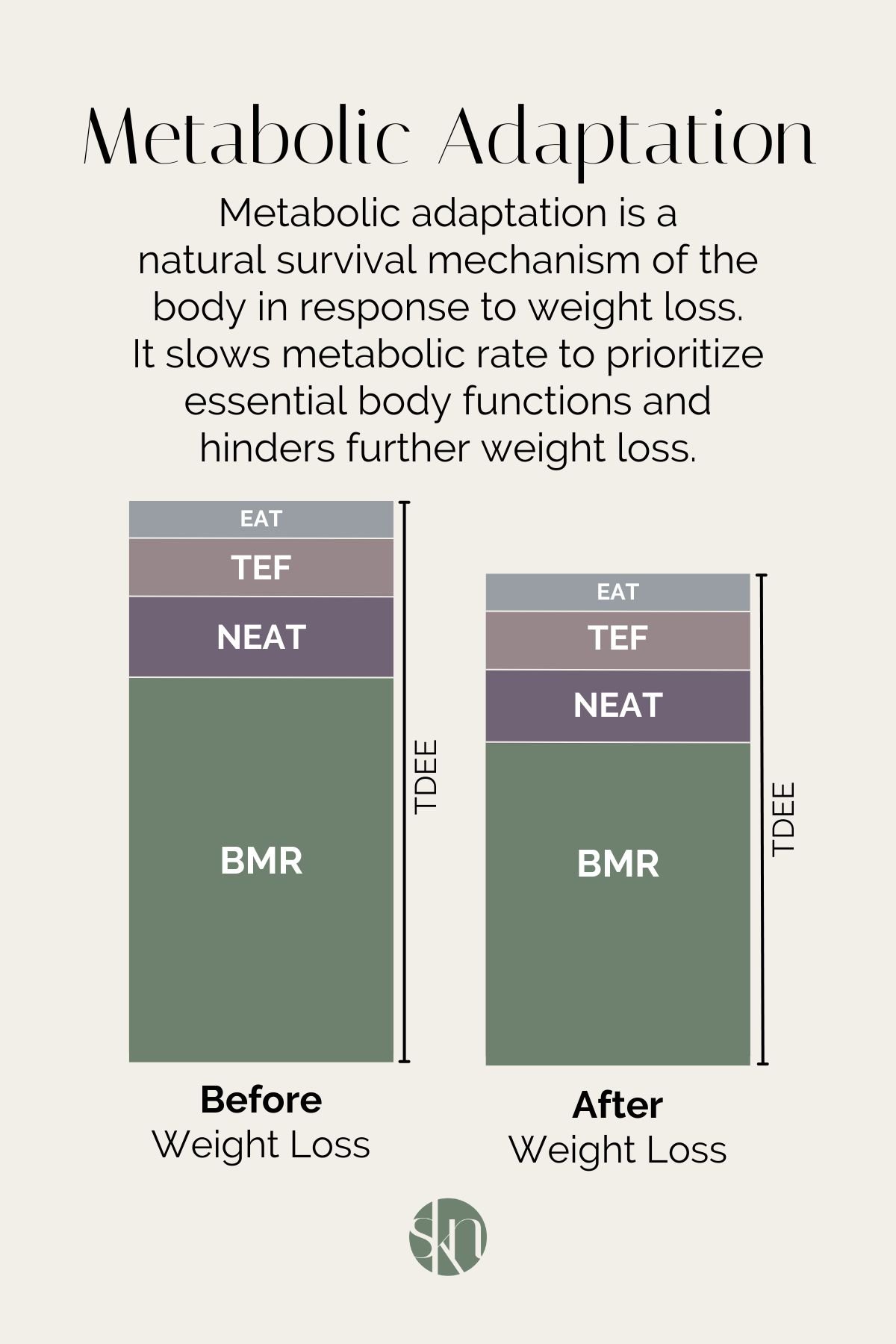
Metabolic adaptation, also known as adaptive thermogenesis, is a phenomenon that occurs when our body becomes more efficient at using energy and burns fewer calories in the process. Metabolic adaptation generally occurs as a response to weight loss when the imposed calorie deficit has diminished or closed entirely, and it creates a new point of equilibrium where energy intake and energy expenditure are equal on an ongoing basis (4).

While reaching this point is often viewed as a failure, it is a natural part of weight loss. Metabolic adaptation is a normal physiological response and a built-in protection mechanism the body uses to maintain homeostasis.

When we lose weight, our energy requirements go down, as smaller bodies generally require fewer calories to perform basic functions. It is normal for metabolic adaption to occur during the weight loss process, and is more likely to occur with severe calorie restriction and after rapid body mass loss, however, there are many ways to address it depending on the individual situation (5).

Another potential contributing factor to decreased energy expenditure and metabolism is a subconscious decrease in non-exercise activity thermogenesis (NEAT). NEAT includes any energy expended that is outside of sleeping, eating, fidgeting, and formal exercise, and also includes lifestyle habits such as taking the stairs versus the elevator or parking further from the entrance in the parking lot.

Decreased NEAT is a major factor in metabolic adaptation but is often overlooked as it is difficult to track. It accounts for approximately 15% of total daily energy expenditure, which can range from 500 to 1,000 calories between people of the same body mass (6). While metabolic adaptation does decrease resting metabolic rate (RMR) by an average of 10-15% at most, research has shown that much of the drop in total daily energy expenditure can be attributed to NEAT.

In fact, what people often refer to as a “slow metabolism” or “starvation mode” can be attributed to a decrease in subconscious non-exercise energy expenditure.

How long does a weight loss plateau last?

A weight loss plateau can last anywhere from a few days to several weeks. It is normal for weight to stall for a week or two during a weight-loss phase before trending down again, so it is important to wait at least 4 weeks before making changes.

How to Know if You’ve Hit a Weight Loss Plateau

Before trying to break a weight loss plateau, it is important to ensure that you’ve hit a real weight loss plateau. To truly understand if you’ve hit a weight loss plateau, it’s important to understand the fundamental mechanism of weight loss, as well as the key differences between weight loss and fat loss.

Put simply, “weight loss” refers to a decrease in your overall body weight from muscle, bone, water, and fat, while “fat loss” refers to weight loss strictly from fat.

Given a standard scale only measures weight, it can easily be impacted by day to day-to-day fluctuations from water, salt, and carbohydrate intake, as well as digestion (i.e. bowel movements), workouts, and recovery. However, weight increases from these factors are not a representation of fat gain. Fat gain is a result of a sustained surplus of calories that accumulate as fat (energy) storage in the form of adipose tissue.

To mitigate confusion from these factors, it is important to accumulate as many data points as possible by weighing yourself daily, ideally, first thing in the morning after you’ve gone to the bathroom but before you eat or drink anything. In doing so, you can track your weekly average weight and look for trends over 4-week spans to determine whether you’ve reached a real weight loss plateau or not.

MonTuesWedThursFriSatSunAverageChange
Week 1161.8161.2161.2160.6160.8160.8160.6161.0– 1.2 lbs
Week 2160.6160.8160.2160.2159.8160.0159.6160.2– 0.8 lbs
Week 3161.2160.4160.4160.2160160160.0160.20.0 lbs
Week 4159.2159.6159.0158.5158.6158.2158.2158.8– 1.4 lbs
TOTAL– 2.2 lbs

This is particularly important for females as they experience natural water weight fluctuations are part of their menstrual cycle, which have the potential to be misinterpreted as a weight loss plateau.

It is also important to ask yourself if you’ve gone through any lifestyle or physical changes with might be mistaken for a weight loss plateau, for example:

  • Have you been compliant and consistent with your weight loss plan?
  • Have you experienced a noticeable increase in muscle mass?
  • Have you changed your water intake?
  • Have you made any changes to your food choices?
  • Have you recently been on vacation?
  • Have you been more sedentary due to a move or job change?

If, after considering all of these factors, you are confident that you’ve been adhering to your weight loss plan, and have not seen a decrease in weight in over 4 weeks, you can confirm you experiencing a real weight loss plateau.

Infographic on how to break a weight loss plateau.

How to Break a Weight Loss Plateau

While there are many reasons you may not be losing weight, here are the best ways to break a weight loss plateau:

Review and Improve Adherence

If you determine that the cause of your weight loss plateau is a lack of adherence, you must employ techniques to increase the accuracy of tracking, intake, and reporting, or remodel the program to make it easier to adhere to. Examples of this include:

  • Weigh all food and beverages on a digital scale
  • Use a food-tracking app
  • Log food intake in real-time
  • Make healthy food choices more visible in the kitchen
  • Keep junk food or “empty calorie” food out of the home or office
  • Not eat directly out of food packaging
  • Pre-portion meals and snacks before eating
  • Use a prepared meal service
  • Not eat in front of digital devices or screens
  • Schedule workouts ahead of time
  • Find an exercise buddy to hold you accountable

To improve dietary adherence, it is important to consider the individual and their personal food behaviors.

Review and Adjust Program

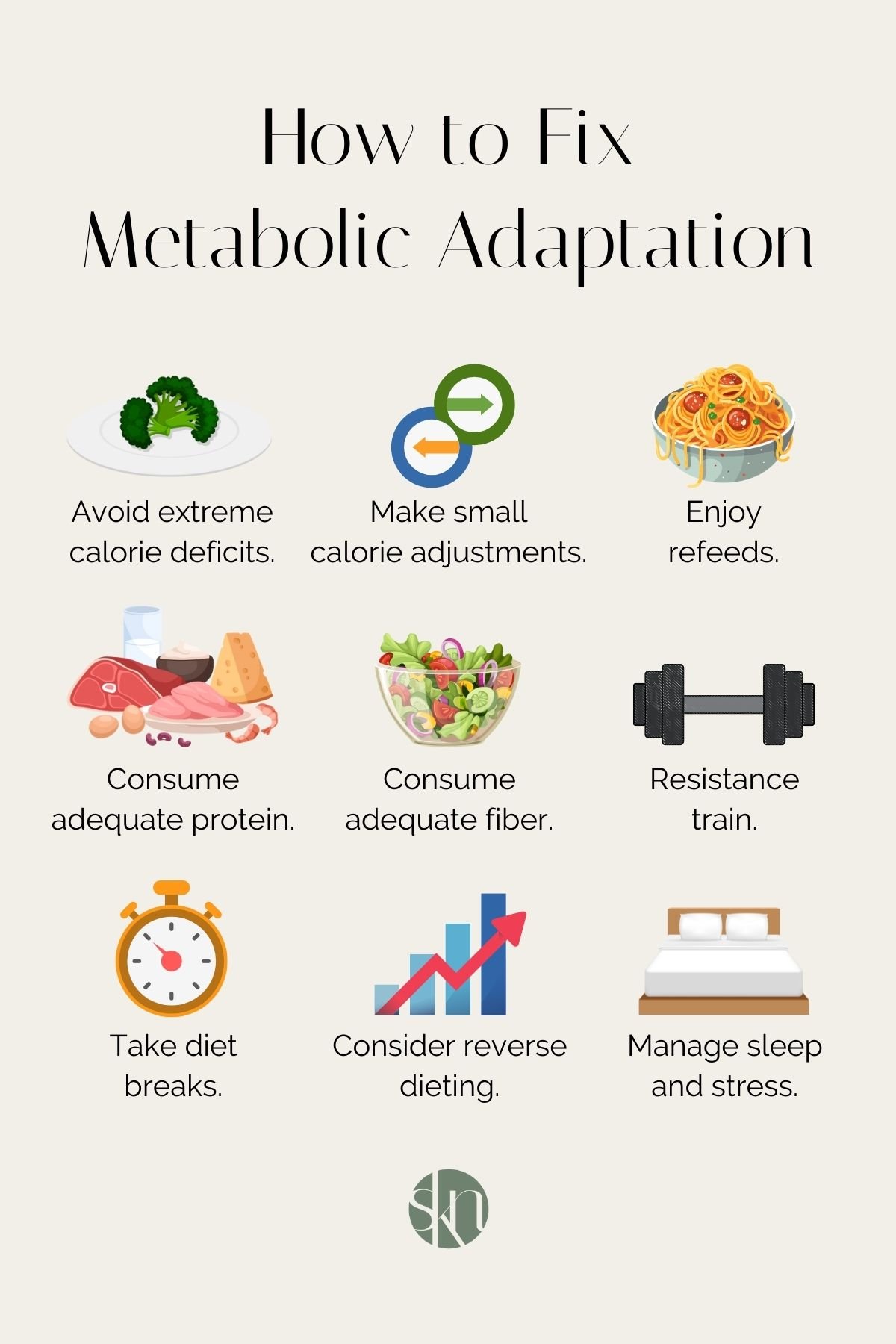
If you determine that the cause of your weight loss plateau is due to metabolic adaptation, you must look for ways to reopen the calorie deficit by one of three options:

  1. Decrease energy intake,
  2. Increase energy expenditure,
  3. Some combination of both.

While both diet and exercise are impactful for weight loss, the decision on which option to choose will depend on the individual and their physical and psychological tolerance, and must be dealt with methodically. It is important to consider if hunger is already a persistent issue, how realistic it is to increase activity level, and how urgent or time-sensitive the weight loss goal is. For example:

  • If calorie intake is already too low and hunger is too high, it is best to opt for an increase in energy expenditure.
  • If activity level is already too high with little room to improve, it is best to opt for a decrease in energy intake, by no more than 10% of total calories.
  • If hunger levels are not a factor and there is room for more activity, you can opt for an increase in energy expenditure AND a decrease in energy intake, by no more than 10% of total calories.

FAQs

What foods break the weight loss plateau?

There are no specific foods that will break a weight loss plateau. While it is important to prioritize healthy foods, consume adequate protein to support the maintenance of lean body mass, and eat fiber-rich filling foods to reduce hunger levels, a weight loss plateau can only be broken by ensuring dietary program compliance and/or reopening a calorie deficit to account for metabolic adaptation.

Can a cheat day break a weight loss plateau?

A cheat day alone will not break a weight loss plateau. While including cheat days, or cheat meals, in your weight loss program, may provide some psychological relief and potentially increase adherence, it does not break a weight loss plateau.

Will a weight loss plateau resolve itself?

A short-term weight loss plateau, for less than 4 weeks, may resolve itself as it can be due to changes in hydration, water, and carbohydrate intake, as well as sleep, stress, and hormonal changes. A long-term weight loss plateau, for more than 4 weeks, is unlikely to resolve itself and must be addressed through increased compliance, adjusting calorie intake, and/or increasing physical activity.

The Bottom Line

A weight loss plateau is an extended period with no change in body weight or body composition. Plateaus are normal occurrences during weight loss efforts and occur because the individual, due to lack of adherence or metabolic adaptation, has closed their calorie deficit by consuming more calories than they are expending. You can break a weight loss plateau by making program alterations to increase adherence, decrease calorie intake, increase calorie expenditure, or a combination of the three.

Chickpea Pumpkin Curry

Published on October 10, 2024 by Stephanie Kay

Filled with creamy coconut milk and warming spices, this chickpea pumpkin curry is hearty, healthy, and full of flavor. This recipe is perfect for a cozy fall dinner and leftovers keep well for lunches.

Bowl of chickpea pumpkin curry on a brown plate with steamed rice, naan bread, and cilantro.

If you’re bored of the same old dinner recipes, I’ve got you covered. This chickpea pumpkin curry recipe is full of flavor and texture and quick and easy to make. Not to mention, it’s inexpensive and super versatile.

With a few pantry staples, you can create a healthy vegetarian dinner the whole family will enjoy. Serve it with steamed rice or naan bread for an extra tasty Indian-inspired feast.

Two bowls of pumpkin chickpea curry with white rice, naan, and cilantro.

Why You’ll Love this Pumpkin Curry

  • Made in One Pot – This one-pot recipe ensures clean-up is a breeze.
  • Quick and Easy – Ready in 30 minutes, this chickpea pumpkin coconut curry is perfect for a weeknight dinner.
  • High in Fiber – With over 9 grams of fiber per serving, this vegetarian curry is a fiber and veggie-loaded meal.
  • Keeps Well – The curry keeps well in the fridge and freezer which makes it a great meal prep idea.
Ingredients for pumpkin chickpea curry; canned chickpeas, edible pumpkin, coconut milk, curry powder, salt, cumin, onion, ginger, garlic, and spinach.

Ingredients + Substitutions

  • Chickpeas – To add some plant-based protein.
  • Pumpkin – To add some complex carbohydrates and fiber. I used a small fresh pumpkin, but you can use butternut squash or sweet potatoes instead if needed. Unfortunately, you can’t use pumpkin puree for this recipe.
  • Coconut Milk – To add some healthy fats and ensure the curry sauce is rich and creamy. I used full-fat coconut milk, but you can use light coconut milk, or coconut cream is preferred.
  • Spinach – To add some leafy greens, micronutrients, and additional fiber. baby kale
  • Onion, Garlic, and Ginger – To flavor the curry. I used whole onion, garlic cloves, and fresh ginger, but you can use powder if needed. See the notes section of the recipe card for details.
  • Curry Powder – To flavor the curry. You can use mild or spicy curry powder, curry paste, or use garam masala instead.
  • Spices – A combination of cumin, chili flakes, and salt to flavor and season the curry. If you want to add more heat, you can add a pinch of cayenne pepper as well.
Large pot with sautéed onion, garlic, ginger, curry powder, and spices.
Large pot with cubed pumpkin and chickpeas.

Dietary Adaptions

To Make it Gluten-Free: Use certified gluten-free vegetable broth or water.

To Make it Dairy-Free: No adaptations are needed, this recipe is dairy-free.

Large pot with coconut milk, water, pumpkin and chickpeas.
Large pot with pumpkin chickpea curry with fresh spinach on top.

Red’s Nutrition Tip

While chickpeas are a good source of vegetarian protein, overall, animal protein is more protein-dense than plant-based protein. That said, they are a great source of fiber and complex carbohydrates, and you can add additional protein in the form of grilled tofu or grilled chicken to this dish if you want to increase the overall protein content of the meal.

Serving Suggestions

This chickpea pumpkin curry recipe is a balanced meal complete with plant-based protein, carbohydrates, fiber, and healthy fats. It can be served on its own, with a side of white rice or brown rice, or with cauliflower rice for a low-carb option.

  • To increase the protein content, you can serve it with some grilled extra-firm tofu or chicken.
  • To increase the fiber content and add more veggies, I would suggest adding one cup of diced red bell pepper, frozen peas, broccoli florets, or chopped green beans to the curry.
Large white pot with pumpkin chickpea curry with chopped cilantro on top.

Storage + Reheating

To Refrigerate: Allow the pumpkin chickpea curry to cool completely and then transfer to an airtight container in the fridge for up to 5 days.

To Freeze: Once cooled, transfer the curry to an airtight container and freeze for up to 3 months. To make grab-and-go meals and reheating easier, you can freeze the curry in individual portion-sized containers.

To Reheat: Once thawed, the chickpea pumpkin curry can be reheated in a pot on the stovetop on medium heat and warm for 5 minutes or until heated through or in the microwave for 2-3 minutes.

Two bowls pumpkin chickpea curry with a side steamed rice, naan bread, cilantro, and a tea towel.

More Chickpea Curry Recipes:

  • Chickpea Peanut Curry
  • Spinach Chickpea Curry
  • Chicken and Chickpea Curry
  • Squash and Chickpea Curry
  • Chickpea Curry Meal Prep Bowls

Calories vs. Macros: Which is Better for Weight Loss?

Published on October 8, 2024 by Stephanie Kay

If you are trying to lose weight, tracking calories and counting macros are common recommendations, but what’s the difference? Here is everything you need to know about counting calories vs. macros, the pros and cons, and the best approach for weight loss.

Women wearing a pink shirt holding a phone with a calorie tracking application while making a meal.

Table of contents

  • What’s the difference between counting calories and macros?
  • How to Track Calories vs. Macros for Weight Loss
  • Pros and Cons of Counting Calories
  • Pros and Cons of Counting Macros
  • Are macros or calories more important for building muscle?
  • So, is it better to count calories or macros for weight loss?
  • Do you need to count macros or calories for weight loss?

What’s the difference between counting calories and macros?

Calorie counting is a method of food tracking that tracks how many calories a person consumes per day. A calorie is an independent measure of the energy content of a food and tracking calories involves tracking how many total calories are in the food and beverages a person consumes in a day.

Macro counting is a method of food tracking that tracks how many grams of each macronutrient, protein, carbohydrate, and fat, a person consumes per day. Macros, also known as macronutrients, are the primary dietary nutrients that the body requires in large amounts and they make up the majority of the calorie content of our food and beverages. Protein and carbohydrates provide 4 calories per gram, while fat provides 9 calories per gram.

Given macros make the calorie content of our food, by counting macros you are indirectly counting calories, however, by counting calories you are not counting macros.

As noted in the pyramid of nutrition priorities, both calories and macros play important roles in weight loss, fat loss, and body composition goals, although, their level of importance varies depending on the specific goal.

Infographic on the difference between calories vs. macros.

How to Track Calories vs. Macros for Weight Loss

To lose weight, or more specifically lose fat, you must create a calorie deficit. When the calories you consume via food and beverage exceed the calories expended via total metabolism, the body will use stored energy, also known as body fat, for fuel. Put simply, for fat loss to occur, you must ensure you are eating fewer calories than you are burning.

To count calories for weight loss, you must determine how many calories you need to consume to create a calorie deficit.

To determine how many calories you need for weight loss or fat loss, you must determine your total daily calorie needs for general health and weight maintenance. This is known as your total daily energy expenditure (TDEE) and can be calculated using the Mifflin-St Jeor formula by using an online calculator such as tdeecalculator.net (1). Once you’ve calculated your TDEE, you can then determine the size of your calorie deficit (small = 10-15%, medium = 20-25%, large = 25% or more) to determine your total calorie intake for weight loss. Put simply:

  • Daily Calorie Needs for Weight Loss = TDEE – (TDEE x % Calorie Deficit)

For example, if Sara determines her TDEE is 2,000 calories per day and wants to implement a moderate calorie deficit of 20% (400 calories), her total daily calorie needs for weight loss are 1,600 calories per day.

  • Daily Calorie Needs for Weight Loss = 2,000 – (2,000 x 0.2) = 2,000 – 400 = 1,600 calories

Once you’ve determined your total calorie needs for weight loss, you can use an app to help track your calorie intake, such as MyFitnessPal or FatSecret.

To count macros for weight loss, you must determine how many grams of each macronutrient you need to consume per day to create a calorie deficit.

Once you’ve determined how many calories you need to consume for weight loss, you can determine the macronutrient balance of those calories. While the exact macronutrient balance required may vary from one individual to the next depending on specific sex, age, body weight, activity level, and goals, the United States Department of Agriculture (USDA) and the Food and Nutrition Board of the Institutes of Medicine (IOM) recommend healthy adults consume a macronutrient ratio of (2, 3):

  • Carbohydrates: 45 – 65% of total calories
  • Fats: 20 – 35% of total calories
  • Proteins: 10 – 35% of total calories

More specifically, should an individual choose to consume a macro balance of 45% carbohydrate, 30% protein, and 25% fat, their macro intake would be calculated by the following steps:

  • Daily Calorie Needs for Weight Loss = TDEE – (TDEE x % Calorie Deficit)
  • Grams of Carbohydrate per Day = Daily Calorie Needs x 45% ÷ 4 calories per gram
  • Grams of Protein per Day = Daily Calorie Needs x 30% ÷ 4 calories per gram
  • Grams of Fat per Day = Daily Calorie Needs x 25% ÷ 9 calories per gram

This calculation will provide the exact number of grams of carbohydrate, protein, and fat required to create a calorie deficit for weight loss.

For example, if Sara determines her TDEE is 2,000 calories per day and wants to implement a moderate calorie deficit of 20% (400 calories), her total daily calorie needs for weight loss are 1,600 calories per day. Based on this calorie deficit, her macro intake would be:

  • Grams of Carbohydrate per Day = 1,600 x 0.45 ÷ 4 = 180 grams
  • Grams of Protein per Day = 1,600 x 0.30 ÷ 4 = 120 grams
  • Grams of Fat per Day =1,600 x 0.25 ÷ 9 = 44 grams

Note: While not a primary or essential nutrient, alcohol is also considered a macronutrient and contains 7 calories per gram. Alcohol should be included in tracking methods whether you are counting calories or macros.

While macro intake can be calculated manually, it can also easily be calculated using an app such as MyFitnessPal, Carbon Diet, or MyMacros.

Infographic on pros and cons of counting calories vs. macros.

Pros and Cons of Counting Calories

Here is a list of the benefits of counting calories:

  • Supports weight loss. Counting calories increases the accuracy of how many calories an individual consumes per day, which can help to ensure they are creating a calorie deficit when food and beverages are consistently and accurately tracked.
  • Increases portion size awareness. Counting calories can help to increase awareness around the serving sizes and portion sizes of the food and beverages an individual consumes, which can be highly beneficial for long-term success. Research has shown that people underestimate their calorie intake by up to 20%, and overweight people may underestimate their calorie intake by up to 40% (4).
  • Can be very educational. The sheer act of counting calories can bring greater awareness to the quality and quantity of our food choices, as well as potentially increase intuitive eating behaviors and promote healthy eating habits.

Here is a list of the drawbacks of counting calories:

  • Does not ensure food quality. While calorie counting emphasizes food quantity, it does not account for food quality. For this reason, it is possible to count calories and create a calorie deficit while consuming a high level of processed foods.
  • Doesn’t account for macronutrient balance. Although calorie counting addresses the total number of calories consumed, it does not account for the source of those calories. Consuming a good ratio of carbohydrates, proteins, and fats can help to encourage a more optimal macronutrient intake which helps to support overall health, as well as increase satiety signals and balance blood sugar (5).
  • Doesn’t account for micronutrient intake. Because counting calories does not emphasize food quality, it does not ensure that you will meet your optimal intake of micronutrients, including vitamins and minerals.
  • May lead to muscle loss. Counting calories without tracking protein intake may lead to the loss of lean muscle mass (6, 7). Not only is muscle mass a predictor of health and longevity, but it helps to increase metabolism, via the thermic effect of food, and increase satiety signals in a calorie deficit. Evidence suggests that a protein intake of 0.7 grams of protein per pound of body weight per day is an optimal intake for weight loss (8).
  • May promote unhealthy eating habits. For certain individuals, intense food restriction, such as calorie counting, has been linked to eating disorders including anorexia nervosa, bulimia nervosa, and binge eating disorder, which can all lead to major health problems (9).

Pros and Cons of Counting Macros

Here is a list of the benefits of counting macros:

  • Supports weight loss. Counting macros indirectly ensures you are tracking calories, which can help to ensure you are creating and maintaining a calorie deficit to support weight loss.
  • Increases portion size awareness. Counting macros can help to improve portion control by bringing more awareness to the portion size of proteins, carbohydrates, and fats consumed. Not only do many people tend to underestimate portion sizes overall, but they tend to overestimate their protein intake.
  • Can be very educational. In addition to bringing more awareness to the quality and quantity of our food choices, counting macros can help to provide more food freedom by demonstrating that all foods can be included in a healthy diet. Research has shown that flexible dieting helps to promote a healthier relationship with food and prevent binge eating (10).
  • Promotes macronutrient balance. By counting macros, you can ensure you are creating a calorie deficit to support weight loss while consuming an optimal balance of macronutrients to support optimal health and other health goals. Carbohydrates, protein, and fat all play important roles in our health to provide energy, maintain structure, and regulate metabolic pathways, and learning how to create a balanced meal can help to ensure you are meeting your macro targets.
  • Increases energy expenditure. While one calorie is one calorie, not all sources of calories are created equal in terms of how they affect energy expenditure and calories in vs. calories out. Counting macros can help to increase TDEE through the thermic effect of food (TEF); the energy expended to digest, metabolize, absorb, and store the food that you eat. Protein has a much greater thermic effect (20-30%) than carbs (5-10%) or fat (0-3%) and, therefore, the food you eat can increase your energy expenditure (11).
  • Increases satiety signals. Tracking macros, namely protein, can help to increase satiety signals and support weight loss, as protein impacts several appetite-regulating hormones, namely ghrelin, that increase feelings of fullness. Studies have demonstrated that individuals have decreased appetites with a higher protein intake, and research has shown that the most filling foods are those with a high protein and high fiber content (12).
  • Promotes muscle maintenance. By counting macros, you can help to ensure you are consuming adequate protein to support muscle maintenance, and potentially muscle gain, while in a calorie deficit. Consuming adequate protein is imperative for maintaining lean muscle mass, a common negative side effect of weight loss programs, including calorie counting, when optimal protein intake targets are not tracked and met (6, 7).
  • Supports athletic performance. While the ideal macronutrient ratio for performance depends on the type and intensity of the activity, counting macros is a more ideal approach for athletic performance than calorie counting alone, especially during a weight loss phase. Athletes require a different ratio of carbohydrates and fat for performance than the average person, and tracking macros can help to ensure you are meeting these needs (13).
  • Supports hormone balance. Unlike counting calories, tracking macros allows individuals to prioritize the best macronutrient ratio to balance their hormones. This is particularly helpful for females, particularly athletes and those who exercise, as benefit from a higher ratio of fats than men to support their menstrual cycle (14, 15, 16).

Here is a list of the drawbacks of tracking macros:

  • Requires more effort. The increased detail of counting macros requires slightly more effort than calorie counting.
  • Does not ensure food quality. While tracking macros places far more emphasis on nutrient intake than calorie counting, namely macronutrient intake, it is still possible to accurately track macros while consuming a high level of ultra-processed foods.
  • Doesn’t account for micronutrient intake. Like calorie counting, because macro counting does not emphasize food quality, it does not ensure that you will meet your required intake of vitamins and minerals.
  • May promote unhealthy eating habits. Much like calorie counting, macro counting may lead to intense food restriction, which has been linked to eating disorders including anorexia nervosa, bulimia nervosa, and binge eating disorder, which can all lead to major health problems.

Are macros or calories more important for building muscle?

Counting macros is more beneficial than counting calories for building muscle and body composition goals. Unlike calorie counting, macro counting emphasizes protein intake, which is essential for muscle development, particularly when paired with resistance training. The recommended protein intake for maximizing muscle growth is 0.7 to 1.0 grams per pound of body weight per day (17).

Moreover, macro counting is more beneficial for healthy weight gain than calorie counting alone as it emphasizes the consumption of adequate protein, carbohydrates, and fats in a calorie surplus.

So, is it better to count calories or macros for weight loss?

In the macros vs. calorie debate for weight loss, macros win. While both counting calories and counting macros can support a weight loss goal, counting macros has more benefits as, in addition to creating a calorie deficit, it can help to improve nutrient balance, increase satiety signals, improve body composition, support athletic performance, and support hormone balance.

Regardless of which method you choose, be sure to prioritize healthy food choices by consuming a good balance of lean protein sources, fiber-rich carbohydrates, and healthy fats in your diet.

Do you need to count macros or calories for weight loss?

While counting calories and macros are very helpful dietary approaches for weight loss goals, you don’t need to count calories or macros for weight loss to occur. There are many ways to lose weight without counting calories including prioritizing whole foods, following hand portion sizes, and volume eating.

The Bottom Line

Calorie counting is a method of food tracking that tracks how many calories a person consumes per day; while counting macros tracks how many grams of carbohydrates, protein, and fat a person consumes per day. Although both counting calories and macros can help with weight loss, counting macros has more benefits as it supports macronutrient balance, satiety signals, muscle maintenance, athletic performance, and hormone balance, and can increase metabolic rate through the thermic effect of food.

Middle Eastern Breakfast Bowl

Published on October 3, 2024 by Stephanie Kay

Filled with creamy labneh, poached eggs, and spices, this Turkish-inspired Middle Eastern breakfast bowl is a flavor and protein-packed breakfast perfect for weekday mornings.

Middle Eastern breakfast bowl with yogurt sauce, soft-boiled eggs, tomatoes, za'atar seasoning, and pita bread.

Turkish eggs, traditionally known as çilbir and pronounced as chil-bir, is a dish of poached eggs over garlicky yogurt sauce finished with warm spicy butter or oil. If you’ve never tried it, it’s absolutely delicious and I highly recommend giving it a try, as it was the inspiration for these Middle Eastern breakfast bowls.

The combination of yogurt sauce and eggs ensures that these bowls are packed full of protein, and the olive oil and milk fat ensure they are full of healthy fats and incredibly filling. While you can enjoy them as is, I suggest serving them with warm flatbread or pita bread for a hearty, healthy, balanced, satisfying breakfast.

Close of up Middle Eastern Turkish eggs-inspired breakfast bowl on a black plate with a fork, parsley, and pita.

Why You’ll Love It

  • Quick and Easy – Ready in 15 minutes, this Middle Eastern dish is perfect for a weekday breakfast.
  • High in Protein – The combination of creamy labneh and eggs ensures that each bowl has over 25 grams of protein.
  • Full of Flavor – These Middle Eastern breakfast bowls are filled with sweet, savory, and spicy flavors.
Ingredients for Middle Eastern breakfast bowl: labneh, eggs, cherry tomatoes, bell pepper, garlic, greens, feta cheese, pita, and za'atar.

Ingredients + Substitutions

  • Labneh – To add some protein. Labneh, often classified as “yogurt cheese”, is a form of strained whole milk yogurt known for its thick texture, similar to that of cream cheese. You can find labneh in most major grocery stores, or make labneh at home by straining Greek yogurt. That said, you can also just swap the labneh for plain Greek yogurt or skyr in this recipe.
  • Eggs – To add some more protein. I made soft-boiled eggs for my recipe, but you can make hard-boiled, fried, or poached eggs if preferred.
  • Feta Cheese – To add a bit more protein and a salty bite.
  • Tomatoes and Red Peppers – To add some veggies and color.
  • Garlic – To flavor the tomato mixture. I used fresh garlic, but you can use garlic powder if preferred, see the notes section of the recipe card for details.
  • Red Pepper Flakes – To add some heat, you can also use cayenne pepper if needed.
  • Fresh Herbs – To add some leafy greens, fiber, and micronutrients. I used a combination of mixed greens but any leafy green, such as spinach, parsley, or mint will work.
  • Olive Oil – To add some healthy fats and good the tomato mixture. You can use regular or extra virgin olive oil.
  • Za’atar Seasoning – To flavor the dish. Za’atar is a spice mix from the Middle East typically made with toasted sesame seeds, sumac, dried oregano, and thyme. You can find za’atar seasoning in most major grocery stores or you can make your own homemade za’atar spice blend.
  • Pita Bread – To add some complex carbohydrates. I opted for pita but you can use flatbread, sourdough, or any other style of bread you enjoy.

Dietary Adaptions

To Make it Gluten-Free: Use gluten-free pita bread.

To Make it Dairy-Free: Unfortunately, you can’t make this recipe dairy-free.

Mediterranean breakfast bowls with yogurt sauce, eggs, veggies, spices, and warm flatbread.

Red’s Nutrition Tip

Not only does the combination of eggs and labneh (or Greek yogurt) ensure that these bowls are protein-packed, but feta is one of the highest protein cheeses, so a little sprinkle on top adds a nice boost of protien too.

Serving Suggestions

These bowls are a balanced meal with protein, carbohydrates, fat, and fiber; however, you can adjust the bowl to meet your personal dietary needs. For example:

  • To make it higher in protein, add an extra 1/4 cup of labneh and/or an extra egg.
  • To make it low-fat, use 0% labneh or Greek yogurt and swap the soft-boiled eggs for scrambled egg whites.
  • To make it low-carb, omit the pita bread.
  • To make them higher in fiber, use whole-wheat or whole-grain pita bread or flatbread.
Close up of a Turkish egg breakfast bowl.

Storage

These bowls are best served immediately, as they don’t store well in the fridge once prepared. That said, if you want to make these breakfast bowls ahead of time you can make the soft-boiled eggs and reheat them in a pot of boiling water for 1 minute before preparing the bowls per the instructions. These bowls cannot be frozen.

More Breakfast Bowl Recipes:

  • Italian Breakfast Bowl
  • Green Quinoa Breakfast Bowl

12 Most Hyper-Palatable Foods

Published on October 1, 2024 by Stephanie Kay

The food industry is known for making food combinations that are so delicious they are hard to resist, but which foods are the most addictive? Here is a list of the most hyper-palatable foods.

Cheeseburger with French fries on a plate with a side of ketchup and a glass of soda with ice and a straw.

Table of contents

  • What is Hyper-Palatable Food?
  • Are Hyper-Palatable Foods Addictive?
  • Hyper-Palatable Foods List
  • 1. Pizza
  • 2. Chocolate
  • 3. Chips
  • 4. Cookies
  • 5. Ice Cream
  • 6. French Fries
  • 7. Cheeseburgers
  • 8. Soda
  • 9. Cake
  • 10. Cheese
  • 11. Bacon
  • 12. Fried Chicken
  • Nutrition of Most Hyper-Palatable Foods
  • Should you avoid hyper-palatable foods?
  • Are hyper-palatable foods weight loss friendly?

What is Hyper-Palatable Food?

Hyper-palatable foods are generally considered foods that are rewarding and pleasurable to eat due to their specific combinations of fat, sugar, sodium, and carbohydrates and, therefore, easy to overconsume.

While there is no official scientific definition, the term hyper-palatable foods (HPF) has been commonly used to describe foods manufactured from well-designed formulas to increase the palatability and consumption level of food products due to their activation of the brain’s reward systems.

In 2019, a team of researchers set out to develop a quantitative definition of hyper-palatable foods and found that these foods fell into one of three clusters (1):

  • Foods containing fat and sodium (> 25% kcal from fat, ≥ 0.30% sodium by weight),
  • Foods containing fat and simple sugars (> 20% kcal from fat, > 20% kcal from sugar),
  • Foods containing carbohydrates and sodium (> 40% kcal from carbohydrates, ≥ 0.20% sodium by weight).

The fat and sodium-containing foods included processed meats (e.g. bacon and hot dogs) and meal-based items with fat and carbohydrates (e.g. pizza); the fat and sugar-containing foods included desserts (e.g. cake, ice cream, brownies); and the carbohydrates and sodium-containing foods included bread snacks (e.g. crackers, pretzels) and savory items (e.g. popcorn, biscuits).

This study also found that an estimated 62% of foods in the US food system are considered hyper-palatable, and included foods not designed to be hyper-palatable food and foods marketed as “healthy” or “low fat” options such as trail mixes and sauces (1).

Are Hyper-Palatable Foods Addictive?

Hyper-palatable foods are often said to have “addictive” qualities because they are so appealing, tempting, and artificially rewarding to eat.

The concept of food addiction (FA) was first introduced in 1956, however, it is not formally recognized as a psychological disorder and is a contentious topic with continuous debates about its validity. Some experts argue that food addiction should be classified as a substance use disorder, while others argue it aligns more with behavioral addictions, and skeptics argue it shouldn’t be recognized as a mental health disorder at all (2).

While the debate around food addiction is ongoing, a cross-sectional study was run to determine which aspects of food contribute to its addictive potential (3). Using the Yale Food Addiction Scale (YFAS) as a reference, participants were asked to rate foods for their addictive potential. The study found that processed foods, higher in fat and glycemic load, were most frequently associated with problematic, addictive-like eating behaviors. Moreover, higher scores were also small-to-moderate predictors of greater difficulty in controlling the calorie intake of these kinds of foods.

Infographic of most hyper-palatable foods: pizza, chocolate, chips, cookies, ice cream, French fries, cheeseburger, soda, cake, cheese, bacon, and fried chicken.

Hyper-Palatable Foods List

Here is a list of the most hyper-palatable foods according to the Yale Food Addiction Scale (YFAS) based on a ranking of 1 (not at all addictive) to 7 (extremely addictive) (3).

1. Pizza

Pizza is one of the most popular foods in the world and it turns out it is one of the most hyper-palatable foods too. The combination of starchy crust, sweet sauce, melted cheese, and salty pepperoni makes pizza the perfect balance of carbohydrates, fat, and sodium to give it addictive properties and make it so hard to resist that extra slice. A 1-slice (107-gram) serving of cheese pizza contains 285 calories, 12.2 grams of protein, 10.4 grams of fat, 35.6 grams of carbohydrate, and 3.8 grams of sugar (4).

Addictiveness Score: 4.01

2. Chocolate

While certain forms of chocolate are considered health foods, particularly dark chocolates with high cacao content, milk chocolate and chocolate candies are particularly high in fat and sugar, which makes them very easy to overconsume. A 1-ounce serving of milk chocolate contains 151 calories, 2.2 grams of protein, 8.4 grams of fat, 16.8 grams of carbohydrate, and 14.6 grams of sugar (5).

Addictiveness Score: 3.73

3. Chips

Not only are chips a highly desirable combination of carbohydrates, fat, and salt, but their crunch factor makes them extra enjoyable. A 1-ounce (22 chips) serving of plain, salted potato chips contains 149 calories, 1.8 grams of protein, 9.5 grams of fat, 15.1 grams of carbohydrate, and 0.9 grams of sugar (6).

Addictiveness Score: 3.73

4. Cookies

While the nutrition content of cookies will vary based on the type of cookie and from one recipe to the next, cookies are the ultimate combination of high-fat and high-sugar content. Moreover, their delicious scent and desirable texture enhance the experience while eating them. A 1 medium chocolate chip cookie (33 grams) contains 149 calories, 1.3 grams of protein, 7.0 grams of fat, 20.1 grams of carbohydrate, and 12.5 grams of sugar (7).

Addictiveness Score: 3.71

5. Ice Cream

The combination of cold, creamy, sugar, and fat in ice cream makes it a hard-to-resist treat, especially on warm summer days. Another addictive property of ice cream is “melt control”; an additional sensory property that enhances enjoyment as the eater wants to consume the ice cream both “not too fast” and “not too slow”. A 1/2 cup (66-gram) serving of vanilla ice cream contains 137 calories, 2.3 grams of protein, 7.3 grams of fat, 15.6 grams of carbohydrate, and 14.0 grams of sugar (8).

Addictiveness Score: 3.68

6. French Fries

Much like chips, French fries provide a desirable combination of carbohydrates, fat, and salt, along with enhanced palatability from temperature and texture. French fries also become increasingly palatable when paired with sweet or fatty sauces like ketchup or mayonnaise. A small (71-gram) serving of French fries contains 222 calories, 2.4 grams of protein, 10.4 grams of fat, 29.4 grams of carbohydrate, and 0.2 grams of sugar (9).

Addictiveness Score: 3.60

7. Cheeseburgers

Between the soft bun, salty burger, and creamy cheese, cheeseburgers combine refined carbohydrates, fat, and salt to make them a highly palatable food. Plus, the crispy exterior and juicy interior of a burger patty make them texturally appealing and very easy to “smash”. A single patty cheeseburger contains 280 calories, 15.0 grams of protein, 13.4 grams of fat, 25.5 grams of carbohydrate, and 4.4 grams of sugar (10).

Addictiveness Score: 3.51

8. Soda

Traditional soda, not diet soda or sugar-free soft drinks, is one of the highest added sugar and most hyper-palatable foods. Soft drinks contain more sugar than most other beverages and other sugary foods, and this is highly effective at stimulating the pleasure centers of the brain. A small (16-ounce) cola contains 207 calories, 0 grams of protein, 1.2 grams of fat, 51.2 grams of carbohydrate, and 48.9 grams of sugar (11).

Addictiveness Score: 3.29

9. Cake

From chocolate to carrot to red velvet, cake combines sugar, fat, and moisture for the ultimate flavor and mouthfeel. It also contains excessive amounts of refined carbohydrates and added sugars, which have been shown to release dopamine; the body’s feel-good neurotransmitter (12, 13). A 1-slice (64 grams) serving of chocolate cake with frosting contains 249 calories, 2.3 grams of protein, 12.8 grams of fat, 33.8 grams of carbohydrate, and 25.6 grams of sugar (14).

Addictiveness Score: 3.26

10. Cheese

While certain cheeses are high in protein, cheese is one of the most-calorie-dense foods, which makes it one of the most hyper-palatable foods as well. The natural fat and sodium content of cheese makes it highly palatable and it’s no surprise it’s hard to step away from a cheeseboard and no coincidence it’s part of other hyper-palatable foods such as pizza and cheeseburgers. A 1-ounce serving of cheddar cheese contains 114 calories, 6.5 grams of protein, 9.4 grams of fat, 1.0 grams of carbohydrate, and 0.1 grams of sugar (15).

Addictiveness Score: 3.22

11. Bacon

Not only does bacon have a unique combination of fat, sugar, salt, and smoke that makes it highly palatable, but the nitrogen compounds in bacon give it its distinct and delicious scent (16). Bacon is a highly versatile food that gives everything from breakfast to pasta and sandwiches are more enjoyable taste. A 2-slice serving of bacon contains 63.2 calories, 5.2 grams of protein, 4.6 grams of fat, 0.3 grams of carbohydrate, and 0.4 grams of sugar (17).

Addictiveness Score: 3.03

12. Fried Chicken

Fried chicken is a dish consisting of chicken pieces that have been coated with seasoned flour batter and deep-fried. The high fat and salt content of fried chicken, along with its crispy and crunchy texture, makes it one of the most palatable foods. Plus, much like French fries, eating fried chicken with a dipping sauce such as BBQ, ranch, or sweet-n-sour makes it even more palatable. A 1-piece (78 grams) serving of fried chicken contains 192 calories, 23.7 grams of protein, 9.4 grams of fat, 1.4 grams of carbohydrate, and 0 grams of sugar (18).

Addictiveness Score: 2.97

In addition to the top 12 most addictive foods, according to the study, other hyper-palatable foods included plain rolls, buttered popcorn, breakfast cereal, gummy candy, steak, and muffins.

Nutrition of Most Hyper-Palatable Foods

Here is a ranking and nutrition comparison of the glycemic load, fat, and sodium content of the most hyper-palatable foods (3).

FoodsRatingGlycemic LoadFat Sodium
Pizza4.012210 g551 mg
Chocolate3.731413 g35 mg
Chips3.731210 g160 mg
Cookies3.7174 g63 mg
Ice Cream3.681415 g98 mg
French Fries3.602118 g266 mg
Cheeseburger3.511728 g885 mg
Soda (Not Diet)3.29160 g15 mg
Cake3.262410 g260 mg
Cheese3.2209 g174 mg
Bacon3.03012 g647 mg
Fried Chicken2.97726 g441 mg
Rolls (Plain)2.73151 g450 mg
Popcorn (Buttered)2.642630 g771 mg
Breakfast Cereal2.59226 g270 mg
Gummy Candy2.57220 g15 mg
Steak2.54024 g38 mg
Muffin2.502919 g380 mg
Nuts2.47313 g179 mg
Eggs2.1807 g94 mg

Should you avoid hyper-palatable foods?

While it is important to be mindful of your consumption of hyper-palatable foods, they don’t need to be avoided completely and they can be included in a healthy diet in moderation.

Overall, it is best to prioritize healthy whole foods such as fresh fruits, vegetables, whole grains, nuts, seeds, beans, lentils, meat, poultry, seafood, and dairy products, and include ultra-processed foods and hyper-palatable foods in limited quantities.

Should one consume hyperpalatable foods, one should practice the principles of intuitive eating to help foster a healthy relationship with these foods and create healthier coping mechanisms if emotional eating is a concern.

Are hyper-palatable foods weight loss friendly?

Although hyper-palatable foods can be difficult to stop eating, they can support a weight loss goal if the individual can maintain a calorie deficit. In fact, research has consistently shown that any dietary strategy that restricts calories is effective for weight loss when adhered to and that a flexible dieting approach has greater long-term success (19, 20).

That said, because hyper-palatable foods are some of the most calorie-dense foods or energy-dense foods, and are often referred to as empty calories, it is important to practice portion control to ensure that you remain in a calorie deficit while enjoying them.

Understanding what foods are most filling and what foods are most hyper-palatable can help improve mindful eating practices which is highly beneficial for weight management.

The Bottom Line

Hyper-palatable foods are foods that are rewarding and pleasurable to eat due to their specific combinations of fat, sugar, sodium, and carbohydrates. Often referred to as junk food, hyper-palatable foods are overwhelmingly present in the US food supply, and areas studies in food addiction research show that pizza, chocolate, chips, cookies, ice cream, French fries, cheeseburgers, soda, cake, cheese, bacon and fried chicken have been shown to be some of the most addictive foods. While hyperpalatable foods can be included in a healthy diet, regardless of health goals, it is best to prioritize healthy foods and consume ultra-processed foods in moderation.

Chicken Pasta Meal Prep Bowls

Published on September 29, 2024 by Stephanie Kay

Whip up these chicken pasta meal prep bowls for a week of healthy meals! With over 40 grams of protein and 7 grams of fiber, these bowls are perfect for filling lunches and dinners.

Glass meal prep containers filled with a chicken pasta meal prep recipe with parmesan cheese and parsley on top.

If you’re bored of the same old chicken and rice meal prep, these chicken pasta meal prep bowls are for you. The combination of chicken breasts, pasta, and parmesan cheese ensures that this pasta recipe is protein-packed while the pasta and veggies ensure they are loaded with fiber too.

While I designed the bowls as a meal prep idea for healthy lunches, they also make a great family dinner idea for busy weeknights. Not to mention, they are super versatile and you can mix and match the veggies and cheese to use whatever you have in the fridge.

Four chicken meal prep chicken pasta bowls with a with a fork, tea towel, parmesan cheese, and parsley.

Why You’ll Love Them

  • Quick and Easy – Ready in 30 minutes, this meal prep chicken pasta is perfect for a simple meal.
  • High-Protein – These chicken pasta meal prep bowls contain over 40 grams of protein per serving.
  • Keep Well – These meal prep bowls keep well in the fridge and freezer and reheat well in the microwave.
Ingredients for meal prep chicken pasta: penne pasta, chicken breasts, onion, garli, sundried tomatoes, spinach, milk, parmesan cheese, olive oil, oregano, salt, and pepper.

Ingredients + Substitutions

  • Pasta – To add some complex carbohydrates and fiber. I used regular pasta, but you can use whole wheat pasta if preferred or gluten-free pasta if needed.
  • Chicken – To add some protein. I used chicken breast meat but skinless, boneless chicken thighs will also work, or you use leftover or rotisserie chicken, see the notes section of the recipe card for details.
  • Sundried Tomatoes – To flavor the pasta. You can use dry-packed or oil-packed sundried tomatoes.
  • Spinach – To add some leafy greens and fiber. I used fresh spinach but you can use frozen spinach if preferred, see the notes section of the recipe card for details.
  • Broccoli – To add some more fiber and micronutrients. I used fresh broccoli but you can use frozen broccoli if preferred, see the notes section of the recipe card for details.
  • Onion and Garlic – To add flavor and fragrance.
  • Oregano – To season the chicken pasta. I used dried oregano but you can use fresh if preferred, basil would also work well.
  • Milk – To make the sauce. I used 2% milk, but any type of milk or heavy cream.
  • Parmesan Cheese – To add some more protein and healthy fats. I recommend freshly grated parmesan cheese, but pecorino and mozzarella cheese would also work well.
  • Olive Oil – To add some healthy fat and cook the chicken, but butter would also work.
  • Salt and Pepper – To season.

Dietary Adaptions

To Make it Gluten-Free: Use certified gluten-free pasta.

To Make it Dairy-Free: Swap the parmesan cheese for nutritional yeast and the milk for plain almond milk.

Pan with cooked bite-sized pieces of chicken.
Pan with sautéed onion, garlic, oregano, sundried tomatoes, and spinach.

Red’s Nutrition Tip

While pasta is often demonized as an “unhealthy” choice, it’s actually a great source of complex carbohydrates and fiber. In fact, wheat is the highest protein grain, so using wheat pasta in a recipe is a great way to add carbs and protein and the same time.

Serving Suggestions

This chicken pasta is a balanced meal complete with protein, carbohydrates, fiber, and healthy fats. However, it’s easily adaptable to suit your personal dietary needs.

  • To make it higher protein, add an extra 1/2 pound of chicken breast to the recipe.
  • To add more fiber, swap the regular pasta for whole grain pasta and/or add 2 more cups of broccoli.
  • To make it lower in fat, use half the amount of olive oil and use skim milk.
  • To make it lower carb, swap the regular pasta for zucchini noodles or low-carb pasta.
Four creamy chicken pasta in meal prep bowls.

Storage + Reheating

To Refrigerate: Allow the pasta to cool completely, then transfer it to an airtight container and store it in the fridge for up to 5 days.

To Freeze: Once cooled, transfer the pasta to an airtight container and store it in the freezer for up to 3 months.

To Reheat: Allow the pasta to thaw completely before reheating. To reheat the pasta on the stovetop, transfer the pasta to a pan on medium heat with 1-2 tablespoons of water, stirring gently, until the water has been absorbed and the pasta is warmed through. To reheat the pasta in the microwave, place the pasta in a microwave-safe container with 1-2 tablespoons of water and reheat for 2-3 minutes, stirring every minute or so, until the water has been absorbed and the pasta is warmed through.

Close up of meal prep chicken pasta with a fork and tea towel.

More Chicken Pasta Recipes:

  • Chicken and Vegetable Pasta
  • Pesto Chicken Pasta
  • Greek Chicken Pasta
  • Chicken Mushroom Orzo

Red Lentil Tofu Curry

Published on September 26, 2024 by Stephanie Kay

Ready in 30 minutes, this creamy red lentil tofu curry is a protein-packed vegetarian meal perfect for a weeknight dinner. Serve it with rice and naan for a delicious and nutritious meal filled with Indian flavors.

Two bowls of red lentil tofu curry with white rice and cilantro on top and a side of naan bread.

As many of you know, I love a good curry. Not only are they full of flavor, but they are quick, easy, and relatively inexpensive to make. With a few simple ingredients and pantry staples you can create a hearty and healthy meal without much effort.

Whether it’s a weeknight dinner, a Friday night, or a Meatless Monday, curry is a great way to feed a crowd and something that the whole family can enjoy. So, if you’re looking for a new vegetarian meal idea, whip up this lentil tofu curry and enjoy a delicious and nutritious plant-based feast.

Large pot with vegan red lentil curry with tofu with a side of white rice, red pepper flakes, and cilantro.

Why You’ll Love It

  • Made in One Pot – This quick and easy one-pot recipe is ready in 30 minutes.
  • High in Protein – The combination of red lentils and tofu ensures this curry has over 25 grams of plant-based protein per serving.
  • High in Fiber – With 10 grams of fiber per serving, this lentil tofu curry is hearty and filling.
  • Vegetarian – This is a gluten-free, dairy-free, vegetarian, and vegan recipe for everyone to enjoy.
Ingredients for tofu lentil curry: red lentils, block of tofu, coconut milk, onion, garlic, ginger, carrot, spinach, curry powder, cumin, turmeric, salt, broth, and rice.

Ingredients + Substitutions

  • Red Lentils – To add some plant-based protein and fiber. I used red lentils because I think they provide a better texture, but green or brown lentils will also work.
  • Tofu – To add some more plant-based protein. You can use firm or extra-firm tofu.
  • Coconut Milk – To ensure the curry is rich and creamy. I used full-fat coconut milk but you can use light coconut milk or almond milk if preferred.
  • Spices – A combination of curry powder, cumin, turmeric, and salt to flavor the curry. You can use any style of curry powder you like, garam masala will also work.
  • Onion, Garlic, and Ginger – To add some flavor and fragrance. I used fresh ginger, garlic cloves, and a whole onion, but you can use powders if preferred. See the notes section of the recipe card for details.
  • Carrot – To add some veggies.
  • Spinach – To add some greens and micronutrients.
  • Vegetable Broth – To cook the lentils and make the creamy sauce, water will also work.
  • Rice – To serve, although optional. You can use white rice, brown rice, or cauliflower rice.
  • Cilantro – To serve, although optional.
Large pan with brown tofu cubes.
Large pan with sauteed onion, carrots, garlic, ginger, curry powder, cumin, turmeric, and salt.

Dietary Adaptions

To Make it Gluten-Free: Use certified gluten-free broth or water instead.

To Make it Dairy-Free: No adaptations are needed, this recipe is dairy-free.

Large pan with sauteed onion, carrots, garlic, ginger, curry powder, cumin, turmeric, salt, and raw red lentils.
Large pot with veggies, spices, red lentils, diced tomatoes, coconut milk, and broth.

Red’s Nutrition Tip

I made this lentil curry with tofu, however, if you wanted to increase the protein content of the meal you could use tempeh instead. While tofu and tempeh are both made from soybeans, tempeh is fermented and has a lower calorie and higher protein content than tofu.

Large pot with cooked lentil curry.
Large pot with red lentil curry with browned tofu on top.

Serving Suggestions

This tofu lentil curry is a balanced meal filled with protein, complex carbohydrates, fiber, and healthy fats that can be enjoyed on its own or adapted to suit your personal dietary needs. For example:

  • To make it lower in fat, use light coconut milk.
  • To make it more filling or make more portions, serve it with steamed rice and naan bread.
  • To add more veggies and fiber, add 1-2 cups of cabbage, green peppers, green beans, or broccoli.
Large pan with lentil tofu curry with cilantro on top with rice and red pepper flakes.

Storage + Reheating

To Refrigerate: Allow the curry to cool completely and then transfer to an airtight container in the fridge for up to 5 days.

To Freeze: Transfer the cooled tofu and red lentil curry to an airtight container and freeze for up to 3 months.

To Reheat: Once thawed, the curry can be reheated in a pot on the stovetop on medium heat for 5-10 minutes or in a microwave-safe container in the microwave for 2-3 minutes.

Close up of bowl with tofu lentil curry with basmati rice, cilantro, and chilies.

More Vegetarian Curry Recipes:

  • Spinach Chickpea Curry
  • Lentil Sweet Potato Curry
  • Chickpea Peanut Curry

Should Women Take Creatine?

Published on September 24, 2024 by Stephanie Kay

Creatine is one of the most well-researched and popular supplements in the fitness industry, but should women take creatine too? Here is everything you need to know about creatine, how it affects women, and some tips on how to pick a good creatine supplement.

Scoop of creatine powder and creatine capsules with a dumbbell on a grey background.

Table of contents

  • What is creatine?
  • How does creatine work?
  • Benefits of Creatine
    • Increases strength and power output.
    • Increases lean muscle mass.
    • Supports muscle recovery.
    • Improves cognitive function.
  • Side Effects of Creatine
    • Water weight gain.
    • Digestive discomfort.
  • Is creatine safe?
  • How does creatine affect women?
  • How much creatine should women take?
  • Does creatine work for everyone?
  • Can creatine help with weight loss?
  • How to Choose a Creatine Supplement
  • FAQs

What is creatine?

Creatine is a naturally occurring compound produced by the body and is derived from the amino acids glycine, arginine, and methionine, which are the building blocks of protein (1). Creatine is primarily made by the liver and the vast majority of creatine, roughly 95%, is stored in skeletal muscle as phosphocreatine, while the remainder is stored in the brain and testes.

While creatine is naturally produced by the body, it is also found in protein-rich foods such as red meat, seafood, and animal milk, and supplements, and both dietary creatine and endogenous production equally contribute to the body’s creatine stores (2, 3). More specifically, the body biosynthesizes roughly 1 gram of creatine per day and derives the other 1 gram per day from the diet (4).

Since creatine can be metabolized by the body, it is not considered a conditionally essential nutrient, however, creatine supplementation has been shown to have many health benefits.

Infographic on what is creatine and how does creatine work.

How does creatine work?

Put simply, creatine helps your muscles produce more energy during exercise.

Adenosine triphosphate (ATP) is your body’s fuel source and it drives almost every process in the body. ATP is made up of one adenosine molecule and three phosphate groups and when de-phosphorylated, or a phosphate group is removed, energy is created for your muscles, which results in which results in adenosine diphosphate (ADP). Creatine stores high-energy phosphate groups in the form of phosphocreatine, which are “donated” ADP to regenerate it to ATP (5, 6).

More creatine results in a higher potential for ATP regeneration, or energy for our cells, which is particularly relevant under conditions of high energy demand, such as high-intensity exercise.

Infographic on the benefits of creatine (increase strength and powder output, increase lean muscle mass, support muscle recovery, and increase cognitive function) and side effects of creatine (water weight gain and digestive discomfort) for women.

Benefits of Creatine

Here is a list of the pros of creatine supplementation.

Increases strength and power output.

The primary benefit of creatine is its improvement in strength and power output, especially in resistance training. Creatine supplementation can help to increase energy stores and improve performance during high-intensity exercise which requires maximal muscle efforts ranging from 30 to 150 seconds, such as weightlifting and sprinting (4). Not only have these effects been seen in trained athletes, but the supplementation of creatine for this has been well-researched in the general population, including the elderly and women (7, 8, 9, 10).

Increases lean muscle mass.

Muscle hypertrophy, or an increase in muscle mass, size, and strength, is the inevitable result of progressive increases in resistance training. When creatine is used in conjunction with effective resistance training, it can modestly increase the rate of lean muscle mass development and improve body composition (7, 9, 11, 12).

Supports muscle recovery.

While creatine appears to play an important role in muscle damage and recovery, it seems to have a paradoxical effect. Several studies have shown that creatine supplements help to promote recovery from muscle-damaging exercise, however, some research suggests that chronic, long-term supplementation may have the opposite effect (13). One possible explanation for this is that individuals who regularly supplement with creatine can work harder than they would otherwise, which could lead to great muscle damage.

Improves cognitive function.

Some newer research suggests that creatine may improve cognitive function in acute conditions, such as sleep deprivation and exercise, as well as in chronic conditions, such as brain injury, Alzheimer’s disease, and aging (14). There is also some early research suggesting that creatine supplementation may be helpful for individuals with major depressive disorder or bipolar disorder (15).

Side Effects of Creatine

Here is a list of the cons of creatine supplementation.

Water weight gain.

Creatine supplementation can cause some short-term weight gain due to an increase in total body water weight. This increase in weight is not an increase in body fat. Creatine is an osmotically active substance that draws water into your cells, which may temporarily cause weight to increase and may even cause your muscles to appear larger. Weight gain after a creatine loading phase ranges between 2-4 pounds, however, some research found that men experience more water retention than women (16, 17).
Digestive discomfort.
Excessive doses of creatine can cause digestive issues including diarrhea, gas, and/or bloating (18). For this reason, individuals should follow the recommended dosing or reduce the dose, take it with meals, and/or spread their dose throughout the day if needed.
Is creatine safe?

To be clear, creatine is NOT a steroid. Creatine is one of the most well-studied supplements and most effective at improving exercise performance. Overall, the research suggests that creatine is safe for most people to take. There is no evidence to suggest that creatine has a negative effect on the liver or kidneys, however, individuals with preexisting liver or kidney concerns should consult with their doctor before taking a creatine supplement.

How does creatine affect women?

Although much of the creatine research has been conducted on men, creatine supplementation has been shown to have several health benefits in women. In addition to increasing strength and power output and increasing lean body mass, research has shown that creatine supplementation may be of particular importance during menses, pregnancy, post-partum, as well as during and post-menopause (19).

When paired with resistance training, creatine further augments body composition and bone mineral density, particularly in post-menopausal females (20).

Creatine supplementation was shown to have a positive effect on memory and cognition, especially in menopausal women who are more prone to inflammation, and mood swings induced by hormonal changes during the menstrual cycle (19).

Moreover, the increase in water retention from creatine can help to increase hydration which may be beneficial during the luteal phase of the menstrual cycle (21). This may help with thermal regulation and hydration during the luteal phase, which may be beneficial for exercise performance.

Creatine supplementation has also shown to be particularly helpful for women who are vegan or vegetarian, as they tend to have lower creatine stores due to their reduced intake of animal foods, which are the primary source of dietary creatine (22).

Overall, creatine supplementation is as safe and effective for women as it is for men.

How much creatine should women take?

While there are no hard rules for creatine supplementation, it is recommended that individuals begin with a loading phase to maximize muscle creatine stores before starting a maintenance dose to maintain elevated stores.

The loading dose is typically recommended at roughly 20 grams per day (0.3 g/kg/day) for at least 3 days, before beginning the maintenance dose of 3-5 grams per day (0.04 to 0.07 g/kg/day) (23).

As noted, the loading phase has been associated with temporary weight gain due to water retention, but this is generally a short-term effect that does not impact long-term weight. It is important to drink extra water during this phase to ensure proper hydration.

Does creatine work for everyone?

While creatine is highly effective for most people, there is a small segment of the population referred to as “non-responders” that show little to no benefit from creatine supplementation (24).

Can creatine help with weight loss?

While creatine supplementation does not directly cause weight loss, when consumed in consumption with a calorie deficit, it can indirectly support weight loss and improve body composition by increasing lean body mass and supporting metabolism.

Although some individuals may experience weight gain from increased water retention after taking creatine, this is temporary and not reflective of an increase in body fat.

How to Choose a Creatine Supplement

Creatine powder is a tasteless and odorless powder, and relatively inexpensive compared to other supplements. Here are some tips on how to choose the best creatine supplement:

  1. Look for creatine monohydrate. Creatine monohydrate is the most extensively researched and cost-effective creatine derivative on the market. While there are many forms of creatine, creatine monohydrate supplementation has consistently shown benefits (25).
  2. Look for third-party testing. Much like protein powder, creatine supplements are not regulated by the FDA, therefore, it is beneficial to opt for creatine powders that have been third-party tested to ensure that they contain all the ingredients in the amounts listed on the label. Whenever possible, opt for creatine supplements that are labeled with NSF Certified for Sport or Informed-Sport logos.
  3. Read the ingredients. Learn how to read a label and opt for creatine supplements without added sugar, fillers, food dyes, or chemicals.

FAQs

Should women over 40 take creatine?

Yes. Creatine is safe for women over 40 years old and research has shown that creatine supplementation is particularly helpful for women before, during, and post-menopause.

Does creatine affect hormones in females?

Creatine has been shown to have beneficial effects on female hormones during certain phases of the menstrual cycle when estrogen and progesterone are increased during the luteal phase.

Is it safe to take creatine while pregnant or breastfeeding?

To date, there is limited research on creatine and no human studies on the safety of supplementation with creatine in women during pregnancy, however, some rodent studies suggest that creatine may not only be safe but have positive effects on babies (26, 27). That said, it is best to consult with your doctor before taking creatine while pregnant or breastfeeding.

The Bottom Line

Creatine is a naturally occurring molecule produced by the body from amino acids. Creatine supplements are white, odorless powders and the most well-researched and beneficial form is creatine monohydrate. Creatine has been shown to increase strength and exercise performance, increase muscle growth, support muscle recovery, and improve cognitive function, especially in menopausal women. Some women may experience weight gain from water weight gain and digestive discomfort from oral creatine supplementation, however, the increased water retention may be beneficial during the luteal phase of the menstrual cycle.

Sheet Pan Halloumi Bowls

Published on September 19, 2024 by Stephanie Kay

Made on a single pan and ready in 30 minutes, these sheet pan halloumi bowls are a quick and easy meal full of protein, fiber, and flavor. This vegetarian recipe is perfect for weekday lunches or a weeknight dinner.

Two halloumi bowls with quinoa and a jar of creamy yogurt herb dressing and fresh basil on the side.

If you’ve never tried halloumi, it’s semi-hard, salty cheese traditionally made from goat’s and sheep’s milk, or a mixture of the two. Thanks to its sturdy texture, it’s great for grilling and frying as it maintains its shape and doesn’t melt, which makes it perfect for sandwiches, salads, and bowls.

The combination of crispy halloumi, roasted vegetables, and fluffy quinoa in this recipe, along with creamy yogurt and herb dressing, these sheet pan halloumi bowls are a well-balanced meal idea filled with colors, textures, and flavors.

Two sheet pan halloumi bowls with two forks, a tea towel, a jar of herb dressing, and a glass of water with lemon.

Why You’ll Love Them

  • Made on One Pan – Prep time and cleanup are easy with this one-pan recipe.
  • Quick and Easy – Ready in under 30 minutes, this recipe is perfect for a weeknight dinner.
  • Great for Meal Prep – These bowls keep well in the fridge making them a great make-ahead meal.
Ingredients for sheet pan halloumi bowls: halloumi cheese, zucchini, cherry tomatoes, red onion, quinoa, and creamy herb dressing.

Ingredients + Substitutions

  • Halloumi – To add some vegetarian protein.
  • Veggies – To add some color, fiber, and micronutrients. I used a combination of cherry tomatoes, zucchini, and red onion, but broccoli, radishes, bell peppers, and carrots would also work well.
  • Leafy Greens – To add some more fiber and micronutrients. I used mixed greens but arugula and any style of lettuce would work well.
  • Quinoa – To add some complex carbohydrates and plant-based protein. You could also use couscous or another high-protein grain you enjoy.
  • Greek Yogurt – To make the creamy dressing and add some more protein. You can use whole or non-fat yogurt.
  • Fresh Herbs – To make the dressing. I used basil, but any combination of basil, cilantro, parsley, basil, dill, and/or mint will work.
  • Lemon Juice – To balance the dressing, red wine vinegar will also work.
  • Garlic – To flavor the dressing. The recipe calls for a garlic clove but you can use garlic powder if needed.
  • Salt and Pepper – To season.
Sheet pan with raw, sliced halloumi, zucchini, red onion, and cherry tomatoes.
Sheet pan with roasted halloumi, zucchini, red onion, and cherry tomatoes.

Dietary Adaptions

To Make them Gluten-Free: No adaptations are needed, this recipe is gluten-free.

To Make them Dairy-Free: Swap the halloumi for extra-firm tofu and swap the yogurt for dairy-free yogurt.

Large sheet pan with cooked halloumi and vegetables.

Red’s Nutrition Tip

Halloumi is one of the highest protein cheeses, which makes it a great addition to a vegetarian meal. That said, if you’re not a fan or you can’t find it, you can swap the halloumi for extra-firm tofu slices instead.

Serving Suggestions

These sheet pan halloumi bowls are a balanced meal with protein, carbohydrates, fiber, and healthy fats. They can be enjoyed on their own as a filling meal or adapted to suit your personal dietary needs. For example:

  • To add more fiber, swap the zucchini or tomatoes for broccoli.
  • To add more protein, serve the bowls with an additional plant or animal protein source such as grilled tofu, chicken, or beef.
  • To add more carbohydrates, serve the bowls with a side of pita bread.
  • To reduce the fat content, use non-fat yogurt.
Close up of a bowl with quinoa, roasted vegetables, crispy halloumi, and creamy herb dressing.

Storage + Reheating

To Refrigerate: Allow the quinoa, halloumi, and vegetables to cool completely, then transfer to airtight containers for up to 5 days. The dressing can be stored in a separate airtight container for up to 1 week.

To Freeze: Freezing is not recommended.

To Reheat: The quinoa, halloumi, and vegetables in the microwave for 1-2 minutes.

More Halloumi Recipes

  • Grilled Halloumi Salad

17 High-Protein Cheeses

Published on September 17, 2024 by Stephanie Kay

Whether you are trying to lose weight, build muscle, or just eat a little healthier, consuming enough protein is important and certain cheeses can help you do this. From parmesan to cheddar, here is a list of high-protein cheeses you can add to your diet today to support your health goals.

Wedge of Swiss, brie, blue, parmesan, Gruyere, and cheddar cheese on a white wood cutting board with a cheese knife.

Table of contents

  • List of Highest Protein Cheeses
  • 1. Parmesan
  • 2. Romano
  • 3. Gruyere
  • 4. Swiss
  • 5. Provolone
  • 6. Edam
  • 7. Gouda
  • 8. Mozzarella
  • 9. Colby
  • 10. Cheddar
  • 11. Blue
  • 12. Halloumi
  • 13. Brie
  • 14. Goat
  • 15. Feta
  • 16. Cottage Cheese
  • 17. Ricotta
  • Ranking of High-Protein Cheeses per Serving
  • High-Protein Cheese FAQs

Consuming adequate protein is important for overall health as it helps to support tissue maintenance and formation, immune and hormone function, appetite regulation, and weight management. Exactly how much protein you need will vary based on your age, health, activity level, and goals, but consuming plant and/or animal proteins at every meal is a good way to ensure you are meeting your optimal daily protein intake.

Although cheese is primarily a source of fat, cheese does contain protein, and certain cheeses contain more protein than others. In general, low-moisture, low-fat cheeses are typically higher in protein than high-moisture, whole-milk cheeses.

That said, it’s important to understand that cheese, while a good source of protein and micronutrients, is one of the most calorie-dense foods. For this reason, it’s important to be mindful of the serving size and portion size of cheese you consume, otherwise, you can quickly increase your calorie intake while trying to increase your protein intake. A recommended portion size for cheese is roughly the size of your thumb.

Infographic of list of high-protein cheeses: parmesan, Romano, Gruyere, Swiss, provolone, edam, gouda, mozzarella, Colby, cheddar, blue, halloumi, brie, goat, and feta cheese.

List of Highest Protein Cheeses

Here is a list of high-protein cheeses ranked from highest to lowest protein content per serving.

1. Parmesan

Parmesan, also known as Parmigiano-Reggiano, is a hard Italian cheese and one of the highest protein cheeses. Unlike other cheeses, parmesan has a very low lactose content due to its long aging process the long aging process it goes through, which converts the lactose in the milk into lactic acid, making it a great option for individuals who don’t tolerate lactose well (1). Parmesan works well in pasta dishes, soups, and salads, in breaded meats, or on roasted vegetables or potatoes.

Nutrition Facts of parmesan cheese, per 1-ounce serving (2)

  • Calories: 111 calories
  • Protein: 10.1 grams
  • Fat: 7.09 grams
  • Carbs: 0.91 grams

2. Romano

Traditional Romano cheese is a hard Italian cheese made from sheep’s milk called pecorino Romano, which translates to sheep [cheese] of Rome, however, North American versions are typically made of cow’s milk and simply referred to as Romano. True pecorino Romano has “Protected Designation of Origin,” or DOP status in the European Union, and must adhere to certain production methods. Romano is good in pasta, meatballs, salads, soups, and stews, and is the traditional cheese used in traditional pasta dishes such as carbonara and cacio e pepe.

Nutrition Facts of Romano cheese, per 1-ounce serving (3)

  • Calories: 110
  • Protein: 9.02 grams
  • Fat: 7.63 grams
  • Carbs: 1.03 grams

3. Gruyere

Gruyere is a hard, yellow cow’s milk cheese named after the town of Gruyère in the canton of Fribourg, Switzerland. Thanks to its natural aging process, traditional gruyere cheese is a source of probiotics, a form of beneficial bacteria that support gut health (4). Gruyere cheese has a nutty taste, distinct smell, and smooth texture, and is a good melting cheese as it’s commonly used in French onion soup, quiche, and fondue.

Nutrition Facts of Gruyere cheese, per 1-ounce serving (5)

  • Calories: 117
  • Protein: 8.45 grams
  • Fat: 9.16 grams
  • Carbs: 0.10 grams

4. Swiss

While there are many types of traditional Swiss cheese, in North America, the term “Swiss cheese” is often used to refer to Emmental cheese, which is a semi-hard, light-yellow cheese dotted with holes of varying sizes. Also known as “eyes”, the holes in American-style Swiss cheese are produced by carbon dioxide bubbles given off by bacteria that create air pockets during production. Swiss cheese is a great source of calcium, containing 252 mg per 1 ounce, and slices of Swiss cheese are a great addition to a sandwich, burger, or wrap.

Nutrition Facts of Swiss cheese, per 1-ounce serving (6)

  • Calories: 111
  • Protein: 7.66 grams
  • Fat: 8.79 grams
  • Carbs: 0.41 grams

5. Provolone

Provolone cheese is a semi-hard Italian cheese with a smooth texture and mellow flavor. It is a stretched-curd cheese that comes in a wide range of shapes and sizes. Provolone can be enjoyed cold or warm and works well in sandwiches and salads or as a simple snack on its own.

Nutrition Facts of Provolone cheese, per 1-ounce serving (7)

  • Calories: 100
  • Protein: 7.26 grams
  • Fat: 7.54 grams
  • Carbs: 0.61 grams

6. Edam

Edam is a semi-hard cheese from the Netherlands with a pale-yellow color and is highly distinguishable by its bright red paraffin wax coating. Edam cheese is made from pasteurized cow’s milk and has a mild yet nutty flavor and smooth yet firm texture. The original mini Babybel® is an Edam-style cheese. Edam cheese works well on cheese boards, with crackers, or served with bread.

Nutrition Facts of Edam cheese, per 1-ounce serving (8)

  • Calories: 101
  • Protein: 7.09 grams
  • Fat: 8.11 grams
  • Carbs: 0.41 grams

7. Gouda

Gouda is a semi-hard cow’s milk cheese from the Netherlands with an orange color, dense and creamy texture, and aromatic, caramel-like flavor. Gouda cheese can be aged anywhere from 1 to 20 months, which will affect its flavor and texture (9). Whether it’s young, aged, smoked, or flavored, Gouda cheese makes a nice addition to a cheese platter, as a snack with fresh fruit, in croquettes, or mac and cheese.

Nutrition Facts of Gouda cheese, per 1-ounce serving (10)

  • Calories: 101
  • Protein: 7.06 grams
  • Fat: 7.77 grams
  • Carbs: 0.63 grams

8. Mozzarella

Mozzarella is a soft cheese with a mild flavor that comes in several formats including fresh, smoked, whole milk, and part-skim, and includes varieties such as buffalo, fior de latte, stracciatella, boconccini, and burrata. Low-fat mozzarella, also known as part-skim mozzarella cheese, is higher in protein than whole milk protein due to its reduced fat content, and low-moisture mozzarella cheese contains more protein than fresh mozzarella due to its reduced water content. Mozzarella is great on pizza and casseroles and works well in sandwiches and salads.

Nutrition Facts of Mozzarella cheese, per 1-ounce serving of part-skim mozzarella (11)

  • Calories: 72
  • Protein: 6.89 grams
  • Fat: 4.51 grams
  • Carbs: 0.79 grams

9. Colby

Colby cheese is a semi-hard cheese that originated from Colby, Wisconsin. While often compared to cheddar cheese due to its yellow color, it has a slightly softer texture and milder flavor that resembles Monterey Jack cheese. You may recognize Colby cheese as the orange cheese in the American-style white and orange blocks of cheese. Colby cheese is commonly used as a snack or in sandwiches or salads.

Nutrition Facts of Colby cheese, per 1-ounce serving (12)

  • Calories: 112
  • Protein: 6.75 grams
  • Fat: 9.1 grams
  • Carbs: 0.73 grams

10. Cheddar

Cheddar is a widely recognized and popular semi-hard cheese originating from England. It is sold in several varieties including milk, medium, sharp, extra-sharp, premium, and aged. Unlike mozzarella cheese, cheddar cheese is not protected by designation of origin and it is now produced all over the world. Cheddar is a highly versatile cheese as it works well on a cheese board, with crackers or bread, in eggs, soups, chilis, quiches, savory muffins, and grilled cheese sandwiches, as well as with apple pie.

Nutrition Facts of Cheddar cheese, per 1-ounce serving (13)

  • Calories: 114
  • Protein: 6.49 grams
  • Fat: 9.44 grams
  • Carbs: 0.96 grams

11. Blue

Blue cheese is a generic term for a range of cheeses that are marbled with blue veins of mold and include varieties such as English Stilton, French Roquefort, and Italian Gorgonzola. These cheeses can be made from cow’s milk, sheep’s milk, or goat’s milk and receive their blue hue from the fungus penicillium roqueforti. In addition to its color, blue cheese is known for its strong smelt and funky, pungent flavor. Blue cheese works well in salads, savory breads and tarts, and is the featured ingredient in blue cheese dressing.

Nutrition Facts of Blue cheese, per 1-ounce serving (14)

  • Calories: 100
  • Protein: 6.07 grams
  • Fat: 8.14 grams
  • Carbs: 0.66 grams

12. Halloumi

Halloumi is a semi-hard, unripened, brined cheese made from a mixture of goat’s milk and sheep’s milk, although sometimes made from cow’s milk, said to have originated from Cyprus. It is known for its squeaky texture and salty texture and is perfect for grilling or pan-frying. Halloumi cheese works well in salads, sandwiches, and bowls.

Nutrition Facts of Halloumi cheese, per 1-ounce serving (15)

  • Calories: 90
  • Protein: 5.99 grams
  • Fat: 7.0 grams
  • Carbs: 1.0 grams

13. Brie

Brie is a soft-ripened, off-white French cheese made from cow’s milk known for its white rind and creamy interior. Brie is made in several varieties including regular, double cream, or triple cream, which are made by adding extra cream before forming the curd. While often compared to Camembert, brie has a butterier texture and creamier flavor, a higher milk fat percentage, and is made in much larger-sized wheels. Brie cheese is a wonderful addition to a cheese board, works well in sandwiches, and works well baked with fruit and served with bread for a delicious appetizer.

Nutrition Facts of Brie cheese, per 1-ounce serving (16)

  • Calories: 95
  • Protein: 5.9 grams
  • Fat: 7.85 grams
  • Carbs: 0.13 grams

14. Goat

While goat cheese can include any cheese made from goat milk, the term “goat cheese” in North America typically refers to fresh, unripened goat cheese. Also known as fresh chèvre, goat cheese has a soft texture and tangy flavor and is sold in small log shapes or as pre-crumbled goat cheese. It can also be found coated in ash, herbs, and dried fruits. Goat cheese is great for spreading on sandwiches, crackers, or bread, and works well as a high-protein topping to green salad.

Nutrition Facts of Goat cheese, per 1-ounce serving of soft goat cheese (17)

  • Calories: 75
  • Protein: 5.24 grams
  • Fat: 5.98 grams
  • Carbs: 0 grams

15. Feta

Feta is a brined, firm Greek cheese with a crumbly texture and is traditionally made from goat’s milk, sheep’s milk, or a combination of the two. Like parmesan cheese, feta is protected by designation of origin (PDO) in the European Union. Feta is lower in fat than many other cheeses, which makes it lower in calories. Feta works well in salads, appetizers, shakshuka, and savory baked goods, and even makes a great creamy pasta sauce.

Nutrition Facts of Feta cheese, per 1-ounce serving (18)

  • Calories: 75
  • Protein: 4.03 grams
  • Fat: 6.10 grams
  • Carbs: 1.10 grams

16. Cottage Cheese

Cottage cheese is a curdled milk product with a slightly liquid and creamy texture and a little bit sweet and a little bit salty flavor. Cottage cheese is far lower in calories than other styles of cheese, which is why the suggested portion size of cottage cheese (1/2 cup) is much larger than other styles of cheese (1 ounce). Cottage cheese comes in whole milk, 2%, and 1% varieties, and the lower the milk fat content the higher the protein content. Cottage cheese is a great snack on its own, in savory bowls with eggs, sweet bowls with fruit and honey, in pancakes, and you can even add cottage cheese to scrambled eggs and make a creamy tomato sauce.

Nutrition Facts of cottage cheese, per 1-ounce serving of 1%, low-fat cottage cheese (19)

  • Calories: 20
  • Protein: 3.52 grams
  • Fat: 0.29 grams
  • Carbs: 0.77 grams

17. Ricotta

Ricotta is a soft Italian cheese with a mild flavor made from cow, sheep, goat, or buffalo milk. The term ricotta translates to recooked or cooked twice in Italian and is known as a whey cheese as it is made from whey, the liquid left over from the cheese-making process of other cheeses. Like cottage cheese, ricotta cheese is lower in calories than other styles of cheese, and part-skim ricotta cheese contains more protein than whole-milk ricotta cheese. Ricotta is commonly used in sweet and savory Italian dishes such as cakes, pastries, lasagna, and other pasta dishes.

Nutrition Facts of Ricotta cheese, per 1-ounce serving of part-skim ricotta cheese (20)

  • Calories: 39
  • Protein: 3.23 grams
  • Fat: 2.24 grams
  • Carbs: 1.46 grams

Ranking of High-Protein Cheeses per Serving

CheeseProtein per 1 ounceProtein per 100 grams
Parmesan10.1 grams35.8 grams
Romano9.0 grams31.8 grams
Gruyere8.5 grams29.8 grams
Swiss7.7 grams27.0 grams
Provolone7.3 grams25.6 grams
Edam7.1 grams25.0 grams
Gouda7.1 grams24.9 grams
Mozzarella (Skim)6.9 grams24.3 grams
Colby6.8 grams23.8 grams
Cheddar6.5 grams22.9 grams
Blue6.1 grams21.4 grams
Halloumi6.0 grams21.4 grams
Brie5.9 grams20.8 grams
Goat (soft)5.2 grams18.5 grams
Feta4.0 grams14.2 grams
Cottage Cheese (1%)3.5 grams12.4 grams
Ricotta (Skim)3.2 grams11.4 grams

All nutrition data is based on FoodData Central.

High-Protein Cheese FAQs

Which cheeses are high in protein?

The top 3 cheeses with the most protein are parmesan, Romano, and Gruyere cheese.

Can I eat cheese on a high-protein diet?

Yes. Cheese is a good source of protein and calcium and can most certainly be included in a high-protein diet.

What cheese is good for building muscle?

Hard cheese and semi-soft cheese tend to contain the most protein and all essential amino acids required for muscle growth. A 1-ounce serving of Swiss, Provolone, or Gouda cheese can add 7 to 8 grams of protein per meal, while 1/2 cup of low-fat cottage cheese can add 14 grams of protein.

What is the best cheese for weight loss?

All cheeses can support weight loss as long as the individual consumes a calorie intake that maintains a calorie deficit. Eating balanced meals with adequate protein, fiber, and healthy fats will help to ensure you are fueled and full while losing weight. Generally speaking, building meals with high-protein, low-calorie foods such as low-fat cheeses is a good way to boost protein intake while remaining in a calorie deficit.

The Bottom Line

Cheese is a good source of protein and can help to increase protein intake. The highest protein cheeses are parmesan, Romano, Gruyere, Swiss, and provolone cheese, but all cheeses are healthy and can be included in a balanced diet. The recommended portion size for cheese is roughly the size of your thumb, while the recommended portion size for cottage cheese is roughly the size of your palm.

Is BMI an Accurate Measure of Health?

Published on September 15, 2024 by Stephanie Kay

We are a society obsessed with health metrics but, in recent years, body mass index (BMI) has become a controversial health assessment tool. While it’s still commonly used by health professionals, is BMI an accurate measure of health? Here are the facts you need to know.

Medical scale in doctor's office.

Table of contents

  • What is BMI?
  • How is BMI calculated?
  • Uses of BMI
  • Limitations of BMI
    • 1. Doesn’t account for body composition.
    • 2. Doesn’t account for fat distribution.
    • 3. Doesn’t account for sex or age.
    • 4. Doesn’t account for ethnicity.
    • 5. Doesn’t account for other risk and lifestyle factors.
  • Is BMI accurate for athletes?
  • Is BMI accurate for women?
  • So, is BMI accurate?

What is BMI?

BMI, or Body Mass Index, is a calculation of a person’s weight relative to their height used to estimate their level of body fat. The higher the number the more body fat a person is estimated to have, the lower the number the less body fat a person is estimated to have.

BMI is used as a medical assessment tool as a predictor of risk factors for serious health problems. According to the data, both a high and low BMI can increase a person’s risk of serious health conditions; the higher a person’s BMI the greater their chances of developing conditions such as cardiovascular disease, high blood pressure, and diabetes, and the lower a person’s BMI the greater their chances of developing conditions such as malnourishment, bone loss, decreased immune function, and anemia.

The standard BMI formula is intended for use in adults only, specifically individuals over 20 years old, as kids and teenagers are in a constant state of growth. More recently, BMI-for-Age Growth Charts were developed to calculate BMI for ages 5 to 19 to help healthcare providers track growth and optimize care for children and adolescents.

Infographic of BMI classification chart.

How is BMI calculated?

BMI is calculated by dividing weight by height and can be calculated by metric or imperial measurements (1).

  • The metric BMI formula is: Weight (kg) / [Height (m)]2
  • The imperial BMI formula is: Weight (lb) / [Height (in)]2 x 703

The calculation of your BMI will classify you into one of the following weight status categories (2):

  • Underweight: BMI is less than 18.5
  • Normal Weight: BMI is 18.5 to 24.9
  • Overweight: BMI is 25 to 29.9
  • Obese: BMI is 30 or more

The obese category is further divided into Class I Obesity (BMI of 30-34.9), Class II Obesity (35-39.9) and Severe Obesity (40+).

Uses of BMI

BMI is primarily used as a health screening tool commonly used by doctors, personal trainers, and other health care professionals. It is used to gauge body fat, assess health risks, and even used to determine eligibility for certain medical procedures and surgeries.

Scientific researchers in large-scale population research tend to use BMI as a quick and easy way to calculate body fat, as it is less costly and invasive than other methods such as calipers and hydrostatic weighing. Insurance companies also use BMI as a metric to determine the risk level associated with insuring a person for different types of care.

While BMI does provide broad data for estimating body fat percentage at a population level, it does have limitations at the individual level.

Infographic on uses and limitations of BMI.

Limitations of BMI

Here are some of the biggest concerns and problems with BMI:

1. Doesn’t account for body composition.

While BMI uses body weight as a metric, it doesn’t account for body composition, or the proportion of fat, muscle, and bone that make up body weight. BMI does not discriminate between muscle mass, which we want to build and maintain for health and longevity, and fat mass, which we generally want to keep low for optimal health (3, 4, 5, 6).

An arguably better metric for assessing obesity, although not perfect, is body fat percentage, which can be tested via more accurate methods such as skinfold calipers, dual-energy x-ray absorptiometry (DXA), hydrostatic weighing, or air displacement plethysmography (Bod Pod) (7).

While there isn’t necessarily an “ideal” body fat percentage, having too much body fat, particularly subcutaneous fat, increases your risk of various health complications (4, 5, 6, 8). A normal, healthy body fat percentage in the general population is 18-24% in adult men and 25-30% in adult women (9). These percentages are based on population-level statistics; however, they can vary at the individual level based on lifestyle factors.

2. Doesn’t account for fat distribution.

Body fat distribution is the pattern of fat deposits throughout the body, which can be a key indicator of health risk, and is not accounted for in BMI.

In addition to essential body fat, the minimal amount of fat necessary for normal physiological function, fat is primarily stored as central adiposity (around the trunk and upper body) and peripheral adiposity (around the hips and lower body)(10). Central adiposity includes visceral fat, the fat surrounding the abdominal organs, and abdominal subcutaneous fat.

While the majority of body fat is subcutaneous, the fat that you can pinch on your belly, thighs, and arms, visceral fat, stored deep within the abdominal cavity, surrounding the heart, liver, intestines, and other organs, is the most dangerous. High levels of visceral fat increase your risk for health issues such as diabetes, heart disease, stroke, and some cancers (11, 12, 13).

Recent research has suggested that abdominal adiposity, defined by waist-to-hip ratio and waist-to-thigh ratio, is more predictive of cardiovascular disease than BMI measurements (14). Moreover, a meta-analysis confirmed that visceral fat is a strong predictor of negative health outcomes, but a reduction in total abdominal fat may occur without any change in BMI (15).

Not only does this mean that certain individuals can fall into the “obese” category due to high muscle mass and low visceral fat mass, but that individuals can fall into the “normal weight” range due to low body weight but with high visceral fat mass and have an increased risk of health problems that have the potential to be overlooked.

3. Doesn’t account for sex or age.

BMI doesn’t account for sex, as it was developed from data on non-Hispanic white men, and is therefore not a completely reliable data point for women.

Women naturally have a higher body fat percentage than men with different storage regions: men are more prone to develop visceral body fat, while women predominantly have subcutaneous body fat (16). Estrogen levels in women cause increased fat storage in the hips, thighs, and breasts, and the prominent role of estrogen influencing fat composition is further seen in women as hormone changes after menopause cause an increase in abdominal adipose tissue.

Moreover, even if body weight remains the same, age tends to cause considerable changes in body composition. Young men and women generally have more muscle mass than older adults who tend to have more body fat and less muscle. While maintaining muscle mass is recommended for optimal health and longevity, this natural decline in muscle mass and bone density is not accounted for in BMI, which can underestimate body fat in the elderly.

4. Doesn’t account for ethnicity.

Large variations in body composition by ethnic groups have been found, as both body fat percentage and muscle mass can vary widely by race and ethnicity.

Studies have found that black individuals have less body fat and more lean muscle mass than other ethnicities with the same BMI, while individuals of Asian descent tend to have less muscle mass and higher central body fat distribution (17, 18). This leads to an overestimated risk in black individuals and an underestimated risk for those of Asian descent.

5. Doesn’t account for other risk and lifestyle factors.

BMI does not account for health risk factors such as high blood pressure, high blood sugar, family health history, poor diet, inactivity, and tobacco and alcohol use.

Not only is possible to be within the “normal weight” range and have many healthy risk factors, but it is also possible to be in the “overweight” range with no risk factors.

Is BMI accurate for athletes?

Due to the lack of consideration of body composition, BMI is not necessarily a reliable metric for assessing strength athletes, muscular individuals, or bodybuilders. These individuals can have a high BMI due to greater muscle mass, despite having low body fat and not considered overweight or obese (19, 20).

Is BMI accurate for women?

Overall, the physiological differences in men and women are not accounted for in BMI calculations. Women naturally store more body fat than men and post-menopausal women have an increase in visceral body fat mass compared to pre-menopausal women. Moreover, Hispanic and black women had significantly higher average BMI than white women despite having lower body fat (21).

So, is BMI accurate?

Although BMI is useful to assess population-level trends, it isn’t an accurate metric of health risk at an individual level on its own.

While it is a quick, accessible, and low-cost measure of obesity, and if you are obese according to BMI, you are most likely obese according to body fat percentage, there are better methods to measure body fat percentage overall (22).

Although BMI can be used as a health screening tool, it should not be used it should in isolation to determine overall health status or as a determinant of healthy weight. BMI suffers from both overclassification and underclassification of weight and health as it does not account for body composition, fat distribution, age, sex, ethnicity, and other risk and lifestyle factors.

While the World Health Organization (WHO) still recommends BMI as a health metric, in recent years the American Medical Association (AMA) has adopted a new policy that BMI alone is not enough to assess health and weight, and that it be used in conjunction with other measures of risk (23).

The Bottom Line

Body mass index (BMI) is a formula of weight and height used to determine a number that is used to estimate an individual’s level of body fat. While it helps provide broad data at a population level, it has limitations at the individual level and should not be used as a health screening tool in isolation. If used, it should be used in conjunction with other health metrics such as waist circumference to hip circumference, body fat percentage, lab tests, and consideration for other risk and lifestyle factors.

Chicken Peanut Stew

Published on September 12, 2024 by Stephanie Kay

Filled with tender chicken, sweet potatoes, and a rich and creamy peanut and tomato sauce, this West-African-inspired chicken peanut stew is total comfort food. Whip up this one-pot recipe for a crowd-pleasing and family-friendly meal.

Bowl of west African chicken peanut stew with brown rice, chopped peanuts, and cilantro.

Traditional peanut stew or groundnut stew, also known as maafe, is a staple of West African dish originating from Senegal. Across the region, there are many versions of the that feature peanuts as the base but are adapted with various meats, vegetables, and spices, depending on what’s available.

Made with pantry staples, this chicken peanut stew recipe is a great reminder that you don’t need fancy ingredients to make a delicious meal. With the right combination of spices, ingredients, and a bit of time, you can create a flavorful stew without much effort.

Pot of west African peanut stew with chicken on a wood cutting board with a side of brown rice, chopped peanuts, cilantro, and a tea towel.

Why You’ll Love It

  • Made in One Pot – Ready in 40 minutes in a single pot, this recipe is great for a quick and easy weeknight dinner.
  • High in Protein – With over 30 grams of protein per serving, this West African peanut soup with chicken is a protein-packed meal.
  • Keeps Well – This stew keeps well in the fridge and freezer, which makes it a great meal prep idea for healthy lunches.
Ingredients for West African chicken peanut stew: chicken thighs, peanut butter, diced tomatoes, onion, garlic, ginger, pepper, sweet potatoes, kale, smoked paprika, cumin, salt, and chopped peanuts.

Ingredients + Substitutions

  • Chicken – To add some protein. I used boneless, skinless chicken thighs in my recipes but chicken breasts will also work.
  • Peanut Butter – To add some more protein and healthy fats. I used natural peanut butter, but conventional smooth and crunchy peanut butter will also work well.
  • Sweet Potatoes – To add some complex carbohydrates.
  • Tomatoes – A mixture of diced tomatoes and tomato paste to thicken the stew.
  • Red Chili – To add a bit of heat, although optional. You can also use red pepper flakes, see the notes section of the recipe card for details.
  • Onion, Garlic, and Ginger – To add flavor and fragrance. I used fresh ginger, onion, and garlic, but you can use powder if preferred. See the notes section of the recipe card for details.
  • Spices – A mixture of smoked paprika, ground cumin, and salt to season the stew.
  • Broth – The recipe calls for chicken broth, but vegetable broth and water will also work well.
  • Greens – A bit of kale or collard greens to add some fiber and micronutrients. Spinach would also work well.
  • Roasted Peanuts – To serve, although optional.
Large pot with browned cubed chicken thighs.
Large pot with sauted onion, garlic, ginger, red chili, smoked paprika, cumin, and salt.

Dietary Adaptions

To Make it Gluten-Free: Use certified gluten-free chicken broth.

To Make it Dairy-Free: No adaptations are needed, this recipe is dairy-free.

Large pot with broth, diced tomatoes, tomato paste, creamy peanut butter, and spices.
Large pot with broth, diced tomatoes, tomato paste, creamy, peanut butter, spices, cooked chicken, and sweet potatoes.

Red’s Nutrition Tip

This combination of chicken thighs and peanuts, which are one of the highest protein nuts, ensures that this stew is protein-packed, and serving it with brown rice or millet, which are some of the highest protein grains, is a great way to take the protein content to the next level.

Large pot with African chicken peanut stew.

Serving Suggestions

This chicken peanut stew is a well-balanced meal that is high in protein, full of healthy fats, and rich in fiber. It can be enjoyed on its own or served with a side of brown rice for a more filling meal, or adapted to suit your personal dietary needs, for example:

  • To add more protein, add an additional 1/2 pound of chicken thighs to the recipe.
  • To add more complex carbohydrates, serve the stew with some cooked millet, steamed white rice, or brown rice.
  • To add more fiber, serve the stew with some cauliflower rice or a side of steamed vegetables such as broccoli.
  • To reduce the fat content, swap the chicken thighs for chicken breasts and use low-fat peanut butter.
Bowl of chicken peanut stew with brown rice and cilantro.

Storage + Reheating

To Refrigerate: Allow the stew to cool completely, transfer to an airtight container, and store in the refrigerator for up to 4 days.

To Freeze: Once cooled, any leftover chicken peanut stew can be stored in a freezer-safe container for up to 3 months.

To Reheat: Once thawed, place the stew in a pot on the stovetop on medium heat and warm for 5 minutes or until heated. To reheat the stew in the microwave, place thawed stew in a microwave-safe bowl and warm for 2-3 minutes.

More Chicken Stew Recipes:

  • Slow-Cooker Chicken Stew
  • Turmeric Chicken Stew

Whole Wheat vs. Whole Grain vs. Multigrain Bread: Which is Healthiest?

Published on September 10, 2024 by Stephanie Kay

Between whole grain, whole wheat, and multigrain, the bread aisle can quickly leave you confused with all the different options. While most experts agree that whole grain foods are a healthy choice, how healthy are breads made from them? Here are all the nutrition facts you need to know.

Different loaves of bread on a wood cutting board and a white wood background.

Table of contents

  • Understanding Grains and Flours
  • What’s the difference between whole wheat, whole grain, and multigrain bread?
  • What is “white bread” and “brown bread”?
  • Nutrition of Whole Wheat vs. Whole Grain vs. Multigrain Bread
  • Calories
  • Protein
  • Fat
  • Carbohydrates
  • Fiber
  • Sugar
  • Vitamins + Minerals
  • Ingredients
  • So, what’s the healthiest choice?

Understanding Grains and Flours

All grain kernels contain three edible original parts; bran, germ, and endosperm (1). The bran is the outer skin layer and is rich in antioxidants, B vitamins, and fiber; the germ is the embryo that contains B vitamins, some protein, minerals, and healthy fats; and the endosperm is the starchy middle layer that contains complex carbohydrates, proteins, and small amounts of vitamins and minerals.

All grain kernels, including wheat, brown rice, corn, and oats, naturally contain a bran, germ, and endosperm and are considered “whole grains” as long all three parts are still present in the same relative proportions as when the grain was growing in the fields.

Grains can be made into flour in one of two primary ways: by grinding all parts of the grain into flour, to make whole-grain flour, or by removing the bran and germ, to make refined-grain flour.

The different flours can be used to make different products including whole grain and refined grain food products, including bread.

Infographic on the difference between whole wheat, whole grain, and multigrain bread.

What’s the difference between whole wheat, whole grain, and multigrain bread?

Whole wheat bread, whole grain bread, and multigrain bread differ in the type of grain and type of flour used to make them.

  • Whole-Wheat Bread: Whole-wheat bread is a whole-grain bread made from whole-wheat flour. The flour used to make whole wheat bread is made of wheat berries and contains bran, germ, and endosperm.
  • Whole-Grain Bread: Whole-grain bread is made from whole-grain flour, but is not limited to wheat flour, as it can be made from any grain or multiple grains. The flour used to make whole-grain bread contains bran, germ, and endosperm, however, it can be made from grains such as wheat, rye, barley, millet, and/or oats, as the type of grain is not specified.
  • Multigrain Bread: Multigrain bread is made from flour from multiple grains, but is not necessarily whole grain. The flour used to make multigrain bread can be whole or refined, however, it contains multiple grains such as wheat, rye, barley, millet, oats, etc. Multigrain bread can contain any number of grains and, therefore, can also be labeled “5-grain”, “7-grain” or “12-grain” bread.

Whole wheat, whole grain, and multigrain bread can also be made from sprouted grains and referred to as sprouted grain bread, and can also be made via fermentation to make sourdough bread, which is generally known as the healthiest type of bread.

What is “white bread” and “brown bread”?

While the terms “white bread” and “brown bread” are commonly used, they do not refer to a distinct style of bread, rather, they are a reference to the color of the bread based on the type of flour used to make them.

White bread refers to bread made of refined grain flour, which only contains the white endosperm, and does not contain the brown-colored bran. The flour itself is white-colored and, therefore, called white flour. Although typically made from refined wheat flour, white bread can be made with refined flour from any grain.

Brown bread refers to bread made of whole-grain flour, which is brown-colored as it contains the bran, germ, and endosperm. Although often made from whole-wheat flour, brown bread can be made with a variety of whole and ancient grains.

Infographic on the nutritional values (calories, protein, fats, carbohydrates, fiber, and sugar) of whole wheat vs. whole grain vs. multigrain bread.

Nutrition of Whole Wheat vs. Whole Grain vs. Multigrain Bread

While the exact nutritional values will vary by brand and ingredients, bread is generally a good source of calories, carbohydrates, and fiber, with moderate amounts of protein and limited fat. Here is a comparison of the nutritional value of a 100-gram serving of whole-wheat bread, whole-grain bread, and multigrain bread (2, 3, 4).

Nutrition per 100 gramsWhole-Wheat BreadWhole-Grain BreadMultigrain Bread
Calories254 calories233 calories265 calories
Protein12.30 grams6.98 grams13.40 grams
Fat3.55 grams2.33 grams4.23 grams
Carbohydrates43.10 grams48.84 grams43.30 grams
Fiber6.00 grams7.00 grams7.40 grams
Sugar4.41 grams9.30 grams6.39 grams

Calories

Whole wheat, whole grain, and multigrain bread contain a similar number of calories. A 100-gram serving of whole-wheat bread contains 254 calories, whole-grain bread contains 233 calories, and multigrain bread contains 265 calories.

Protein

Whole-wheat bread and multigrain bread contain more protein than whole-grain bread. Wheat is the highest protein grain, therefore, bread made from wheat flour will contain more protein than other types of flour. Multigrain bread typically contains wheat flour. A 100-gram serving of whole-wheat bread contains 12.3 grams of protein and multigrain bread contains 13.4 grams of protein, while a 100-gram serving of whole-grain bread contains 6.98 grams of protein.

Fat

Whole wheat, whole grain, and multigrain bread contain a similar amount of fat, although none are significant sources of fat. A 100-gram serving of whole-wheat bread contains 3.55 grams of fat, whole-grain bread contains 2.33 grams of fat, and multigrain bread contains 4.23 grams of fat.

Whole grain breads typically contain more fat than refined grain breads because the bran and germ contain more healthy fats, however, the fat content of bread is also dependent on the recipe, as some brands will add additional oils.

Carbohydrates

Whole wheat, whole grain, and multigrain bread contain a similar amount of carbohydrates. A 100-gram serving of whole-wheat bread contains 43.1 grams of carbohydrates, whole-grain bread contains 48.84 grams of carbohydrates, and multigrain bread contains 43.3 grams of carbohydrates.

Fiber

Whole wheat, whole grain, and multigrain bread contain a similar amount of dietary fiber. A 100-gram serving of whole-wheat bread contains 6 grams of fiber, whole-grain bread contains 7 grams of fiber, and multigrain bread contains 7.4 grams of fiber.

Sugar

Whole-wheat and whole-grain bread typically contains less sugar than multigrain bread, since they are made with whole-grain flour, while multigrain bread can be made from whole or refined flour. While bread contains natural sugars, it can also contain added sugars, however, it will vary significantly by recipe. A 100-gram serving of whole-wheat bread contains 4.41 grams of sugar, whole-grain bread contains 9.3 grams of sugar, and multigrain bread contains 6.39 grams of sugar.

Vitamins + Minerals

Whole-grain breads, including whole-wheat bread, contain more vitamins and minerals than breads made from refined flour, including white bread. Whole-grain flours contain the bran and germ, which contain most of the B vitamins and trace minerals, which ensures flours made of them contain more micronutrients than those made from refined flour, which only contains the endosperm.

Ingredients

Because bread is a recipe, the exact list of ingredients used to make whole wheat, whole grain, and multigrain bread will vary by producer. The required ingredients to make bread are flour, water, salt, and yeast, anything additional is optional. Commercial breads are typically made with all-purpose flour, which is fortified with added nutrients and includes preservatives to help extend the shelf-life of the bread. For these reasons, the exact ingredients in whole grain, whole wheat, and multigrain bread will vary widely by brand.

For example, here are the ingredient lists from some of the most popular US bread brands (5, 6, 7):

  • Nature’s Own Whole-Wheat Bread: Whole Wheat Flour, Water, Yeast, Brown Sugar, Wheat Gluten, Contains 2% or Less of Each of the Following: Salt, Monoglycerides, Enzymes, Ascorbic Acid, Soybean Oil, Vinegar, Cultured Wheat Flour, Monocalcium Phosphate, Soy Lecithin
  • Pepperidge Farm Whole-Grain Bread: Whole Wheat Flour, Water, Oats, Wheat Gluten, Sugar, Yeast, Contains 2% Or Less Of OF: Honey, Soybean Oil, Salt, Calcium Propionate and Sorbic Acid to Extend Freshness, Monoglycerides, Datem, Whey, Soy Lecithin
  • Dave’s Killer Multigrain Bread: Whole Wheat flour, Water, Cane Sugar, 21 Whole Grain and Seed Mix (Whole Flax Seeds, Sunflower Seeds, Ground Flax seeds, Sesame Seeds, Triticale, Pumpkin Seeds, Rolled Barley, Rolled Oats, Rolled Rye, Black Sesame Seeds, Cornmeal, Millet, Rolled Spelt, Brown Rice Flour, Amaranth Flour, Yellow Cornmeals, KAMUT® Khorasan Wheat, Quinoa, Buckwheat Flour, Sorghum Flour, Poppy Seeds), Wheat Gluten, Oat Fiber, contains 2% or less of each of the following: Molasses, Sea Salt, Yeast, Vinegar, Cultured Wheat Flour, Enzymes, Acerola Cherry Powder

To ensure you are opting for the healthiest, high-quality bread, you can read the ingredient label so you know exactly what the product contains.

So, what’s the healthiest choice?

Generally speaking, whole-grain options are best since they are a good source of fiber, B vitamins, and antioxidants, however, whole wheat, whole grain, and multigrain bread can all be healthy choices. In the end, it comes down to their production process and the ingredients they are made with.

Breads that are naturally fermented, such as sourdough, and sprouted grain breads are generally considered the healthiest breads, and these styles of bread can be whole-wheat, whole-grain, or multigrain. Whenever possible, read the ingredient label and opt for bread made with simple ingredients, such as flour, water, salt, and yeast, with limited additives and preservatives.

Overall, eating whole-grain foods, such as whole-grain bread, brown rice, and whole-wheat pasta, is a good way to increase your intake of dietary fiber, low-glycemic carbohydrates, and micronutrients.

The Bottom Line

The difference between whole-wheat, whole-grain, and multigrain bread is the type of flour(s) they are made with. Whole-wheat bread is a form of whole-grain bread made from wheat kernels, while whole-grain bread can be made from flour any type of grain, and multigrain bread is made from whole or refined flour from multiple grains. Multigrain, whole-wheat, and whole-grain bread can all be included in a healthy diet and are similar in calorie, carbohydrate, fiber, and micronutrient content.

Meal Prep Philly Cheesesteak Bowls

Published on September 5, 2024 by Stephanie Kay

Turn Philly cheesesteak sandwiches inside out with these deconstructed meal prep Philly cheesesteak bowls! These bowls are healthy, high in protein, and very easy to make.

Meal prep Philly cheesesteak bowls with rice and fresh parsley on top and a fork and tea towel on the side.

If you’ve never had a Philly cheesesteak, let me be the first to tell you, they are delicious. The combination of tender steak, melted cheese, and caramelized onions in a buttery roll is a taste of deliciousness in every bite. That said, they are not the most “macro-friendly” meal, so I designed these Philly cheesesteak bowls to be a dismantled version of the classic sandwich.

While these bowls are meant to be a meal prep to enjoy for healthy lunches, they work just as well for dinner and are super versatile. For instance, you can swap the steak for ground beef, use cheese sauce instead of cheese slices, swap the white rice for brown rice, and add any veggies you like. In fact, with a few simple swaps, you can add more protein or fiber or make these bowls a low-carb meal.

Four deconstructed Philly cheesesteak and rice bowls.

Why You’ll Love Them

  • Quick and Easy – This recipe is made with minimal ingredients and is ready in under 30 minutes.
  • High in Protein – Each Philly cheesesteak bowl contains over 35 grams of protein.
  • Gluten-Free – This recipe is gluten-free for everyone to enjoy.
Ingredients for Philly cheesesteak bowls; ribeye steak, onion, bell peppers, provolone cheese slices, and white rice.

Ingredients + Substitutions

  • Steak – To add some protein. A classic Philly cheesesteak is made with thinly shaved ribeye steak but you can use any steak you like, flank steak and skirt steak would both work very well. Alternatively, you could swap the steak for ground beef.
  • Bell Peppers – To add some veggies. I used red and green bell peppers but you can use any color you like.
  • Onion – To add some more veggies and flavor.
  • Cheese – To add a bit more protein, as provolone is a very high-protein cheese, and add some healthy fat. Provolone cheese is generally used for cheesesteak bowls, but you can use any style of cheese or cheese sauce you enjoy.
  • Garlic Powder – To flavor the steak.
  • Salt and Pepper – To season the steak and veggies.
  • Olive Oil – To cook the steak strips.
  • Rice – To add some complex carbohydrates. You can use brown rice if prefer or use cauliflower rice if you’d like to make them a low-carb meal.

Dietary Adaptions

To Make them Gluten-Free: No adaptations are needed, this recipe is gluten-free.

To Make them Dairy-Free: Omit the cheese or use non-dairy cheese instead.

Cast iron pan with cooked steak strips, onions, and bell peppers.
Cast iron pan with cooked steak strips, onions, and bell peppers topped with provolone cheese slices.

Red’s Nutrition Tip

If you’re concerned about the consumption of red meat, there is no need. Beef, and other forms are red meat, is one of the most nutrient-dense sources of protein. In fact, many lean cuts of beef contain a similar amount of calories and fat as chicken and often contain more micronutrients per serving.

Serving Suggestions

These Philly cheesesteak bowls are a balanced meal with protein, complex carbohydrates, fiber, and fats, and can, therefore, be enjoyed on their own as a complete meal. However, they can easily be adapted to help you meet your personal health goals, for example:

  • To make them higher in protein, add an additional 1/2 pound of steak to the recipe.
  • To make them lower in fat, use a leaner cut of steak or swap the steak for chicken breasts.
  • To make them higher in fiber, swap the white rice for brown rice and/or add some high-fiber vegetables, such as broccoli, green peas, or kale.
  • To make them low carb, swap the rice for cauliflower rice.
Closer up of four meal prep Philly cheesesteak bowls in glass meal prep contanier.

Storage + Reheating

To Refrigerate: Once cooked, allow the Philly cheesesteak bowls to cool completely, then cover them with a lid and store them in the fridge for up to 4 days.

To Freeze: Once the bowls have cooled completely, cover them with a lid and store them in the freezer for up to 3 months.

To Reheat: You can reheat Philly cheesesteak meal prep bowls in the microwave for 2-3 minutes or until warm. If using frozen bowls, remove them from the freezer and allow them to that overnight in the fridge before reheating.

Close of of glass containers filled with meal prep Philly cheesesteak bowls.

More Meal Prep Recipes:

  • Firecracker Beef Meal Prep Bowls
  • Korean Crispy Beef Bowls
  • Teriyaki Ground Turkey Meal Prep Bowls
  • Previous
  • 1
  • …
  • 10
  • 11
  • 12
  • 13
  • 14
  • …
  • 58
  • Next
Stephanie Kay Nutrition

Hey, I’m Stephanie

– AKA RED –

I’m a nutritionist on a mission to change the way you look at food and teach you how to make real food work for real life in a realistic way.

Get to Know Me

Want A 7-Day Meal Plan?

Download my free 7-day meal plan, complete with a grocery list, for a week’s worth of easy healthy recipes that make real food work for real life.

    • facebook
    • instagram
    • pinterest

    Shop My Cookbooks

    My eCookbooks are filled with quick and easy real food recipes to help make eating well a breeze so you can crush your goals.

    Learn More

    Recipes

    • Dinner
    • Breakfast
    • Meal Prep
    • Snacks

    Nutrition

    • FAQs
    • Tips
    • This vs. That
    • Weight Loss

    Connect

    • Instagram
    • Youtube
    • About
    • Cookbooks

    About Stephanie

    I’m a nutritionist on a mission to change the way you look at food and teach you how to make real food work for real life in a realistic way.

    Learn More

    Site Credits
    2023 © Stephanie Kay Nutrition | Privacy Policy
    To Top