Stephanie Kay Nutrition

Stephanie Kay Nutrition

Real Food for Real Life

  • recipes
    • all recipes
    • Breakfast
    • Lunch
    • Dinner
    • Soups & Stews
    • Salads
    • Sides
    • Snacks
  • nutrition
    • All Articles
    • Tips
    • FAQs
    • This vs. That
    • How To/Guides
    • Weight Loss
  • resources
    • 10 Days of Nutrition
    • 7-Day Meal Plan
    • Balanced Meal Guide
    • 5-Ingredient Cookbook
    • Lunch Box Cookbook
  • About
    • About Steph
    • Contact
  • recipes
    • all recipes
    • Breakfast
    • Lunch
    • Dinner
    • Soups & Stews
    • Salads
    • Sides
    • Snacks
  • nutrition
    • All Articles
    • Tips
    • FAQs
    • This vs. That
    • How To/Guides
    • Weight Loss
  • resources
    • 10 Days of Nutrition
    • 7-Day Meal Plan
    • Balanced Meal Guide
    • 5-Ingredient Cookbook
    • Lunch Box Cookbook
  • About
    • About Steph
    • Contact
  • Dinner
  • Breakfast
  • Meal Prep
  • Nutrition Tips
  • facebook
  • instagram
  • pinterest
  • youtube

Metabolism 101: How Do You Burn Calories?

Published on November 19, 2024 by Stephanie Kay

From fast metabolism to slow metabolism, there are a lot of buzzwords in the fitness and nutrition industry when it comes to metabolism but what exactly do they mean, if anything at all? Here is everything that you need to know about your metabolism and how it works.

Pile of healthy foods on dark background including bread, fruit, vegetables, whole grains, cheese, meat, fish, lentils, nuts, and seeds.

Table of contents

  • What is metabolism?
  • How does metabolism work?
  • Components of Metabolism
    • TDEE = BMR + TEF + EAT + NEAT
  • What is Basal Metabolic Rate (BMR)?
  • What is the Thermic Effect of Food (TEF)?
  • What is Exercise Activity Thermogenesis (EAT)?
  • What is Non-Exercise Activity Thermogenesis (NEAT)?
  • What is a “slow” metabolism or “fast” metabolism?
  • How does metabolism impact weight?
  • Does diet impact metabolism?
  • Does muscle increase metabolism?
  • Does exercise increase metabolism?
  • Does metabolism slow with age?
  • What causes slow metabolism?
  • How to Speed Up Your Metabolism
    • 1. Eat more protein.
    • 2. Resistance train to build muscle.
    • 3. Exercise regularly. 
    • 4. Increase your NEAT.
    • 5. Get good sleep.

What is metabolism?

Metabolism is the sum of all reactions that occur throughout the body within each cell that provide the body with energy (1). The energy we consume from food and beverages is converted into energy that fuels all of the vital processes that are continuously occurring inside the body that allow for life and normal functioning. The body’s rate of energy production, measured in calories, is affected by factors such as sex, height, age, exercise, diet, hormone health, and disease.

How does metabolism work?

There are two primary chemical reactions involved in metabolism: catabolism and anabolism. Catabolic reactions govern the breakdown of food to obtain energy, while anabolic reactions use the energy produced by catabolic reactions to synthesize larger molecules (2). Both catabolic and anabolic reactions are critical to maintaining life.

  • Catabolism: The breakdown of molecules to obtain energy. This includes the breakdown of macronutrients (proteins, carbohydrates, and fats) into their simpler forms to provide the body with energy and the basic building blocks required for growth.
  • Anabolism: The synthesis of all compounds required by the cells. This includes growth and repair, which utilize energy that comes from our food.

The majority of the energy (calories) we consume daily is used to keep catabolic and anabolic reactions operating in the body, while a smaller portion of the energy (calories) we consume is utilized to fuel activity.

Infographic of the components of metabolism; Total Daily Energy Expenditure (TDEE ) = Basal Metabolic Rate (BMR) + Thermic Effect of Food (TEF) + Exercise Activity Thermogenesis (EAT) + Non-Exercise Activity Thermogenesis (NEAT).

Components of Metabolism

There are four main components of metabolism (3, 4):

  1. Basal Metabolic Rate (BMR)
  2. Thermic Effect of Food (TEF)
  3. Exercise Activity Thermogenesis (EAT)
  4. Non-Exercise Activity Thermogenesis (NEAT)

TDEE = BMR + TEF + EAT + NEAT

Each component of metabolism utilizes energy and makes up our total daily energy expenditure (TDEE).

What is Basal Metabolic Rate (BMR)?

Your basal metabolic rate (BMR) is the amount of energy used by the body at rest or for your most basic life-sustaining functions. Even when you’re resting, your body requires energy for breathing, circulation, nutrient processing, adjusting hormone levels, and cell production. The body’s BMR accounts for the largest amount of energy expended daily, approximately 70% of total daily energy expenditure (3, 5). BMR is influenced by various factors including sex, age, height, fat mass, fat-free mass, and hormones (6, 7, 8).

Basal metabolic rate (BMR) is often used interchangeably with resting metabolic rate (RMR), however, there is a small difference between the two. BMR and RMR both measure the amount of energy – in calories – the body needs to stay alive and function properly, however, RMR accounts for additional low-effort daily activities on top of basic body functions. These low-effort activities include things such as eating or using the bathroom (9). For this reason, there is roughly a 10% difference between your BMR and your RMR, since RMR accounts for slightly more energy expended each day (10).

What is the Thermic Effect of Food (TEF)?

The thermic effect of food (TEF), also known as diet-induced thermogenesis, is the energy expended to digest, metabolize, absorb, and store the food that you eat (11). TEF represents approximately 10% of the energy you expend each day, however, it is influenced by age, meal timing, and the macronutrient composition of your meal (3).

Each macronutrient – protein, carbohydrate, and fat – requires a certain amount of energy to be digested by the body, which can be expressed as a percentage of the energy that they contain (12):

  • Thermic Effect of Fats = 0-3%
  • Thermic Effect of Carbohydrates = 5-10%
  • Thermic Effect of Protein = 20-30%

Of all three macronutrients, protein has the highest thermic effect of food, meaning that the body requires more energy to break down 1 gram of protein compared to 1 gram of carbohydrate or fat.

What is Exercise Activity Thermogenesis (EAT)?

Exercise activity thermogenesis (EAT) is the energy expended by the body for physical movement. EAT accounts for periods of intentional exercise, such as going for a run, lifting weights, going for a swim, or doing a workout. Of all components of metabolism, EAT varies the most as it is dependent upon how active you are each day and can account for anywhere from 5% to 30% of your total daily expenditure depending on the individual (3, 13).

What is Non-Exercise Activity Thermogenesis (NEAT)?

Non-exercise activity thermogenesis (NEAT) is the energy expended for everything we do that is not sleeping, eating, or sports-like exercise (14). This ranges from the energy expended walking to the bathroom, standing, cooking, cleaning, and fidgeting. Your NEAT accounts for approximately 15% of your total daily energy expenditure (3).

What is a “slow” metabolism or “fast” metabolism?

Since metabolism is the sum of all the energy your body expends throughout the day, the terms “slow metabolism” and “fast metabolism” generally refer to how little or how much energy your body expends per day. Given certain components of metabolism, namely basal metabolic rate (BMR), are influenced by factors outside of our control, including age, sex, height, and genetics, metabolism is sometimes classified as “slow” or “fast” based on these factors.

Generally speaking, men tend to have a higher BMR than women; larger individuals tend to have a higher BMR than smaller individuals, and BMR increases rapidly before the age of one and gradually decreases after the age of 60 (15, 16).

While fast or slow metabolism are not technical terms, put simply, the more calories your body naturally burns at rest the faster your metabolism, and the fewer calories your body burns at rest the slower your metabolism.

Although less common, some individuals may suffer from a metabolic disorder which occurs when abnormal chemical reactions disrupt normal metabolic processes in the body. Examples of metabolic disorders include diabetes, Gaucher’s disease, and hemochromatosis (17).

How does metabolism impact weight?

Metabolism has a direct impact on weight loss and weight gain. Weight is fundamentally driven by energy balance; the relationship between “energy in” vs. “energy out”, which is defined by the laws of thermodynamics, and dictates whether weight is lost, gained, or remains the same. Put simply:

  • To maintain weight, energy intake (calories consumed) must equal energy expenditure (calories burned).
  • To lose weight, energy expenditure (calories burned) must exceed energy intake (calories consumed) to create a calorie deficit.
  • To gain weight, energy intake (calories consumed) is greater than energy expenditure calories burned to create a calorie surplus.

When more calories are consumed than required for total daily energy expenditure (TDEE), the excess is stored primarily as adipose tissue, also known as body fat, as a form of stored energy (18). Conversely, when fewer calories are consumed than required for TDEE, the body will utilize the energy it has previously stored by burning body fat.

Does diet impact metabolism?

Yes, the amount and type of food you eat have a direct impact on your metabolism.

Given that the thermic effect of food (TEF) is a component of your total daily energy expenditure (TDEE), the macronutrient composition of your meal has a direct effect on how much energy your body expends to digest it. Since protein has the highest TEF, 10% to 30% higher than carbohydrates or fat, a protein-rich diet can help to increase your metabolism, as well as support the development and maintenance of lean muscle mass, which has a direct impact on BMR. Although there is limited evidence, some research suggests that high-carb meals produce a greater thermic effect when compared with high-fat meals (11).

Moreover, how many calories you choose to eat and for how long also has a direct impact on metabolism. Extended periods of undereating in a calorie deficit, extreme or not, can cause BMR to slow due to a phenomenon known as metabolic adaption. Also known as adaptive thermogenesis, metabolic adaption is a natural built-in protection mechanism the body uses to maintain homeostasis by causing the body to become more efficient at using energy and burn fewer calories in the process, a common cause of weight loss plateaus.

Does muscle increase metabolism?

Since basal metabolic rate (BMR) is influenced by body composition or an individual’s muscle-to-fat ratio, when you increase muscle mass you increase your metabolism. Total lean mass, or the total weight of your body minus the weight from fat mass, takes a lot of energy to maintain. Individuals with a higher degree of lean muscle will generally have a higher metabolic rate than individuals with lower levels of lean muscle mass (19, 20).

Generally speaking, less body fat and more muscle will result in a higher basal metabolic rate, while more body fat and less muscle will result in a slower higher basal metabolic rate. Therefore, if you build muscle, you will increase your BMR, however, if you lose muscle, you will decrease your BMR.

Does exercise increase metabolism?

Exercise has a direct impact on metabolism since exercise activity thermogenesis (EAT) influences the total daily energy expenditure (TDEE) or the total amount of calories expended per day. While basal metabolic rate (BMR) accounts for the majority of the energy expended by the body, exercise still plays a very important role in metabolism and overall health.

Not only does exercise directly increase energy expenditure during the activity itself but the increase in metabolic activity from exercise can outlast your workout. Depending on the duration and intensity of your physical activity, your metabolism can continue to burn calories at complete rest due to the result of rising oxygen consumption after workouts known as excess post-exercise oxygen consumption or EPOC (21).

Interestingly, while aerobic activities such as running, cycling, or swimming burn more calories during exercise, anaerobic activities such as weightlifting or interval training can help you expend more energy after exercising as they have a higher EPOC (22). After a resistance training workout, your body continues to burn calories as your muscles recover throughout the day.

Moreover, not only do anaerobic exercises that build muscle, such as resistance training, increase metabolism through increased EPOC but the maintenance of lean muscle mass itself increases total daily energy expenditure by increasing BMR and, therefore, overall metabolism.

Does metabolism slow with age?

Contrary to popular belief, metabolism does not slow with age. In 2021, a large study – the most comprehensive on the topic to date – was released which demonstrated that until the age of 60, age has very little impact on our basal metabolic rate. Using data from nearly 6,500 people, ranging in age from 8 days to 95 years, researchers discovered that there are four distinct periods of metabolic life (23):

  • From infancy until age 1, when calorie burning is at its peak, metabolic rate surges until it is about 50% higher than the adult rate,
  • From age 1 to 20, metabolism gradually slows by about 3% a year,
  • From age 20 to 60, metabolism holds steady,
  • And from age 60 onward, metabolism declines by about 0.7% a year.

Although people gain a pound and a half per year during adulthood, on average, this weight change cannot be attributed to a slowing metabolism. While metabolic rate does very gradually decline over the age of 60, before this point, it is primarily dietary and lifestyle factors that are the largest contributing factors to changes in weight.

What causes slow metabolism?

Looking back at the components that influence metabolism (BMR, TEF, EAT, and NEAT), several aspects can contribute to slow metabolism, some controllable and some not.

  • Height: Quite simply, the smaller you are the less energy you need so the slower your BMR will be.
  • Sex: Generally speaking, women have a slightly lower BMR than men.
  • Underrating Protein: Protein has the highest thermic effect of food (TEF); therefore, underrating protein will result in a slower metabolism.
  • Skipping Resistance Training: More muscle mass = faster metabolic rate. While all forms of activity support overall health, resistance training has a direct impact on metabolism as it supports the development and maintenance of muscle mass.
  • Not Engaging in Intentional Exercise: If you move your body but you’re not engaging in intentional exercise (run, workout, class, etc..) you’re leaving unexpended calories on the table.
  • Limited Daily Movement: If you’re engaging in intentional exercise but don’t move your body regularly outside of the gym/run/class, you’re once again leaving unexpended calories on the table.
  • Chronic Dieting/Undereating Calories: Chronic dieting and undereating can cause metabolic adaptation and BMR to decrease to ensure you burn fewer calories at rest to compensate for the lack of calories. Long-term consumption of fewer than 1,000 calories per day can have a significant impact on basal metabolic rate (24, 25, 26).

Fortunately, while some of the factors are outside of your control, several factors are within your control and there are plenty of ways to increase slow metabolism.

Infographic on ways to speed up your metabolism.

How to Speed Up Your Metabolism

While many of the factors that influence metabolism are outside of our control, such as age, height, and genetics, many factors within our control can help to increase metabolic rate. Although you most certainly can’t “boost” your metabolism, focusing on the factors within your control can help to increase your metabolic rate and total daily energy expenditure.

1. Eat more protein.

Due to the high thermic effect and other factors, a high protein intake tends to increase metabolism, while it also supports the development and maintenance of lean muscle, which helps keep BMR strong. While exactly how much protein you need to support your goals will vary from one individual to the next, as the recommended protein intake for weight loss and maximizing muscle growth can be as high as 0.7 to 1.0 grams per pound of body weight per day, aim to consume, at least, one palm-sized portion of protein at every meal.

Moreover, research has consistently shown that weight loss programs based on physical activity alone are less effective than programs that combine diet and exercise in both the short and long-term.

2. Resistance train to build muscle.

Prioritizing resistance and strength training will help you build and maintain lean muscle mass, which directly increases your basal metabolic rate (BMR), exercise activity thermogenesis, and overall metabolism. Our resting energy expenditure is largely dependent on our fat-free mass, therefore, the more muscle mass we build through resistance training, the higher our resting energy expenditure (27).

3. Exercise regularly. 

Be it walking, cycling, dancing, skiing, or swimming, engaging in intentional exercise regularly will help to increase your exercise activity thermogenesis (EAT), which is a factor in metabolism. Governing health bodies generally recommend a minimum of 150 minutes of moderate-intensity physical activity per week or 75 minutes of vigorous-intensity physical activity per week (28).

4. Increase your NEAT.

Think of ways, outside of the gym and intentional exercise, to move your body more regularly. This will help to increase your non-exercise activity thermogenesis (NEAT), which is arguably the most underrated component of metabolism. Everything from playing with your kids to pacing while talking on the phone to picking up a basket instead of using a shopping cart can help to increase your NEAT.

5. Get good sleep.

Rest has a direct impact on your energy levels, hormone balance, and hunger cues. Go to bed at a decent hour and aim for 7-9 hours of uninterrupted high-quality sleep (29). Managing stress and prioritizing quality sleep is a secret weight-loss tool as it can help to keep your hormones, energy levels, and metabolism strong.

The Bottom Line

Metabolism is the sum of all processes that occur in the body and that provide the body with energy. Your metabolism, or total daily energy expenditure, is made up of your basal metabolic rate, thermic effect of food, exercise, and non-exercise activity, and is impacted by age, sex, height, muscle mass, hormones, and genetics. Your metabolism can be supported by various diet and lifestyle factors including consuming adequate protein, participating in regular exercise, prioritizing resistance training, and getting adequate high-quality sleep.

10 Post-Workout Snack Ideas

Published on August 29, 2023 by Stephanie Kay

What you eat after a workout can help to optimize your recovery, maximize performance in your next workout, and help you reach your goals. Depending on the time of day you workout, you may be able to consume a complete meal post-workout but for the days you’re in between meals or in a pinch here are some quick, easy, and healthy post-workout snack ideas.

Examples of the best post workout snack ideas: eggs and toast, cottage cheese and orange, hummus and pita, protein powder and banana, yogurt and granola, tuna and crackers, peanut butter and apple, milk and oatmeal.

Why Post-Workout Snacks Are So Important

During an intense workout, the body utilizes stored energy from our muscles, muscle is broken down and damaged, and fluid is lost through perspiration. By providing the body with the appropriate macronutrients in a post-workout snack or post-workout meal, it can replenish glycogen stores, support muscle recovery, support muscle growth, and optimize performance for the next exercise session.

Infographic explaning the 3 Rs of workout recovery of post-workout nutrition: refuel, repair, rehydrate.

What to Eat After a Workout

After a workout, it is best to consume include carbohydrates, protein, and fluids. The objective of a post-workout snack is to refuel, repair, and rehydrate, also known as the 3 Rs of workout recovery.

Carbohydrates to Refuel

Carbohydrates are the body’s natural form of energy and are stored in our muscles as glycogen. During exercise, glycogen is utilized as fuel and our stores are depleted; the more intense the activity the more glycogen is utilized (1). By consuming carbohydrates post-workout we are able to more easily replenish stored glycogen and initiate the recovery process. Consuming carbohydrates post-workout is especially important for endurance athletes or athletes who are training for several hours or multiple times per day.

Examples of carbohydrates: Fruit, oats, bread, crackers, rice, granola, and potatoes

Protein to Repair

Consuming protein post-workout helps to repair and rebuild muscle. Exercise triggers the breakdown of muscle, although the exact level will vary from one form of exercise to another, consuming protein post-workout helps to prevent the breakdown of protein and stimulates muscle protein synthesis, which supports the increase and maintenance of muscle tissue (2, 3). An individual’s exact protein requirements will vary depending on the form of exercise and type of athlete, however, consuming 15 to 25 grams of protein post-work is a good guideline to follow. Consuming adequate amino acids from protein post-workout is especially important for strength athletes or individuals who partake in strength and resistance training.

Examples of protein: Eggs, yogurt, cottage cheese, nuts, poultry, seafood, meat, and protein powder

Fluids to Rehydrate

Consuming water or hydration drinks post-workout helps to replenish the body with fluids lost through perspiration during exercise. Calculating the exact amount of fluid necessary is especially important for endurance athletes or individuals training in high-temperature climates. For the average gymgoer, it is best to focus on consuming water post-workout, as well as before and during. Fluids can be obtained through beverages, as well as hydrating fruits and vegetables.

Examples of fluids: Water, electrolyte drinks, sports drinks, fresh fruits, and fresh vegetables

What about fat?

Dietary fat has not been shown to promote or inhibit recovery. Eating fat after a workout will not directly stimulate insulin or contribute to glycogen repletion for muscle recovery, and research shows that it neither blunts insulin, nor slows glycogen repletion (4).

While healthy fats be consumed after exercise to ensure it’s a more balanced meal, it is not an essential component of post-workout snacks.

Infographic demonstrating the components of a good post workout snack to refuel, repair, and rehydrate: carbohydrates, protein, fluid and electrolytes.

When Should You Eat Your Post-Workout Snack

While your post-workout snack can impact your recovery, the timing of it is less crucial than once thought. In fact, nutrient timing isn’t particularly important for the average exerciser trying to look and feel better.

The post-exercise “anabolic window” concept was brought to the general public in the early 2000s due to a popular research paper with the premise being that the timing of specific nutrients immediately post-workout could make or break recovery, however, further research now shows that this is no longer the case (5).

It is now understood that the anabolic effect of a protein-rich meal is roughly 3 to 5 hours, potentially longer depending on the size and composition of the meal. For individuals looking to build muscle, protein dosing in pre-workout and post-work snacks and meals will maximize anabolic response, as long as optimal daily protein intake is reached, which is 1.6 to 2.2 g/kg (0.7 to 1.0 g/lb) of body weight per day for maximizing muscle growth.

Moreover, while there are practical implications for endurance athletes, as these types of individuals will experience the most drastic decrease in nutrient availability during their activity, carbohydrate timing in post-workout snacks is of lesser importance for the average exerciser or individual looking to build muscle.

Overall, the total amount of protein and carbohydrates consumed throughout the day is more important for general health and body composition goals than specific nutrient timing strategies.

Infographic with examples of the best post workout snacks; 1) eggs and toast, 2) yogurt and granola, 3) cottage cheese and fruit, 4) tuna and crackers, 5) hummus and pita, and 6) protein shake and banana.

The Best Post-Workout Snack Ideas

Here are 10 nutritious post-workout snack combinations you can pull together in a pinch.

1. Eggs + Toast

Whether you workout morning, noon, or night, eggs and toast is a quick and easy combo that you can whip up in minutes.  Not only are eggs a good source of protein but they are also a natural source of cholesterol, which has been shown to have a beneficial effect on muscle building and recovery (6, 7) 

A post-workout snack of two eggs and 1 slice of whole-grain bread provides an average of 16 grams of protein and 12 grams of carbohydrates (8, 9).

2. Greek Yogurt + Granola

Although any type of yogurt makes a good post-workout snack, Greek yogurt is particularly high in protein making it a great option. Given yogurt is a natural source of sugar it can actually provide both protein and carbohydrate post-workout, however, pairing it with some granola helps to add a little extra boost of fiber-rich carbohydrates. If you are buying store-bought granola, be sure to read the ingredients and opt for versions with limited added sugar and oil, especially if you are trying to create a calorie deficit.

A post-workout snack of 3/4 Greek yogurt and 1/4 cup of granola provides an average of 17 grams of protein and 22 grams of carbohydrates (10, 11).

3. Cottage Cheese + Fruit

Cottage cheese is an excellent source of dairy protein in the form of both whey and casein protein: whey is a high-quality well-absorbed protein, while casein is a slow-digesting protein that has been shown to boost muscle growth and aid recovery (12, 13). Much like yogurt, cottage cheese is available in 0%, 1%, 2%, and full-fat versions so, depending on your health goal, you can pick the option that works best for you as they are an equally good source of protein. Pairing cottage cheese with some fresh fruit helps to provide some additional carbohydrates and fiber at the same time.

A post-workout snack of 1/2 cup of 2% cottage cheese and 1 orange provides an average of 15 grams of protein and 21 grams of carbohydrates (14, 15).

4. Tuna + Crackers

Canned tuna is a quick and convenient source of protein that is relatively inexpensive. Not only is tuna a dense source of protein but it’s a good source of omega-3 fatty acids, which have been shown to reduce inflammation (16). Depending on your hunger level, tuna can be paired with vegetables, and crackers, or made into a sandwich to provide some much-needed carbohydrates.

A post-workout snack of 1/2 can of tuna and 10 whole-grain crackers provides an average of 23 grams of protein and 20 grams of carbohydrates (17, 18).

5. Hummus + Pita

Hummus is made from chickpeas, which are a legume and a source of vegetarian protein. Although chickpeas do contain protein, they are primarily a source of carbohydrates, as well as insoluble fiber, and can therefore help to refuel as well as repair. A serving of hummus alone does not contain a significant amount of protein, only 2.4 grams per 2 tablespoons; however, when paired with a whole-wheat pita the protein content can be increased.

A post-workout snack of 1/4 cup of hummus and 1 large whole-wheat pita provides an average of 11 grams of protein and 44 grams of carbohydrates (19, 20).

6. Milk + Oatmeal

Milk is an often overlooked but great source of protein, especially post-workout. The proteins and nutrients found in milk are high quality and easily absorbable, especially compared to alternative dairy beverages (21). Although you may think of oats as a breakfast item, a small bowl of oatmeal made with milk creates a well-balanced post-workout snack with protein and carbohydrates in minutes.

A post-workout snack of 1 cup of 2% milk and 1/2 rolled oats provides an average of 13 grams of protein and 40 grams of carbohydrates (22, 23).

7. Peanut Butter + Apple

Peanut butter is a moderate source of protein and, when paired with a piece of fruit, works well as a light, quick, and easy post-workout snack. Given a 2-tablespoon serving of peanut butter only contains 8 grams of protein, it is a moderate source of protein compared to other sources, however, it works well in a pinch or can tide you over until mealtime. Not a fan of peanut butter or allergic to peanuts? No problem, almond butter works too, although it does contain less protein than peanut butter.

A post-workout snack of 2 tablespoons of natural peanut butter and 1 medium apple provides an average of 8 grams of protein and 27 grams of carbohydrates (24, 25).

8. Deli Meat + Wrap

Deli meat is a great post-workout protein source when you don’t have time to cook or need something quick. Be it sliced turkey, chicken, ham, or roast beef; deli meat can provide up to 33 grams of protein per 100-gram serving (26). If you’re concerned about calories or fat content, you can opt for leaner options such as turkey or ham, and you can pair any form of deli meat with a whole grain wrap and a dollop of mustard of a savory post-workout snack with protein and carbohydrates.

A post-workout snack of 85 grams of sliced turkey and 1 whole-wheat wrap provides an average of 16 grams of protein and 33 grams of carbohydrates (27, 28).

9. Protein Powder + Banana

Protein powder is a great option when you are on the go or looking to boost your overall protein intake without overly increasing calories. Protein powders are available in both animal and plant-based options, made from everything from whey to pea to rice, and can be mixed into smoothies, mixed with milk, or added to water, and provide between 20 to 30 grams of protein per serving. When choosing a protein powder, be sure to read the ingredients and, whenever possible, opt for versions that are third-party tested to ensure quality. 

A post-workout snack of 1 scoop of whey protein powder and 1 medium banana provides an average of 21 grams of protein and 32 grams of carbohydrates (29, 30).

10. Protein Bar

Protein bars are a great option if you are not a fan of protein powder or are looking for something you can leave in your gym bag. Often made with protein powder but combined with dried fruits, nuts, seeds, or whole grains, they can be a well-balanced source of both protein and carbohydrates, however, not all protein bars are created equal. When choosing a protein bar, be sure to read the ingredients and opt for bars with whole food ingredients, with over 10 grams of protein, and less than 10 grams of added sugar.

A post-workout snack of 1 protein bar provides an average of 10 to 20 grams of protein and 25 to 35 grams of carbohydrates, on average (31).

Post Workout Nutrition FAQs

Should I eat immediately after a workout?

You do not need to eat immediately after a workout. Research shows that post-workout snacks and meals, with adequate protein and carbohydrates, consumed within 2-3 hours of a workout will support recovery.

What happens if you don’t eat after a workout?

Assuming that total daily calories, carbohydrates, and protein intake is met, there is no negative recovery side effect to not eating after a workout. Apart from endurance athletes, average exercisers can support recovery, replenish energy stores, and support muscle growth without specific nutrient timing strategies.

What is a savory snack after a workout?

Eggs, cottage cheese, and lean protein sources such as turkey, chicken, and fish are great for savory post-workout snacks.

What not to eat after a workout?

It is best to limit ultra-processed foods and prioritize nutrient-dense whole foods after a workout to optimize recovery. Antioxidant-rich foods like berries, leafy greens, and colorful vegetables combat inflammation and promote recovery, while polyphenols have been shown to help minimize post-exercise pain, improve strength recovery, and reduce fatigue (32).

If you’re unsure of what to eat to support your personal goals and optimize your athletic performance, it is best to work with a registered dietician who specializes in sports nutrition or a sports medicine specialist.

The Bottom Line

After a workout, it is best to consume a post-workout snack with protein and carbohydrates, along with water and/or electrolytes, for optimal recovery. Protein will help to stimulate muscle synthesis and improve recovery, while carbohydrates will help to restore muscle glycogen and replenish energy. Examples of good post-workout snacks include eggs and toast, yogurt and granola, cottage cheese and fruit, tuna and crackers, hummus and pita, or a protein shake with a banana.

Protein Overnight Oats

Published on July 5, 2023 by Stephanie Kay

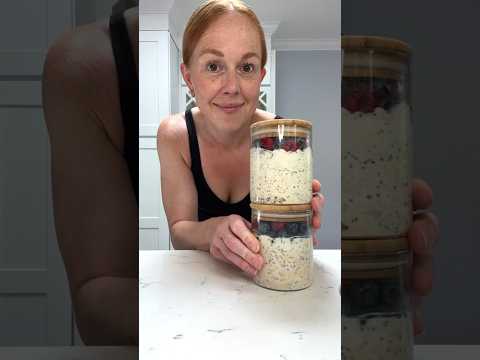
Turn basic overnight oats into a protein-packed breakfast with these high-protein overnight oats! Ready in 5 minutes and filled with over 45 grams of protein, this easy protein overnight oats recipe is a wonderful meal prep idea that will keep you fueled and full all morning long.

Two glass jars of high-protein overnight oats on wood cutting board topped with blueberries and raspberries.

I don’t know about you, but I love oatmeal. It’s quick, easy, and inexpensive, and I could easily eat it every morning if I had to. Give me warm oatmeal in the winter, and overnight oats in the summer, and I’d be a happy camper.

The only downside to oatmeal is that it’s not particularly high in protein. Fortunately, there are many ways to add protein to oatmeal and by using a combination of those ingredients, you can easily turn basic overnight oats into high-protein overnight oats in a few simple steps.

Overhead shot of protein overnight oats with berries in a glass jar with a gold spoon on a wood cutting board.

Why You’ll Love This Protein Overnight Oats Recipe

  • High in Protein – With over 45 grams of protein per serving, these oats are a protein-packed breakfast!
  • Full of Fiber – The combination of rolled oats, chia seeds, and berries ensures this protein overnight oats recipe is high in fiber too.
  • Easy to Make – Just add everything to a jar and stir!
  • Great for Meal Prep – These high-protein overnight oats keep well in the fridge for days, which makes them perfect for meal prep!
  • Versatile – Once you get the basics down you can flavor these protein overnight oats any way that you like and they are a fun way to use protein powder.
Ingredients for protein overnight oats; rolled oats, milk, Greek yogurt, protein powder, chia seeds, and honey.

Ingredients for High-Protein Overnight Oats

  • Oats – I recommend using old-fashioned rolled oats but quick-cooking oats will also work well. Do not use instant oats (i.e. pre-cooked oats) or steel-cut oats, they will not absorb as much liquid or provide as good of a texture.
  • Chia Seeds – To thicken the overnight oats, create a rich and creamy texture, and add some healthy fats and a bit of protein at the same time.
  • Protein Powder – The recipe calls for vanilla protein powder, but you can use any flavor your like. Be sure to use the best protein powder possible.
  • Greek Yogurt – To add a big boost of protein and help to creamy a creamy texture. You can use whole milk or non-fat Greek yogurt. You can use plain yogurt; however, it won’t be as high in protein.
  • Milk – Using cow’s milk helps to add additional protein to the oats. Although you can use almond milk or non-dairy milk, they will not provide nearly as much protein.
  • Berries – To add some extra flavor and fiber. You can use fresh berries or fresh fruit of your choice.

Although optional, you can add a spoonful of honey or maple syrup to sweeten the protein overnight oats if you like. Depending on the flavor and sweetness of your protein powder you may or may not need it.

Dietary Adaptions

To Make them Gluten-Free: No adaptations are needed, this recipe is gluten-free. Just be sure to use certified gluten-free rolled oats.

To Make them Dairy-Free: You can make this recipe dairy-free by swapping the cow’s milk for unsweetened almond milk, soy milk, or coconut milk, and swapping the Greek yogurt for dairy-free yogurt, such as coconut milk yogurt, however, the oats will not be as high in protein.

Rolled oats, vanilla protein powder, and chia seeds in a glass container.
Rolled oats, vanilla protein powder, chia seeds, Greek yogurt, and milk in a glass container.

How to Make Protein Overnight Oats

Here’s how you’ll make these high-protein overnight oats:

  1. Add the dry ingredients to a jar. Add the old-fashioned rolled oats, protein powder, chia seeds, milk, and Greek yogurt to a mason jar.
  2. Give it a good stir. Using a small spoon, stir the ingredients together until well combined.
  3. Place in the fridge overnight. Once mixed, cover the mason jar with a lid and place it in the fridge overnight.
  4. Serve with toppings of your choice. In the morning, take the mason jar out of the fridge and serve the protein overnight oats with fresh berries, nut butter, sliced bananas, or other toppings of your choice.

You can find the step-by-step instructions in the recipe card below.

Red’s Nutrition Tip

Want to add some extra protein to your protein overnight oats? Add a drizzle of almond butter or peanut butter on top!

Close up of high-protein overnight oats in a glass container.

Best Protein Powder for Overnight Oats

You can use a whey protein powder, plant-based, or vegan protein powder to make protein overnight oats. This recipe calls for vanilla protein powder, as it provides a neutral base flavor for toppings, however, you can use any flavor of protein powder for protein overnight oats. In addition to vanilla protein powder, chocolate protein powder, peanut butter protein powder, strawberry protein powder, and unflavored protein powder would all work well in this recipe.

Do you need to add protein powder to protein overnight oats?

Adding protein powder to overnight oats helps to ensure the oats contain extra protein, however, it is not essential. If you prefer to make your overnight oats without protein powder, you can combine rolled oats with milk, Greek yogurt, and chia seeds and still create overnight oats with over 20 grams of protein per serving.

Optional Add-Ins for High-Protein Overnight Oats

Once you’ve got the basic ratio of oats, milk, yogurt, and protein powder down, you can add a variety of add-ins and toppings to your protein overnight oats to flavor them any way that you like.

  • Berries
  • Fresh fruit
  • Banana slices
  • Peanut butter
  • Almond butter
  • Chocolate chips
  • Coconut flakes
  • Maple syrup
  • Honey
  • Brown sugar
  • Vanilla extract

More Flavors to Try:

  • Chocolate Peanut Butter Overnight Oats
  • Lemon Blueberry Overnight Oats
  • Strawberry Overnight Oats
Spoonful of protein overnight oats coming out of a jar.

Protein Overnight Oats FAQs

Are overnight oats healthy for you?

Yes, overnight oats are a healthy and balanced breakfast rich in fiber and micronutrients including manganese, phosphorus, magnesium, copper, iron, and zinc (1).

Is overnight oats a good source of protein?

A basic overnight oats recipe, made with rolled oats, chia seeds, and almond milk, is not a great source of protein, however, you can increase the protein content of overnight oats by making them with cow’s milk, Greek yogurt, and protein powder.

How much protein is in overnight oats with almond milk?

Overnight oats made with almond milk are not particularly high in protein since almond milk is not a significant source of protein. To make high-protein overnight oats, it is best to make overnight oats with cow’s milk as it contains 8 grams of protein per cup, compared to almond milk which contains only 1 gram of protein per cup.

Are overnight oats healthier than regular oatmeal?

Overnight oats and regular are both healthy breakfast recipes. In fact, overnight oats and regular oatmeal are far more similar than they are different, they are merely prepared a different way; overnight oats are soaked in liquid, while regular oatmeal is made by boiling oats in liquid.

Storage

Once prepared, protein overnight oats can be stored in an airtight container in the fridge for up to 5 days. Protein overnight oats cannot be frozen.

More Healthy Breakfast Recipes:

  • Blended Baked Oats
  • Chocolate Protein Blended Overnight Oats
  • Mixed Berry Baked Oatmeal
  • Blueberry Yogurt Pancakes
  • Cottage Cheese Pancakes
  • Tiramisu Overnight Oats
Print
Two glass jars of high-protein overnight oats on wood cutting board topped with blueberries and raspberries.

Protein Overnight Oats

Author: Stephanie Kay

With over 45 grams of protein, these protein overnight oats are a hearty and filling breakfast. You can whip up a big batch today and store them in the fridge for days to come.

  • Author: Stephanie Kay
  • Prep Time: 5 minutes
  • Total Time: 5 minutes
  • Yield: 1 serving 1x
  • Category: Breakfast
  • Method: No Cook
  • Cuisine: American
Print Recipe
Pin Recipe

Ingredients

  • 1/2 cup old-fashioned rolled oats, or quick oats
  • 1 scoop vanilla protein powder
  • 1 tablespoon chia seeds
  • 1/2 cup milk
  • 1/2 cup plain Greek yogurt
  • 1/2 cup fresh berries, or frozen berries

Instructions

  1. In a mason jar or small container with a lid, add rolled oats, vanilla protein powder, chia seeds, milk, and Greek yogurt.
  2. Using a small spoon, give everything a good stir until well combined. If using frozen berries, add them on top now.
  3. Once mixed, cover the jar or container with a lid and then place it in the fridge overnight or for at least 2 hours.
  4. In the morning, remove the overnight oats from the fridge, remove the lid and give them a good stir, and serve with fresh berries and/or toppings of your choice.
  5. If making them for meal prep, the oats can be made in advance and stored in an airtight container in the fridge for up to 5 days.
Youtube video

Nutrition

  • Serving Size: 1 jar
  • Calories: 474 calories
  • Sugar: 18 grams
  • Fat: 9 grams
  • Carbohydrates: 55 grams
  • Fiber: 10 grams
  • Protein: 48 grams

Did you make this recipe?

Share a photo and tag us — we can’t wait to see what you’ve made!

How to Create a Balanced Meal

Published on January 31, 2023 by Stephanie Kay

A very common piece of nutrition advice is to eat a “healthy and balanced” diet. Although that might seem simple in theory, implementing this concept can be difficult in practice, especially when you are in the early stages of your nutrition journey. It goes without saying that “balance” implies you should eat more vegetables than candy but implementing this daily can be confusing if you are not sure exactly how to do it. So, allow me to teach you how to create a balanced meal in the simplest possible way.

White plate with a portion of salmon, brown rice, and steamed vegetables.

Table of contents

  • What is a balanced meal?
  • Components of Balanced Meals
  • 1. Protein
  • 2. Carbohydrates
  • 3. Fats
  • The Balanced Meal Formula
  • 5 Benefits of Balanced Meals
  • What does a balanced meal look like?
  • Balanced Meal Plate Examples
  • Other Things to Consider

Go back to the moment in grade school when you were taught about food groups; fruits and vegetables, grain products, milk and alternatives, and proteins and alternatives. Go back to that exact moment and erase it from your brain. Why? Because your body does not recognize food groups. Your body cannot tell if you ate a serving of grains or a serving of milk, the only thing your body recognizes is the nutrients present in the food that you eat. Whether you eat a carrot, a potato, or an almond, all that your body recognizes is what macronutrients it contains: carbohydrates, protein, and/or fat.

Food is made up of macronutrients, which are the body’s building blocks, and these building blocks contain micronutrients: essential vitamins, minerals, antioxidants, and phytochemicals. So, the food that you eat is merely a vehicle for your body to get the necessary macronutrients and micronutrients it requires, not food groups.

What is a balanced meal?

Put simply, a balanced meal is a meal that contains all three macronutrients: protein, carbohydrates, and fats. Macronutrients are the primary building blocks of the human diet, and they make up the caloric content of food. Each macronutrient plays an important role in the body and adequate amounts of each macronutrient helps to optimize health, performance, and body composition.

Components of Balanced Meals

Although many people have heard the terms carbohydrates, protein, and fat, most people are unaware of how these macronutrients affect the body and where we can find them.

1. Protein

The building block of life and plays many key functions in the body. The amino acids that make up protein function as structural components, such as skeletal muscle, enzymes, hormones, immune factors, transporters, acid-base regulators, and neurotransmitters.

Protein is primarily present in animal foods such as red meat, fish, shellfish, poultry, eggs, yogurt, and some other dairy products, and can also be found in smaller concentrations in soy products like tofu and tempeh, as well as beans and lentils.

2. Carbohydrates

The body’s primary source of energy. Carbohydrates also play key roles in digestion and gut health, glucose and insulin action, as well as cholesterol and triglyceride metabolism. Carbohydrates include starches, fibers, and sugars, and can be further classified into simple and complex carbohydrates. Dietary fiber is a particularly important form of complex carbohydrate that aids in digestion and adequate intake has been shown to help benefit improved glycemic control, blood pressure, and lipid profiles.

Carbohydrates are present in whole grains, legumes (beans and lentils), fruits, vegetables, and dairy.

3. Fats

Made up of smaller molecules, called fatty acids, which play several roles in the body including the metabolism of fat-soluble vitamins, cell membrane function, the maintenance of structural integrity of the brain and nervous system, and hormone synthesis. There are two primary types of dietary fat; saturated fat and unsaturated fat, both of which are essential to health.

Fats are found in animal foods, oils, butter, nuts, seeds, avocado, and olives.

The Balanced Meal Formula

To create a balanced meal, you must incorporate all three macronutrients. This means that at breakfast, lunch, and dinner, you should aim to include a source of protein, carbohydrates (ideally starch and fiber), and fat in your meal.

Protein + Carbohydrates + Fiber + Fat

Infographic with formula on how to make a balanced meal.

5 Benefits of Balanced Meals

By building balanced meals, with all three macronutrients, you are better able to create a balanced diet overall and more easily support your health and your goals. By building balanced meals at breakfast, lunch, and dinner as frequently as possible, you will:

1. Consume a more optimal balance of macronutrients.

By regularly consuming balanced meals you can help to ensure you are consuming an adequate and balanced amount of macronutrients to support an overall more well-balanced diet. The current dietary guidelines recommend that individuals consume 45-65% of total daily calories from carbohydrates, 20-35% from fat, and 10-35% from protein (1). By creating a balanced meal at breakfast, lunch, and dinner, you can help to ensure you are consuming a more optimal balance of macronutrients.

2. Balance energy, blood sugar, and hormones.

Creating balanced meals will not only help to ensure that you are consuming adequate calories to fuel your body from one meal to the next but consuming balanced meals with protein and fiber can help to balance blood sugar levels. A meal with complex and fiber-rich carbohydrates, protein, and healthy fats, will take longer to digest than one filled with refined carbohydrates and no protein, which means a more moderate rise in blood sugar and reduced fatigue and cravings.

3. Increase satiety levels, feelings of fullness, and food satisfaction.

Because protein is the most satiating macronutrient and decreases gastric emptying and/or slows energy and nutrient absorption, consuming balanced meals complete with protein, fiber-rich carbohydrates, and healthy fats can help to increase feelings of satiety and fullness (2). High-protein foods are considered some of the most filling foods, and by including all macronutrients in your meals, and not avoiding or vilifying sources of carbs or fat, you are more likely to find satisfaction after eating.

4. Support adequate fiber and micronutrient intake.

Regularly consuming balanced meals that include fiber can help to ensure that you are reaching the recommended daily fiber intake. Current evidence collectively supports a minimum fiber intake of, at least, 25 to 30 grams of fiber per day, or 14 grams for every 1,000 calories consumed per day (3). Moreover, regular consumption of nutrient-rich fruits and vegetables, especially a wide variety of them, can also help to increase your intake of essential vitamins and minerals.

5. Optimize athletic performance and support body composition goals.

The content of meals can help support training goals and help optimize body composition. While the exact macronutrient requirements for athletes will vary based on their sport and goals, both carbohydrate and protein consumption and timing play an important role in muscle maintenance, overall performance, and optimal recovery. Moreover, consuming balanced meals with adequate protein and fiber has been shown to support weight loss and body competition goals, such as muscle building, especially when paired with resistance training (4).

What does a balanced meal look like?

Using the balanced meal formula, you can select, at least, one food from every section of the formula to build a plate that is complete with protein, carbs, fiber, and fat. Here’s a visual example.

Infographic with what is a balanced meal plate.

Balanced Meal Plate Examples

Think of it like ticking a box; at every meal ensure that you are including a source of carbohydrates, protein, and fat on your plate or in your bowl. Here are some simple well-balanced meal ideas that execute to protein + carbohydrates + fiber + fat formula:

  • Eggs + Toast + Spinach + Cheddar Cheese
  • Milk + Oats + Berries + Almonds
  • Deli Meat + Crackers + Carrots + Hummus
  • Tuna + Pita + Lettuce + Mayonnaise
  • Chicken + Pasta + Broccoli + Pesto
  • Salmon + Potatoes + Asparagus + Olive Oil
  • Shrimp + White Rice+ Tomatoes + Avocado
  • Turkey + Quinoa + Kale + Avocado Oil
  • Steak + Corn + Lettuce + Dressing
  • Tofu + Brown Rice + Cabbage + Sesame Oil
  • Chickpeas + Couscous + Cucumber + Feta Cheese
  • Lentils + Barley + Green Beans + Butter

Please note that you can include more than one source of protein, carbs, fiber, and fat in your meal! For example, you can include more than one vegetable in your meal (i.e., a salad with lettuce, carrots, and cucumber), or more than one source of protein (i.e., add chicken and black beans to your salad) or more than one source of fat (i.e., avocado and pumpkin seeds to your salad), the balanced meal formula is simply designed to help ensure that each macronutrient is included.

Other Things to Consider

Prioritize whole foods. When making a balanced meal, it is best to prioritize whole foods as much as possible. Building meals with red meat, poultry, seafood, shellfish, eggs, dairy, whole grains, beans, lentils, nuts, seeds, fruits, and vegetables is a simple way to ensure that you are prioritizing your macronutrient and micronutrient intake at the same time.

Include color and flavor. Remember, balanced meals don’t need to be bland or boring! Make meals more visually appealing by including a wide variety of colors and textures, and feel free to add as many herbs and spices to make your meals as flavorful as possible.

Aim for all 3 meals. When it comes to creating a balanced meal, a simple yet helpful guideline to keep in mind is the “3 for 3” formula; at all three meals, eat all three macronutrients. Be it breakfast, lunch, and dinner, or meals 1, 2, and 3, aim to include all three macronutrients.

Consider portion sizes. When building balanced meals, it is also important to consider the portion sizes of protein, starchy carbohydrates, fiber, and fat you are adding to your meal, especially if you have a goal of weight loss or changing body composition. While calorie or macro counting are popular approaches, the hand-portion size method is a simple yet effective tool to ensure that you are consuming a portion size that more optimally supports your individual needs.

Don’t forget about water. While not included as a component of the balanced meal formula, remember that water is also considered a macronutrient as it is required in large amounts by the body. The current dietary guidelines recommend consuming 0.5 to 1.0 ounces of water per pound of body weight, which should be consumed throughout the day and/or along with meals.

Listen to your body. It’s important to remember that your body is the best coach you will ever have and you must learn to listen to it, interpret what it’s saying, and give it what it needs. In addition to prioritizing balanced meals, you must honor your natural hunger and fullness cues by listening to your body or using a tool such as the hunger-fullness scale. Moreover, keep in mind that your favorite foods and meals, even pasta and pizza, can be included in the balanced meal formula.

Aim for consistency, not perfection. Please remember that the balanced meal formula is a guideline, not a rule. The objective is to implement this guideline at as many meals as possible, as frequently as possible, NOT to implement it at every single meal for the rest of your life. Some meals and days will be easier than others, that’s real life. As with all aspects of nutrition, the objective is consistency, not perfection.

The Bottom Line

By including a portion of protein, carbohydrate, and fat in your meal you can create a balanced meal with a more optimal macronutrient composition. Consuming meals with all macronutrients can help to support energy levels, balance blood sugar, increase satiety levels and feelings of fullness, as well as optimize athletic performance, and support body composition goals.

Greek Chickpea Bowls

Published on September 23, 2021 by Stephanie Kay

Looking for a healthy lunch idea? Look no further than these chickpea bowls. Not only are they packed full of vegetarian protein, fiber, and healthy fats, but they are quick and easy to make and require no cooking at all. Just warm the couscous, chop the veggies, make the dressing, and add everything to containers to create healthy make-ahead lunches for the week.

Chickpea Bowls

Just when I thought meal prep couldn’t get any easier – voilà, no-cook chickpea bowls! Canned chickpeas are one of my go-to vegetarian protein sources when I need something quick and don’t feel like cooking; just strain and rinse and they’re ready to go. Although they do lack a little flavor on their own when paired with salty feta cheese and a zesty lemon-garlic dressing they help to create a well-balanced meal filled with Greek flavors.

More Meal Prep Bowls:

  • Tofu Glory Bowls
  • Rainbow Buddha Bowls
  • Oven-Baked Falafel Bowls
Print
Chickpea Bowls

Greek Chickpea Bowls

Author: Stephanie Kay

Fresh and vibrant, these colourful Greek chickpea bowls are a great vegetarian lunch idea complete with plant-based protein, healthy fats, and plenty of veggies.

  • Author: Stephanie Kay
  • Prep Time: 20 minutes
  • Total Time: 20 minutes
  • Yield: 4 bowls 1x
  • Category: Lunch
  • Method: Meal Prep
  • Cuisine: Greek
Print Recipe
Pin Recipe

Ingredients

Bowls:

  • 2 cans (14oz) chickpeas, drained and rinsed
  • 1 cup couscous, dry
  • 1 cucumber, diced
  • 1 tomato, diced
  • 1 yellow bell pepper, diced
  • 1/2 red onion, diced
  • 1/2 cup black olives
  • 1/2 cup feta cheese, crumbled
  • 1 handful parsley, roughly chopped
  • 1 lemon, quartered

Dressing:

  • 1/4 cup olive oil
  • 2 tablespoons red wine vinegar
  • 1/2 lemon, juiced
  • 1/2 teaspoon Dijon mustard
  • 1 glove garlic, minced or grated
  • 1 teaspoon dried oregano
  • 1 pinch salt
  • 1 pinch black pepper

Instructions

  1. Prepare the couscous according to package directions.
  2. In a small bowl or jar, combine all of the dressing ingredients and give them a good whisk until well combined. Taste and season with more salt and pepper as needed.
  3. Add chopped cucumber, tomatoes, bell pepper, and red onion to a bowl and toss to combine.
  4. Once the couscous has cooked, allow it to cool, and then divide evenly across 4 bowls or containers. Add vegetables mixture, chickpeas, and olives to the bowls, dividing it evenly across.
  5.  
Top each bowl with a crumble of feta cheese, a sprinkle of parsley, and a wedge of lemon.
  6. If you are eating the bowls immediately, top each both with a 1/4 of the dressing. If you are making them ahead of time, add dressing to small containers and dress when ready to serve.
  7. Once prepared, the bowls and dressing can be stored in airtight containers in the fridge for up to 5 days.

Nutrition

  • Serving Size: 1 bowl
  • Calories: 596 calories
  • Sugar: 5 grams
  • Fat: 24 calories
  • Carbohydrates: 79 grams
  • Fiber: 14 grams
  • Protein: 22 grams

Did you make this recipe?

Share a photo and tag us — we can’t wait to see what you’ve made!

Banana Blueberry Muffins

Published on May 22, 2021 by Stephanie Kay

These healthy banana blueberry muffins are everything you love about banana bread and blueberry muffins combined into a delicious and healthy treat. The use of ripe bananas helps to add moisture and sweetness to the batter to make the muffins light and fluffy while being low in sugar and calories at the same time.

Healthy banana blueberry muffins in an open muffins wrapper on a cutting board.

If you love blueberry muffins, you’re going to love these blueberry banana muffins. Honestly, these are some of the BEST healthy muffins I’ve ever made! Moist, fluffy, flavorful, and just the right amount of sweetness, these muffins are a kid-approved snack or breakfast that the whole family is sure to love.

[adthrive-in-post-video-player video-id=”gG6mRVZD” upload-date=”2023-03-02T20:09:31.000Z” name=”Healthy Banana Blueberry Muffins” description=”These healthy banana blueberry muffins are low in refined sugar and calories, while still being easy to make, moist, fluffy, and delicious.” player-type=”collapse” override-embed=”false”]

What You’ll Need

These banana blueberry muffins are so moist, fluffy, and flavorful, you won’t even notice how healthy they are. Here is a list of the ingredients you will need to make them:

  • Flour: This recipe calls for all-purpose flour; however, you could certainly use whole wheat flour if you prefer. Although it will create a slightly denser banana blueberry muffin, it will increase the protein and fiber content slightly.
  • Bananas: Because you can’t make blueberry banana muffins without bananas. For the best results, ensure that your bananas are very ripe; not only will this add more flavor and sweetness, but it will add moisture as well.
  • Blueberries: The second essential ingredient in these muffins. You can use fresh or frozen blueberries.
  • Vanilla Extract: To enhance the flavor of the muffins.
  • Sugar: A bit of sugar to enhance the sweetness of the bananas.
  • Butter: To ensure the muffins are moist, while unsalted butter is recommended, salted and unsalted butter will work.
  • Egg: To add structure and height.

In addition to the above, you’ll need some leavening agents (baking soda, baking powder, and salt) to ensure the muffins are light and fluffy.

Ingredients for banana blueberry muffins: flour, baking soda, baking powder, salt, sugar, egg, vanilla extract, butter, bananas, blueberries

Dietary Adaptions

To Make them Gluten-Free: Swap the all-purpose flour for 1-to-1 gluten-free flour, I recommend Bob’s Red Mill.

To Make them Dairy-Free: Swap the butter for coconut oil.

To Make them Vegan: Swap the butter for coconut oil and use a flax egg instead of the egg.

Bowl with wet ingredients and dry ingredients in a white bowl with a spatula
Mixed muffin batter in a white bowl with a spatula

How to Make Healthy Banana Blueberry Muffins

Like most muffin recipes, these healthy blueberry banana muffins are super easy to make, here’s what you’ll do:

  1. Mix the dry ingredients.
  2. Mix the wet ingredients.
  3. Add the wet ingredients to the dry ingredients.
  4. Gently mix the batter and then fold in the blueberries.
  5. Add the batter to a muffin tin, dividing it evenly.
  6. Transfer the muffin tin to the oven and bake until golden brown.
  7. Allow to cool, eat, and enjoy!

I’ve shared the instructions to make these muffins by hand using mixing bowls, however, if you’d prefer to use an electric mixer, simply swap the order; begin by adding the wet ingredients to the mixer, mix until well combined, then add the dry ingredients and mix until a batter is formed, then turn off the mixer and gently fold in the blueberries by hand.

Mixed banana muffin batter in a bowl with fresh bluebberies about to be mixed in
Mixed batter for banana blueberry muffins

Tips for the BEST Banana Blueberry Muffins

Wondering what makes a delicious, healthy, homemade muffin? Here are my top tips:

Don’t overmix the batter. Overworking the batter will activate the gluten resulting in dense and chewy muffins instead of fluffy ones.

Don’t overfill the muffin cups. As a general rule, fill your muffin cups about 2/3 to 3/4 full, that will leave enough room for the muffins to rise without overflowing. If you want to make extra-large muffins, use freestanding paper baking cups.

Don’t overbake your muffins. Overbaking muffins will result in a dry muffin with a hard top. Keep a watchful eye on your muffins as they bake and bake them just until a toothpick inserted into the center comes out clean, or even with a few moist crumbs.

Allow the muffins to cool in the muffin tin. Once baked, allow the muffins to cool in the muffin tin for a few minutes before transferring them to a cooling rack. This will help to prevent them from falling apart as extra-warm muffins can break when you try to remove them from the mufifn pan directly out of the oven.

Banana blueberry muffins fresh out of the oven in a muffin tin

Red’s Nutrition Tip

While these muffins contain 15 grams of sugar per muffin, which is relatively low for a muffin recipe, it’s important to understand the majority of this sugar is provided by the natural sugars present in the banana and blueberries, and only a small amount is from the added white sugar. Moreover, these muffins are relatively high in fiber compared to other muffin recipes, containing 6 grams of fiber per serving, which helps regulate the body’s use of sugar, helping to keep hunger and blood sugar in check.

Bluebbery banana muffnis on a cutting board in an open muffins liner ready to eat

Banana Blueberry Muffins FAQs

Is it better to use fresh or frozen blueberries for blueberry muffins?

You can use fresh and frozen blueberries in muffins, they will simply provide a slightly different result. Frozen blueberries will cook during the baking process, almost “melting” into the muffins, because the skin becomes more fragile after freezing, however, if they thaw before adding them to the batter their juices can bleed into the muffins and turn the batter a blue-ish color. Fresh blueberries are sturdier, keeping them more intact after baking, and are more likely to “burst” when you bite into them. Overall, both work well and the best option is subjective to personal preference.

Should frozen blueberries be thawed before baking muffins?

It’s best to keep frozen blueberries frozen before adding them to muffin batter. If thawed, the blueberries will release some of their juices, which will bleed into the batter turning the entire batter blue. If using thawed frozen blueberries, you can strain the berries and pat them dry with a paper towel to remove any excess juices to stop the blueberries from bleeding into the batter.

How to keep blueberries from sinking in muffins?

Tossing your blueberries in flour before adding them to the muffin batter can help to stop them from sinking to the bottom. The light coating of flour around the blueberries will absorb some of their liquid, making them less likely to sink to the bottom of the muffins.

Banana blueberry muffin on a cutting board with a bite eaten

Storage + Reheating

To Store: Allow the muffins to cool and then place them in an airtight container and store them at room temperature for up 4 days or in the refrigerator for up to 6 days.

To Freeze: Allow the muffins to cool completely and then place them in a single layer in a freezer bag and store them in the freezer for up to 3 months.

To Reheat: To thaw frozen muffins, allow them to thaw at room temperature, or use a thaw setting on your microwave. Once thawed, you can warm them in the microwave for 30 seconds, or in the oven at 350°F wrapped in aluminum foil for 5-10 minutes

More Banana and Blueberry Muffin Recipes:

  • Banana Nut Muffins
  • Banana Oatmeal Muffin Cups
  • Blueberry Oatmeal Maple Muffins
  • Strawberry Banana Bread
  • Banana Bread Baked Oatmeal
  • Banana Bread Bites
Print
Bluebbery banana muffnis on a cutting board in an open muffins liner ready to eat

Banana Blueberry Muffins

Author: Stephanie Kay

These healthy banana blueberry muffins are moist, fluffy, easy to make, and ready in less than 30 minutes.

  • Author: Stephanie Kay
  • Prep Time: 10 minutes
  • Cook Time: 20 minutes
  • Total Time: 30 minutes
  • Yield: 12 muffins 1x
  • Category: Muffin
  • Method: Baked
  • Cuisine: American
Print Recipe
Pin Recipe

Ingredients

  • 1 1/2 cups all-purpose flour
  • 1 teaspoon baking soda
  • 1 teaspoon baking powder
  • 1/2 teaspoon salt
  • 1 1/2 cups ripe, mashed banana (about 3 large)
  • 6 tablespoons butter, melted
  • 2/3 cup sugar
  • 1 egg
  • 1 teaspoon vanilla extract
  • 1 cup blueberries, fresh or frozen
  • Milk, as needed

Instructions

  1. Preheat the oven to 375°F and line a muffin tin with paper liners or lightly grease it with butter or cooking spray.
  2. Peel your ripe bananas, add them to a medium bowl and, using the back of a fork, mash them until well combined and a puree is formed.
  3. In a medium bowl, add the flour, baking soda, baking powder, and salt, and stir until well combined.
  4. In a large bowl, add the mashed banana, melted butter, sugar, egg, and vanilla extract and beat until well combined and the sugar is well incorporated.
  5. Pour the flour mixture into the banana mixture, then beat or whisk until well combined. Depending on the ripeness of your bananas, the batter may be a little thick. If you find it too thick simply add a couple of tablespoons of milk to loosen it up slightly; you want the batter to be thick but not overly gloopy.
  6. Add blueberries to the batter and gently fold them into the mixture. (Note: If using frozen berries, add the blueberries to a small bowl, sprinkle with a tablespoon of flour, and toss until well coated in flour – this will help the blueberries from bleeding into the batter. Then add the flour-coated blueberries to the batter, leaving any excess flour behind, and fold until well combined.)
  7. Spoon the batter across the muffin pan, dividing it evenly to make 12 muffins.
  8. Transfer the muffin tin to the oven and bake for 18-20 minutes until a toothpick inserted into a muffin comes out clean.
  9. Once baked, allow to cool slightly, then transfer the muffins to a wire rack and allow to cool to room temperature.
  10. The muffins can be served immediately, stored at room temperature for 4 days, in the fridge for up to 6 days, or frozen for up to 3 months.

Nutrition

  • Serving Size: 1 muffin
  • Calories: 139 calories
  • Sugar: 15 grams
  • Fat: 6 grams
  • Carbohydrates: 31 grams
  • Fiber: 1 gram
  • Protein: 2 grams

Did you make this recipe?

Share a photo and tag us — we can’t wait to see what you’ve made!

Almond Butter vs Peanut Butter: Which is Healthier?

Published on February 18, 2021 by Stephanie Kay

Peanut butter has been a North American pantry staple for decades, but in the past number of years, almond butter has entered the market as a healthier alternative to peanut butter, but is almond butter actually better for you? Let’s compare and review almond butter vs. peanut butter

Two jars of almond butter and peanut butter.

Table of contents

  • The Difference Between Almond Butter and Peanut Butter
  • Almond Butter vs. Peanut Butter: Nutritional Comparison
  • Calories
  • Protein
  • Fat
  • Carbohydrates
  • Fiber
  • Sugar
  • Vitamins & Minerals
  • Other Factors to Consider
    • Ingredients
    • Allergies
    • Price
  • So, is almond butter healthier than peanut butter?

The Difference Between Almond Butter and Peanut Butter

Peanut butter is made from ground, dry-roasted peanuts. Although often considered a nut, peanuts (Arachis hypogaea) are a legume and are, therefore, related to beans and lentils. Peanuts are the edible seeds of the plant, widely grown in the tropics and subtropics, and are a source of carbohydrates, fiber, protein, and fats (1).

Almond butter is made by grinding almonds, raw or roasted, into a spread or paste. Although called a nut, almonds are in fact seeds rather than true nuts. Almonds are a source of carbohydrates, fiber, protein, and fats (2).

Both peanut butter and almond butter can be made solely of peanuts or almonds, contain additional ingredients, or be made in smooth or crunchy formats.

Infographic with the nutrition comparison of almond butter vs. peanut butter.

Almond Butter vs. Peanut Butter: Nutritional Comparison

Nutritionally speaking, both almond butter and peanut butter are sources of calories, carbohydrates, protein, fat, and fiber. Here is a comparison of 2 tablespoons (32 grams) of plain almond butter without added salt and natural peanut butter (3, 4).

NUTRITION PER 2 TBSP (32g)ALMOND BUTTERPEANUT BUTTER
Calories196 calories190 calories
Protein6.7 grams8.0 grams
Fat17.8 grams16.0 grams
Carbohydrate6.0 grams7.0 grams
Fiber3.3 grams3.0 grams
Sugar 1.4 grams1.0 grams

Calories

Almond butter and peanut butter contain a similar number of calories. A 2-tablespoon serving of natural almond butter contains 196 calories, while a 2-tablespoon serving of natural peanut butter contains 190 calories, making it close enough for a tie.

Protein

Since peanuts are a legume and almonds are a nut (seed), peanut butter contains slightly more protein than almond butter. A 2-tablespoon serving of almond butter contains 6.7 grams of protein, while a 2-tablespoon serving of peanut butter contains 8.0 grams of protein, making peanut butter the winner.

Fat

Given that nuts contain more naturally occurring fats than legumes, almond butter contains slightly more fat than peanut butter. A 2-tablespoon serving of almond butter contains 17.8 grams of fat, while a 2-tablespoon serving of peanut butter contains 16.0 grams of fat.

Carbohydrates

Peanut butter contains slightly more carbohydrates than peanut butter. A 2-tablespoon serving of almond butter contains 6.0 grams of carbohydrates, while a 2-tablespoon serving of peanut butter contains 7.0 grams of carbohydrates.

Fiber

Both nuts and seeds contain fiber. A 2-tablespoon serving of almond butter contains 3.3 grams of fiber, while a 2-tablespoon serving of peanut butter contains 3.0 grams of fiber.

Sugar

While peanut butter does contain slightly more sugar than almond butter, the sugar is naturally occurring in both natural almond butter and natural peanut butter, and the difference is minimal. A 2-tablespoon serving of almond butter contains 1.4 grams of sugar, while a 2-tablespoon serving of peanut butter contains 1.0 grams of sugar.

Vitamins & Minerals

Both almond butter and peanut butter are sources of vitamins and minerals; however, there are differences between the two. While peanut butter has more B vitamins, almond butter contains more vitamin E, magnesium, calcium, and iron, making almond butter a richer source of micronutrients overall.

Other Factors to Consider

In addition to nutritional values, here are some other factors to consider when deciding between almond butter and peanut butter.

Ingredients

The ingredients used in the production of both almond butter and peanut butter are important to consider. Although many natural versions of almond butter and peanut butter are made solely of almonds and peanuts (as per the nutritional comparison above), that is not the case with all brands.

In fact, beloved conventional peanut butter brands, such as Skippy, Kraft, and Jif, are often made with added oils, such as soybean oil and vegetable oil, and added sugars in the form of white sugar, corn maltodextrin, monoglycerides, and diglycerides (4, 5, 6).

Although these additives are less common in almond butter, added sugars and vegetable oils can still be found in some almond butter brands. Therefore, whether you are shopping for almond butter or peanut butter, it is important that you read the ingredients and opt for brands made solely of almonds, peanuts, and/or salt to ensure you are getting the most nutritious options.

Allergies

Both almonds and peanuts are common allergens. Peanuts are a legume and are one of the top allergenic foods in North America, and while less common, almond and tree nut allergies are becoming increasingly prevalent (7, 8). If you have allergies or are predisposed to gut health issues and food intolerances, this may be a factor to consider; if not, both almond butter and peanut butter are a great choice.

Price

The average jar of peanut butter is significantly less expensive than the average jar of almond butter. Most brands of natural peanut butter can be found in the $3 to $6 range, while almond butter tends to be found at $10 or more per jar.

The reason for the difference in price, in addition to supply and demand, is due in large part to their method of production and processing. Peanuts grow underground in many regions around the world, with relatively low property costs, while almonds are tree nuts and depend on very specific climate and soil conditions, limiting the areas in which they can be farmed (9).

Although a higher price point can give the consumer the illusion that a product is of higher quality, that is not necessarily the case with almond butter and peanut butter.

So, is almond butter healthier than peanut butter?

The differences between almond butter and peanut butter are minimal. While peanut butter contains slightly more protein and more fiber, almond butter contains less sugar and more nutrients, and they both contain a very similar amount of calories, carbohydrates, and fat.

The Bottom Line

Almond butter and peanut butter have very similar nutritional profiles, and both can be included in a healthy diet. The best option will vary from one person to the next based on personal preference, nutritional goals, price point, and allergies. Regardless of what option you choose, be sure to read the ingredients and opt for versions made solely of almonds, peanuts, and/or salt whenever possible.

Mediterranean Grain Bowls

Published on November 27, 2020 by Stephanie Kay

Filled with whole grains, veggies, and healthy fats, these Panera-inspired Mediterranean grain bowls are a great way to transform humble pantry staples into a hearty and flavourful meal. Not only can they be served immediately but they also store well in the fridge, making them a great meal prep idea for healthy weekday lunches.

Mediterranean Grain Bowl Recipe


How to Make the Panera Mediterranean Grain Bowl

Inspired by the Panera grain bowl menu, this Mediterranean grain bowl recipe is my copycat take on the popular menu item.

  1. Cook the Grains: A blend of cilantro-lime rice and quinoa is the base for these grain bowls and it is packed full of flavor. The recipe calls for a combination of brown rice and quinoa, however, you can truly use any grains or combination of grains that you enjoy.
  2. Prep the Dressing: The zesty lemon-tahini dressing adds a nice punch of flavor and a creamy texture to the bowls at the same time.
  3. Chop the Veggies: To keep with the Mediterranean theme, these grain bowls are made with arugula, cherry tomatoes, cucumber, and kalamata olives, however, you can truly add any vegetables that you enjoy.
  4. Grill the Chicken: Although including grilled chicken is optional, it is a quick and easy way to add a big boost of protein to the bowls.
  5. Combine the Bowls: The bowls can be combined in any order that you like and can be served hot or cold, depending on your preference.

You can find the detailed instructions in the recipe card below.

Panera Mediterranean Grain Bowls

Panera Mediterranean Grain Bowl Recipe

These Panera-inspired grain bowls are a hearty and healthy dish that works for a simple weeknight meal or lunch. Layered with whole grains, leafy greens, veggies, grilled chicken, hummus, yogurt, tahini dressing, and a crumble of feta cheese, these Mediterranean grain bowls are the perfect addition to your copycat recipe repertoire!

More Mediterranean Bowls:

  • Hummus Buddha Bowls
  • Pesto Chicken Quinoa Bowls
  • Mediterranean Meal Prep Bowls
  • Baked Falafel Bowls
Print
Mediterranean Grain Bowls

Mediterranean Grain Bowls

Author: Stephanie Kay

Inspired by Panera’s restaurant menu, these Mediterranean grain bowls are filled with warm grains, hummus, Greek yogurt, feta cheese, and grilled chicken to create a hearty and healthy meal.

  • Author: Stephanie Kay
  • Prep Time: 5 minutes
  • Cook Time: 40 minutes
  • Total Time: 45 minutes
  • Yield: 2 bowls 1x
  • Category: Salad
  • Cuisine: Mediterranean
Print Recipe
Pin Recipe

Ingredients

Bowls:

  • 1/2 cup brown rice, dry
  • 1/4 cup quinoa, dry
  • 1 1/2 cups water
  • 1/8 teaspoon ground coriander
  • 1 lime, zested and juiced
  • 1 cup arugula
  • 1/2 cup cucumber, sliced
  • 10 cherry tomatoes, halved
  • 8 kalamata olives
  • 1 oz feta cheese, crumbled
  • 2 tablespoons hummus
  • 2 tablespoons Greek yogurt
  • 8 oz grilled chicken (optional)

Dressing:

  • 1 tablespoon tahini
  • 1 tablespoon lemon juice
  • 1 pinch salt

Instructions

  1. In a small pot or saucepan, combine the brown rice, 1 cup of water, zest and juice of one lime and ground coriander. Bring to a boil, then reduce to a simmer, cover and cook for 25 minutes.
  2. After 25 minutes, add quinoa and remaining 1/2 cup of water, stir to combine with the brown rice, cover, and continue to cook on low for 15 minutes or until rice and quinoa are cooked and can be fluffed with a fork.
  3. While the rice and quinoa are cooking, prepare the dressing. In a small bowl, add the tahini, lemon juice, a pinch of salt and whisk to combine. Add a splash of water to thin the dressing as needed, you want it to be creamy, but not too thick.
  4. Once the rice and quinoa are cooked, remove from the heat and begin to assemble the bowls.
  5. Split the rice and rice mixture evenly across two bowls, layer with arugula, cherry tomatoes, cucumber and olives, and then top each bowl with grilled chicken (optional), a dollop of hummus, Greek yogurt, a sprinkle of feta and a drizzle of dressing.
  6. These bowls can be served immediately or stored in the fridge for up to 3 days. If making them ahead of time, it is best to add the hummus, yogurt and dressing when you are ready to serve to ensure the ingredients do not get soggy.

Nutrition

  • Serving Size: 1 bowl
  • Calories: 563 calories
  • Sugar: 5 grams
  • Fat: 17 grams
  • Carbohydrates: 64 grams
  • Fiber: 6 grams
  • Protein: 39 grams

Did you make this recipe?

Share a photo and tag us — we can’t wait to see what you’ve made!


What Is The Healthiest Sugar?

Published on November 26, 2020 by Stephanie Kay

Added sugar is one of the most discussed foods in the nutrition industry. Although too much sugar is certainly not good for your health, your body can handle a little bit of anything in a reasonable amount, even a little sugar. However, with so many types of sugar on the market things can certainly get confusing quickly. So, here is an answer to the great debate; what is the healthiest sugar?

What Is The Healthiest Sugar?

What is Sugar?

Although most people think of “sugar” as the white stuff we put in coffee or use for baking, sugar is actually a form of carbohydrate consisting of one or two basic carbohydrate units including glucose, fructose, galactose, sucrose, maltose, and lactose. Sugar occurs naturally in most foods, even in trace amounts, individually or in combinations. For instance, table sugar (or sucrose) is a combination of glucose and fructose, while lactose, found in dairy, is a combination of glucose and galactose.

Added vs. Natural Sugars

In addition to different forms of sugar molecules, sugar can be found in natural and added forms. Sugars occur naturally in dairy, fruits, vegetables, grains, beans, lentils, nuts, and seeds, and are typically present along with fiber and starch. These natural sources of sugar are more complicated molecules, take longer to digest, and are more sustained sources of energy.

On the contrary, sugars that have been removed from their natural source to create isolated sugar are known as added sugars. These forms of sugar include white sugar, brown sugar, agave, honey, maple syrup, molasses, barley malt, fructose, glucose, glucose-fructose, maltose, sucrose, dextrose, fruit juice, and purée concentrates, just to name a few. Although it may seem confusing, added sugars can come from both natural and man-made sources.

Sugar vs. Sweeteners vs. Substitutes

Along with added and natural sugars, there are also many different forms of sweeteners and sugar substitutes. In addition to granulated sugars such as white sugar and brown sugar, sugar substitutes, such as stevia, alcohol sugars and artificial sweeteners have become increasingly popular, many of which are less ideal. However, for the purposes of determining the healthiest sugar, this review will focus specifically on added sugars that are commonly used in cooking and baking.

Types of Sugar

WHITE SUGAR

Also known as table sugar, white sugar is the most common form of sugar and is the final product of the processing and refining of sugarcane or sugar beets, most of which are genetically modified (1). Of all forms of granulated sugar, white sugar is the most processed form, as color, minerals, and antioxidant compounds are removed in the production process.

Type of Sugar: Sucrose

BROWN SUGAR

Brown sugar is refined white sugar with varying amounts of molasses added, which provides a darker color and a minor amount of trace nutrients. Both light and dark brown sugar contain molasses, dark brown sugar simply contains a higher concentration of it.

Type of Sugar: Sucrose

CANE SUGAR

Cane sugar is sugar that is extracted directly from sugarcane. Unlike white sugar, cane sugar still contains some of the vitamins and minerals originally present in the sugarcane plant juice, however, the amounts are relatively small (2).  Because cane sugar still retains some of the molasses and moisture from the plant, it has a blonde to light brown color.

Type of Sugar: Sucrose

RAW SUGAR

Raw sugar is cane sugar and is formed if the final refining process of white sugar production is bypassed.

Type of Sugar: Sucrose

TURBINADO SUGAR

Turbinado sugar, as well as demerara sugar, is a form of raw cane sugar and is traditionally slightly less processed than brown sugar (3). Turbinado sugar is made from the first pressing of sugar cane and retains some natural molasses and has a finer, darker grain and light caramel color, while demerara sugar is made of large, pale golden crystals, and is slightly sticky to the touch. Nowadays, turbinado and demerara sugars are typically produced by adding molasses to white sugar, rather than the traditional methods.

Type of Sugar: Sucrose

COCONUT SUGAR

Coconut sugar is made from the sap of coconut trees by a natural 2-step process; sap is collected from the flower buds of the coconut tree, the sap is then boiled to evaporate its water content, and the final product is coconut sugar. Chemically speaking, coconut sugar is very similar to white sugar, as 70% to 79% of coconut sugar is sucrose, and although it is often touted for being a good source of minerals the amount per one or two-teaspoon serving is minimal and its high sugar content outweighs any potential benefits.

Type of Sugar: Sucrose

HONEY

Honey is the rich sugar-nectar collected by bees and is well known for its natural anti-bacterial and anti-microbial benefits thanks to its antioxidant properties (4, 5). Honey has traditionally been used across cultures to help treat numerous health conditions, however, not all honey found in grocery stores today is created equal. Unfortunately, some brands of honey are highly processed, some of which are combined with high-fructose corn syrup, therefore, in order to get the health benefits of honey, be sure to look for raw or unpasteurized honey (6).

Type of Sugar: Fructose, with some glucose and sucrose

MAPLE SYRUP

Pure maple syrup is made by concentrating the sap from maple trees to produce a thick syrup. Unlike refined white sugar, maple syrup contains many trace minerals including manganese, zinc, and iron (7). However, similar to honey, there are many fake maple syrups available on grocery stores shelves that do not provide the same health benefits, therefore, it imperative to look for pure maple syrup to ensure that you are getting the best option.

Type of Sugar: Sucrose, with some glucose and fructose

AGAVE

Often referred to as agave syrup, agave nectar is made from the agave plant, which is native to the Southern United States and Latin America. Traditionally, agave was known to have healing properties, however, the commercial agave sold today has very few beneficial nutritional properties (8). The refining and processing of agave nectar sold in grocery stores today make it 1.5 times sweeter than regular table sugar and the end product is a highly refined, unhealthy syrup.

Type of Sugar: Fructose, with some sucrose

Nutritional Comparison of Added Sugars

PER 1 OZ / 28 GCALORIES (kJ)SUGAR (G)GLYCEMIC INDEX (GI)GLYCEMIC LOAD (GL)
White Sugar10828656
Brown Sugar10627.5656
Cane Sugar10528656
Raw Sugar10528656
Turbinado Sugar10528656
Coconut Sugar10528543
Pure Honey85235812
Maple Syrup73195410
Agave Nectar8021192

All nutrition data based on NutritionData.com and GlycemicIndex.com.

So, What is the Healthiest Sugar?

Despite the wide variety of sugars, they are actually very similar nutritionally. All forms of sugar are composed of glucose, fructose, and sucrose, which are the basic forms of sugar, and provide a similar number of calories (energy) per serving.

Sugars with a higher concentration of fructose, such as honey, have a higher sweetness level and, therefore, a smaller amount is needed to achieve a similar level of sweetness as white sugar. Moreover, liquid sugars, such as maple syrup and honey, have a higher water content; therefore, the overall sugar content is slightly less than the white sugar equivalent by weight.

Sugars that have undergone less processing, such as cane sugar, turbinado sugar, and coconut sugar, tend to have a higher content of minerals and antioxidant compounds, albeit very limited.

Overall, although minimally processed natural sweeteners, such as raw cane sugar, raw honey, and pure maple syrup, are slightly less processed, and contain slightly more minerals and compounds, the nutritional overall differences are rather insignificant when it comes to metabolic health.

The Bottom Line

In short, if you are looking for the healthiest sugar, it is best to limit all forms of added sugar, as the nutritional differences between them are minimal. Although minimally processed sugars, such as cane sugar, raw honey, and pure maple syrup, contain slightly more micronutrients, the evidence to suggest they are truly superior is limited. Health Canada advises limiting the intake of added sugars to less than 10% of total daily calorie intake, ideally less than 5%, while American Heart Association advises capping added sugars at 6 teaspoons (25 grams) per day for women and 9 teaspoons (36 g) per day for men.

Tomato, Spinach & Bacon Pasta

Published on September 26, 2020 by Stephanie Kay

Looking for a little dinner inspiration? Look no further than this pasta recipe! Loaded with salty bacon and fresh vegetables, this bacon pasta with spinach and tomatoes is full of flavour while being incredibly easy to make. In fact, this recipe is so versatile that you can use any vegetables you have in the fridge, making it a perfect dinner idea for busy weeknight meals.

Bacon Spinach Pasta

Bacon Pasta with Spinach and Tomatoes

Although often considered “indulgent” or “unhealthy” foods, bacon and pasta are forms of whole food and can easily be incorporated into a healthy diet. In fact, when chosen with care and eaten in appropriate amounts (even too much of a good thing can be a bad thing) both pasta and bacon can and should be (in my opinion) included as part of a well-balanced diet.

Nutritionally speaking, pasta is a form of complex carbohydrate and is made from a mixture of durum wheat flour, water and/or eggs, while bacon is a natural source of protein and healthy fats. Although bacon is often considered unhealthy due to its content of saturated fat, this is actually one of its biggest nutritional benefits and the myth of saturated fat is one of the more confusing aspects of nutrition. The reality is, when consumed in appropriate serving sizes, both pasta and bacon can serve as a source of whole food-based macronutrients to help create a well-balanced meal.

Not to mention, because both bacon and pasta are quick to cook, they are the perfect ingredients for a quick and easy meal when you are in a pinch. For this bacon pasta recipe, I opted to include spinach and cherry tomatoes for a punch of fibre and added flavour, however, you could truly include any vegetables that you like. Quick-cooking vegetables such as mushrooms, zucchini and asparagus would also work nicely in this dish.

Bacon Pasta with Spinach and Tomatoes

Bacon Pasta with Tomatoes and Spinach

So, next time you are in a pinch and need a quick dinner idea, grab a package of pasta, a few rashes of bacon and whatever veggies you have lying around in the fridge and whip up this quick and easy bacon pasta recipe for a hearty and healthy weeknight meal.

More Healthy Pasta Recipes:

  • Mediterranean Tuna Pasta Salad
  • Pea & Pesto Pasta
  • Easy Vegetable Lasagna

Print

Bacon Spinach Pasta

Tomato, Spinach & Bacon Pasta

Author: Stephanie Kay

Ready in under 20 minutes and made with spinach and cherry tomatoes, this bacon pasta recipe is a quick, easy and healthy weeknight meal!

  • Author: Stephanie Kay
  • Prep Time: 20 minutes
  • Total Time: 20 minutes
  • Yield: 2 servings 1x
  • Category: Main
  • Method: Stovetop
Print Recipe
Pin Recipe

Ingredients

  • 4 slices of bacon, sliced
  • 6 ounces (170 grams) spaghetti, dry
  • 1 shallot, minced
  • 2 cloves garlic, minced
  • 1 cup cherry tomatoes, halved
  • 2 cups spinach, roughly chopped
  • 1/4 teaspoon crushed chillies (optional)
  • Salt
  • Black pepper
  • Parmesan cheese, to serve

Instructions

  1. Bring a large pot of well-salted water to a boil. Add pasta and cook according to package directions. Once cooked, drain pasta, reserve a ¼ cup of the pasta water, and set aside.
  2. In a pan on medium-high heat, add the sliced bacon and cook, stirring occasionally, until browned and crisp. Once cooked, remove bacon from the pan, transfer to a plate with paper towel, and set aside.
  3. In the same pan, leaving the remaining bacon fat, add the shallot, garlic and cherry tomatoes and cook for 3-4 minutes until the tomatoes start to break down.
  4. Add the chopped spinach, a pinch of salt and pepper, and stir to incorporate it with the tomato mixture.
  5. Add the ¼ cup of pasta cooking water to the pan, scraping the bottom to pick up all of the tasty bits, and cook for another 30 seconds to 1 minute until the liquid has slightly reduced.
  6. Add cooked spaghetti and bacon, toss to combine until everything is mixed and the spaghetti is well coated.
  7. To serve, add spaghetti to bowls and sprinkle with fresh parmesan cheese.

Nutrition

  • Serving Size: 1 serving
  • Calories: 580 calories
  • Sugar: 6 grams
  • Fat: 24 grams
  • Carbohydrates: 70 grams
  • Fiber: 5 grams
  • Protein: 20 grams

Did you make this recipe?

Share a photo and tag us — we can’t wait to see what you’ve made!

9 High-Protein Breakfast Foods

Published on April 9, 2020 by Stephanie Kay

Regardless of your goals, protein is an essential nutrient, and eating protein at breakfast is a great way to support your health. Not only is protein important for muscle building, recovery, and the immune system, but protein has been shown to support weight loss, curb cravings, and balance blood sugar by triggering the release of satiety hormones that keep us full for longer periods of time. So, in an effort to help get you set up for a day of success, here is a list of high-protein breakfast foods that you can add to your next morning meal.

A high-protein breakfast of overnight oats with rolled oats, milk, Greek yogurt, chia seeds and peanut butter.

When it comes to breakfast the first foods that come to mind are likely eggs, oatmeal, and cereal, however, there are so many different foods that you can eat for breakfast to help boost your overall protein intake.

Although the exact amount of protein needed will vary from person to person, eating 15 to 30 grams of protein at breakfast is a great way to help balance your blood sugar, keep you full and support your energy levels throughout the day.

These high-protein breakfast foods contain at least 10 grams of protein, so you can eat them on their own or pair them together to help boost your overall protein intake.

Infographic with list of high protein breakfast foods: eggs, Greek yogurt, cottage cheese, tofu, smoked salmon, black beans, protein powder, and leftovers.

List of High-Protein Breakfast Foods

Here is a list of common, and not-so-common, breakfast foods that are high in protein.

1. Eggs

Eggs are a no-brainer breakfast protein, but it’s important to remember that there are so many different ways to use them. Whether it’s scrambled, poached, fried, hard-boiled, or cooked into an omelet, eggs are an inexpensive and versatile way to add some protein to breakfast. Not to mention, when paired with a slice of toast and a bit of cheese you can easily increase the overall protein content of a meal to over 20 grams without much effort. If you’re sick of boiled eggs or don’t have time to cook them up in the morning, try a make-ahead option like these red pepper & spinach egg muffins, meal prep breakfast bowls, or Greek omelet casserole for a high-protein breakfast.

Nutrition: 12 grams of protein per 2-egg serving (1)

2. Greek Yogurt

All varieties of yogurt naturally contain some protein, however, the process of making Greek yogurt helps to increase the overall protein content per serving. The traditional process of making Greek yogurt is done by straining regular yogurt extensively to remove excess liquid whey and lactose, leaving behind a thicker-textured yogurt, and a tangy, creamy product. This produces a yogurt lower in carbohydrates (or natural sugars) and higher in protein content per serving, making it an ideal high-protein breakfast food to add to your meal. Greek yogurt can be eaten on its own, packed into a berry & chia yogurt parfait, or cooked right into these blueberry yogurt pancakes for a delicious high-protein breakfast.

Nutrition: 17 grams of protein per 170 gram or 3/4 cup serving (2)

3. Turkey Sausages

Whether they are turkey, chicken, pork, or beef, sausages can add a good boost of protein to any breakfast. If you are looking to keep calories down, turkey or chicken sausages are a great way to add a lot of protein without additional calories, given they are lower in overall fat content; however, there is nothing unhealthy about using pork or beef sausages if that’s what you prefer. Regardless of what option you choose, be sure to read the ingredients and opt for a version with meat and seasoning, and minimal additives and preservatives. Sausages can be eaten on their own, as a side to eggs, or taken out of the casing and cooked right into a veggie-packed dish like this sweet potato breakfast hash.

Nutrition: 14 grams of protein per 3-ounce serving (3)

4. Cottage Cheese

Not only is cottage cheese a high-protein breakfast food that is quick and convenient but it can be eaten as a sweet or savory dish paired with everything from fruit and honey to meat and grains, like my savory cottage cheese bowls. It also works well in breakfast baked goods such as cottage cheese pancakes. A mere 1/2 cup serving of 2% cottage cheese contains as much protein as a 3oz serving of chicken and more than a serving of eggs.

Nutrition: 12 grams per 1/2 cup serving (4)

5. Smoked Salmon

Although not as common in the standard North American diet, fish is an excellent breakfast food. Not only does it contain a ton of protein, but fatty sources of fish like salmon are also rich sources of omega-3 fatty acids, which are essential for optimal health. Smoked salmon is delicious in a sandwich, paired with a bagel and cream cheese or cottage cheese, and also works well cooked into scrambled eggs or omelets, or baked into fish cakes. In addition to salmon, tuna, cod, and mackerel, all work well for breakfast and, if you are feeling adventurous, give sardines a try for a quick and easy high-protein breakfast option.

Nutrition: 16 grams of protein per 3-ounce serving (5)

6. Tofu

Whether you are vegan, vegetarian, or not, tofu is an excellent alternative to eggs and can easily be cooked into a hearty veggie-packed scramble in minutes for a high-protein breakfast. Roughly 3/4 cup of extra-firm tofu, broken into pieces and cooked into a tofu scramble, can serve as a plant-based protein replacement for 2 eggs. However, because tofu can be a little bland on its own, be sure to add lots of spices, herbs, and seasonings to ensure that it is well-flavored.

Nutrition: 8 grams of protein per 3-ounce serving (6)

7. Black Beans

Black beans, along with other beans and lentils, are not only a good source of plant-based protein, but they are a great source of soluble fiber which helps to provide support for blood sugar balance, cardiovascular health, and satiety. Black beans can easily be prepared by boiling them and adding them to your favorite breakfast burrito or baked egg dish, but if you are in a pinch canned black beans are also a great option and make a great addition to these Tex-Mex breakfast bowls for a high-protein breakfast.

Nutrition: 15 grams of protein per 1 cup serving, cooked (7)

8. Protein Powder

Although not technically a food, high-quality protein powder is a good alternative for people who love smoothies, hate to cook, or are in a pinch. Today, there are many different sources and brands to choose from, however, it is important that you do your homework because not all protein powders are created equal. Protein powder can be used in many ways, however, keep in mind that protein powder is considered a supplement because it is just that: a supplement to a whole foods diet. So, if you struggle to include protein in your diet, protein powder can be a good quick fix but don’t look to it as a long-term solution.

Nutrition: 20 grams of protein per 1 scoop or 28-gram serving (8)

9. Dinner Leftovers

If you are able to let go of the idea of “breakfast foods”, you will open yourself up to a whole new world of possibilities and make finding high-protein breakfast foods a whole lot easier. In reality, there is no such thing as “breakfast foods”, there is only food and you can eat any food at any hour or meal of the day. Chicken, beef, fish, beans, and lentils can all be eaten for breakfast as a source of protein, and dinner leftovers are a great way to create a high-protein breakfast in minutes. You can easily reheat last night’s chicken and veggies, stew, or stir-fry for a delicious and savory high-protein meal that will keep you full for hours to come.

Infographic with high protein breakfast ideas with over 20 grams of protein.

Additional High-Protein Breakfast Foods

In addition to these foods that contain over 10 grams of protein per serving, there are many other commonly consumed breakfast foods that contain slightly less protein but when paired together can help to increase the overall protein content of a meal. Some additional high-protein breakfast foods include (9, 10, 11, 12, 13, 14, 15, 16, 17, 18):

  • Oats: 5 grams of protein per 1/2 cup, dry, serving
  • Peanut Butter: 7 grams of protein per 2-tablespoon serving
  • Bacon: 5 grams of protein per 2-slice serving
  • Milk: 8 grams of protein per 1 cup serving
  • Cheese: 7 grams of protein per 1 oz serving
  • Whole-Grain Bread: 4 grams of protein per 1 slice serving
  • Quinoa: 8 grams of protein per 1 cup, cooked, serving
  • Almonds: 6 grams of protein per 1-ounce serving
  • Pumpkin Seeds: 5 grams of protein per 1-ounce serving
  • Chia Seeds: 5 grams of protein per 1-ounce serving
  • And many more!

How to Build a High-Protein Breakfast

By simply combining a variety of ingredients listed above you can easily create a high-protein breakfast with over 20 grams of protein without much effort; here are some simple combinations to help get you started.

  • 1/2 cup oats + 1 cup milk + 2 tablespoons peanut butter = 20 grams of protein
  • 1/2 cup cottage cheese + 1 oz. almonds + 1 tablespoon chia seeds = 23 grams of protein
  • 2 eggs + 2 slices whole-grain bread + 1 oz. cheddar cheese = 27 grams of protein
  • 3 oz. smoked salmon + 1 oz. goat cheese + 1 slice whole-grain bread = 27 grams of protein
  • 2 oz. turkey sausage + 1 cup black beans + 1 oz. feta cheese = 31 grams of protein

The Bottom Line

When it comes to building a healthy breakfast, there are plenty of high-protein breakfast foods to choose from. Whether it’s eggs, sausages, tofu, or black beans, the options, and combinations are endless, and building a high-protein breakfast will help ensure that you feel full, minimize cravings, and keep you energized for the day ahead. So the next time you are making breakfast, be sure to choose from this list of high-protein breakfast foods and experiment with different options and ingredients to find the combinations that work for you.

Chicken Burrito Casserole

Published on September 29, 2019 by Stephanie Kay

Everything you love about a burrito in one simple dish, this chicken burrito casserole is the perfect weeknight meal! Filled with rice, shredded chicken, beans, and veggies, and topped with cheese, this recipe works well as a healthy lunch, dinner, or meal prep idea.

Chicken Burrito Casserole

There is nothing like a one-pot meal that you can throw together, walk away, and let the oven do all of the work, and this chicken burrito casserole is exactly that! Not only is this dish incredibly easy to prepare (and I mean incredibly!), but it’s a well-balanced meal complete with carbohydrates, protein, and fat that works well for lunch and dinner alike. Packed full of rice, beans, and plenty of veggies, it’s a great meal prep idea, or a simple weeknight dinner idea that will leave you with leftovers for days to come.

This chicken burrito casserole calls for cooked chicken, so it’s the perfect dish to make with leftovers, or grab a whole roast chicken at the grocery store to save yourself some prep work!

More Chicken Casseroles:

  • Greek Chicken Casserole
  • Chicken Tortilla Casserole
  • Chicken Enchilada Casserole
  • Chicken Broccoli Rice Casserole
Print
Chicken Burrito Casserole

Chicken Burrito Casserole

Author: Stephanie Kay

Packed full of protein, fibre and veggies, this healthy chicken burrito casserole works well as a meal prep idea or simple weeknight dinner.

  • Author: Stephanie Kay
  • Prep Time: 10 minutes
  • Cook Time: 55 minutes
  • Total Time: 1 hour 5 minutes
  • Yield: 8 servings 1x
  • Category: Mains
  • Cuisine: Gluten-Free
Print Recipe
Pin Recipe

Ingredients

  • 1/2 red onion, diced
  • 1 red bell pepper, diced
  • 1 jalapeño, minced
  • 1 cup dry long-grain white rice, basmati or jasmine
  • 2 tablespoons chili powder
  • 1 teaspoon garlic powder
  • 1 teaspoon cumin
  • 1/2 teaspoon oregano
  • 1/2 teaspoon sea salt
  • 1 cup corn kernels, frozen
  • 14oz can black beans, strained and rinsed
  • 450g cooked chicken, shredded (6 cups or 3 chicken breasts)
  • 3 1/2 cups chicken broth
  • 1 tablespoon olive oil
  • 2 tablespoons tomato paste
  • 150 grams Monterey Jack or Havarti cheese, grated
  • Cilantro, to serve
  • Green onion, to serve

Instructions

  1. Preheat oven to 400°F.  (If you don’t have cooked chicken, bake the chicken breasts in the oven for 25 minutes. Once cooked, place chicken on a cutting board and use two forks to shred the chicken into bite-size pieces.)
  2. In a large baking dish (I used 9 x 13 inch), add onion, bell pepper, jalapeño, rice, chili powder, garlic powder, cumin, oregano and salt and stir to combine.
  3. In a separate bowl or measuring cup, combine chicken broth, tomato paste and olive oil and whisk until well combined.
  4. Transfer broth mixture to the baking dish and stir to combine with the rice mixture.
  5. Add chicken, black beans and corn to the baking dish and give it one final stir until everything is well incorporated.
  6. Cover the baking dish with aluminium foil and then transfer to the oven to bake for 50-60 minutes or until all of the liquid is absorbed.
  7. Once complete, remove the baking dish from the oven, remove the aluminium foil, and sprinkle with grated cheese.
  8. Return the baking dish to the oven for a final 5-10 minutes until cheese has melted and is slightly golden.
  9. Remove from the oven, allow to cool slightly, and serve with a sprinkle of fresh cilantro and spring onion as desired.

Nutrition

  • Serving Size: 1 slice
  • Calories: 361 calories
  • Sugar: 4 grams
  • Fat: 11 grams
  • Carbohydrates: 37 grams
  • Fiber: 6 grams
  • Protein: 28 grams

Did you make this recipe?

Share a photo and tag us — we can’t wait to see what you’ve made!

Recipes

  • Dinner
  • Breakfast
  • Meal Prep
  • Snacks

Nutrition

  • FAQs
  • Tips
  • This vs. That
  • Weight Loss

Connect

  • Instagram
  • Youtube
  • About
  • Cookbooks

About Stephanie

I’m a nutritionist on a mission to change the way you look at food and teach you how to make real food work for real life in a realistic way.

Learn More

Site Credits
2023 © Stephanie Kay Nutrition | Privacy Policy
To Top