Stephanie Kay Nutrition

Stephanie Kay Nutrition

Real Food for Real Life

  • recipes
    • all recipes
    • Breakfast
    • Lunch
    • Dinner
    • Soups & Stews
    • Salads
    • Sides
    • Snacks
  • nutrition
    • All Articles
    • Tips
    • FAQs
    • This vs. That
    • How To/Guides
    • Weight Loss
  • resources
    • 10 Days of Nutrition
    • 7-Day Meal Plan
    • Balanced Meal Guide
    • 5-Ingredient Cookbook
    • Lunch Box Cookbook
  • About
    • About Steph
    • Contact
  • recipes
    • all recipes
    • Breakfast
    • Lunch
    • Dinner
    • Soups & Stews
    • Salads
    • Sides
    • Snacks
  • nutrition
    • All Articles
    • Tips
    • FAQs
    • This vs. That
    • How To/Guides
    • Weight Loss
  • resources
    • 10 Days of Nutrition
    • 7-Day Meal Plan
    • Balanced Meal Guide
    • 5-Ingredient Cookbook
    • Lunch Box Cookbook
  • About
    • About Steph
    • Contact
  • Dinner
  • Breakfast
  • Meal Prep
  • Nutrition Tips
  • facebook
  • instagram
  • pinterest
  • youtube

Kale Caesar Salad

Published on June 8, 2017 by Stephanie Kay

If you love Caesar salad, you’re going to love this recipe! Made with crunchy kale, crispy bacon, and a creamy homemade Caesar dressing, this kale Caesar salad recipe is the delicious and nutritious at the same time. Whip it up as a main course, side dish, or a healthy appetizer.

Kale Caesar Salad


I’ve really been getting into my Instagram stories lately. Most of the time I’m just lip-syncing to 90s music and sharing pictures of my meals, but based on the feedback I’ve been getting, people are liking it, so I’m just going to keep going! I think the reason I enjoy it is that it gives me some real-time feedback from my community and the people that are following me. As much as I LOVE blogging and sharing recipes on here, it can be hard to know what people are enjoying and what people actually want more of, so it gives us a space to connect in a fun way. Last weekend, I shared a little video asking people to send me some of their recipe requests to help me come up with new topics and recipes for the blog, and I got a ton of responses – so, thank you! I really want to share recipes that people actually want and will use, so your requests are always welcome.

One of the requests that I received was for a good Caesar salad dressing, and I was pretty into the idea, so that’s what I’m sharing this week! Caesar salad is all about the salad dressing, and although the store-bought versions can be a little dodgy, it is actually pretty simple to make at home. Although most people think all creamy dressings are “unhealthy” that is certainly not the case. In fact, in my recent post for a simple homemade mayo, I went on a rant about why mayo and cream-based sauces are not created equal, to help dispel some of these food myths.


Kale Caesar Salad


In this recipe, I’ve swapped kale for romaine, but you can certainly use romaine instead or a combination of the two, and I kept things simple with some crispy bacon and fresh parmesan, but could certainly add a little protein in the form of chicken or steak to make this kale Caesar salad a deliciously complete meal.


Print
Kale Caesar Salad

Kale Caesar Salad

Author: Stephanie Kay

This kale Caesar salad recipe makes a great appetizer or side dish or can be served as a main course topped with grilled chicken or beef. The dressing can be made in advance and stored in the fridge for 3-5 days.

  • Author: Stephanie Kay
  • Prep Time: 15 minutes
  • Cook Time: 15 minutes
  • Total Time: 30 minutes
  • Yield: 6 servings 1x
  • Category: Salads, Sides
  • Cuisine: Gluten-Free, Paleo
Print Recipe
Pin Recipe

Ingredients

Kale Caesar Salad:

  • 1 head curly kale, washed and chopped
  • 6 slices bacon
  • 1/4 cup freshly grated parmesan

Caesar Dressing:

  • 1 egg yolk
  • 1 tablespoon Dijon mustard
  • 2 cloves garlic
  • 2 anchovy fillets OR 2 teaspoon capers
  • 1 lemon, juiced
  • 1/2 cup olive oil

Instructions

  1. Begin by cooking the bacon. Preheat the oven to 400°F, add bacon to a baking sheet and bake in the oven for 15 minutes until crispy. Alternatively, you can cook the bacon in a frying pan, I just find the oven much easier and cleaner in the oven.
  2. While the bacon is cooking, prepare the dressing. Add all ingredients, except the olive oil, to a small bowl or food processor and mix to combine. With the food processor running or while whisking, slowly drizzle in the olive oil in small batches to help emulsify until the dressing is thick and well combined. Once complete, set aside.
  3. Once the bacon is done cooking, transfer it to a paper towel to help absorb any excess oil, and chop into small bite-size pieces.
  4. Add the chopped kale to a bowl, add a sprinkle of sea salt, drizzle with half of the dressing, and use your hands to massage the dressing into the kale. The more you can massage it, the more tender the kale will be and more it will take on the flavour.
  5. Once the kale has been well massaged add additional dressing to taste. You may have a little leftover dressing, mine only used half, it just depends on the size of your head of kale.
  6. Top salad with chopped bacon and sprinkle with shaved parmesan.
  7. Serve and enjoy!

Nutrition

  • Serving Size: 1 serving
  • Calories: 230 calories
  • Sugar: 1 gram
  • Fat: 22 grams
  • Carbohydrates: 1 gram
  • Fiber: 0 grams
  • Protein: 7 grams

Did you make this recipe?

Share a photo and tag us — we can’t wait to see what you’ve made!

Easy Homemade Mayo

Published on June 7, 2017 by Stephanie Kay

Learn how to make homemade mayonnaise with this quick and easy homemade mayo recipe.

Homemade Mayo


Mayo is one of those foods that people have oh-so-confused and, truth be told, I used to be rather confused about it myself. After spreading endless jars of mayo on my sandwiches as a kid, I swore it off for years never eating it for fear that it would cause me to pack on the pounds and grow my love handles. So allow me to break down some of the (many) confusing myths about mayo.

  • Mayonnaise is not a dairy product, there is no dairy in it.
  • Store-bought mayo is not the same as homemade mayo.
  • True mayo is made of whole foods; egg yolks, mustard, vinegar or lemon juice, and oil.
  • Egg yolks are healthy.
  • Mustard is healthy.
  • Vinegar is healthy, lemon juice is healthy.
  • Oil (the right kind) is healthy.
  • Therefore, the whole food combination of eggs yolks + mustard + vinegar + oil is healthy!

The difference between homemade mayo and store-bought mayo comes down to the format and quality of the ingredients. Mayonnaise is primarily made of oil, so choosing the right oil is imperative to ensuring your mayo is of good quality. When making a simple homemade mayo, it is best to opt for olive oil, avocado oil or melted ghee. It is best to avoid all vegetable oils, which is what store-bought versions contain, and opt for the most natural cooking oils to help create the best quality product. Not only are store-bought versions often made with canola or vegetable oil, but they also contain added sugars and preservatives.


Homemade Mayo Recipe


The easiest way to make mayonnaise at home is to use a food processor or handheld blender, however, if you don’t have either of these options a little elbow grease goes a long way! The key to getting the right consistency is to slowly add the oil in small batches to ensure a thick and creamy texture is created. Once you can make a simple homemade mayo, the flavor options are endless as it can be augmented to a flavored version, classic aioli, caesar dressing, tartar sauce, or anything else your heart desires.


Print
Homemade Mayo

Easy Homemade Mayo

Author: Stephanie Kay

This homemade mayo recipe can be made with lemon juice or vinegar and olive oil or avocado oil. All combination will turn out equally well!

  • Author: Stephanie Kay
  • Prep Time: 10 minutes
  • Total Time: 10 minutes
  • Yield: 1 1/2 Cups 1x
  • Category: Condiment
  • Method: Blender
Print Recipe
Pin Recipe

Ingredients

  • 2 egg yolks
  • 4 teaspoon lemon juice or white vinegar
  • 1 teaspoon Dijon mustard
  • 1 cup avocado oil or olive oil
  • Pinch of sea salt

Instructions

  1. Place the egg, Dijon mustard, vinegar and sea salt into a mixing bowl or food processor, and whisk to combine.
  2. While the food processor is running, or while whisking in a bowl, slowly drizzle in oil in small bathes until mayo thickens in texture.
  3. Season with a pinch of salt as needed. You can adjust the taste by adding a little more mustard or acid as needed.
  4. Store in a tightly sealed jar or container jar in the fridge for up to one week.

Nutrition

  • Serving Size: 1 tablespoon
  • Calories: 102 calories
  • Sugar: 0 grams
  • Fat: 12 grams
  • Carbohydrates: 0 grams
  • Fiber: 0 grams
  • Protein: 0 grams

Did you make this recipe?

Share a photo and tag us — we can’t wait to see what you’ve made!

Simple Greek Salad

Published on May 30, 2017 by Stephanie Kay

This simple Greek salad is a fresh, fragrant, and colorful salad that pairs well with grilled meats or on its own for a simple lunch or dinner.

Simple Greek Salad


Greek food is one of my favorite things to eat out, and although I have yet to visit Greece, it is certainly on my travel bucket list. The thing I love the most about Greek food (at least the Greek food I’ve tasted) is how simple it is. Simple ingredients put together in simple ways that create maximum flavor. Although I am all for fancy restaurants and gastronomy from time to time, the food that really impresses me is simple food done exceptionally well. If you think that creating tasty dishes in the kitchen means that you need fancy ingredients and kitchen skills, think again. The best dishes are the ones that have been around for generations, passed down by family members, and the ones that use fresh and quality ingredients.

The key to this simple Greek salad is using a high-quality feta cheese. Feta is a brined curd white cheese made from sheep’s or goat’s milk or a mixture of the two. There are many varieties now available in grocery stores, but if possible opt for a Greek-style feta made of goat or sheep’s milk, as some stores now carry cow’s milk feta. My local farmers’ market sells sheep’s milk feta, so you can always try looking at yours to see what they might have available locally.

This recipe is my take on a classic Greek Salad using minimal ingredients for maximum flavor; fresh vegetables, studded with briny olives, and salty bites of feta make this salad irresistible and every bite interesting. This simple Greek salad is best made with tomatoes and cucumbers that are in season, but it will honestly work with any ones you can find!


Print
Simple Greek Salad

Simple Greek Salad

Author: Stephanie Kay

This simple Greek salad is a fresh, fragrant and colourful salad that pairs well with grilled meats or on its own as a great lunch or dinner.

  • Author: Stephanie Kay
  • Prep Time: 20 minutes
  • Total Time: 20 minutes
  • Yield: 4 servings 1x
  • Category: Salad
  • Method: By Hand
  • Cuisine: Greek
Print Recipe
Pin Recipe

Ingredients

Ingredients:

  • 5 tomatoes, diced
  • 1 green bell pepper, diced
  • 1/2 English cucumber, diced
  • 1/4 red onion, diced
  • 1 cup kalamata olives, pitted
  • 200g Feta Cheese

Dressing:

  • 2 cloves garlic, minced
  • 1 1/2 teaspoons dried oregano
  • 1/2 teaspoon Dijon mustard
  • 1/2 lemon, juiced
  • 2 tablespoons red wine vinegar
  • 1 teaspoon sea salt
  • 1/4 teaspoon black pepper
  • 1/4 cup extra virgin olive oil

Instructions

  1. In a small bowl, combine the dressing ingredients and whisk together until well combined. Set aside.
  2. Prepare the vegetables. Slice the cucumber lengthwise in half and then into quarters, and chop into 1/2 inch pieces. Cut the tomatoes into chunks. Core bell pepper and cut into chunks. Slice onion into thin strips.
  3. Add chopped cucumber, tomatoes, bell pepper, onion and olives to a bowl.
  4. Drizzle salad with dressing mixture and toss to combine. Crumble with goat cheese and toss gently again to combine.
  5. Set aside for 30 minutes to allow the flavours to blend.
  6. Serve and enjoy!

Nutrition

  • Serving Size: 1 serving
  • Calories: 230 calories
  • Sugar: 9 grams
  • Fat: 29 grams
  • Carbohydrates: 18 grams
  • Fiber: 5 grams
  • Protein: 10 grams

Did you make this recipe?

Share a photo and tag us — we can’t wait to see what you’ve made!

Jalapeno Lime Chicken Burgers

Published on May 30, 2017 by Stephanie Kay

Moist, juicy and flavour-packed Jalapeno lime chicken burgers! Whether you are looking to limit your intake of red meat, or simply prefer chicken, these jalapeno lime chicken burgers are great served on a bun or as a salad topper for a fun and spicy meal.

Jalapeno Lime Chicken Burgers

Chicken burgers are notorious for being boring and dry but these jalapeno lime chicken burgers help to spice things up for a flavourful burger every time! When I hear the words “chicken burger”, I typically think of something dry, boring and unsavoury. That is likely because that describes most of the chicken burgers I have eaten in my years; they come out of a box at a family BBQ, are overcooked and are the blandest thing you have ever eaten. So no wonder the words “chicken burger” don’t always appeal to me, but fortunately there is a better way to do this simple burger.

I think the biggest issue with chicken burgers, or turkey burgers, is keeping them moist and adding flavour because there is nothing worse than a dry, flavourless burger! For these jalapeno lime chicken burgers, I went with a little Mexican inspiration and added flavour with some herbs and spices to help pack a little extra punch, and as for texture, it all comes down to the cooking method. Some people like to add breadcrumbs to help keep burgers moist, however, I like to add onion and pay a little more attention to ensure I am not overcooking them. If you are doing chicken burgers on the grill, ensure that your grill is nice hot before adding the meat and only cook them until the internal temperature reaches 165ºF to not overcook them. If you are making the on the stovetop, sear them first in a grill pan on both sides before transferring them to the oven to finish off the cooking.

Jalapeno Lime Chicken Burgers

More Healthy Chicken Burger Recipes:

  • Spinach Feta Chicken Burgers
  • Cajun Chicken Burgers
  • Greek Chicken Burgers
Print
Jalapeno Lime Chicken Burgers

Jalapeno Lime Chicken Burgers

Author: Stephanie Kay

Chicken burgers are notorious for being boring and dry, but these jalapeno lime chicken burgers help to spice things up for a flavourful burger every time!

  • Author: Stephanie Kay
  • Prep Time: 10 minutes
  • Cook Time: 15 minutes
  • Total Time: 25 minutes
  • Yield: 4 burgers 1x
  • Category: Mains
  • Cuisine: Dairy-Free, Gluten-Free, Paleo
  • Diet: Low Calorie
Print Recipe
Pin Recipe

Ingredients

  • 1lb. ground chicken
  • 1/2 yellow onion, minced
  • 2 cloves garlic, minced
  • 1 jalapeño, seeds removed and diced
  • 1/2 lime, juiced
  • 1/2 teaspoon lime zest
  • 1/4 cup cilantro, roughly chopped
  • 1/2 teaspoon cumin
  • 1 egg, lightly beaten
  • 1/4 teaspoon sea salt
  • 1/8 teaspoon black pepper
  • Optional Toppings: Avocado, guacamole, tomatoes, salsa, red onion

Instructions

  1. In a large bowl, combine all of the ingredients and use your hands to ensure the ingredients are well combined.
  2. Separate the chicken mixture into 4 and form into patties using your hands. (This recipe makes 4 large patties or 6 medium sized patties.)
  3. Season the burgers with a little extra pinch of salt and pepper on both sides before adding them to the grill.
  4. Heat a grill or grill pan to a medium heat, and cook patties for 5-7 minutes per side until cooked through to an internal temperature of 165ºF.
  5. Dress burgers with toppings of your choice to serve. I opted for guacamole, tomato, and leaf lettuce.
  6. Enjoy!

Nutrition

  • Serving Size: 1 burger
  • Calories: 204 calories
  • Sugar: 2 grams
  • Fat: 11 grams
  • Carbohydrates: 7 grams
  • Fiber: 1 gram
  • Protein: 22 grams

Did you make this recipe?

Share a photo and tag us — we can’t wait to see what you’ve made!


Mango Cucumber Salad

Published on May 25, 2017 by Stephanie Kay

Mango Cucumber Salad

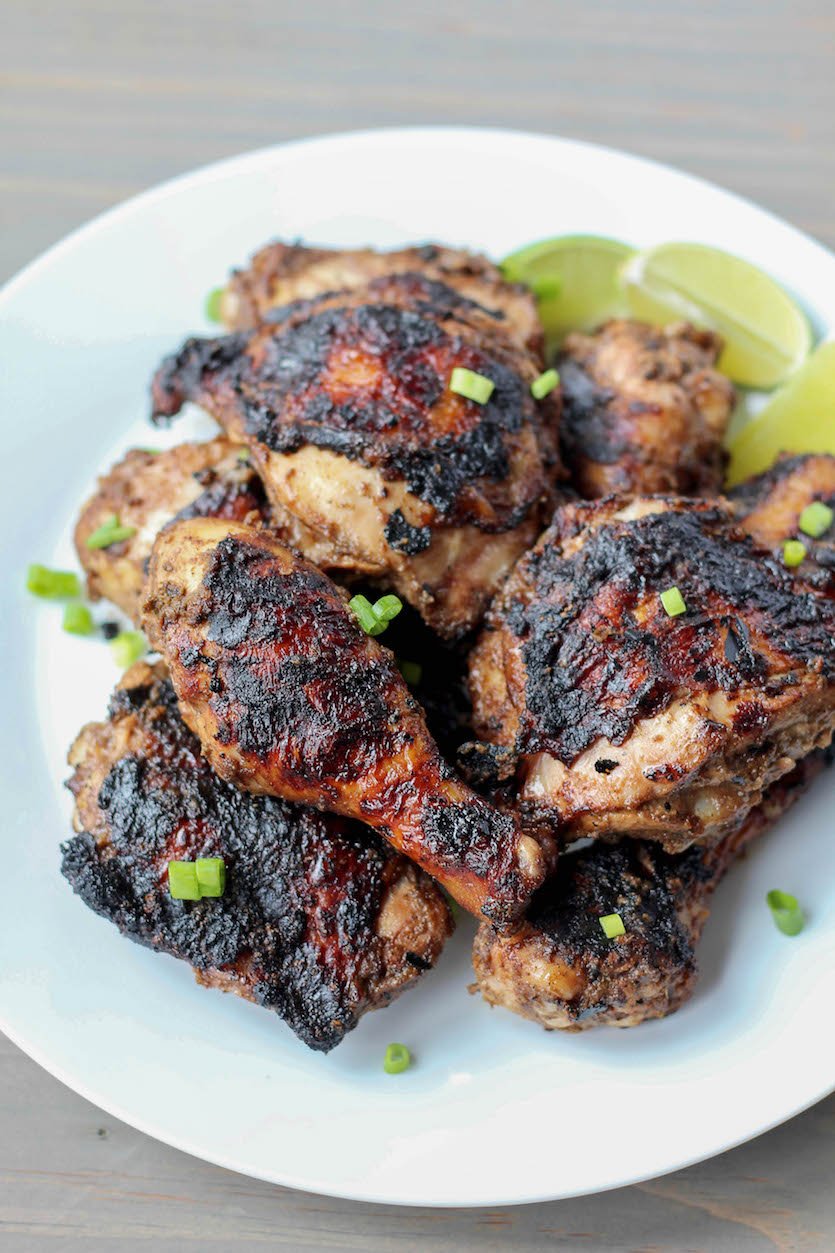
With its light and tropical flavour, this mango cucumber salad is a great addition to any BBQ. The cooling nature of this mango cucumber salad is a great match to a piece of spicy jerk chicken, cilantro lime chicken, or anything off the BBQ, so try it for your next summer gathering for a crowd-pleasing side dish.

Mango and Cucumber Salad

Although often done as salsa, I think the combination of mango and cucumber makes a great summer salad. A few weeks ago I saw a mango cucumber salad in a magazine while I was on a flight, and the idea has stuck with me ever since. Not only did I think the recipe idea was clever and unexpected, but I thought it was a really fresh and fun side dish for a summer BBQ, so I decided to give my own recipe a go! As it turns out, the flavours and texture contrast between the mango and the cucumber are perfectly balanced making it highly addictive. The best part about this dish is that it is really easy to prepare, you just need the ingredients and a good knife.

This mango and cucumber salad recipe calls for a scotch bonnet, and if you have never used one before, I need to warn you that they are very hot! Scotch bonnet, also known as Caribbean red peppers, is one of the hottest peppers and, for reference, is 12 to 140 times hotter than your standard jalapeño. Fortunately, the preparation method of soaking the sliced scotch bonnet in lime juice and sea salt helps to tame its heat, so it’s not as fiery as you might think, plus the mango and cucumber make the salad quite cooling in the end. However, if you are one to stick on the mild side, simply use a small amount of pepper or opt for a red chilli instead.

Mango and Cucumber Salad

Print

Mango and Cucumber Salad

Mango Cucumber Salad

Author: Stephanie Kay

Made with ripe mango and crunchy cucumber, this mango cucumber salad is the perfect cooling side dish for any grilled meat or summer BBQ.

  • Author: Stephanie Kay
  • Prep Time: 45 minutes
  • Total Time: 45 minutes
  • Yield: 4 servings 1x
  • Category: Salad
  • Method: By Hand
Print Recipe
Pin Recipe

Ingredients

  • 1 English cucumber, lightly peeled, seeds removed and cut into wedges
  • 2 mangos, ripe but firm, peeled, quartered and cut into 1/4″ wedges
  • 1 shallot, thinly sliced
  • 2 cloves garlic, minced
  • 1/2 scotch bonnet, or spicy pepper of your choice, seed removed and diced
  • 1 lime, juiced
  • 1 teaspoon sea salt
  • 1/2 cup cilantro, roughly chopped

Instructions

  1. In a large bowl, combine the shallot, garlic, chilli, lime juice and sea salt, and stir to combine.
  2. Cut the mango and cucumber, add to the bowl, and toss again to ensure everything is well coated.
  3. Cover and transfer to the fridge for 30-45 minutes to allow the flavours come together. The sea salt and lime juice will help to act as a dressing and the shallot, cucumber and papaya will soften as the salad rests.
  4. To serve, add chopped cilantro to the bowl, toss to combine and season with sea salt and pepper to taste.
  5. Enjoy!

Nutrition

  • Serving Size: 1 serving
  • Calories: 133 calories
  • Sugar: 26 grams
  • Fat: 1 gram
  • Carbohydrates: 34 grams
  • Fiber: 4 grams
  • Protein: 2 grams

Did you make this recipe?

Share a photo and tag us — we can’t wait to see what you’ve made!

Chocolate Peanut Butter Nice Cream

Published on May 25, 2017 by Stephanie Kay

Learn how to make chocolate nice cream with peanut butter! Ready in minutes and made with only 4 ingredients, this chocolate peanut butter nice cream is the perfect summer night treat. Consider it a fun and healthy way to satisfy a sweet tooth.

Chocolate Peanut Butter Nice Cream

If you know me or follow me on Instagram, you know that ice cream is my absolute favourite treat. Like, absolute favourite. As soon as the weather warms hits, I start dreaming of trips to my local ice cream shop and all the flavours I will get to enjoy.

Chocolate? Cappuccino? Pistachio? Salted Caramel? Ah, I am already salivating at the thought of them! Although I would love to eat ice cream every night, I know that is not the best idea, so when I have a craving for my favourite treat, it is nice cream to the rescue!

What is Nice Cream?

If you’ve never made ‘nice cream’, it got its name as (you got it), a nice play on ice cream. Essentially, nice cream is bananas blended into a naturally sweetened creamy soft serve that you can flavour any way you like, almost like a really thick smoothie. Needless to say, it’s delicious!

The flavour options are endless, as anything that can be blended can be used in nice cream, so berries, cocoa powder, peanut butter, coconut, and even coffee can all be added for flavour.

I take inspiration from all of my favourite ice cream flavours and try to re-create a healthier version at home.  Plus, once you have created your base flavour, you can also treat it as a sundae and add all sorts of toppings like fresh fruit, dried fruit, nuts, seeds, or shredded coconut.

Chocolate Peanut Butter Nice Cream

More Nice Cream Recipes:

  • Chocolate Almond Nice Cream
  • Peanut Butter Frozen Yogurt Bark


Print
Chocolate Peanut Butter Nice Cream

Chocolate Peanut Butter Nice Cream

Author: Stephanie Kay

Made with ripe bananas, cocoa powder and peanut butter, this chocolate peanut butter nice cream is rich and creamy while being healthy and good for you.

  • Author: Stephanie Kay
  • Prep Time: 5 minutes
  • Total Time: 5 minutes
  • Yield: 2 servings 1x
  • Category: Ice Cream
  • Method: Blender
  • Cuisine: American
  • Diet: Vegan
Print Recipe
Pin Recipe

Ingredients

  • 3 ripe bananas, peeled, sliced and frozen
  • 2 tablespoons cocoa powder
  • 3 tablespoons peanut butter
  • 1 teaspoon vanilla extract

Instructions

  1. Peel and freeze bananas ahead of time. It is easiest if you peel them and slice them into wedges to freeze in a bag or container.
  2. Add frozen bananas to a food processor or blender and puree on high until a smooth consistency is formed. You might need to stop the food processor a couple of times along the way and scrape down the edges.
  3. As the bananas begin to puree, add in cocoa powder, vanilla extract and peanut butter. Depending on how hard your bananas are, you can add a little coconut or almond milk to help them blend together.
  4. The nice cream can be served immediately, or for a harder consistency, transfer to a loaf pan and freeze for 1-2 hours.
  5. Spoon into bowls to serve. The mixture can also be frozen in a covered pan or container for several days.
  6. Enjoy!

Nutrition

  • Serving Size: 1 serving
  • Calories: 296 calories
  • Sugar: 22 grams
  • Fat: 14 grams
  • Carbohydrates: 43 grams
  • Fiber: 7 grams
  • Protein: 8 grams

Did you make this recipe?

Share a photo and tag us — we can’t wait to see what you’ve made!


Rainbow Chicken Stir-Fry

Published on May 18, 2017 by Stephanie Kay

This quick and easy rainbow chicken stir-fry is ready in less than 30 minutes and loaded with vegetables of all colors, making it a great weeknight meal.

Rainbow Chicken Stir-Fry


When I am in a pinch, it is stir-fry to the rescue. Why? Because you don’t need much in terms of cooking equipment and they are really speedy to prepare. Honestly, the longest part of making a stir-fry is chopping the vegetables, but nowadays you can easily buy pre-chopped veggies in any grocery store or even frozen vegetable blends. When it comes to making stir-fries tasty, it really comes down to the flavors you add. You can certainly find lots of pre-made stir-fry sauces at any grocery store but most of them are loaded with added sugars and sodium, and it is just so easy to make your own!

I used a blend of vegetables that I like in this stir-fry, but if you aren’t a fan of cabbage or mushrooms swap them out for a vegetable you prefer like bok choy, broccoli, and/or snow peas. I think chicken is a great protein to use because it cooks so quickly but shrimp or thinly sliced beef would be delicious too! To keep the recipe gluten-free I used tamari, but you could also use coconut aminos to keep it completely paleo, or soy sauce works just as well.


Print

Rainbow Chicken Stir-Fry

Rainbow Chicken Stir-Fry

Author: Stephanie Kay

I like to think of this chicken stir-fry recipe as a ‘”kitchen sink” stir-fry because you can pretty much use any vegetables you have on hand, and can easily swap the chicken for red meat or seafood.

  • Author: Stephanie Kay
  • Prep Time: 15 minutes
  • Cook Time: 15 minutes
  • Total Time: 30 minutes
  • Yield: 2 servings 1x
  • Category: Mains
  • Cuisine: Chinese
  • Diet: Gluten Free
Print Recipe
Pin Recipe

Ingredients

Stir-Fry:

  • 2 chicken breasts
  • 1/2 head red cabbage, thinly sliced
  • 2 carrots, peeled and thinly sliced
  • 1 red bell pepper, thinly sliced
  • 2 cups buttons mushrooms, thinly sliced
  • 2 cups spinach, tightly packed
  • 2 teaspoons olive oil

Sauce:

  • 1 1/2 teaspoons fish sauce
  • 3 teaspoons tamari or coconut aminos
  • 1 1/2 teaspoons sesame oil
  • 3 cloves garlic, minced
  • 1/2 inch fresh ginger, grated or minced

Instructions

  1. In a small bowl, combine the marinade ingredients and set aside.
  2. In a skillet on medium-high heat, add the olive oil and sliced chicken. Cook for 1-2 minutes just until the chicken is seared on both sides.
  3. Add the sliced vegetables to the pan, pour in the sauce and stir-fry for 3-4 minutes until tender but still crisp and the chicken in cooked through.
  4. Remove from the heat and serve.
  5. Enjoy!

Nutrition

  • Serving Size: 1 serving
  • Calories: 399 calories
  • Sugar: 22 grams
  • Fat: 12 grams
  • Carbohydrates: 42 grams
  • Fiber: 13 grams
  • Protein: 36 grams

Did you make this recipe?

Share a photo and tag us — we can’t wait to see what you’ve made!

Almond Banana Pancakes

Published on May 17, 2017 by Stephanie Kay

Made with 5 ingredients, these almond banana pancakes are a delicious grain-free and gluten-free pancake recipe that everyone can enjoy. Plus, they keep well in the fridge and freezer so they make a great healthy meal prep idea too!

Almond Banana Pancakes

You know those moments when you really want a treat; be it a cookie, a muffin or pancakes, but you can’t be bothered to make a full batch because you only want one serving? Ya, this recipe is for exactly those moments. These single-serve almond banana pancakes are a super quick and delicious way to start your day.

Cooking for one can be a real pain in the butt. You’re either forced to do a calculus class in your kitchen trying to figure out how to break a recipe down into a single serving, or you’ve made enough food to feed a small army and then some. It’s a bit ridiculous, to say the least. When I lived alone most of my meals were pretty basic; eggs + toast, salad + tuna, chicken + vegetables. Not only was a terrible cook at the time (true story), but the idea of making a full recipe was really overwhelming and expensive, especially when it came to baking. Sure, I’d like an oatmeal cookie but I don’t want to make 24 oatmeal cookies because then I’m going to eat 24 oatmeal cookies and regret the fact that I ever wanted one oatmeal cookie to begin with. Oy!

So, these almond banana pancakes are for those Saturday mornings when you just need to whip something up for one. With only 5 ingredients they are really easy to prepare, and if you have company, you can simply double or triple the recipe with no issues.

Almond Banana Pancakes

I know there are a lot of “protein pancake” recipes out there that call for 1 egg, 1 banana, and protein powder, but I wanted to create a version with all-natural ingredients. If you have never used almond flour before, it is essentially just ground-up almonds and is sometimes called ‘almond meal’ on packaging in stores. The combination of eggs and almond meal in this recipe actually provides 18 grams of protein per serving, and the inclusion of the banana provides a great source of natural carbohydrates making them a great post-workout treat (just go easy on the syrup.)

More Healthy Pancake Recipes:

  • Blueberry Yogurt Pancakes
  • Cornmeal Pancakes
  • Banana Oatmeal Pancakes
Print
Almond Banana Pancakes

Almond Banana Pancakes

Author: Stephanie Kay

Made with ripe banana, almond flour and eggs, these almond banana pancakes are a healthy and delicious gluten-free pancake recipe.

  • Author: Stephanie Kay
  • Prep Time: 10 minutes
  • Cook Time: 10 minutes
  • Total Time: 20 minutes
  • Yield: 3 pancakes 1x
  • Category: Pancakes
  • Method: Stovetop
  • Cuisine: American
  • Diet: Gluten Free
Print Recipe
Pin Recipe

Ingredients

  • 1 banana, ripe
  • 1/2 cup almond flour
  • 1 egg
  • 1/4 teaspoon baking powder
  • 1/2 teaspoon vanilla extract
  • 1 teaspoon butter or coconut oil
  • 1/4 cup raspberries, frozen or fresh (optional)
  • Maple syrup, to serve (optional)

Instructions

  1. Peel and slice the banana into pieces and add to a bowl. Using a fork, mash the banana into a puree trying to eliminate as many chunks as possible.
  2. Once the banana is well mashed, crack the egg into the bowl, add vanilla extract and whisk to combine.
  3. Add in the almond flour and baking powder to the bowl and whisk until batter forms.
  4. In a skillet on medium heat, add half of the butter or coconut oil and heat until melted. Once melted, add a 1/4 cup of the batter mixture to the centre of the pan. (The batter should make 3 small pancakes.)
  5. Cook for 2 to 3 minutes per side until the edges crisp up and bubbles begin to form. Be careful to not increase the heat too high as the batter will burn. Flip and cook on the other side for another 2 to 3 minutes until golden and fluffy.
  6. To create a quick raspberry coulis, add the frozen berries to a saucepan on low heat. As the berries heat mash them up with a fork or spoon to create a quick sauce. (You can also do this in the microwave for 30 seconds if needed.)
  7. To serve, top pancakes with raspberry coulis and drizzle with maple syrup.
  8. Enjoy!

Nutrition

  • Serving Size: 1 pancake
  • Calories: 175 calories
  • Sugar: 5 grams
  • Fat: 6 grams
  • Carbohydrates: 12 grams
  • Fiber: 2 grams
  • Protein: 5 grams

Did you make this recipe?

Share a photo and tag us — we can’t wait to see what you’ve made!


Kale and Eggs Breakfast Skillet

Published on May 10, 2017 by Stephanie Kay

Ready in under 10 minutes, this kale and eggs breakfast skillet is a great way to add protein and greens to your diet before you start the day!

Kale and Eggs Breakfast Skillet

My weekday breakfasts need to be two things; quick and tasty. My 20-year self would think that quick and tasty meant a bagel and cream cheese from Tim Hortons, but 33-year-old me knows that there is a much better way. Like most people, I used to hate waking up in the morning. I would constantly hit the snooze button (multiple times) before getting out of bed with only enough time to shower, get ready, get out the door, and rush to a coffee shop to grab something to eat before heading to work. In hindsight, it was the worst way to start my day. Not only was my entire morning rushed and unpleasant, but by 10 am I would be starving again because that bagel and cream cheese or muffin I grabbed did not do my hunger justice. Fortunately, making a healthy breakfast doesn’t need to be complicated, and, now that I know better, a little kale and eggs can get me out the door in a hurry.

I don’t know why, but for some reason, in North America, we have associated eggs, and really any breakfast that takes over 5 minutes to prepare, a weekend breakfast. Only items that you can pour into a bowl, add to the toaster, or eat on the go are considered reasonable weekday options. I don’t know what the exact trigger or exact moment was, but one day it dawned on me how odd that actually was. I mean, if eating eggs or a full bowl of oatmeal for breakfast makes me feel better and gives me more energy for my day, why on earth am I eating a bagel and cream cheese as I rush to work? Serious food for thought.

Kale and Eggs Breakfast Skillet

This sautéed kale and eggs breakfast skillet is truly such a quick and easy way to make a nourishing sit-down breakfast in under 10 minutes. You can really add any type of veggies you like to the pan, but on those weekday mornings when you can’t be bothered to chop extra things, just add the kale and you’ll have an incredibly healthy and hearty breakfast to fuel your day.


Print
Kale & Eggs Breakfast Skillet

Kale and Eggs Breakfast Skillet

Author: Stephanie Kay

This kale and egg breakfast skillet will work with essentially any dark leafy green. If you are not a fan of kale, spinach, swiss chard or collards would work really well too.

  • Author: Stephanie Kay
  • Prep Time: 2 minutes
  • Cook Time: 8 minutes
  • Total Time: 10 minutes
  • Yield: 1 serving 1x
  • Category: Breakfast
  • Method: Stovetop
Print Recipe
Pin Recipe

Ingredients

  • 2–3 kale leaves
  • 2–3 eggs
  • 1 teaspoon butter or olive oil
  • 1/8 teaspoon sea salt
  • Pinch black pepper
  • 1/8 teaspoon crushed chillies (optional)

Toppings:

  • Pesto
  • Goat Cheese

Instructions

  1. Remove stems from kale leaves and roughly chop kale into bite size pieces. Add chopped kale to a colander and rinse gently under cold water to clean any excess dirt off the leaves. Shake off any excess water; you can leave the kale a little wet as this will help to cook it in the pan.
  2. In a skillet on medium, heat butter or olive oil. Add in the chopped kale and season with sea salt and pepper. (If you want to add crushed chillies, add them to the pan at this point.)
  3. Allow the kale to cook for 2-3 minutes until it begins to wilt and becomes bright green in colour, gently tossing the kale every minute to ensure all leaves are coated in oil and wilted. (I find adding a cover to the pan helps to speed cooking time as it will steam a little as well.)
  4. Using a spoon or spatula, make a pocket for each egg in the kale, and crack one egg into each pocket.
  5. Cover the pan and allow the eggs to cook until opaque; about 4-5 minutes.
  6. Once eggs are cooked, remove from the heat and top kale and eggs with crumbled goat cheese and pesto to taste (optional).
  7. Serve on its own or with a slice of sourdough toast.
  8. Enjoy!

Nutrition

  • Serving Size: 1 skillet
  • Calories: 206 calories
  • Sugar: 2 grams
  • Fat: 15 grams
  • Carbohydrates: 5 grams
  • Fiber: 2 grams
  • Protein: 15 grams

Did you make this recipe?

Share a photo and tag us — we can’t wait to see what you’ve made!


Roasted Radishes

Published on May 10, 2017 by Stephanie Kay

Radishes are usually thought of as a raw only vegetable, but there are so many different ways to use this spicy vegetable. This simple roasted radishes recipe is a delicious way to tame their peppery bite into a soft and savory side dish.

Roasted Radishes


Radishes are one of those vegetables that most people don’t buy, let alone eat, because I think many people just don’t know what to do with them. In fact, that person used to be me; I would either walk by them in the grocery store or, if they made it into my fridge, they would sit in the back until they were barely edible. (Not a great way to spend your hard-earned money.) I’ve definitely enjoyed them in a salad or two out at a restaurant, but it wasn’t until I discovered that you could roast them that they became a staple in my spring produce repertoire. I remember being at a dinner party when the host served me roasted radishes, taking a bite and thinking “Why have I never thought of this?”. Thankfully someone showed me the way and now I get to pay it forward to you. Try these roasted radishes as a delicious side dish to any summer feast.

More Roasted Side Dishes:

  • Lemon Garlic Roasted Asparagus
  • Crispy Roasted Broccoli
  • Balsamic Roasted Vegetables


Print

Roasted Radishes

Roasted Radishes

Author: Stephanie Kay

These oven-roasted radishes are simple, healthy and delicious side dish!

  • Author: Stephanie Kay
  • Prep Time: 5 minutes
  • Cook Time: 20 minutes
  • Total Time: 25 minutes
  • Yield: 4 servings 1x
  • Category: Side
  • Method: Roasted
Print Recipe
Pin Recipe

Ingredients

  • 1 - 1 1/2 lbs radishes
  • 2 tablespoons butter, melted
  • 1/4 teaspoon sea salt
  • 1/8 teaspoon fresh ground black pepper
  • Optional: Small handful parsley, chopped

Instructions

  1. Preheat oven to 425°F.
  2. Remove ends from radishes and slice in half lengthwise.
  3. Add radishes to a baking sheet, drizzle with metled butter and season with salt and pepper. Use you hands to ensure all radishes are well seasoned.
  4. Transfer baking sheet to the oven for 18-20 minutes until radishes are tender on the inside.
  5. Once cooked, season with extra salt and pepper to taste and top with chopped parsley before serving.
  6. Enjoy!

Nutrition

  • Serving Size: 1 serving
  • Calories: 67 calories
  • Sugar: 0 grams
  • Fat: 6 grams
  • Carbohydrates: 3 grams
  • Fiber: 2 grams
  • Protein: 1 gram

Did you make this recipe?

Share a photo and tag us — we can’t wait to see what you’ve made!

DIY Burrito Bowls

Published on May 4, 2017 by Stephanie Kay

These easy homemade burrito bowls are a great way to please a crowd while keeping time in the kitchen to a minimum. This simple recipe makes a great weeknight meal or fun party dinner for people of all ages and works well any night of the week.

DIY Burrito Bowls

Taco night was a big deal in my house as a kid; once I saw that Old El Paso kit gets pulled out of the cupboard I knew dinner was going to be a hit. I think the reason I loved tacos and burritos so much was that it was something different, flavours I was not used to, but the best part was that you got to build them yourself. Little bowls of goodness are all over the table allowing you to mix and match your own toppings to make those tacos just the way you like them. More salsa? Go for it! Less lettuce? Do it right up! Don’t get me wrong, I love my mother’s cooking and she taught me a lot about food, but when I discovered there was more to seasoning than just salt and pepper it opened my eyes to a whole new world of flavour! (Mom, if you are reading this,  I’m kidding and I love your plain baked chicken breasts.)

Anyway, I think one of the reasons people struggle so much with eating well is that they don’t add enough seasonings to their meals so they instantly associate healthy eating with being boring. The truth of the matter is, with the variety of herbs and spices available there are endless options to add flavours to your meal. At first, this is an incredibly overwhelming process because knowing what goes with what, or how to actually use them, is very confusing. The good news is that it is actually pretty hard to mess up herbs and spices in cooking, and the best way to learn is to learn by doing, so you just need to get out there and give it a go.

Burrito Bowl Recipe

This DIY burrito bowls recipe is a healthy twist on your standard burrito; with all of the fillings without the tortilla itself. This recipe works well for a group of people as everyone can build their own bowl (which means less work for the cook!), but it is also a great way to do meal prep for the week. You can leave the ingredients in their own containers in the fridge and just build your burrito bowls as needed.

More Ground Beef Recipes:

  • Firecracker Beef Meal Prep Bowls
  • Loaded Burger Bowls
  • Crispy Korean Beef Bowls
Print
DIY Burrito Bowls

DIY Burrito Bowls

Author: Stephanie Kay

These DIY burrito bowls call for ground beef, however, ground chicken or ground turkey would work well too.

  • Author: Stephanie Kay
  • Prep Time: 10 minutes
  • Cook Time: 20 minutes
  • Total Time: 30 minutes
  • Yield: 4 bowls 1x
  • Category: Main
  • Cuisine: Mexican
Print Recipe
Pin Recipe

Ingredients

Meat:

  • 1 pound ground beef
  • 1 yellow onion, diced
  • 2 cloves garlic, minced
  • 1 teaspoon olive oil
  • 1 teaspoon chilli powder
  • 1/2 teaspoon cumin
  • 1/2 teaspoon paprika
  • 1/4 teaspoon salt

Toppings:

  • 1 head romaine lettuce, shredded
  • 1 cup white rice, dry
  • 1 ripe avocado
  • 1 cup salsa, fresh or store-bought
  • 1 cup corn, fresh or frozen
  • 1 bunch of cilantro, roughly chopped
  • 2 limes, cut into wedges
  • Salt
  • Hot sauce (optional)

Instructions

  1. In a small pot, add rice, 2 cups of water and a pinch of sea salt. Bring to a boil and then reduce to a simmer for 15 minutes (or as indicated on package) until rice can be fluffed with a fork.
  2. In a large skillet on medium heat, add oil and sauté onion until translucent, about 3-4 minutes.
  3. Add the garlic and cook for another 1 minute, ensuring it does not burn.
  4. Add the ground beef to the pan, season with sea salt, and cook until browned on all sides. As the ground beef begins to cook add the chilli powder, cumin and paprika and ensure it is well combined with the beef and continue to cook until no longer pink.
  5. While the beef is cooking, prepare the vegetables. Roughly chop the lettuce into bite size pieces, rinse corn under hot water to thaw (if frozen), cut lime into wedges and roughly chop coriander.
  6. To make a quick guacamole, remove avocado flesh from both avocados and add to a bowl. Season with a pinch of salt, a handful of chopped coriander, add the juice of half a lime and use a fork to mash it all together.
  7. Add chopped romaine, guacamole, salsa, corn, cilantro, and lime wedges to separate bowls for service.
  8. Once the rice and the beef are cooked, transfer them to two separate bowls for service.
  9. Place all bowls on the table to build a DIY burrito bowls bar and combine the ingredients to build the bowl of your choice.
  10. Enjoy!

Nutrition

  • Serving Size: 1 bowl
  • Calories: 501 calories
  • Sugar: 10 grams
  • Fat: 12 grams
  • Carbohydrates: 68 grams
  • Fiber: 10 grams
  • Protein: 34 grams

Did you make this recipe?

Share a photo and tag us — we can’t wait to see what you’ve made!


Coconut Macaroons

Published on May 2, 2017 by Stephanie Kay

Why do one recipe, when you can do coconut macaroons two ways! These crunchy on the outside and chewy in the middle macaroons are easy and inexpensive to prepare, making them the perfect sweet treat.

Coconut Macaroons


Coconut macaroons are actually quite simple to make at home, and with only 5 ingredients they are a baker’s dream. Shredded coconut is one of those ingredients I like to keep in the pantry, not because I make a lot of macaroons but because I love adding it snacks like yogurt, granola, and trail mix; it adds a lot of crunch, a touch of sweetness and a little tropical vibe. You can find shredded coconut in almost every grocery store baking aisle, or look for it at bulk food stores in bins. It comes in several formats sweetened or unsweetened, finely shredded, coarsely shredded, or even flaked. I typically opt for the unsweetened variety (I find it has a little sweetness on its own) and rotate between shredded or flaked dependent on my mood.


Coconut Macaroons


For this particular recipe, I used shredded coconut; I think the larger the shreds the crispier the macaroons are on the outside and the softer they are on the inside. Try these coconut macaroons for your next party because it’s hard to go wrong with a little coconut dipped in chocolate.


Print

Coconut Macaroons

Easy Coconut Macaroons

Author: Stephanie Kay

These healthy coconut macaroons can be eaten on the own or dipped in chocolate, it adds a little extra decadence but if you love the taste of coconut just leave them as is!

  • Author: Stephanie Kay
  • Prep Time: 10 minutes
  • Cook Time: 20 minutes
  • Total Time: 30 minutes
  • Yield: 18 macaroons 1x
  • Category: Dessert
  • Method: Baked
Print Recipe
Pin Recipe

Ingredients

  • 3 cups shredded coconut, unsweetened
  • 3 eggs, whites separated
  • 1/4 cup maple syrup
  • 1 teaspoon vanilla extract
  • 1/4 teaspoon sea salt
  • Optional: 100g dark chocolate (80%)

Instructions

  1. Preheat the oven to 350°F.
  2. In a large bowl, combine the egg whites, vanilla extract and sea salt, and whisk together until frothy and thick. You don’t need stiff peaks, you just want to eggs to double in volume and fluff up.
  3. Once the eggs are whisked, add the shredded coconut and drizzle in the maple syrup. Using a spatula, fold the mixture together gently until well combined.
  4. Line a baking sheet with parchment paper (this prevents the macaroons from sticking). Using an ice cream scoop, or your hands, shape the mixture into small balls and line them on a baking sheet. I used a medium 34mm ice cream scoop which gave me golf ball size macaroons.
  5. Transfer the baking sheet to the oven for 15-20 minutes until macaroons are golden on top.
  6. Remove baking sheet from the oven, using a spatula slowly transfer the macaroons to a wire rack to allow to cool completely. Be gentle with the macaroons are they will still be a little soft when they are warm. (Keep the parchment paper, you will use this to dip the macaroons in chocolate.)
  7. For the chocolate dip, add dark chocolate to a double boiler (or a glass bowl over a small pot) and heat chocolate until melted, then remove from the heat.
  8. Once the macaroons are cooled and the chocolate is melted, one at a time dip the macaroons into the bowl of melted chocolate just high enough to cover the base. Transfer the dipped macaroons back to the baking sheet lined with parchment paper and allow to cool. You can speed up the cooling process by transferring the baking sheet to the fridge.
  9. The macaroons can be served immediately or stored in an air-tight container for up to a week.
  10. Enjoy!

Nutrition

  • Serving Size: 1 macaroon
  • Calories: 125 calories
  • Sugar: 4 grams
  • Fat: 11 grams
  • Carbohydrates: 7 grams
  • Fiber: 3 grams
  • Protein: 2 grams

Did you make this recipe?

Share a photo and tag us — we can’t wait to see what you’ve made!

Did you make this recipe? Rate it below!

Probiotics: A Complete Guide

Published on May 1, 2017 by Stephanie Kay

Turn on the news or open the latest newspaper and you will see the term probiotic popping up everywhere. Until 5 or 10 years ago, you rarely heard the term probiotic, let alone microbiome,  but today it is commonly used in everything from television ads to food packaging. But do you even know what it means? Here is a simple guide all about probiotics; what they are, why you need them, and where you can get them in your diet.

All About Probiotics

What are probiotics?

Probiotics are live bacteria and yeast that are considered good for our health. The word probiotic is the compound of two words; pro meaning “in favor of”, and biotic meaning “life”, defining probiotics as life-promoting. The World Health Organization defines a probiotic as any living microorganism that has a health benefit when ingested. Probiotics are essentially an army of beneficial bacteria present in the body, specifically the digestive tract, which support general health and well-being. These friendly bacteria are present in the billions in our bodies, in fact, our human cells are outnumbered ten to one by bacteria. There are a variety of different strains of probiotic bacteria, lactobacillus being the most well know, however other strains include bifidobacteria, saccharomyces, streptococcus, and many more which all have vitally important functions in the body.

Why do we need probiotics?

Probiotics, or our gut bacteria, make up our body’s microbiome which has many important influences on the body. In fact, research continues to show how incredibly interconnected our bodies are to our microbiome, some research even considers our microbiome an organ itself. Here are some of the many benefits of a healthy microbiome:

  • Improves digestive health
  • Improves nutrient absorption
  • Supports the immune system
  • Reduces inflammation
  • Prevents overgrowth of “bad” bacteria
  • Synthesis of B Vitamins & Vitamin K

Researchers are still discovering how exactly probiotics work in the body and their many benefits, however, there is growing evidence that our gut health can impact everything from digestive disorders like IBS and IBD to skin conditions, allergies, and even weight loss. Every individual’s microbiome is incredibly unique and diverse, much like our fingerprint, however, is equally as important. Probiotics have been present in us from the moment we entered the world, although our external environment and lifestyle can have a negative, and positive, impact on the health of our microbiome.

What impacts our microbiome?

Our internal bacterial environment is very lively and complex; at any one moment there are thousands of moving pieces and reactions occurring, and while our intestinal bacteria are pretty resilient, their health can be compromised when exposed repeatedly to environmental factors. There are many factors that can impact the health of our gut and microbiome, however, some of the most common include diet, lifestyle, and stress. A poor diet high in refined sugars, processed foods, and alcohol and low in fiber can have a negative impact on the microbiome, as well as high levels of stress and repeated antibiotic use. The word antibiotic is literally the opposite of the word probiotic (anti meaning “opposed to”, biotic meaning “life”) so although antibiotics can help to kill off any harmful bacteria, they also kill off any beneficial bacteria as well. In order to ensure we have a flourishing microbiome, it is important to focus on whole foods and limit processed foods to ensure that our beneficial bacteria greatly outways our “bad” bacteria as they help to keep out fungi and yeasts.

Where do we get probiotics?

Most often, probiotics are made via fermentation, and it is important to note that probiotics are not a new concept. Throughout history, cultures have produced and consumed at least one form of fermented food in their diet, as fermentation was a form of preservation long before refrigeration. Fermentation not only helps to increase beneficial bacteria but can help to remove anti-nutrients, ensuring that it is more easily digested.  Nowadays, many of us consume little (if any at all) probiotics in the form of food, and although the word probiotic might conjure up images of yogurt, there are many more foods that are rich in probiotics:

  • Sauerkraut
  • Kimchi
  • Fermented Vegetables
  • Pickles
  • Tempeh
  • Miso
  • Kombucha
  • Cultured Yogurt
  • Kefir

Note that not all forms of fermented foods are created equal. In order for pickled vegetables and sauerkrauts to be rich in probiotics, they must be naturally fermented and not contain vinegar, while yogurts must be free of added sugars, additives, and their ingredients should only contain “whole milk and live bacterial culture”. Not only are the ingredients in these foods important, but their natural preparation method is important as well.

In addition to probiotic-rich foods, probiotics are also made naturally in our digestive tracts from consuming foods rich in prebiotics such as onions, leeks, garlic, bananas, apples, pears, asparagus, artichokes, yams, yicama, and oats. These types of food are rich in prebiotic fibers, namely inulin and fructo-oligosaccharides,  that allow probiotic bacteria to grow and thrive.

What about probiotic supplements?

Probiotics can also be found in supplemental form varying in bacterial type (strain), quantity (CFUs), and format (capsule vs. liquid) and they can be beneficial in some cases. It is important to note that not all probiotic supplements are created equal, you get what you pay for, so not all forms are as beneficial. Additionally, the benefits experienced from one probiotic strain may be completely different from the benefits experienced from another strain so it is best to know what strain you need.  For instance, if you are sensitive to dairy, don’t opt for a probiotic grown on a dairy strain, as it can make your digestive symptoms worse. If you are unsure, look for a trusted reputable brand with diverse strains without any additives, or speak to a healthcare practitioner to learn what is best for you.

The Bottom Line

In general, you can support your digestive health and microbiome by eating a diet rich in whole foods, and prebiotic-rich foods and incorporating fermented foods daily to help ensure you are thriving with beneficial bacteria!

Pineapple Mint Smoothie

Published on April 26, 2017 by Stephanie Kay

No matter the season or the weather, this smoothie is sure to add a little brightness to your day! Loaded with light and refreshing flavors this Pineapple Mint Smoothie is a delicious treat.

Pineapple Mint Smoothie


Truth be told, I didn’t know what to call this smoothie. There are so many delicious ingredients in this drink it was hard to choose which ones to feature. Tropical Ginger & Mint Smoothie? Sweet Ginger & Mint Smoothie? Minted Lime and Pineapple Smoothie? The options were endless, but I knew that Pineapple Ginger Lime and Mint Smoothie were just a little too long.

The recipe for this smoothie came out of a partnership with my friends at Pure Kitchen Ottawa, as they featured me as one of their smoothies of the month and this was the recipe we created! It took a little while to get to the right combination of flavors, we toyed around with spinach and banana, but the winner ended up being the recipe below. Not only does it taste delicious, but the ingredients in this smoothie make it incredibly nutritious as it is great for digestive health too! Pineapple is a known digestive aid as it is rich in an enzyme called bromelain, while ginger and mint are both known to be natural digestive aids and natural remedies to reduce bloating. So, not only is this Pineapple Mint Smoothie delicious, but it is a little tummy-tamer too, and I know everyone can be a fan of that.


Print

Pineapple Mint Smoothie

Pineapple Mint Smoothie

Author: Stephanie Kay

I’ve suggested frozen pineapple to keep the smoothie nice and cold, but you could also use fresh and just add a little ice. And although not an official ingredient, I’m sure you could a little tequila to the mix for a fun summer drink at your next party too.

  • Author: Stephanie Kay
  • Prep Time: 5 minutes
  • Total Time: 5 minutes
  • Yield: 1 smoothie 1x
  • Category: Drinks
  • Method: Blended
  • Cuisine: American
Print Recipe
Pin Recipe

Ingredients

  • 1 cup frozen pineapple
  • 1 cup water
  • 1 lime, juiced
  • 1/4 inch ginger root, peeled
  • 4 - 6 mint leaves

Instructions

  1. Add all ingredients to the blender and process on high until smooth.
  2. Serve with a mint leave and enjoy!

Nutrition

  • Serving Size: 1 smoothie
  • Calories: 144 calories
  • Sugar: 20 grams
  • Fat: 0 grams
  • Carbohydrates: 42 grams
  • Fiber: 3 grams
  • Protein: 2 grams

Did you make this recipe?

Share a photo and tag us — we can’t wait to see what you’ve made!


Summer Rolls with Almond Dipping Sauce

Published on April 25, 2017 by Stephanie Kay

Summer rolls, also known as fresh spring rolls or rice paper wraps, are a delicious and refreshing snack and a wonderful way to add more veggies to your diet. The dipping sauce alone is reason enough to eat them! These veggie-loaded summer rolls with almond butter dipping sauce make a wonderful light lunch, snack, or party appetizer.

Summer Rolls with Almond Dipping Sauce

If you’ve had summer rolls before you’ll know that there are endless variations to this recipe; you can really add any type of vegetable or protein you like. At most restaurants, these rolls are served with the addition of vermicelli noodles, but I wanted to keep this particular recipe light and fresh so I opted to forgo the extra noodles, and instead, I’ve added extra veggies in the form of leaf lettuce to help provide bulk and crunch. These summer rolls are my go-to party appetizer (someone has to bring the veggies after all!), but I also love making a batch of these on the weekend to use them as simple snacks for the week. And, let’s be honest, it’s really the dipping sauce that makes these summer rolls a winner. The combination of sweet, savory, and salty will make you want to dunk pretty much anything in it!

Print
Summer Rolls with Almond Dipping Sauce

Summer Rolls with Almond Dipping Sauce

Author: Stephanie Kay

These summer rolls are vegetarian, but you could add chicken, beef or shrimp if you like. I opted to use almond butter, but peanut butter would also be delicious.

  • Author: Stephanie Kay
  • Prep Time: 30 minutes
  • Total Time: 30 minutes
  • Yield: 12 servings 1x
  • Category: Snacks
  • Cuisine: Dairy-Free, Gluten-Free, Vegetarian
  • Diet: Vegetarian
Print Recipe
Pin Recipe

Ingredients

Summer Rolls:

  • 12 sheets of rice paper
  • 1/2 cucumber, julienned
  • 1 red bell pepper, julienned
  • 2 medium carrots, peeled and julienned
  • 1/4 red cabbage, shredded
  • 2 cups romaine or Boston lettuce, shredded
  • 3 sprigs fresh mint leaves
  • 1/2 cup cilantro, roughly chopped

Dipping Sauce:

  • 2 garlic cloves
  • 3 teaspoon sesame oil
  • 1/4 cup natural almond butter
  • 1-inch fresh ginger, peeled
  • 1 lime, juiced
  • 2 tablespoons soy sauce, tamari, or coconut aminos
  • 1 teaspoon maple syrup or honey
  • 1 tablespoon water, plus more as needed

Instructions

  1. Make the dipping sauce by adding all of the ingredients to a small food processor and blend until smooth. Depending on the consistency of your almond butter, you might need to add a little more water to the sauce to help thin it out a little; you don’t want it to be runny, but you also don’t want it to be a thick paste. (If you don’t have a food processor, you can whisk the ingredients together in a small bowl, however, ensure that the garlic and ginger are as finely minced as possible.)
  2. Time to roll. Make yourself a rolling station by laying out all of your chopped vegetables, herbs and rice paper wraps.
  3. Add hot water to a large bowl and place it on the counter with a damp tea towel next to it, just by splashing a little water on it. (The dampness of the tea towel ensure the wraps don’t stick to it.)
  4. One at a time, place a rice paper into the bowl of hot water until it is submerged and becomes soft to the touch. This should take about 10-15 seconds depending on the temperature of your water.
  5. Remove the soft rice paper from the bowl of water and lay it flat on the tea towel. You many need unfold any corners that may have turned up to ensure it is laying as flat as possible.
  6. Add the fillings of your choice to the centre of the rice paper, about 1/4 of the distance to the top of the paper. Be careful not to overfill it as the paper will tear, begin with a smaller amount and the adjust accordingly on your next one.
  7. Fold the top portion of the rice paper wrapper over the filling. Holding the whole thing firmly in place, fold the sides of the wrapper in, and roll forward until closed. Everyone has their own technique when it comes to rolling, so find what works best for you! (If you find your paper drying out as you roll it, just add a little water to your fingertips to help keep it malleable.)
  8. If you mess up, just remove the vegetable filling, discard the faulty rice paper and start over. Once rolled, set your completed rice paper wraps aside until all 12 are rolled, this will also help them to dry a little.
  9. Serve the rolls with the delicious dipping sauce. Any extra rolls can be stored in the fridge for up to 3-4 days.

Nutrition

  • Serving Size: 1 roll
  • Calories: 113 calories
  • Sugar: 2 grams
  • Fat: 5 grams
  • Carbohydrates: 6 grams
  • Fiber: 2 grams
  • Protein: 3 grams

Did you make this recipe?

Share a photo and tag us — we can’t wait to see what you’ve made!


  • Previous
  • 1
  • …
  • 49
  • 50
  • 51
  • 52
  • 53
  • …
  • 58
  • Next

Recipes

  • Dinner
  • Breakfast
  • Meal Prep
  • Snacks

Nutrition

  • FAQs
  • Tips
  • This vs. That
  • Weight Loss

Connect

  • Instagram
  • Youtube
  • About
  • Cookbooks

About Stephanie

I’m a nutritionist on a mission to change the way you look at food and teach you how to make real food work for real life in a realistic way.

Learn More

Site Credits
2023 © Stephanie Kay Nutrition | Privacy Policy
To Top