Stephanie Kay Nutrition

Stephanie Kay Nutrition

Real Food for Real Life

  • recipes
    • all recipes
    • Breakfast
    • Lunch
    • Dinner
    • Soups & Stews
    • Salads
    • Sides
    • Snacks
  • nutrition
    • All Articles
    • Tips
    • FAQs
    • This vs. That
    • How To/Guides
    • Weight Loss
  • resources
    • 10 Days of Nutrition
    • 7-Day Meal Plan
    • Balanced Meal Guide
    • 5-Ingredient Cookbook
    • Lunch Box Cookbook
  • About
    • About Steph
    • Contact
  • recipes
    • all recipes
    • Breakfast
    • Lunch
    • Dinner
    • Soups & Stews
    • Salads
    • Sides
    • Snacks
  • nutrition
    • All Articles
    • Tips
    • FAQs
    • This vs. That
    • How To/Guides
    • Weight Loss
  • resources
    • 10 Days of Nutrition
    • 7-Day Meal Plan
    • Balanced Meal Guide
    • 5-Ingredient Cookbook
    • Lunch Box Cookbook
  • About
    • About Steph
    • Contact
  • Dinner
  • Breakfast
  • Meal Prep
  • Nutrition Tips
  • facebook
  • instagram
  • pinterest
  • youtube

Turkey Noodle Soup

Published on November 23, 2025 by Stephanie Kay

Ready in 30 minutes, this quick and easy turkey noodle soup is the perfect way to use leftover Thanksgiving turkey. Filled with veggies, cooked noodles, shredded turkey, and a flavorful broth, it’s a healthy and comforting meal.

Close up of a white bowl of turkey noodle soup on a small white plate with a gold spoon, beige striped tea towel, white bowl of salt, and small wood bowl of chopped parsley on a white background.

I don’t know about you, but after making a turkey dinner, the last thing I want to do is cook anything else. That said, I never want Thanksgiving leftovers to go to waste, so I’m always looking for quick and easy recipes to use leftover turkey meat, and this turkey noodle soup recipe is exactly that.

This homemade soup turns leftover turkey into a family-friendly and freezer-safe recipe in a matter of minutes with minimal ingredients. Plus, you can easily make a double or triple batch if needed and store extra servings in the freezer for a warm, comforting meal on a cold day.

Large pot of turkey noodle soup with a silver ladle and a dark green tea towel on a white background.

Why You’ll Love It

  • Made in One Pot – This one-pot recipe requires minimal prep and clean-up time.
  • Ready in 30 Minutes – This turkey soup is quick and easy to make.
  • High in Protein – The combination of shredded turkey and egg noodles gives this soup 37 grams of protein per serving.
  • Super Versatile – You can use any style of noodles and add any veggies you have on hand to this turkey noodle soup.
Large bowl of egg noodles, jar of dried thyme, garlic cloves, bowl of chopped cooked turkey, onion, celery, carrots, and jug of turkey broth on a white background.

Ingredients + Substitutions

  • Turkey – Some leftover turkey meat to add some protein. While this is a turkey noodle soup recipe, you can make it with leftover chicken meat as well. See the notes section of the recipe card for details.
  • Noodles – To add some complex carbohydrates and fiber. The recipe calls for egg noodles, but you can use any noodles you like.
  • Broth – To make the soup. You can use store-bought or homemade broth. If you’re feeling up to it, you can simmer the turkey carcass to make a homemade turkey broth. Alternatively, a combination of pre-made chicken broth or vegetable broth and water works just as well.
  • Onion + Garlic – To flavor the soup. The recipe calls for a whole onion and garlic cloves, but onion powder and garlic powder will also work well. See the notes section of the recipe card for details.
  • Carrots + Celery – To add some veggies and make the mirepoix mix.
  • Parsley + Thyme – To flavor the soup. The recipe calls for dried parsley and dried thyme, but fresh parsley and fresh thyme will also work. See the notes section of the recipe card for details.
  • Bay Leaf – To create additional, although optional.
  • Olive Oil – To add some healthy fats, butter or avocado oil will also work well.
  • Salt and Pepper – To season.

Dietary Adaptions

To Make it Gluten-Free: Use certified gluten-free broth and gluten-free egg noodles or pasta.

To Make it Dairy-Free: No adaptations are needed; this recipe is dairy-free.
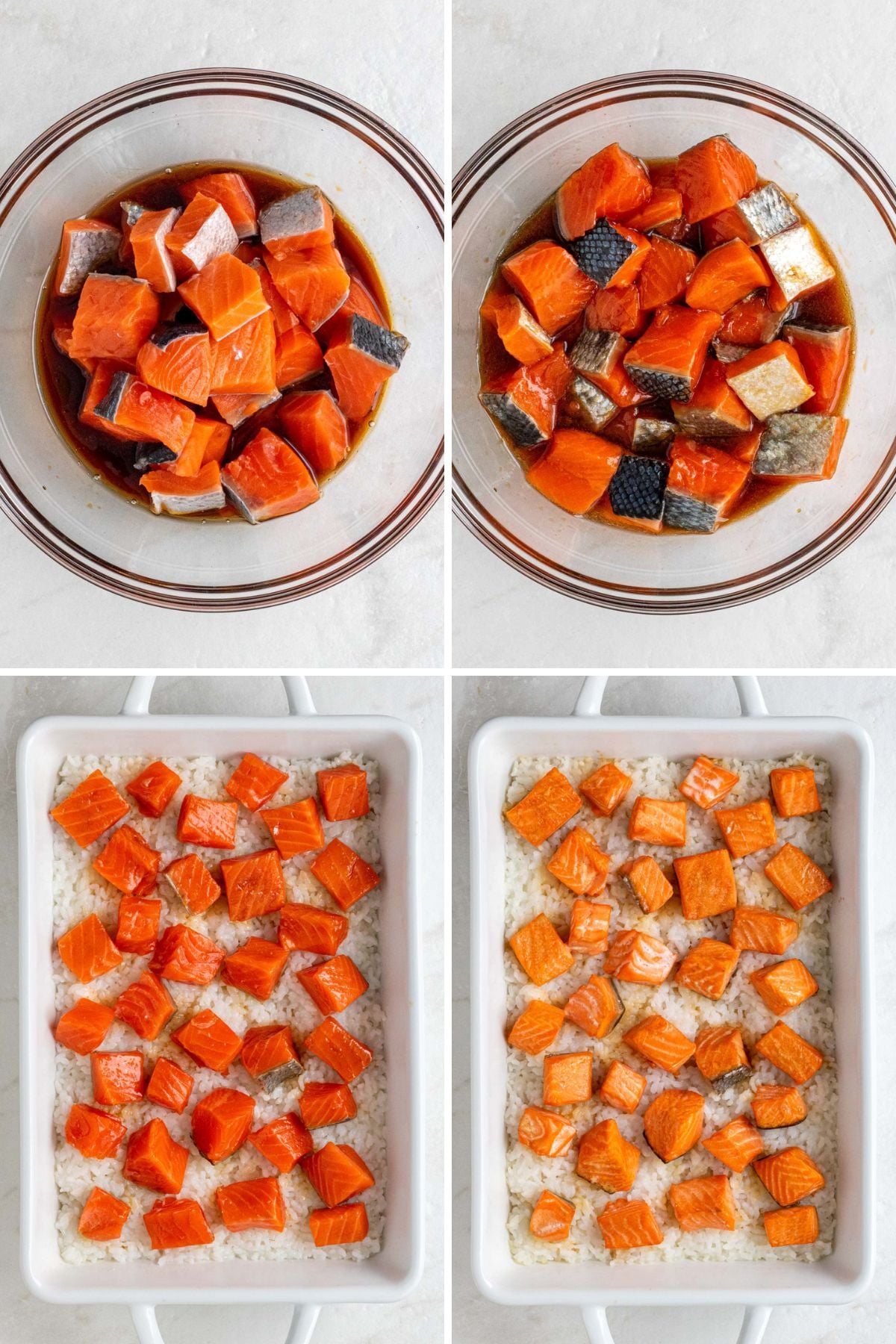
Collage of four images of a large pot with sautéed onion, celery, carrots, garlic, thyme, salt, and pepper; large pot with vegetables, turkey broth, and a bay leaf; large pot of large pot with turkey broth, raw egg noodles, and shredded turkey; and a large pot with cooked egg noodle and turkey soup.

Red’s Nutrition Tip

While this turkey noodle soup is a nutrient-dense meal as is, you can increase its nutrient content by making homemade turkey broth with a leftover turkey carcass. Not only are bones rich in micronutrients, but they are also one of the best food sources of collagen.

Serving Suggestions

This turkey noodle soup is a balanced meal with protein, carbohydrates, fiber, and fat. It can be enjoyed as is or adapted to suit your personal calorie or macro needs. For example:

  • To make it higher in protein, add an extra cup of leftover turkey breast or thigh meat to the recipe.
  • To make it higher in carbohydrates, add an extra 1/2 pound of egg noodles (along with required broth and water) to the soup and/or serve the soup with a side of crusty bread.
  • To make it higher in fiber, swap the egg noodles for whole wheat pasta and/or add some high-fiber foods such as white beans, green beans, or frozen peas to the soup.
  • To make it lower in fat, only use pieces of white turkey meat.
  • To reduce sodium content, use low-sodium chicken broth.

Can I make it in a slow cooker?

Yes, you can make this turkey noodle soup in a slow cooker or crockpot. Add the onion, carrots, celery, garlic, dried parsley, dried thyme, salt, black pepper, bay leaf, turkey broth, and shredded turkey meat to a slow cooker and cook on high for 3 hours or on low for 6 hours. Once cooked, add the egg noodles and cook for a final 20-30 minutes on high until the noodles are tender.

Close up of a white bowl of egg noodle turkey soup with chopped parsley on a white plate with a gold spoon on a white background.

Storage + Reheating

To Refrigerate: Allow the soup to cool completely, then place it in an airtight container and store it in the fridge for 3 to 5 days.

To Freeze: Place the cooled soup in a freezer-safe airtight container and freeze for up to 3 months.

To Reheat: Warm thawed soup in a saucepan or pot on the stovetop on medium heat for 5-10 minutes until warm or in a microwave-safe dish in the microwave for 2-3 minutes.

More Noodle Soup Recipes:

  • Lemon Chicken Orzo Soup
  • Meal Prep Instant Noodle Cups
  • Thai Chicken Noodle Soup

Roasted Butternut Squash and Sweet Potato Soup

Published on November 20, 2025 by Stephanie Kay

This roasted butternut squash and sweet potato soup is a heart-warming soup filled with flavor. Serve it with crusty bread and your favorite cheese for a simple yet delicious lunch.

Large pot of roasted butternut squash and sweet potato soup with heavy cream and fresh parsley on top with a silver serving spoon and a loaf of sourdough bread, a bowl of salt and pepper, and beige tea towel on a white background.

Root vegetables are one of my favorite cold-weather ingredients. They are inexpensive, versatile, and packed full of fiber and micronutrients. You can serve them roasted as a simple side dish, add them to stews and casseroles, a hearty winter salad, or blend them into a rich and creamy soup with a silky-smooth texture.

This butternut squash and sweet potato soup recipe is a satisfying vegetarian soup that feeds a crowd and can easily be turned into a vegan soup if needed.

Close up of a bowl of sweet potato and butternut squash soup with cream and parsley on top on a wood plate with a silver spoon on a white background.

Why You’ll Love It

  • High in Fiber – The combination of root vegetables ensures this soup has over 7 grams of fiber per serving.
  • Full of Flavor – The addition of garlic, sage, and thyme gives the roasted sweet potato and butternut squash soup an extra hint of fall flavor
  • Keeps Well – This soup keeps well in the fridge and freezer, making it a great meal prep idea.
Jug of vegetable broth, jar of heavy cream, garlic cloves, onion, sweet potatoes, butternut squash, and jars of dried thyme and dried sage on a white background.

Ingredients + Substitutions

  • Butternut Squash and Sweet Potatoes – To make the soup and add some complex carbohydrates. The recipe calls for a specific ratio of them, but you can use any combination you like. You can also use frozen butternut squash and sweet potatoes if needed. See the notes section of the recipe card for details.
  • Onion – To add a hint of sweetness to the soup. The recipe calls for a whole onion, but you can use onion powder if preferred. See the notes section of the recipe card for details.
  • Garlic – To flavor the soup. The recipe calls for garlic cloves, but you can use garlic powder if preferred. See the notes section of the recipe card for details.
  • Herbs – A combination of sage and thyme to enhance the fall flavor. The recipe calls for dried herbs, but you can use fresh herbs if preferred. See the notes section of the recipe card for details.
  • Broth – To make the soup. The recipe calls for vegetable broth, but you can use chicken broth if preferred.
  • Heavy Cream – To add some healthy fats. The recipe calls for heavy cream, but table cream or half-and-half would also work, and you can use coconut milk if needed. See the notes section of the recipe card for details.
  • Olive Oil – To add some more healthy fats, butter would also work well.
  • Salt and Pepper – To season.

Dietary Adaptions

To Make it Gluten-Free: Use certified gluten-free chicken broth.

To Make it Dairy-Free: Swap the heavy cream for canned coconut milk.

Large sheet pan with raw, cubed butternut squash and sweet potato on a white background.
Large sheet pan with roasted butternut squash and sweet potato on a white background.

Red’s Nutrition Tip

most filling foods

Serving Suggestions

This roasted butternut squash sweet potato soup is a good source of carbohydrates, fiber, and fat; however, you can easily make this soup a more balanced meal or adapt it to your personal calorie or macro needs. For example:

  • To make it a more balanced meal, enjoy the soup with a high-protein sandwich, such as my chicken avocado sandwich or tofu sandwich.
  • To make it lower in fat, omit the heavy cream and use half the amount of olive oil.
  • To make it higher in fiber, add more high-fiber fresh vegetables to the soup, such as parsnips or carrots.
  • To add more texture, serve the soup with bacon bits or roasted pumpkin seeds on top.
  • To add more flavor, add some fresh ginger, curry powder, garam masala, cayenne pepper, or a pinch of cinnamon.
Grid of images of a large pot filled with sautéed onion, garlic, and herbs; pot of sautéed veggies and roasted butternut squash and sweet potato; pot of butternut squash and sweet potato covered in vegetable broth; and a pot of blended soup.

Can you make it in a slow cooker?

Yes, you can make butternut squash and sweet potato soup in a slow cooker or crockpot. Simply add all of the ingredients to a slow cooker and cook on high for 3-4 hours or on low for 6-8 hours until the vegetables are fork tender. Once cooked, using an immersion blender, blender, or food processor, purée the soup until smooth. Then add the heavy cream, stir to combine, taste, and adjust seasoning with additional salt and pepper as needed.

Storage + Reheating

To Refrigerate: Allow the soup to cool completely, transfer it to an airtight container, and store it in the refrigerator for 5 days.

To Freeze: Once cooled, any leftover soup can be stored in an airtight container in the freezer for up to 3 months.

To Reheat: Once thawed, reheat the butternut squash and sweet potato soup in a pot on the stovetop on medium heat for 5 minutes or until warm, or in the microwave for 1-2 minutes. If using frozen leftovers, allow the stew to thaw completely before reheating.

Two bowls of butternut squash sweet potato soup, one on a wood plate with a silver spoon, with crusty bread and a bowl of salt and pepper on the side on a white background.

More Butternut Squash and Sweet Potato Recipes:

  • Curried Butternut Squash Soup
  • Butternut Squash, White Bean, and Kale Soup
  • Butternut Squash and Spinach Lasagna
  • Butternut Squash Casserole
  • Butternut Squash Risotto
  • Butternut Squash Mac and Cheese

How to Reduce Sodium Intake

Published on November 18, 2025 by Stephanie Kay

Concerned about the amount of sodium in your diet? You’re not alone. While this mineral is essential to health, excessive sodium can lead to a range of health issues. So here are some practical tips on how to reduce sodium intake to help ensure you’re consuming a heart-healthy diet.

Boxes of low-sodium Swanson chicken broth on a grocery store shelf.

Table of contents

  • Tips to Reduce Sodium Intake
  • 1. Prioritize whole foods.
  • 2. Cook your own meals.
  • 3. Read food labels.
  • 4. Use fresh or frozen meat.
  • 5. Use low-sodium options.
  • 6. Season with herbs and spices.
  • 7. Select condiments with care.
  • 8. Drain and rinse canned beans and vegetables.
  • 9. Don’t overdo electrolyte supplements.

Sodium is a mineral, electrolyte, and essential micronutrient. Also known as sodium chloride (NaCl), it plays numerous critical roles in the human body, including maintaining normal cellular homeostasis, regulating fluids, electrolyte balance, and blood pressure, as well as nerve and muscle function (1, 2).

Exactly how much sodium you need per day will vary slightly by individual; however, the recommended daily intake of sodium is 2,300 mg per day for adults and children 14 years and older, which is equivalent to roughly 1 teaspoon of table salt (3).

While sodium is essential to life, too much sodium can be dangerous and be a major risk factor for high blood pressure, heart disease, stroke, kidney disease, and more (4).

Infographic with tips on how to reduce sodium intake.

Tips to Reduce Sodium Intake

Here are 9 tips to help you reduce your sodium intake.

1. Prioritize whole foods.

Eating more whole foods is one of the easiest ways to reduce sodium intake, as most of the sodium in the modern diet comes from processed foods (5). Fresh foods, such as fruits, vegetables, whole grains, legumes, nuts, seeds, eggs, dairy, poultry, seafood, and meat, are naturally low in sodium.

Reaching for more whole foods can also improve the overall quality of the diet by increasing vitamin and mineral intake and reducing the consumption of excess calories, added sugars, and saturated fat.

2. Cook your own meals.

Cooking your own meals can help to significantly reduce sodium intake, as you can control all of the ingredients and seasonings. Commercially packaged and prepared foods, including those prepared at restaurants, account for over 70% of the sodium intake in the Standard American diet (5).

By cooking your own meals, you can decide exactly how much salt is added to the recipe, as well as opt for low-sodium foods and products and control portions as needed.

3. Read food labels.

Reading food labels when purchasing processed or prepared foods can further help to reduce sodium consumption. Reviewing the sodium content on the nutrition information panel can help you determine exactly how much sodium the item contains, and opt for a lower-sodium option if needed.

The nutrition facts label on a food product indicates the sodium content in milligrams (mg) per serving and as a percentage of the Daily Value (%DV). As a general dietary guideline, 5% DV or less of sodium per serving is considered low, and 20% DV or more of sodium per serving is considered high (5).

4. Use fresh or frozen meat.

Whenever possible, use fresh or frozen meat rather than cured, salted, smoked, and other processed meats. While there is nothing inherently unhealthy about cured, salted, or smoked meats for the average person, if you are trying to reduce your sodium intake or follow a low-sodium diet, these foods are best limited or avoided as they have a higher sodium content.

Instead, opt for fresh or frozen lean meats such as chicken, turkey, fish, and lean cuts of beef, pork, and lamb, such as sirloin steak or pork tenderloin.

5. Use low-sodium options.

Comparing the sodium content on different brands and products, and choosing packaged foods labeled “low sodium,” “reduced sodium,” or “no salt added” when available, can also help control your overall sodium intake.

While processed foods with a high sodium content can be included in a healthy diet, when consumed in excess or collectively, they can add up over time. Opting for low-sodium versions of broth, canned vegetables, beans, and lentils can help mitigate total sodium intake.

6. Season with herbs and spices.

Seasoning foods with herbs and spices is a great way to add flavor to meals without adding sodium. The ingredients can provide depth, brightness, and aroma to dishes without the salt shaker.

Using fresh basil, mint, parsley, or dill; dried onion, garlic, ginger, oregano, paprika, or cumin; and salt-free seasoning blends can easily and inexpensively add flavor to fish, meat, soups, stews, sauces, and casseroles.

7. Select condiments with care.

Along with ultra-processed foods, condiments significantly contribute to sodium intake in the standard American diet and are often overlooked. Some of the most popular condiments with high sodium contents include salad dressings, ketchup, soy sauce, teriyaki sauce, pre-made sauces, and gravy.

Although these condiments can certainly be included in a healthy diet in moderate amounts, their cumulative or excess consumption can “push” sodium intake beyond recommended limits. Therefore, it’s best to be mindful of their frequency of use and portion size, and opt for low-sodium condiments, such as vinegar, mustard, pesto, tzatziki, and salsa, when possible.

8. Drain and rinse canned beans and vegetables.

Using canned foods in recipes is a great way to cut down on prep and cooking time; however, many of these products contain high levels of added sodium. Fortunately, by draining and rinsing canned vegetables, beans, chickpeas, and lentils before using them, you can reduce their sodium content by up to 41% (6, 7).

9. Don’t overdo electrolyte supplements.

Electrolyte supplements have become increasingly popular, but not everyone needs them, and consuming them unnecessarily can quickly increase your sodium intake. While sodium is the primary and beneficial ingredient in commercial electrolyte products, many brands contain 300 mg to 1,000 mg of sodium per serving, which equates to 13% to 44% of the daily recommended intake (8).

If you want to avoid increasing your sodium intake, it’s best to limit or avoid electrolyte powders and tablets, or work with a registered dietitian to determine if supplementation is right for you.

The Bottom Line

While sodium is essential to health, too much sodium can lead to a number of serious health concerns. To consume less sodium, prioritize whole foods, cook your own meals, read food labels, use fresh meat, buy low-sodium foods, season with herbs and spices, select condiments with care, drain and rinse canned beans and vegetables, and don’t overdo electrolyte supplements.

Chicken Enchilada Casserole

Published on November 13, 2025 by Stephanie Kay

Layered with corn tortillas, shredded chicken, cheese, and homemade enchilada sauce, this easy chicken enchilada casserole is high in protein and full of flavor. Enjoy it as a fun family dinner tonight, and you’ll have leftovers for days to come.

White baking dish filled with chicken enchilada casserole with avocado slices, jalapeño slices, and cilantro on top with a tea towel, a spatula, and bowls of salsa, sour cream, jalapeño, cotija cheese, and cilantro on the side on a white background.

This chicken enchilada casserole recipe is everything you love about chicken enchiladas in a deconstructed form. While my recipe doesn’t make a completely authentic enchilada sauce, it uses common pantry staples and is very easy to make, which makes it great for busy nights.

Plus, you can easily make a double or triple batch of the sauce and store it in the fridge to use as a spicy condiment for eggs, nachos, tacos, soups, and stews.

Close up of a baking dish of chicken enchilada casserole with a slice missing with avocado and jalapeño slices on top.

Why You’ll Love It

  • High in Protein – The combination of shredded chicken, black beans, and cheese gives this casserole over 26 grams of protein per serving.
  • Full of Flavor – The homemade enchilada sauce takes this dish to the next level.
  • Keeps Well – This chicken enchilada casserole keeps well in the fridge and freezer, making it a great meal prep idea.
Bowls of shredded chicken, shredded cheese, flour, tomato paste, spices, black beans, and olive oil, with a container of chicken broth, bell peppers and a plate of corn tortillas on a white background.

Ingredients + Substitutions

  • Chicken – To add some protein. I think my slow cooker shredded chicken works best, but you can use any type of cooked chicken, such as leftovers or rotisserie chicken, you have on hand. To use raw chicken, see the notes section of the recipe card for details.
  • Olive Oil – To add some healthy fats and make the homemade enchilada sauce.
  • Flour – To thicken the enchilada sauce. The recipe calls for all-purpose flour, but any wheat flour or 1:1 gluten-free flour will work well.
  • Spices – A mixture of chili powder, smoked paprika, ground cumin, garlic powder, onion powder, and dried oregano to make the enchilada sauce. If you don’t have all of the spices on hand, a simple taco seasoning would also work well. See the notes section of the recipe card for details.
  • Vinegar – To balance the acidity in the enchilada sauce. The recipe calls for apple cider vinegar, but white vinegar would also work.
  • Peppers – To add some veggies and micronutrients. I used a red and green bell pepper, but any color will work. I can of diced green chiles would also work well.
  • Black Beans – To add some plant-based protein and fiber.
  • Tortillas – To add some complex carbohydrates, you can use corn or flour tortillas.
  • Cheese – The recipe calls for Monterey Jack cheese, but you can use any shredded cheese you like. Cheddar cheese would also work well.
  • Toppings – A combination of sour cream, avocado, cotija cheese, chopped cilantro, and green onion to serve, although optional.
Small pot filled with homemade red enchilada sauce.

Dietary Adaptions

To Make it Gluten-Free: Use 1:1 gluten-free flour, corn tortillas, and certified gluten-free broth.

To Make it Dairy-Free: Omit the cheese or use a dairy-free cheese alternative.
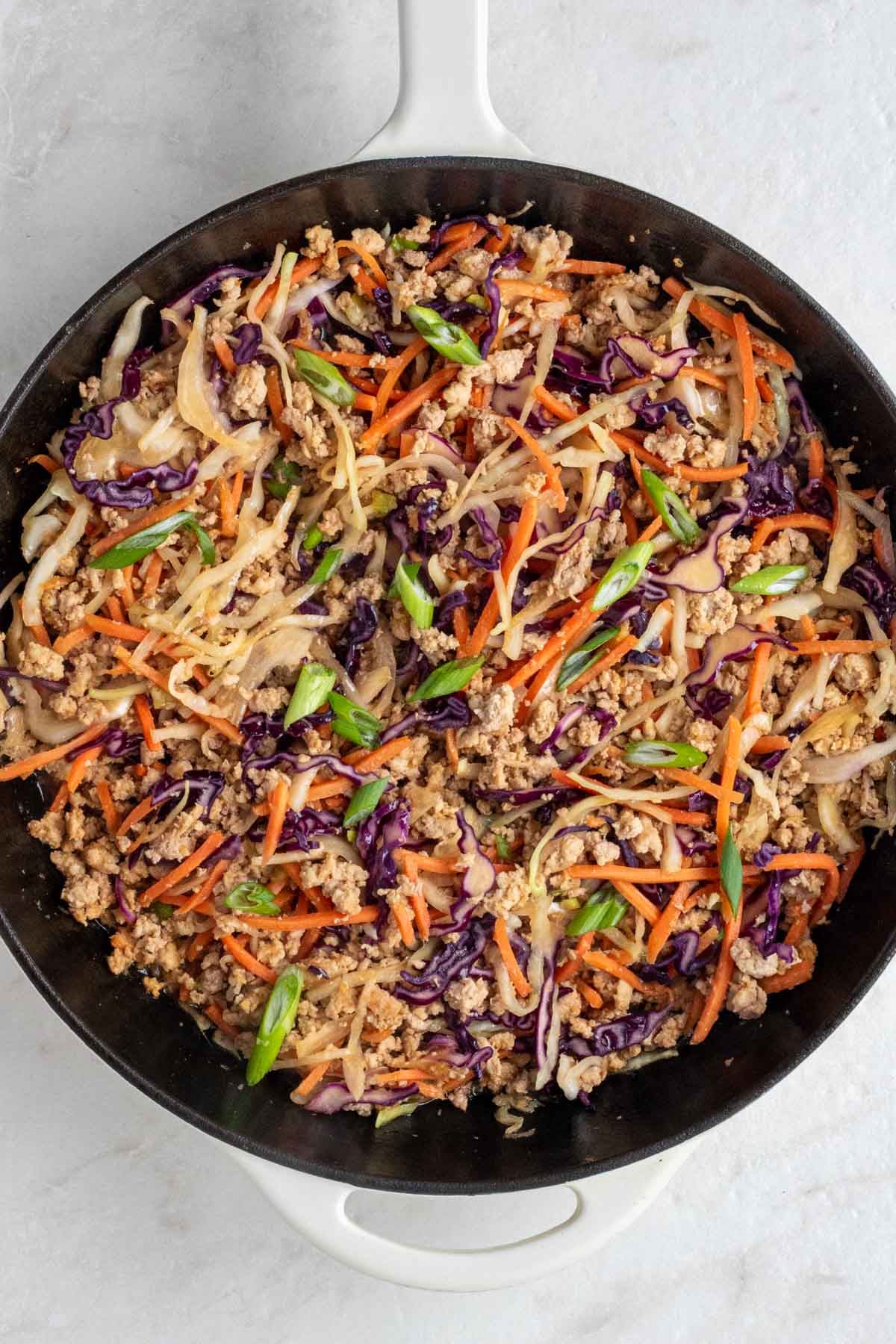
White mixing bowl with shredded chicken, black beans, diced red bell pepper, and diced green bell pepper on a white background.
White mixing bowl filled with shredded chicken, black beans, and peppers covered in red enchilada sauce.
Red’s Nutrition Tip

This chicken enchilada casserole is a great example of how combining plant and animal protein can help to increase the protein content of a recipe. The combination of shredded chicken and black beans, along with some cheese, ensures this dish is protein-packed and can help you significantly increase your protein intake in a single meal.
Grid of images of casserole dishes filled with varying amounts of corn tortillas, shredded chicken mixture, and shredded cheese.

Can you make it in a slow cooker?

Yes, you can make this chicken enchilada casserole in a slow cooker or crock pot. Simply prepare the enchilada sauce and assemble the casserole as per the instructions in a slow cooker or crockpot, as opposed to a casserole dish, and then cook on high for 2-3 hours or on low for 4-6 hours.

Grid of images of casserole dishes filled with varying amounts of corn tortillas, enchilada sauce, shredded chicken mixture, and shredded cheese.

Serving Suggestions

This chicken enchilada casserole is a balanced meal idea with protein, carbohydrates, fiber, and fats. It can be enjoyed on its own or adapted to suit your personal calorie or macro needs. For example:

  • To make it higher in protein, add another cup of shredded chicken to the recipe.
  • To make it higher in fiber, add another can of black beans to the recipe and/or serve it with a side of steamed vegetables.
  • To make it lower in fat, use low-fat cheese.
  • To make it lower in carbs, use low-carb tortillas.
Close up of a large baking dish with slices of chicken enchiladas casserole.

Storage + Reheating

To Refrigerate: Allow the casserole to cool completely, then cover the baking dish with aluminum foil or transfer it to an airtight container, and store leftovers in the fridge for up to 5 days.

To Freeze: To freeze the casserole whole, allow the enchilada casserole to cool completely, then cover the baking dish with plastic wrap and aluminum foil, place it in a freezer-safe bag, and place it in the freezer. To freeze leftovers individually, transfer the leftovers to an airtight container and place them in the freezer for up to 3 months.

To Reheat: From the fridge, transfer the whole casserole, covered, to the oven at 350°F for 20-30 minutes until heated through and bubbling. Individual portions can be reheated in an oven-safe casserole dish at 350°F for 10-15 minutes or in a microwave-safe dish in the microwave for 2-3 minutes. If frozen, allow the casserole to thaw completely and then reheat at 350°F for 20-30 minutes or until heated through. To reheat from frozen, cover the baking dish with foil and warm it in the oven at 350°F for 40-50 minutes until heated through.

Slice of enchilada chicken casserole on a white black with fresh salsa and crumbled cotija cheese on top on a white background.

More Tex-Mex Chicken Casserole Recipes:

  • Chicken Burrito Casserole
  • Chicken Tortilla Casserole

Oat Milk vs. Almond Milk: Which is Healthier?

Published on November 11, 2025 by Stephanie Kay

Oat milk and almond milk are two of the most popular milk alternatives in the modern market, but which one is healthier? Here is a comparison and nutritional breakdown of oat milk vs. almond milk.

Tall glass of oat milk with rolled oats on the side and an oat straw behind it on a white background, next to a small jar of almond milk on a wood cutting board with whole almond on the side on a pink background.

Table of contents

  • What’s the difference between oat milk and almond milk?
  • Ingredients in Oat Milk vs. Almond Milk
  • Oat Milk vs. Almond Milk: Nutrition
  • Calories
  • Protein
  • Fat
  • Carbohydrates
  • Fiber
  • Sugar
  • Micronutrients
  • Other Factors to Consider
    • Dietary Preferences
    • Allergies
    • Taste
    • Texture
    • Uses
    • Environmental Impact
  • So, is oat milk healthier than almond milk?

What’s the difference between oat milk and almond milk?

Oat milk and almond milk are plant-based milk alternatives. While similar in their production method, these non-dairy milks differ in their primary ingredient, taste, texture, and nutritional value.

Oat milk and almond milk are both produced using a similar method: soaking the main ingredient (oats or almonds) in water, blending the mixture, and then straining the liquid to remove the solid pulp.

The key difference between oat and almond milk lies in how much water each ingredient absorbs. Oats absorb significantly more water than almonds do, which means a greater proportion of the original oat material remains in the final oat milk product compared to the amount of almond material found in almond milk.

Ingredients in Oat Milk vs. Almond Milk

While homemade oat and almond milk require only their namesake ingredient and water, commercially produced versions involve additional ingredients and steps to make these processed foods.

Although the exact process will vary by brand, commercial varieties are generally treated with enzymatic hydrolysis to improve digestibility, stability, and texture (mouthfeel), fortified to match the nutrient profile of cow’s milk, and homogenized to ensure a consistent texture and prevent the liquid from separating (1, 2, 3). Moreover, many varieties contain added oils, salt, gums, sugar, and flavor to improve the texture and flavor. This is also common in other milk alternatives, such as soy milk and coconut milk.

Here are the ingredients in the most popular US oat milk brands (4, 5, 6, 7):

  • Chobani Oatmilk: Oat Blend (Water, Whole Grain Oats), Contains 2% or less of: Rapeseed Oil, Sea Salt, Vitamin D2 (Yeast Extract), Calcium Carbonate, Gellan Gum.
  • Planet Oatmilk: Oatmilk (Filtered Water, Oats), Calcium Carbonate, Dipotassium Phosphate (stabilizer), Sea Salt, Gellan Gum, Vitamin A Palmitate, Vitamin D2, Riboflavin (Vitamin B2), Vitamin B12.
  • Oatly Oat Drink: Oat Base (Water, Gluten-Free Oats), Contains 2% or less of: Low Erucic Acid Rapeseed Oil, Dipotassium Phosphate, Calcium Carbonate, Tricalcium Phosphate, Sea Salt, Dicalcium Phosphate, Zinc, Riboflavin, Vitamin A, Vitamin D2, Vitamin B12.

Here are the ingredients in the most popular US almond milk brands (4, 8, 9, 10):

  • Silk Almond Milk: Almondmilk (Filtered Water, Almonds), Cane Sugar, Contains 2% or Less of: Vitamin and Mineral Blend (Calcium Carbonate, Vitamin E Acetate, Vitamin A Palmitate, Vitamin D2), Sea Salt, Gellan Gum, Ascorbic Acid (Vitamin C to Protect Freshness), Natural Flavor.
  • Blue Diamond Almond Milk: Almondmilk (Filtered Water, Almonds), Calcium Carbonate, Sea Salt, Potassium Citrate, Sunflower Lecithin, Gellan Gum, Natural Flavors, D-Alpha-Tocopherol (Natural Vitamin E).
  • Califa Farms Almond Milk: Almondmilk (Water, Almonds), Calcium Carbonate, Sunflower Lecithin, Sea Salt, Natural Flavor, Guar Gum, Gellan Gum, Vitamin A Palmitate, Vitamin D2, Potassium Citrate.
Infographic of oat milk vs. almond milk nutrition.

Oat Milk vs. Almond Milk: Nutrition

Here is a comparison of the nutritional value of 1 cup (240 ml) of plain, unsweetened oat milk vs. plain, unsweetened almond milk (11, 12).

Nutrition per 1 cup (240ml)OAT MILKALMOND MILK
Calories115 calories46 calories
Protein1.9 grams1.6 grams
Fat6.6 grams3.7 grams
Carbohydrates12.2 grams1.6 grams
Fiber1.8 grams1.0 grams
Sugar5.6 grams0.0 grams

Calories

Oat milk contains more calories than almond milk. A 1-cup serving of oat milk contains 115 calories, while a 1-cup serving of almond milk contains 46 calories.

Given that oat milk contains more oats than almond milk contains almonds, oat milk retains more macronutrients overall, which contributes to its higher calorie content.

Protein

Oat milk and almond milk contain similar amounts of protein; however, neither is a significant source of protein. A 1-cup serving of oat milk contains 1.92 grams of protein, and a 1-cup serving of almond milk contains 1.58 grams of protein.

While almonds are one of the best sources of plant-based protein and contain more protein per serving than oats, because there are more oats in oat milk than almonds in almond milk, the protein content of oat milk is higher.

Fat

Oat milk contains more fat than almond milk. A 1-cup serving of oat milk contains 6.60 grams of fat, and a 1-cup serving of almond milk contains 3.74 grams of fat.

The fat content in almond milk is provided by the natural, healthy fats found in almonds, while most of the fat content in oat milk is from added vegetable oils, as oats contain minimal amounts of fat.

Carbohydrates

Almond milk contains fewer carbohydrates than oat milk. A 1-cup serving of oat milk contains 12.24 grams of carbohydrate, and a 1-cup serving of almond milk contains 1.61 grams of carbohydrate.

Oats are primarily a source of carbohydrates, while almonds are primarily a source of fat; hence, oat milk contains more carbohydrates than almond milk.

Fiber

Oat milk typically contains slightly more fiber than almond milk; however, neither is a significant source of fiber. A 1-cup serving of oat milk contains 1.80 grams of fiber, and a 1-cup serving of almond milk contains 0.96 grams of fiber.

While oats and almonds are both good sources of fiber, oats contain more fiber, and more oats make their way into the milk; therefore, oat milk is higher in fiber than almond milk, specifically beta-glucan, a heart-healthy soluble fiber. Although the primary ingredient in both almond milk and oat milk is water, very little fiber is transferred from oats and almonds to their final milk products.

Sugar

Oat milk contains more sugar than almond milk. A 1-cup serving of oat milk contains 5.57 grams of sugar, and a 1-cup serving of almond milk contains 0.00 grams of sugar.

Oat milk contains more natural sugars than almond milk because the processing of oats to make oat milk involves breaking down starches into simple sugars through an enzymatic process that naturally sweetens the milk.

Micronutrients

Homemade or unfortified brands of oat milk and almond milk are not particularly rich sources of micronutrients; however, most store-bought versions are fortified with vitamins and minerals to match the nutritional profile of regular milk.

Oat milk naturally contains more iron and phosphorus, while almond milk naturally contains more vitamin E, but both are fortified with calcium, Vitamin A, Vitamin D, and/or Vitamin B12.

Other Factors to Consider

Here are some additional things to consider in the almond and oat milk debate.

Dietary Preferences

An individual’s dietary preferences and health goals may impact the choice between non-dairy milks. While oat milk and almond milk are suitable for individuals following a plant-based or vegan diet, almond milk may be more suitable for individuals managing blood sugar levels or following a low-carb diet or ketogenic diet, or looking to create a calorie deficit to support weight loss.

Allergies

Oat and almond milk are excellent dairy alternatives for individuals avoiding lactose, as both are completely lactose-free. For those with gluten sensitivities or celiac disease, both options are also suitable, provided oat milk is made with certified gluten-free oats. For individuals with tree nut allergies, almond milk is not a safe option and, while oat milk is nut-free, it is best to read the label because some commercial oat milks may be processed in facilities that also handle nuts, which could lead to cross-contamination.

Taste

Overall, oat milk has a stronger flavor than almond milk. Oat milk has a naturally sweet and oaty flavor, while almond milk has a milk and nutty flavor.

Texture

Oat milk generally has a richer texture than almond milk. Oat milk has a creamy and smooth texture, similar to traditional dairy milk, while almond milk has a more watery texture and thinner consistency.

Uses

Both oat milk and almond milk can be used as alternatives to traditional dairy milk in your morning coffee, cereal, smoothies, mashed potatoes, creamy soups, sauces, or baked goods. Baristas and coffee shops tend to prefer oat milk over almond milk for espresso drinks because of its creamy texture and ability to steam, which makes it ideal for latte art.

Environmental Impact

Oat milk is generally considered to have a lower environmental impact than almond milk. Oat milk requires significantly lower water usage than almond milk and has a relatively low greenhouse footprint; however, almond milk generally has lower CO2 emissions (13).

One concern with oat milk is that some conventional oats have been shown to be contaminated with unsafe levels of glyphosate; however, this can be mitigated by choosing organic varieties.

So, is oat milk healthier than almond milk?

Overall, both oat milk and almond milk are healthy options; one is not healthier than the other. The “best” option depends on your dietary needs, calorie intake, macro needs, and personal preferences.

Oat milk is higher in calories, fat, carbohydrates, fiber, iron, and phosphorus, while almond milk is higher in vitamin E. Oat and almond milk contain similar levels of protein, calcium, Vitamin A, Vitamin D, and Vitamin B12.

For individuals with nut allergies, oat milk is a better option, and for individuals with celiac disease, almond milk is likely a better option. For individuals following a plant-based or vegan diet, almond or oat milk are good options.

The Bottom Line

Oat milk and almond milk are plant-based milk alternatives and both can be included in a healthy diet. They are made from their namesake ingredient and water; however, commercial versions often contain added ingredients to improve flavor, texture, stability, and nutritional profile. Oat milk is higher in calories, fat, carbohydrates, and fiber, but oat and almond milk contain similar levels of protein. Regardless of the option you choose, it is best to read the ingredients and opt for varieties with minimal added sugar.

Pumpkin Spice Chia Pudding

Published on November 8, 2025 by Stephanie Kay

Turn leftover pumpkin puree into a delicious afternoon snack with this pumpkin spice chia pudding. Not only is it easy to make, but it’s high in fiber and full of flavor!

Jar of pumpkin spice chia pudding with a dollop of yogurt and chopped pecans on top with cinnamon sticks on the side on a white background.

Chia seeds are a nutritional powerhouse and, while there isn’t a ton you can do with them, chia pudding is a great way to use them. By simply combining them with milk, sweeteners, and flavoring of your choice, you can create a delicious yet healthy treat that can satisfy a sweet tooth.

This pumpkin chia pudding recipe has a creamy texture and is full of fall flavor. It works well as a light breakfast, sweet snack, or healthy dessert, and keeps well in the fridge for several days.

Three jars pumpkin chia seed pudding with cinnamon sticks on a white cutting board with a small silver spoon and a bowl of chia seeds on the side on a white background.

Why You’ll Love It

  • Easy to Make – If you can add ingredients to a container and stir, you can make this recipe.
  • High in Fiber – The combination of chia seeds and pumpkin puree gives this chia pudding 18 grams of fiber per serving.
  • Full of Flavor – The addition of pumpkin pie spices and maple syrup gives it the perfect balance of sweet fall flavors.
Jug of milk, bowls of maple syrup, chia seeds, pumpkin puree, jars of cinnamon, cloves, nutmeg, and ginger, and a jar of maple syrup on a white background.

Ingredients + Substitutions

  • Chia Seeds – To make the chia pudding and add some fiber. You can use black or white chia seeds.
  • Pumpkin Puree – To add some more fiber and pumpkin flavor. I used canned pumpkin puree, but you can use homemade if preferred. If needed, you can use pumpkin pie filling; see the notes section of the recipe card for details.
  • Milk – To add some protein. The recipe calls for cow’s milk, but you can use non-dairy milk if preferred.
  • Maple Syrup – To add a hint of sweetness. The recipe calls for real maple syrup, but you can use honey, brown sugar, or coconut sugar if preferred.
  • Vanilla Extract – To add an extra hint of flavor, although optional.
  • Spices – A mixture of ground cinnamon, ginger, nutmeg, and cloves to give the pumpkin spice flavor. The recipe calls for each spice individually, but you can use pre-made pumpkin pie spice if preferred. See the notes section of the recipe card for details.

Dietary Adaptions

To Make it Gluten-Free: No adaptations are needed; this recipe is gluten-free.

To Make it Dairy-Free: Swap the milk for full-fat coconut milk, almond milk, or oat milk.

Grid of images with a glass bowl of milk, pumpkin puree, vanilla extract, maple syrup, and spices; a glass bowl of whisk pumpkin mixture; a glass bowl of whisk pumpkin mixture with chia seeds on top; and a glass bowl of pumpkin chia mixture on a white background.

Red’s Nutrition Tip

Small but mighty, chia seeds are a nutritional powerhouse. Not only are they a great source of fiber, but they are one of the highest protein seeds and a good source of ALA omega-3 fatty acids.

Serving Suggestion

This pumpkin spice chia pudding is a good source of fat, fiber, and natural sugar; however, it can easily be adapted to suit your personal calorie or macro needs. For example:

  • To make it higher in protein, add a 1/4 cup of yogurt or Greek yogurt to the recipe and/or a handful of chopped nuts, such as walnuts or pecans.
  • To make it lower in fat, use non-fat dairy milk.
  • To make it higher in fiber, serve it with chopped apples or fresh berries on top.
  • To make it lower in sugar, omit the maple syrup or use a sugar-free sweetener.
  • To make it a special treat, top it with whipped cream or coconut whipped cream.
A glass bowl with pumpkin chia mixture with a silver serving spoon with four small glass jars filled with pumpkin chia mixture.

Storage

To Refrigerate: Once prepared, you can store the pumpkin chia pudding in an airtight container in the fridge for up to 5 days.

To Freeze: This recipe cannot be frozen.

More Pumpkin Recipes:

  • Pumpkin Baked Oatmeal
  • Pumpkin Oatmeal Cookies
  • Pumpkin Muffins
  • Pumpkin Pie Bars
  • Pumpkin Granola

Vegetarian Stuffed Peppers

Published on November 6, 2025 by Stephanie Kay

Filled with brown rice, quinoa, and black beans, these Mexican-inspired vegetarian stuffed peppers are a healthy dinner loaded with fiber and plant-based protein. Plus, topped with melted cheese, they are something the whole family can enjoy.

Vegetarian stuffed peppers in large baking dish with sliced avocado and fresh cilantro on top and lime wedges on the side.

Stuffed peppers are a classic dish, and, fortunately, they can easily be adapted for different dietary needs and flavor profiles. While ground beef stuffed peppers are great for meat eaters, using plant protein instead of animal protein makes them a more crowd-pleasing dish that everyone can enjoy.

This vegetarian stuffed peppers recipe is an easy weeknight meal that works well as a colorful, flavorful, and fiber-filled main course or side dish.

A large casserole dish filled with vegetarian stuffed bell peppers with a stack of plates, half an avocado, a bowl of lime wedges, wood bowl of fresh cilantro, with a tea towel and gold serving spoon on a white background.

Why You’ll Love Them

  • Full of Flavor – These Mexican-inspired vegetarian stuffed peppers are loaded with sweet and savory flavors.
  • High in Fiber – The combination of brown rice, quinoa, black beans, and corn ensures each serving contains 15 grams of fiber.
  • Vegetarian – They can easily be turned into vegan stuffed peppers by omitting the shredded cheese.
Red bell peppers, red onion, shredded cheese, spices, garlic cloves, black beans, brown rice, quinoa, diced tomatoes, frozen corn, and fresh cilantro on a white background.

Ingredients + Substitutions

  • Bell Peppers – To make the stuffed peppers. I used a combination of red bell peppers, but green, orange, and yellow peppers or poblano peppers would also work well.
  • Brown Rice – To add some complex carbohydrates. The recipe calls for raw brown rice, but you can use cooked rice if preferred. See the notes section of the recipe card for details.
  • Quinoa – To add some plant-based protein and fiber. You can use red, white, or multi-color quinoa. The recipe calls for raw quinoa, but you can use cooked quinoa if preferred. See the notes section of the recipe card for details.
  • Black Beans – To add some more vegetarian protein. I used black beans, but pinto beans, kidney beans, or cannellini beans would all work well.
  • Tomatoes – To add some colors and texture. The recipe calls for diced tomatoes, but crushed tomatoes will also work.
  • Corn – To add some more color and fiber. The recipe calls for frozen corn, but canned corn will also work. See the notes section of the recipe card for details.
  • Broth – To help cook the rice mixture and add some flavor. The recipe calls for vegetable broth, but chicken broth or water will also work.
  • Spices – A mixture of chili powder, ground cumin, smoked paprika, and dried oregano to add some Mexican-inspired flavor. You can use taco seasoning if preferred. See the notes section of the recipe card for details.
  • Olive Oil – To add some healthy fats.
  • Cheese – To add some more healthy fats, protein, and flavor to the stuffed peppers. The recipe calls for Monterey Jack cheese, but any mild, high-protein cheese, such as Havarti or cheddar cheese, will also work well.
  • Salt and Pepper – To season.
Large pot of sautéed onion, garlic, and spices on a white background.
Large pot of sautéed onion and garlic in spices with cooked brown rice, cooked quinoa, diced tomatoes, black beans and frozen corn on a white background.

Dietary Adaptions

To Make them Gluten-Free: Use certified gluten-free broth.

To Make them Dairy-Free: Omit the shredded cheese.

Large pot with brown rice, quinoa, and black bean filling on a white background.

Red’s Nutrition Tip

Rice, quinoa, and black beans are all sources of fiber and vegetarian protein. While eating them individually is a good option, combining them is a great way to create a complete protein source, eat more fiber, and increase protein intake at the same time.

Serving Suggestions

These vegetarian stuffed bell peppers are a balanced meal with protein, carbohydrates, fiber, and fats. They can be enjoyed on their own or adapted to suit your personal calorie or macro needs. For example:

  • To make them higher in protein, add some crumbled, extra-firm tofu to the rice and bean mixture.
  • To make them low carb, swap the rice for cauliflower rice.
  • To make them lower in fat, omit the shredded cheese and don’t use avocado or sour cream as a topping.
  • To add more veggies, serve the stuffed peppers with a big green salad.
Baking dish with roasted red bell pepper halves on a white background.
Baking dish with roasted red bell pepper halves with with brown rice, quinoa, and black bean filling on a white background.

Storage + Reheating

To Refrigerate: Allow the stuffed peppers to cool completely, then transfer them to an airtight container and store them in the fridge for up to 4 days.

To Freeze: Once cooled, place the vegetarian stuffed peppers in an airtight container and store them in the freezer for up to 3 months.

To Reheat: Once thawed, the stuffed peppers can be reheated in the oven for 2-3 minutes or in the oven at 350°F for 10 minutes.

Close up of a large baking dish filled with quinoa, brown rice, and black bean stuffed peppers with sliced avocado and fresh cilantro on top on a white background.

Can you make the filling ahead of time?

Yes, you can make the stuffed pepper filling ahead of time. Once cooked, it can be stored in an airtight container in the fridge for up to 4 days or in the freezer for up to 3 months.

More Stuffed Pepper Recipes:

  • Stuffed Pepper Casserole
  • Mexican Stuffed Peppers

Teriyaki Beef Bowls

Published on October 30, 2025 by Stephanie Kay

Ready in 30 minutes, filled with steamed rice, crunchy veggies, and tender slices of beef covered in a homemade teriyaki sauce, these teriyaki beef bowls are a quick, easy, and delicious dinner idea.

Two teriyaki beef bowls with chopsticks with a bowl of sesame seeds and sliced green onion on a white background.

If you think you can’t make teriyaki at home, think again, because these beef teriyaki bowls are SO easy to make. Though you can certainly find pre-made teriyaki sauce in most grocery stores, making your own teriyaki sauce is simple and incredibly inexpensive.

With a few simple ingredients, many of which you probably already have at home, you can create a glossy, sweet, sticky, and savory teriyaki sauce in a matter of minutes. Not to mention, if desired, you can make a double or triple match, quickly reduce it in a pan, allow it to cool, and store it in an airtight container for days to come.

Close up beef teriyaki bowls on a white background.

Why You’ll Love It

  • Quick and Easy – Ready in 30 minutes, this recipe is perfect for a weeknight dinner.
  • High in Protein – These teriyaki beef bowls are loaded with 32 grams of protein per serving.
  • Full of Flavor – The homemade teriyaki sauce ensures each bite is mouthwatering.
Plate of flank steak with a bowls of spices, brown sugar, rice vinegar, soy sauce, and rice with a red bell pepper, carrot, broccoli, and green onion on a white background.

Ingredients + Substitutions

  • Flank Steak – To add some protein. The recipe calls for flank steak, but any lean steak would work well. You can also use ground beef if preferred. See the notes section of the recipe card for details.
  • Soy Sauce – To make the homemade teriyaki sauce and season the beef. You can use regular or low-sodium soy sauce.
  • Rice Vinegar – To balance the acidity of the teriyaki sauce. Any style of rice wine vinegar will work well.
  • Brown Sugar – To add a bit of sweetness to the sauce. The recipe calls for brown sugar, but you can use honey or pure maple syrup if preferred.
  • Cornstarch – To thicken the teriyaki sauce.
  • Ground Ginger – To flavor the sauce. The recipe calls for ground ginger, but you can use fresh ginger root if preferred. See the notes section of the recipe card for details.
  • Garlic Powder – To flavor the sauce. The recipe calls for garlic powder, but you can use garlic cloves if preferred. See the notes section of the recipe card for details.
  • Rice – To add some carbohydrates. The recipe calls for white rice; I used jasmine rice, but any white rice or brown rice will also work well. See the notes section of the recipe card for details.
  • Veggies – A mixture of broccoli, bell pepper, carrots, and green onion to add some fiber and micronutrients to the beef bowls. Other vegetables such as shelled edamame beans, snap peas, snow peas, and mushrooms would also work well.
  • Sesame Oil – To cook the beef and add some healthy fats. Olive oil will also work well.
  • Sesame Seeds – To serve, although optional.

Dietary Adaptions

To Make them Gluten-Free: Use gluten-free soy sauce, tamari, or coconut aminos.

To Make them Dairy-Free: No adaptations are needed; this recipe is dairy-free.

Cast iron skillet with raw sliced flank steak.
Cast iron skillet with cooked teriyaki steak slices.

Red’s Nutrition Tip

Flank steak is one of the leanest cuts of beef, making it a great option for a high-protein, low-calorie meal. In fact, flank steak’s fat content is closer to chicken breasts than chicken legs, and it’s a great source of zinc, iron, phosphorus, and several B vitamins (1).

Serving Suggestions

These teriyaki steak bowls are a balanced meal with protein, carbohydrates, fiber, and fats. They can be enjoyed as is or adapted to suit your personal calorie or macro needs. For example:

  • To make them lower in fat, swap the steak for lean ground meats such as extra-lean ground beef, ground chicken, or ground turkey.
  • To make them low-carb, swap the rice for cauliflower rice.
  • To add some heat, add a pinch of red pepper flakes to the teriyaki sauce.
  • To reduce sodium content, use a low-sodium soy sauce.
Cast iron skillet with stir-fry veggies.

Storage + Reheating

To Refrigerate: Allow the teriyaki beef and rice to cool completely, then add them to containers, combined or separately, and store them in the refrigerator for up to 4 days.

To Freeze: Once cooled completely, transfer the beef and rice to airtight containers, combined or separately, and store them in the freezer for up to 3 months.

To Reheat: Once thawed, reheat the teriyaki beef and rice in the microwave for 2-3 minutes or until warm.

Close up of teriyaki steak bowls with sesame seeds on top in a light grey bowl with wood chopsticks on a white background.

More Beef Bowls:

  • Crispy Beef Bowls
  • Firecracker Beef Bowls
  • Korean Beef Bowls

Protein 101: A Complete Guide

Published on October 28, 2025 by Stephanie Kay

Protein is an important part of a healthy diet as it plays many vital roles in the human body. Here is a complete guide to protein and the best sources to help increase your dietary protein intake.

Raw pork, beef, chicken breasts, salmon and eggs, with bowl of beans, sunflower seeds, hazelnuts, and almonds, with a jug of milk and jar of yogurt on a white background.

Table of contents

  • What is protein?
  • Why do we need protein?
  • How much protein should you have per day?
  • Risks of Protein Deficiency
  • What foods contain protein?
  • How to Increase Protein Intake
  • Is too much protein dangerous?

What is protein?

Protein is a macronutrient required for essential functions in the human body. It is considered an essential nutrient because the body cannot biosynthesize enough to maintain health and survival.

Protein is also an energy-providing nutrient, as it supplies 4 calories per gram, along with carbohydrates and fat, which supply 4 and 9 calories per gram, respectively.

Protein is composed of amino acids. Of the 20 amino acids that make up protein, 9 are considered essential amino acids and must be obtained through food. Amino acids are classified into 3 groups (1):

  • Essential
  • Non-essential
  • Conditional

Essential amino acids cannot be made by the body and, therefore, must be consumed through food. These include histidine, isoleucine, leucine, lysine, methionine, phenylalanine, threonine, tryptophan, and valine.

Non-essential amino acids can be made by the body from essential amino acids or in the normal breakdown of proteins. These include alanine, arginine, asparagine, aspartic acid, glutamic acid, glutamine, glycine, proline, serine, and tyrosine.

Conditional amino acids are those that the body cannot produce in sufficient amounts during periods of illness, stress, injury, or rapid growth, such as infancy. These include arginine, cysteine, glutamine, tyrosine, glycine, ornithine, proline, and serine.

Infographic on protein 101; definition, functions, types, and recommended intake.

Why do we need protein?

All cellular processes in the human body involve protein in some way. Proteins function as structural components, enzymes, hormones, immune factors, transporters, acid-base regulators, and neurotransmitters (1).

Protein is also required for the development and maintenance of muscle mass. The single largest tissue store of bodily protein is muscle (2). Skeletal muscle makes up about 40% of the human body’s weight and contains 50-75% of its total protein (1).

How much protein should you have per day?

Exactly how much protein you need will vary by age, height, weight, gender, activity level, and health goals.

Based on current dietary guidelines, the recommended dietary allowance (RDA) for protein is 0.8 grams per kilogram of body weight per day or 0.36 grams per pound of body weight per day (3). However, the RDA for protein is the recommended minimum intake to prevent a deficiency and was derived from studies on sedentary individuals.

A growing body of evidence has shown that this intake is suboptimal for healthy aging, appetite regulation, weight management, muscle protein synthesis, and optimizing athletic performance (4, 5, 6, 7, 8). The current evidence suggests:

  • For optimizing health, the recommended intake is 0.54 to 0.7 grams of protein per pound of body weight per day.
  • For weight loss, the recommended intake is 0.7 grams of protein per pound of body weight per day.
  • For weight gain, the recommended intake is 0.7 to 1.0 grams of protein per pound of body weight per day.

Risks of Protein Deficiency

Not consuming adequate dietary protein can lead to protein deficiency, which can cause wasting and shrinkage of muscle tissue, edema or swelling due to fluid retention, anemia, thin and brittle hair, skin lesions, and slow growth in children (9).

That said, protein deficiency is rare in the U.S. general population. Data shows that the protein intake of U.S. adults averages 88.2 grams per day, which amounts to 14% to 16% of total daily calories, and meets the RDA of 0.36 grams per pound of body weight per day (10).

Infographic of high-protein foods by macro breakdown.

All data are provided by Food Data Central.

What foods contain protein?

Protein is found in a wide range of animal and plant foods, such as:

  • Meat – beef, pork, lamb, bison, etc.
  • Fish and Seafood – tuna, salmon, shrimp, crab, mussels, etc.
  • Poultry – chicken, turkey, duck, etc.
  • Dairy – yogurt, skyr, cheese, etc.
  • Eggs
  • Legumes – beans, lentils, tofu, etc.
  • Nuts – peanuts, almonds, pistachios, cashews, etc.
  • Seeds – hemp seeds, pumpkin seeds, sunflower seeds, etc.
  • Whole grains – wheat, amaranth, quinoa, etc.

While many foods contain protein, the nutritional value of protein is generally measured by its essential amino acid composition. Different foods contain different amounts of amino acids, which affects their bioavailability, digestibility, and overall protein content.

Animal protein sources contain all essential amino acids and, therefore, are considered “complete” proteins. Plant protein sources do not contain all essential amino acids, or do not contain them in optimal ratios, and, therefore, are considered “incomplete” proteins.

According to both the protein digestibility corrected amino acid score (PDCAAS) and digestible indispensable amino acid score (DIAAS) used to assess the ability of a dietary protein to meet the body’s amino acid requirements, animal protein sources have higher digestibility and bioavailability than plant protein sources (11, 12).

Moreover, animal proteins are primarily sources of protein and fat, with little to know carbohydrates or fiber, outside of milk proteins, while plant proteins are sources of carbohydrates, fiber, and fat with moderate levels of protein. This is an important factor to consider when trying to increase protein intake while counting calories or macros, or eating a plant-based diet primarily focused on vegan or vegetarian protein.

How to Increase Protein Intake

Meeting your optimal dietary protein intake can easily be achieved through food sources and, if needed, supplement sources of protein. Some of the best ways to increase protein intake are:

  1. Eat a source of protein at every meal,
  2. Increase your current portion size of protein,
  3. Combine plant and animal proteins in meals,
  4. Eat protein-rich snacks,
  5. Use protein powders.

By regularly creating balanced meals with a source of protein, carbohydrates, fiber, and fat, and including protein in snacks, especially post-workout snacks, you can help to ensure you are reaching your optimal daily protein needs.

Should you struggle to meet the recommended protein intake for your goals, you can use protein supplements, such as protein powder, collagen powder, and protein bars, to help support your intake.

Is too much protein dangerous?

High-protein diets, typically defined as more than 20–25% of total daily calories, have been touted as dangerous and harmful to health; however, the research does not fully support these claims.

While many people believe that high-protein diets are unhealthy and can lead to kidney damage, liver damage, cardiovascular disease, osteoporosis, and even an increased breast cancer risk, the evidence does not support it and, in some cases, demonstrates the opposite.

Several meta-analysis studies concluded that protein intakes have a trivial to non-existent effect on kidney function, while another study found that high protein intakes had no harmful effects on bone mineral content or bone density, and another showed that higher protein intakes resulted in significant decreases in hip fractures (13, 14, 15, 16, 17, 18).

With the exception of pre-existing kidney disease, there does not appear to be any imminent risk with high protein intakes within the discussed guidelines. High-protein diets are generally considered safe for healthy individuals and, in many cases, beneficial.

Overall, the quality of the protein consumed is more influential than protein intake alone. While it’s important to consume adequate protein, the “package” which the protein comes with (i.e., fat, fiber, vitamins, minerals, phytonutrients, etc.) has a greater impact on health. Choosing a high-quality protein, such as salmon or lentils, that provides all the amino acids, beneficial fats, fiber, and micronutrients, is far healthier than consuming a low-quality protein, such as a burger or processed meat, that also contains excessive saturated fat or sodium.

The Bottom Line

Protein is a macronutrient made up of amino acids. Of the amino acids that make up protein, nine are essential amino acids and must be obtained through food. Proteins function as structural components, enzymes, hormones, immune factors, transporters, acid-base regulators, and neurotransmitters. It can be found in animal and plant foods, such as meat, poultry, seafood, eggs, dairy, beans, lentils, grains, nuts, and seeds.

Slow Cooker Shredded Chicken

Published on October 26, 2025 by Stephanie Kay

Made with only 6 ingredients, this slow-cooker shredded chicken recipe is a great high-protein meal prep idea. It creates tender shredded chicken that can be used in tacos, sandwiches, salads, soups, stews, and casseroles.

Close up of slow cooker shredded chicken.

Meal prep is made easy with this crockpot shredded chicken recipe! While simple, this shredded chicken is a great meal prep hack for busy days when you don’t have time to cook or forget to thaw meat for dinner before you leave for work.

While the flavors are simple, the recipe is very versatile, as you can add any seasonings you like to the slow cooker. Plus, once cooked, you can store shredded chicken in the fridge or freezer and use it for quick-assembly weeknight dinners when you need a tasty, yet healthy, and crowd-pleasing meal on the table in under 30 minutes.

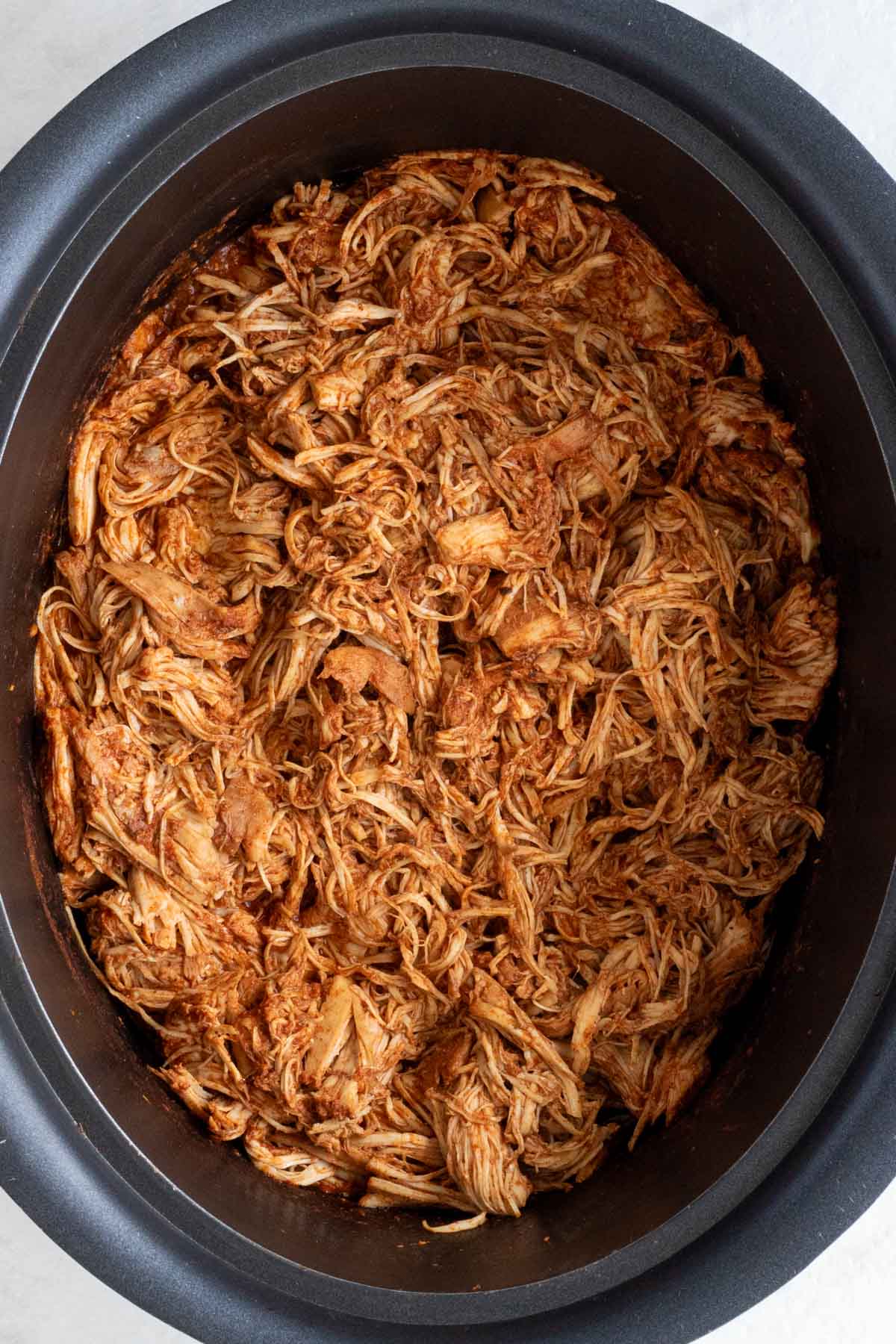
Large crockpot filled with shredded chicken.

Why You’ll Love It

  • Easy to Make – This 6-ingredient crockpot recipe is straightforward to make.
  • High in Protein – Made with boneless, skinless chicken breasts, this shredded chicken is a great lean protein source to add to recipes.
  • Keeps Well – This slow cooker shredded chicken recipe stores well in the fridge and freezer, making it a great meal prep idea.
Plate of raw chicken breasts with a jug of chicken broth, jars of onion powder and garlic powder, and bowls of salt and black pepper on the side on a white background.

Ingredients + Substitutions

  • Chicken Breast – The recipe calls for boneless, skinless chicken breasts, but you can use boneless, skinless chicken thighs if preferred. See the notes section of the recipe card for details.
  • Broth – To cook the chicken and add some flavor. I used chicken broth, but vegetable broth or water will also work well.
  • Onion Powder – To season the chicken, although optional.
  • Garlic Powder – To season the chicken, although optional.
  • Salt and Pepper – To season.
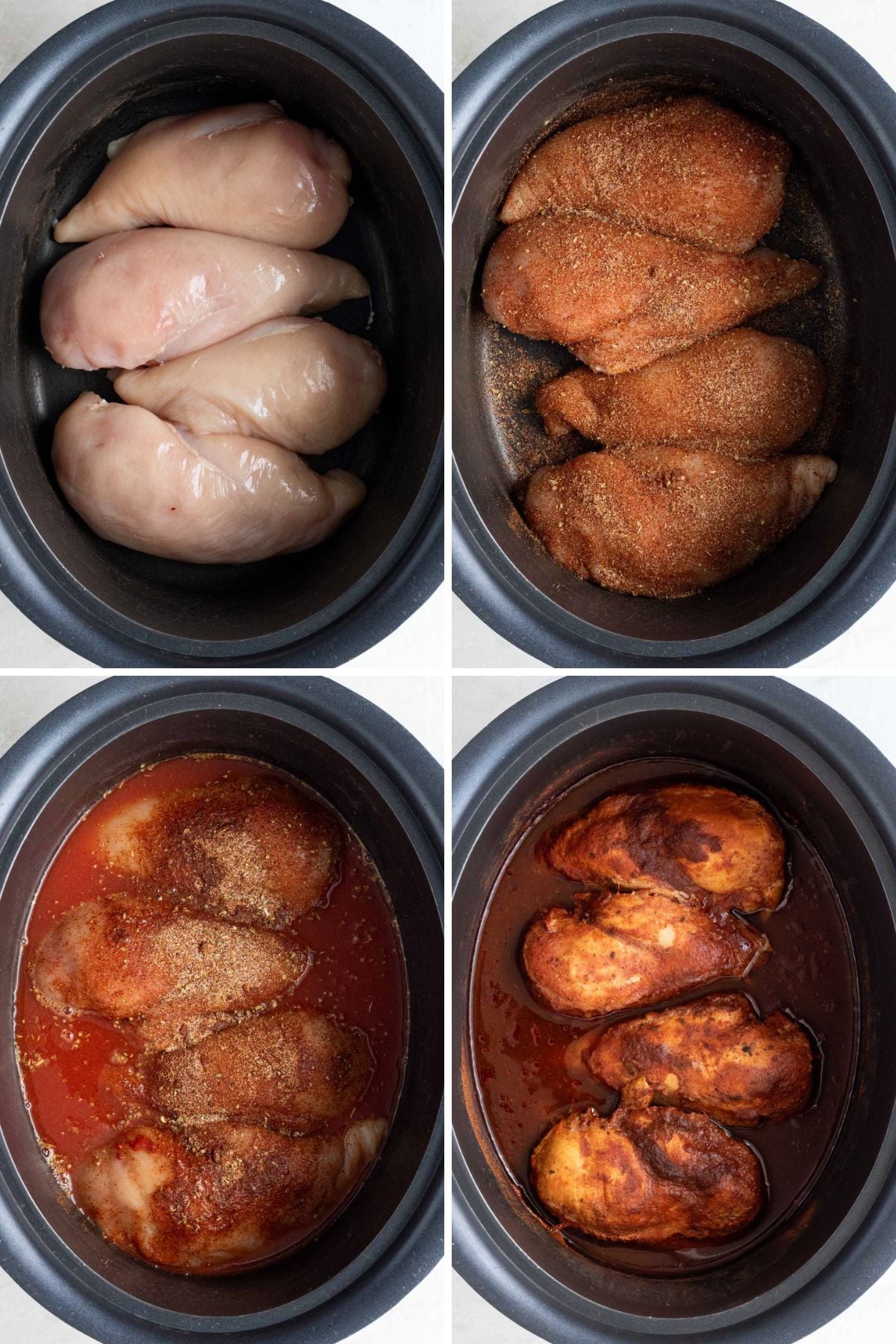
Slow cooker filled with raw chicken breasts seasoned with salt, pepper, onion powder, and garlic powder on a white background.
Slow cooker filled with seasoned, raw chicken breasts covered in chicken broth on a white background.

Dietary Adaptions

To Make it Gluten-Free: Use certified gluten-free broth.

To Make it Dairy Free: No adaptations are needed; this recipe is dairy-free.

Slow cooker filled with cooked chicken breasts in chicken broth on a white background.
Slow cooker filled with shredded chicken on a white background.

Red’s Nutrition Tip

This slow-cooker shredded chicken is a great way to help increase protein intake. Whether your goal is general health, to create a calorie deficit for weight loss, or to build muscle for healthy weight gain, the lean chicken breasts are a low-calorie, high-protein food that can increase the protein content of a meal without overly increasing calorie content or saturated fat content.

Serving Suggestions

This shredded chicken is a great source of protein that can be used in a wide variety of recipes.

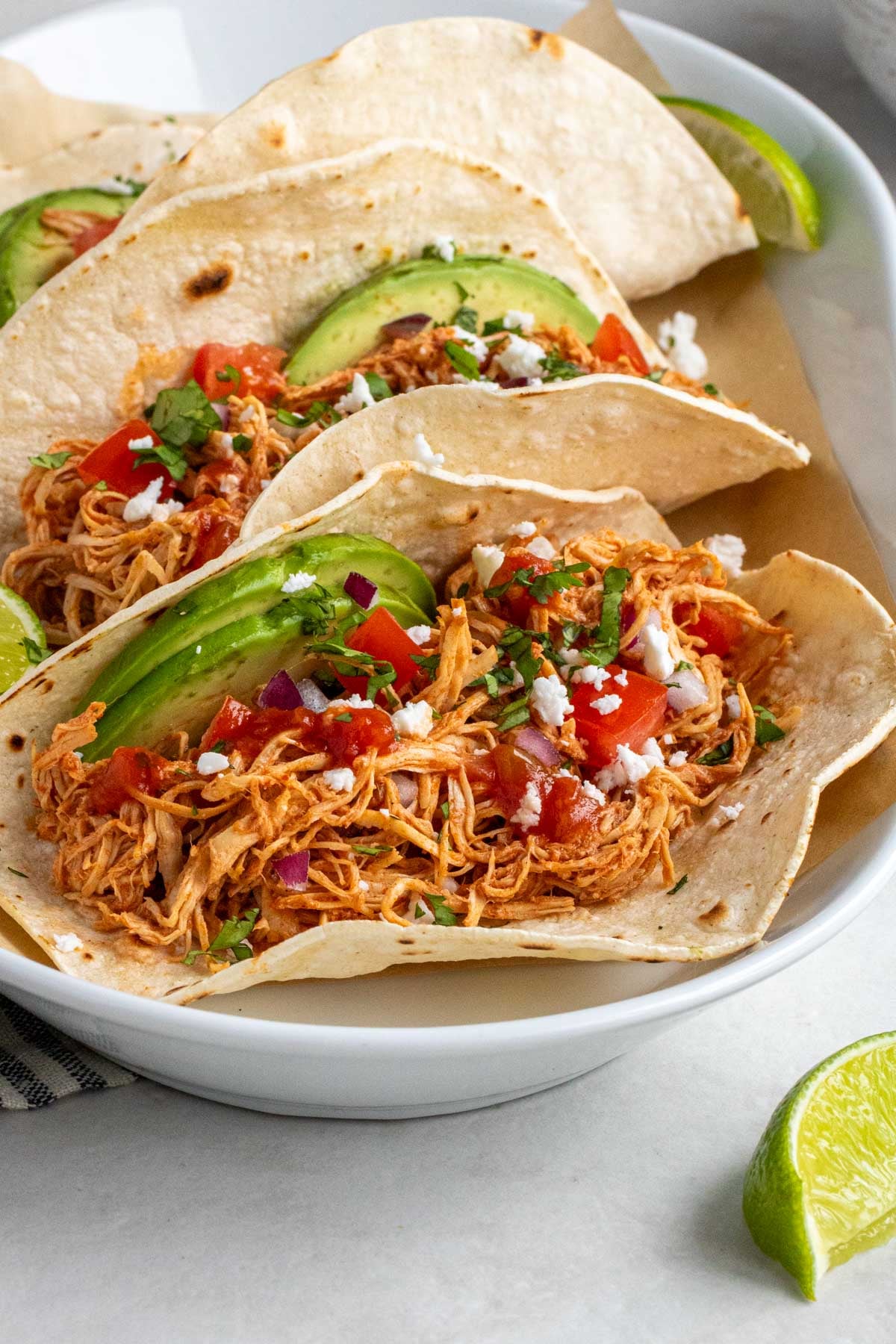
  • To turn it into tacos, add a pack of taco seasoning to the slow cooker and serve the shredded chicken on corn tortillas with salsa, guacamole, and sour cream.
  • To turn it into pasta, add a tablespoon of Italian seasoning and swap the broth for a 28-ounce jar of your favorite pasta sauce, and serve it over a 1-pound box of cooked pasta.
  • To turn it into chicken salad, mix shredded chicken with mayonnaise, Dijon mustard, chopped celery, and dill.

Here is a collection of my favorite recipes with shredded chicken:

  • Chicken Burrito Casserole
  • Greek Chicken Casserole
  • Chicken Salad Meal Prep Bowls
  • Curried Chicken Salad
  • Meal Prep Instant Noodle Cups
  • Meal Prep Taco Salad
Close up of a crock pot filled with shredded chicken.

Storage + Reheating

To Refrigerate: Once cooled, transfer the shredded chicken to an airtight container and store it in the fridge for up to 4 days.

To Freeze: Transfer the cooled shredded chicken to an airtight container and store it in the freezer for up to 3 months.

To Reheat: Once thawed, add the chicken to a plate or bowl and warm it in the microwave for 30-second increments until warm. Be careful not to overheat it, as it will dry out the chicken.

More Slow Cooker Chicken Recipes:

  • Slow Cooker Chicken Stew
  • Slow Cooker Tuscan Chicken
  • Slow Cooker Butter Chicken
  • Slow Cooker Chicken Tacos
  • Slow Cooker Moroccan Chicken


Meal Prep Breakfast Sandwiches

Published on October 23, 2025 by Stephanie Kay

These meal prep breakfast sandwiches are the perfect breakfast for busy mornings. The combination of fluffy eggs, crispy bacon, and melted cheese creates a healthy and high-protein meal to start the day.

Three meal prep breakfast sandwiches stacked on a plate with a breakfast egg sandwich wrapped in parchment paper in the background.

I don’t know about you, but I LOVE breakfast sandwiches. They’re tasty, easy to make, and work well as a well-balanced meal idea loaded with protein, carbohydrates, and fats that keep me going all morning long.

While you can certainly find egg sandwiches at any fast-food drive-through, making them at home is easy and so much healthier. Not only can you control the quality of the ingredients you use, but you can also control the portion size and calorie content to support your personal goals. Plus, meal prep breakfast egg sandwiches are something the whole family can enjoy.

Close up make-ahead breakfast sandwiches on a plate on a white background.

Why You’ll Love Them

  • Easy to Make – If you can make a sandwich, you can certainly make this recipe.
  • High in Protein – The combination of eggs, bacon, and cheese ensures each breakfast sandwich contains 20 grams of protein.
  • Freeze Well – These make-ahead breakfast sandwiches keep well in the fridge and freezer, making them a great meal prep idea.
Bowl of eggs, plate of bacon, plate of cheese slices, jar of milk, and bowl of salt on a white background.

Ingredients + Substitutions

  • Eggs – To add some protein.
  • Bacon – To add some more animal protein. I used regular bacon, but you can use Canadian bacon, turkey bacon, or sausage patties instead. See the notes section of the recipe card for details.
  • Cheese – To add some more protein and healthy fats. The recipe calls for cheddar cheese, but you can use any low-moisture cheese you like. American, Havarti, Monterey Jack, and pepper jack cheese would work particularly well.
  • English Muffins – To add some complex carbohydrates. I used white English muffins, but whole wheat English muffins would also work well.
  • Milk – To add some extra protein to the baked eggs and ensure they have a creamy texture.
  • Salt and Pepper – To season.
Large white baking dish with baked eggs on a white background.
Large baking sheet lined with parchment paper with cooked bacon.

Dietary Adaptions

To Make them Gluten-Free: Use gluten-free English muffins and certified gluten-free bacon.

To Make them Dairy-Free: Omit the cheddar cheese and use cooking spray instead of butter, and swap the milk for almond milk.

A dozen English muffins with a slice of baked egg on top on a white background.
A dozen English muffins with a slice of baked egg and slice of cheddar cheese on top on a white background.

Red’s Nutrition Tip

While saturated fat is not inherently unhealthy, if you’re trying to reduce your intake, you can swap the pork bacon for turkey bacon and use a low-fat cheese instead.

Serving Suggestions

This meal prep breakfast sandwich recipe is a balanced meal with protein, carbohydrates, fiber, and fat. They can be enjoyed on their own as an easy grab-and-go breakfast or adapted to suit your personal calorie or macro needs. For example:

  • To make them higher in protein, add an additional 6-12 eggs to the recipe, or add a cup of cottage cheese to the egg mixture.
  • To make them lower in fat, swap the bacon for turkey bacon or turkey sausage patties.
  • To make them higher in fiber, use whole-grain English muffins and/or add a mixture of your favorite veggies, finely chopped, to the egg mixture.
  • To add some flavor, add a dash of hot sauce, onion powder, and/or garlic powder to the egg mixture.
A dozen English muffins with a slice of baked egg, slice of cheddar cheese, and two slices of bacon on top on a white background.
A dozen bacon hot breakfast sandwiches on a white background.

Storage + Reheating

To Refrigerate: Wrap each breakfast sandwich individually in parchment paper or aluminum foil, then place them in a plastic bag or airtight container, and store them in the fridge for up to 5 days.

To Freeze: Wrap each breakfast sandwich individually in parchment paper or aluminum foil, then place them in a freezer-safe plastic bag or airtight container, and store them in the freezer for up to 3 months.

To Reheat: For the best results, thaw the breakfast sandwiches overnight. Once thawed, remove the parchment paper or aluminum foil, and warm in the microwave for 1-2 minutes or in the oven or toaster oven at 425°F for 5-10 minutes. To reheat breakfast sandwiches from frozen, unwrap them, then warm them in the microwave for 3-4 minutes or in the oven or toaster oven at 425°F for 15-20 minutes.

Close up of bacon, egg, and cheese sandwiches on a white background.

More Meal Prep Breakfast Recipes:

  • Breakfast Egg Bake
  • Meal Prep Breakfast Burritos
  • Spinach and Feta Egg White Wraps

Lentil Chili

Published on October 16, 2025 by Stephanie Kay

Turn chili season into a vegetarian feast with this easy lentil chili recipe. It’s full of flavor, fiber, and plant-based protein and keeps well in the fridge and freezer, making it a great meal prep idea.

Bowl of vegetarian lentil chili with shredded cheese, sliced avocado, and fresh cilantro on top with a silver spoon on a white background.

I’m not sure about you, but I love chili. It’s easy to make, super versatile, and keeps well for months. While more traditional chili recipes contain meat, you can make a good vegetarian chili with the right combination of spices and pantry staples you likely already have on hand.

So, whether you’re prepping for game day or just looking for a heart-warming dinner idea, this hearty lentil chili recipe is a delicious and nutritious crowd-pleasing meal idea.

Close up of two bowls of vegetarian lentil chili with a bowl of shredded cheese and tortilla chips on the side on a white background..

Why You’ll Love It

  • Made in One Pot – This recipe keeps prep time and clean up to a minimum.
  • High in Fiber – The combination of lentils and black beans ensures this lentil chili contains 15 grams of fiber per serving.
  • Plant-Based – This vegetarian lentil chili contains over 18 grams of plant-based protein per serving.
  • Keeps Well – It’s a great meal prep recipe as it keeps well in the fridge for days and the freezer for months.
Bowls of brown lentils, red kidney beans, black beans, diced tomatoes, crushed tomatoes, tomato paste, and spices, with a yellow onion, garlic cloves, and a jug of vegetable broth on a white background.

Ingredients + Substitutions

  • Lentils – To add some protein. The recipe calls for green lentils or brown lentils, as I think they provide the best texture, but red lentils will also work. See the notes section of the recipe card for details.
  • Beans – To add some more vegetarian protein and fiber. The recipe calls for canned beans, but you can use raw beans if preferred. See the notes section of the recipe card for details.
  • Tomatoes – To add some flavor and bulk to the chili. The recipe calls for a combination of diced and canned tomatoes, but you can use one or the other, or use plain tomato sauce instead. I used fire-roasted tomatoes to add some extra flavor, but you can use regular tomatoes if preferred.
  • Broth – To cook the lentils and flavor the chili. The recipe calls for vegetable broth to ensure the recipe is vegan and vegetarian, but you can use chicken or beef broth if preferred.
  • Onion and Garlic – To add a depth of flavor. The recipe calls for a whole onion and garlic cloves, but you can use onion powder or garlic powder if preferred. See the notes section of the recipe card for details.
  • Bell Pepper – To add some veggies and micronutrients. I used a red bell pepper, but any color will work.
  • Spices – A combination of chili powder, smoked paprika, ground cumin, dried oregano, and cocoa powder to flavor the chili. Feel free to add some cayenne pepper or ground chipotle peppers if you want a bit more heat.
  • Salt and Pepper – To season.
  • Olive Oil – To add some healthy fats.
Pot with sautéed onion and red bell pepper on a white background.
Pot with sautéed veggies and spices on a white background.

Dietary Adaptions

To Make it Gluten-Free: Use certified gluten-free broth or water instead.

To Make it Dairy-Free: No adaptations are needed; this recipe is dairy-free.

Pot with sautéed veggies, spices, and brown lentils on a white background.
Pot with sautéed veggies, spices, brown lentils, tomatoes, and tomato paste on a white background.

Red’s Nutrition Tip

Lentils are a great alternative to ground beef in vegan and vegetarian recipes. Not only are they one of the best sources of plant-based protein, but they are also low in saturated fat and one of the highest fiber foods. In addition to chili, they work well in lentil tacos and lentil shepherd’s pie.

Pot with sautéed veggies, spices, lentils and tomato sauce on a white background.
Pot with sautéed veggies, spices, lentils, tomato sauce with red kidney beans and black beans on a white background.

Serving Suggestions

This vegan lentil chili recipe is a balanced meal complete with protein, carbohydrates, fiber, and fats. That said, it can easily be adapted to suit your personal dietary needs. For example:

  • To make it higher in protein, add a block of crumbled, extra-firm tofu along with the beans.
  • To make it higher in fiber, add some frozen corn to the chili.
  • To make it higher in fat, top the lentil chili with some shredded cheese, sliced avocado, or a dollop of sour cream or Greek yogurt.
  • To make it higher in carbohydrates, serve the chili with cooked rice or tortilla chips.
  • To add more flavor, top the chili with fresh cilantro, hot sauce, and/or sliced jalapeño.

Can you make it in a slow cooker?

Yes, this vegetarian lentil chili can easily be made in a slow cooker. Simply add all of the ingredients to a slow cooker, stir to combine, and cook on high for 4-5 hours or low for 8-9 hours.

Large pot of lentil chili with a serving spoon with avocado, cilantro, cheese and tortilla chips on the side with a grey striped  tea towel on a white background.

Storage + Reheating

To Refrigerate: Once cooked, allow the chili to cool completely, then transfer it to an airtight container and store it in the fridge for up to 4 days.

To Freeze: Once the lentil chili has cooled, transfer it to an airtight container, or containers if storing individual portions, and store it in the freezer for up to 3 months.

To Reheat: Once thawed, the chili can be reheated in a pot on the stovetop on medium-high heat for 5-10 minutes or in the microwave for 2-3 minutes.

Two bowls of lentil chili with fresh cilantro, shredded cheese, sliced jalapeño, and slice avocado on a white background.

More Vegetarian Chili Recipes:

  • Slow-Cooker Vegetarian Chili
  • Black Bean and Sweet Potato Chili

12 Foods High in Omega-3

Published on October 14, 2025 by Stephanie Kay

Omega-3s are essential fatty acids with many health benefits that must be obtained from the diet. Here is a list of the foods high in omega-3 that you can start eating today.

Canola oil, avocados, walnuts, beans, soybeans, pumpkin seeds, salmon fillet, chia seeds, eggs, flax seeds, and spinach on a white wood background.

Table of contents

  • What are omega-3 fatty acids?
  • Health Benefits of Omega-3 Fats
  • How much omega 3 do you need?
  • Can you take too much omega 3?
  • List of Foods High in Omega-3s
  • 1. Mackerel
  • 2. Salmon
  • 3. Herring
  • 4. Chia Seeds
  • 5. Trout
  • 6. Anchovies
  • 7. Walnuts
  • 8. Tuna
  • 9. Sardines
  • 10. Soybeans
  • 11. Flax Seeds
  • 12. Caviar
  • Ranking of Omega-3 Foods per Serving
  • How much fish should you eat?
  • Should you take an omega-3 dietary supplement?
  • FAQs

What are omega-3 fatty acids?

Omega-3 fatty acids are polyunsaturated fatty acids (PUFAs). Omega-3s, sometimes referred to as n-3s, play many vital roles in the human body and are considered essential nutrients because the body cannot produce them and, therefore, they must be obtained from food.

There are 3 main types of omega-3 fatty acids (1):

  • Alpha-Linolenic Acid (ALA)
  • Eicosapentaenoic Acid (EPA)
  • Docosahexaenoic Acid (DHA)

Omega-3 fatty acids are found in the oil of plant and animal foods. ALA (alpha-linolenic acid)is found in plant foods such as chia seeds, flax seeds, and walnuts, while EPA (eicosapentaenoic acid) and DHA (docosahexaenoic acid) are found in animal foods, primarily in fatty, cold-water fish such as salmon, mackerel, sardines, and herring.

EPA and DHA are the most bioactive forms of the fatty acids and are directly used by the body. While the body can convert some ALA into EPA and DHA, the process is inefficient, and only very small amounts are converted, making EPA and DHA the most effective forms of omega-3s with more significant physiological and clinical benefits.

Health Benefits of Omega-3 Fats

Omega-3 fatty acids are the focus of a great deal of research and have been linked with many health benefits. Studies suggest that omega-3s can help to (2):

  • Lower triglyceride levels
  • Lower blood pressure
  • Protect against cardiovascular disease and coronary heart disease
  • Lower risk of developing Alzheimer’s disease, dementia, and other problems with cognitive function
  • Lower risk of breast cancer and colorectal cancer
  • Lower risk of developing age-related macular degeneration (AMD) and dry eye disease
  • Support maternal health and fetal growth and development

To date, most health benefits have been associated with EPA and DHA from foods (e.g., fish) and/or dietary supplements (e.g., fish oil), as opposed to ALA. While ALA is a good source of healthy fats, the body’s ability to convert it into EPA and DHA is limited and estimated to occur at rates of <8% and <4%, respectively (3). Therefore, consuming EPA and DHA from food sources and/or supplements is recommended, particularly for vegetarians and vegans.

More studies are needed to understand how omega-3 fats might help rheumatoid arthritis, mental health conditions, or other diseases.

How much omega 3 do you need?

Only infants and children under the age of 1 have specific dietary guidelines for total omega-3 intake. For adults and children over 1 year of age, the Adequate Intakes (AIs) apply only to ALA because it is the only omega-3 that is essential (4).

  • Birth to 12 months*: 0.5 g/day
  • Children 1-3 years: 0.7 g/day
  • Children 4-8 years: 0.9 g/day
  • Boys 9-13 years: 1.2 g/day
  • Girls 9-13 years: 1.0 g/day
  • Teen boys 14-18 years: 1.6 g/day
  • Teen girls 14-18 years: 1.1 g/day
  • Men: 1.6 g/day
  • Women: 1.1 g/day
  • Pregnant teens and women: 1.4 g/day
  • Breastfeeding teens and women 1.3 g/day

*As total omega-3s. All other values are for ALA alone.

Can you take too much omega 3?

Yes, you can take too much omega-3 from supplements; however, the side effects are typically mild and include an unpleasant taste in the mouth, bad breath, heartburn, nausea, stomach discomfort, diarrhea, headache, and smelly sweat (5, 6).

While there is no established Tolerable Upper Intake Level (UL), health authorities generally recommend consuming no more than 5 g/day of EPA and DHA combined from dietary supplements (2).

Infographic of list of foods high in omega-3 fatty acids.

List of Foods High in Omega-3s

Here is a list of the foods highest in omega-3 fatty acids, in no particular order.

1. Mackerel

Mackerel is one of the best sources of omega-3 fatty acids. These small fish are also a great source of animal protein, vitamin D, vitamin B12, and selenium. Mackerel can be prepared in many ways, as fresh mackerel can be grilled, pan-fried, or smoked, while canned mackerel can be used in salads or spreads. A 3-ounce serving of mackerel contains 1.95 grams of combined EPA and DHA omega-3 fatty acids (7, 8).

2. Salmon

Salmon is a great source of omega-3s, specifically EPA and DHA. Along with other fatty fish, salmon is rich in healthy fats, protein, and many micronutrients. Both farmed and wild-caught salmon are healthy choices, and fresh, frozen, or tinned salmon are all good sources of omega-3 fatty acids. A 3-ounce serving of salmon contains 1.83 grams of combined EPA and DHA omega-3 fatty acids (9, 8).

3. Herring

Herring is another oily fish rich in omega-3 fats. It can be grilled, smoked, or pickled, and is commonly eaten with bread, crackers, or potatoes, with butter, onions, or pickles. A 3-ounce serving of herring contains 1.83 grams of combined EPA and DHA omega-3 fatty acids (10, 8).

4. Chia Seeds

Chia seeds are one of the best plant-based food sources of omega-3 fatty acids. They are also one of the best sources of fiber, magnesium, and are one of the highest protein seeds. Be they black or white, chia seeds can be added to overnight oats, blended into smoothies, sprinkled onto yogurt bowls, or made into chia seed pudding. A 1-tablespoon serving of chia seeds contains 2.42 grams of ALA omega-3 fatty acids (11).

5. Trout

Trout is another fish rich in omega-3 fatty acids, although levels vary by species and whether it is farmed or wild. Lake trout generally have the highest omega-3 content among trout species, particularly siscowet trout. Trout is also a good source of vitamin D, vitamin E, and lean protein. A 3-ounce serving of trout contains 1.34 grams of combined EPA and DHA omega-3 fatty acids (12, 8).

6. Anchovies

Anchovies are an abundant source of omega-3 fatty acids. While often high in sodium, these tiny fish are rich in selenium, and their strong taste makes them great for dissolving into dishes to add a deep, savory, umami flavor. Anchovies are a common ingredient in Caesar salad dressing, Worcestershire sauce, and spaghetti alla puttanesca. A 3-ounce serving of anchovies contains 1.23 grams of combined EPA and DHA omega-3 fatty acids (13, 8).

7. Walnuts

Walnuts are another plant source of omega-3 fatty acids, specifically ALA. They are also a good source of insoluble fiber and have been shown to have anti-inflammatory benefits thanks to their high antioxidant content. A 1-ounce serving of walnuts contains 2.57 grams of ALA omega-3 fatty acids (14).

8. Tuna

Be it skipjack, yellowfin, or albacore, tuna is a rich source of omega-3 fatty acids. Albacore (white) tuna generally contains more EPA and DHA than light tuna; however, all types of tuna are rich in healthy fats and great high-protein, low-calorie foods. A 3-ounce serving of tuna contains 1.11 grams of combined EPA and DHA omega-3 fatty acids (15, 8).

9. Sardines

Sardines are one of the most nutrient-dense foods and a great source of healthy fats. These small, oily fish have a soft texture and strong flavor, and can be cooked fresh or found canned. Sardines can be eaten directly from the tin on crackers or toast, or added to salad dressings and sauces for a depth of flavor. A 3-ounce serving of sardines contains 0.84 grams of combined EPA and DHA omega-3 fatty acids (16, 8).

10. Soybeans

Not only are soybeans one of the best sources of vegetarian protein, but they are also one of the best plant-based sources of the omega-3 fatty acid alpha-linolenic acid. While soybean oil is the richest in omega-3 fats, other soybean products, such as tofu, tempeh, and edamame, contain healthy fats. A 1-cup (93-gram) serving of soybeans contains 1.34 grams of ALA omega-3 fatty acids (17).

11. Flax Seeds

Flax seeds are another seed high in ALA omega-3 fatty acids. Whole flax seeds can be hard for the body to digest; therefore, ground flaxseed and flaxseed oil are better options to obtain maximum health benefits. Ground flaxseed can be sprinkled onto oatmeal, added to smoothies, or used to make flax eggs in baked goods. A 1-tablespoon serving of flax seeds contains 2.35 grams of ALA omega-3 fatty acids (18).

12. Caviar

Caviar is tiny, cured, unfertilized fish eggs and is rich in omega-3 fatty acids. It is considered a luxury food item and is commonly served as a garnish on crackers, toast, or blinis with crème fraîche, onions, and/or chives. A 1-ounce serving of caviar contains 0.89 grams of combined EPA and DHA omega-3 fatty acids (19, 8).

Ranking of Omega-3 Foods per Serving

FoodServing SizeOmega-3 per ServingType(s) of Omega-3
Walnuts1 ounce2.57 gramsALA
Cod Liver Oil1 tablespoon2.44 gramsEPA & DHA
Chia Seeds1 tablespoon2.42 gramsALA
Flax Seeds1 tablespoon2.35 gramsALA
Mackerel3 ounces1.95 gramsEPA & DHA
Salmon3 ounces1.83 gramsEPA & DHA
Herring3 ounces1.83 gramsEPA & DHA
Trout3 ounces1.34 gramsEPA & DHA
Soybeans1 cup1.34 gramsALA
Anchovies3 ounces1.23 gramsEPA & DHA
Hemp Seeds1 tablespoon1.20 gramsALA
Tuna3 ounces1.11 gramsEPA & DHA
Canola Oil1 tablespoon1.01 gramsALA
Soybean Oil1 tabelspoon0.90 gramsALA
Caviar1 tablespoon0.89 gramsEPA & DHA
Sardines3 ounces0.84 gramsEPA & DHA
Oysters3 ounces0.33 gramsEPA & DHA
Lamb (ground)3 ounces0.01 gramsEPA & DHA
Beef (steak)3 ounces0.01 gramsEPA & DHA

All nutrition facts are provided by Food Data Central.

How much fish should you eat?

The American Heart Association recommends eating fish 2-3 times per week, including one serving of oily fish. If you’re concerned about consuming too much mercury, focus on low-mercury fish such as salmon, sardines, anchovies, trout, catfish, cod, shrimp, and scallops (20).

Should you take an omega-3 dietary supplement?

Omega-3 supplements, such as fish oil supplements, can be helpful, particularly if you are not getting adequate omega-3 fatty acids from your diet. Supplementation may be beneficial for individuals who do not eat fatty fish, are pregnant or breastfeeding, or for certain conditions; however, it is best to consult with your doctor or a registered dietitian before taking them.

FAQs

Which food has the highest omega-3 content?

Fatty, oily fish such as mackerel, salmon, and herring have the highest omega-3 content.

What fruit is very high in omega 3?

Fruits are not particularly good sources of omega-3 fatty acids.

Are eggs high in omega 3?

Some eggs are high in omega-3 fatty acids, specifically eggs from pasture-raised hens or ones that were fed a diet with feed enriched with omega-3 fats from flaxseed or algae (21).

What depletes omega-3 in the body?

An insufficient intake of omega-3-rich food, particularly low fish consumption, can hinder levels of omega-3 fatty acids. A deficiency of omega-3s can cause rough, scaly skin and a red, swollen, itchy rash (2).

The Bottom Line

Omega-3 fatty acids are heart-healthy fats that are essential for optimal health. The best sources of eicosapentaenoic acid (EPA) and docosahexaenoic acid (DHA) omega-3 fats are mackerel, salmon, and herring, while the best sources of Alpha-Linolenic Acid (ALA) omega-3 fats are chia seeds, walnuts, and flax seeds. Health authorities recommend eating at least two servings of fish per week to support adequate omega-3 intake.

Slow Cooker Tuscan Chicken

Published on October 9, 2025 by Stephanie Kay

Covered in a creamy parmesan sauce with sun-dried tomatoes and spinach, this slow-cooker Tuscan chicken recipe is a flavorful dish packed with protein. Serve it over pasta, potatoes, or rice for a family-friendly dinner idea.

Crockpot filled with slow cooker Tuscan chicken with a bowl of pasta, chopped parsley, and shredded parmesan cheese on the side with a green tea towel on a white background.

Busy weeknights call for easy meals, and this slow-cooker Tuscan chicken recipe is exactly that. It’s made with minimal ingredients, requires minimal prep, and cooks on its own while you go about your busy schedule.

Plus, it’s incredibly versatile and can be served on its own with a side salad or steamed veggies, or served over pasta or with mashed potatoes for a hearty yet healthy and filling meal.

Close up of slow cooker Tuscan chicken.

Why You’ll Love It

  • High in Protein – With over 30 grams of protein per serving, this is a filling meal perfect for lunch, dinner, or meal prep.
  • Full of Flavor – The combination of Italian-inspired seasonings and ingredients ensures this crockpot Tuscan chicken is full of flavor in every bite.
  • Easy to Make – If you can add ingredients to a pot, you can easily make this dump-and-cook recipe!
Plate of chicken breasts with a bowl of parmesan, sun-dried tomatoes, and spinach with a jar of Italian seasoning, pot of broth, pot of cream, with an onion and garlic cloves on a white background.

Ingredients + Substitutions

  • Chicken Breasts – To add some protein. The recipe calls for skinless chicken breasts, but you can use boneless skinless chicken thighs if preferred. See the notes section of the recipe card for details.
  • Sun-Dried Tomatoes – To add some color and flavor. You can use dry-packed or oil-packed sundried tomatoes.
  • Spinach – To add some greens, fiber, and micronutrients.
  • Onion and Garlic – To flavor the cream sauce. The recipe calls for a small onion and garlic cloves, but you can use onion powder and garlic powder if preferred. See the notes section of the recipe card for details.
  • Cream – To add some healthy fats and make the cream sauce. The recipe calls for heavy cream (36% milkfat or higher), but you can use light cream (18% to 30% milkfat) if preferred.
  • Parmesan – To add a bit more protein and ensure the sauce is extra thick and creamy.
  • Broth – To cook the chicken, vegetable broth or water will also work.
  • Italian Seasoning – To add some Italian flavor.
  • Salt and Pepper – To season.
Slow cooker with raw chicken breasts covered in Italian seasoning, salt, and pepper, on a white background.
Slow cooker with raw chicken breasts covered in spices with diced onion, minced garlic, and chopped sun dried tomatoes on a white background.

Dietary Adaptions

To Make It Gluten-Free: Serve the Tuscan chicken over gluten-free pasta or mashed potatoes.

To Make It Dairy-Free: This recipe cannot be made dairy-free.

Slow cooker with seasoned chicken breasts, onion, garlic, sundried tomatoes, heavy cream, and broth on a white background.
Slow cooker with cooked chicken in a creamy parmesan sauce with chopped spinach on top on a white background.

Red’s Nutrition Tip

This crock pot Tuscan chicken is a good source of protein and healthy fats, and can be enjoyed on its own as a high-protein, low-carb meal; however, it can easily be made a more well-balanced meal by serving it over a source of complex carbohydrates such as pasta, potatoes, or rice.

Serving Suggestions

This slow cooker Tuscan chicken is a good source of protein and fat, while being relatively low in carbs and fiber. It can be enjoyed on its own or adapted or served with additional ingredients to create a balanced meal that suits your personal calorie or macro needs. For example:

  • To make it higher in protein, add an extra 1/2 pound of chicken breasts to the recipe.
  • To make it lower in fat, swap the heavy cream (36% milkfat or higher) for light cream (18% to 30% milkfat).
  • To make it higher in carbohydrates, serve the chicken over cooked pasta, mashed potatoes, or rice.
  • To make it lower in carbohydrates, serve the chicken over cauliflower rice or zucchini noodles.
  • To make it higher in fiber, serve the chicken over whole-wheat pasta.
Slow cooker filled with a Tuscan chicken crockpot recipe with parmesan and parsley on top on a white background.

Storage + Reheating

To Refrigerate: Once cooked, allow the slow cooker Tuscan chicken to cool completely, then transfer to an airtight container and store in the refrigerator for up to 4 days.

To Freeze: Once cooled, leftovers can be stored in an airtight container for up to 3 months.

To Reheat: Once thawed, place the creamy Tuscan chicken in a pot on the stovetop on medium heat for 5-10 minutes or in the microwave for 2-3 minutes.

Two bowls of crockpot Tuscan chicken recipe with pasta with a silver fork and green tea towel on a white background.

More Slow Cooker Chicken Recipes:

  • Slow-Cooker Chicken Stew
  • Slow-Cooker Butter Chicken
  • Slow Cooker Chicken Tacos
  • Slow-Cooker Moroccan Chicken

How to Eat Healthy on the Go

Published on October 7, 2025 by Stephanie Kay

When life gets busy, sticking to your health goals can certainly become more challenging. Whether it’s a late night at the office or a packed after-school schedule, here are some simple tips on how to eat healthy on the go.

Laptop and cup of black coffee on a white background with coffee stains on the surface.

When it comes to healthy eating, there are numerous “rules” you can follow; however, generally speaking, the objectives are straightforward: eat a balanced diet composed primarily of whole foods.

According to the nutrition prioritization pyramid, a tool that highlights the most important aspects of nutrition, the priorities of a healthy diet are not in the tiny details of food groups, micronutrients, and nutrient timing, but rather in the foundational principles of overall lifestyle, consistency, food quality, and macronutrient intake.

Unfortunately, many people stress over the small details of their diet and aim for perfection, and often give up when they make a small “mistake”, when they should be focusing on building a foundation of healthy eating habits they can maintain for the long term.

Whether the goal is weight loss, weight gain, to maintain a healthy weight, or general health, it’s important to learn to eat healthy when life is slow AND when life gets busy.

Infographic on how to eat healthy on the go.

6 Tips for Eating Healthy on the Go

Here are some quick and easy tips for healthy eating on the go.

1. Don’t skip breakfast.

If you know you’ve got a busy day ahead, don’t skip breakfast. Eating breakfast, particularly a well-balanced one, can help to ensure you’re fueled for the day, balance your blood sugar, and mitigate sugar cravings and poor food choices later in the day.

Ensuring you eat breakfast is also particularly helpful when you’re on the go and don’t know when you’ll be able to eat a full meal again. By eating a well-balanced meal with protein, carbohydrates, fiber, and healthy fats, you can get your day started on the right foot. Examples of quick breakfasts you can meal prep the night before or in the morning include:

  • Protein Overnight Oats
  • Breakfast Egg Bake
  • Spinach Feta Egg White Wrap
  • Meal Prep Breakfast Sandwiches
  • Protein Fruit Smoothie

2. Pack a snack.

Before you leave the house, put something in your bag. While meal prepping a bunch of meals before a busy week would be an ideal solution, packing something before you leave the house may simply be more realistic. If you’ve got time to pull together a quick no-cook meal, that’s great; otherwise, grabbing a healthy travel snack before you head out the door can help to keep you on track.

Do your best to reach for whole foods and, if possible, ones that are high in protein and fiber. Examples of grab-and-go nutritious snacks include:

  • Cheese + Apple
  • Hummus + Carrots
  • Yogurt + Berries
  • Peanut Butter + Crackers
  • Protein Bars

3. Look for protein and fiber.

When you’re busy, you may find yourself buying meals or eating at restaurants more frequently than you’d like to; however, that doesn’t mean you need to forgo your health goals. When deciding what to eat, scan the menu for meal options with sources of protein and fiber. Not only does this help to ensure you’re eating a more balanced meal, but foods high in protein and fiber are some of the most filling foods and can help to increase satiety and, in turn, reduce overeating (1, 2).

In fact, whether you’re in a restaurant, gas station, or airport, healthy choices are far more prevalent than commonly believed. Most restaurants offer grilled or baked protein options with rice, baked potatoes, steamed veggies, or greens with salad dressing, while you can easily find fresh fruits, nuts, seeds, beef jerky, cheese sticks, and boiled eggs at most gas stations, train stations, and airports.

Examples of low-fat, protein-rich foods include:

  • Lean beef
  • Chicken
  • Fish
  • Shrimp
  • Greek yogurt
  • Cottage cheese

Examples of high-fiber foods include:

  • Whole grains
  • Brown rice
  • Chickpeas
  • Beans
  • Lentils
  • Fruits
  • Vegetables

Moreover, looking for prepared foods with protein and fiber can help to limit added sugars in the diet, which are very common in packaged and processed foods, such as granola bars, fruit yogurts, and trail mixes.

4. Be mindful of portion sizes.

Whether you’re going through the drive-through or grabbing something to eat with your coffee, being mindful of the portion size you order is a great way to eat healthier on the go. Research has shown that restaurant portion sizes are often 2 to 4 times larger than home-cooked ones, and eating at fast food and full-service restaurants was associated with an increase in daily total energy intake of roughly 200 calories and a reduction in other nutrients (3).

So, instead of just ordering the combo meal or the large drink, take a moment to consider your hunger and fullness cues to practice portion control. For example, ordering the 6-inch sub instead of the 12-inch sub can cut calorie intake from 1,064 calories to 532 calories in a single meal, while ordering the small vanilla latte instead of the venti vanilla latte can decrease your sugar intake from 49 grams to 26 grams in a single snack (4, 5).

That said, if you are served a large portion at a restaurant, remember, you don’t need to finish it all. In fact, saving leftovers for the next meal or the next day is another great strategy for eating healthy on the go.

5. Don’t get too hungry.

When trying to eat healthy on the go, don’t let perfect be the enemy of good. If you’re hungry and you haven’t packed anything and truly can’t find any healthy options, just eat something.

Although some people are comfortable waiting or skipping meals, for others, this can be a recipe for disaster and lead to “hangry” mode and poor food choices later in the day. Instead of stressing over finding the healthiest option, just do your best with the available options and reprioritize whole foods, protein, and fiber the next time you eat.

6. Stay hydrated.

Staying hydrated is important every day of the week, but particularly important when you’re busy or outside of your regular day-to-day routine. Adequate hydration plays an important role in energy, mood, performance, and body composition, so ensuring you’re drinking water while you’re on the can help to mitigate its stressful side effects (6).

Exactly how much water you need will vary by individual based on several factors, including weight, activity level, climate, and diet; however, on average, it is suggested that the total water intake for men is 15.5 cups (3.7 liters) per day, and the total water intake for women is 11.5 cups (2.7 liters) per day (7, 8, 9).

The Bottom Line

While eating healthy on the go can be challenging, it’s possible with a few healthy eating strategies. By eating breakfast, packing snacks, prioritizing protein and fiber, being mindful of portion sizes at restaurants, and staying hydrated, you can help to support your dietary goals no matter how busy your schedule gets.

  • Previous
  • 1
  • 2
  • 3
  • 4
  • 5
  • 6
  • …
  • 58
  • Next
Stephanie Kay Nutrition

Hey, I’m Stephanie

– AKA RED –

I’m a nutritionist on a mission to change the way you look at food and teach you how to make real food work for real life in a realistic way.

Get to Know Me

Want A 7-Day Meal Plan?

Download my free 7-day meal plan, complete with a grocery list, for a week’s worth of easy healthy recipes that make real food work for real life.

    • facebook
    • instagram
    • pinterest

    Shop My Cookbooks

    My eCookbooks are filled with quick and easy real food recipes to help make eating well a breeze so you can crush your goals.

    Learn More

    Recipes

    • Dinner
    • Breakfast
    • Meal Prep
    • Snacks

    Nutrition

    • FAQs
    • Tips
    • This vs. That
    • Weight Loss

    Connect

    • Instagram
    • Youtube
    • About
    • Cookbooks

    About Stephanie

    I’m a nutritionist on a mission to change the way you look at food and teach you how to make real food work for real life in a realistic way.

    Learn More

    Site Credits
    2023 © Stephanie Kay Nutrition | Privacy Policy
    To Top