Stephanie Kay Nutrition

Stephanie Kay Nutrition

Real Food for Real Life

  • recipes
    • all recipes
    • Breakfast
    • Lunch
    • Dinner
    • Soups & Stews
    • Salads
    • Sides
    • Snacks
  • nutrition
    • All Articles
    • Tips
    • FAQs
    • This vs. That
    • How To/Guides
    • Weight Loss
  • resources
    • 10 Days of Nutrition
    • 7-Day Meal Plan
    • Balanced Meal Guide
    • 5-Ingredient Cookbook
    • Lunch Box Cookbook
  • About
    • About Steph
    • Contact
  • recipes
    • all recipes
    • Breakfast
    • Lunch
    • Dinner
    • Soups & Stews
    • Salads
    • Sides
    • Snacks
  • nutrition
    • All Articles
    • Tips
    • FAQs
    • This vs. That
    • How To/Guides
    • Weight Loss
  • resources
    • 10 Days of Nutrition
    • 7-Day Meal Plan
    • Balanced Meal Guide
    • 5-Ingredient Cookbook
    • Lunch Box Cookbook
  • About
    • About Steph
    • Contact
  • Dinner
  • Breakfast
  • Meal Prep
  • Nutrition Tips
  • facebook
  • instagram
  • pinterest
  • youtube

Cajun Chicken Burgers

Published on May 21, 2024 by Stephanie Kay

Covered in Cajun seasoning, these Cajun chicken burgers are full of flavor, a little bit spicy, and very easy to make. They are the perfect addition to a cookout or summer BBQ.

Cajun chicken burgers on a brioche bun with creamy coleslaw and a side of crinkle cut French fries on the side.

You can say goodbye to bland chicken burgers with this spicy Cajun chicken burger recipe. The combination of Cajun spices and creamy and crunchy coleslaw ensures that these chicken burgers are full of flavor while still being good for you.

Whether you’re celebrating with a family cookout, partying at a potluck, or enjoying a simple weeknight meal, these Cajun chicken burgers are the perfect addition to the grill and a great way to add more protein to your diet!

Close up a cajun chicken burger on a bun with cabbage coleslaw on top.

Why You’ll Love Them

  • Quicky and Easy – Ready in 30 minutes, these burgers are perfect for a quick weeknight dinner.
  • Flavor of Flavor – The homemade spice mix ensures that every burger bite is full of Cajun flavor.
  • High in Protein – With over 30 grams of protein per burger, these Cajun chicken burgers are a protein-packed meal.
  • Freeze Well – These burger patties can be frozen raw or cooked for up to 3 months which makes them a great meal prep idea.
Ingredients for Cajun chicken burgers; ground chicken breasts, breadcrumbs, onion, garlic, paprika, cumin, thyme, oregano, salt, brioche buns, and cheddar cheese.

Ingredients + Substitutions

  • Chicken – The recipe calls for ground chicken, but you could use ground chicken breasts, ground chicken thighs, or ground turkey if preferred. While easy to find ground chicken in most grocery stores, you can also grind chicken in a food processor by adding skinless chicken breasts or skinless chicken thighs and blending them until finely chopped.
  • Cajun Seasoning – A mixture of paprika, cumin, dried oregano, dried thyme, cayenne (or chili powder), and salt to create the Cajun spice mix for the burger patties. You can also use store-bought Cajun seasoning if preferred.
  • Onion and Garlic – To enhance the flavor of the burgers. I used fresh onion and garlic, but you could use onion powder and garlic powder if preferred. See the notes section of the recipe card for details.
  • Breadcrumbs – To add moisture to the burgers, although they are optional.
  • Buns – I used brioche buns but you can use any burger bun you like.
  • Cheese – To add some more protein and healthy fats to the burgers. I use cheddar cheese, but you can use any sliced cheese you like, Gouda, Monterey Jack, or havarti would work well.
  • Red Cabbage – The base for the coleslaw topping, green cabbage will also work well.
  • Carrots – To add some color and more veggies.
  • Parsley – To add some greens and freshness, you can use fresh cilantro instead.
  • Yogurt – To make the creamy coleslaw dressing and add some more protein and healthy fats. I used Greek yogurt, but you could use regular yogurt, mayonnaise, or sour cream if preferred.
  • Lemon Juice – To balance the dressing with some acid.
  • Salt and Black Pepper – To season the burger and coleslaw.

Dietary Adaptions

To Make them Gluten-Free: Use gluten-free burger buns and gluten-free breadcrumbs.

To Make them Dairy-Free: Swap the yogurt for mayonnaise.

To Make them Higher in Protein: Use ground chicken breast instead of regular ground chicken.

Ground chicken, Cajun spice mix, breadcrumbs, diced onion, and minced garlic in a glass bowl.
Four raw chicken burger patties on a grey cutting board.

How to Make Cajun Chicken Burgers

  1. Mix Cajun seasoning. Add the paprika, cumin, oregano, thyme, cayenne, and salt to a small bowl and stir to combine.
  2. Mix and shape burger patties. Add the ground chicken, onion, garlic, breadcrumbs, and Cajun seasoning to a bowl and use your hands to mix the spices into the chicken, then shape the mixture into 4 evenly sized burger patties.
  3. Cook the burgers. Warm a grill or frying pan to medium-high heat, grease with a bit of olive oil, then add the burger patties and cook for 4-5 minutes per side or until cooked through to an internal temperature of 165ºF. With one minute reaming, add a slice of cheese to each burger patty and allow to melt as they finish cooking.
  4. Make the coleslaw. In a large bowl, add the yogurt, lemon juice, and a pinch of salt and pepper, whisk to combine, then add the shredded cabbage, shredded carrots, and chopped parsley and toss to combine.
  5. Assemble the burgers. Add the chicken burger to the bottom bun, top with coleslaw, and top bun.
  6. Serve and enjoy! The burgers can be enjoyed immediately or cooled and stored in the fridge for up to 4 days or in the freezer for up to 3 months.

You can find the detailed instructions in the recipe card below.

Bowl of creamy cabbage coleslaw with a side of spicy mayo.

Red’s Nutrition Tip

You can reduce the fat content of these burgers by using ground chicken breast instead of standard ground chicken. Ground chicken is typically made with a mixture of white and dark meat and some chicken skin, which is a good source of collagen, while ground chicken is made solely of chicken breasts. Although the nutritional differences between chicken breasts and chicken thighs are minimal, you can control the calorie content of the recipe by making this adjustment.

Serving Suggestions

The burgers are a good source of protein, healthy fats, and complex carbohydrates. I served them with cheddar cheese, spicy mayonnaise, and a bit of coleslaw. To make them a more balanced meal, I would recommend serving them with a high-fiber salad or side dish, such as:

  • Black Bean and Corn Salad
  • Quinoa Chickpea Salad
  • Grilled Sweet Potato Wedges
  • Apple Cider Vinegar Coleslaw
Cajun chicken burger on a white plate with a side of French fries and a glass of sparkling water.

Storage + Reheating

To Refrigerate: Cooked Cajun chicken burgers can be stored in an airtight container in the fridge for up to 4 days.

To Freeze: You can freeze the raw chicken burger patties by placing them on a baking sheet in the freezer for 30 minutes, then wrapping each burger patty in plastic wrap, and then storing the wrapped patties in a plastic bag or airtight container for up to 3 months. Cooked Cajun chicken burger patties can be wrapped individually in plastic wrap and then stored in a plastic bag or airtight container for up to 3 months.

To Reheat: You can reheat cooked Cajun chicken burger patties in the oven at 350℉ for 7 to 10 minutes, flipping halfway through, or until the center of the patty is hot. Alternatively, you can reheat the chicken burgers in an air fryer at 350℉ for 2-3 minutes or in the microwave for 1-2 minutes. If using frozen cooked burger patties, be sure to thaw them before reheating.

More Cajun Recipes:

  • Grilled Cajun Shrimp Tacos
  • Blackened Salmon with Avocado Salsa
  • Blackened Shrimp
  • Blackened Fish Tacos
Print
Cajun chicken burgers on a brioche bun with creamy coleslaw and a side of crinkle cut French fries on the side.

Cajun Chicken Burgers

Author: Stephanie Kay

These Cajun-inspired burgers are a little bit smoky, a tiny bit spicy, a lot of juicy, and full of flavor. Not only are they quick and easy to make but they freeze well making them a great meal prep idea.

  • Author: Stephanie Kay
  • Prep Time: 10
  • Cook Time: 15
  • Total Time: 25 minutes
  • Yield: 4 burgers 1x
  • Category: Dinner
  • Method: Grilled
  • Cuisine: American
Print Recipe
Pin Recipe

Ingredients

Cajun Chicken Burgers:

  • 1 pound ground chicken or ground chicken breasts
  • 1 onion, minced
  • 2 cloves garlic, minced
  • 1/2 cup breadcrumbs
  • 2 teaspoons paprika
  • 1 teaspoon ground cumin
  • 1/2 teaspoon dried oregano
  • 1/4 teaspoon dried thyme
  • 1/4 teaspoon cayenne pepper (optional)
  • 1 teaspoon salt

Cabbage Coleslaw (optional):

  • 1 cup red cabbage, shredded
  • 1 carrot, peeled and shredded
  • 1/4 cup parsley, finely chopped
  • 3 tablespoons plain yogurt
  • 1 tablespoon lemon juice
  • Salt and black pepper, to season

To Serve:

  • 4 burger buns
  • 4 slices cheddar cheese

Instructions

  1. In a small bowl or jar, add the paprika, cumin, oregano, thyme, and salt and stir to combine.
  2. In a large bowl, add the ground chicken, minced onion, minced garlic, breadcrumbs, and Cajun spice mix, and then, using your hands, mix the ingredients until well incorporated.
  3. Once mixed, divide and shape the chicken mixture into 4 evenly-sized burger patties.
  4. Heat a grill, cast-iron skillet, or large frying pan to medium-high heat, add a bit of oil, then add the patties and cook for 4-5 minutes per side or until cooked through to an internal temperature of 165ºF. With one minute remaining on the burgers, add a slice of cheddar cheese to each burger pattie and allow it to melt as they finish cooking.
  5. While the burgers are cooking, prepare the coleslaw. In a large bowl, add the yogurt, lemon juice, a pinch of salt, and black pepper and whisk to combine. Add the shredded cabbage, shredded carrots, and chopped parsley to the bowl and toss until well combined. Taste and adjust seasoning with salt and pepper as needed.
  6. If you’d like to grill the burger buns, add them to the grill or pan at this time, open side down, and toast for 15-30 seconds until golden brown.
  7. Once the burgers are cooked, remove them from the grill and assemble them on buns with coleslaw and additional toppings of your choice.
  8. Any leftover burger patties can be stored in an airtight container in the fridge for up to 4 days or in the freezer for up to 4 months.

Notes

To Use Onion Powder: Use 1 teaspoon of onion powder and add it in step #1 with the other spices.

To Use Garlic Powder: Use 1/2 teaspoon of garlic powder and add it in step #1 with the other spices.

Nutrition

  • Serving Size: 1 burger
  • Calories: 483 calories
  • Sugar: 9 grams
  • Fat: 22 grams
  • Carbohydrates: 38 grams
  • Fiber: 4 grams
  • Protein: 34 grams

Did you make this recipe?

Share a photo and tag us — we can’t wait to see what you’ve made!

Asparagus Pasta Salad

Published on May 16, 2024 by Stephanie Kay

This creamy asparagus pasta salad is the perfect side dish for a spring potluck, summer BBQ, or a simple meal prep idea for healthy lunches. It’s full of bright green color, loaded with veggies, and covered in a rich and flavorful lemon ricotta dressing.

White bowl filled with creamy lemon asparagus pasta salad with a gold serving spoon.

If you love pasta salad, I think you’re going to love spring pasta salad. Filled with bright colors and fresh flavors this easy pasta salad recipe is full of seasonal spring produce and a great way to kick off BBQ season, plus, it’s super quick and easy to make.

In my opinion, the best part about this asparagus pasta salad is the lemon ricotta dressing. This creamy dressing comes together in a matter of minutes and adds a welcome boost of protein and velvety texture to this cold pasta salad.

Serving of asparagus pasta salad on a white plate with grilled chicken and a gold fork.

Why You’ll Love It

  • Quick and Easy – Ready in 20 minutes, this lemon asparagus pasta salad is fast to prepare.
  • Creamy – The combination of ricotta cheese, olive oil, garlic, and lemon juice creates a rich and creamy dressing that ensures this pasta salad is full of flavor in every bite.
  • Full of Fiber – This veggie-loaded pasta salad is a delicious and nutritious way to ensure you’re getting your eating your veggies and contributing to your daily fiber intake.
  • Keeps Well – This pasta salad keeps well in the fridge for up to 5 days making it a great make-ahead meal or wonderful leftovers you can enjoy for days to come.
Ingredients for asparagus pasta salad: uncooked pasta, asparagus, radishes, frozen peas, fresh parsley, fresh dill, lemon, ricotta, garlic, olive oil, salt, and pepper.

Ingredients + Substitutions

  • Pasta – I recommend using short-cut pasta in this recipe as the shape pairs best with the asparagus. I used rotini pasta in my recipes, however, fusilli, penne, farfalle, cavatappi, gemelli, and cavatelli would all work well.
  • Asparagus – The star of this creamy asparagus pasta salad recipe. Be sure to use fresh asparagus, frozen asparagus is not recommended as it will end up soggy.
  • Radish – To add some crunch, color, a zesty bite, and more vegetables. If you don’t like radishes, carrots or zucchini would be good alternatives.
  • Green Peas – To add a pop of freshness and additional fiber. The recipe calls for frozen peas, but you can use fresh peas if desired, see the notes section of the recipe card for details.
  • Fresh Herbs – A combination of fresh parsley and fresh dill to add some freshness and leafy greens. Fresh basil and a bit of fresh mint would also work well.
  • Ricotta – To add a boost of protein and ensure the dressing is rich and creamy. You can use whole milk or skim milk ricotta cheese or swap it for cottage cheese, sour cream, or plain Greek yogurt instead.
  • Olive Oil – To make the dressing. I used extra virgin olive oil; however, any olive oil will work, or you can use avocado oil instead.
  • Lemon – A combination of lemon juice and zest to make the creamy lemon ricotta dressing. If you don’t have fresh lemons, you can omit the zest and use lemon juice concentrate or red wine vinegar instead.
  • Garlic – To flavor the dressing.
  • Salt and Pepper – To season.
Small glass jar with creamy lemon ricotta dressing and a spoon.

Dietary Adaptions

To Make it Gluten-Free: Use your favorite gluten-free pasta or white beans instead.

To Make it Dairy-Free: Swap the ricotta cheese for soft tofu.

Asparagus and green peas in a white bowl with ice water.

How to Make Asparagus Pasta Salad

  1. Make the dressing. While the pasta is cooking, add the ricotta cheese, olive oil, garlic, lemon juice, lemon zest, and salt to a small jar or bowl and whisk to combine.
  2. Prep the veggies. Trim and chop the asparagus, slice the radishes, and mince the parsley and dill.
  3. Blanch the veggies. Add the asparagus to a small pot of boiling water and cook for 2 minutes, then add the green peas and cook for an additional minute. Once cooked, transfer to a bowl of ice water to cool.
  4. Boil the pasta. Bring a large pot of salted water to a boil, add the uncooked pasta, and cook as per package directions or until al dente.
  5. Cool the pasta. Once cooked, strain the pasta in a large colander and then it under cold water to cool it down.
  6. Mix the pasta salad. Transfer the cooked pasta, asparagus, green peas, radish, parsley, and dill to a large bowl, cover with the lemon ricotta dressing, and toss until well combined. Taste and adjust seasoning with salt and pepper as needed.
  7. Serve and enjoy! The asparagus pasta salad can be served immediately or stored in an airtight container in the fridge for up to 5 days.

You can find the detailed instructions in the recipe card below.

Large white bowl with cooked pasta, blanched asparagus, green peas, sliced radish, parsley, dill, and lemon ricotta dressing on top.

Red’s Nutrition Tip

If you’re concerned about white pasta being “unhealthy”, there is nothing to worry about. Not only is pasta a great source of complex carbohydrates, but it’s made with minimal ingredients and contains moderate amounts of protein, fiber, and micronutrients. In fact, the nutritional differences between white pasta and whole wheat pasta are minimal and both can be included in a healthy and balanced diet.

Serving Suggestions

This creamy asparagus pasta salad is a great source of complex carbohydrates, fiber, and healthy fats. Therefore, serving it with a source of protein, such as grilled chicken, steak, or fish, can help to create a balanced meal. I would suggest serving it with one of the following:

  • Honey Mustard Chicken Thighs
  • Lemon Garlic Chicken Thighs
  • Lemon Pepper Chicken Thighs
  • Lemon Paprika Chicken
  • Blackened Shrimp
  • Bake Pesto Salmon
  • Honey Ginger Grilled Salmon
  • Grilled Tofu Skewers
Creamy asparagus pasta salad in a white bowl with gold serving spoons and a jar of lemon ricotta dressing on the side.

Storage

Transfer the asparagus pasta salad to an airtight container and store it in the fridge for up to 5 days.

More Asparagus and Pasta Salad Recipes:

  • Italian Bow Tie Pasta Salad
  • Mediterranean Orzo Pasta Salad
  • Creamy Asparagus Soup
  • Asparagus Radish Spring Salad
  • Creamy Chicken Pasta Salad
  • Lemon Asparagus Risotto
Print
White bowl filled with creamy lemon asparagus pasta salad with a gold serving spoon.

Asparagus Pasta Salad

Author: Stephanie Kay

This creamy lemon asparagus pasta salad recipe makes a wonderful vegetarian lunch or side dish. Plus, it keeps well in the fridge for days making it a great make-ahead salad.

  • Author: Stephanie Kay
  • Prep Time: 10 minutes
  • Cook Time: 15 minutes
  • Total Time: 25 minutes
  • Yield: 6 servings 1x
  • Category: Salad
  • Method: Stovetop
  • Cuisine: American
Print Recipe
Pin Recipe

Ingredients

Pasta Salad:

  • 1 pound short-cut pasta, such as rotini, fusilli, penne, or farfalle
  • 1 pound asparagus, ends trimmed and cut into 1-inch pieces
  • 1 cup frozen peas
  • 1 cup radish, halved and thinly sliced
  • 1/4 cup parsley, roughly chopped
  • 2 tablespoons fresh dill, finely chopped

Lemon Ricotta Dressing:

  • 1/4 cup ricotta cheese
  • 1/4 cup olive oil
  • 1 clove garlic, finely minced or grated
  • 3 tablespoons lemon juice
  • 1 teaspoon lemon zest
  • 1/2 teaspoon salt, plus more as needed
  • Black pepper, to taste

Instructions

  1. In a small bowl or jar, add the ricotta, olive oil, garlic, lemon juice, lemon zest, and salt, and whisk until well combined. Set aside.
  2. Wash the asparagus, then trim the ends, and slice into 1-inch pieces. Wash the radishes, then cut them in half, and then thinly slice them into bite-size pieces.
  3. Bring a large pot of salted water to a boil, add the pasta, and cook as per package direction or until al dente.
  4. Place a large bowl of ice water on the counter.
  5. Bring a small pot of water to a boil, add the sliced asparagus, and cook for 2 minutes, then add the frozen peas and cook for an additional 1 minute until both vegetables are tender and bright green. Once cooked, strain the asparagus and peas and transfer them to the bowl of ice water to cool. Once cooled, drain the asparagus and peas and gently pat dry to remove any excess water.
  6. Once the pasta is cooked, using a colander, drain the water and then run the pasta under cold water to cool it down and stop the cooking process, and then drain it again to remove any excess water. 
  7. In a large bowl, add the cooked pasta, asparagus, peas, sliced radish, parsley, and dill, pour in the lemon ricotta dressing, and toss until well combined. Taste the salad and adjust the seasoning with olive oil, salt, and pepper as needed.
  8. The pasta salad can be served immediately or stored in an airtight container in the fridge for up to 5 days.

Notes

To Use Fresh Peas: Use 1 cup of fresh, raw peas and add them to the pot after the asparagus has cooked for 1 minute, as per step #5.

Nutrition

  • Serving Size: 1 serving
  • Calories: 419 calories
  • Sugar: 5 grams
  • Fat: 12 grams
  • Carbohydrates: 65 grams
  • Fiber: 6 grams
  • Protein: 14 grams

Did you make this recipe?

Share a photo and tag us — we can’t wait to see what you’ve made!

12 Tips for Healthy Weight Gain

Published on May 14, 2024 by Stephanie Kay

Whether your goal is to gain weight, build muscle, or improve your body mass index, here are some simple yet effective tips to help with healthy weight gain.

Steak, pork, lentils, beans, and nuts on a cutting board with milk, vegetables, and weights in the background.

What is healthy weight gain?

Healthy weight gain involves gaining weight at a slow rate by prioritizing nutrient-dense foods to gain weight from muscle growth and subcutaneous fat, rather than visceral fat, to maintain a healthy body mass index (BMI).

Unlike weight loss, where a calorie deficit is required, for weight gain a calorie surplus is required. A calorie surplus occurs when calorie intake from food and beverages (calories in) exceeds the calorie expended from metabolic rate and activity (calories out).

To ensure that weight gain occurs healthily, calories must be increased slowly over time. A calorie surplus of 10-20% is adequate for gaining healthy weight and will help to prioritize muscle growth and minimize visceral body fat gain (1). This equates to an increase of roughly 200-500 calories per day, which will support a healthy weight gain of 0.25–0.5% of body weight per week.

For example, if a 150-pound adult female’s maintenance daily calorie intake is 2,000 calories per day, creating a 10% calorie surplus of 200 calories will increase her calorie intake to 2,200 per day. These additional 200 calories per day will, theoretically, accumulate to 1,400 calories per week, which is roughly 0.4 pounds gained per week and a weight gain rate of 0.27% of her body weight.

Infographic on tips for healthy weight gain.

How to Gain Healthy Weight

Here are 12 of the best tips to help you gain healthy weight.

1. Prioritize calorie-dense whole foods.

The most important thing for healthy weight gain is to prioritize nutritious foods. Although consuming high-calorie processed foods is a simple way to gain weight quickly, it is not a healthy way to gain weight. To gain healthy weight you must prioritize healthy foods, such as meat, seafood, poultry, eggs, dairy, whole grains, beans, lentils, nuts, seeds, fruits, and vegetables, to ensure you are consuming adequate nutrients as well as extra calories.

To gain weight healthily, you must consume more calories than you are expending while consuming a balance of protein, carbohydrates, fats, fiber, vitamins, and minerals from whole foods.

2. Eat enough protein.

In addition to consuming more calories, eating more protein is important for healthy weight gain. Consuming adequate protein helps to increase muscle mass which increases overall body weight. Protein helps to increase the proportion of weight gained from lean mass during overfeeding, which helps to minimize fat gain and promote healthy weight gain. The recommended protein intake for maximizing muscle growth is 1.6 to 2.2 g/kg (0.7 to 1.0 g/lb) of body weight per day (2).

You can increase protein intake by consuming animal protein sources, such as meat, poultry, eggs, fish, and dairy products; plant protein sources, such as tofu, beans, and lentils; and include protein supplements, such as protein powder, as needed.

3. Increase your portion sizes.

Another simple yet effective way to eat more calories to support healthy weight gain is to increase the portion size of the foods you are already eating. By simply eating a slightly larger portion of protein, complex carbohydrates, and/or healthy fats at one or two meals during the day, you can easily increase your calorie intake by several hundred calories without much effort.

That said, it’s important that you only increase the estimated portion sizes of the whole foods you are eating, not the hyper-processed foods, to ensure you are increasing calories from nutrient-dense foods to gain weight healthily.

4. Eat more often.

Eating smaller meals more often can help to increase calorie intake without getting too full or uncomfortable at meals. While eating larger portions at mealtime is one way to add more calories to your diet, if you find yourself bloated or lethargic after eating a large meal, consuming smaller meals more frequently throughout the day can help you gain weight without feeling uncomfortable.

5. Eat high-fat snacks.

Eating snacks in general is a good way to eat more calories, but eating high-fat snacks specifically can increase calorie intake in small portions. Fat is the most calorie-dense macronutrient, as it contains 9 calories per gram while protein and carbohydrates contain 4 calories per gram, therefore, foods high in fat are some of the most calorie-dense foods. Eating snacks high in fat, such as cheese, cream cheese, avocado, or nut butter, is an easy way to eat more calories without eating large portions of food.

6. Opt for fattier cuts of meat.

Opting for protein sources that are high in fat is a good way to eat more protein while eating calories at the same time. While lean meats, such as chicken breasts, white fish, and ground turkey are wonderful sources of protein, they contain little to no fat. Instead, opting for fattier cuts of meat, such as ribs, ribeye steak, chicken legs, chicken wings, and oily fish, can help to increase calorie intake while increasing protein intake and micronutrient intake at the same time. In fact, fatty bone-in cuts of meat are some of the most nutrient-dense cuts of meat and are wonderful food sources of collagen too.

7. Use full-fat dairy products.

Dairy products are very nutrient-dense foods, containing 13 essential vitamins and minerals, protein, and healthy fats, and whole milk dairy products are the most calorie-dense options (3). Whole milk products are made from whole milk, which is 3.25% milk, and opting for whole milk, whole milk yogurt, and full-fat cheese instead of low-fat or 0% dairy products is a simple way to add a few more calories to your daily intake. You can also use full-fat dairy products to make dishes like oatmeal, mashed potatoes, or creamy pasta sauces extra rich.

8. Garnish meals with nuts and seeds.

While nuts and seeds do contain protein and fiber, they are primarily sources of fat and concentrated calories. A small 1-ounce serving of nuts or seeds, such as pecans, almonds, or sunflower seeds, can provide as much as 200 calories, making them a great way to add calories to a meal or snack. A sprinkle of pumpkin seeds on a salad, a drizzle of almond butter on overnight oats, or a handful of peanuts as a snack can help you gain weight while prioritizing nutritious foods.

9. Use sauces and condiments.

Condiments are an often-overlooked source of calories and can easily contribute to healthy weight gain if opting for nutritious choices. While sugary sauces and seed oil dressings are less than ideal choices, condiments made from whole foods, such as hummus, pesto, tahini, sauerkraut, kimchi, homemade mayonnaise, and healthy oils such as olive oil and avocado oil, are a simple way to add more calories to your diet. However, be mindful of the serving size you choose to consume as many condiments are very rich in fat, which can increase the calorie content of your meal much faster than you’d expect.

10. Add liquid calories.

Liquids are a quick way to add more calories to your diet and adding healthy liquid calories can help to promote healthy weight gain. Instead of reaching for empty-calorie beverages such as soda, sugary drinks, and alcohol, opt for beverages such as milk, fresh juices, and smoothies. Cow’s milk is a great source of protein that be consumed on its own or added to oatmeal, chia pudding, and smoothies. Protein shakes made with a source of complex carbohydrates, protein, and healthy fats, such as berries, Greek yogurt, protein powder, and peanut butter, are not only a great post-workout snack but a simple way to add more calories and extra protein to a meal.

11. Enjoy a bedtime snack.

A high-protein snack before bed can help you increase your calorie intake, meet your daily protein target, and support muscle recovery while you sleep. Although many people believe it’s best to limit food before you go to sleep, studies show that protein consumed before sleep is effectively digested and absorbed, which helps to stimulate muscle protein synthesis. A high-protein bedtime snack such as Greek yogurt with granola, cottage cheese with fruit, or edamame contains the beneficial nutrients to help you gain weight with a healthy diet.

12. Incorporate resistance training.

In addition to a healthy diet and calorie surplus, resistance training is particularly important to ensure healthy weight gain, especially if your goal is to build muscle. Resistance training, also called strength training and weight training, is a form of exercise that increases muscular strength and endurance by exercising a muscle or muscle group against external resistance (4). Resistance training can be performed through bodyweight exercises, such as pull-ups and push-ups, or with exercises using dumbbells, barbells, or kettlebells.

Resistance training performed with progressive overload is the most effective way to build muscle, which can help you gain weight or lose weight, depending on your goal. When performed in a calorie deficit, resistance training can help to maintain lean muscle mass while losing weight, and when performed in a calorie surplus, resistance training can help to build muscle while gaining weight.

If you are a beginner to resistance training or have stopped for a long period, you may be able to gain muscle with minimal fat gain or even some fat loss, as body fat stores can be used as energy to stimulate muscle growth (5, 6). However, for individuals who have been resistance training for several years, adding pounds of muscle with zero body fat gain is highly unlikely.

It’s also important to note that resistance training has many health benefits beyond muscle building, weight gain, and weight loss. Resistance training has been shown to improve cardiovascular health, hormone health, metabolism, bone density, tendon and ligament strength, coordination, cognitive abilities, and self-esteem in healthy adults (4, 7).

The Bottom Line

To gain weight healthily it is important that you that you create a calorie surplus by eating nutrient-dense whole foods. Consuming adequate protein and creating balanced meals with complex carbohydrates, healthy fats, and fiber can help you build muscle and gain weight while maintaining a healthy body mass index. Slowing increasing calorie intake with nutritious foods in conjunction with resistance training is the best way to support healthy weight gain.

Tomato Cottage Cheese Pasta

Published on May 9, 2024 by Stephanie Kay

Turn cottage cheese into a rich and creamy pasta sauce with this tomato cottage cheese pasta recipe! With over 15 grams of protein per serving, this vegetarian pasta is perfect for a healthy, high-protein lunch or dinner.

Tomato cottage cheese pasta with fresh basil and parmesan cheese on top.

Cottage cheese is getting a lot of love these days and I’ll all for it. From ice cream to cookie dough to savory bowls and pasta, cottage cheese has gone viral and is being used in so many new and different ways. While it remains a controversial ingredient – you either love it or you hate it – this creamy salty cheese is a great way to add protein to breakfast, lunch, or dinner, including pasta sauce!

I know at first glance (or taste) blending cottage into tomato sauce might seem a little odd, it works. The combination of salty cheese, sweet tomatoes, and Italian herbs, creates a creamy pasta sauce you add to your favorite noodles for a high-protein vegetarian meal.

Close of up a bowl of pasta with creamy cottage cheese pasta sauce.

Why You’ll Love It

  • Quick and Easy – Ready in less than 30 minutes, this creamy pasta is perfect for a weeknight meal.
  • High in Protein – When paired with wheat pasta, this protein pasta sauce contains over 15 grams of protein per serving.
  • Vegetarian – This kid-friendly vegetarian recipe is something the whole family can enjoy!
Ingredients for tomato cottage cheese pasta: fusilli pasta, diced tomatoes, cottage cheese, onion, garlic, basil, parmesan, and olive oil.

Ingredients + Substitutions

  • Pasta – The recipe calls for short-cut pasta, such as fusilli, cavatappi, or penne, because I think they pair best with this creamy cottage cheese pasta sauce, but any pasta shape will work.
  • Tomatoes – I use a can of diced tomatoes in the recipe, but you could use crushed tomatoes, tomato sauce, or your favorite marinara sauce if preferred. See the notes section of the recipe card for details.
  • Cottage Cheese – To add protein to the tomato sauce and ensure it’s rich and creamy. I recommend using full-fat cottage cheese; however, 2%, 1%, and fat-free cottage cheese will also work.
  • Herbs – To add some flavor and fragrance. I added dried basil to my sauce but any dried Italian herbs you like, dried oregano, dried thyme, or Italian seasoning would all work very well. You can also add a few red pepper flakes for a bit of spice.
  • Parmesan – To add some saltiness, creaminess, and a bit more protein to the sauce. I recommend using freshly grated parmesan cheese for the best results.
  • Onion and Garlic – To flavor the sauce. I used fresh onion and garlic in the recipe, but you can use onion powder and garlic powder if preferred. See the notes section of the recipe card for details.
  • Olive Oil – To add some healthy fats and cook the veggies.

Dietary Adaptions

To Make it Gluten-Free: Use gluten-free pasta.

To Make it Low-Fat: Use fat-free cottage cheese.

To make it Low-Carb: Swap the pasta for roasted spaghetti squash strands or zucchini noodles.

Blender with cooked tomatoes, cottage cheese, and grated parmesan.
Tomato cottage cheese sauce in a blender.

How to Make Tomato Cottage Cheese Sauce

  1. Cook the veggies. In a large pan on medium heat, warm the olive oil, add the onion, and cook for 4-5 minutes until tender. Then add the garlic and basil and cook for an additional 1-2 minutes until fragrant.
  2. Blend the sauce. In a large blender or food processor, add the cooked onion mixture, diced tomatoes, cottage cheese, and parmesan cheese, and purée until smooth and creamy. Taste and adjust seasoning with salt and pepper as needed.
  3. Add the cottage cheese sauce to cooked pasta. Add the creamy cottage cheese pasta sauce to the cooked pasta, and gently stir until well combined.
  4. Serve and enjoy! The tomato cottage cheese pasta can be served immediately with a sprinkle of fresh basil leaves and additional parmesan cheese, or the sauce can be prepared ahead of time and stored in the fridge for up to 5 days.

You can find the detailed instructions in the recipe card below.

Pot with cooked pasta and tomato cottage cheese sauce on top.
Pot with pasta with cottage cheese tomato sauce.

Red’s Nutrition Tip

Cottage cheese is a source of complete protein, one of the highest protein cheeses, and a great way to add more protein to any meal or snack. If you’re not a fan of cottage cheese, simply swap it for ricotta cheese instead. It has a similar nutrition profile without the chunky texture.

Serving Suggestions

This recipe is a good source of protein, complex carbohydrates, and healthy fats; however, it could be even higher in protein and fiber to make it a more well-balanced and complete meal.

To add protein, you can add meat by cooking some ground beef, ground turkey, or ground chicken and add it to the pot with the noodles and sauce and stir until well combined or add some plant protein by adding cooked crumbled tofu instead.

To add fiber, add some steamed broccoli, cauliflower, carrots, or green peas to the pasta, and/or serve it with a green salad. You could also swap the white pasta for whole wheat pasta to add an extra small boost of fiber.

Pot with cooked pasta and tomato cottage cheese sauce on top.

Storage + Reheating

To Refrigerate: Allow the pasta to cool completely, then transfer it to an airtight container and store it in the fridge for up to 5 days.

To Freeze: Once cooled, transfer the pasta to an airtight container and store it in the freezer for up to 3 months.

To Reheat: Allow the pasta to thaw completely before reheating. To reheat the pasta on the stovetop, place the pasta in a pan on medium heat with 1-2 tablespoons of water, stirring gently, until the water has been absorbed and the pasta is warmed through. To reheat the pasta in the microwave, place the pasta in a microwave-safe container with 1-2 tablespoons of water and reheat for 2-3 minutes, stirring every minute or so, until the water has been absorbed and the pasta is warmed through.

Bowl of tomato cottage cheese pasta with fresh basil, parmesan cheese, and a fork.

More Creamy Pasta Recipes:

  • Creamy Zucchini Pasta
  • Roasted Beet Pasta
  • Green Goddess Pasta
  • Pumpkin Ricotta Pasta
Print
Tomato cottage cheese pasta with fresh basil and parmesan cheese on top.

Tomato Cottage Cheese Pasta

Author: Stephanie Kay

Ready in under 30 minutes and over 15 grams of protein per serving, this creamy tomato cottage cheese pasta is a hearty and healthy vegetarian recipe that is perfect for a weeknight dinner.

  • Author: Stephanie Kay
  • Prep Time: 10 minutes
  • Cook Time: 15 minutes
  • Total Time: 25 minutes
  • Yield: 6 servings 1x
  • Category: Dinner
  • Method: Stovetop
Print Recipe
Pin Recipe

Ingredients

  • 1 pound short-cut pasta, such as fusilli or penne
  • 1 tablespoon olive oil
  • 1 onion, diced
  • 2 cloves garlic, minced
  • 1 teaspoon dried basil
  • 1 can (14 ounces) diced tomatoes
  • 1 cup cottage cheese
  • 1/4 cup freshly grated parmesan cheese
  • Salt
  • Black pepper

Instructions

  1. Bring a large pot of well-salted water to a boil, add the pasta, reduce to a very gentle simmer, and cook to al dente or as per package directions. While the pasta is cooking, scoop out 1 cup of pasta water and set it aside. Once the pasta is cooked, drain the water, and set it aside.
  2. In a large on medium-high heat, warm the olive oil, then add the diced onion and cook for 5-6 minutes until tender, then add the minced garlic and dried basil and cook for an additional 1-2 minutes until fragrant.
  3. Transfer the onion and garlic mixture to a high-speed blender or small food processor, add diced tomatoes, cottage cheese, and parmesan cheese, and purée until smooth. Taste and adjust seasoning with salt and pepper as needed.
  4. Once the pasta is cooked and drained, return it to the pot you cooked it in, pour the tomato cottage cheese pasta sauce on top, and stir until well combined, adding splashes of the reserved pasta water to loosen it up only as needed. Once mixed, taste and adjust the seasoning with additional salt and pepper as desired.
  5. Serve immediately with freshly chopped basil leaves and more grated parmesan cheese as desired. Any leftovers can be stored in an airtight container in the fridge for up to 5 days in the freezer for up to 3 months.

Notes

To Use Marinara Sauce: Swap the canned tomatoes for 1 1/2 cups of marinara sauce.

To Use Onion Powder: Swap the onion for 1 teaspoon of onion powder and add it with the tomatoes.

To Use Garlic Powder: Swap the onion for 1/2 teaspoon of garlic powder and add it with the tomatoes.

Nutrition

  • Serving Size: 1 serving
  • Calories: 370 calories
  • Sugar: 7 grams
  • Fat: 5 grams
  • Carbohydrates: 64 grams
  • Fiber: 3 grams
  • Protein: 16 grams

Did you make this recipe?

Share a photo and tag us — we can’t wait to see what you’ve made!

Berry Baked Yogurt

Published on May 7, 2024 by Stephanie Kay

This 6-ingredient berry baked yogurt is gluten-free, high in protein, low in calories, and absolutely delicious. Not only is it easy to make but it’s a kid-approved recipe you can enjoy as a healthy breakfast or sweet snack.

Slice of berry baked yogurt on a white plate with a fork and a side of fresh berries, fresh yogurt, and maple syrup.

If you’ve never made a yogurt bake, you are certainly not alone. I kept seeing baked cottage cheese and baked yogurt recipes all over social media, so I decided to give it a try and it did not disappoint. In fact, it has a very similar consistency and texture to flan, which is an Italian dessert made from condensed milk and sugar, fortunately, this recipe is much healthier.

While it may seem a little odd at first, the combination of Greek yogurt and eggs bakes into a light and fluffy mixture with a creamy texture that is delicious and strangely additive. So, if you’re looking for a new healthy snack or toddler-friendly breakfast, give this easy berry baked yogurt a try.

Slice of berry yogurt bake on a white plate with fresh berries, yogurt, and maple syrup on top and a piece on a fork.

Why You’ll Love It

  • Minimal Ingredients – Made with 6 ingredients, this baked yogurt recipe is very easy to make.
  • High in Protein – The combination of Greek yogurt and eggs ensures that each serving contains 10 grams of protein.
  • Great for Meal Prep – This berry yogurt bake keeps well in the fridge for up to 5 days which makes it great for make-ahead breakfasts or snacks.
  • Kid Friendly – This recipe works well as a simple breakfast or healthy snack for kids and adults alike.
Ingredients for berry yogurt bake: Greek yogurt, eggs, vanilla extract, maple syrup or honey, cornstarch, and frozen berries.

Ingredients + Substitutions

  • Greek Yogurt – I used plain Greek yogurt in my recipe to ensure the baked yogurt is high in protein without added sugar, however, you can use regular yogurt or vanilla yogurt if preferred.
  • Eggs – To add a boost of protein and some healthy fats.
  • Berries – To add some color and fiber. I used frozen berries, but fresh berries work just as well.
  • Maple Syrup – To add a hint of sweetness to the yogurt bake, you can use honey or omit it completely if desired.
  • Vanilla Extract – To add flavor and fragrance, vanilla essence will also work. Although the recipe doesn’t call for it, adding a pinch of cinnamon or cardamom powder to the yogurt mixture would add some nice flavor as well.
  • Cornstarch – To thicken and bind the baked yogurt. I used cornstarch, but tapioca flour, arrowroot powder, oat flour, or almond flour would also work well.

Dietary Adaptions

To Make it Gluten-Free: Be sure to use certified gluten-free cornstarch.

To Make it Dairy-Free: This recipe cannot be made dairy-free.

Glass bowl with yogurt, eggs, vanilla extract, maple syrup, and cornstarch.
Whisked yogurt mixture in a glass bowl.

How to Make Baked Yogurt

  1. Mix the ingredients. Add the Greek yogurt, eggs, maple syrup, vanilla extract, and cornstarch to a large mixing bowl and whisk until well combined.
  2. Fill a baking pan. Pout the yogurt mixture into a greased 9-inch baking dish and spread it out evenly.
  3. Add the berries. Dollop the top of the yogurt mixture with berries.
  4. Baked until set. Transfer the baking dish to an oven preheated to 350°F and bake for 35-40 minutes until the sides are browned and the center is set.
  5. Serve and enjoy!

The detailed instructions can be found in the recipe card below.

Baking dish with yogurt mixture and frozen berries ready for the oven.
Berry yogurt bake fresh from the oven.

Red’s Nutrition Tip

Although I used Greek yogurt in the recipe and it’s often touted as being the “healthiest” yogurt, that is not the case. The difference between Greek yogurt and regular yogurt is simply Greek yogurt is strained to remove excess liquid whey and lactose, which creates a thicker-textured yogurt that is slightly higher in protein. All forms of plain yogurt are healthy choices and can be used in this recipe, the “best” choice simply comes down to personal preference.

Slices of berry yogurt bake in a baking pan.

Can you make this in individual portions?

Yes! This baked yogurt also works well as single-serving desserts or snacks. To turn it into individual portions, grease 4-ounce ramekins, then prepare the yogurt mixture as per the instructions, pour it into the greased ramekins, dollop with berries, and then bake in the oven at 350°F for 15-20 minutes.

Serving Suggestions

This berry baked yogurt is a great source of protein and healthy fats and makes a wonderful snack on its own. If you want to eat it for breakfast and ensure it’s a balanced meal, I would suggest serving it with a side of complex carbohydrates, such as a small bowl of oatmeal and whole-grain toast.

Close up of berry baked yogurt with a bite on a fork, yogurt, maple syrup, and fresh berries.

Storage

Once cooled, transfer the berry yogurt bake to an airtight container and store it in the fridge for up to 5 days.

More Yogurt Recipes:

  • Berry & Yogurt Chia Parfait
  • Frozen Yogurt Bark
  • Strawberry Overnight Oats
Print
Slice of berry baked yogurt on a white plate with a fork and a side of fresh berries, fresh yogurt, and maple syrup.

Berry Baked Yogurt

Author: Stephanie Kay

This baked yogurt is high in protein, full of healthy fats, and perfect for a healthy snack or light breakfast. Plus, it keeps well in the fridge so it’s great for meal prep.

  • Author: Stephanie Kay
  • Prep Time: 5 minutes
  • Cook Time: 35 minutes
  • Total Time: 40 minutes
  • Yield: 9 slices 1x
  • Category: Breakfast or Snack
  • Method: Baked
Print Recipe
Pin Recipe

Ingredients

  • 2 cups plain Greek yogurt
  • 6 eggs
  • 1/4 cup maple syrup or honey
  • 1 teaspoon vanilla extract
  • 2 tablespoons cornstarch or tapioca starch
  • 1 cup berries, fresh or frozen

Instructions

  1. Preheat oven to 350°F and grease a 9×9-inch baking pan with butter or oil.
  2. In a large mixing bowl, add the Greek yogurt, eggs, maple syrup, vanilla, and cornstarch and whisk until well combined.
  3. Pour the yogurt mixture into the prepared baking dish, spreading it out evenly, and then dollop the top with the berries.
  4. Transfer the baking pan to the oven and bake for 35-40 minutes until fully cooked when the sides are slightly golden brown, and the top is set. It’s ok if it’s a little jiggly, it will continue to bake and set as it cools down.
  5. Once baked, remove the baking pan from the oven and allow to cool completely, then slice it into 9 pieces.
  6. Once cooled, the baked yogurt be eaten on its own or topped with additional yogurt and berries. Any leftovers can be stored in an airtight container in the fridge for up to 5 days.

Notes

Baking Dish: You can use an 8×8-inch baking dish is preferred.

To Use Regular Yogurt: Swap the Greek yogurt for 2 cups of plain yogurt.

To Omit the Cornstarch: Swap the cornstarch for 2 tablespoons of tapioca flour, oat flour, or almond flour.

Nutrition

  • Serving Size: 1 slice
  • Calories: 150 calories
  • Sugar: 9 grams
  • Fat: 6 grams
  • Carbohydrates: 13 grams
  • Fiber: 1 gram
  • Protein: 10 grams

Did you make this recipe?

Share a photo and tag us — we can’t wait to see what you’ve made!

Shredded Tofu Tacos

Published on May 2, 2024 by Stephanie Kay

Ready in 30 minutes, lightly spicy, and full of plant-based protein, these shredded tofu tacos are a quick and easy vegan meal idea that even a tofu hater will love.

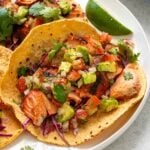
Three shredded tofu tacos with pico de gallo, avocado, and cilantro on top on a plate with a side of lime wedges.

Let’s be honest, vegan food gets a lot of hate and, while I don’t follow a vegan or vegetarian diet myself, meatless recipes are a great way to add more plants and variety to your diet. Plus, plant-based protein sources are often less expensive than animal proteins and are a great way to add more fiber to your diet at the same time.

I’ve shared several tofu recipes before, but I’ve never shared a shredded tofu recipe. While it’s nothing revolutionary, shredding tofu instead of slicing or cubing tofu is a great way to add more texture to tofu and cuts the cooking time in half!

Overhead shot of shredded tofu tacos with a side of pico de gallo, sliced avocado, lime, and cilantro on the side.

By seasoning shredded tofu with soy sauce and a mixture of spices and frying it in a pan, you can create a savory, salty, and delicious meat-like filling with the best texture that is perfect for taco night. Honestly, these shredded tofu tacos are so flavorful I’m confident that they will become one of your go-to vegetarian recipes.

Why You’ll Love This Recipe

  • Quick and Easy – Made in one pan in less than 30 minutes, these shredded tofu tacos are perfect for a weeknight meal.
  • Vegetarian – These crowd-pleasing vegan tacos are full of plant-based protein.
  • Keep Well – The shredded tofu mixture keeps well in the fridge and freezer making great leftovers and great for meal prep.
Ingredients for shredded tofu tacos: extra-firm tofu, chili powder, paprika, cumin, onion powder, garlic powder, salt, soy sauce, and tomato paste.

Ingredients + Substitutions

  • Tofu – To make the shredded tofu mixture. For the best results, use firm or extra-firm tofu, silken tofu is not recommended.
  • Soy Sauce – To give the shredded tofu a salty flavor and umami taste.
  • Spices – A mixture of chili powder, paprika, cumin, onion powder, garlic powder, and salt to season the shredded tofu.
  • Tomato Paste – To flavor the tofu and add some texture.
  • Tortillas – I used corn tortillas because I think the texture is better, but you can use flour or low-carb tortillas if preferred.
  • Toppings – This recipe calls for a combination of salsa, avocado, lime juice, and cilantro, but you can add any toppings you like to these shredded tofu tacos.
Block of extra-firm tofu on a cutting board shredded into pieces with a box grater.

Dietary Adaptions

To Make them Gluten-Free: Swap the soy sauce for tamari or coconut aminos.

To Make them Dairy-Free: No adaptations are needed, this recipe is dairy-free.

Bowl of shredded tofu of soy sauce, chili powder, paprika, onion powder, garlic powder, and salt on top.
Shredded tofu covered in spices in a bowl.

How to Make Shredded Tofu Tacos

  1. Press the tofu. Wrap the tofu in paper towels or a tea towel and place something heavy on top to remove any excess liquid.
  2. Shred the tofu. Using a box grater, shred the block of tofu into strips.
  3. Season the tofu. Place the tofu shreds in a large mixing bowl, add soy sauce, chili powder, paprika, cumin, onion powder, garlic powder, and salt, and stir until well combined.
  4. Cook the shredded tofu. Transfer the seasoned tofu to a large frying pan on medium-high heat with olive oil, add the tomato paste, and cook for 5-6 minutes until the tofu is slightly crispy.
  5. Serve and enjoy! Add the shredded tofu to the tortillas and serve with toppings of your choice.

You can find the detailed instructions in the recipe card below.

Shredded tofu in a cast-iron skillet ready to be cooked.
Cooked shredded tofu taco mixture in a cast-iron skillet.

Red’s Nutrition Tip

These delicious tofu tacos are a pretty good source of protein but not as high as more traditional taco recipes. If you want to increase the protein content of each taco, I would suggest serving them with some black beans or adding a bit of lentil taco mixture.

Serving Suggestions + Toppings

Shredded tofu is a great source of vegetarian protein, so pairing it with a source of complex carbohydrates, healthy fats, and fiber, such as tortillas, avocado, and lettuce, can help to ensure eating a balanced meal. My favorite toppings for these shredded tofu tacos are:

  • Salsa
  • Guacamole
  • Sliced avocado
  • Black beans
  • Refried beans
  • Pickled red onion
  • Shredded lettuce
  • Slice red cabbage
  • Pico de gallo
  • Hot sauce
  • Lime wedges
Tofu tacos on a plate.

Other Ways to Use Shredded Tofu Filling

Add it to quesadillas. Turn cheese quesadillas into a high-protein vegetarian meal by adding the shredded tofu taco mixture.

Add it to burritos. Make vegan burritos by swapping chicken or beef for shredded tofu and filling them with brown rice, beans, nutritional yeast, lettuce, salsa, avocado, hot sauce, and cilantro.

Make shredded tofu bowls. Turn these shredded tofu tacos into a shredded tofu taco bowl. Fill a bowl with rice, black beans, shredded tofu, and top with avocado, tomatoes, and cheese for a healthy lunch dinner, or meal prep idea.

Top on nachos. Cover a lined baking sheet with tortilla chips then add the shredded tofu mixture on top, sprinkle with shredded cheese, and then place under the broiler until the cheese is melted and dollop with salsa, guacamole, and sour cream to serve.

Close up of vegetarian tofu tacos with shredded tofu.

Storage + Reheating

To Refrigerate: Allow the shredded taco mixture to cool completely and then store it in an airtight container in the fridge for up to 7 days.

To Freeze: Once cooked and cooled, the shredded tofu can be stored in an airtight container in the freezer for up to 6 months.

To Reheat: Once thawed, the shredded tofu mixture can be reheated in a pan on medium heat for 5-10 minutes or in the microwave for 2-3 minutes.

More Tofu Recipes:

  • Sheet Pan Tofu and Veggies
  • Spicy Peanut Tofu Meal Prep Bowls
  • Tofu Sandwich
  • Tofu Noodle Stir Fry
  • Grilled Tofu Skewers
  • Tofu Coconut Curry
  • Peanut Tofu Noodles
Print
Three shredded tofu tacos with pico de gallo, avocado, and cilantro on top on a plate with a side of lime wedges.

Shredded Tofu Tacos

Author: Stephanie Kay

These 30-minute shredded tofu tacos are a healthy, high-protein vegetarian recipe that works well for lunch or dinner.

  • Author: Stephanie Kay
  • Prep Time: 10 minutes
  • Cook Time: 10 minutes
  • Total Time: 20 minutes
  • Yield: 8 tacos 1x
  • Category: Dinner
  • Method: Stovetop
  • Cuisine: Vegetarian
Print Recipe
Pin Recipe

Ingredients

Shredded Tofu:

  • 1 block (14 ounces) extra-firm tofu
  • 3 tablespoons soy sauce
  • 2 teaspoons chili powder
  • 2 teaspoon smoked paprika
  • 1 teaspoon cumin
  • 1 teaspoon onion powder
  • 1 teaspoon garlic powder
  • 1/2 teaspoon salt
  • 2 tablespoons olive oil
  • 2 tablespoons tomato paste

Tacos:

  • 8 corn tortillas, or wheat tortillas
  • Salsa
  • Avocado
  • Cilantro
  • Lime wedges

Instructions

  1. Remove the tofu from the packaging and place it between two pieces of paper towel or wrap it in a tea towel and place it on a cutting board. Set something heavy on top, like a cast-iron skillet, and allow it to sit for at least 10 minutes to remove excess liquid.
  2. Once pressed, unwrap the tofu and place it on a cutting board. Using a box grater, shred the block of tofu into strips.
  3. In a large mixing bowl, add the tofu shreds, drizzle with soy sauce, then sprinkle with chili powder, paprika, cumin, onion powder, garlic powder, and salt, and stir until the tofu is well coated in the spices.
  4. In a large pan or cast-iron skillet on medium-high heat, warm the olive oil, then add the shredded tofu mixture, add the tomato paste, and cook, stirring frequently, for 5-6 minutes until the tofu is slightly crispy.
  5. Once cooked, remove the pan from the heat and serve the shredded tofu in tortillas with toppings of your choice.
  6. Any leftover shredded tofu can be stored in an airtight container in the fridge for up to 7 days or in the freezer for up to 6 months.

Nutrition

  • Serving Size: 2 tacos (no toppings)
  • Calories: 334 calories
  • Sugar: 2 grams
  • Fat: 16 grams
  • Carbohydrates: 34 grams
  • Fiber: 3 grams
  • Protein: 16 grams

Did you make this recipe?

Share a photo and tag us — we can’t wait to see what you’ve made!

Beef vs. Chicken: Which is Healthier?

Published on April 30, 2024 by Stephanie Kay

Both chicken and beef are good sources of protein, but is one healthier than the other? Here is a complete comparison of the nutritional content of beef vs. chicken.

Cuts of beef and chicken on a wooden cutting board on a wood background.

Meat consumption in the US has been increasing over the past few decades, with chicken consumption and beef consumption being the primary contributors. According to data from the USDA and Economic Research Service, chicken is the most widely consumed meat, as more chicken than beef is consumed per capita, and everything from nutritional values to taste to cost is a factor.

Table of contents

  • Cuts of Beef vs. Chicken
  • Beef vs. Chicken Nutrition
  • Calories
  • Protein
  • Fat
  • Carbohydrates
  • Vitamins + Minerals
  • Cholesterol
  • Glycemic Index
  • Beef vs. Chicken Bone Broth
  • Other Factors to Consider
  • Taste
  • Cooking Methods
  • Cost
  • Level of Processing
  • So, which one is the healthier choice?
  • The Bottom Line

Cuts of Beef vs. Chicken

Beef and chicken are available in a wide variety of cuts, from bone-in to boneless and whole cuts to ground meat. The most popular cuts of chicken meat are boneless chicken breasts, due to their leanness and versatility, while the most popular cuts of beef are ribeye steaks. The nutritional values of chicken and beef vary widely based on the exact cut of meat consumed.

Beef vs. Chicken Nutrition

Here is a calorie and macronutrient comparison of various cuts of beef and chicken meat per 100-gram serving (1, 2, 3, 4, 5, 6).

Cut of MeatCaloriesProteinFatCarbohydrate
Top Sirloin Steak131 calories22 grams4 grams0 grams
Chicken Breast106 calories23 grams2 grams0 grams
Flank Steak165 calories21 grams8 grams0 grams
Chicken Leg214 calories16 grams16 grams0 grams
Ground Beef185 calories18 grams13 grams0 grams
Ground Chicken143 calories17 grams8 grams0 grams
Infographic of nutrition content of calories, protein, and fat in beef vs. chicken per 100 gram serving.

Calories

On average, chicken contains fewer calories than beef. Chicken is generally a leaner meat than beef and, therefore, it has a lower calorie density than beef, but it varies widely by cut of meat. Per 100-gram serving, top sirloin steak contains 131 calories and chicken breast contains 106 calories; however, flank steak contains 165 calories and chicken leg contains 214 calories.

Protein

Chicken and beef contain very similar amounts of protein. In general, fattier cuts of chicken and beef contain fewer grams of protein per serving than leaner cuts of chicken and beef.

Per 100-gram serving, top sirloin steak contains 22 grams of protein, chicken breast contains 22.5 grams of protein, flank steak contains 21.1 grams of protein, chicken leg contains 16.4 grams of protein, lean ground beef contains 18 grams of protein, and ground chicken contains 17 grams of protein.

Fat

On average, beef contains more fat than chicken. Although it varies widely by cut of meat, red meat generally contains more fat than poultry, and red meat also contains more saturated fats.

The fat content of chicken meat is primarily found in the skin, which can easily be removed to reduce the fat and calorie content of chicken meat, whereas the fat content of beef is primarily marbled into the meat itself. Lean cuts of chicken without skin are referred to as “white meat” and are lower in fat content than “dark meat” cuts of chicken and beef.

On average, chicken also contains more unsaturated fat, while beef contains more saturated fat. Both chicken and beef contain monounsaturated fats and polyunsaturated fats, including omega-3 and omega-6 fats; however, beef has a higher content of omega-3 fats than chicken. Although overall, seafood is a much better source of omega-3 fats than beef.

Per 100-gram serving, top sirloin steak contains 4.08 grams of fat, chicken breast contains 1.93 grams of fat, flank steak contains 8.29 grams of fat, chicken leg contains 16 grams of fat, lean ground beef contains 12.8 grams of fat, and ground chicken contains 8.1 grams of fat.

Carbohydrates

Neither beef nor chicken are a source of carbohydrates, fiber, or sugar.

Vitamins + Minerals

Here is a comparison of essential vitamins and minerals from a 100-gram serving of cooked sirloin steak vs. skinless chicken breast based on the USDA dietary guidelines for an average adult female (7, 8, 9).

MicronutrientTop Sirloin Steak% RDAChicken Breast% RDA
Calcium22 mg2%5 mg1%
Iron1.92 mg11%0.45 mg3%
Magnesium27 mg8%34 mg11%
Phosphorus253 mg36%258 mg37%
Potassium410 mg16%391 mg15%
Sodium66 mg3%52 mg2%
Zinc5.7 mg71%0.9 mg11%
Thiamin0.088 mg8%0.107 mg10%
Riboflavin0.163 mg15%0.213 mg19%
Niacin9 mg64%12 mg86%
Vitamin B60.681 mg52%1.16 mg89%
Vitamin B121.47 mcg61%0.21 mcg9%
Folate10 mcg3%4 mcg1%
Choline117 mg28%111 mg26%
Infographic on micronutrients, vitamins and minerals, in beef and chicken per 100 gram serving.

Cholesterol

The cholesterol content of beef and chicken varies significantly by the cut of meat. Here is a comparison of the cholesterol levels of various cuts of beef vs. chicken per 100-gram serving (7, 8).

Cut of MeatCholesterol
Top Sirloin Steak60 mg
Chicken Breast73 mg
Flank Steak58 mg
Chicken Leg93 mg
Ground Beef66 mg
Ground Chicken86 mg

Glycemic Index

Beef and chicken both have a glycemic index of zero because they do not contain carbohydrates.

Beef vs. Chicken Bone Broth

Both beef and chicken bone broth are good sources of collagen, protein, healthy fats, and micronutrients. Chicken and beef broth are made by simmering the animal bones in water until they disintegrate and release their nutrients into the water to make a rich bone broth. The calorie, protein, and fat content of both will vary based on the recipe used to make them. Overall, both beef broth and chicken broth are nutrient-dense foods that can be included in a healthy diet.

Other Factors to Consider

In addition to nutritional content, here are some other factors to consider when it comes to choosing chicken or beef.

Taste

Chicken meat has a milder, more neutral flavor than beef. Red meats like beef contain more myoglobin, an oxygen-carrying protein that adds flavor and aroma to cooked meat, than white meats such as chicken and turkey. However, darker cuts of chicken, such as chicken thighs and chicken legs, tend to have more flavor than light cuts of chicken, such as skinless chicken breast.

Cooking Methods

Chicken and beef are versatile meats that can be prepared in many ways. Both meats can be grilled, baked, braised, poached, or roasted, and used in soups, stews, casseroles, burgers, sandwiches, and stir-fries.

On average, beef takes slightly less time to cook, as it can be eaten rare, while chicken meat needs to reach an internal temperature of 165°F before it’s safe to eat (10). Bone-in chicken and beef take longer to cook than boneless cuts.

Cost

While the cost of food and meat continues to rise, chicken remains consistently cheaper than beef and pork. On average, chicken retails at $1.95 per pound, while beef retails at $5.48 per pound (11). The primary reason for this is that beef production requires more resources and time than chicken production.

Level of Processing

Both chicken and beef are considered unprocessed foods as they are whole foods that come from animals. While both chicken and beef can be used to make processed and ultra-processed foods, such as processed meats and hot dogs, whole cuts of meat, such as steaks, chicken breasts, and ground meats are considered unprocessed or minimally processed foods.

If you are unsure if a meat product is processed or not, it is best to read the label ingredients and see what, if anything, has been added to the meat.

So, which one is the healthier choice?

Chicken meat is higher in protein and lower in fat than beef, but beef is higher in omega-3 fats, vitamins, and minerals than chicken. Although many people assume chicken has less cholesterol than beef, the cholesterol levels of these meats are very similar.

Both chicken and beef are nutrient-dense sources of protein that can increase satiety signals and feelings of fullness, and help you reach your optimal daily protein target. Moreover, both chicken and beef can support a goal of weight loss if the individual is in a calorie deficit, and choosing chicken and leaner cuts of beef can make that easier.

The healthiest choice is simply the one that you enjoy and consume as a source of protein as part of a balanced meal with carbohydrates, fiber, and healthy fats made primarily of whole foods.

The Bottom Line

Chicken and beef are good sources of protein, fats, vitamins, and minerals. On average, chicken is lower in calories and higher in protein, and beef is high in fat, vitamins, and minerals. Chicken has a milder taste than beef and is less expensive, but beef takes less time to cook, and both meats can be prepared via multiple cooking methods. Overall, both chicken and beef have multiple health benefits and can be included as good sources of complete protein in a healthy diet.

The Bottom Line

Chicken and beef are good sources of protein, fats, vitamins, and minerals. On average, chicken is lower in calories and higher in protein, and beef is high in fat, vitamins, and minerals. Chicken has a milder taste than beef and is less expensive, but beef takes less time to cook, and both meats can be prepared via multiple cooking methods. Overall, both chicken and beef have multiple health benefits and can be included as good sources of complete protein in a healthy diet.

How to Eat More Fiber

Published on April 27, 2024 by Stephanie Kay

Fiber plays a vital role in our health but many of us as falling short on our dietary fiber intake. Fortunately, getting more fiber into your diet is not as complicated as it may seem, it just takes a little planning. Here are some simple tips on how to eat more fiber.

Table of contents

  • Types of Fiber
  • What foods are highest in fiber?
  • What are the benefits of eating more fiber?
  • How much fiber should you eat?
  • Is it possible to eat too much fiber?
  • Tips to Eat More Fiber
  • 1. Eat More Vegetables
  • 2. Opt for Whole Grains over Grain Products
  • 3. Start at Breakfast
  • 4. Eat More Beans and Lentils
  • 5. Snack on Nuts and Seeds
  • 6. Reach for Fruit Instead of Juice
  • 7. Leave the Skin On
  • 8. Prioritize Whole Foods
  • 9. Use a Fiber Supplement

Types of Fiber

Fiber is a form of complex carbohydrate, as it is a non-digestible polysaccharide found in plant-based foods, and can be categorized into two different types; soluble fiber and insoluble fiber.

  • Soluble fiber dissolves in water and forms a gel-like substance as it goes through the digestive system, which helps to slow the absorption of sugar into the bloodstream and is particularly beneficial in supporting healthy microbiome fermentation (1). Soluble fiber is found in plant pectin and gums such as legumes, oats, barley, and quinoa; vegetables such as artichoke, squash, broccoli, and carrots; and fruits such as apples, pears, berries, and bananas.
  • Insoluble fiber does not dissolve in water and, therefore, passes through the digestive tract relatively untouched. For this reason, insoluble fiber helps to add bulk to the stool, prevent constipation, and regulate bowel movements. Insoluble fiber is found in whole grains, beans, nuts, seeds, and some vegetables.

It is important to understand that there is a lot of overlap between soluble and insoluble fiber, and many fiber-rich foods contain a combination of both forms.

What foods are highest in fiber?

Fiber can be found in a wide range of plant-based foods, including fruits, vegetables, whole grains, beans, lentils, nuts, and seeds. The most high-fiber foods include:

  • Fruits: Raspberries, pears, apples with skin, bananas, oranges, and strawberries
  • Vegetables: Green peas, broccoli, turnip greens, Brussels sprouts, sweet potatoes and potatoes with skin, corn, cauliflower, and carrots
  • Whole Grains:  Barley, bran, oats, oat bran, and brown rice
  • Beans & Lentils: Split peas, lentils, and black beans
  • Nuts & Seeds: Chia seeds, almonds, pistachios, and sunflower seeds
Infographic on the benefits of fiber.

What are the benefits of eating more fiber?

Consuming adequate dietary fiber helps to normalize bowel movements, promote gut health, control blood sugar levels, and lower cholesterol levels (2). A high-fiber diet has also been shown to help regulate weight and appetite by keeping you fuller for longer periods, as well as help reduce the risk of developing cardiovascular disease (3, 4).

How much fiber should you eat?

While the exact amount of fiber a person needs will vary by individual, the current dietary guidelines recommend 14 grams of fiber for every 1,000 calories, which equates to roughly 25 grams of fiber per day for women and 38 grams of fiber per day for men (5). Currently, only about 5% of the US population meets the dietary fiber recommendations, as the average American consumes 15 grams of fiber per day (6).

Since most fiber-containing foods contain a combination of soluble and insoluble fiber, it is not necessary to be specific about the exact type of fiber you are consuming, rather, focusing on overall fiber intake is the best way to ensure that you are eating enough.

Is it possible to eat too much fiber?

While high-fiber foods are essential to a healthy diet, increasing your fiber intake too quickly can negatively impact your digestive system and cause gas, bloating, and constipation. For this reason, it is best to increase your fiber intake slowly, over a period of days or weeks, and ensure that you drink plenty of water during the process.

Infographic with 9 tips on how to eat more fiber.

Tips to Eat More Fiber

Here are 9 ways to eat more fiber ways to ensure you are reaching your recommended daily fiber intake.

1. Eat More Vegetables

Although most people know they are good for them, many still fail to eat vegetables regularly. Because all vegetables contain fiber, eating more vegetables can quickly increase your daily fiber intake without much effort. Non-starchy vegetables such as leafy greens, broccoli, and cauliflower are low in calories, high in fiber, rich in micronutrients, and can help keep you full for longer periods. Not only is eating vegetables at every meal ideal but eating them first can help to ensure that you don’t fill up on other things before you get the chance to eat them.

2. Opt for Whole Grains over Grain Products

One of the easiest ways to eat more fiber is to focus on whole grains in their whole format as opposed to products made of them. Eating whole grains helps to ensure that you are eating all parts of the grain, including the germ, endosperm, and fiber-rich bran. Unfortunately, refined grains and refined grain products are a poor source of fiber given they have been stripped of their vitamin-containing germ and fiber-rich hull. So, instead of reaching for pastries, baked goods, and granola bars, opt for whole grains such as rolled oats, barley, quinoa, buckwheat, wild rice, and brown rice.

3. Start at Breakfast

Instead of waiting until snack time to eat your fruit and lunchtime to eat your veggies, focus on adding more fiber to your meals first thing in the morning. By simply adding fruit to your oatmeal, veggies to your eggs, and nuts or seeds to your yogurt you can help to boost your overall fiber intake before you even start your day.

4. Eat More Beans and Lentils

Not only are beans and lentils a rich source of soluble fiber, but they are a great source of plant-based protein that you can include in meals. Although not everyone is accustomed to cooking with beans and lentils, they are very easy to cook with and are an important part of many traditional diets. Replacing meat with chickpeas, black beans, or lentils in a few meatless meals per week, or adding them to meat-based meals, is a great way to boost your fiber, protein, vitamin, and mineral intake simultaneously.

5. Snack on Nuts and Seeds

In addition to being food sources of healthy fats and protein, nuts and seeds are versatile fibrous foods that are easy to transport, which makes them great for snacks. Although all nuts and seeds contain some soluble fiber, pumpkin seeds, almonds, pistachios, hazelnuts, and pecans are particularly high in fiber and great for snacking. However, because they are high in fat, they are very calorie-dense foods, so it is important to be mindful of portion size.

6. Reach for Fruit Instead of Juice

Although fruit is a rich source of fiber, fruit juice is not. Given that juices are pressed, leaving only a concentration of carbohydrates, specifically in the form of natural sugar, they are not a good source of fiber. Although fresh fruit and vegetable juices may contain vitamins and minerals, they are stripped of any fiber and therefore do not provide the same health benefits as whole fruits and vegetables. So, instead of reaching for juice, opt for fruits and vegetables in their whole format.

7. Leave the Skin On

In many cases, the dietary fiber found in fruits and vegetables is found in their skin. Certain fresh fruits and vegetables, such as apples, potatoes, and cucumbers, contain little to no fiber without their skin. In fact, up to 31% of the dietary fiber in a vegetable can be found in its skin (7). So, if the skin on a fruit or vegetable is edible, do your best to consume it as it will help to increase your overall fiber intake.

8. Prioritize Whole Foods

Since fiber is a form of complex carbohydrate found in whole foods, prioritizing whole foods in your diet is the best way to help you eat more fiber. Whole foods and minimally processed foods, such as frozen vegetables, whole wheat flour pasta, and whole-grain bread, generally contain more fiber than ultra-processed foods. Moreover, although many ultra-processed foods are fortified with added fiber, they are not as nutrient-dense as whole foods.

9. Use a Fiber Supplement

If you’re struggling with the above suggestions or are in the process of working on them, but are continually missing your daily dietary fiber intake, fiber supplements are a good option. Fiber supplements, such as fiber powders, are a great way to add extra fiber to your diet without much effort.

While replacing high-fiber foods in your diet with fiber supplements completely is not recommended, as high-fiber whole foods contain many additional nutrients and compounds for optimal health, taking a fiber powder is a good way to supplement your intake in the short term.

The Bottom Line

The best way to eat more fiber is to eat more whole foods. Consuming a diet rich in fruits, vegetables, whole grains, beans, lentils, nuts, and seeds is the easiest way to ensure you are eating enough fiber and a healthy diet. While how much fiber you need will vary by individual, consuming adequate fiber has been shown to support the digestive system, promote weight loss and healthy weight management, reduce the risk of heart disease and cardiovascular disease, improve blood sugar levels, and lower cholesterol, as well as promote other health benefits.

Slow Cooker Butter Chicken

Published on April 25, 2024 by Stephanie Kay

Simmered in a rich and creamy tomato sauce, this slow-cooker butter chicken recipe is easy to make and full of flavor. Serve it with some rice or naan for a healthy weeknight meal!

Slow cooker butter chicken in a bowl with basmati rice, naan, and fresh cilantro on top, and naan bread on the side.

Butter chicken, traditionally known as murgh makhani, is one of the most popular curries and Indian dishes around the world. Interestingly, there is no “official” recipe for butter chicken. It is believed that butter chicken originated in the 1930s by a restaurant owner in Delhi looking for something to do with leftover tandoori chicken and, voila, butter chicken was born!

The combination of tender chicken thighs, warm spices, and creamy sauce creates a delicious and nutritious meal that is packed full of protein and healthy fat. Not to mention, it’s very easy to make! So, if you’re looking for a simple and flavorful chicken recipe for dinner, this slow-cooker butter chicken is perfect for you.

Slow cooker butter chicken in a crockpot.

Why You’ll Love It

  • Easy to Make – With no pre-cooking required, this one-pot recipe is incredibly quick and easy to make.
  • High in Protein – This slow-cooker butter chicken is packed full of protein with over 25 grams per serving.
  • Full of Flavor – The combination of yogurt, warm spices, and tomatoes creates a rich and flavorful sauce for this chicken curry.
  • Great for Meal Prep – This butter chicken keeps well in the fridge and freezer which makes it a great make-ahead meal.
Ingredients for slow cooker butter chicken: chicken thighs, yogurt, garam masala, turmeric, chili powder, salt, onion, garlic, ginger, tomato purée, heavy cream, and butter.

Ingredients + Substitutions

  • Chicken – The recipe calls for boneless skinless chicken thighs, but you can use boneless skinless chicken breast or a combination of the two.
  • Yogurt – To marinate the chicken, you can use regular yogurt or Greek yogurt, just ensure it’s plain.
  • Onion, Garlic, and Ginger – To enhance the flavor of the dish. The recipe calls for fresh garlic, onion, and ginger, but you can use powdered versions if preferred. See the notes section of the recipe card for details.
  • Spices – A combination of garam masala, turmeric, chili powder, and salt to season the chicken and create a flavorful sauce. Garam masala is an Indian spice blend of cumin, coriander, cardamom, black pepper, cinnamon, nutmeg, and cloves, prepared can be found in the spice section of most major grocery stores or you can make your own homemade garam masala spice blend.
  • Lemon Juice – To balance the marinade flavor with some acid.
  • Tomato Purée – To flavor and thicken the sauce. The recipe calls for tomato purée, but you can also use tomato sauce or crushed tomatoes. You can use tomato paste if needed, see the notes section of the recipe card for details.
  • Heavy Cream – To ensure the sauce is rich and creamy. You can use coconut milk if preferred.
  • Butter – To finish the dish and give it its buttery flavor and texture.
Yogurt, lemon juice, onion, garlic, garam masala, turmeric, chili powder, and salt in a bowl.
Whisked yogurt marinate in a bowl.

Dietary Adaptions

To Make it Gluten-Free: No adaptations are needed, this recipe is gluten-free.

To Make it Dairy-Free: Swap the yogurt for coconut yogurt, swap the cream for coconut milk, and omit the butter.

Yogurt marinade and cubed chicken thighs in a bowl.
Chicken thighs marinating in a bowl.

How to Make Slow Cooker Butter Chicken

  1. Marinade the chicken. In a large bowl, add the yogurt, lemon juice, garlic, ginger, garam masala, turmeric, and chili powder, and stir to combine, then add cubed chicken and stir until well incorporated in the yogurt mixture. Set aside and allow to marinate for at least 10 minutes or up to 12 hours.
  2. Sear the chicken. Warm the olive oil in a pan or the base of a stove-top slow cooker, then add the chicken and cook for 1-2 minutes per side until seared. While this step is optional it provides better flavor and texture.
  3. Add it to a slow cooker. Transfer the seared chicken and remaining yogurt mixture to the slow cooker, add the diced onion, tomato sauce, and salt, and stir until well combined.
  4. Cook until tender. Turn on the slow cooker and cook on high for 4-5 hours or on low for 7-8 hours.
  5. Add cream and butter. Once the chicken is cooked, pour in the heavy cream and butter, stir to combine, and warm for a final 5 minutes.
  6. Serve and enjoy! Serve the slow-cooker butter chicken with basmati rice or naan and fresh cilantro.

You can find the detailed instructions in the recipe card below.

Marinated chicken cooking in a pan.
Marinated chicken cooked in a pan.

Red’s Nutrition Tip

This slow-cooker butter chicken is a healthy dish full of protein and healthy fats and serving it with some rice and vegetables will make it a well-balanced meal. If you want to decrease the calorie or fat content of the dish, you can use 0% yogurt, swap the chicken thighs for chicken breasts (although the nutritional difference between the two is minimal), and use light coconut milk, table cream, half-and-half, or whole milk instead of heavy cream, and omit the butter.

Can you make it in an Instant Pot?

Yes! Marinate the chicken in the yogurt and spices as per the directions, then transfer the chicken to the Instant Pot, add the diced onion, tomato purée, and salt, and stir to combine. Close the lid, set it for 10 mins on high, then let it release pressure naturally for 10 minutes, and then release all remaining pressure. Remove the lid, add the heavy cream and butter, and stir until everything is well incorporated.

Seared chicken, onion, and tomato purée in a slow cooker.
Butter chicken ingredients in a slow cooker ready to be cooked.

Serving Suggestions

This slow-cooker butter chicken is a great source of protein and healthy fats. To make it a more balanced meal, I would suggest serving it with some complex carbohydrates and fiber in the form of vegetables, such as:

  • Basmati rice + broccoli
  • Brown rice + cauliflower
  • Naan bread + carrots
  • Roasted potatoes + green beans
Cooked slow cooker butter chicken in a crockpot with chopped fresh cilantro on top.

Storage + Reheating

To Refrigerate: Allow the butter chicken to cool completely, transfer to an airtight container, and store in the refrigerator for 3-4 days.

To Freeze: Once cooled, the leftover slow-cooker butter chicken can be stored in an airtight container in the freezer for up to 3 months.

To Reheat: Reheat the butter chicken in a pot on the stovetop on medium heat for 5 minutes or until warm, or in the microwave for 1-2 minutes. If using frozen leftovers, allow the butter chicken to thaw completely before reheating.

Close up of a bowl of slow cooker butter chicken with yogurt and cilantro on top with a side of basmati rice and naan bread.

More Chicken Curry Recipes:

  • Chicken Tikka Masala
  • Chicken and Chickpea Curry
  • Slow-Cooker Moroccan Chicken
  • Coconut Curry Chicken Meatballs
Print
Slow cooker butter chicken in a bowl with basmati rice, naan, and fresh cilantro on top, and naan bread on the side.

Slow Cooker Butter Chicken

Author: Stephanie Kay

This rich and creamy slow-cooker butter chicken is full of authentic flavor without the effort. Serve it with rice or naan for a healthy, high-protein meal.

  • Author: Stephanie Kay
  • Prep Time: 20 minutes
  • Cook Time: 4 hours
  • Total Time: 4 hours 20 minutes
  • Yield: 8 servings 1x
  • Category: Main
  • Method: Slow Cooker
  • Cuisine: Indian
Print Recipe
Pin Recipe

Ingredients

Marinade:

  • 2 pounds boneless skinless chicken thighs, cubed into 1-inch pieces
  • 1/2 cup plain yogurt
  • 1 tablespoon lemon juice
  • 2 cloves garlic, minced
  • 1-inch ginger root, peeled and minced
  • 1 tablespoon garam masala
  • 1/2 teaspoon turmeric powder
  • 1/2 teaspoon chili powder
  • 1 teaspoon salt
  • 2 tablespoons olive oil, for cooking

Sauce:

  • 1 onion, diced
  • 1/2 teaspoon salt, plus more as needed
  • 2 cups tomato purée, or tomato sauce
  • 1/2 cup heavy cream
  • 2 tablespoons butter or ghee

Instructions

  1. In a large bowl, add the yogurt, lemon juice, garlic, ginger, garam masala, turmeric, chili powder, salt and stir to combine. Add the diced chicken to the bowl, stir to combine in the yogurt mixture, and allow to rest for at least 10 minutes. If time permits, you can prep it ahead of time and allow it to marinate in an airtight container in the fridge for up to 12 hours.
  2. Once the chicken has marinated, warm the olive oil in a large pan on medium-high heat. Add the chicken and cook for 1-2 minutes or until browned on all sides. You don’t need to cook the chicken all the way through, just sear it in the juices before adding it to the slow cooker. Note: If the slow cooker has a removable stovetop-safe pot, you can place it directly on the stovetop top cook the chicken directly in the removable pot, and then return it to the slow cooker base.
  3. Transfer the seared chicken to the slow cooker, along with any leftover yogurt marinade from the bowl, then add diced onion, tomato purée, and salt, and stir until well combined with the chicken mixture.
  4. Cover the slow cooker with a lid and cook on high for 4-5 hours or on low for 7-8 hours until the chicken is tender.
  5. Once cooked, remove the lid and pour in the heavy cream and melted butter, stir to combine with the chicken mixture, and cook on high for a final 5 minutes.
  6. Once cooked, the slow-cooker butter chicken can be served immediately with rice or naan and fresh cilantro, or cool allow it to completely, and store it in the fridge for up to 4 days or in the freezer for up to 3 months.

Notes

To Make Garam Masala: If you can find it in the grocery store, you can make your own with this easy garam masala recipe.

To Use Tomato Paste: Omit the tomato purée and use 1/4 cup of tomato paste and 1 3/4 cups chicken broth or water instead.

To Use Garlic Powder: Swap the garlic cloves for 1/2 teaspoon garlic powder.

To Use Ginger Powder: Swap the fresh ginger for 1/2 teaspoon ginger powder.

To Use Onion Powder: Swap the onion for 1 teaspoon onion powder.

Nutrition

  • Serving Size: 1 serving
  • Calories: 262 calories
  • Sugar: 5 grams
  • Fat: 14 grams
  • Carbohydrates: 8 grams
  • Fiber: 2 grams
  • Protein: 25 grams

Did you make this recipe?

Share a photo and tag us — we can’t wait to see what you’ve made!


Baked Steel Cut Oatmeal

Published on April 23, 2024 by Stephanie Kay

Whether you’re doing some meal prep or entertaining for a weekend brunch, this one-pan baked steel-cut oatmeal is a great way to make a healthy, high-fiber breakfast for a crowd.

Slice of baked steel cut oatmeal in a bowl with milk, sliced banana, strawberries, and blueberries on top.

If you’re anything like me and you love oats for breakfast, but you don’t always have time to make it in the morning, this baked steel-cut oatmeal is the recipe for you. This recipe is quick and easy to make and keeps well in the fridge and freezer for days and weeks to come, which makes it the perfect dish for breakfast meal prep.

And the best part is, it’s super versatile. Once you get the basic recipe down, you can add different spices, fruits, nuts, and flavors you like to make your version of these delicious and healthy baked steel-cut oats.

Baked steel cut oatmeal in a white baking dish cut into slices with slices of banana and blueberries on top.

Why You’ll Love It

  • High in Fiber – With over 5 grams of fiber per serving, these baked steel-cut oats are a great way to start the day.
  • Kid-Friendly – These are a healthy kid-approved breakfast.
  • Versatile – This baked steel-cut oatmeal recipe is super versatile as you can add any mix-ins you like.
  • Great for Meal Prep – These oats keep well in the fridge and freezer making them great for meal prep.
Ingredients for baked steel cut oatmeal: steel cut oats, milk, maple syrup, butter, egg, vanilla extract, baking powder, salt, cinnamon, and fresh berries for serving.

Ingredients + Substitutions

  • Steel-Cut Oats – Because you can’t make steel-cut baked oatmeal without steel-cut oats. You can swap them for rolled oats if desired, however, I do not recommend using quick-cooking oats or instant oats.
  • Milk – To add some protein and cook the oats. The recipe calls for regular milk, but you can use almond milk or coconut milk if desired.
  • Egg – To bind the oats and add a bit of protein.
  • Butter – To ensure the oats are moist. You can use coconut oil if needed.
  • Maple Syrup – To sweeten the oats and add some flavor. Honey and brown sugar will also work.
  • Vanilla Extract – To add flavor and fragrance.
  • Cinnamon – To further flavor the oats, feel free to omit it if you like.
  • Leavening Agents – A mixture of baking powder and salt to ensure the oats are light and fluffy.
Egg and maple syrup in a white mixing bowl.
Egg, maple syrup, melted butter, and vanilla extract in a large mixing bowl.

Dietary Adaptions

To Make it Gluten-Free: Use certified gluten-free steel-cut oats.

To Make it Dairy-Free: Swap the milk for unsweetened almond milk or coconut milk and swap the butter for coconut oil.

To Make it Egg-Free: Swap the egg for one “flax egg”.

Wet ingredients and steel cut oats in a large mixing bowl.
Wet and dry ingredients in a large mixing bowl.

How to Make Baked Steel Cut Oats

  1. Mix the dry ingredients. In a medium bowl, combine the steel-cut oats, baking powder, salt, and cinnamon.
  2. Mix the wet ingredients. In a large bowl, add the butter, maple syrup, egg, vanilla extract, and milk and whisk until well combined.
  3. Mix the batter. Add the oat mixture to the milk mixture and stir to combine until a batter forms, then transfer the batter to a greased 9×9 baking dish.
  4. Bake the oats. Transfer the baking dish to an oven at 375°F and bake the oats for 45-50 minutes until the middle is set and the sides are golden brown.
  5. Serve and enjoy! Once baked, allow the baked steel-cut oatmeal to cool slightly, and then serve it with toppings of your choice.

You can find the detailed instructions in the recipe card below.

Steel cut baked oats ready for the oven.
Baked steel cut oats out of the oven.

Red’s Nutrition Tip

There is a common misconception that steel-cut oats are much healthier than rolled oats, but that is not entirely true. In fact, steel-cut oats and rolled oats contain a very similar number of calories, carbohydrates, fiber, protein, and fat per serving, they are simply processed differently, and both can be included in a healthy diet.

White baking dish with steel baked steel cut oats cut into slices with fruit on top.

Serving Suggestions

Add some mix-ins. To boost the flavor content of this baked oatmeal recipe, you can mix in a cup of fruit, nuts, or chocolate chips. I recommend frozen blueberries, frozen raspberries, diced bananas, chopped apples, chopped pecans, chopped walnuts, or a mixture of them.

Serve with protein. These baked oats are a great source of complex carbohydrates and fiber; however, they are low in protein. Serving oatmeal with a source of protein, such as Greek yogurt, skyr, cottage cheese, scrambled eggs, or breakfast sausages, can help to create a balanced meal.

Serve with healthy fats. To ensure your steel-cut oats breakfast is complete with all three macronutrients, you can top them with a source of healthy fats such as a drizzle of almond butter or peanut butter.

Serve with fiber. While the oats contain 5 grams of fiber per slice, serving them with a topping or side of fresh fruit can help to increase the fiber and micronutrient content of the meal.

Add a touch of sweetness. While these baked steel-cut oats do contain some sugar, you can add an extra touch of sweetness by finishing them with a drizzle of pure maple syrup or honey.

Overhead shot of a piece of steel cut baked oatmeal with milk, sliced banana, strawberries, blueberries, and cinnamon on top.

Storage + Reheating

To Refrigerate: Allow the baked steel-cut oatmeal to cool completely and then cover it with aluminum foil or plastic wrap or transfer it to an airtight container and store it in the fridge for up to 5 days.

To Freeze: To freeze baked oatmeal whole, cool completely, then cover the baking dish with plastic wrap and/or aluminum foil and then place the entire baking dish in a freezer-safe bag. To freeze leftovers or individual portions, transfer the baked oatmeal to an airtight container and place it in the freezer. Baked oatmeal can be frozen for up to 3 months.

To Reheat: To reheat steel-cut baked oatmeal whole, allow it to thaw completely, and then cover the baking dish with aluminum foil and warm it in the oven at 350°F for 10-15 minutes. To reheat individual portions of the baked oatmeal, place a thawed portion in an oven-proof baking dish in the oven for 5-10 minutes or in the microwave in a microwave-safe dish for 1-2 minutes.

Close up of a bowl of baked steel cut oatmeal served with milk and maple syrup and berries on top with cinnamon and a spoon.

More Baked Oatmeal Recipes:

  • Carrot Cake Baked Oatmeal
  • Banana Bread Baked Oatmeal
  • Mixed Berry Baked Oatmeal
  • Morning Glory Baked Oatmeal
Print
Slice of baked steel cut oatmeal in a bowl with milk, sliced banana, strawberries, and blueberries on top.

Baked Steel Cut Oatmeal

Author: Stephanie Kay

This baked steel-cut oatmeal is quick and easy to make and serves a crowd. Serve it on its own for a simple breakfast or top it with milk or yogurt, maple syrup, and berries for a balanced meal.

  • Author: Stephanie Kay
  • Prep Time: 10 minutes
  • Cook Time: 45 minutes
  • Total Time: 55 minutes
  • Yield: 6 slices 1x
  • Category: Breakfast
  • Method: Baked
  • Cuisine: American
Print Recipe
Pin Recipe

Ingredients

  • 2 cups steel-cut oats
  • 1 teaspoon baking powder
  • 1/2 teaspoon salt
  • 1/2 teaspoon ground cinnamon (optional)
  • 1 egg
  • 1/3 cup maple syrup
  • 2 tablespoons butter, melted
  • 1 teaspoon vanilla extract
  • 3 cups milk

Add-Ins (optional):

  • 1 cup berries, apple chunks, and/or chopped nuts

Instructions

  1. Preheat the oven to 375°F and grease a 9 x 9 baking dish or a similar-sized baking dish with butter.
  2. In a medium bowl, add the steel-cut oats, baking powder, salt, and cinnamon, and stir to combine. Set aside.
  3. In a large bowl, add the egg and maple syrup and whisk until well combined. Then add the melted butter, vanilla, and milk, and whisk again until combined.
  4. Add the dry ingredients to the large bowl of wet ingredients, stir to combine, and then transfer the oat mixture to the greased baking dish. The mixture is going to be very liquidy, but don’t worry, it will absorb the milk in the oven. (Optional: If adding any add-ins, such as fruit, nuts, or chocolate chips, gently mix them in at this time.)
  5. Transfer the baking dish to the oven to bake for 45-50 minutes until all of the milk is absorbed, the middle is set, and the sides are golden brown.
  6. Once baked, remove the baked oatmeal from the oven and allow to cool for 5-10 minutes to set. Then slice and serve with toppings of your choice.
  7. Any leftover steel-cut baked oatmeal can be stored in an airtight container in the fridge for up to 5 days or in the freezer for 3 months.

Notes

To Use Rolled Oats: Swap the steel-cut oats with 3 cups of rolled oats.

To Use Almond Milk: Swap the milk for 3 cups of almond milk and add it in step #3.

To Use Coconut Oil: Swap the butter for 2 tablespoons of melted coconut oil and add in step #3.

To Use Brown Sugar: Swap the maple syrup for 1/3 cup brown sugar and add in step #3.

Nutrition

  • Serving Size: 1 slice
  • Calories: 329 calories
  • Sugar: 17 grams
  • Fat: 10 grams
  • Carbohydrates: 49 grams
  • Fiber: 5 grams
  • Protein: 11 grams

Did you make this recipe?

Share a photo and tag us — we can’t wait to see what you’ve made!

9 Meal Prep Tips

Published on April 22, 2024 by Stephanie Kay

Whether you are looking for some help with breakfast, lunch, or dinner, here is everything that you need to know about meal planning, meal prepping, and some easy meal prep tips to help get you started.

Two glass meal prep contains with brown rice, grilled chicken, and green salad with dressing.

Many of us aspire to live a healthy lifestyle with home-cooked meals every night but, let’s face it, life gets busy. By the time you finish work, drive home, make dinner, eat it, and clean up, it can feel like it’s almost time to go to bed. Enter meal prep – a simple planning tool that can help make eating well so much easier.

What is meal prep?

Short for meal preparation, meal prep is the act of preparing all, or some, of your meals ahead of schedule. Meal prep can be done by batch cooking, individually portioning meals, or simply pre-preparing ingredients for breakfast, lunch, and/or dinner for the week ahead.

Why should you meal prep?

Meal prepping is a great way to help make eating well easy and can also save you time and money in the process. By simply planning your meals ahead of time you can ensure that you only buy what you need, reduce food waste, decrease your grocery bill, and save time trying to decide what to eat during the week. Meal prepping can also help you learn the art of portion control and help support weight loss in the process.

Infographic with easy meal prep tips for beginners.

Easy Meal Prep Tips for Beginners

Ready to get started? Here are 9 simple but effective meal-prepping tips to help get you started today.

1. Make a Meal Plan

It may sound obvious, but trying to meal prep without meal planning is less than ideal. When it comes to meal prep, there are truly so many different ways to approach it, so you simply want to choose the method that works best for you. You can batch-cook full recipes and portion them off into individual containers, or you can batch-cook individual ingredients and store them in the fridge for quick and easy assembly when it’s time to eat. The most popular meal to prep is lunch, given most people are not at home at this time but, depending on your schedule, meal prepping breakfast and/or dinner may also be beneficial.

2. Schedule Time for It

Like anything else, meal prep won’t happen unless you make time for it. Although most people choose to meal prep on Sunday, meal prep can be done at any time of the day or day of the week. Simply find a slot of time in your schedule, it can be as little as 15 or 30 minutes, and schedule it. Regardless of the specific strategy you choose, planning meal prep time right into your schedule is the best way to hold yourself accountable.

3. Make a Grocery List

Once you’ve made a plan, it’s time to make a grocery list. Write down all of the recipes that you want to make and make a list of the ingredients you need. Not only does having a list help ensure that you get exactly what you need, but it also helps keep you focused while you are grocery shopping, so you can stick to your plan and your budget.

4. Look for Shortcuts

The biggest misconception with meal prep is that everything needs to be cooked from scratch. There are so many ways that you can cut corners and save time in the kitchen by buying the right ingredients. Items such as pre-cut or frozen vegetables, canned beans, rotisserie chickens, marinades, and sauces are all shortcut ingredients that make great meal prep hacks, helping to make cooking a breeze without forgoing nutrition or flavor.

5. Learn to Multitask

When it’s time to cook, make a plan of attack before you get started. One of the biggest time drains when cooking is not multitasking or doing every recipe individually. Consider the items you need to cook, and then consider how you can cook multiple items at the same time. Can you boil the rice while you roast the potatoes? Can you cut the vegetables for the soup and the stew at the same time? Can you prepare all of the ingredients before you get started? Even just reading the recipe from start to finish before you start cooking can help you avoid any mishaps and help you save some time.

6. Make Double Batches

I can’t stress this one enough: if you are cooking something, just double the batch! Not only will this provide you with more servings, but it will save you a ton of time in the long run. Cutting two onions at the same time is much faster than cutting one onion twice, so if you are already standing in the kitchen, just make a double batch of soup, stew, rice, or meatballs so you don’t have to do it again. Although this may create more servings than you need, you can store them in the freezer and pull them out on the nights when you don’t want to cook and just want to order takeout.

7. Use Good Containers

Having high-quality containers is key to successful meal prepping. If you don’t have anywhere to store the meal you are making, it’s going to be tough to complete the job. When it comes to containers, there are truly so many options to choose from; however, my personal favorites are glass containers and stainless steel containers. Not only do they help to ensure that you avoid the harmful chemicals in plastic containers, but they also store well and wash even better. But, always do what works best for your budget because any containers are better than none!

8. Store Portions Individually

When it’s time to divvy up your recipes, I suggest doing so in individual portions. Although you can certainly store the whole batch of soup, stew, or stir-fry in one large pot or glass container, when they are portioned individually, they are much easier to grab and go out of the fridge, and you can only take what you need out of the freezer instead of thawing the entire dish.

9. Start Small

If you have never done any meal planning or tried meal prepping, it can certainly feel daunting and overwhelming, but you don’t need to do everything at once. Instead of tackling multiple recipes or trying to meal prep for the entire week, start with something small; chop some veggies, cook some rice, bake some chicken, or try one recipe. Creating a meal prep habit is no different from developing any other habit in your life; it takes time, patience, and practice.

Meal Prep FAQs

Here are some commonly asked meal prepping questions.

How long does meal prep take?

The answer to this is totally up to you. How long meal prep will take is completely dependent on your skill level in the kitchen and what you choose to make. If you want to keep things simple, you can easily be in and out of the kitchen in under an hour, but if you are looking to make more elaborate dishes it may take you a full afternoon.

How long does meal prep last?

Depending on what exactly you choose to prepare, meal prep can last anywhere from 3-5 days in the fridge and up to 3 months in the freezer. To help maximize the lifetime of your meals, store them in air-tight containers and label them so things don’t get left (or lost!) in the fridge or freezer.

How do you start meal prepping?

The best way to start meal prepping is just to start! There is no need to get bogged down in the details or to overcomplicate things. Start by selecting a few dishes or recipes that you are comfortable making and go from there.

What are good foods to meal prep?

The best foods to meal prep hold up well in storage and maintain their taste and texture after a few days in the fridge. Cooked meats, whole grains, beans, lentils, root vegetables, soups, and stews make great meal prep ingredients because they can easily last up to a week in the fridge and freeze very well. Raw vegetables are also good meal prep ingredients, however, be sure to not add any sauces or dressings until it is time to eat since they may wilt and get mushy in storage.

Here are some well-balanced meals ideas, with protein, carbohydrates, fiber, and healthy fats, you can meal prep:

  • Hard Boiled Eggs + Bread + Berries + Almond Butter
  • Grilled Chicken + Rice + Sauteed Bell Peppers + Olive Oil
  • Ground Beef + Pasta + Tomato Sauce + Parmesan
  • Roast Chicken + Sweet Potatoes + Leafy Greens + Salad Dressing
  • Canned Tuna + Crackers + Carrots + Mayonnaise

If you’re looking for some recipe inspirations, here are some examples of nutritious meals you can meal prep:

  • Protein Overnight Oats
  • Meal Prep Breakfast Bowls
  • Banana Bread Baked Oatmeal
  • Spinach Breakfast Casserole
  • Egg White Bites
  • Breakfast Burritos
  • Make-Aheal Lentil Salad
  • DIY Instant Noodle Cups
  • Chicken Salad Meal Prep Bowls
  • Chicken and Rice Soup
  • Salmon Meal Prep Bowls
  • Meal Prep Taco Salad
  • Greek Chickpea Bowls
  • Quinoa Mason Jar Salad
  • Spicy Peanut Tofu Bowls
  • Teriyaki Turkey Rice Bowls

The Bottom Line

Meal prepping is all about organization and meal planning. Although the meal prep process may seem overwhelming at first, once you get started you will see that meal prep is truly not that complicated. To get started, make a meal plan, make an organized grocery list, buy some glass containers, and start cooking.

Pesto Chicken Quinoa Bowl

Published on April 18, 2024 by Stephanie Kay

Ready in 30 minutes, this pesto chicken quinoa bowl recipe is perfect for a quick and easy weeknight dinner. Plus, it’s high in protein and full of fiber too!

Close up of a pesto chicken quinoa bowl on a white background with basil leaves and parmesan on top.

When I want a quick and easy meal with a punch of flavor, pesto is my go-to ingredient. Not only are store-bought versions with fresh ingredients really easy to find but they can easily be made at home without much effort. Just add all the ingredients to a food processor, blend, and voilà, you’ve got yourself a delicious fresh pesto sauce!

Not only is it wonderful on pasta and salads but it’s a great way to quickly add flavor to grains and meats, like a pesto chicken quinoa bowl. The combination of fluffy quinoa, grilled chicken, sautéed veggies, and fresh pesto sauce makes a simple meal that is equally delicious and nutritious.

Close up of pesto chicken quinoa bowl with basil pesto on top and a gold fork.

Why You’ll Love Them

  • Quick and Easy – Made with minimal ingredients and ready in 30 minutes, these pesto chicken quinoa bowls are fast and simple to make.
  • High in Protein – The combination of grilled chicken and fluffy quinoa ensures that these bowls contain over 35 grams of protein per serving.
  • Full of Fiber – The combination of quinoa, tomatoes, and zucchini ensures that each pesto chicken quinoa bowl contains over 6 grams of fiber per bowl.
  • Great for Meal Prep – These bowls keep well in the fridge and freezer making them a great make-ahead meal for lunches.
Ingredients for pesto chicken quinoa bowls: chicken breasts, quinoa, basil pesto, tomatoes, zucchini, olive oil, Italian seasoning, garlic powder, red pepper flakes, and salt.

Ingredients + Substitutions

  • Quinoa – This high-protein grain is also rich in healthy fats and dietary fiber. I used white quinoa in my recipe, but you could use red or tri-color quinoa if needed. You could also swap it for white or brown rice if you like.
  • Chicken Breasts – To add protein to the bowls. I used chicken breasts, but chicken cutlets and boneless chicken thighs will also work. If you don’t have time to cook fresh chicken, you can use leftover shredded chicken or rotisserie chicken instead.
  • Pesto – You can use homemade pesto or store-bought pesto. I used grocery store pesto in my bowls, but you can make fresh basil pesto with a combination of basil leaves, pine nuts, parmesan cheese, garlic, lemon juice, and olive oil if preferred.
  • Cherry Tomatoes – To add some color and flavor.
  • Zucchini – To add some more veggies and fiber.
  • Italian Seasoning – To flavor the chicken breasts. You can also use dried oregano.
  • Garlic Powder – To flavor the chicken breasts. You can use fresh garlic if preferred, see the notes section of the recipe card for details.
  • Red Pepper Flakes – To add a bit of spice, but you can omit them if you like.
  • Olive Oil – To marinate and cook the chicken and vegetables.
  • Lemon Juice – To marinate the chicken breasts.
  • Salt and Black Pepper – To season the chicken and vegetables.
  • Fresh Basil – To serve, although optional.
  • Parmesan – To serve, although optional. Feta cheese would also work well.
Two raw chicken breasts in a white bowl with marinade.
Two chicken breasts in a white bowl marinating in olive oil, lemon juice, garlic powder, Italian seasoning, red pepper flakes, and salt.

Dietary Adaptions

To Make them Gluten-Free: No adaptations are needed, this recipe is gluten-free.

To Make them Dairy-Free: Use a dairy-free basil pesto.

Pot of cooked quinoa with fresh basil pesto on top.
Pot of pesto quinoa.

How to Make Pesto Chicken Quinoa Bowls

  1. Cook the quinoa. Add quinoa to a pot of well-salted boiling water and cook for 15 minutes or as per package directions until tender.
  2. Marinate the chicken. In a large bowl, add the olive oil, lemon juice, Italian seasoning, garlic powder, salt, and black pepper, and whisk to combine. Add the chicken breasts, toss to coat in the mixture, and allow to marinate, if time permits.
  3. Cook the chicken. Warm olive oil in a large grill pan on medium heat, add the chicken breasts and cook for 4-5 minutes per side until golden brown and cooked through.
  4. Cook the vegetables. In the same large bowl, add the cherry tomatoes and zucchini and toss to coat in any remaining marinade.
  5. Mix in the pesto. Add the pesto to the cooked quinoa and stir until well combined.
  6. Assemble the bowls. Once everything is ready, layer the bowls with a large spoonful of fluffy quinoa, grilled chicken breast, and sautéed veggies, then top with a drizzle of fresh pesto, fresh basil leaves, and freshly grated parmesan cheese.

You can find the detailed instructions in the recipe card below.

Two raw chicken breasts in a cast-iron skillet.
Two cooked chicken breasts in a cast-iron skillet.

Red’s Nutrition Tip

This chicken pesto quinoa bowl is a great source of animal protein, complex carbohydrates, and healthy fats. While it does contain a decent amount of fiber from the quinoa, you could increase the total fiber content the most by adding more fiber-rich vegetables such as carrots, broccoli, or kale.

Raw sliced zucchini and cherry tomatoes in a cast-iron skillet.
Cooked sliced zucchini and cherry tomatoes in a cast-iron skillet.

Swaps + Variations

Use different types of grains. In addition to quinoa, you can use other high-protein grains in these bowls. Brown rice, wild rice, farro, millet, and couscous would all work very well.

Use different proteins. You can easily swap the chicken breasts for other protein sources such as steak, shrimp, or salmon, or make the bowls vegetarian by swapping the chicken for extra-firm tofu.

Use different veggies. These bowls are very versatile and you can truly roast any vegetables you like, or have on hand, in these bowls. In addition to cherry tomatoes and zucchini, red onion, shredded carrots, broccoli florets, cauliflower, and bell peppers, would also work well as vegetables in this dish.

Try different sauces. I used classic basil pesto in these pesto chicken bowls, but you could also use sun-dried tomato pesto, arugula pesto, or mint pesto. In addition to pesto, Italian-style sauces such as roasted red pepper sauce, olive tapenade, or a simple garlic lemon dressing.

Two pesto chicken quinoa bowls with a side of pesto, lemon wedges, and parmesan.

Storage + Reheating

To Refrigerate: Allow the quinoa, chicken, and vegetables to cool completely, then store them in airtight containers (separate or assembled) in the fridge for up to 4 days. Store the pesto in a separate container for up to 2 weeks.

To Freeze: Once cooled, transfer the quinoa, chicken, and vegetables to cool completely, then store them in airtight containers (separate or assembled) in the freezer for up to 3 months. Store the pesto in a separate airtight container for up to 6 months.

To Reheat: Thaw the quinoa, chicken, and vegetables, then assemble the bowls, and reheat them in the microwave for 2-3 minutes until warm, drizzle with pesto to serve.

Close up of chicken pesto quinoa bowl with pesto, fresh basil, and parmesan on top on a lemon wedge.

More Chicken and Quinoa Recipes:

  • Baja Bowls with Chicken
  • Mediterranean Quinoa Bowls
  • Greek Potato Chicken Tzatziki Bowls
  • Salmon Quinoa Bowls
  • Hot Honey Chicken Bowls
  • Street Corn Chicken Rice Bowls
  • Peanut Chicken Bowls
  • Spicy Gochujang Chicken Bowls
  • Blackened Chicken and Sweet Potato Meal Prep Bowls
Print
Close up of a pesto chicken quinoa bowl on a white background with basil leaves and parmesan on top.

Pesto Chicken Quinoa Bowl

Author: Stephanie Kay

These quick and easy pesto chicken quinoa bowls are full of protein and fiber and perfect for a healthy lunch or dinner. They are also great for meal prep as they keep well in the fridge and freezer.

  • Author: Stephanie Kay
  • Prep Time: 10 minutes
  • Cook Time: 20 minutes
  • Total Time: 30 minutes
  • Yield: 4 bowls 1x
  • Category: Dinner
  • Method: Stovetop
Print Recipe
Pin Recipe

Ingredients

  • 1 1/2 cups quinoa, raw
  • 1 pound chicken breasts
  • 2 tablespoons olive oil, plus more for cooking
  • 1 tablespoon lemon juice
  • 1 teaspoon Italian seasoning
  • 1/2 teaspoon red pepper flakes (optional)
  • 1 teaspoon garlic powder
  • 2 cups cherry tomatoes
  • 1 medium zucchini, quartered and sliced
  • 1 teaspoon salt
  • 1/4 teaspoon black pepper
  • 1/4 cup pesto, plus more to serve
  • Fresh basil leaves, to serve
  • Parmesan cheese, to serve

Instructions

  1. Fill a saucepan with water and bring it to a boil. Once boiling, add a generous pinch of salt and quinoa and cook for 15 minutes, or as per package directions, until tender. Once cooked, strain quinoa in a fine mesh colander and shake the colander to remove as much excess water as possible.
  2. In a large bowl, add the olive oil, lemon juice, Italian seasoning, red pepper flakes, garlic powder, and salt, and whisk until well combined. Add the chicken breasts to the bowl and toss in the marinade until well coated on all sides.
  3. In a large pan or cast-iron skillet, warm a bit of olive oil on medium-high heat, then add the chicken breasts and cook them for 5-6 minutes per side until golden brown and they reach an internal temperature of 165°F.
  4. While the chicken is cooking, add the cherry tomatoes and zucchini to the same bowl used to marinate the chicken breast and toss the vegetables to soak up any additional seasoning.
  5. Once the chicken is cooked, remove it from the pan and set aside on a plate to rest for at least 5 minutes and then slice it into strips.
  6. Once the chicken is cooked and is resting, transfer the vegetables to the same pan used to cook the chicken, turn the heat down to medium, and cook for 3-4 minutes until the zucchini is tender and the cherry tomatoes start to burst.
  7. Once the quinoa is cooked and strained, return the quinoa to the pot, add the pesto, and stir until well incorporated.
  8. Assemble the bowls with a layer of pesto quinoa, sliced chicken, sautéed veggies, and an extra drizzle of pesto on top. Finish with fresh basil and freshly grated parmesan cheese to serve.
  9. Any leftovers can be cooled and stored in the fridge for up to 4 days or in the freezer for up to 3 months.

Notes

To Bake: If you’d prefer to bake the chicken and vegetables, marinade both as per the directions, add them to a baking sheet lined with parchment paper, then transfer it to the oven and bake for 20-25 minutes or until the chicken reaches an internal temperature of 165°F.

To Use Oregano: Swap the Italian seasoning for 1 teaspoon of dried oregano.

To Use Fresh Garlic: Swap the garlic powder for 2 cloves of garlic minced.

Nutrition

  • Serving Size: 1 bowl
  • Calories: 515 calories
  • Sugar: 2 grams
  • Fat: 21 grams
  • Carbohydrates: 46 grams
  • Fiber: 6 grams
  • Protein: 36 grams

Did you make this recipe?

Share a photo and tag us — we can’t wait to see what you’ve made!

8 Foods High in Collagen

Published on April 16, 2024 by Stephanie Kay

While collagen supplements are very popular and a great way to increase your collagen intake, many protein-rich foods are great sources of collagen naturally. Here is a list of the top 8 foods high in collagen that you can add to your diet today.

What are collagen-rich foods?

Collagen is naturally found in animals and is primarily found in flesh with connective tissues. Collagen is not found in plants, however, certain plant foods contain amino acids, vitamins, and minerals that promote collagen production.

Collagen is the most abundant type of protein in the body and is a major component of bone, skin, muscles, tendons, and cartilage. When digested in the stomach, collagen is broken down into amino acids, which are distributed wherever the body most needs protein.

As we age, collagen production naturally declines and, although the body naturally produces collagen, consuming collagen-rich foods and foods that support collagen production might help your body make more collagen to promote skin health and protect muscles and ligaments (1, 2).

Infographic with foods high in collagen; bone broth, organ meats, beef, chicken, pork, fish, egg membrane, gelatin, and supplements.

Best Food Sources of Collagen

The best collagen-rich foods are:

1. Bone Broth

Bone broth is one of the best food sources of collagen. It is made by simmering bones and connective tissues in water with a bit of vinegar for up to 24 hours. This process of boiling bones starts to disintegrate the bones and release nutrients and proteins, including collagen, into the water. The best collagen-rich bone broths are made from beef, pork, or chicken bones and can easily and inexpensively be made at home.

Prepared bone broth can also be found in major grocery stores, however, it’s important to read the label and buy high-quality versions made primarily of bones and tissues with little or no additives. Unfortunately, some research has found that commercially prepared bone broths don’t contain enough collagen to make a notable health difference (3).

2. Organ Meats

Type I collagen is naturally concentrated in organ meats and organ meats have much higher levels of collagen than muscle meats (4). Organ meats, such as heart, kidneys, intestines, and tripe from beef, pork, or chicken are also great sources of essential amino acids, vitamins, minerals, and healthy fats.

While organ meats have fallen out of favor in America and many Western countries, they were staples in ancestral diets and are still commonly consumed in certain parts of the world. A popular way to enjoy organ meats is by eating liver pate, which is made by blending liver with onion, garlic, and herbs into a paste, and is used as a spread for crackers or bread.

3. Beef

Beef is a great source of Type I and Type III collagen, known as bovine collagen, but not all cuts of beef are high in collagen (5). While steak is one of the most popular cuts of beef, the best beef sources of collagen are tough cuts full of connective tissue like pot roast, brisket, shanks, and chuck steak (6). Although tough cuts of beef take longer to cook, they are filled with collagen-rich cartilage and tendons and make wonderful beef stews, soups, and curries.

4. Chicken

Chicken, specifically chicken cartilage and chicken skin, is also a good food source of collagen. Bone-in, skin-on cuts of chicken such as wings, legs, and feet are rich in Type II collagen (7). Chicken skin is also a great source of glycine, an amino acid that is a precursor for collagen (8). So instead of always making skinless chicken breasts for dinner, grab some chicken wings, chicken thighs, or chicken legs, eat it off the bone, and enjoy a boost of collagen in every bite.

5. Pork

Pork skin is a very collagen-rich food. While most people aren’t cooking pork skin at home, pork skin is used to make pork rinds, a crispy, airy pork snack that is a great alternative to chips. Pork rinds are high in protein, high in fat, and low in carbohydrates. Pork rinds, also known as pork scratchings or pork crackling, can be found at major grocery stores and come in a variety of flavors.

6. Fish

Fish, particularly fish bones, skin, and scales, is a great source of collagen. Fish skin contains Type I collagen with a high degree of purity and fish collagen, also known as marine collagen, is highly bioavailable (9).

Sardines are a great source of collagen since they’re usually eaten whole, as is salmon when consumed with the skin on. Fish bones can also be used to make collagen-rich broths and stocks. While less popular in Western diets, jellyfish is a also great source of high-quality collagen which is often turned into hydrolyzed collagen supplements.

7. Eggs

While egg whites and egg yolks don’t contain collagen, egg membranes do. Eggs have 3 primary parts; albumen/white, yolk, and the shell membrane. The shell membrane is the thin layer between the egg white and the eggshell and it contains Type I, Type V, and Type X collagen (10, 11, 12). More specifically, eggs contain transparent protein membranes that provide defense against bacterial invasion, both of which are good sources of protein.

While it can be difficult to access this membrane when cooking or baking with eggs, as it’s often left inside the shell once it’s cracked, you can remove manually remove it from the shells. Alternatively, when peeling hard-boiled eggs, do not discard the bits of membrane that stick to the egg.

Some studies have found that egg yolks may also contain collagen, however, much more research is needed.

8. Gelatin

Gelatin is made by boiling animal bones, cartilage, and skin before allowing the liquid to cool and set into a translucent jelly-like substance. The breakdown of these tissues produces animal gelatin, which is a form of collagen and can be more easily absorbed by your body. Beef gelatin can be used as a natural thickener for soups, stew, and broth, or to make homemade jello, marshmallows, electrolyte gummies, and treats.

Gelatin is also used to make gummy candy, however, not all gummy candies are made from animal gelatin. Vegan gelatin is made from agar-agar or other plant-based sources, which do not contain collagen.

What foods boost collagen production?

In addition to food sources of collagen, many foods contain compounds that can help to boost natural collagen production.

Amino acids are the building blocks of protein and glycine, proline, and hydroxyproline are the key amino acids that make up collagen, and lysine, another essential amino acid, plays an important role in collagen formation (12). Foods rich in these amino acids include dairy products, legumes, whole grains, and soy.

Moreover, micronutrients such as vitamin C and zinc are required for collagen synthesis, and consuming foods with these vitamins and minerals, such as copper, can help to support natural collagen production. Foods rich in zinc include shellfish, legumes, meats, nuts, seeds, and whole grains, and foods rich in vitamin C include citrus fruits, berries, leafy greens, bell peppers, and tomatoes.

Collagen Foods vs. Collagen Supplements

There is a good amount of research on collagen powders and their benefits on skin elasticity and hydration, strengthening ligaments and tendons, mitigating osteoarthritis and osteoporosis, and reducing activity joint pain. Oral collagen supplements can be found in powdered and liquid form and have both been proven to support collagen production, however, collagen supplements made of hydrolyzed collagen peptides are considered the optimal choice.

Although there are many collagen-rich foods and many foods that contain vitamins and minerals known to support collagen production, at this time, there is limited research to clarify if dietary collagen has the same health benefits as a collagen supplement.

The Bottom Line

The consumption of collagen can help to support the body’s natural collagen production, skin health, ligament health, and joint pain. Bone broth, tough cuts of beef, bone-in chicken, pork skin, fish skin, egg membranes, and gelatin are foods with the most collagen. Consuming foods rich in vitamin C and zinc can also help to support the natural production of collagen in the body.

Honey Miso Salmon

Published on April 11, 2024 by Stephanie Kay

These baked honey miso salmon fillets are flaky, moist, and full of flavor. Ready in under 30 minutes, this recipe is perfect for a quick, easy, and healthy dinner.

Fillet of honey miso salmon with sesame seeds on a plate white rice rice and broccolini.

If you’ve never cooked with miso, this honey miso salmon recipe is a great place to start! Miso is a fermented soybean paste that is common in Japanese cuisine, made with soybeans, water, salt, and koji. While well-known for its use in miso soup, miso paste is often used in broths, marinades, dressings, and sauces.

While you can use it on any fish, miso compliments salmon incredibly well. The umami flavor of the miso is the perfect pairing to the sweet honey and salty soy sauce and this fool-proof recipe ensures you get perfectly cooked salmon.

Grey plate on a white background with jasmine rice, honey miso salmon fillet and broccolini with a fork and with a side of sesame seeds in a wooden bowl.

Why You’ll Love This Honey Miso Glazed Salmon

  • Quick and Easy – Ready in 30 minutes, this recipe is perfect for a weeknight dinner.
  • Minimal Ingredients – This 7-ingredient recipe is made primarily with pantry staples.
  • High in Protein – At over 28 grams of protein per serving, this miso salmon recipe is a great way to increase your protein intake and enjoy some healthy fats too.
  • Full of Flavor – The combination of salty, sweet, and umami flavors in this recipe is a party in your mouth!
Ingredients for honey miso salmon recipe: salmon fillets, miso paste, honey, soy sauce, rice vinegar, ginger root, garlic cloves, green onion, and sesame seeds.

Ingredients + Substitutions

  • Salmon – I used skin-on salmon fillets for my recipe but you can truly use any cut of salmon you like. You can use fresh salmon or frozen salmon; just ensure they are thawed before cooking.
  • Miso Paste – The recipe calls for white miso paste, but you can use yellow or red miso if preferred.
  • Honey – To add sweetness and stickiness to the miso glaze. I used raw honey, but any honey will work, or you can use brown sugar instead.
  • Soy Sauce – To balance the flavors with some saltiness. You can use regular or low-sodium soy sauce, or use tamari or coconut aminos to make it gluten-free.
  • Rice Vinegar – To balance the glaze with some acidity. If you don’t have rice vinegar, you can use mirin, white vinegar, or apple cider vinegar instead.
  • Garlic – The recipe calls for garlic cloves, but you can use garlic powder if preferred. See the notes section of the recipe card for details.
  • Ginger – The recipe calls for fresh ginger, but you can use ground ginger if preferred. See the notes section of the recipe card for details.
Grey bowl with miso paste, honey, soy sauce, rice vinegar, grated garlic, and grated ginger on a white background.
Grey bowl of honey miso glaze on a white background.

Dietary Adaptions

To Make it Gluten-Free: Swap the soy sauce for tamari or coconut aminos.

To Make it Dairy-Free: No adaptations are needed, this recipe is dairy-free.

Four salmon fillets in a white baking dish lined with parchment paper.
Four salmon fillets covered in honey miso glaze in a baking with lined with parchment paper.

How to Make Honey Miso Salmon

  1. Make the miso glaze. In a large bowl or container, add the miso paste, honey, soy sauce, rice vinegar, garlic, and ginger, and whisk until well combined.
  2. Glaze the salmon. Place the salmon fillets, skin-side down, in a large baking dish lined with parchment paper.
  3. Bake the salmon. Transfer to an oven at 400°F and bake for 12-15 minutes or until the salmon is cooked to your liking.
  4. Serve and enjoy! Serve the miso-glazed salmon immediately with a sprinkle of sesame seeds and green onions.

You can find the detailed instructions in the recipe card below.

Four cooked honey miso salmon fillets with sesame seeds and parsley on top in a white baking dish with parchment paper.

Red’s Nutrition Tip

Miso is made from fermented soybeans, which makes it a good source of beneficial bacteria and one of the top probiotic foods for gut health. Consuming probiotic foods, along with prebiotic foods, is a great way to support healthy digestion and overall health.

Tips for the Best Miso Glazed Salmon

Use white miso. While you can use any type of miso paste in this recipe, white miso is easier to find and has a subtler taste that won’t overpower the salmon.

Use high-quality salmon. If possible, I recommend using wild-caught salmon. Both fresh salmon and frozen salmon are good options. That said, any salmon that you can find that suits your budget will work!

Keep the skin on. Not only is salmon skin an excellent source of healthy fats from omega-3 fatty acids, but it’s also a great food source of collagen, vitamins, and minerals, and it adds flavor to the salmon as it cooks.

Allow time to marinate. For maximum flavor, marinade the salmon ahead of time in the miso glaze to ensure it soaks up as much as possible. Simply place the salmon in an airtight container or plastic bag, pour in the miso mixture, ensure covering the salmon well, and then allow it to marinate in the fridge for up to 12 hours.

Don’t overcook the salmon. You’ll know your salmon is done when it flakes easily when gently pressed with a fork. Cooking salmon for too long with result in a dry and overly fishy-tasting dish.

Piece of miso glazed salmon on a plate with rice and broccoli.

Can you cook it in a pan?

Yes, you can cook this miso-glazed salmon in a pan. Heat a large pan or cast-iron skillet to medium-high heat, warm one tablespoon of olive oil or sesame oil, place the salmon fillets into the pan skin-side up, cook for 4 minutes, then flip and cook for an additional 3-4 minutes or until cooked to your liking.

Serving Suggestions

These honey miso salmon fillets are a great source of protein and healthy fats, therefore, serving them with some complex carbohydrates and fiber creates a balanced meal. I would suggest serving the salmon with:

  • Rice + Broccoli
  • Brown Rice + Bok Choy
  • Rice Noodles + Bell Peppers
  • Buckwheat Noodles + Snow Peas
  • Ramen + Radish and Cucumber Salad
Fillet of honey miso salmon broken up with a fork on a plate.

Storage + Reheating

To Refrigerate: Allow the salmon to cool completely, then transfer it to an airtight container and store it in the refrigerator for up to 4 days.

To Freeze: Once cooled completely, add the salmon to an airtight container and store it in the freezer for up to 3 months.

To Reheat: Once thawed, place the honey miso salmon in a pan on medium heat with 1-2 tablespoons of water, cover it with a lid, and heat for 3-5 minutes until warmed through and the water has been absorbed. The salmon can also be reheated in the microwave for 1 to 2 minutes or until warm.

More Salmon Recipes:

  • Maple Glazed Salmon
  • Salmon Meal Prep Bowls
  • Salmon Quinoa Bowls
  • Honey Ginger Grilled Salmon
Print
Fillet of honey miso salmon with sesame seeds on a plate white rice rice and broccolini.

Honey Miso Salmon

Author: Stephanie Kay

Ready in under 30 minutes, this baked honey miso glazed salmon is sticky, salty, sweet, and very easy to make.

  • Author: Stephanie Kay
  • Prep Time: 10 minutes
  • Cook Time: 15 minutes
  • Total Time: 25 minutes
  • Yield: 4 servings 1x
  • Category: Dinner
  • Method: Baked
Print Recipe
Pin Recipe

Ingredients

  • 4 salmon fillets (4 ounces each)
  • 1/4 cup white miso paste
  • 1/4 cup honey
  • 2 tablespoons soy sauce
  • 2 tablespoons rice vinegar
  • 2 garlic cloves, grated
  • 1-inch ginger root, grated
  • Sesame seeds, to serve
  • Green onions, thinly sliced, to serve

Instructions

  1. Preheat the oven to 400°F and grab a baking dish or baking sheet and line it with parchment paper.
  2. In a small bowl, add the miso paste, honey, soy sauce, rice vinegar, grated garlic, and grated ginger, and whisk until well combined.
  3. Place the salmon fillets in the baking dish lined with parchment paper, skin-side down and spaced out equally, then pour the miso glaze over each fillet until well covered on the top and both sides, using a pastry brush or spoon to ensure each fillet is well coated.
  4. Transfer the baking sheet to the oven and bake for 12-15 minutes or until the salmon is cooked to your liking. If you prefer a crispy top, once almost cooked, turn the oven to broil for 1-2 minutes until the top of the salmon fillets is golden brown.
  5. The salmon can be served immediately with a sprinkle of sesame seeds and green onions or cooled and stored in the fridge for up to 4 days or in the freezer for up to 3 months.

Notes

To Use Garlic Powder: Swap the grated garlic for 1 teaspoon of garlic powder.

To Use Ground Ginger: Swap the grated ginger for 1 teaspoon of ground ginger.

Nutrition

  • Serving Size: 1 fillet
  • Calories: 226 calories
  • Sugar: 9 grams
  • Fat: 6 grams
  • Carbohydrates: 15 grams
  • Fiber: 0 gram
  • Protein: 28 grams

Did you make this recipe?

Share a photo and tag us — we can’t wait to see what you’ve made!

Spicy Peanut Chicken Noodles

Published on April 9, 2024 by Stephanie Kay

Ready in 30 minutes, these spicy peanut chicken noodles are a quick, easy, and tasty recipe that is perfect for a weeknight dinner.

Bowl of spicy peanut chicken noodles with chopped peanuts and green onion on top with chop sticks.

If you like spicy noodles, you’re going to love these spicy peanut noodles with chicken! The combination of peanut butter, soy sauce, and chili paste creates a delicious peanut sauce that adds flavor, protein, and healthy fats to noodles in a matter of minutes.

Plus, this recipe is super versatile. You can use different types of noodles and different ground meats, and mix and match vegetables to create endless variations of these spicy peanut noodles for a nutritious and delicious meal.

Close up of bowl of spicy peanut noodles with chicken with chop sticks and a side of crushed peanuts.

Why You’ll Love Them

  • Quick and Easy – These spicy chicken peanut noodles are ready in under 30 minutes making them perfect for a fast dinner idea.
  • Full of Flavor – The combination of peanut butter, soy sauce, and chili paste creates a delicious, creamy, and spicy peanut sauce without much effort.
  • High in Protein – With 30 grams of protein per serving, these spicy peanut chicken noodles are a protein-packed meal.
  • Great for Meal Prep – These noodles are a great meal prep idea as they keep well in the fridge and freezer for months.
Ingredients for spicy peanut chicken noodles recipe: rice noodles, ground chicken, peanut butter, soy sauce, chili paste, honey, sesame oil, rice vinegar, garlic, green onion, red bell pepper and shredded carrots.

Ingredients + Substitutions

  • Rice Noodles – The recipe calls for Thai rice noodles, but you could also use brown rice noodles, buckwheat noodles, soba noodles, udon noodles, ramen noodles, chow mein noodles, or egg noodles.
  • Ground Chicken – To add a source of lean protein. You can also use ground turkey, beef, or pork.
  • Peanut Butter – To make the spicy peanut sauce. I used creamy peanut butter in my recipe, but you can use crunchy peanut butter if needed, and almond butter will also work.
  • Soy Sauce – To add some saltiness to the sauce. You can use regular or low-sodium soy sauce, tamari, or coconut aminos.
  • Chili Paste – To ensure the peanut sauce is spicy. You can use chili garlic sauce, gochujang, sambal, or sriracha. You can find a form of chili paste in most major grocery stores or an Asian grocery store, but if you can’t find chili paste, you can use Frank’s hot sauce or add some red pepper flakes instead.
  • Honey – To balance the sauce with a touch of sweetness. You can also use maple syrup or brown sugar.
  • Carrots – To add some color, crunch, and veggies. I used shredded carrots but you can use sliced or diced if preferred.
  • Red Bell Pepper – To add some more veggies.
  • Onion and Garlic – To add flavor.
  • Sesame Oil – To cook the chicken and add flavor. You can use peanut oil or olive oil if preferred.
  • Rice Vinegar – To balance the spicy peanut sauce with some acid. You can also use red wine vinegar or apple cider vinegar.
  • Peanuts – Some chopped peanuts to serve. Toasted sesame seeds will also work.
Small white bowl of spicy peanut sauce with rice noodles, peanuts, and a plate of shredded carrots, sliced bell pepper, and green onion on the side.

Dietary Adaptions

To Make them Gluten-Free: Swap the soy sauce for tamari or coconut aminos.

To Make them Dairy-Free: No adaptations are needed, this recipe is dairy-free.

To Make them Peanut-Free: Swap the peanut butter for almond butter and peanuts for almonds.

To Make the Dish Vegetarian: Swap the ground chicken for one block of firm tofu and crumble it into small pieces before cooking it as per the instructions.

Pan with cooked ground chicken.
Pan with cooked ground chicken, sliced bell pepper, shredded carrots, green onion, and garlic.

How to Make Spicy Peanut Noodles

  1. Boil the rice noodles. Bring a large pot of salted water to a boil, add the rice noodles, and cook as per package instructions.
  2. Make the peanut sauce. In a small bowl, add the peanut butter, soy sauce, water, chili paste, honey, and rice vinegar, and whisk until well combined.
  3. Cook the chicken. In a large skillet, warm the sesame oil, then add the ground chicken and cook for 4-5 minutes until partially cooked through. Add the green onions, garlic, red bell pepper, and shredded carrots, and cook for an additional 2-3 minutes until the vegetables are tender and the chicken is fully cooked through.
  4. Add the noodles. Once cooked, strain the rice noodles, and then add them to the pan with the cooked ground chicken mixture.
  5. Add the spicy peanut sauce. Pour the peanut sauce over the noodles and then gently toss to combine until well the noodles are well coated with the chicken, vegetables, and sauce.
  6. Serve and enjoy! The noodles can be served immediately with a sprinkle of chopped peanuts and sliced green onion.

You can find the detailed instructions in the recipe card below.

Cast iron pan rice noodles with cooked ground chicken, vegetables, and spicy peanut sauce.

Red’s Nutrition Tip

This recipe is a well-balanced meal that is high in protein, full of healthy fats, and complex carbohydrates. You increase the fiber content of the meal by adding broccoli or kale, decrease the carbohydrate content by swapping the noodles for zucchini noodles, and decrease the calorie density of the meal by using ground chicken breast and low-fat peanut butter.

Variations + Serving Suggestions

Use different proteins. You can easily mix up these spicy peanut noodles by using different sources of protein. In addition to ground chicken, ground turkey or ground pork would also work very well, or you could swap the ground chicken for chicken breast, sliced steak, or shrimp.

Make it vegetarian. You can make this recipe vegetarian by swapping the ground chicken for tofu. Simply use extra-firm tofu and, using your hands, crumble it into small pieces before adding it to the pan as per the recipe instructions in place of the chicken.

Add more veggies. You can increase the vegetable and fiber content of this recipe by adding extra vegetables such as broccoli florets, snap peas, bean sprouts, bell peppers, shredded cabbage, or edamame.

Two bowls of spicy peanut chicken noodles with crushed peanuts and sliced green onion on top with a side of chili sauce.

Storage + Reheating

To Refrigerate: Allow the noodles to cool completely, then transfer them to an airtight container and store them in the fridge for up to 4 days.

To Freeze: Place the cooled noodles in an airtight container and store them in the freezer for up to 3 months.

To Reheat: To reheat the noodles on the stovetop, add the thawed noodles to a pan with two tablespoons of water (this helps to rehydrate the noodles) and cook on medium heat, tossing the noodles frequently, until warmed through. To reheat the noodles in the microwave, place the noodles in a microwave-safe container with 2 tablespoons of water and heat for 1-minute increments, tossing the noodles in between, for a total of 2-3 minutes.

Close up of a white bowl of spicy peanut noodles with chicken with chopsticks.

More Healthy Noodle Recipes:

  • Spicy Pork Noodles
  • DIY Instant Noodle Cups
  • Thai Chicken Noodle Soup
  • Sesame Beef Noodles
Print
Bowl of spicy peanut chicken noodles with chopped peanuts and green onion on top with chop sticks.

Spicy Peanut Chicken Noodles

Author: Stephanie Kay

These 30-minute spicy peanut noodles with chicken are a quick and easy meal that is high in protein and full of flavor. Enjoy them as a healthy lunch or dinner and enjoy leftovers for days to come.

  • Author: Stephanie Kay
  • Prep Time: 10 minutes
  • Cook Time: 15 minutes
  • Total Time: 25 minutes
  • Yield: 4 servings 1x
  • Category: Dinner
  • Method: Stovetop
  • Cuisine: Asian
Print Recipe
Pin Recipe

Ingredients

  • 12 ounces rice noodles
  • 2 teaspoons sesame oil
  • 1 pound ground chicken
  • 2 green onions, thinly sliced, white and green parts separated
  • 4 cloves garlic, minced
  • 1 red bell pepper, thinly sliced
  • 1 cup shredded carrots
  • 1/4 cup natural peanut butter
  • 1/4 cup soy sauce
  • 1/4 cup water
  • 2 tablespoons chili paste
  • 1 tablespoon honey
  • 1 tablespoon rice vinegar
  • 1/4 cup peanuts, roughly chopped, to serve (optional)

Instructions

  1. Bring a large pot of water to a boil. Once boiling, add the rice noodles and cook them as per package instructions until tender.
  2. In a small bowl, add the peanut butter, soy sauce, water, chili paste, honey, and rice vinegar and whisk until well combined, then set aside. (Optional: For a creamier sauce, you can add the mixture to a small food processor or blender and purée until smooth.)
  3. In a large skillet, warm the sesame oil on medium-high heat, add the ground chicken, and cook for 4-5 minutes, breaking it up with a wooden spoon or spatula, until partially cooked through.
  4. Add the sliced green onion (white parts only), minced garlic, sliced bell pepper, and shredded carrots to the pan and cook for and additional 2-3 minutes until the chicken is cooked through and the vegetables are tender. 
  5. When the rice noodles are cooked, strain them, transfer them to the pan with the chicken, and turn down the heat to low.
  6. Pour the peanut butter mixture over the noodles, and gently toss the noodles until well combined with the cooked chicken, vegetables, and spicy peanut sauce. (Depending on the thickness of your peanut butter, you may need to add a couple more tablespoons of water to help the sauce coat the noodles.)
  7. Taste and adjust the seasoning with additional soy sauce and/or chili paste as desired.
  8. The noodles can be served immediately with a sprinkle of chopped peanuts and remaining green onions. Any leftovers can be cooled and stored in an airtight container in the fridge for up to 4 days or in the freezer for up to 3 months.
Youtube video

Notes

To Use Onion Powder: Swap the green onions for 1 teaspoon of onion powder. Instead of adding it to the chicken in step #4, add it directly to the sauce mixture as per step #2.

To Use Garlic Powder: Swap the green onions for 1 teaspoon of garlic powder. Instead of adding it to the chicken in step #4, add it directly to the sauce mixture as per step #2.

Nutrition

  • Serving Size: 1 serving
  • Calories: 593 calories
  • Sugar: 11 grams
  • Fat: 20 grams
  • Carbohydrates: 73 grams
  • Fiber: 4 grams
  • Protein: 30 grams

Did you make this recipe?

Share a photo and tag us — we can’t wait to see what you’ve made!

  • Previous
  • 1
  • …
  • 14
  • 15
  • 16
  • 17
  • 18
  • …
  • 58
  • Next

Recipes

  • Dinner
  • Breakfast
  • Meal Prep
  • Snacks

Nutrition

  • FAQs
  • Tips
  • This vs. That
  • Weight Loss

Connect

  • Instagram
  • Youtube
  • About
  • Cookbooks

About Stephanie

I’m a nutritionist on a mission to change the way you look at food and teach you how to make real food work for real life in a realistic way.

Learn More

Site Credits
2023 © Stephanie Kay Nutrition | Privacy Policy
To Top